Rain Ruins Leather Bags: Factory Waterproofing Methods
Water is the enemy of leather. A single soaking can leave a bag with permanent water stains, a distorted shape, stiff patches where the leather dried hard, and a surface finish that lifts and peels. Yet some leather bags shrug off rain, puddles, and spills for years — not because they are made of a magical hide, but because water resistance was engineered into them from the tannery to the finishing table. The difference between a bag that survives weather and a bag that is ruined by it is a chain of deliberate decisions made long before the bag reaches the customer.
This guide explains how leather bags are actually made water-resistant — from tanning chemistry and protective finishes to factory treatment methods and testing — so brands know what to specify, what to expect, and what the claims on a leather product actually mean. The factory perspective matters here because waterproofing is not a single treatment; it is a system of choices, and the choices belong in the specification.
What Water Actually Does to Leather
Understanding the enemy is the first step in defeating it. Water damages leather through several distinct mechanisms, and each one is addressed by a different part of the waterproofing system.
The fiber mechanism. Leather is a network of collagen fibers — the natural structure of the hide, preserved and stabilized by tanning. These fibers have a vast internal surface area, and water is strongly attracted to them. When leather gets wet, water wicks into the fiber network by capillary action and swelling begins. The fibers absorb water, the structure plumps and then distorts, and the leather softens dramatically — losing its shape, its firmness, and much of its strength while wet.
The re-drying mechanism. The damage is completed at drying. As wet leather dries, the fibers can stick together where they were swollen, the surface tightens unevenly, and the result is a bag that is stiffer in some places, baggy in others, with visible tide marks where water pooled. Re-drying also leaches some of the tanning agents and oils to the surface — visible as white or gray bloom — and the leather loses flexibility permanently.
The staining mechanism. Water carries dissolved salts and dyes into the leather. Rainwater leaves mineral deposits; spilled coffee, juice, and wine leave their pigments in the fibers. The finish can also be damaged: water penetrates through micro-cracks in the finish layer, lifts it from the leather below, and causes peeling or blisters that no amount of care can reverse.
The hardware mechanism. Water attacks more than the leather. Metal hardware corrodes, zipper tapes wick moisture into the interior, and the structure's adhesives can break down with repeated wetting. A truly water-resistant bag protects its hardware, its seams, and its interior — not just its leather panels.
The biological mechanism. Damp leather is a growth medium. Mould and mildew colonize wet leather within days, leaving permanent dark spots and an odour that cleaning rarely removes. This is why a bag that gets soaked and then stored damp is effectively lost — the waterproofing system is also a biological defense system.
The mechanisms explain the strategy: waterproofing must prevent water from entering (repellency), protect against the damage if it enters anyway (stabilization), and keep the product usable through cycles of wet and dry.
Water Resistance vs Waterproofing: The Honest Vocabulary
Before discussing methods, the vocabulary must be honest — because the industry's marketing language and its engineering language are different, and brands that mix them up specify the wrong thing.
Water-resistant means the material resists water penetration to a defined degree under defined conditions. A water-resistant leather repels light rain and spills, but prolonged exposure or pressure will eventually let water through. Most leather products are water-resistant, not waterproof.
Waterproof means no water penetrates under the stated conditions — usually tested under hydrostatic pressure for a specified time. True waterproofing requires a continuous barrier: a membrane, a rubberized layer, or a fully sealed construction. A leather bag that is genuinely waterproof is rare, because the seams, zippers, and stitching are all penetration points.
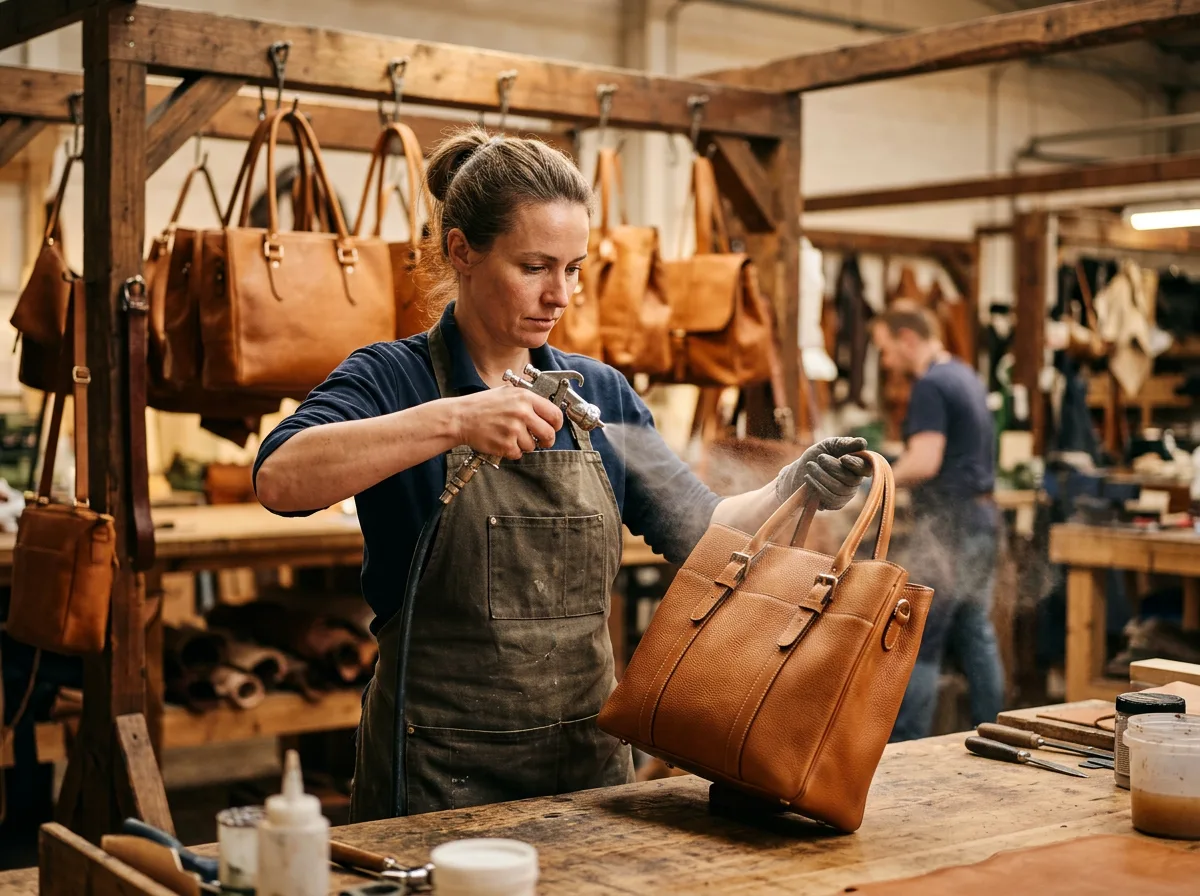
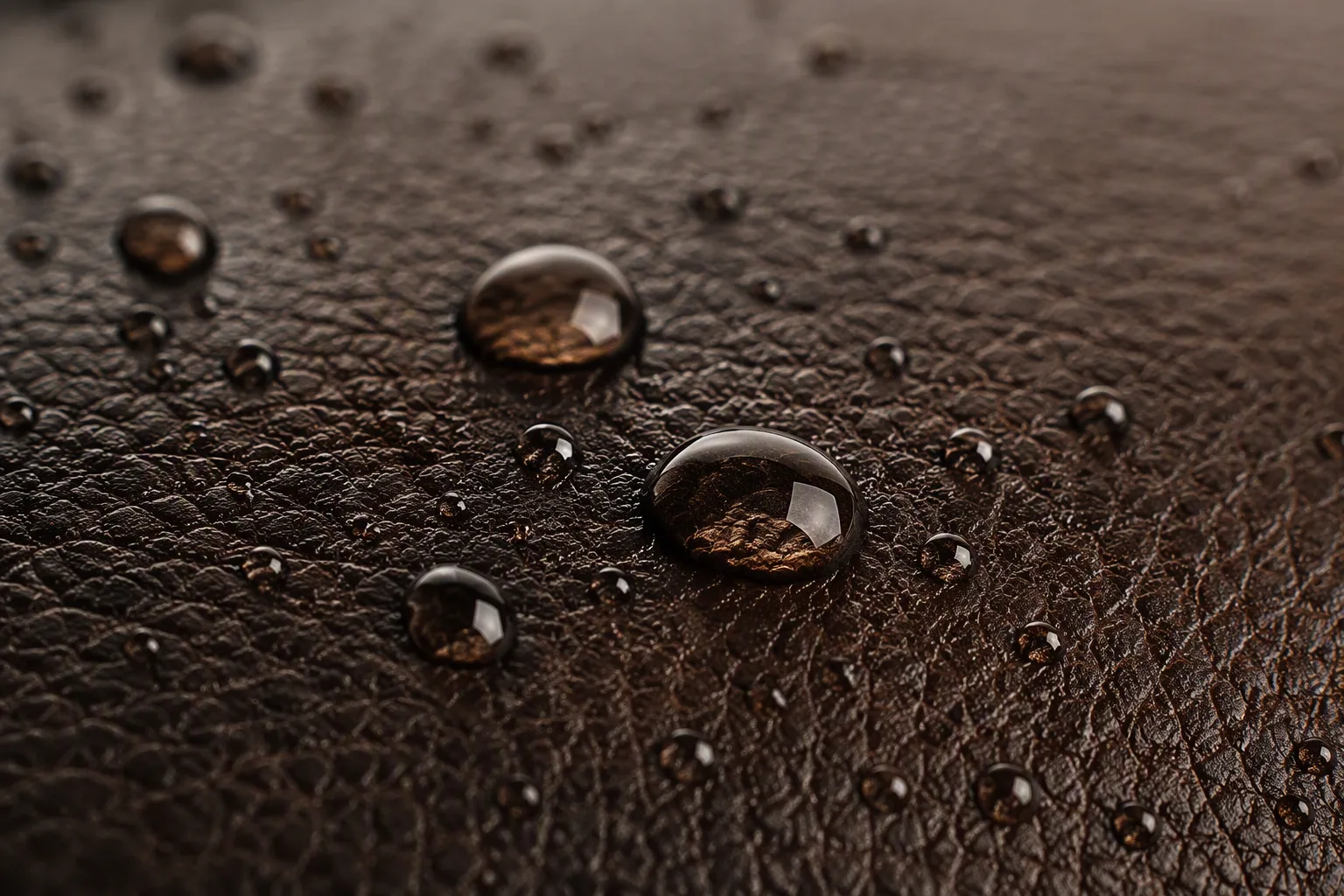
Water-repellent describes a treatment that makes water bead up and roll off the surface rather than wetting it. Repellency is the first line of defense; it keeps the leather dry long enough for the next lines to matter.
DWR (durable water repellent) is the technical term for the fluoropolymer or wax-based treatments that create repellency. "Durable" refers to the treatment's ability to survive wear and washing — all DWR treatments wear out, and durability is a matter of degree.
Hydrophobic describes the chemistry's property (water-fearing) rather than the product's performance. A hydrophobic coating repels water, but it is only one layer of the system.
The honest specification asks: what water challenge will this bag face — light rain, heavy rain, immersion, daily commuting, outdoor use? The answer sets the performance target, and the performance target selects the methods.
Layer One: Water Resistance at the Tannery
Water resistance begins before the leather is a sheet — it is engineered into the leather itself during tanning and fatliquoring. This is the layer that brands cannot see and often do not know to specify, and it is the most fundamental.
Fatliquoring: the oil that keeps water out. After tanning, leather is fatliquored — lubricated with emulsified oils that penetrate the fiber network. Fatliquoring is primarily about flexibility, but it is also the first water defense: the oil coats the fibers, reducing their attraction to water and slowing wicking. The amount and type of fatliquor directly affects water resistance — and it is invisible in the finished product. A leather that feels supple and repels water modestly is often simply well-fatliquored. The specification should state the fatliquor type (natural oils, synthetic, silicone) because each behaves differently with water.
Hydrophobic tanning chemistry. Modern tanneries can add hydrophobic (water-fearing) agents during the tanning or retanning stage. These chemicals bond to the fiber structure and reduce its affinity for water — a permanent, structural water resistance that survives far longer than any surface treatment. Chromium-tanned leather with hydrophobic retanning agents is the workhorse of water-resistant bag leather; the chemistry is inside the material, not on it.
Vegetable-tanned leather's different story. Vegetable-tanned leather is less water-resistant by nature than chrome-tanned: its tannins are water-soluble, and wetting leaches them out, leaving the leather stiff and pale. Vegetable-tanned bags need surface protection (wax or oil) to compensate. This is not a defect — it is a different material with different water behavior — but it must be specified accordingly.
The tannery test. Water resistance is measurable at the tannery with standard tests: the Maeser water penetration test (flexing a specimen under water until penetration) and water absorption tests (weight gain after immersion). A spec can require a minimum performance — for example, no penetration after 15,000 flexes in the Maeser test — and the tannery certifies the leather against it. Brands that specify the test get the performance; brands that do not get whatever the tannery ships.
Layer Two: The Finish as Water Defense
The surface finish is the second layer of the system — the visible face of the leather and its primary contact with water. Different finishes have very different water behavior.
Aniline and naked finishes. Aniline leather (dyed through with a transparent protective layer, or none at all) shows the natural grain beautifully and absorbs water readily. It is the most vulnerable finish to water damage: stains penetrate, tide marks show, and the leather darkens where wet. Aniline bags are a deliberate choice of aesthetics over weather resistance — and should be sold with honest expectations and care instructions.
Semi-aniline finishes. A thin pigmented topcoat over aniline-dyed leather balances natural look with some protection. Water beads partially, stains penetrate more slowly, and the finish is more forgiving. Semi-aniline is the pragmatic choice for daily-use bags that want a natural look.
Pigmented finishes. A full pigmented coating covers the surface with a plastic-like film — the most water-resistant finish family. Water beads and runs off, stains wipe away, and the leather beneath is largely protected. The trade-off is the surface: pigmented leather looks and feels less "natural," and the finish itself can chip or peel over time. The majority of everyday and travel bags use pigmented finishes precisely because of their water behavior.
The finish chemistry. Modern finishes are water-based acrylic or polyurethane systems, formulated with water resistance in mind. The finish's water resistance depends on its chemistry, its thickness, and its integrity — a finish with micro-cracks (from flexing, drying, or age) lets water through. The finish spec matters: a full PU finish on a travel bag is a water-resistance decision, and a water-based aniline finish on a fashion bag is the opposite decision.
The finish test. The finish's water resistance is tested with the Bally flexometer (flexing under water, counting flexes until visible damage) and water-spot tests (droplet contact, rating the stain after drying). A pigmented travel-leather spec might require 50,000 Bally flexes without damage; an aniline fashion leather might have no requirement. The spec sets the test; the test protects the claim.
Layer Three: Factory Treatment Methods
The third layer is applied at the factory — treatments that add water resistance on top of the tannery's and the finish's work. These are the methods that factories control directly, and they are where the practical engineering happens.
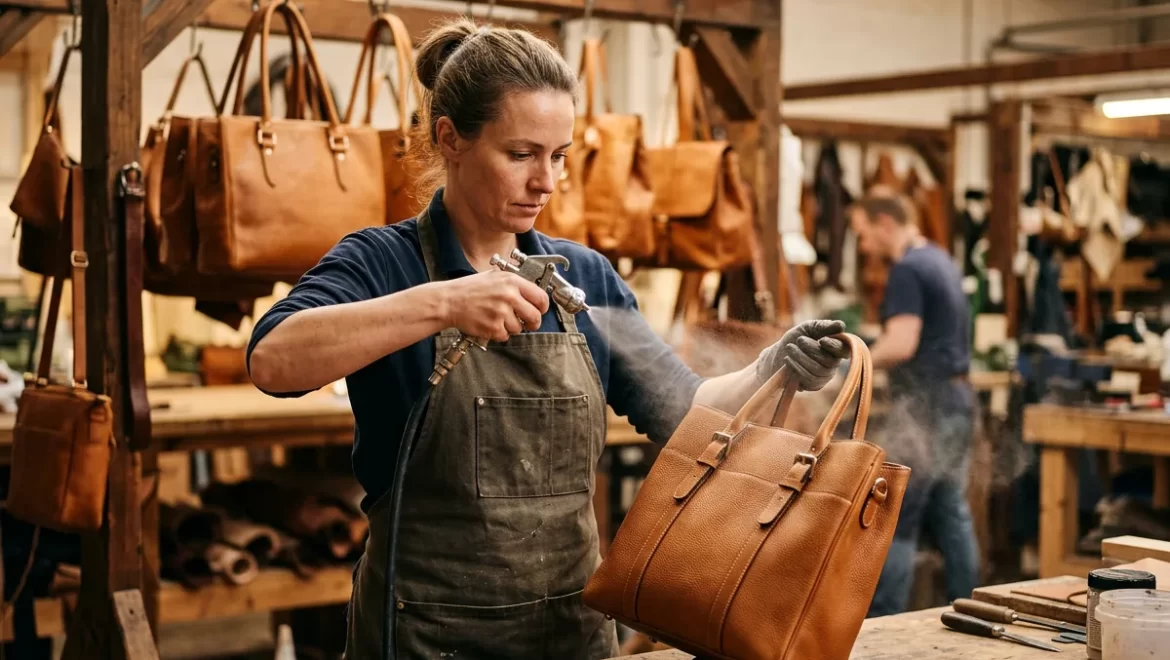
Waterproofing spray and impregnation. Factory-applied impregnation (spray or dip) forces a water-repellent agent into the surface and upper fiber layers. Silicone and fluoropolymer impregnations are the common chemistries. The treatment is applied after the finish, on the finished surface and often on the flesh side too, and it adds a meaningful level of repellency to the assembled product. The treatment's durability is limited — it wears with use — but it is a legitimate factory method and the right one for many products.
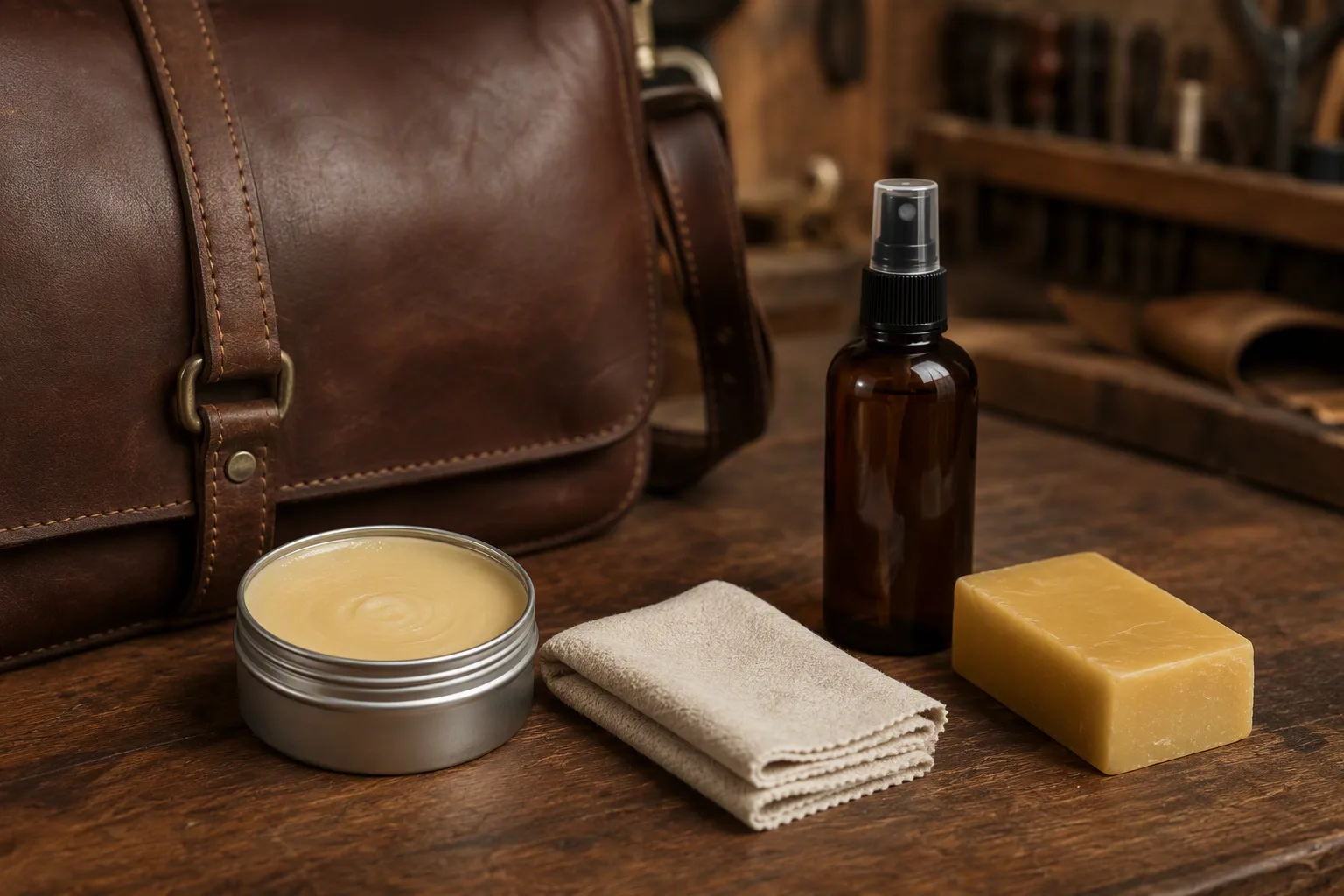
Wax and oil conditioning. Traditional waterproofing is wax and oil: beeswax, paraffin, or proprietary conditioning compounds rubbed into the surface. Wax fills the surface capillaries, repels water, and nourishes the leather. The treatment is re-appliable by the end user — this is why "condition your bag" is not just cosmetic advice but water-resistance maintenance. Factory-applied waxing is a deliberate product choice (heritage-style bags, vegetable-tanned products) with real water resistance and a real maintenance requirement.
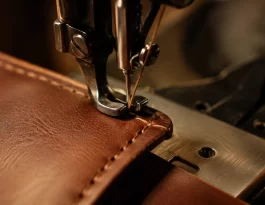
The seam and stitch treatment. The factory's water weak points are the seams: needle holes are capillaries that wick water into the interior. Serious water resistance treats the seams — seam sealing (applying a waterproof sealant along the seam line), welded or taped seams (a waterproof tape fused over the seam on the inside), and stitch sealing (wax or sealant on the needle holes). A bag can have water-resistant leather and still leak through its seams; the seam treatment closes the system.
The hardware protection. Factory treatment extends to hardware: coated or sealed rivets, treated zippers (water-repellent zipper tapes), and drainage consideration in construction. The hardware's water behavior is part of the product's water resistance, and the factory controls it.
The assembly-level waterproofing. For genuinely waterproof products, the factory assembles the bag with a waterproof membrane (PU or TPU laminated film) between the leather and the lining, seals the seams, and uses water-resistant zippers. This is the "rain-proof" construction used for outdoor and travel products. It changes the bag's breathability, hand feel, and cost — but it is the only honest way to deliver a waterproof leather bag.
The Water Resistance Test Matrix
Testing is where water resistance stops being a claim and becomes a specification. The factory test matrix covers the material, the finish, and the assembled product:
| Test | What it measures | Typical spec for water-resistant bags |
|---|---|---|
| Maeser water penetration | Water penetration under flexing | No penetration after 15,000-25,000 flexes |
| Water absorption | Weight gain after immersion | < 20-30% absorption after 2 hours |
| Bally flexometer | Finish cracking under flex in water | No visible damage after 20,000-50,000 flexes |
| Water spot test | Staining after droplet contact | No permanent stain after 24 h drying |
| Spray test (ISO 4920) | Surface repellency rating | Rating 4-5 (water beads and rolls off) |
| Hydrostatic head | Water pressure resistance | 1,000-10,000 mm for waterproof products |
| Seam leakage test | Water through seams | No leakage at specified pressure |
The matrix is specified per product: a commuting bag needs a strong spray rating and water absorption control; an outdoor bag needs hydrostatic head and seam testing; a fashion bag may need only a modest water-spot requirement. The specification selects the tests; the tests certify the product; the certificate is what the brand can honestly claim.
Specifying Water Resistance: The Tech Pack Discipline
Water resistance becomes a controlled product attribute when it is written into the tech pack. The discipline has five parts:
Define the challenge. "This bag must survive daily commuting in light-to-moderate rain, occasional spills, and be stored damp-free." The statement of the water challenge sets the performance target for every layer.
Specify the leather. The leather spec includes the tannery's water performance: fatliquor type, hydrophobic retanning, the Maeser requirement, and the water absorption limit. A bag leather spec without a water test is a water-resistance gap.
Specify the finish. The finish spec includes the finish family (aniline, semi-aniline, pigmented), its flexometer requirement, and its water-spot behavior. The finish is the product's visible water defense.
Specify the factory treatments. The factory treatment spec lists the impregnation, waxing, seam sealing, and hardware protection to be applied. This is the layer the factory quotes and the layer that is verified at QC.
Specify the tests and the certificate. The QC plan includes the test matrix and the acceptance limits, and the production certificate records the results. A water-resistance claim without a test certificate is a marketing sentence; with a certificate, it is an engineering fact.
Water Resistance by Product Type
The water system is matched to the product's real life. The decision framework by category:
Daily commuting and work bags. The workhorse profile: pigmented or semi-aniline finish, fatliquored leather with moderate water absorption control, factory impregnation, sealed seams. The bag must survive daily weather without looking tired — the water system is a durability feature, not a headline.
Travel and weekender bags. The demanding profile: pigmented finish with high flexometer performance, full factory treatment, seam sealing, water-resistant zippers. Travel bags face weather, transport, and rough handling; the water system is a protection feature — and many travel specs add hydrostatic head testing for genuine rain protection.
Outdoor and rain-proof bags. The waterproof profile: membrane construction, sealed or welded seams, water-resistant hardware and zippers, hydrostatic head tested. The bag is honestly waterproof — and the construction changes the product's feel and cost. This profile is specified when the product's claim is "waterproof," not "water-resistant."
Fashion and evening bags. The aesthetic profile: aniline or naked finishes, minimal water system, honest care instructions. The bag prioritizes look and hand feel over weather resistance — a legitimate choice, but the specification should state it, and the marketing should not overclaim.
Heritage and vegetable-tanned products. The traditional profile: wax and oil protection, re-appliable conditioning, maintenance instructions. The water system is the user's responsibility over time — the product is sold with care expectations, not water claims.
The framework prevents the most common failure: a brand selling a fashion bag with rain-proof expectations, or a travel bag with an aniline finish that stains in the first shower. Match the water system to the product's life, and the claims become true.
Common Waterproofing Myths
The factory hears the same misconceptions from every new brand — and correcting them saves specifications, samples, and refunds:
"It's real leather, so it's waterproof." Leather is a porous natural material; untreated, it absorbs water readily. "Real leather" is not a water-resistance statement — the water system is specified separately from the material.
"A spray makes it waterproof." A surface treatment adds repellency, not waterproofing. Sprayed leather resists light rain and spills; it is not waterproof under pressure or immersion. The word "waterproof" should be reserved for membrane systems.
"Waterproofing ruins the leather." At the factory level this is false — the water system is part of the specification, chosen to preserve the leather's look and behavior. What ruins leather is water entering it unprotected, or over-application of treatments by amateurs.
"More oil means more waterproofing." Oils improve repellency up to a point, then saturate the leather — over-oiled leather feels greasy, attracts dirt, and can weaken structure. The fatliquor is formulated, not maximized.
"A water stain means the leather is bad." Water stains are the expected behavior of under-protected leather — the product's water system was not matched to its challenge. The fix is specification, not replacement.
"Care instructions are just marketing." Care instructions are part of the water system: conditioning replenishes the oils that water resistance depends on. A bag with a great water spec and ignored care instructions will decline faster than a modestly specified bag that is maintained.
Care and Maintenance: The User's Part of the System
The factory builds the water system; the user maintains it — and the maintenance is as specified as the construction. The honest factory view: a water-resistant bag is a partnership between specification and care.
The care routine. Periodic conditioning with a leather conditioner replenishes the oils that fatliquoring provided at the tannery. The frequency depends on use: monthly for daily bags, quarterly for occasional bags, and after every significant wetting. The conditioning product should match the leather's finish — a conditioner for aniline leather is different from one for pigmented leather.
Re-applying repellency. The surface repellency (impregnation, DWR) wears with use — the user's spray-on water repellent refreshes it. This is maintenance, not a one-time factory treatment; the product instructions should say how often and with what.
Drying discipline. A wet bag should be dried at room temperature, away from direct heat, with the interior opened and stuffing to hold the shape. Heat drying is the fastest way to distort leather — the drying instructions are water-system instructions.
Storing and mould prevention. A dry, ventilated storage environment prevents the biological failure that follows wetting. The storage instruction completes the water system: water in, water out, water managed.
The products that survive years of weather are the products whose users follow the care system — and the brands that teach the care system honestly get fewer returns and more loyal customers.
Waterproofing and Sustainability: The Modern Balance
Waterproofing intersects with the industry's sustainability conversation — and the intersection has real trade-offs that an honest factory names plainly.
The chemistry question. The classic high-performance water repellents are fluoropolymers (PFCs) — effective, durable, and increasingly regulated because they persist in the environment. The industry's shift to PFC-free repellents (paraffin, silicone, and polymer-based alternatives) changes the performance curve: modern PFC-free treatments have closed much of the gap, but they are not identical — they typically need more frequent re-application and can behave differently on different finishes. A brand specifying water resistance should ask the tannery or factory which repellent chemistry is used, and match the choice to its sustainability policy and its performance needs.
The water-based finish shift. The finish layer's chemistry is also transitioning: solvent-based finishes are being replaced by water-based acrylic and polyurethane systems with lower environmental impact. Water-based finishes have largely matched solvent-based performance, and they simplify the factory's compliance picture. The finish spec and the sustainability claim are now linked — a "water-based finish" is both a performance and an environmental specification.
The durability argument. The most sustainable waterproofing is the one that makes the bag last: a well-specified water system keeps a bag out of the landfill through years of weather, and every extra year of use is the largest environmental saving available in the product's life. The sustainability case for waterproofing is durability — the water system is a longevity system, and longevity is the sustainability strategy that no material swap can beat.
The honesty requirement. The greenwashing risk is real: a bag marketed as "waterproof and sustainable" is usually neither fully waterproof nor fully green — and the market punishes both overclaims. The honest position is specific: the repellent chemistry (PFC-free or not), the finish system (water-based or not), the test results, and the expected lifespan. Specificity is both the ethical and the commercial position — the customers who care about sustainability are the customers who read the certificate.
The modern water system is a balancing act between performance, chemistry, maintenance, and honesty — and the brands that manage the balance with evidence build products that survive both the weather and the scrutiny.
FAQ
Is real leather waterproof?
A: No. Leather is a porous natural material that absorbs water. Water resistance is engineered into the product through tanning chemistry, finishes, factory treatments, and seam sealing — and true waterproofing requires a membrane construction. "Real leather" alone is not a water-resistance claim.
How can I tell if a leather bag is water-resistant?
A: Look at the specification: the leather's water test (Maeser, absorption), the finish type (pigmented is most resistant), the factory treatments (impregnation, seam sealing), and the QC test certificate. A drop test on a corner will show you repellency immediately — beads roll off resistant surfaces, stains wet unprotected ones.
What is the best treatment for waterproofing a leather bag?
A: The best treatment matches the leather and the challenge: a fluoropolymer or silicone impregnation for daily bags, wax for vegetable-tanned or heritage products, and a membrane construction only for genuinely waterproof claims. There is no single best — there is a matched system.
Does waterproofing change how leather looks and feels?
A: It depends on the method. Finish-level systems (pigmented coatings) change the look toward a smoother surface; impregnations are nearly invisible; wax adds a soft sheen and changes the hand feel; membrane construction makes the bag less breathable and stiffer. The specification chooses the balance.
Why does my leather bag stain when it gets wet?
A: Water stains mean the water system was not matched to the challenge: the leather absorbs water (no or weak repellency), or the finish lets water through to the fibers. The stain is tide-marked mineral and dye deposits left as the water dried. Prevention is the water system; the care instructions should say how to handle wetting.
Can I make my leather bag waterproof at home?
A: You can maintain or refresh repellency with conditioning and spray treatments — this is legitimate maintenance. You cannot add genuine waterproofing to an assembled bag at home; that requires membrane construction and seam sealing at the factory.
What is the difference between water-resistant and waterproof leather bags?
A: Water-resistant bags repel light rain and spills to a defined degree; waterproof bags keep water out entirely under tested conditions. Waterproofing requires a continuous barrier (membrane, sealed seams, water-resistant zippers) and is rare in leather bags. Marketing often blurs the line — the specification and test certificate are the truth.
How long does a waterproofing treatment last?
A: Surface treatments (impregnation, DWR) last weeks to months of use before needing refresh; finish-level systems last the life of the finish; tannery-level chemistry lasts the life of the leather. The care instructions state the refresh cycle — treat repellency as maintenance, not a one-time feature.
Is vegetable-tanned leather bad for rain?
A: Not bad — different. Vegetable-tanned leather's water-soluble tannins leach out when wet, leaving it stiff and pale, so it needs wax or oil protection and honest expectations. With the right care system, vegetable-tanned bags last beautifully — in weather they are not designed for, they need the user's maintenance.
What should I specify in the tech pack for a water-resistant bag?
A: The water challenge statement, the leather's water performance (fatliquor, hydrophobic retanning, Maeser and absorption tests), the finish family and its flexometer requirement, the factory treatments (impregnation, seam sealing, hardware protection), and the QC test matrix with acceptance limits. Specify the tests; the tests certify the product.
Conclusion
Water resistance in a leather bag is not a single treatment or a marketing label — it is a system built in three layers: the tannery's chemistry, the finish's defense, and the factory's treatments — held together by testing and maintained by care. Rain ruins leather bags when the system is absent or unmatched; bags survive weather for years when the system is specified, verified, and maintained.
The factory view is practical: define the water challenge your product will face, specify the leather's water performance, the finish's defense, the factory treatments, and the tests that prove the claims. Then teach the user the care system that keeps the water system alive. The result is not a bag that "looks waterproof" — it is a bag that survives the rain, season after season, and a specification that stands behind every claim it makes.
Ready to spec a water-resistant leather bag? Contact our factory — we will define the water system for your product, match the treatments to your leather and finish, and certify the tests so your claims are true.