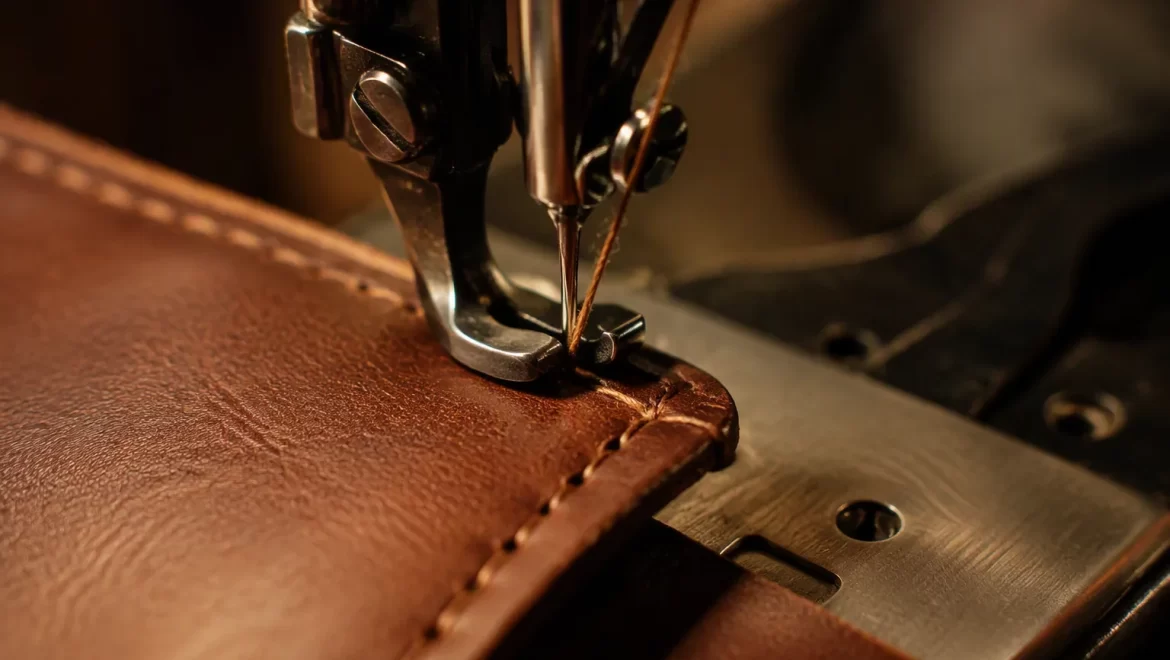
Broken Stitches Ruin Leather Bags: Thread and Techniques
Open a returned leather bag and you will often find the same story: the leather is fine, the hardware is fine, but the stitches have failed. A seam has pulled open, a handle has detached, a zipper guard has unraveled — and the bag has died from a few centimeters of broken thread. Stitching is the smallest component in a leather bag and the most frequent cause of premature failure. It is also the least understood: brands specify the leather in detail and leave the thread to chance, as if seams were self-evident.
From inside a factory, stitching is a science with its own vocabulary, materials, and quality rules. This guide explains the thread and techniques that determine whether a bag's seams last — thread types and sizes, stitch geometries, machine settings, needle selection, and the inspection standards that separate bags that survive from bags that unravel.
Why Stitches Fail: The Four Failure Mechanisms
Every stitch failure belongs to one of four mechanisms, and each one has a different cause and cure.
Thread breakage. The thread itself snaps — under load, under repeated flexing, or at a weak point created during sewing. A handle seam carrying the bag's weight can be loaded with hundreds of kilograms over its lifetime, flexed thousands of times, and the thread fatigues like any material. Thread that is too thin for the seam's job, damaged by a burred needle, or weakened by heat from high-speed sewing breaks prematurely.
Seam slippage and pullout. The thread does not break — it pulls out of the leather. Needle holes are capillaries of weakness: if the seam is too close to the edge, if the stitches are too wide apart, or if the leather's fiber structure is cut too deep by the needle, the seam pulls free under load. The failure looks like the thread broke, but the leather failed first.
Unraveling. The seam's end unravels when the lock is weak or missing. A lockstitch that was not backstitched, a thread end that was not properly secured, or a chain stitch whose chain broke — the seam progressively comes apart starting at its end, usually the most stressed point of a bag.
Abrasion and wear. The thread wears through where it rubs: handle edges, strap corners, piping, zipper guards. Thread that is too soft, too thin, or unprotected by design wears down over months of contact until it breaks. Abrasion failures look gradual — frayed, fuzzy threads — and they are the most predictable of the four, which makes them the most preventable.
The four mechanisms map to four specification decisions: thread material and size (breakage), seam geometry and edge distance (slippage), stitch type and end-locking (unraveling), and design placement (abrasion). Get the four decisions right and the seam outlives the leather; get any one wrong and the bag fails early — no matter how good the hide is.
Thread Materials: What the Factory Actually Uses
Thread is a material specification with its own performance profile. The factory's thread rack holds a small number of families, each with a defined role.
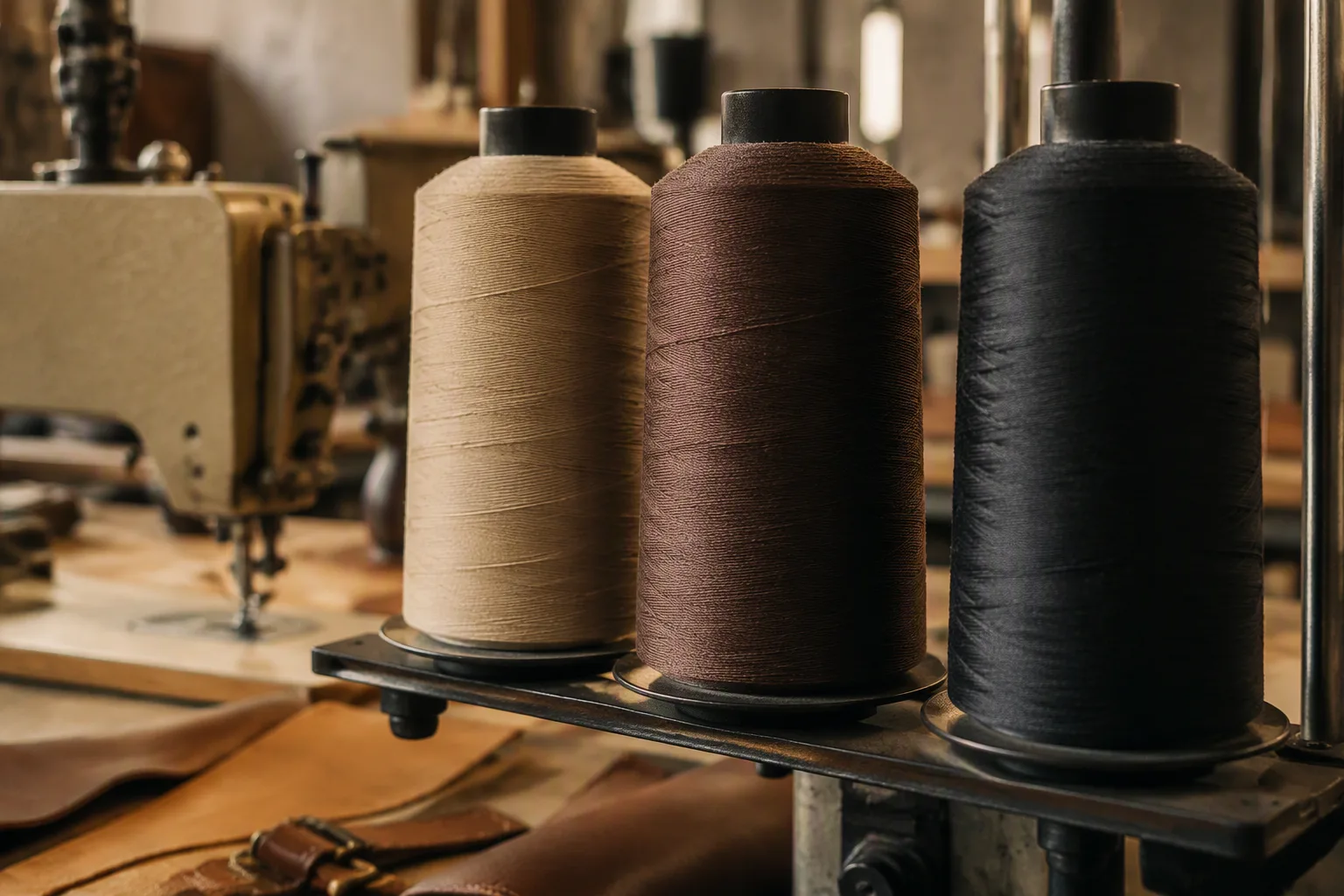
Polyester thread — the workhorse. Bonded polyester (often called "poly bonded" or "synthetic thread") is the default for leather bags. It combines strength, UV resistance, abrasion resistance, and minimal water absorption — the balanced profile that most seams need. The "bonded" part matters: bonding is a treatment that fuses the thread's fibers together, reducing fuzz, improving abrasion resistance, and stabilizing the thread through the needle. Most leather bag seams should be bonded polyester.
Nylon thread — the strength specialist. Nylon is stronger than polyester at the same size and has higher elasticity, making it excellent for high-stress seams — handle attachment, shoulder straps, heavy hardware anchors. Its weaknesses: nylon absorbs water (weakening it slightly when wet), and it degrades faster under UV exposure. For interior load-bearing seams where strength matters more than weather, nylon earns its place.
Cotton thread — the traditionalist. Cotton has been displaced by synthetics in most production, but it survives in specific roles: aesthetic stitching on heritage products, some hand-stitching, and interior details where its natural look matters. Cotton is weaker, absorbs water and mildew, and frays — it is a design choice, not a performance choice.
Waxed and bonded threads for hand-stitching. Hand saddle-stitching uses waxed thread — traditionally linen or polyester, waxed to reduce friction and add some water resistance. Saddle-stitching has a genuine durability advantage (two threads interlocked, so the seam survives if one thread breaks), but it is slow and expensive. The choice of hand versus machine stitching is a cost and positioning decision, not a simple quality one.
Thread size and the numbering system. Thread thickness is specified in weights — in production, typically Tex (grams per 1,000 meters) or the older ticket numbers. Common bag threads run from Tex 20 (light details) through Tex 30-40 (standard seams) to Tex 60-90 (heavy straps and handles). The spec must match the thread to the seam's load: a handle seam sewn with Tex 20 will fail by thread breakage regardless of technique. The thread size is part of the tech pack, not an afterthought.
Stitch Types: Lockstitch, Chainstitch, and Their Jobs
The stitch geometry is a load-bearing engineering decision. Two families dominate leather bag production, and each has a different failure signature.
Lockstitch — the standard. The lockstitch (two threads, one from the needle and one from the bobbin, locked in the middle of the material) is the default for leather bags. It is strong, stable, does not unravel easily, and holds its shape. Its limitation: it is a single-thread system — if the thread breaks at one point, the seam fails along its length at that seam's load path. Lockstitch is the right choice for most structural seams.
Chainstitch — the flexible specialist. The chainstitch (a single thread formed into a chain on the underside) has real advantages for leather: it stretches slightly with the material, making it excellent for seams that flex and for stitching multiple layers (like attaching zippers to folded leather edges). Its critical weakness: if the chain breaks anywhere, the entire seam unravels rapidly. Chainstitch must be lock-secured at every end, and it is the wrong choice for load-bearing seams that cannot tolerate unraveling.
Saddle-stitch — the heritage standard. Two needles, two threads, interlocked every stitch — saddle-stitching is the most failure-tolerant stitch: if one thread breaks, the second thread holds the seam. It also allows the distinctive slanted stitch appearance prized on heritage and luxury products. The costs: speed (minutes per seam versus seconds by machine) and therefore price.
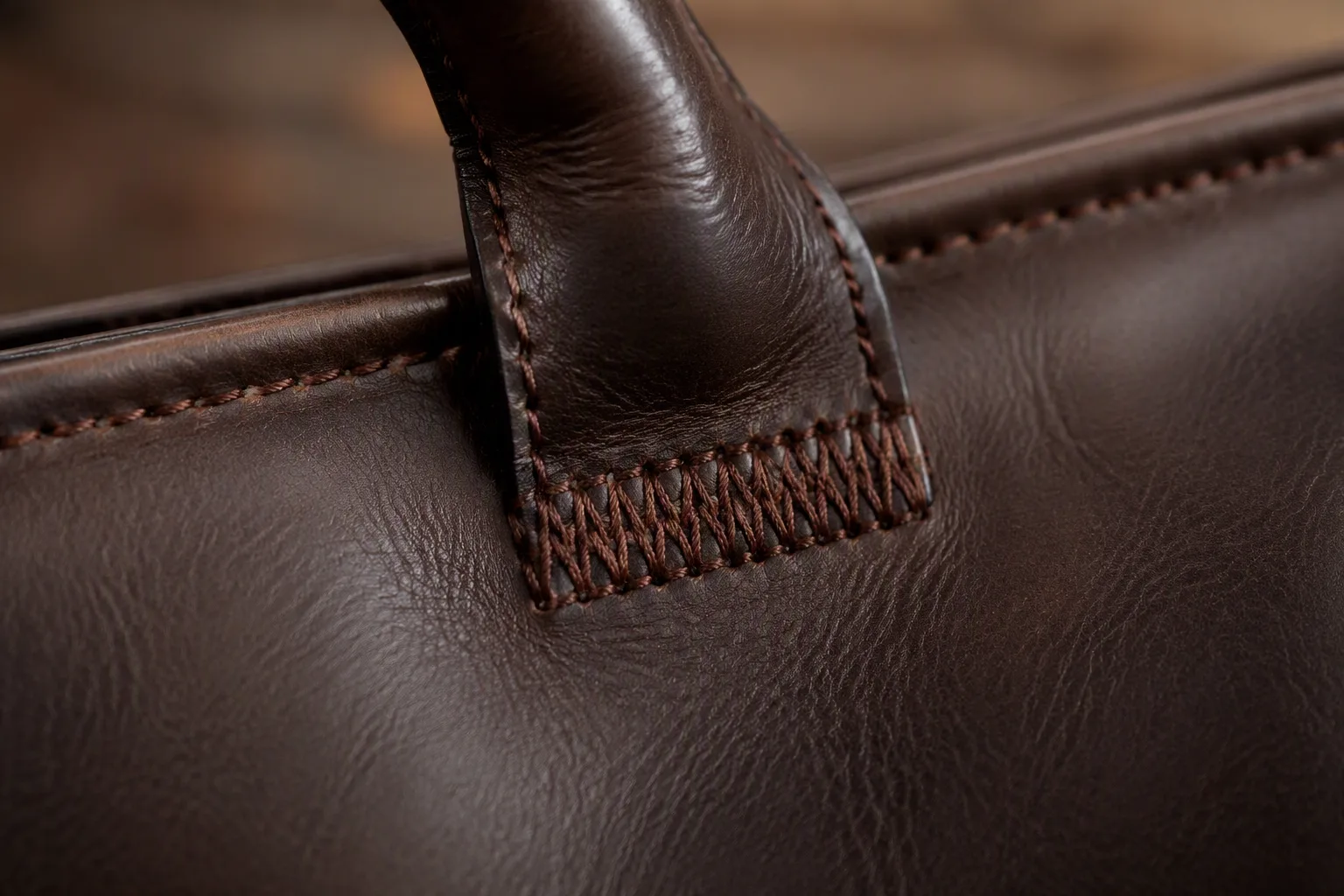
Decorative and specialty stitches. Zigzag, bar-tack (the dense reinforcement at stress points like handle roots and strap ends), and piped seams each have defined roles. Bar-tacks are arguably the most important stitch in the bag: the dense zigzag lock at every stress point that prevents seam unraveling at handle roots, zipper ends, and strap attachments. A bag without bar-tacks at its stress points will fail there — predictably.
The Machine Side: Tension, Needle, and Speed
The stitch is only as good as the machine setup — and machine setup is where most production stitching problems are born. Three variables dominate.
Thread tension. The needle thread and bobbin thread must lock exactly in the middle of the material. Tension too high: the seam puckers, the leather distorts, and the thread is over-stressed (failing early). Tension too low: loose, sloppy stitches that catch and abrade. Correct tension produces flat, even stitches with the lock invisible on both faces. Tension is a per-seam, per-material setting — changed whenever the leather thickness, thread size, or stitch type changes.
Needle selection. The needle must match the thread (the needle eye and groove sized for the thread) and the material (point type matched to the leather). Leather needles have a cutting point — the "diamond point" or "wedge point" cuts a clean hole rather than forcing the fibers apart. A wrong needle damages the leather fibers around every hole, creating the conditions for seam pullout; a burred or worn needle drags and heats the thread, weakening it invisibly.
Speed and heat. High-speed sewing generates heat at the needle; heat weakens synthetic threads. Heavy leather stitched at high speed can produce needle temperatures that degrade polyester and nylon. Serious production controls speed per material — the factory knows the speed at which the thread still sews clean, and that speed is not always the maximum. The difference between a seam that lasts and a seam that fails can be a machine speed setting.
Puckering and its causes. Puckering — the seam gathering and wrinkling — is the visible symptom of multiple problems: tension, needle damage, thread-to-material mismatch, or feed issues. Puckered seams concentrate stress at the stitch line and fail earlier. The factory's quality rules treat puckering as a defect to be corrected at setup, not a cosmetic nuance.
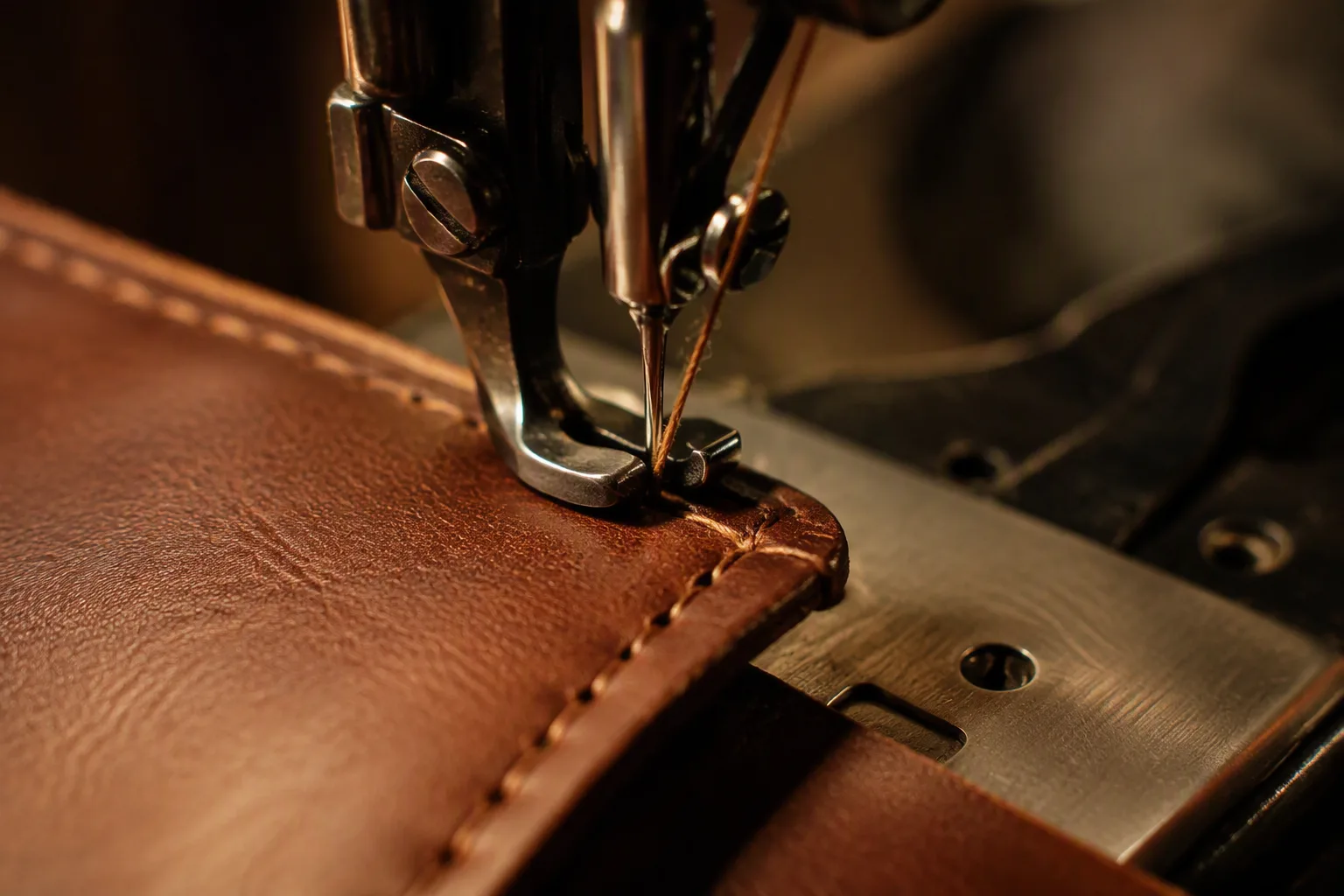
The Geometry of Strong Seams
Seam strength is geometry as much as material. The factory's pattern engineering sets the seam's geometry before the first stitch.
Edge distance. The distance from the seam to the material's edge determines pullout strength. Too close: the seam tears through the edge under load. Too far: wasted material and a seam that does not hold the shape. Standard edge distances run 3-6 mm for leather bags depending on the seam's load, with heavy seams getting more distance. The spec sets the distance; the distance determines the failure mode.
Stitches per inch (SPI). SPI is the density control: typical leather bag seams run 6-8 SPI (3-4 stitches per 10 mm). Higher SPI means more holding points but also more needle holes — and too many holes weaken the leather (a "cheese grater" effect where the seam is a line of perforations). Lower SPI means fewer holding points and weaker resistance to pullout. The optimal SPI balances holding power against leather damage — and it changes with leather thickness and firmness.
Seam allowance and folding. The seam's load path depends on how the material is folded and joined: a flat seam (butted edges) has different strength than a folded seam (edge turned under), and both differ from a lapped seam (overlapping panels). The construction choice distributes load differently and is part of the pattern spec.
The layered seam and reinforcement. Load-bearing seams are reinforced by design: the strap seam stitches through the strap, a reinforcement patch, and the body panel — distributing the load over more material. Bar-tacks at the seam ends stop unraveling. The reinforcement is specified in the pattern; a handle that detaches from the body was almost always missing its reinforcement layering.
Stitching by Bag Component: The Factory Rules
The factory applies different stitching rules to each component of the bag, because each component carries different loads and faces different wear.
Handle and strap attachment. The most failure-prone seams in the industry: the handle seam carries the bag's entire weight, flexes with every step, and is subject to abrasion. Rules: bonded polyester or nylon thread in an adequate size, doubled or reinforced seam lines, bar-tacks at every stress point, and edge distances increased for the load. Handle failures are thread failures — spec the handle seam like the engineering joint it is.
Body seams and gussets. The body and gusset seams hold the bag's shape and contents. Rules: balanced lockstitch at 6-8 SPI, even tension, clean edge distance, and corners bar-tacked. Gusset seams flex with every load — the stitching must survive tens of thousands of flex cycles.
Zipper attachment. Zipper seams have their own discipline: the zipper tape is a different material sewn to leather, with different stretch behavior. Chainstitch is often preferred for zipper attachment (flexibility), with the ends locked. The zipper seam's failure shows as the zipper pulling free of the leather — a common return reason that is preventable.
Piping and trim. Piping (the corded edge trim) adds abrasion surfaces and seam complexity. Rules: piping seams need adequate thread, even feeding (piping is slippery), and careful corner handling. Piping failures are abrasion failures — the thread wears at the pipe edge.
Lining attachment and interior details. The lining's stitching is less load-bearing but has its own rules: thread matched to lining material, clean invisible stitches, and reinforcement at interior pockets that carry weight. Interior stitching failures show as lining tears and pocket detachment — quality details that customers notice first.
Stitching Quality Control: What to Inspect
Stitching QC is a defined checklist with measurable criteria — and it belongs in the factory's inspection protocol and the brand's own verification.
The visual checklist. Even stitch spacing (consistent SPI along the seam), straight seam lines, balanced tension (lock invisible, no puckering), clean thread ends, correct bar-tacks at stress points, no skipped stitches, no thread burns or fuzz. Each item is checkable in seconds by an experienced inspector.
The physical tests. Beyond the visual, the factory verifies seams mechanically: seam strength tests (pulling a seam to failure and recording the load), seam slippage tests, and flex endurance (repeated flexing of a seamed specimen). The spec can require a minimum seam strength in kilograms — the test makes the seam's quality measurable and auditable.
The stress-point audit. The QC protocol pays special attention to stress points: handle roots, strap ends, zipper ends, and corners. These are the seams that will fail first — the audit checks thread size, bar-tack presence, edge distance, and reinforcement at every one.
The return-data loop. The most powerful QC is the return loop: every returned bag's failure is recorded, categorized (thread breakage, pullout, unraveling, abrasion), and fed back to the production line. Factories that track return reasons by failure mechanism find and fix their stitching problems in weeks; factories that do not repeat them for years. The return data is the factory's truth about its seams.
The Thread Specification in the Tech Pack
Stitching becomes controlled quality when it is written into the tech pack. The stitching spec has six parts:
Thread spec. Material (bonded polyester, nylon, etc.), size (Tex number), and color (with the standard's tolerance for shade variation). The thread spec is as precise as the leather spec — thread is a material with performance requirements.
Stitch spec. Stitch type (lockstitch, chainstitch, saddle), SPI (density), and seam type (flat, folded, lapped) per seam group. The pattern marks the seam types; the spec defines them.
Stress-point spec. Bar-tack requirements, reinforcement layering, and thread upgrades at handle roots, strap ends, zipper ends, and corners. The stress-point spec is where most bags are won or lost.
Machine spec. Tension guidance, needle type (leather point), and speed limits per material. The machine spec is the factory's internal discipline — but the brand should know it exists.
QC spec. The visual checklist, the seam strength test requirement with minimum load, and the stress-point audit. The QC spec makes the stitching auditable.
Approved sample reference. The approved sample is the visual standard: stitch spacing, thread finish, bar-tack appearance, and seam cleanliness are all compared against the sealed sample. Sample drift — production deviating from the approved sample — is the most common stitching quality failure, and the sealed sample is the antidote.
Thread Myths in Leather Bags
The factory hears recurring myths about stitching — and they cost brands real money:
"Thicker thread always means stronger seams." False. Oversized thread needs larger needles, which damage the leather more; and thick thread that is not bonded frays and abrades faster. The right thread is matched to the seam's load and the leather's thickness — not the thickest available.
"Hand-stitching is always better than machine." False. Hand saddle-stitching has real advantages (double-thread security) but machine lockstitch with correct tension and bonding can out-perform careless hand-stitching. The quality difference is in the execution, not the tool.
"If the leather is good, the seam will hold." False. The seam's failure is independent of the hide's quality: premium leather sewn with wrong thread size, wrong SPI, or no bar-tacks fails exactly like cheap leather. Stitching is a separate specification from leather.
"A stitch that looks even is a strong stitch." False. Appearance and strength are different properties. Even, beautiful stitching with too-low tension or too-thin thread fails under load. The visual check is the first QC layer, not the last.
"All polyester threads are the same." False. Bonded polyester differs dramatically from unbonded; thread quality varies by manufacturer, treatment, and consistency. The thread spec should name the treatment (bonded) and the quality standard, not just "polyester."
"Seam failures are a warranty issue, not a design issue." False. Seam failures are a design and specification issue — the thread, stitch geometry, and stress-point reinforcement were decided long before production. Warranties pay for specification mistakes; the fix is in the spec.
Stitching by Bag Type: Practical Frameworks
The stitch spec is matched to the product's life, just like the leather:
Everyday work and tote bags. The balanced profile: bonded polyester Tex 30-40, lockstitch 7-8 SPI, full bar-tack discipline at handle roots and stress points. The bag carries weight daily — the seams are the product's structural skeleton.
Travel and luggage bags. The demanding profile: nylon or high-strength polyester for load-bearing seams, reinforced handle and strap attachment, chainstitch for zipper flexibility, seam strength tested. Travel bags face the heaviest loads and the roughest handling.
Handbags and fashion bags. The aesthetic profile: stitching is a visible design element — thread color, stitch pitch, and finish are style features. The spec balances appearance against strength: decorative seams may be lighter, structural seams are engineered regardless of visibility.
Heritage and luxury bags. The premium profile: saddle-stitching or fine machine stitching with waxed thread, higher SPI, meticulous end-locking, and hand-finished details. The product's durability claim is its stitching quality — the spec reflects the positioning.
Outdoor and utility bags. The extreme profile: heavy bonded thread, maximum bar-tack coverage, seam-sealed or taped constructions, and seam strength specifications at the top of the range. Outdoor bags fail by seam before anything else — the stitch spec is the product's core engineering.
Stitching and Sustainability: Thread's Quiet Footprint
Sustainability conversations about bags focus on leather — but the stitching carries its own environmental story, and an honest factory names it.
The thread's lifecycle. A single bag carries only grams of thread, yet the factory's total thread consumption is measured in tons per year: polyester thread is petroleum-derived, cotton thread is water- and pesticide-intensive to grow, and the spinning, dyeing, and bonding processes consume energy and water. The thread's footprint is small per product but real per factory — and it is almost never specified.
The material choices. Recycled polyester thread (from recycled PET bottles) is now production-viable with performance close to virgin polyester — the choice for brands with recycled-content claims. Organic or GOTS-certified cotton serves heritage and natural-product lines. The thread spec can carry a sustainability requirement just like the leather spec, and the factory's traceability follows it.
The durability dimension. The sustainability argument that matters most is the one already made for seams: a bag whose stitching fails in year one is a bag manufactured for the landfill. The seam's durability is the largest sustainability lever in the product's stitching — a seam engineered for ten years of use saves the full environmental cost of a replacement bag. The factory's view is consistent: the most sustainable seam is the seam that never fails.
The honest accounting. The least sustainable choice is the greenwashed one: claiming "sustainable thread" while specifying a seam that fails in a season, or paying for recycled thread while the factory's bonding chemistry does the environmental harm. The spec should name the thread's material, its recycled content, and its durability requirement together — performance and footprint are specified as one system.
Stitching is a small component with a small per-product footprint — but it is specified, measured, and improvable like everything else, and the brands that include it in their sustainability specification are the brands whose claims survive scrutiny.
The Factory Audit: Verifying Stitching Capability
Stitching quality lives or dies in the factory's capability — and capability is auditable before the first sample is cut. A stitching-focused factory visit or audit covers four areas:
The machine floor. The audit walks the sewing line and reads the setup: machines matched to tasks (flat-bed for panels, cylinder-arm for gussets, post-bed for tricky corners), needles matched to leather, tension gauges in use, and speed discipline visible in the floor's operation. The machine floor tells the factory's stitching story faster than any presentation.
The training system. The audit asks how operators are trained and how new seam types are introduced: sample-trained? Written setup cards? A first-article approval step before production runs? Factories that formalize the setup process produce consistent seams; factories that rely on operator memory produce variable ones.
The inspection protocol. The audit reads the QC records: the visual checklist in use, the seam strength test results by lot, the stress-point audit, and — most revealing — the return-data log with failures categorized by mechanism. The return log is the factory's truth; its absence is the loudest warning.
The sample discipline. The audit compares current production against the approved sample: stitch spacing, thread finish, bar-tack appearance, seam cleanliness. Sample drift is the most common quality failure in stitching, and the audit catches it in minutes.
A brand does not need to become a stitching engineer to audit stitching — it needs to ask the four questions, read the records, and compare production to the sample. The factory that answers confidently is the factory whose seams survive; the factory that answers vaguely is the factory whose returns tell the story the audit missed.
FAQ
Why do the stitches on my leather bag break?
A: Stitches break through four mechanisms: thread breakage (wrong size or material for the load), seam pullout (seam too close to the edge or leather weakened by the needle), unraveling (unlocked or unbar-tacked ends), and abrasion (thread worn at rubbing points). Each mechanism maps to a specification decision — the fix is in the thread and stitch spec, not in repair.
What is the best thread for leather bags?
A: Bonded polyester is the default workhorse: strong, abrasion-resistant, UV-stable, and low water absorption. Nylon is chosen for high-strength load-bearing seams (handles, straps). Cotton is a heritage/design choice, not a performance one. The best thread is the one matched to the seam's load and the leather's thickness.
What does "bonded" thread mean?
A: Bonding is a treatment that fuses the thread's fibers together, reducing fuzz, improving abrasion resistance, and stabilizing the thread during high-speed sewing. Bonded thread is the standard for production leather goods; unbonded thread frays, fuzzes, and fails faster.
How many stitches per inch should a leather bag have?
A: Typical leather bag seams run 6-8 SPI (3-4 stitches per 10 mm). Higher SPI adds holding points but more needle holes weaken the leather; lower SPI reduces holding power. The optimal density balances strength against leather damage and varies with thickness and firmness.
Is hand-stitching better than machine stitching?
A: Hand saddle-stitching has a genuine advantage — two interlocked threads, so the seam survives if one breaks — but machine lockstitch with correct setup can be equally strong. The difference is execution and cost, not tool. Saddle-stitching is chosen for heritage positioning and maximum failure tolerance; machine stitching is chosen for consistent production quality and cost.
Why does my bag's handle seam keep failing?
A: Handle seams are the most stressed seams in a bag — they carry the full weight, flex constantly, and face abrasion. Failure usually means one of: too-thin thread, missing bar-tacks at stress points, insufficient edge distance, or no reinforcement layering. Handle seams are engineering joints and must be specified accordingly.
What is a bar-tack and why does it matter?
A: A bar-tack is a dense zigzag reinforcement stitch placed at stress points — handle roots, strap ends, zipper ends, corners. It locks the seam against unraveling and distributes load. Bags without bar-tacks at stress points fail there first; bar-tack discipline is the cheapest seam insurance in the factory.
Can seam strength be tested?
A: Yes. Seam strength tests pull a seamed specimen to failure and record the load; seam slippage tests measure the seam's resistance to pulling through the material. The spec can require a minimum seam strength (in kilograms), making seam quality measurable and auditable per production lot.
Why does the stitching pucker on my bag?
A: Puckering is caused by thread tension imbalance (needle and bobbin locking off-center), needle damage, thread-to-material mismatch, or feed issues. Puckered seams concentrate stress and fail earlier. Puckering is a setup defect, correctable at the machine — not a cosmetic nuance to accept.
What should I specify for stitching in my tech pack?
A: The complete stitching spec: thread material and size (Tex number), stitch type and SPI per seam group, seam geometry (edge distance, type), stress-point reinforcement (bar-tacks, layering), QC checks (visual checklist, seam strength test, stress-point audit), and the approved sample as the visual standard.
Conclusion
Stitching is the hidden quality factor in leather bags — the smallest component with the largest influence on whether a bag lives or fails. Thread that is specified, stitch geometry that is engineered, tension that is controlled, stress points that are reinforced, and seams that are tested: these decisions separate bags that unravel in months from bags that carry for decades.
The factory view is practical: treat the seam as an engineering joint, specify the thread like a material, bar-tack every stress point, test the seam's strength, and track return reasons by failure mechanism. The bag's leather may sell it, but its stitches keep it sold. Get the stitching right and every other quality investment pays off; get it wrong and no leather quality can save the seam.
Planning a leather bag line? Our factory specifies thread, stitch, and stress-point reinforcement with every project — ask us for the stitching specification template and a seam strength test on your sample.