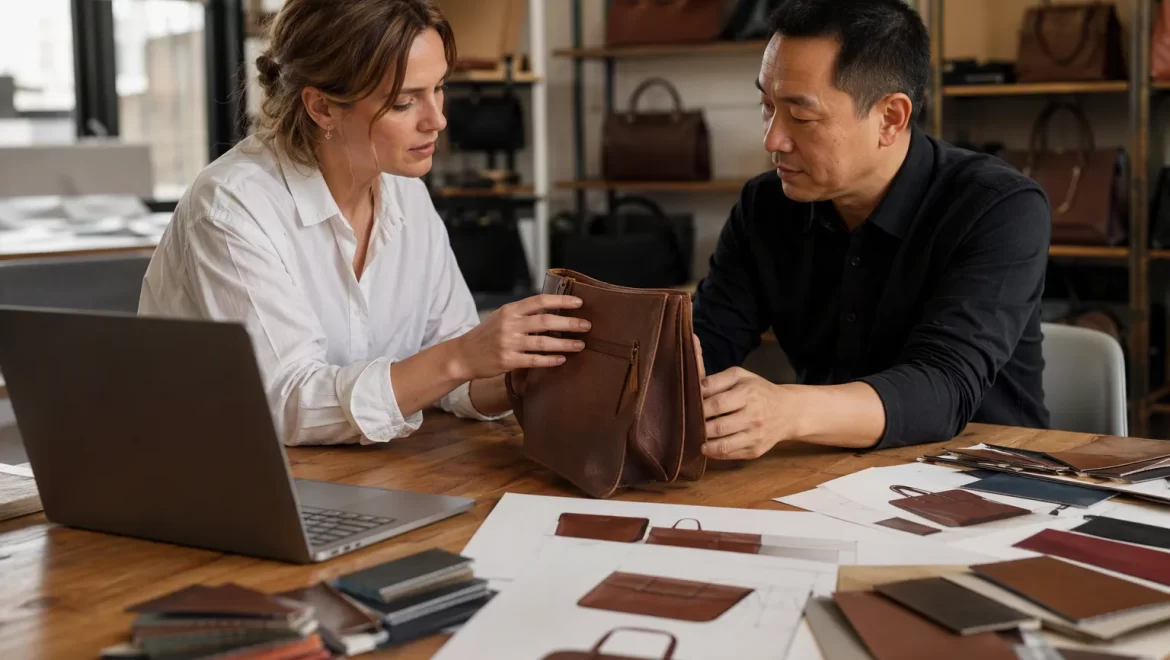
OEM/ODM Leather Bags: Mistakes Buyers Must Avoid
Most leather bag orders go wrong before a single hide is cut. The failure happens in emails, spreadsheets, and rushed decisions — in the gap between what a buyer assumes and what a factory actually delivers. After two decades of running bag production lines, we can name the pattern: buyers who ask the wrong questions, sign the wrong terms, and discover the truth only after the first container arrives.
The good news is that every one of those mistakes is avoidable. This guide walks through OEM and ODM leather bag manufacturing from the factory floor perspective — the cost structure, the sampling discipline, the contract terms, the quality gates, and the seven mistakes we see buyers repeat year after year.
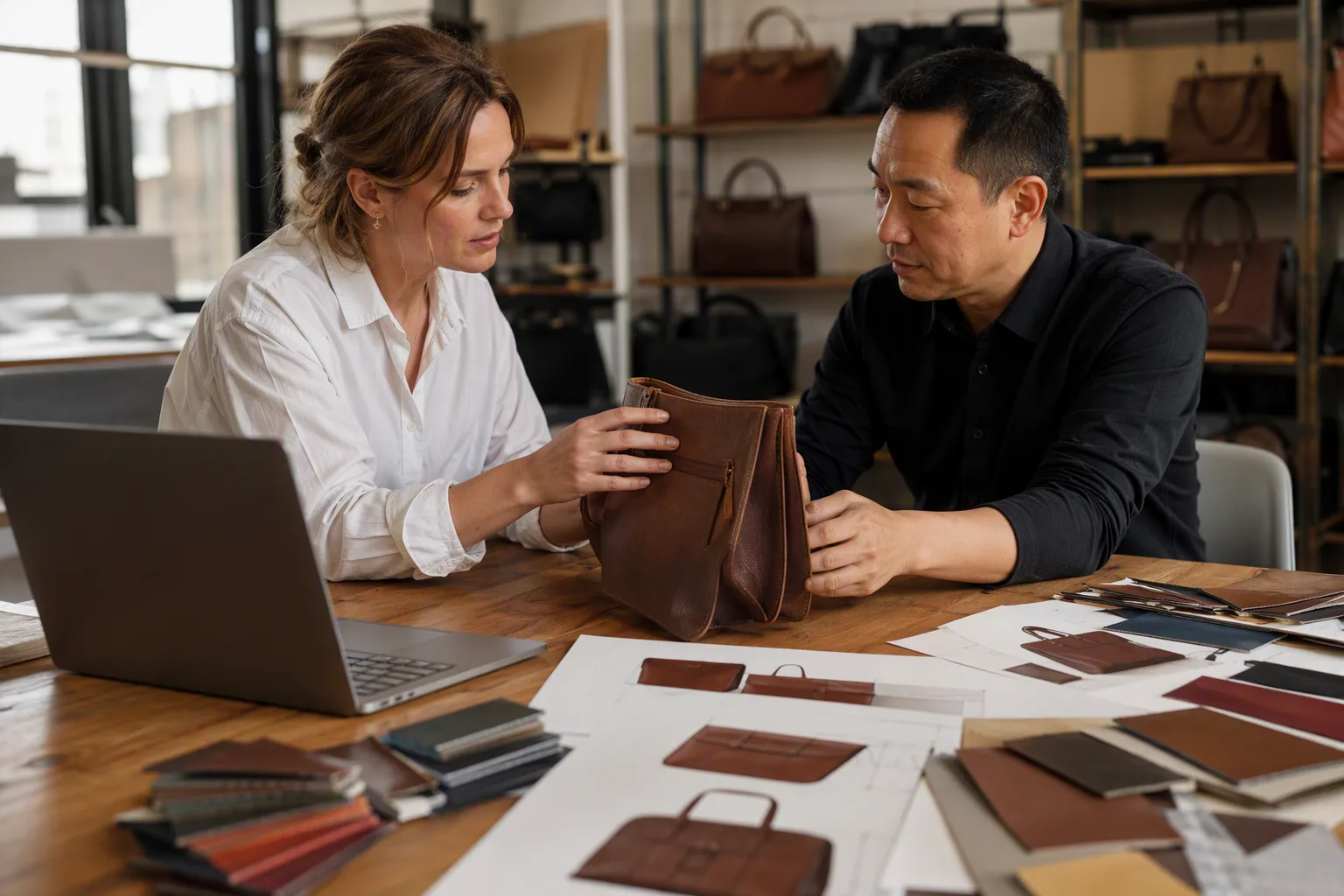
Understanding OEM and ODM in Leather Bags
The labels OEM and ODM get thrown around casually, but they describe two very different relationships with the factory. Choosing the wrong one for your business model is mistake number zero — it colors every decision that follows.
The OEM Model: Build My Design
OEM means original equipment manufacturing. You bring the design, the patterns, or at least a detailed specification, and the factory builds it. You own the design; the factory owns the production capability. In leather bags, OEM typically means your tech pack drives everything — materials, dimensions, hardware, construction methods.
The buyer's burden is high. A weak tech pack produces a weak bag, and the factory will build exactly what you specify, not what you imagined. Buyers who succeed at OEM treat their specification as the product — they invest in measurement charts, material specs, and stitch details before production starts.
The ODM Model: Pick From Our Patterns
ODM means original design manufacturing. The factory shows you its own developed styles — patterns it has cut, tested, and produced before — and you select, adapt, and brand them. The factory owns the design base; you bring the market access.
ODM suits buyers who need speed, lower development cost, and proven construction. The trade-off is originality: another brand may sell a similar silhouette, so ODM buyers differentiate through materials, colors, hardware, and packaging rather than the base shape.
Where Buyers Misread the Difference
The common confusion is treating ODM as OEM with extra steps. Some buyers ask a factory to modify an ODM pattern heavily — new proportions, new pocket layout, new hardware — and are surprised when the price approaches OEM levels. Modification costs time and sample rounds; the factory is not hiding margin, it is charging for real work.
| Comparison | OEM | ODM |
|---|---|---|
| Design source | Buyer's tech pack | Factory's existing patterns |
| Development cost | Higher (patterns + samples from scratch) | Lower to medium |
| Time to first sample | 3–5 weeks typical | 1–2 weeks typical |
| Exclusivity | Full, if protected | Limited; similar styles may exist |
| Best for | Established brands with clear specs | New brands, private label, speed |
The Hybrid: Semi-Custom and Exclusive ODM
Most real orders are neither pure OEM nor pure ODM — they sit in the middle. A buyer picks a factory's ODM base style, then changes the size, swaps the hardware, and upgrades the lining. Factories call this semi-custom, and it is the most common way brands start.
The hybrid model gives new buyers a faster path: the construction is already proven, so pattern-error risk drops, and the sample round usually takes half the time of a from-scratch OEM build. The cost sits between the two models too — you pay for modification work, but not for full pattern development.
There is also exclusive ODM, where a buyer pays a development fee to reserve an ODM style so the factory will not sell it to other brands. This is a useful middle step before committing to full OEM ownership, and it is cheaper than developing a new pattern from zero. Ask your factory whether they offer exclusivity terms on their ODM range — many do, but few advertise it.
What a Factory Quote Actually Contains
Buyers often compare factory quotes line by line and pick the cheapest. That comparison only works if you know what belongs inside a quote — and what is silently missing from the cheap one.
Breaking Down the Price Components
A leather bag quote is built from visible and invisible layers. The visible ones are materials and labor. The invisible ones are the costs that separate a factory that delivers quality from one that merely quotes it.
| Cost component | What it covers | Typical share of FOB |
|---|---|---|
| Leather and materials | Hides, lining, hardware, thread, packaging | 35–55% |
| Cutting and labor | Skiving, stitching, assembly, edge work | 20–35% |
| Overheads | Factory floor, management, QC, power | 8–12% |
| Development amortization | Sampling and pattern costs spread over order | 3–8% |
| Factory margin and buffer | Profit, defect allowance, currency risk | 8–15% |
A low quote is usually not a factory being generous. It is a quote with a thinner buffer — which means thinner leather, looser tolerances, or an inspection that finds less.
MOQ: Why It Exists and How It Is Set
Minimum order quantity is the factory's arithmetic for staying solvent. Every production run carries fixed costs — pattern setup, cutting templates, machine changeovers, QC calibration, leather lot purchase. Those costs exist whether you order 200 bags or 2,000, so the MOQ is the volume where the factory can cover them and still price competitively.
Typical leather bag MOQs run 200–500 pieces per colorway, though they vary with bag complexity and material cost. Expect higher MOQs for custom-cut leather (waste drives cost) and lower for simple ODM styles the factory produces regularly.
The Hidden Costs Buyers Miss
Three costs routinely escape first-time buyers. The first is sampling — development samples, revised samples, and sealed samples each carry real material and labor cost. The second is quality hold: some factories quote assuming you accept standard AQL levels, then charge extra for stricter inspection or third-party audits.
The third is logistics — packaging upgrades for leather (dust bags, tissue, carton inserts) that prevent transit damage but rarely appear in the headline price. Ask for a full breakdown in writing. A factory that openly itemizes sampling, inspection, and packaging is easier to trust than one that bundles everything into a mystery number.
Sampling Discipline: The Buyer's First Real Test
The sample stage tells you more about a factory than any marketing material. It is also where most buyer-factory relationships quietly sour — over unclear feedback, endless revision rounds, and samples that never match the vision.
What a Serious Sample Costs and Why
A development sample of a mid-size leather bag typically costs $50–$150, and buyers who refuse to pay for samples often regret it. The sample consumes cut leather, skilled pattern-maker time, and sewing capacity that could otherwise produce revenue. Free samples exist, but they usually come from stock patterns — not from your design, and not with your leather.
Paying for samples is not a cost; it is a filter. Factories that charge fairly for samples invest fairly in making them right.
Making Revision Rounds Count
Every revision round adds one to two weeks and real cost. The buyers who compress this stage share one habit: written, structured feedback. They send marked-up photos, dimension corrections, and a single consolidated list instead of scattered comments across WeChat, email, and calls.
Name one decision-maker. When three people send conflicting feedback, the factory builds to whoever replied last, and nobody is happy. Consolidate internally first, then speak to the factory with one voice.
Red Flags at the Sample Stage
A sample that arrives late without explanation, or with visible shortcuts, is information. Check the obvious signs: stitches consistent and even, edges finished and smooth, hardware securely anchored, zippers running smoothly, dimensions matching the spec. If the first sample is sloppy, the factory is telling you what production will look like — believe it.
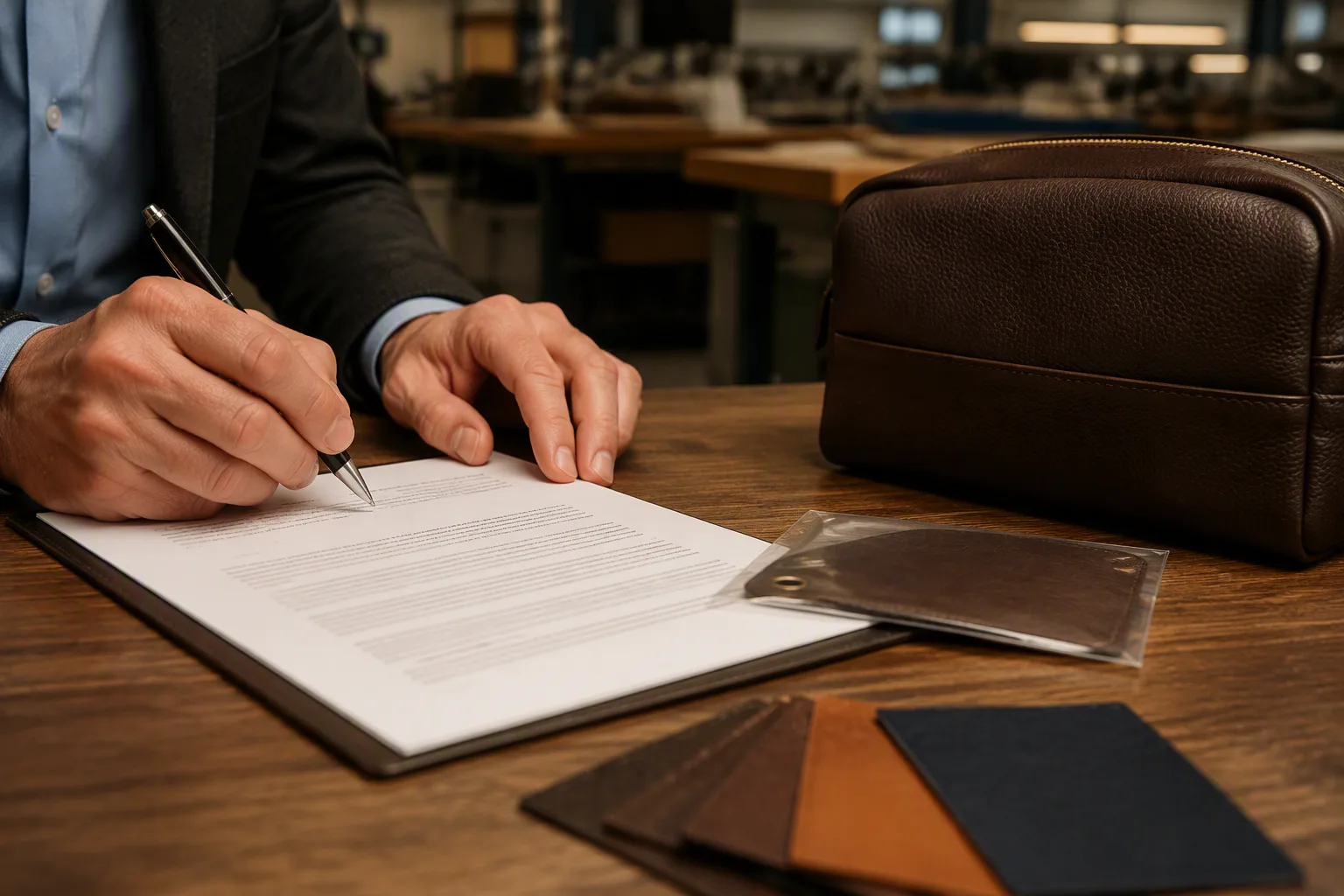
Contracts and Payment: Protecting Both Sides
Leather bag production involves prepayment, offshore logistics, and design IP — three reasons the relationship needs a contract that both sides actually understand.
The Terms That Matter Most
Beyond price and delivery date, four terms decide whether the deal goes well. Payment schedule: the standard is 30% deposit with the balance before shipment, but negotiate what fits your risk profile. Lead time: lock production days, not vague promises of "about two months."
Defect policy: define acceptable quality levels and how defective goods are handled — rework, replacement, or refund. Force majeure and delay: agree what happens when a shipment slips, because it will, at some point.
Payment Structures Compared
| Payment method | How it works | Buyer risk | Typical use |
|---|---|---|---|
| T/T with deposit | 30% down, 70% before shipment | Medium; deposit at risk | Most common |
| Letter of credit | Bank guarantees payment against documents | Low, but bank fees | Large orders, new partners |
| Full prepayment | 100% before production | High | Small orders, stock items |
| Net terms | Pay after delivery | Low buyer risk; needs trust | Repeat partners |
T/T with deposit is the industry default for good reason — it balances the factory's material cost against the buyer's shipment risk. Be wary of either extreme: a factory demanding 100% upfront, or a buyer refusing any deposit, signals trouble.
Protecting Your Design
Your pattern, sketches, and spec sheet are your property — until you send them unprotected. Add a simple NDA before sharing detailed designs, and check the contract's IP clause: who owns the patterns the factory develops from your spec? In OEM, you should own them. In ODM, the factory's base patterns stay theirs, and any exclusivity you want should be written down, with a time limit and territory.
Quality Control in OEM and ODM Programs
Quality does not happen at the final inspection — it is built through checkpoints, and the buyer's job is to define them early. Factories respond to what is measured.
Define Quality Before Production
Approved samples are the contract's quality reference. The factory builds to the sealed sample plus the written spec; disputes are settled by comparing the product to that sample, not to a memory. So choose your sealed sample carefully, sign it, date it, and store one copy at the factory and one with your team.
Inspections at the Right Moments
There are three moments when inspection genuinely helps. Inline inspection catches problems while production can still fix them cheaply. Pre-shipment inspection samples the finished goods against AQL standards before the cartons close. Container loading inspection verifies what actually gets loaded matches the packing list.
| Inspection type | When | What it catches | Cost signal |
|---|---|---|---|
| Inline | Mid-production | Stitching drift, material issues | Low; part of good factory process |
| Pre-shipment | Before packing | Defects in finished goods | Standard AQL sampling |
| Loading | At container stuffing | Wrong goods, short counts | Third-party or buyer presence |
Demand inspection reports as documents, not assurances. Photos, defect counts, and pass-fail records are the evidence you will need if something goes wrong.
The Evidence You Should Demand
A factory that inspects properly can show you: the approved sample record, inline checklists with dates, AQL sampling results per batch, and defect photos with dispositions. If a factory cannot produce any of these, quality is running on memory — and memory is not a QC system.
Defect Classification: The Language of Disputes
Disputes over quality usually collapse into one question: is this defect acceptable? The industry answers with a three-tier classification that both sides should agree on before production.
A critical defect makes the bag unsafe or unusable — a broken zipper that cannot close, hardware that detaches in use, or leather that splits along a seam. These are rejectable without debate. A major defect visibly hurts the product's function or appearance — crooked stitching on a front panel, mismatched leather shade between panels, or edge paint chipping.
A minor defect is barely noticeable and does not affect use — a small mark inside the lining, slightly uneven thread ends.
| Defect class | Example | Typical rule |
|---|---|---|
| Critical | Broken zipper, detached handle | Reject the unit, no discussion |
| Major | Shade mismatch, crooked seam | Count against AQL major limit |
| Minor | Inner mark, uneven thread ends | Count against AQL minor limit |
Agreeing this classification in writing before production turns later disagreements from arguments into arithmetic. The factory counts defects against the agreed limits; you review the count against the same table. That shared language is what makes AQL work at all.
Seven Mistakes Buyers Make with Factories
After watching hundreds of orders, the same seven mistakes appear in almost every difficult project. Read them as a checklist before you sign anything.
Mistake 1: Choosing on Price Alone
The cheapest quote usually buys the thinnest leather and the loosest tolerance. Price differences of 10–20% often trace to material grade, not factory greed. Compare quotes line by line — leather type and thickness, hardware material, stitching spec, packaging — before comparing totals.
Mistake 2: Specifying Materials Too Late
Changing the leather after production starts is expensive and slow. Leather must be ordered, matched, and inspected as a lot before cutting. Lock your material decisions at sampling, not after seeing the first production batch.
Mistake 3: Skipping the Written Spec
Verbal agreements evaporate under pressure. Every material, dimension, and finish detail belongs in writing — a tech pack, an email chain, or a signed spec sheet. If it is not written down, it does not exist.
Mistake 4: Ignoring Communication Time Zones
A question sent at your 9 a.m. may reach the factory at midnight their time. Build a communication rhythm: a weekly call or message cycle, named contacts on both sides, and a response-time expectation that fits reality.
Mistake 5: Micromanaging After Signing
Buyers who approve a spec and then change direction every week burn the factory's patience and their own money. Changes after approval should be the exception, priced and scheduled formally — not casual requests slipped into a chat.
Mistake 6: Forgetting the End Customer
The bag that looks great in your office may fail in the market — too heavy, too stiff, hardware too flashy for the target aisle. Design with the factory's feedback on what actually wears well, not just what photographs well.
Mistake 7: Treating the Factory as an Enemy
The most expensive relationship is the adversarial one. Factories respond to buyers who act as partners: clear specs, fair terms, timely payments, and honest feedback. A factory that trusts you will give you better service, better defect handling, and better prices over time.
How the Mistakes Compound
Rarely does one mistake sink an order — they compound. A buyer chooses on price, then delays material confirmation, then changes the spec mid-production, then argues about the resulting defects. Each step was a reasonable decision in isolation; together they produced a bag nobody wanted.
The antidote is the same sequence this guide has followed: choose the model honestly, read the quote fully, discipline the sampling, sign clear terms, define quality early, and pick a partner you can talk to. Do those six things and most of the seven mistakes never get a chance to happen.
Choosing the Right Factory Partner
The factory is not a vendor; it is a manufacturing partner for years of product cycles. Choosing well is a process, not a lucky guess.
The Capability Audit
Visit the factory or audit it seriously. Look at the sewing floor, the cutting room, the QC station, and the sample room. Ask which machines they run for which tasks, how they grade incoming leather, and how they handle defect rates. A factory that answers specifics is more valuable than one that answers marketing.
Communication and Documentation
Test the factory with a real inquiry: a detailed spec and a question list. Measure response quality — do they answer what you asked, or what they wanted to sell? Do they document decisions in writing? The inquiry process predicts the production process.
Building for the Long Term
Factories invest in buyers who stay. Volume improves pricing, history improves quality stability, and a multi-year relationship gives you first call on production capacity in peak seasons. Treat the first order as the beginning of a relationship, not a one-off transaction.
A First Order Timeline: From Inquiry to Delivery
Buyers who have never run a factory order often expect a rhythm that does not exist. Leather bags move through distinct phases, each with its own lead time and its own failure points. Knowing the calendar in advance turns surprise delays into planned milestones.
The Week-by-Week Roadmap
A realistic first order spans roughly twelve to fourteen weeks from first inquiry to delivered goods — assuming the design is clear and the leather is a standard grade. The table below shows how that time is spent.
| Phase | Typical duration | What happens |
|---|---|---|
| Inquiry and quoting | Week 1 | Spec exchange, factory assessment, quote and terms |
| Development sampling | Weeks 2–6 | Patterns, first sample, revisions, sealed sample |
| Material ordering | Weeks 5–8 | Leather lot, hardware, lining, thread confirmed |
| Production | Weeks 7–11 | Cutting, stitching, assembly, edge finishing |
| Inspection and packing | Weeks 11–12 | Inline and pre-shipment checks, carton packing |
| Shipping | Weeks 12–14 | Consolidation, freight booking, customs clearance |
Notice the overlap: materials are ordered before sampling fully ends, because leather lots have their own lead time. Factories that wait for the sealed sample before ordering materials lose two weeks — and honest factories tell you that trade-off openly.
Where Orders Slip and How to Build Buffer
The most common slippage points are also the most preventable. Sample feedback arriving late shifts everything downstream. Leather substitution after approval adds weeks. Payment delays freeze the production floor — most factories will not cut leather until the deposit clears.
Build buffer into the plan: approve samples with a written deadline, freeze materials early, and schedule payment so the factory is never waiting on your bank. Add two weeks of slack before your hard launch date, and treat the timeline as a promise you keep on both sides.
How Order Size Changes the Math
Order volume does more than scale revenue — it reshapes the factory's economics and your unit price. Understanding the curve helps you choose a realistic starting volume instead of either over-ordering or under-ordering.
At 200–300 pieces, the factory covers fixed costs but has little room to discount; your unit price is the honest baseline. Between 500 and 1,000 pieces, material purchasing power improves — the factory can negotiate better leather and hardware rates, and cutting waste falls as layouts are optimized.
Above 1,000 pieces, you enter a different conversation: dedicated cutting templates, faster assembly lines, and real price steps that a 300-piece order can never reach. The mistake is ordering small to "test the market" and expecting production pricing. A test order is priced for its own economics.
Plan two steps instead: a small certified order to validate the product, then a volume order to unlock the pricing you actually want to sell at. The factory will respect a buyer who understands this math — and quote accordingly from the first conversation.
Reading Factory Communication: What Their Answers Tell You
Before you sign anything, you will exchange dozens of messages with the factory. Those messages are a preview of the working relationship — if you know how to read them.
The Vague Answer
Ask about production lead time and hear "not too long." Ask about defect policy and hear "we have good quality." Vagueness usually means the factory has not standardized the answer — or does not want to commit to it. A serious factory answers with numbers: "42 days from deposit to ready for shipment," "AQL 2.5 with major defects under 2%."
The Overpromise
A factory that promises impossibly fast sampling, rock-bottom prices, and perfect quality in the same sentence is selling, not manufacturing. Reality has trade-offs. Speed costs overtime, low price costs materials, and perfect quality costs inspection time. When promises ignore trade-offs, the bill arrives later — in delays or in defects.
The Paper Trail Habit
Watch whether the factory documents decisions in writing. Quotations, revised specs, sample feedback, inspection reports — a factory with a paper trail habit is a factory that can be held accountable. One that communicates only by voice notes and memory will be hard to manage when a problem appears, and problems always appear eventually.
A good test is a simple written question about your order: the factory's reply tells you whether you are dealing with a partner or a merchant.
FAQ
What is the difference between OEM and ODM for leather bags?
OEM means the buyer supplies the design and the factory manufactures it. ODM means the factory offers its own developed styles and the buyer selects, adapts, and brands them.
What is a typical MOQ for custom leather bags?
Most factories set MOQs between 200 and 500 pieces per colorway. Complex custom construction or premium leather raises the number; simple ODM styles may allow lower minimums.
Should I pay for samples?
Yes. Development samples carry real material and labor cost, and paying for them is a filter that separates serious factories from casual ones. Budget $50–$150 per development sample for a mid-size bag.
How long does leather bag production take?
After sample approval, typical production runs 30–60 days depending on order size and factory load. Add 2–4 weeks for sampling and 1–3 weeks for shipping when planning your calendar.
What payment terms are standard?
A 30% deposit with the balance before shipment is the industry standard. Letter of credit suits larger or first-time orders; be cautious of any demand for 100% upfront payment.
How do I protect my bag design?
Use an NDA before sharing detailed specs, and put IP ownership and exclusivity terms in writing with time limits and territory. In OEM programs the buyer should own patterns developed from their spec.
What is a sealed sample?
The sealed sample is the signed, dated reference bag that both buyer and factory agree represents the accepted quality. Production is compared against it, and disputes are settled by it.
Should I use third-party inspection?
For first orders or large orders, third-party pre-shipment inspection is cheap insurance. It provides neutral evidence and reduces the emotional friction of buyer-versus-factory disagreements.
What leather is best for OEM bags?
It depends on the product: full-grain for heritage and durability, top-grain for balanced cost, and split or corrected leather for budget lines. Your factory should help match leather to construction and price target.
Can I mix OEM styles with ODM styles in one order?
Yes, and many buyers do. A single order can combine your own OEM development with a few factory ODM styles, which spreads sampling cost and fills out a collection quickly. Just keep the specs separate in the contract, because each style carries its own MOQ and its own defect classification.
What happens if the factory misses the delivery date?
That depends on what you wrote before production started. A good contract defines the grace period, the penalty (often a small percentage of the order value per week), and the notification duty — the factory should warn you the moment a delay becomes likely. Without these clauses, a late shipment is simply a negotiation, and you hold the weaker hand.
How do I check a factory's reputation before ordering?
Ask for factory audits or certifications, request references from brands they supply, and run a small test order before committing volume. The test order is the most honest reference: a factory that delivers a clean small order on time will usually deliver a clean large one.
Conclusion
OEM and ODM leather bag manufacturing is not complicated once you see the machinery behind the curtain. Understand what you are buying, read the quote honestly, discipline your sampling, sign clear terms, and define quality before the machines start. The seven mistakes above are the ones we see every week — and every one of them is a choice you can make differently.
The factory is not looking for a perfect buyer. It is looking for a clear one. Bring a real spec, a real budget, and a real decision-maker, and you will find the production floor far more cooperative than the stories suggest. When you are ready to start a project — from a single sample to a full production program — talk to us with your numbers and your questions. We will tell you what works, what costs, and what to change before you commit.