Pigmented Versus Aniline Leather: Which Works for Pet Carriers?
- What the Two Surfaces Are
- How They Are Made
- Appearance and Colour Depth
- Wear Under Pet Use
- Cleanability and Stain Behaviour
- Moisture, Saliva and Odour
- Colour Fastness and Transfer
- Repair and Refinishing
- Matching the Surface to the Part
- Building a Range That Mixes Both
- Testing Both on a Sample
- Specification and Trade-Offs
- Ageing and End-of-Life Appearance
- What Buyers Actually Notice
- Care Instructions by Surface
- Cost, Availability and the Practical Choice
- Incoming Checks and Reference Keeping
- Common Misjudgements
- A Decision Sequence
- FAQ
The argument between pigmented and aniline leather is usually settled on looks, and that is the wrong basis for a pet carrier. The two surfaces age differently, clean differently and fail differently, and the carrier's use exposes all three.
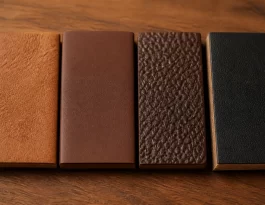
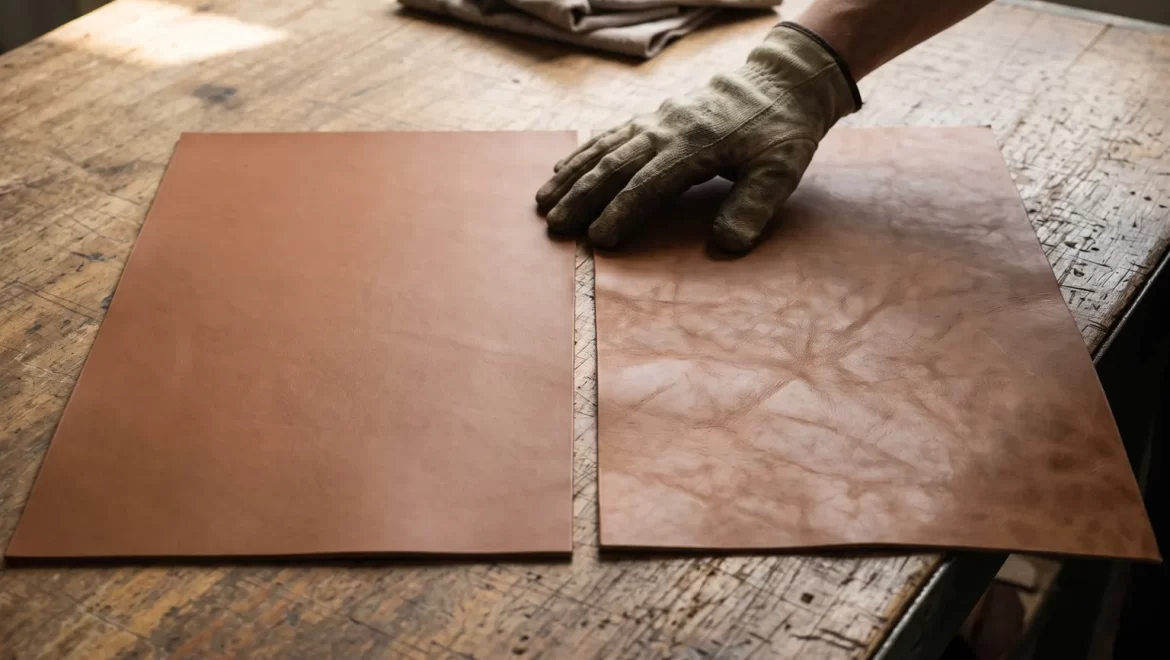
Neither is universally better. A pigmented surface protects the hide and hides damage; an aniline surface shows the hide and rewards it. Which one a carrier needs depends on the part of the bag and how much contact it takes.
What the Two Surfaces Are
Both are finishes applied to a tanned hide, and the difference lies in how much of the hide's own surface remains visible.
Pigmented Surfaces
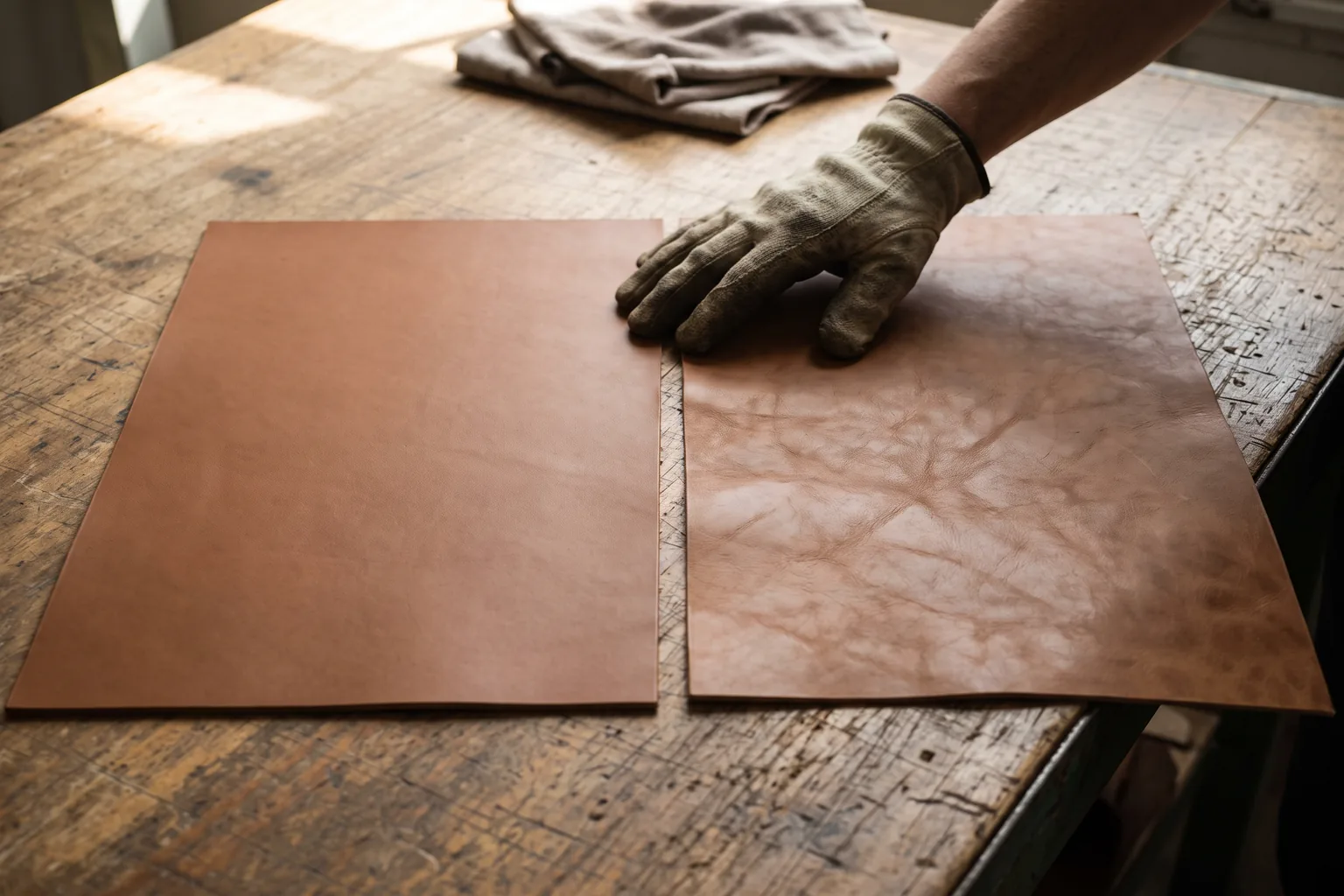
A pigmented finish lays a colour coat over the surface, usually over a corrected or lightly buffed grain, and seals it. The result is an even colour with a uniform surface and little visible variation from hide to hide.
Because the coat sits on top, it takes the wear. That is the point of it, and also its limit.
Aniline Surfaces
An aniline finish dyes the hide without hiding it. The grain, the scars and the natural variation remain visible, and the surface is sealed lightly or not at all.
The appearance is the material itself, which is why it is valued, and why it shows every mark.
Semi-Aniline as the Middle
A semi-aniline finish dyes the hide and adds a thin protective coat. It keeps some natural appearance while giving a measure of protection, and it is the usual compromise where both matter.
The compromise is real: it protects less than pigmented and shows less than pure aniline.
| Surface | Hides the grain | Protection | Shows marks |
|---|---|---|---|
| Pigmented | Yes | High | Little |
| Semi-aniline | Partly | Medium | Some |
| Aniline | No | Low | Much |
How They Are Made
The production route explains most of the behavioural differences, and it also explains why the same name can describe quite different products.
Preparing the Crust
Pigmented finishes usually start from a corrected crust, where the grain has been lightly buffed to remove defects and give an even surface. Aniline finishes start from a crust selected for its intact grain, because nothing will cover what is left.
That selection step is why aniline articles cost more for the same area: the hide must be good enough to show.
Applying Colour
A pigmented route builds colour in layers, with pigment dispersed in a binder and sealed with a top coat. Each layer adds opacity and protection, and each layer also adds a film that can eventually separate.
Aniline colour is taken up by the leather itself, usually by dyeing in the drum or by surface staining. There is no film to separate because there is no film.
Sealing and Top Coats
Top coats decide how the surface feels and how it resists soiling. A pigmented article may have a matt, satin or gloss top coat, and the choice changes both appearance and cleanability more than the pigment beneath it.
Aniline articles may carry a light protective coat or none, and that decision is often what separates a serviceable aniline from an impractical one.
Appearance and Colour Depth
Appearance is the reason most buyers choose one over the other, and it is worth being precise about what each delivers.
Colour Evenness
Pigmented surfaces deliver even colour across a run, which makes them easy to match to a specification and easy to repeat between lots.
Aniline colour varies with the hide, and the variation is part of the product. A range built on aniline has to accept that variation or spend heavily on selection.
Depth and Transparency
Aniline shows depth because light passes into the leather and returns through the grain. Pigmented surfaces reflect from the top coat, which reads as solid and slightly flatter.
Under retail lighting the difference is obvious; under household light it is subtler but still present.
Marking and Patina
Pigmented surfaces resist marking and, when marked, tend to show scuffs as lighter areas where the coat has been disturbed. Aniline takes marks into the leather, darkens with handling and develops a patina.
Whether patina is desirable depends on the product's positioning. In a pet carrier, the marks come from claws and hardware rather than from careful handling, which changes the judgement.
| Aspect | Pigmented | Aniline |
|---|---|---|
| Evenness across a run | High | Low by nature |
| Depth of colour | Surface | Through the hide |
| Mark behaviour | Light scuffs | Darkening, patina |
| Repair of marks | Recoat possible | Limited |
Wear Under Pet Use
Pet wear is abrasive and local: claws at the opening, harness hardware at the anchors, and the animal's weight at the base.
Abrasion and Scuffing
A pigmented top coat takes abrasion on its surface and protects the hide beneath, so the failure mode is a worn patch rather than a damaged hide. The patch is visible and can be refinished.
Aniline has no film to absorb abrasion, so wear goes directly into the grain. It tends to look like burnishing rather than damage, which is more acceptable in appearance and less acceptable in structure.
Flex and Cracking
Where a panel folds repeatedly, the finish must move with the leather. A thick pigmented system can crack along a fold line, and once cracked it admits moisture at the crack.
Aniline has no film to crack, but the leather itself can crease deeply where it folds, and deep creases darken.
Edge Wear
Edges are where both systems fail first, because the edge presents the substrate rather than the surface. Neither finish protects a raw edge, so edge treatment decides how the bag looks after a year.
Hardware Contact
At anchor points, the finish is rubbed by metal under load. Pigmented coats polish away at the contact patch; aniline darkens and compresses. Both are visible, and both are better managed by design than by finish choice.
Cleanability and Stain Behaviour
Cleaning frequency is higher in a pet carrier than in a handbag, so stain behaviour carries more weight here than appearance.
Wiping versus Absorbing
A sealed pigmented surface holds soil on the surface, where a cloth can reach it. An open aniline surface accepts liquid into the grain, and once inside, the cloth cannot reach it.
The difference appears on the first spill and again on the tenth, when the accumulated marks become visible.
Oil and Grease
Oils spread into aniline and darken it permanently; on a pigmented surface they sit on the coat and can usually be lifted. Paw marks and food residue are both oil-bearing, which makes this the most common practical complaint.
Water Marks
Water marks form where liquid dries unevenly at the edge of a wet patch. Pigmented surfaces mark less because the liquid does not enter, and aniline surfaces mark where it has.
| Stain type | Pigmented | Aniline |
|---|---|---|
| Water spill | Wipes off | May leave a tide mark |
| Oil or grease | Liftable | Darkens permanently |
| Mud | Wipes off when dry | Works into grain |
| Saliva | Sits on surface | Absorbs at edges |
Moisture, Saliva and Odour
Moisture is the mechanism behind most odour complaints, and the two surfaces handle it differently.
Where Moisture Goes
On a pigmented surface, moisture stays on top until it is wiped or evaporates. On an aniline surface, some enters the leather and must dry through it, which takes far longer in a closed bag.
The longer the moisture stays, the more time odour-causing residue has to establish itself.
Saliva at the Edges
Animals mouth the opening and the edges, and saliva is a harsher medium than water. Aniline absorbs it at the edges, which is where the first sour smell usually appears.
Practical Consequence
For carriers used with animals that salivate or travel wet, a sealed surface at the opening and a cleanable interior matter more than the appearance of the exterior grain.
Colour Fastness and Transfer
Colour transfer is judged harshly because it marks the animal rather than the product.
Rubbing Fastness
Pigmented surfaces generally resist dry rubbing because the colour sits under a sealed coat. Aniline colour lives in the leather and can migrate under friction, especially when damp.
Testing with dry and damp cloths separately shows which condition is responsible, and the results often differ.
Light and Heat
Both surfaces fade, but differently: a pigmented coat fades evenly across the panel, while aniline fades unevenly where the hide's own tone varies.
Where a carrier is displayed in a window, this becomes a retail problem rather than a use problem.
Transfer to the Coat
Transfer to a light-coloured coat is the visible failure. Aniline in a dark shade is the highest risk, and it is often the shade chosen for exactly the appearance that makes it risky.
| Condition | Pigmented | Aniline |
|---|---|---|
| Dry rub | Low risk | Moderate risk |
| Damp rub | Low risk | Higher risk |
| Light exposure | Even fading | Uneven fading |
| Dark shades | Stable | Highest transfer risk |
Repair and Refinishing
Repairability separates the two systems more than any other single property.
Refinishing a Pigmented Surface
A pigmented surface can be cleaned, recoloured and resealed, which restores a worn area without replacing the panel. This is routine work for a leather repairer and is the main argument for pigmented leather in high-contact products.
Limits of Aniline Repair
Aniline damage is inside the leather, so repair means recolouring the hide itself. Marks can be blended and the tone revived, but a deep stain cannot be removed.
What This Means for Warranty
Where a range is expected to survive two seasons of use, refinishability changes the cost of complaints. A pigmented surface can often be corrected locally; an aniline surface usually cannot.
Matching the Surface to the Part
The most useful decision is not which surface wins overall, but which surface belongs on each part of the carrier.
Base and Lower Body
The base meets mud, moisture and abrasion, and it is the hardest panel to refinish invisibly. A pigmented or semi-aniline surface earns its place here, because protection outweighs appearance.
Testing that choice is straightforward: load a sample base with a representative weight, set it on a hard floor and leave it for an hour, then compare the deflection against an unloaded sample. A base that flattens visibly under load will flatten permanently in use, and no finish choice corrects it once the construction is fixed.
Body Panels
Body panels are seen more and handled less. This is where aniline can be justified, provided the range accepts natural variation and the animal is not a heavy scrabler.
Opening and Edges
The opening is mouthed, rubbed and wiped. A sealed surface here reduces both staining and edge odour, and the benefit is greater than on any other panel.
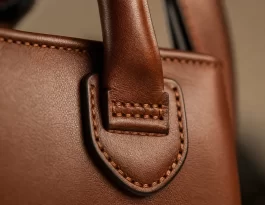
Handles and Trim
Handles take concentrated handling and show patina quickly. Aniline ages attractively here; pigmented resists soiling better. The choice follows whether the range sells on character or on cleanliness.
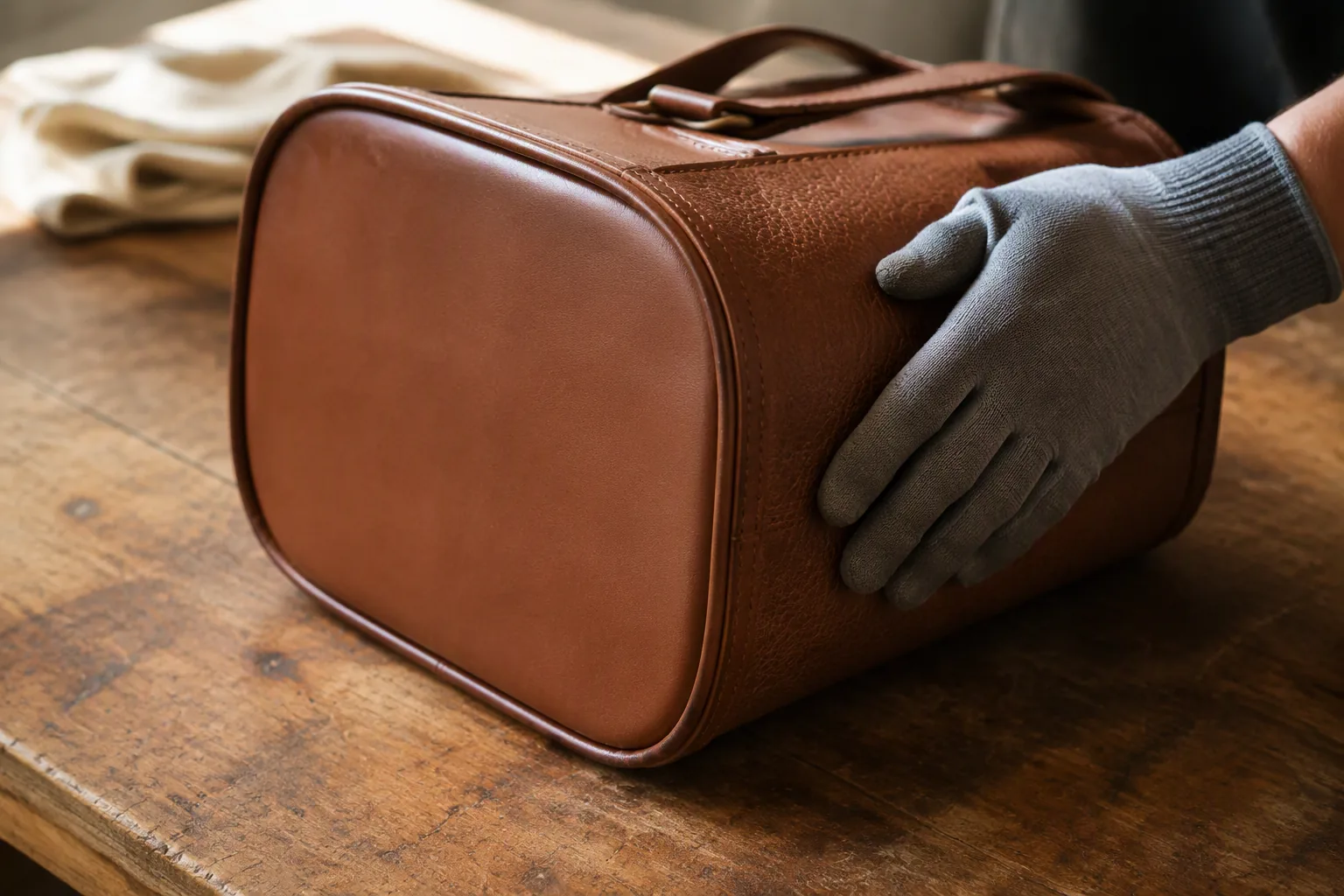
| Part | Preferred surface | Reason |
|---|---|---|
| Base | Pigmented or semi-aniline | Moisture and abrasion |
| Body | Aniline or semi-aniline | Appearance, less contact |
| Opening | Pigmented | Saliva and wiping |
| Handles | Either, by positioning | Patina against soiling |
Building a Range That Mixes Both
Mixing surfaces in one carrier is common in higher-end work, and it needs a rule so the combination reads as intentional.
A Consistent Logic
The simplest rule is that surfaces that get cleaned are sealed and surfaces that get admired are not. Applying that rule consistently makes the mixture look designed rather than accidental.
Colour Matching Across Surfaces
A pigmented panel and an aniline panel in the same colour will not match exactly, because the surfaces reflect light differently. The mismatch is smaller in dark shades and larger in light ones.
Where an exact match is required, both parts should come from the same finishing route.
Communicating the Difference
Buyers notice the difference and ask about it, so the reason should be available: the sealed panels protect, the open panels show the material. Stating this in product information prevents it being read as inconsistency.
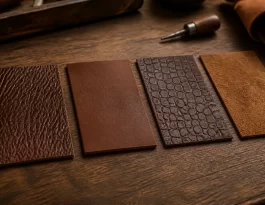
Testing Both on a Sample
Comparing the two systems needs the same tests on the same part, in the same conditions.
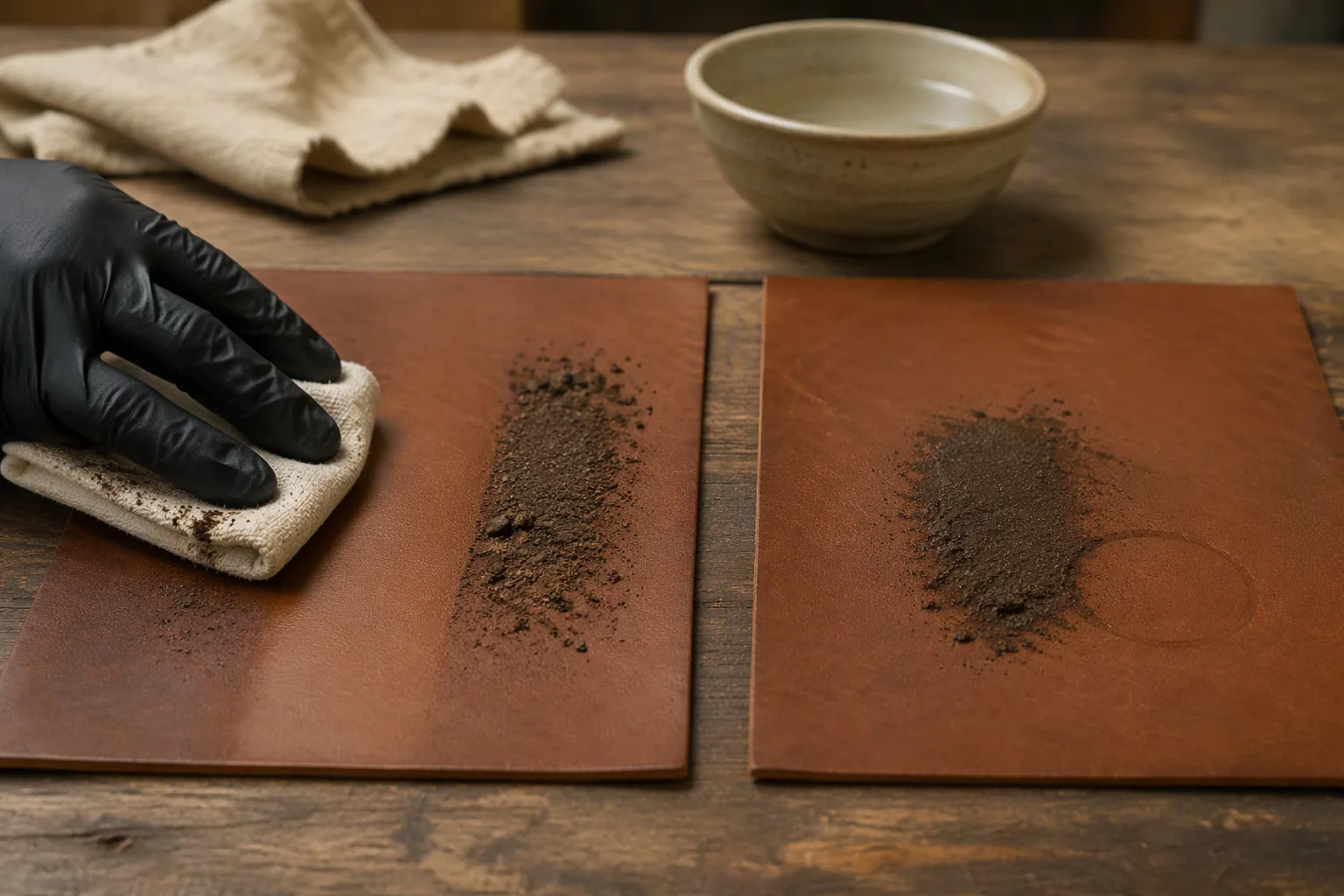
Soil and Wipe
Apply a small amount of soil to a marked square, leave it briefly, then wipe with a damp cloth using consistent pressure. Compare what remains.
The test is crude and predictive: what stays after one wipe is what the buyer will see after a week.
Water and Saliva
Place a drop of water on one area and a drop of dilute saline on another, leave for a few minutes, then blot and dry. Compare the marks left behind.
Saline usually produces the larger difference between the systems, and it is the more realistic test for a carrier.
Rub and Flex
Rub with a white cloth, dry and damp, then flex the sample repeatedly along a fold line and inspect the fold for cracking or colour change.
Loaded Contact
Fit the sample to a partly built bag and press hardware against it under load. The mark left after a few cycles shows how the surface will look at the anchor points.
| Test | Duration | Read this |
|---|---|---|
| Soil and wipe | Minutes | Residue retained |
| Water and saline | Minutes | Tide marks |
| Dry and damp rub | Minutes | Colour transfer |
| Flex along a fold | Repeated cycles | Cracking |
| Loaded hardware rub | Repeated cycles | Contact polish |
Specification and Trade-Offs
Both systems can be specified precisely, and the precision is what prevents a substitution from changing the product's behaviour.
What to Write Down
Name the finishing route, the crust it sits on, the sealer or top coat, the colour reference with tolerance, and the parts each article is used for. Add the fastness and cleaning requirements that were tested.
Record substitutions as they happen, with the part affected and the test result that justified them. A substitution that is not recorded becomes an unexplained difference in the next delivery, and the argument that follows is usually settled by whoever kept better notes rather than by who was right.
What to Leave Open
Leave the process to the finisher and fix the results. Naming a specific product or line reduces the supplier's ability to meet the requirement and rarely improves the outcome.
The Trade-Off in One Line
A pigmented surface trades appearance for protection; an aniline surface trades protection for appearance. The carrier's parts should be assigned accordingly rather than argued as a single choice.
One consequence is worth stating plainly: the same carrier can be built twice, once in aniline for a premium range and once in pigmented for a volume range, using the same pattern, the same boards and the same hardware. Only the surface changes, so the testing and the care instructions carry over, which makes the second version cheap to develop once the first has been proven in use.
Ageing and End-of-Life Appearance
Both surfaces change with use, and the change is the part buyers judge when they decide whether to buy the range again.
How Pigmented Ages
A pigmented surface ages by losing its coat at contact points. The base colour shows through the worn areas, and the bag looks scuffed rather than worn in.
Because the change is a loss, it can be reversed; the panel can be refinished and the appearance restored, which is why pigmented ranges often look newer for longer.
How Aniline Ages
Aniline ages by absorbing use. Edges darken, the surface dulls and the grain becomes more pronounced, and the bag looks handled rather than damaged.
The change is often considered desirable, but only where the wear is even. Uneven wear from a harness or a clawing animal reads as damage rather than character.
The Point Where Each Fails
The practical difference is what happens at the end of life. A pigmented surface fails visibly and repairably; an aniline surface fails subtly and permanently.
| Ageing effect | Pigmented | Aniline |
|---|---|---|
| Contact points | Coat loss, lighter | Darkening, polish |
| Folds | Possible cracking | Deep creases |
| Overall read | Scuffed | Characterful or worn |
| Reversible | Yes, by refinishing | Limited |
What Buyers Actually Notice
Buyers judge the surface in the first minute and then live with it for a year, and the two judgements rarely agree.
The First Minute
In the first minute, aniline wins. The depth, the variation and the grain read as quality, and a pigmented surface can look flat beside it.
That judgement is made without handling, and it is the one that decides the sale in a showroom.
The First Month
In the first month, the picture reverses. Water marks, paw marks and the first scuff appear on aniline while the pigmented surface still wipes clean.
Complaints arrive in this window, and they are complaints about function rather than appearance.
The First Year
By the first year, both surfaces have a story. Pigmented looks maintained, aniline looks used. Which reads as better depends on the positioning of the range and on how the animal actually behaves.
A range that sells on natural material should expect the aniline story; a range that sells on practicality should not.
Care Instructions by Surface
Care instructions are part of the product decision, because a surface that needs the wrong care fails faster than one that needs none.
Caring for Pigmented
A pigmented surface tolerates a damp cloth, a mild soap and a non-abrasive application. What it does not tolerate is solvent, abrasion and heat, all of which disturb the coat.
Instructions should name the action rather than the product: wipe, do not scrub; air dry, do not heat.
Caring for Aniline
Aniline needs less frequent and more careful cleaning. A dry cloth first, then a barely damp one, and no soap unless the article is specified for it.
Because aniline absorbs, instructions should also warn against leaving the carrier wet, which is the single behaviour that most damages it.
What Customers Do Anyway
Customers wipe, scrub and occasionally wash. Instructions that assume care will be ignored are more useful than instructions that assume it will be followed, so the surface should be chosen for the treatment it will actually receive. Designing for that reality means choosing a surface that tolerates a damp cloth without instruction, and writing guidance that shortens the learning rather than assuming it.
Cost, Availability and the Practical Choice
Cost differences are real but they are not the deciding factor once the parts have been assigned.
Where the Cost Sits
Aniline costs more because the hide must be good enough to show, and because selection rejects more. Pigmented costs less per area for the same usable panel, and the difference grows with the quality of the aniline specified.
Availability and Repeatability
Pigmented articles are easier to repeat exactly, which matters for a range that runs across seasons. Aniline repeatability depends on the hide supply and on the finisher's willingness to match a previous lot.
A Workable Default
For a first pet carrier range, a pigmented exterior with a sealed interior-facing surface covers most requirements with the fewest surprises. Aniline becomes a deliberate choice for a positioned range, applied to the parts where its appearance is worth the care it demands.
Incoming Checks and Reference Keeping
The surface is decided at the sample stage and then defended at goods-in, because a delivery that looks right can still behave differently.
Checks for Pigmented Goods
Inspect the coat for evenness, for thin areas at the panel edges, and for any sign of lifting at a fold. A coat that is thin at the edge will fail there first.
Compare the colour against the sealed reference under the light the product will be sold in, not under workshop lighting.
Checks for Aniline Goods
Inspect for grain damage, for dye unevenness beyond the agreed tolerance, and for any area that has been refinished to hide a defect. Aniline cannot hide a repair, so a repair usually shows as a change in sheen.
Check the feel as well: an aniline article that has been over-sealed feels different from the reference and will behave differently.
Keeping the Reference
Retain a sealed sample and an offcut of each delivery, labelled with the article, the lot and the date. Reference material is what makes a later dispute answerable.
| Check | Pigmented | Aniline |
|---|---|---|
| Coating evenness | Critical | Not applicable |
| Lifting at folds | Critical | Not applicable |
| Dye unevenness | Low risk | Critical |
| Hidden repairs | Unlikely | Likely, inspect sheen |
| Handle and seal | Compare to reference | Compare to reference |
Common Misjudgements
The same mistakes recur in briefs, and each one is cheap to avoid at the sample stage.
Judging a Surface on a New Swatch
A new swatch shows colour and grain and hides how the surface behaves after a month. Every comparison in this article depends on testing a used surface, not a fresh one.
Where a swatch is the only evidence available, the decision should be treated as provisional until a sample has been soiled, wiped and flexed.
Assuming Aniline Means Unprotected
Some aniline articles carry a light protective coat that changes their behaviour substantially. Assuming that aniline means open and vulnerable leads to rejecting articles that would serve.
The article's specification, not its category name, decides the behaviour.
Assuming Pigmented Means Plastic
A well-finished pigmented article can look and feel close to natural leather, particularly with a matt top coat and a lightly corrected grain. Dismissing it on principle removes the most practical option for high-contact parts.
Forgetting the Edges
Both surfaces fail at the edges first, and neither protects a raw edge. Edge treatment should be decided with the surface rather than after it.
| Misjudgement | What it costs |
|---|---|
| Deciding on a new swatch | Complaints in the first month |
| Treating aniline as unprotected | Rejecting a workable article |
| Treating pigmented as plastic | Losing the practical option |
| Ignoring edge treatment | Early failure at the opening |
A Decision Sequence
A short sequence keeps the argument in the right order and stops appearance from deciding before function.
Step One: Assign the Parts
List the parts of the carrier and mark which are contacted, cleaned or merely seen. This decides where protection is required before any material is discussed.
Step Two: Test the Candidates on Those Parts
Test each candidate against the requirements of the parts it would be used for, using the soil, water, rub and flex checks. Record the results on the same sheet.
Step Three: Accept the Trade
Where an aniline surface is chosen for appearance, accept that the care instructions and the complaint profile change with it. Where a pigmented surface is chosen for protection, accept the flatter appearance.
Step Four: Write It Down
Specify the route, the sealer, the colour tolerance and the parts, and keep a sealed sample with an offcut. A decision that is not written down is re-argued at the next cost review.
| Step | Output |
|---|---|
| Assign parts | A list of protection requirements |
| Test candidates | Comparable results per part |
| Accept the trade | An agreed appearance and care profile |
| Write it down | A specification and a sealed reference |
FAQ
Which is better for a pet carrier, pigmented or aniline leather?
A: For most pet carriers, a pigmented or semi-aniline surface on the contact parts and an aniline surface on the body, if the range sells on natural appearance. Neither is better in general; the part decides.
Does aniline leather stain easily?
A: Yes. Aniline absorbs liquids, so water leaves tide marks, oils darken permanently and saliva stains at the edges where animals mouth the opening.
Is pigmented leather real leather?
A: Yes. Pigmented leather is a tanned hide with a colour coat and a sealer applied over a corrected or lightly buffed grain. The hide is still leather; the surface has been finished to give even colour and protection.
Can aniline leather be protected?
A: Some aniline articles carry a light protective coat, usually described as semi-aniline. It reduces staining without hiding the grain, and it is the usual compromise where appearance matters and cleaning is frequent.
Why does pigmented leather crack?
A: A thick or inflexible finish system can crack along a fold line where the panel flexes repeatedly. Thinner finishes and better flex tolerance reduce the risk, and the fold should be tested on a sample.
Why does aniline leather darken where it is handled?
A: Handling brings oils and friction into the grain, which darkens and polishes it. The change is normally called patina and is considered desirable where wear is even.
Which surface resists odour better?
A: A sealed pigmented surface holds less residue because liquid stays on top and can be wiped. Aniline absorbs moisture and residue into the grain, which is harder to clean and more likely to retain smell.
Can a worn pigmented panel be repaired?
A: Usually yes. The surface can be cleaned, recoloured and resealed, which restores the panel without replacing it. This is the main practical argument for pigmented leather in high-contact products.
Can an aniline stain be removed?
A: Deep stains that have entered the grain generally cannot be removed. Tone can be revived and marks blended, but a permanent stain stays permanent.
Does colour transfer from aniline to a pet's coat?
A: It can, especially in dark shades and when the leather is damp. Testing with a damp white cloth shows the risk before bulk, and the result should be recorded in the specification.
Should both surfaces be used in one carrier?
A: Yes, often. The usual rule is that parts which are cleaned are sealed and parts which are admired are left open, which gives a carrier that protects where it must and shows material where it can.
How do I compare the two on a sample?
A: Soil a marked area and wipe it, place water and dilute saline drops and dry them, rub with dry and damp cloths, flex along a fold, and press hardware against the surface under load. Compare what remains.
Which surface is easier to keep looking new?
A: Pigmented. It resists soiling, wipes clean and can be refinished. Aniline looks better when new and then records its use.
Does a thicker top coat make pigmented leather better?
A: Not necessarily. A thicker coat protects more but is more likely to crack at folds and looks less natural. The top coat should be chosen for the flex behaviour of the part it covers.
What should the specification contain?
A: The finishing route, the crust, the sealer or top coat, the colour reference with tolerance, the fastness and cleaning requirements, and the parts each article is used for.
Is aniline worth the care it demands?
A: Where the range sells on natural material and the animal is not a heavy scrabler, yes. Where the carrier is expected to be wiped daily, a sealed surface serves the product better.
Ready to decide by part rather than by preference? Mark which panels are contacted, cleaned or merely seen, test pigmented, semi-aniline and aniline on those parts with soil, water, rub and flex, and accept the trade each one makes. Then specify the route, the sealer and the colour tolerance, and keep a sealed sample with an offcut so the next delivery is judged against the same surface.