How Do You Write Leather Care Labelling for Pet Bag Products?
- Why Care Labelling Fails First
- What Must Be on the Label
- Matching the Label to the Finish
- Wording That Changes Behaviour
- Symbols and Their Limits
- Instructions by Soil Type
- Conditioning and Its Risks
- Drying, Heat and Storage
- Lining and Hardware Instructions
- Multi-Material Products
- Translation and Market Variation
- Testing the Label With Users
- Design, Placement and Durability
- Keeping Labels Consistent Across a Range
- What the Label Cannot Fix
- Care Kits and What They Signal
- Warranty, Complaints and the Label
- Digital Care Instructions
- Common Labelling Mistakes
- A Label Review Checklist
- Working With Suppliers on Care Text
- FAQ
Care labelling is written last and read first. A buyer who has just cleaned a carrier with the wrong product reads the label to find out what went wrong, and usually finds instructions that were vague, generic or copied from another product.
The label is also the cheapest place to prevent complaints, because most leather damage in pet products comes from water, heat and over-conditioning rather than from the leather itself.
Why Care Labelling Fails First
Most labels fail for reasons that have nothing to do with the material and everything to do with how the text was produced.
Written From the Factory's Point of View
Instructions are often written by the person who knows the material best, which produces wording that assumes knowledge the buyer does not have. "Clean with a suitable leather cleaner" is accurate and useless.
The test is whether someone who has never handled leather could follow the instruction without making a decision the label did not authorise.
Vague Verbs and Missing Quantities
"Wipe clean" does not say with what, how damp, or how hard. "Condition occasionally" does not say how often or how much, and both omissions lead to over-application, which is the more damaging error.
Quantities and frequencies are what turn an intention into a behaviour.
When the Label Contradicts the Finish
A label that recommends a conditioner on a pigmented surface, or a damp cloth on an unfinished aniline, contradicts the finish it is meant to protect. The contradiction usually appears when the label is copied from another product.
The label has to be written against the specification, not against the category.
| Failure | Typical wording | What happens |
|---|---|---|
| Factory viewpoint | "Use a suitable cleaner" | Buyer guesses |
| Vague verb | "Wipe clean" | Wrong cloth, too wet |
| Missing frequency | "Condition occasionally" | Over-application |
| Copied label | Generic leather care | Contradicts the finish |
What Must Be on the Label
A leather care label has a small number of essential entries, and most failures are omissions rather than wrong advice.
The Materials Statement
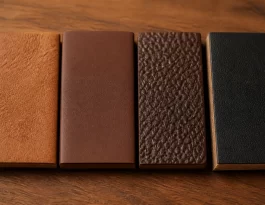
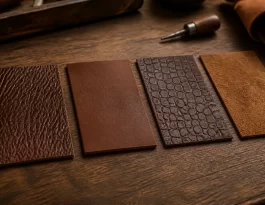
Name the leather and the finish, in plain terms: pigmented, semi-aniline or aniline, and whether the interior is coated or textile. The finish name drives every later instruction, so it belongs on the label rather than only in the specification.
Where the product mixes materials, each one should be named, because the care of the most delicate part governs the whole item.
The Cleaning Method
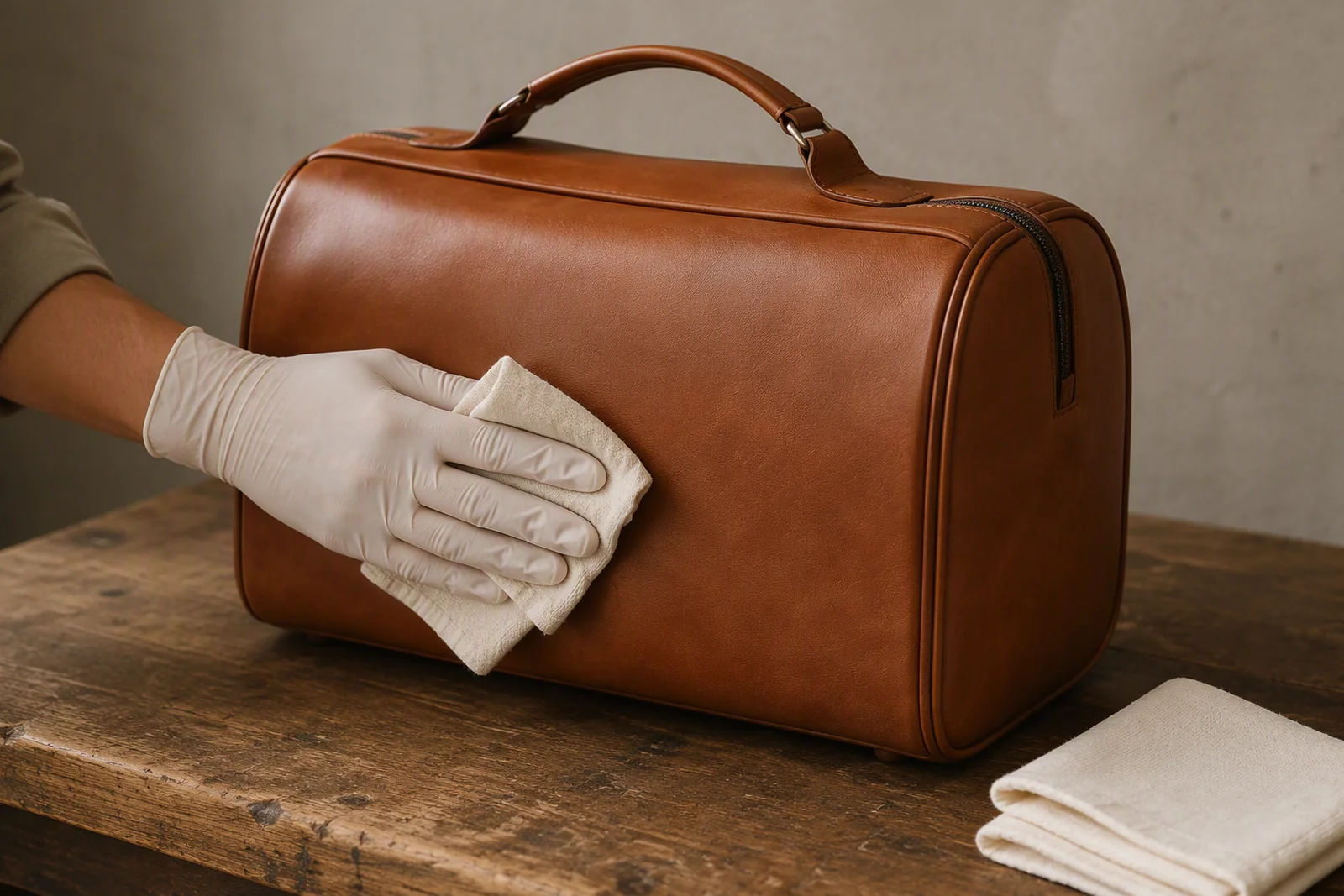
State the method, the tool and the moisture level: a soft dry cloth, a barely damp cloth, or a mild soap solution applied with a cloth and wiped off. "Damp" should be defined as wrung out, not wet.
The Prohibitions
List what must not be done: no soaking, no machine washing, no solvent, no heat drying, no abrasive pad, no silicone or oil-based product on a sealed surface. Prohibitions are easier to follow than instructions because they describe a clear refusal.
They also survive translation better, since a prohibition is usually one verb and one noun. Putting the prohibitions first, rather than last, is worth considering: a buyer who reads only one line should read the refusal that matters most.
| Entry | Why it matters |
|---|---|
| Materials statement | Sets which method applies |
| Cleaning method | Prevents guesswork |
| Prohibitions | Clearer than advice |
| Drying guidance | Prevents the most common damage |
| Storage guidance | Prevents mould and creasing |
Matching the Label to the Finish
The same sentence can be correct for one finish and damaging for another, which is why labels cannot be shared across a range without review.
Labels for Pigmented Surfaces
A pigmented surface tolerates a damp cloth and a mild soap, and it does not need conditioning. Recommending conditioner here is the most common mistake, because the coat already seals the leather and added product sits on the surface and attracts soil.
Labels for Semi-Aniline
A semi-aniline surface can be wiped but benefits from occasional light conditioning, applied thinly and buffed. The instruction should specify a small quantity, because the failure mode is over-application rather than neglect.
Labels for Aniline
An aniline surface needs the most careful wording: dry cloth first, minimal moisture, no soap unless specified, and a warning against leaving the carrier damp. Conditioning is appropriate but must be described as sparing and even.
Labels for Coated Interiors
A coated interior can be wiped with a damp cloth and mild soap, and it should be dried before the carrier is closed. The instruction that matters most is the last one, because a closed damp interior is where odour starts.
Wording That Changes Behaviour
Two labels can describe the same action and produce different behaviour, and the difference is usually structure rather than vocabulary.
Sequence Instead of Prose
A numbered sequence is followed more reliably than a paragraph, because it can be checked step by step. "Wipe, dry, air" as three steps is clearer than the same three actions in a sentence.
The sequence should also end with the step people skip, which is usually drying.
Quantities People Can Judge
"Small amount" is judged differently by everyone. "A pea-sized amount on a cloth" is judged consistently, and it is short enough to fit a label.
The same applies to moisture: "cloth wrung out until it stops dripping" is a test, while "damp cloth" is an impression.
Naming the Failure
Instructions are followed more carefully when the consequence is named. "Do not soak: the leather will stiffen and the shape will collapse" is more persuasive than "do not soak", because it explains what the buyer loses.
| Wording style | Effect |
|---|---|
| Paragraph prose | Skimmed, partly followed |
| Numbered steps | Followed in order |
| Named quantity | Consistent application |
| Named consequence | Higher compliance |
Symbols and Their Limits
Care symbols are fast to read and poor at conveying nuance, and leather care is almost entirely nuance.
What Symbols Do Well
Symbols communicate the prohibitions that matter most: do not wash, do not bleach, do not tumble dry, do not iron. Those four refusals cover the majority of damage cases in leather pet products.
Where They Fall Short
There is no widely understood symbol for "wipe with a barely damp cloth and dry away from heat", which is the instruction that matters most for aniline. Symbols alone therefore leave the most important part unstated.
Using Both
The practical approach is a symbol row for the prohibitions and two or three short lines for the method, with the method placed where it will be read. Symbols satisfy the quick glance; the lines carry the behaviour.
Where a market requires particular symbols or wording, the label should be checked against that market's requirements rather than assumed from another market.
Instructions by Soil Type
Pet soiling arrives in a few recognisable forms, and a label that addresses them directly is more useful than a general instruction.
Mud and Grit
Mud should be allowed to dry and then brushed off before any cloth is used, because wiping wet mud pushes grit into the grain. The label should say this explicitly, since the instinct is to wipe immediately.
Oils and Food Residue
Oil spreads when rubbed, so the instruction is to blot rather than wipe, and to use the dry side of the cloth first. On a sealed surface the residue lifts; on an open surface it darkens and the label should not promise removal.
Accidents and Odour
Liquid accidents should be blotted, then wiped with a barely damp cloth and dried open. The label should also direct attention to the interior and the seams, which hold residue after the surface looks clean.
Saliva at the Opening
Saliva concentrates at the opening and the edges. A wipe with a slightly damp cloth, followed by drying, is enough on a sealed surface; on aniline the label should recommend drying without rubbing.
| Soil | First action | Then |
|---|---|---|
| Mud | Let dry, brush | Wipe with dry cloth |
| Oil | Blot, do not rub | Wipe, dry |
| Accidents | Blot | Damp wipe, air dry |
| Saliva | Damp wipe | Dry, do not rub |
Conditioning and Its Risks
Conditioning is the instruction buyers most often over-apply, and it is also the one most often missing where it is needed.
When Conditioning Helps
Conditioning helps an aniline or semi-aniline surface that has dried out, which usually shows as a dull, slightly stiff feel at the edges and folds. The benefit is real but slow, and it appears over days rather than immediately.
When It Harms
On a sealed pigmented surface, conditioner sits on the coat, attracts dust and can soften the top coat. On any surface, applying too much leaves a residue that traps soil and eventually looks like dirt rather than care.
Writing the Quantity
The label should give a quantity and a frequency: a small amount on a soft cloth, worked in thinly, once or twice a year. Naming a maximum is more useful than naming a minimum, because over-use is the failure mode.
| Surface | Conditioning | Frequency |
|---|---|---|
| Pigmented | Not needed | None |
| Semi-aniline | Thin, sparing | 1-2 times a year |
| Aniline | Thin, even | 2-4 times a year |
| Coated interior | Not applicable | None |
Drying, Heat and Storage
Drying is where most leather damage happens, and it is the step that labels mention least.
Air Drying
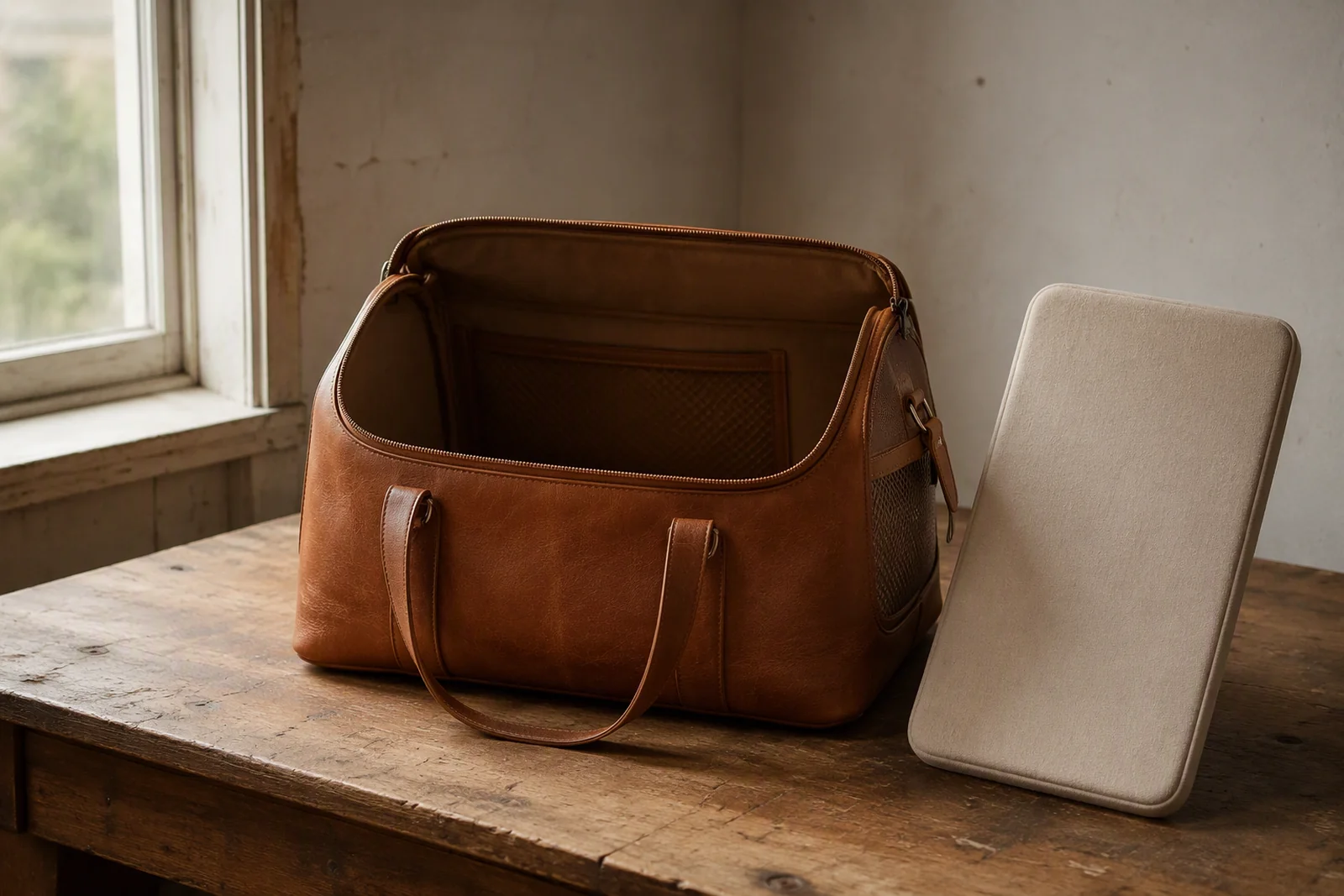
A wet carrier should be opened, wiped and left to dry at room temperature with air moving through it. Leaving it closed slows drying and keeps moisture against the lining and seams.
The label should say open and air dry, because closed drying is the default behaviour when a buyer comes home tired.
A carrier that has been soaked through needs more than a wipe: open it fully, take out any removable pad, and leave it where air can move through it for a day. Placing it near a window is acceptable; placing it on a radiator is not, and the label should make that distinction because both are described as drying.
Why Heat Is Prohibited
Radiators, hair dryers and sunlight dry the surface faster than the interior, which pulls moisture through the leather and leaves it stiff and prone to cracking. The damage appears days later, so the connection is rarely made.
Naming the prohibited sources is more effective than saying "avoid heat".
Storage Between Uses
Storage should keep the shape and allow air: stuffed lightly, closed but not compressed, away from damp walls and direct sun. A carrier stored in a plastic bag traps moisture and is the usual cause of mould.
Lining and Hardware Instructions
A label that speaks only about the exterior leaves the parts that fail first without guidance.
Interior Linings
Textile linings should be vacuumed or brushed dry, and wiped only when the specification allows it. Coated linings can be wiped, but must be dried before closure.
The label should separate the two, because a buyer will otherwise treat the interior the way the exterior was treated.
Metal Hardware
Hardware needs drying rather than polishing. A damp cloth followed by a dry one is enough, and abrasive polish removes the finish that protects the metal.
Where hardware is plated, the label should warn that polish and solvent can strip the plating, which is a common cause of complaints that look like corrosion.
Zips and Edges
Zips should be brushed free of grit before use, and never forced. Edges should be kept dry, because edge paint and raw edges are the first places where moisture shows.
Multi-Material Products
Most pet carriers combine leather with textile, mesh and coated materials, and the label must resolve the conflict rather than list every option.
The Governing Rule
The care instruction should follow the most delicate component, because a method safe for leather is usually safe for textile but not the reverse.
Where the Rule Breaks
A carrier with a machined washable pad is a common exception: the pad can be removed and washed while the shell cannot. The label should separate removable parts explicitly and name which may be washed.
Wording That Avoids Ambiguity
"Remove the pad before cleaning the shell" is unambiguous; "the pad may be washed" leaves the buyer to decide whether the shell can be washed with it. The label should state both the permission and the separation.
| Combination | Instruction |
|---|---|
| Leather + textile lining | Dry methods first |
| Leather + coated interior | Wipe, then dry open |
| Removable pad | Remove before cleaning |
| Leather + mesh panel | Brush, avoid soaking |
Translation and Market Variation
A label written for one market and translated for another usually loses the quantities that made it useful.
Translating Instructions, Not Words
Instructional text translates badly word by word, because the verbs carry the method. A translator who does not know what "blot" implies will produce a sentence that reads as "rub".
The practical solution is to translate from a short controlled version written for translation, with the decided steps stated plainly.
Market-Specific Requirements
Markets differ in what must appear on a care label and in which language, and requirements also differ for leather goods against textiles. The label should be checked against each target market rather than assumed from the home market.
Where a requirement is unclear, the safe approach is more information rather than less, provided the extra text does not contradict the method.
Keeping One Method Across Markets
The method itself should not vary by market, only the wording. A carrier that is wiped in one country and soaked in another is a different product with the same design.
Testing the Label With Users
A label can be tested before printing, and the test is cheaper than the returns it prevents.
A Small Comprehension Trial
Give the label to a handful of people who do not work with leather and ask them to describe what they would do, step by step, without the product in front of them.
The answers show which sentences are being interpreted differently from their intent, and they usually expose the quantities.
Observing the First Clean
Watch one person clean a sample carrier using only the label. What they reach for, how wet the cloth is and where they stop are the four or five facts the label needs to control.
This is more informative than asking whether the label was clear, because people answer that question politely.
Note what was used as a cloth and how wet it became, since those two details explain most of the difference between a product that survives and one that does not. A tea towel wrung out once is wetter than a microfibre cloth wrung twice, and the label said only damp.
Recording What Was Misread
Keep a short record of the phrases that were misread and the correction applied. Over two or three products, the same phrases recur, and the corrections become a house style that saves repeated work.
Design, Placement and Durability
A correct label that is not read, or that wears off, delivers none of its value.
Placement
The label should be where the buyer looks when the product needs cleaning: attached to the carrier or to a card that is kept, not buried inside a folded insert.
Where a swing tag is used, the care text should also appear on a durable label attached to the product, because swing tags are discarded. Where a carrier is sold with a dust bag, printing the method on the dust bag is often more useful than printing it on the carrier, because the bag is kept and read at the moment of storage, which is when damp and creasing are most likely.
Legibility
Type below a readable size is decoration. The minimum size that survives printing on a small label, at normal reading distance, should be established once and applied to every product.
Contrast matters as much as size. Dark text on a dark label cannot be read in the low light of a hallway cupboard, which is where a care label is usually consulted. Space around the text, rather than more text, is what makes a short label usable.
Durability of the Label Itself
A care label on a pet product will get wet. Materials and printing should survive the cleaning method they describe, or the label will fail before the product does.
| Design decision | Test |
|---|---|
| Placement | Is it found without instructions |
| Type size | Readable at arm's length |
| Print durability | Survives the described method |
| Attachment | Stays on in use |
Keeping Labels Consistent Across a Range
Labels drift when products change and the text does not, and the drift is invisible until a complaint arrives.
One Label per Finish
Group products by finish rather than by style, and write one label per finish group. A range of eight styles usually resolves to two or three finish groups, which keeps the text small enough to review.
Updating When the Finish Changes
A change of sealer, top coat or crust changes the label, even when the product looks identical. The label should carry a revision reference so a change is visible in the file rather than remembered by someone.
Substitutions and Their Effect
A supplier substitution that is technically acceptable can still invalidate the label, for example if a more open aniline replaces a semi-aniline. Substitutions should trigger a label review, not only a cost review.
| Change | Label impact |
|---|---|
| New top coat | Cleaning method may change |
| New crust | Conditioning advice may change |
| Substitution to a more open surface | Prohibitions must be added |
| New lining | Interior instruction changes |
What the Label Cannot Fix
A label manages behaviour; it cannot compensate for a construction or material choice that was wrong for the product.
Design Decisions That Outrank Text
If the opening cannot be wiped without pushing soil into a seam, no instruction will prevent staining. If the base cannot dry, no drying advice will prevent odour. Those are design problems that the label can only acknowledge.
When to Change the Product Instead
Where the same complaint appears despite clear labelling, the next step is to change the surface, the edge treatment or the interior rather than to write a longer label.
A Short Honest Note
Labels that admit a limitation, such as aniline darkening with use, generate fewer complaints than labels that promise even wear. The admission sets an expectation that the product can meet. Where a label admits that aniline darkens with use, a buyer who notices darkening reads confirmation rather than a fault. The same sentence on a pigmented product would be nonsense, which is why care text belongs to the finish rather than to the brand.
Care Kits and What They Signal
Including a cloth or a conditioner sachet is a labelling decision as much as a product decision, because it tells the buyer which method is expected.
What Belongs in a Kit
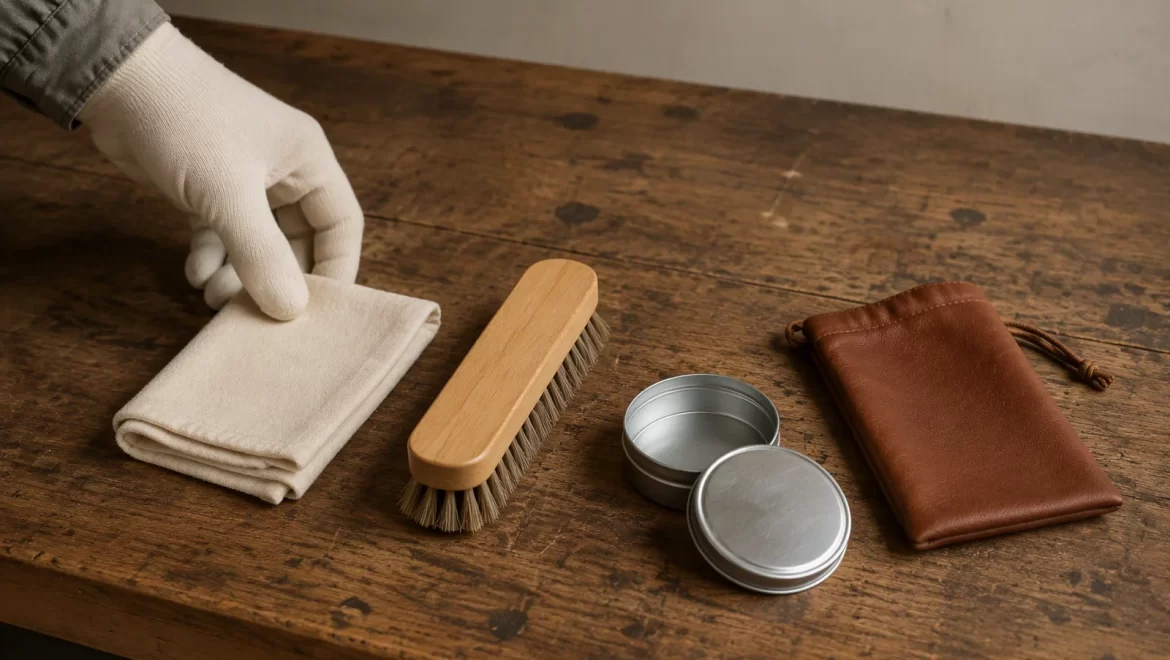
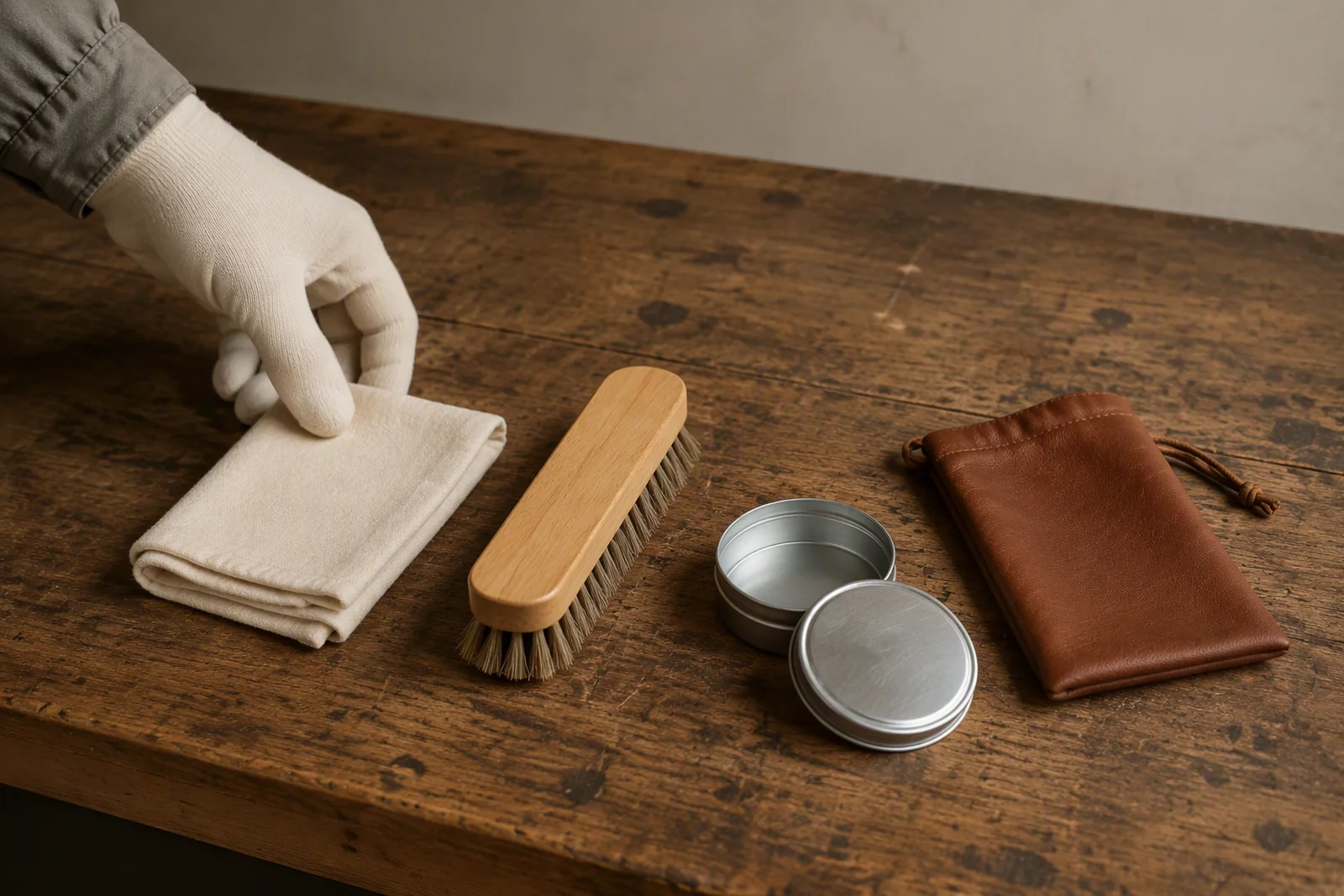
A soft dry cloth and a small quantity of the product the label actually recommends is enough. A brush is useful where mud is likely, and a sachet of conditioner is appropriate only for aniline and semi-aniline.
What Should Be Left Out
Silicone sprays, oil-based dressings and general-purpose polishes should not be included, because they contradict the label on most finishes and create the residue that attracts soil.
The Packaging Message
A kit that contains a conditioner on a pigmented product implies conditioning is needed, which contradicts the label. The contents are read as instructions, so they should match the text.
| Finish | Suitable kit contents |
|---|---|
| Pigmented | Dry cloth, damp cloth |
| Semi-aniline | Cloth, small conditioner |
| Aniline | Cloth, conditioner, brush |
| Coated interior | Cloth, no conditioner |
Warranty, Complaints and the Label
Label wording shapes how a complaint is handled, and a vague label weakens both sides of the conversation.
What a Clear Label Protects
Where the label states the method and the prohibitions, a complaint can be assessed against what was recommended. Without that reference, every complaint becomes a judgement about expectations.
What It Cannot Excuse
A label does not excuse a finish that fails under the recommended care. If the product deteriorates while being cleaned as instructed, the issue is the product rather than the buyer.
Handling the Grey Area
Most disputes sit between correct care and reasonable use: a carrier wiped daily, a bag left damp overnight. The label can narrow that area by naming the behaviours that matter most, which are usually moisture and heat.
Digital Care Instructions
A printed label has room for perhaps sixty words; a linked page has room for the explanation, and the link needs to be worth following.
What the Page Should Add
The page should carry the reasoning and the method in more detail: the finish, why heat is prohibited, how to treat each soil type, and what to do if the carrier gets soaked.
Keeping It Consistent
The printed label and the page must agree. Where they diverge, buyers follow whichever they read last, which is usually the page.
Making the Link Durable
A short address or a code that survives washing is more useful than a long link that wears off. Where the code is printed on a label, it should be tested with the same moisture the label describes.
Common Labelling Mistakes
The same errors appear across ranges, and each one is visible on a printed label in seconds.
Listing Products Instead of Actions
A label that names a branded cleaner is useful only while that product exists in that market. A label that names the action survives substitutions and translations.
Omitting the Interior
Exterior-only labels leave the lining and seams, which is where odour and staining concentrate. The interior deserves its own line.
Promising an Outcome
"Restores the original appearance" is a promise the material may not keep, particularly on aniline. Describing the action and the limit is safer than describing a result.
| Mistake | Better approach |
|---|---|
| Naming a product | Name the action |
| Exterior only | Add interior line |
| Promising results | Describe method and limit |
| No drying step | End with air drying |
A Label Review Checklist
A short review before print catches most of what a complaint would later teach.
Content Checks
Confirm the materials statement, the method, the prohibitions, the drying step, the interior instruction and the storage guidance are all present. Confirm each one matches the specification of the finish actually used.
Wording Checks
Read each sentence as someone who has never cleaned leather. If a decision is left open, the sentence needs a quantity, a tool or a consequence.
Physical Checks
Confirm the label is placed where it will be found, printed at a readable size, and made of a material that survives the method it describes.
Working With Suppliers on Care Text
Care text is usually written downstream of the supplier, and the supplier is the only party who knows what was actually applied.
Asking for the Finish Record
Request the finish record with each delivery: the sealer, the top coat and any treatment applied after finishing. The label is written from that record, not from the article name.
Agreeing Changes in Advance
Where a supplier changes a finish for reasons of supply, the label must change with it. Making the label part of the approval process prevents a silent mismatch.
Keeping the Reference
Keep a sealed sample and the finish record together, so a later label question can be answered by looking rather than by remembering.
FAQ
What should a leather care label for a pet bag include?
A: The materials and finish, the cleaning method with a tool and a moisture level, the prohibitions, the drying step, the interior instruction and the storage guidance. Each entry should be short enough to read at arm's length.
Should the label name a specific leather cleaner?
A: Naming an action is safer than naming a product. A named product may be unavailable in a market, discontinued, or unsuitable for a later finish change.
How often should leather be conditioned?
A: Aniline and semi-aniline surfaces benefit from thin conditioning once or twice a year, or up to four times if the climate is dry. Pigmented surfaces do not need conditioning at all.
Why is conditioner harmful on pigmented leather?
A: The surface is already sealed, so the product sits on the coat, attracts dust and can soften the finish. The result looks like dirt and is difficult to remove without disturbing the coat.
Can a leather pet carrier be washed?
A: No. Soaking stiffens the leather, distorts the shape and drives moisture into seams and lining. Cleaning is by wiping, with drying afterwards.
How should a wet carrier be dried?
A: Open it, wipe off surface water and leave it at room temperature with air moving through it. Radiators, hair dryers and direct sun dry the surface faster than the interior and cause stiffening and cracking.
What do the care symbols cover?
A: They cover prohibitions well: do not wash, do not bleach, do not tumble dry, do not iron. They do not convey a wiping method, so the key instruction has to be written in words.
How should mud be removed?
A: Let it dry, brush it off, then wipe with a dry cloth. Wiping wet mud pushes grit into the grain and spreads the stain.
How should oil marks be treated?
A: Blot rather than rub, using the dry side of a cloth first. On a sealed surface the residue lifts; on an open aniline surface some darkening is permanent and the label should not promise otherwise.
Should the interior have its own instruction?
A: Yes. Linings and seams hold residue after the exterior looks clean, and a coated interior must be dried before the carrier is closed.
How should hardware be cleaned?
A: Wipe with a damp cloth and dry immediately. Abrasive polish and solvent can remove plating, which then looks like corrosion.
Can one label cover a whole range?
A: Only within a finish group. Group products by finish rather than by style, and write one label per group, because the same sentence can be wrong for a different surface.
What happens if a supplier substitutes the leather?
A: The label must be reviewed. A substitution to a more open surface, for example, requires additional prohibitions even though the product looks unchanged.
How can a label be tested before printing?
A: Ask several people who do not work with leather to describe what they would do, step by step, and watch one of them clean a sample using only the label.
Where should the label be placed?
A: Where the buyer looks when cleaning: attached to the carrier or on a card that is kept. A swing tag alone is not enough, because it is usually discarded.
What can a label not fix?
A: Construction and material problems. If a seam cannot be wiped clean or a base cannot dry, the product needs a design change rather than longer instructions.
Ready to write a label that changes behaviour rather than describing it? Name the finish and the action, give a tool, a moisture level and a quantity, list the prohibitions, end with air drying, and add a line for the interior. Then test the wording on people who do not work with leather, and keep the label tied to the finish record so a substitution cannot slip past it.