Understanding Leather Grain Types for Custom Bag Manufacturing
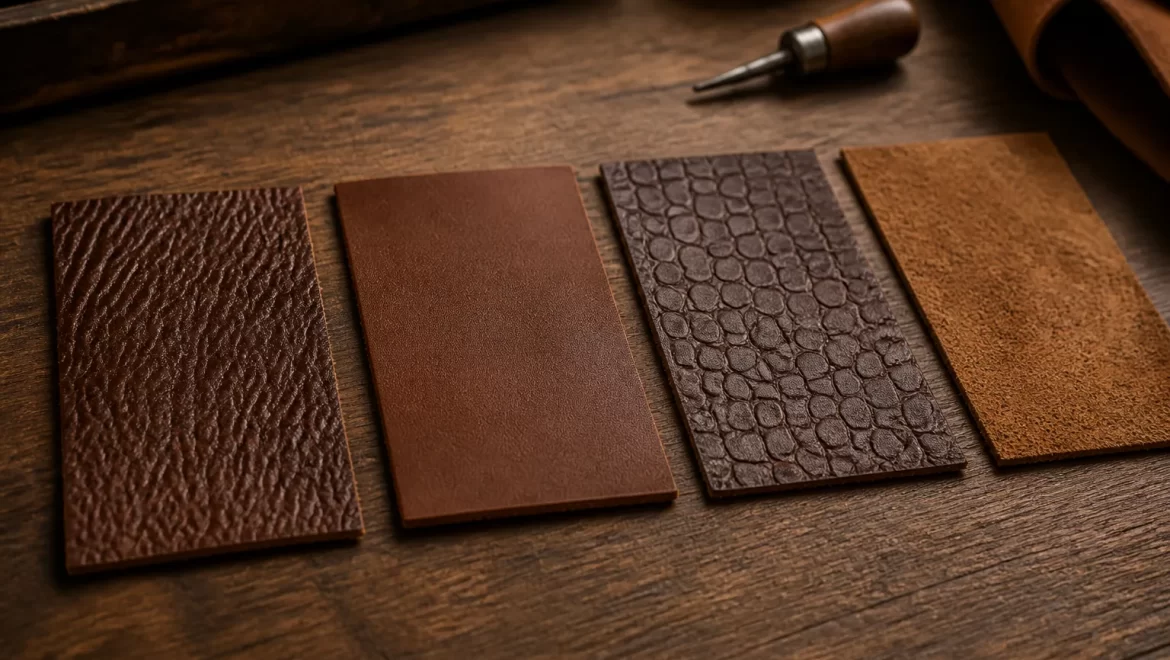
The grain is the face of the leather — and the face of your bag. When a customer picks up a leather bag, what they see, touch, and judge first is the grain: the natural surface pattern of the hide that no other material can imitate. Yet grain is also the most misunderstood specification in custom bag manufacturing. Brands specify "full-grain leather" or "genuine leather" as if the terms were self-explanatory, and factories produce bags that look nothing like what the brand imagined — because grain is not one thing. It is a spectrum of choices, each with different appearance, durability, behavior, and cost.
This guide explains the grain types from the factory floor: what grain actually is, how the four grain categories are made, how they behave in production and in use, and how to specify grain correctly for your custom bag project. It is written for buyers, designers, and brand owners who want to order the right leather the first time — and for anyone who has ever been confused about the difference between full-grain, top-grain, and everything else.
What Grain Actually Is
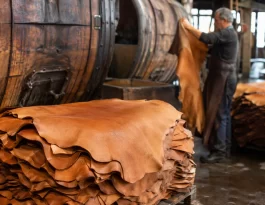
Grain is the outer surface of the animal hide — the side that was exposed to the world during the animal's life. It is a dense network of collagen fibers, arranged more tightly than the inner layers of the hide, and it carries the natural characteristics that make each hide unique: pores, hair follicles, wrinkles, scars, and the subtle texture of the animal's life.
The grain layer is what gives leather its two defining qualities. First, it is the strongest part of the hide — the dense fiber network resists stretching, tearing, and abrasion better than the looser layers beneath. A bag built with the grain intact is a stronger bag. Second, it is the most beautiful part — the natural pattern that develops patina over years of use. This is why grain matters in bag manufacturing: it is simultaneously the performance layer and the aesthetic layer, and what you choose determines both.
The key concept that organizes all grain types is simple: what happened to the grain layer after the hide was tanned. Was it left intact? Was it sanded? Was it embossed with a new pattern? Was it split off entirely? The answers to these questions define the four main grain categories — and they are the difference between a bag that develops a beautiful patina and a bag that looks the same in year one and year ten.
The Four Grain Categories
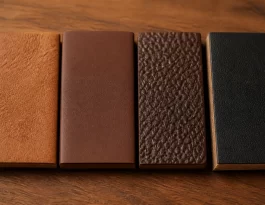
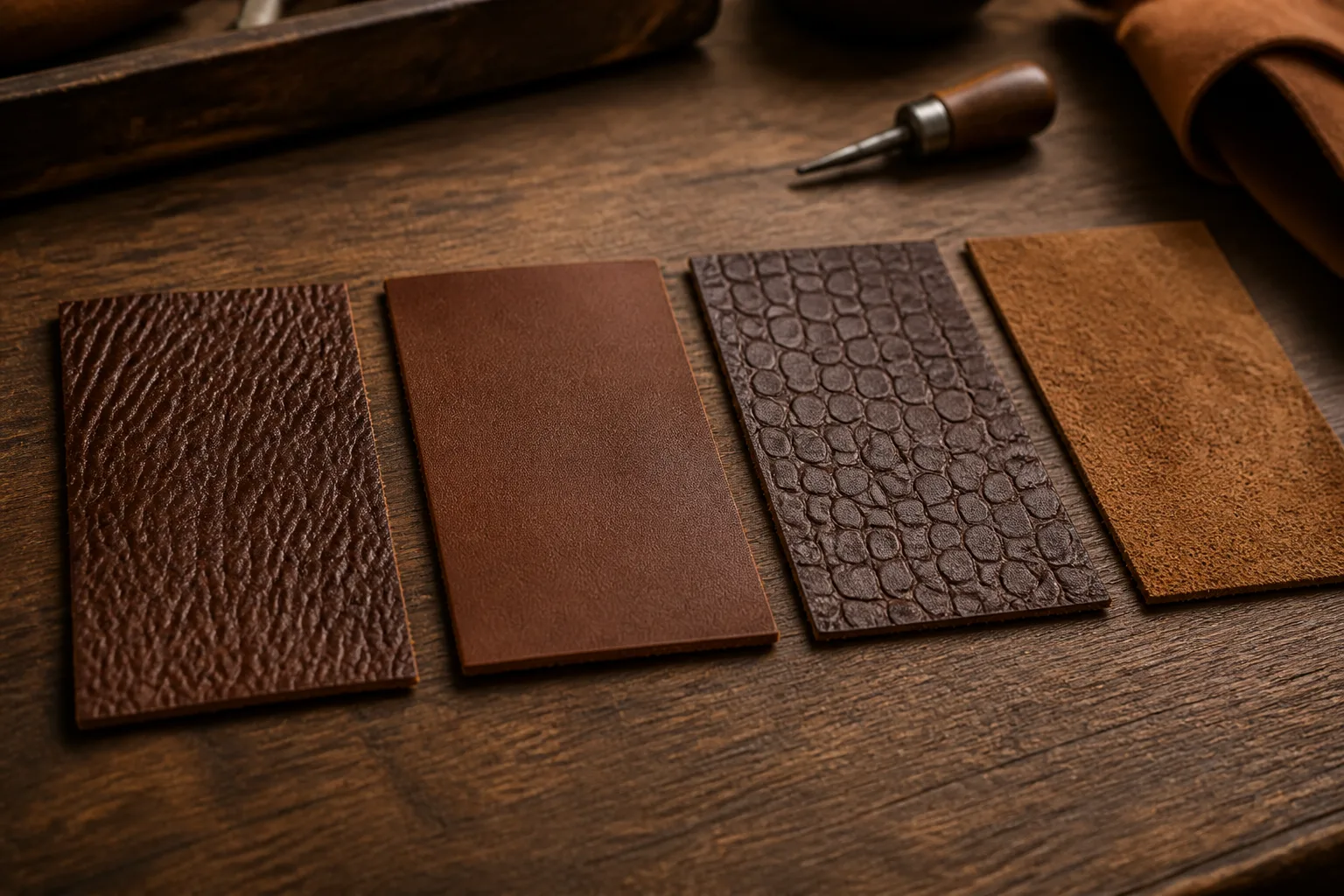
The leather industry divides grain into four standard categories, each defined by what was done to the grain layer:
Full-Grain Leather
Full-grain leather keeps the entire grain layer intact. The hide is tanned, and the surface is cleaned and finished as lightly as possible — often with just a protective coat of wax or a very light pigment that lets the natural texture show through. Nothing is sanded off, and nothing is embossed over.
The result is the most durable and most distinctive leather. Every scar, wrinkle, and pore of the original hide remains visible — which is exactly the point. Full-grain leather is never uniform, because real hides are never uniform. It develops a rich patina as it ages, darkens with use, and becomes more beautiful over years. For bags, full-grain is the premium choice: it is the leather of heritage brands and heirloom products.
Its cost reflects its honesty: full-grain requires the best-quality hides, because surface defects cannot be sanded away. The usable area of each hide is smaller, the rejection rate is higher, and the price per square foot is the highest of the grain types.
Top-Grain Leather
Top-grain leather starts as full-grain — then the top surface is sanded or buffed to remove imperfections and create a smooth, uniform surface. The sanding removes the outermost fiber layer, so the leather is slightly thinner and slightly less abrasion-resistant than full-grain. A finish is then applied: pigment, or a light topcoat, to seal the smooth surface.
The result is a cleaner, more consistent appearance than full-grain. Where full-grain shows the hide's life story, top-grain shows a smooth, even canvas. It is more forgiving of surface imperfections (because they are sanded away), which makes it more affordable and more predictable in production.
Top-grain is the workhorse of quality bag manufacturing. Most mid-to-premium bags use it: it offers most of full-grain's durability at a significantly lower cost, with a uniform surface that brands and customers often prefer for clean, modern designs. The trade-off is the patina: a pigmented top-grain surface does not develop the rich character of full-grain, because the pigment seals the natural surface.
Split Leather
When a thick hide is split horizontally, the top layer (with the grain) becomes one piece of leather, and the bottom layer becomes a second piece: split leather. The split has no natural grain surface — its texture is the loose, fibrous structure of the hide's inner layer, called suede on one side.
Splits are used two ways in bags. Split leather with a suede finish is used for linings, pockets, and accent panels — soft, warm, and affordable. Split leather can also be coated with a synthetic finish (often called bonded or coated split) to imitate a grain surface, but the coating does not behave like real grain: it wears differently and does not develop patina.
Splits are significantly cheaper than grain leather, which makes them attractive — but they are weaker, less abrasion-resistant, and more sensitive to moisture. A bag made entirely from coated split will not perform like a grain-leather bag, no matter how convincing the surface looks.
Corrected-Grain and Embossed Leather
Corrected-grain leather is top-grain taken further: after sanding, the surface is embossed with an artificial grain pattern (often printed from a real hide) and covered with a heavier pigment finish. The result is a very uniform, very consistent surface that hides most natural variation.
Embossed and corrected-grain leathers are the most economical grain-type choices. They are used extensively in value-priced bags and fashion lines where surface consistency matters more than natural character. The finish can be made quite durable — modern finishes are engineered for wear — but the leather does not patina, and the embossed pattern is a reproduction, not the original.
How Grain Choice Affects Production
Grain is not only an aesthetic decision — it changes how the leather behaves in every stage of production, from cutting to edge finishing.
Cutting and utilization. Full-grain hides carry visible defects that must be cut around, so utilization (the percentage of hide that becomes usable panels) is lower — typically 70–80% for full-grain versus 85–92% for corrected grain, where defects are hidden under finish. The utilization difference is a direct cost difference. For a factory quoting a bag, grain choice changes the material cost per bag before any other factor.
Cutting room behavior. Full-grain is firmer and less stretchy than corrected-grain with its heavy finish, which makes it easier to cut precisely and less likely to distort during sewing. Split leather is softer and stretchier, which makes it harder to handle on the cutting table and in the sewing room — a factor production teams know well.
Sewing and construction. Stiffer full-grain holds its shape better in structured bags — the bag stands, corners are crisp, and panels align. Softer corrected leathers and splits drape more, which suits slouchy silhouettes but fights structured designs. The grain choice must match the bag's intended construction, not just its look.
Edge finishing. Full-grain and top-grain with firm, clean edges take edge paint and burnishing beautifully. Coated and embossed leathers finish differently — the finish layer can chip at edges if not handled correctly. Edge quality, the most visible craftsmanship signal on a bag, depends on the grain type underneath.
Hardware and stress points. The grain layer carries the load at stress points — handle roots, strap attachments, corners. Full-grain's dense fiber network holds hardware anchors better than split or corrected leather. For bags with heavy hardware or heavy loads, grain integrity at stress points is a durability decision, not a cosmetic one.
Grain and Durability: What the Wear Data Says
Field wear on bags tells a consistent story about grain types — and the story surprises brands who assumed "leather is leather."
Abrasion and scuffing. Full-grain's dense, intact surface resists scuffing better than any other type; the marks that do appear can often be buffed away, and they fade into the leather's character. Top-grain with pigment scuffs more visibly — the pigment layer shows wear against a contrasting surface — and the marks are not buffable. Corrected grain is the most vulnerable: once the finish is scratched through, the artificial surface is damaged permanently.
Patina and aging. Only full-grain (and lightly finished top-grain) develops the rich patina that leather enthusiasts value. Pigmented and embossed surfaces do not patina — they age by fading and wearing, which reads as "old" rather than "character." For brands selling the leather heritage story, the grain choice is the story.
Moisture and weather. The intact grain surface is the leather's natural defense against moisture — the dense fiber layer resists water penetration. Sanded, split, and coated surfaces are more vulnerable: moisture enters more easily and damages the fibers beneath. A bag's performance in rain and humidity is, in large part, a grain decision.
Structural wear. The fiber density of the grain layer carries repeated flexing — opening, closing, bending — better than the looser inner layers. Full-grain bags flex for years without structural fatigue; splits and heavily corrected leathers fatigue sooner, especially at crease points.
The durability ranking. From field data across thousands of bags, the honest ranking of grain types by durability is: full-grain, then top-grain, then corrected grain, then split leather. The price ranking is identical — which is not a coincidence. You pay for durability in leather, and the grain is where the durability lives.
Grain and Cost: The Price Structure
Grain type is the single largest driver of leather cost, and the price spread is wider than most brands expect. The cost structure reflects what each grain type demands from the raw material and the process:
| Grain type | Typical cost per square foot | Why it costs what it does |
|---|---|---|
| Full-grain | Highest (2.5–4× split) | Best hides only; surface defects cannot be hidden; lower utilization |
| Top-grain | High (1.5–2.5× split) | Good hides; sanding hides minor defects; good utilization |
| Corrected / embossed | Medium (1.2–1.8× split) | Lower-grade hides accepted; defects hidden by finish |
| Split (suede / coated) | Lowest | Any hide can yield a split; no grain surface required |
Two cost realities follow. First, the material cost per bag can vary by 2–3× purely on grain choice — before any construction differences. A "premium leather bag" at $60 and a "premium leather bag" at $180 may use the same design and the same construction, differing only in grain. Second, the cost difference is not waste — it buys measurable durability, patina, and brand story. The question is whether the brand's market position and price point can carry the grain it chooses.
Grain and Sustainability
Grain choice has a sustainability dimension that few brands consider — and it is not the one the marketing usually implies.
Full-grain is the most efficient per year of use. A full-grain bag that lasts 10 years and develops patina displaces several bags of shorter-lived materials. The longest-lived product is the most sustainable product, and full-grain is the longest-lived grain. This is the strongest sustainability argument in leather — and it is rarely heard in the marketing noise.
Corrected grain and splits are the most efficient per dollar. They use hides that would otherwise be wasted or downgraded — the sanding and finishing process turns imperfect hides into usable product. The sustainability case here is material utilization: no hide is wasted, and lower-grade hides find a use.
The finish is part of the footprint. Pigmented and embossed leathers carry synthetic finishes; full-grain with a light wax carries almost none. The finish chemistry is part of the product's environmental footprint — and it is invisible in most sustainability marketing.
Repairability. Full-grain bags can be reconditioned, re-oiled, and repaired — their surface takes maintenance. Pigmented and coated leathers are harder to repair convincingly; when the finish wears, replacement is the practical option. Repairability is the quiet sustainability factor.
For a brand choosing grain, the honest framing is: full-grain for longevity and story, corrected grain for value and utilization, splits for specific functional roles — each with a defensible sustainability narrative, none with a universal one.
Specifying Grain for Custom Bags: The Buyer's Checklist
Ordering custom bags with the right grain is a specification discipline. The checklist a serious buyer uses:
Specify the grain type by name, not by marketing. Write "full-grain, lightly finished" or "top-grain, pigmented finish" in the tech pack — not "premium leather." Ambiguous specs produce ambiguous results, and the factory will optimize for its own convenience.
Specify the finish, not just the grain. The finish — wax, aniline, semi-aniline, pigment, embossed — determines appearance and aging. Grain and finish together define the leather. Specify both, and specify them with samples.
Define the surface tolerance. How much natural variation is acceptable? A full-grain bag's charm is its variation, but variation must be bounded: specify acceptable color variation, acceptable marking, and the grading standard for the visible panels.
Approve the leather sample, and seal it. The leather sample approved at sampling is the standard for production. Seal it, date it, and reference it in the tech pack — "as per sealed leather sample L-03." An unsealed sample is a moving target.
Match grain to construction. Specify grain with the bag's structure in mind: full-grain or firm top-grain for structured designs, softer corrected or split for slouchy styles, grain on exterior panels and splits or suede for linings. The grain map — which panel uses which leather — belongs in the tech pack.
Budget the cost difference. If the design calls for full-grain, budget for the material reality: 2–3× material cost, lower utilization, and the premium price point the product must carry. If the market price is fixed, choose the grain that fits the price — consciously, not by accident.
Grain Types by Bag Category
Different bag categories have different grain requirements — and the experienced factory can guide the choice:
Structured totes and briefcases. Full-grain or firm top-grain holds shape, takes hardware, and wears for years. This is the heritage category where full-grain's patina story sells the product.
Slouchy and soft silhouettes. Softer corrected grain, nappa-style top-grain, or even split leathers drape naturally. The grain must match the movement: stiff full-grain fights a slouchy design.
Travel and heavy-use bags. Full-grain or thick top-grain for durability under heavy loads, regular handling, and airport abuse. The grain carries the load, and the load justifies the grain.
Fashion and seasonal lines. Corrected and embossed grains offer the look at the right price for seasonal product that does not need a decade of life. Value lines use them deliberately — the choice is a market decision, not a quality failure.
Luxury and heritage lines. Full-grain, lightly finished, with visible natural character — the grain is the product story, and the price carries it.
Children's and everyday bags. Top-grain with a durable pigmented finish balances durability, cleanability, and cost — the workhorse grain for the workhorse category.
The category map is a guide, not a rule — but it explains why the same factory produces bags at $20 and $200: the grain choice is the largest single lever between them.
Common Grain Misconceptions
The grain conversation is full of myths that cost brands money and disappointment. The ones our factory hears most:
"Genuine leather" means a grain type. It does not. "Genuine leather" is a marketing category, not a technical specification — it can legally describe almost any leather product of animal origin. It tells you nothing about grain, durability, or quality. Specify the actual grain type in your tech pack.
"Full-grain means flawless." The opposite: full-grain shows every natural characteristic of the hide, including its imperfections. Flawless uniformity is the property of corrected and embossed leathers — the ones that hide the hide. Full-grain's "flaws" are its authenticity.
"Top-grain is full-grain that failed." Both are legitimate products with different jobs. Top-grain is not a rejected full-grain; it is a deliberate choice for a smooth, uniform, affordable surface. Neither is "better" — they are different products for different positions.
"Sanded leather is fake leather." Sanding does not make leather fake — it makes it smooth. Top-grain and corrected-grain are real leather; the grain was refined, not replaced. Only coated split (and outright synthetic materials) approach the line between leather and imitation.
"All embossed leather is bad." Embossed and corrected grains are legitimate, economical products that serve value and fashion markets well. The problem is only when embossed leather is sold as full-grain, or priced as if it were. Buy what you specify; specify what you buy.
"Thicker leather means better leather." Thickness and grain are different specifications. A thick split is weaker than a thin full-grain — thickness without grain integrity is weight without strength. Specify both thickness and grain, and judge quality on both.
Reading Grain Quality at the Factory
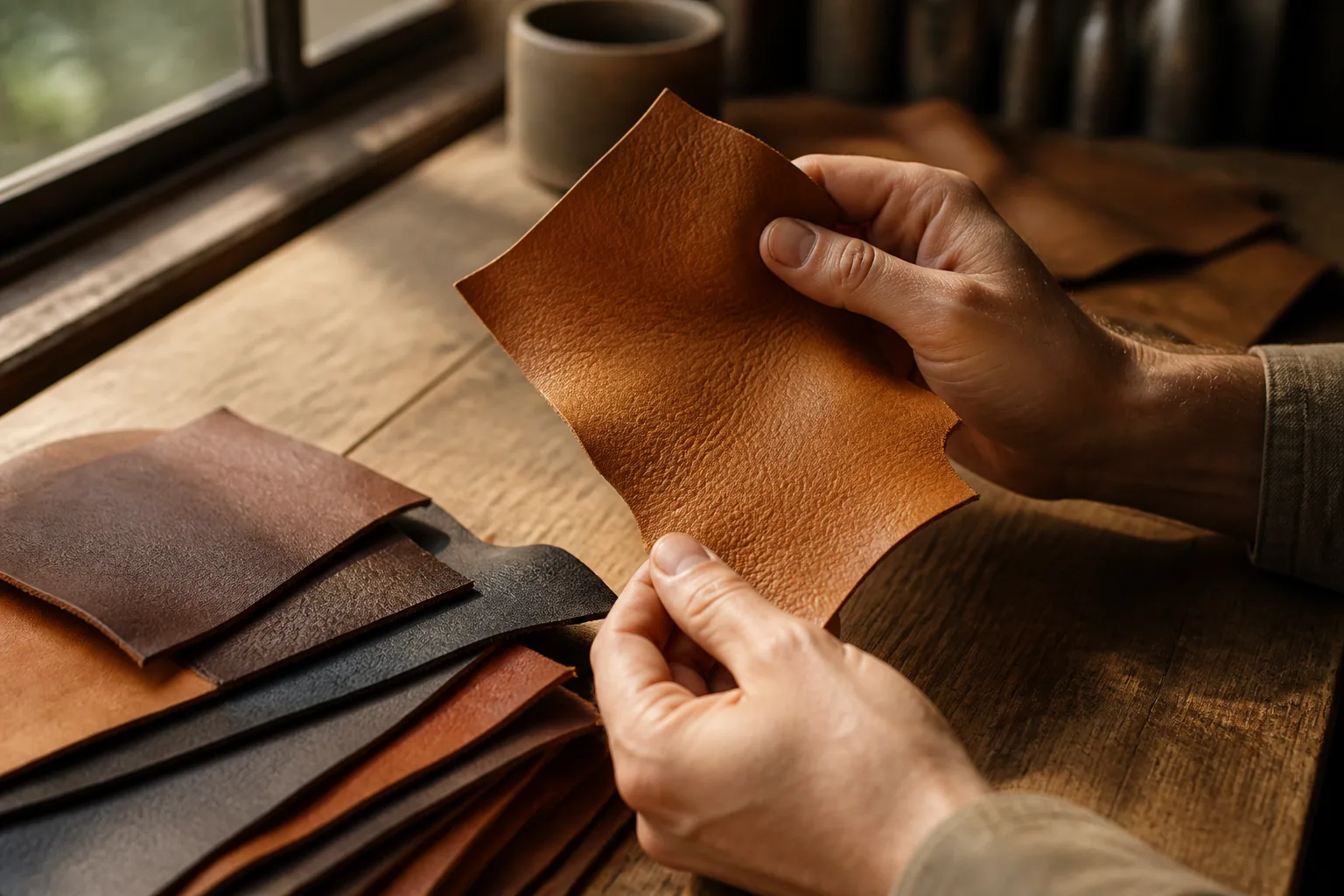
When you visit a tannery or factory, the grain is the first thing to read. The skills are simple and practical:
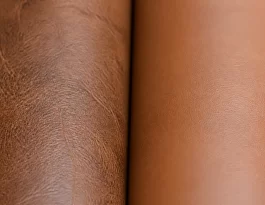
Look at the surface under angled light. Tilt the leather under a light and look at the surface character: full-grain shows natural, irregular texture with visible pores; corrected grain shows a uniform, slightly artificial pattern; embossed grain shows a repeated pattern that you can find twice on one panel.
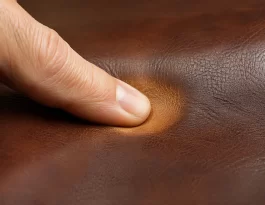
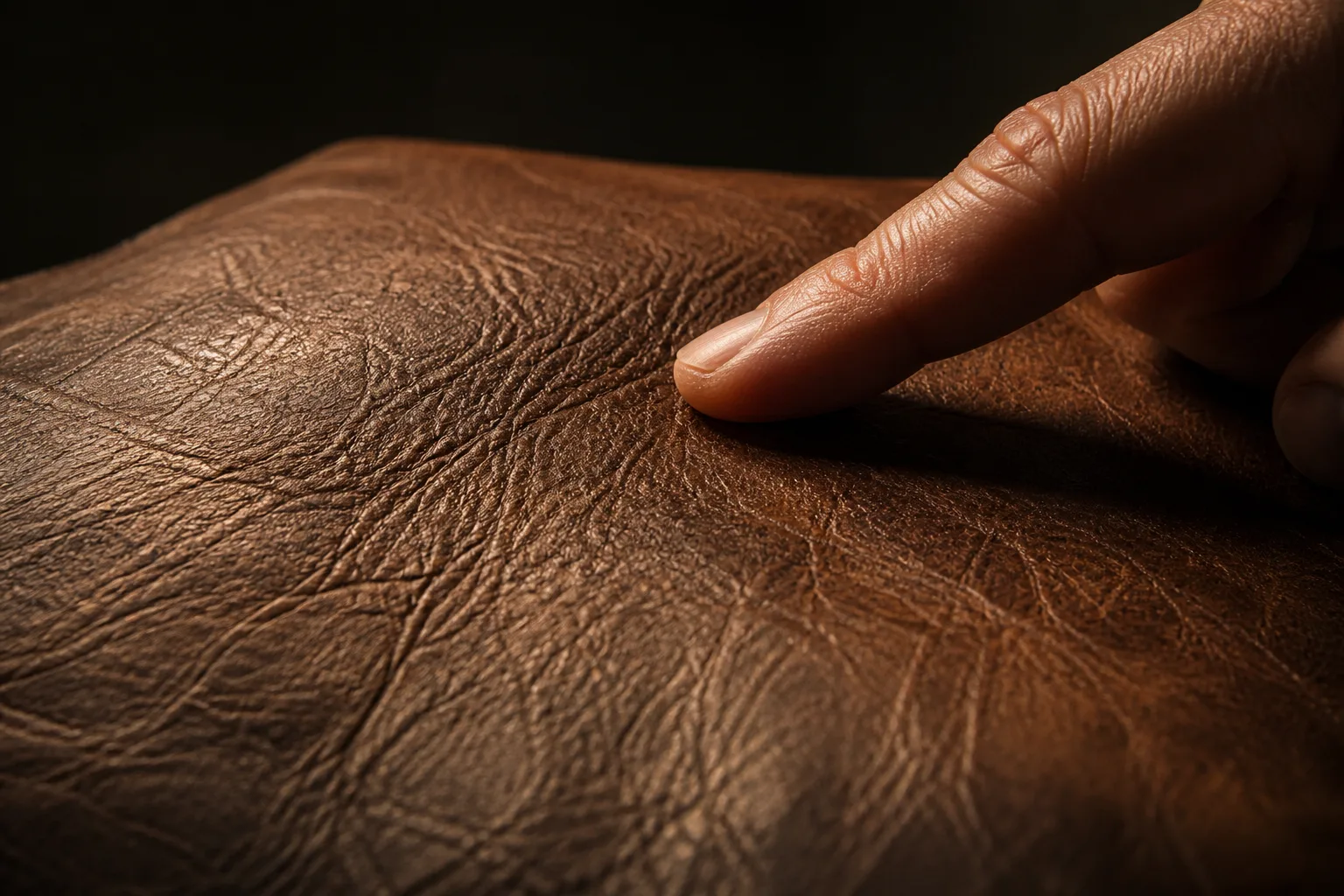
Feel the surface. Run a finger across the grain: full-grain feels warm and natural, with slight tactile variation; finished surfaces feel smooth and uniform; coated leathers feel slightly plasticky.
Check the edge. Look at the cut edge of the leather: full-grain and top-grain show a dense, tight fiber structure at the surface; splits show looser, fibrous structure; coated leathers show a visible finish layer on the surface.
Stretch and release. Fold a corner and watch how the surface behaves: real grain wrinkles naturally and recovers; a heavy finish layer shows creases that do not recover; a split shows loose, soft creasing.
Ask for the tannery's grade. The tannery grades each hide; the grade tells you about the hide's quality within its grain type. Two full-grain hides can differ enormously in grade — and the grade is part of the price.
Compare against the sealed sample. All of this reading is comparative: the sealed leather sample is the standard, and every production lot is read against it. The reading skill is the buyer's protection against sample-quality drift.
The Finish System: Grain's Partner
Grain and finish work as one system — the grain is the surface, the finish is what protects and presents it. Specifying grain without finish is specifying half the product, and the finish choice changes everything the grain delivers.
The finish spectrum. At one end, the natural end: wax and oil finishes that protect lightly and let the grain show completely — the choice for full-grain heritage products, where the surface is the story and the finish only seasons it. In the middle, aniline and semi-aniline finishes: transparent dyes that color the leather while letting natural character show through, with a light protective topcoat. At the other end, pigment finishes: opaque surface coatings that create a uniform, durable, colorfast surface — the choice for top-grain and corrected leathers, where uniformity is the goal.
What the finish controls. The finish determines appearance (natural vs uniform), aging (patina vs fading), cleanability (pigment wipes clean; natural leather absorbs), colorfastness (pigment is stable; aniline transfers and darkens), and cost (finish chemistry is part of the material price). Two bags made from the same grade of top-grain — one aniline, one pigmented — are visibly different products with different price points and different customers.
The factory view. In production, the finish affects behavior at every stage: pigmented surfaces are forgiving in cutting and sewing (uniform, no natural variation to match); aniline surfaces demand more careful panel-matching (natural variation must be graded and routed); waxed full-grain needs handling discipline (fingerprints mark it until the wax sets). The factory's familiarity with a finish affects quality as much as the finish itself — another reason the finish belongs in the tech pack, specified and sealed.
The honest trade-off. The finish system is a series of trade-offs, not a hierarchy: natural finishes show the beauty and age gracefully but demand care; pigmented finishes are durable, uniform, and easy but hide the leather's character. The right finish is the one that matches the product's story, use, and care expectations — and the brand that specifies finish deliberately gets the product it designed.
Verifying Grain in the Sampling Process
The grain specification is only as real as the sample that embodies it — and the sampling process is where grain choices are confirmed or quietly lost. A brand that approves a sample without verifying its grain has approved a promise, not a product.
What to verify on the development sample. When the first sample arrives, verify the grain against the spec and the sealed leather sample: the grain type (does the surface show natural full-grain character, or a corrected, uniform surface?), the finish (wax, aniline, pigment — does it look and behave as specified?), and the color (against the standard, in daylight, not just in the showroom). The sample is the first chance to catch a grain substitution — and substitutions happen more often than brands expect, because the factory may use a different leather lot for sampling than for production.
The production-lot check. The risk is not the sample; it is the production lot. The leather used in mass production must match the sealed sample — same grain type, same finish, same tolerance for natural variation. The professional mechanism is the lot check: every production leather lot is inspected against the sealed sample before cutting begins, and the inspection record is part of the evidence package. A factory that cuts first and compares later has skipped the checkpoint that protects the grain spec.
The panel-level reality. Even within one lot, grain varies across the hide: the spine area is denser and firmer than the belly; the neck shows wrinkles; the shoulders carry marks. The cutting room's routing — which hide areas serve which panels — determines whether the visible panels of the finished bag show the grain the brand expects. The panel-mapping discussion belongs in sampling: the brand should see how the factory plans to use each part of the hide, especially for full-grain where natural character is the feature.
Documenting the standard. The sealed grain sample, the lot inspection records, and the panel-mapping notes together form the grain standard. Written into the tech pack and referenced in the quality checkpoints, they convert the grain choice from a conversation into a contract. The brands that document their grain standard get consistent grain; the brands that rely on memory get surprises.
The sampling process is the last cheap moment to fix a grain problem. A grain substitution caught at sampling costs a sample remake; caught at production, it costs the whole order.
FAQ
What is the difference between full-grain and top-grain leather?
A: Full-grain keeps the entire natural grain layer intact — every pore, wrinkle, and mark of the original hide, with minimal finishing. Top-grain has the surface sanded smooth to remove imperfections, then finished with pigment or a topcoat. Full-grain is more durable, develops patina, and costs more; top-grain is smoother, more uniform, and more affordable.
Is "genuine leather" a grain type?
A: No. "Genuine leather" is a marketing label, not a technical specification — it tells you almost nothing about the leather's quality, grain, or durability. Always specify the actual grain type (full-grain, top-grain, corrected, split) and finish in your tech pack.
Which grain type is best for bags?
A: It depends on the bag's position and construction. Full-grain is best for premium, structured, long-life bags that sell heritage and patina. Top-grain is the workhorse for most mid-to-premium bags — durable, uniform, affordable. Corrected and split leathers serve value lines, fashion seasons, and linings. Match the grain to the product's market and structure.
Why is full-grain leather so much more expensive?
A: Full-grain requires the best hides (surface defects cannot be sanded away), loses more area to natural defects in cutting, and carries the highest raw-material cost. The premium buys the densest, most durable surface and the patina that develops over years of use.
Does top-grain leather develop patina?
A: Lightly finished top-grain can develop some character, but pigmented and heavily finished surfaces do not patina — the pigment seals the natural surface. If patina is part of your product story, specify full-grain or a lightly finished aniline top-grain.
What is the difference between aniline and pigmented leather?
A: Aniline leather is dyed with transparent dyes that let the natural grain show through — no surface pigment. Pigmented leather has a surface coating of pigment that creates a uniform, durable, opaque surface. Aniline shows natural character and patinas; pigmented is uniform and more colorfast but hides the natural surface.
Can split leather be used for the outside of a bag?
A: Yes, but with trade-offs: coated split can imitate a grain surface at low cost, but it is weaker, less abrasion-resistant, and does not patina. Splits are best used for linings, pockets, and accents — for exterior panels, grain leather is the professional choice.
How do I specify leather grain in my tech pack?
A: Name the grain type precisely ("full-grain, lightly finished" / "top-grain, pigmented"), specify the finish (wax / aniline / semi-aniline / pigment / embossed), define the surface tolerance for natural variation, reference the sealed leather sample, and map which grain goes on which panel.
Does grain affect how the bag wears over time?
A: Directly. The grain layer is the most durable part of the hide — it resists scuffing, moisture, flexing, and hardware stress better than the inner layers. Full-grain bags wear gracefully for years; heavily corrected or split bags fatigue sooner. The grain choice is a durability decision.
Conclusion
The grain is the face of your bag and the engine of its durability — the same hide, finished four different ways, produces four different products with different appearance, lifespan, and price. Understanding grain types is the foundation of specifying custom bags that match your vision: full-grain for heritage and patina, top-grain for the premium workhorse, corrected grain for value and fashion, and splits for their functional roles. The specification discipline — naming the grain, sealing the sample, matching grain to construction, and budgeting the material reality — is what separates brands that get what they ordered from brands that order what they get.
The factory floor teaches the same lesson every day: the grain is where the leather's beauty and its strength live, and the choice you make there decides the bag's entire life. Choose it deliberately, specify it precisely, and verify it against the sealed sample — and your custom bags will carry your brand's story for years.
Ready to specify the right grain for your custom bag line? Contact our factory — we will help you select the grain and finish for your market position, seal the sample, and build your tech pack with the grain specification written in.