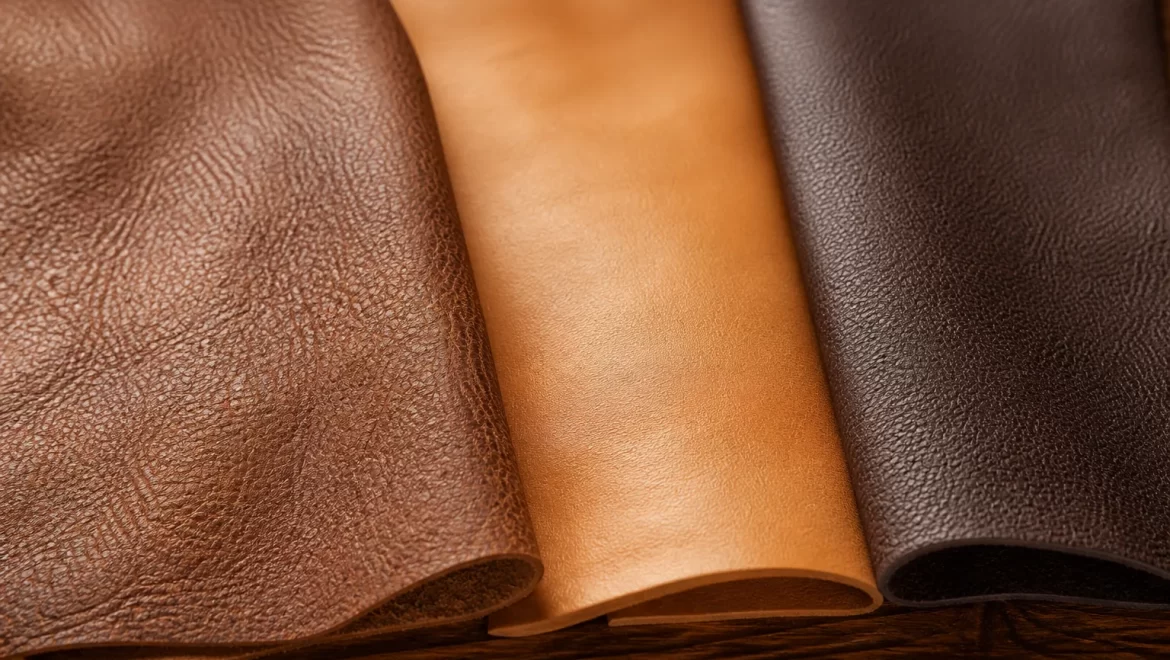
Cowhide vs Sheepskin vs Goatskin: Choosing the Right Leather for Bag Styles
Most bag buyers think of leather as a single material. On the factory floor, it is anything but. The animal the hide came from determines everything about how the leather feels, how it wears, how it sews, and what it costs — and three animals dominate the bag industry: cattle, sheep, and goats. Each produces a leather with a distinct personality, and choosing between them is one of the most consequential decisions in bag design.
Cowhide is the structural workhorse — strong, affordable, and versatile. Sheepskin is the soft luxury option — supple, elegant, and delicate. Goatskin is the underrated performer — lightweight, tough, and fine-grained. None is objectively "best"; each is best for a particular bag style, price point, and brand story. This guide compares all three from a manufacturer's perspective — grain, softness, tear strength, weight, price, and production behavior — so you can choose with your eyes open and your tech pack accurate.
The Three Main Leathers at a Glance
| Leather | Grain | Softness | Strength | Weight | Relative price |
|---|---|---|---|---|---|
| Cowhide | Coarse, bold, natural | Firm to medium | High tensile strength | Heavy | $ (baseline) |
| Sheepskin | Fine, smooth, uniform | Very soft, drapes | Low-moderate tear strength | Light | $$ |
| Goatskin | Fine, tight, pebbled | Medium-soft | Excellent tear strength | Light | $$–$$$ |
One line of context before we go deeper: the hide's structure differs by species because of how each animal lives. A cow's hide is thick and dense — built for a large, heavy animal. A sheep's hide is thin and open-fibered — built for a soft, fleece-covered animal. A goat's hide is thin but extraordinarily tight-grained — built for a nimble, horned animal that rubs against rocks. Those biological facts show up directly in the leather on your cutting table.
Cowhide: The Structural Workhorse
Cowhide is the default leather of the bag industry, and for good reason. It is produced in the largest volumes, comes in the widest range of finishes, and offers the best balance of strength, thickness, and price.
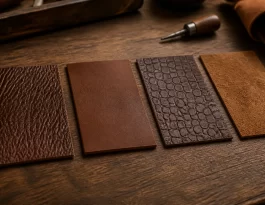
Grain and texture. Cowhide has the boldest, most visible grain of the three — open pores, natural growth lines, and an honest, rugged texture. When you see a bag with a pronounced natural surface, it is almost certainly cowhide (or a cowhide product). The grain takes embossing well, which is why "embossed croc" and "embossed pebble" effects are usually cowhide underneath.
Strength and thickness. Cowhide is the thickest and strongest of the three in absolute terms. It is the only one of the three that routinely reaches 1.6–2.4 mm for structured bags, and its dense fiber structure carries heavy loads without stretching. For work bags, travel bags, and anything that must survive years of abuse, cowhide is the rational choice.
Softness and feel. Firm is the honest word. Cowhide is not plush — it is substantial. The feel is "premium solid" rather than "soft luxury," and that is exactly what many brands want. If your bag line is built on structure, durability, and heritage positioning, cowhide's firmness is a feature, not a limitation.
Price. Cowhide is the most economical of the three per square foot, because cattle are farmed at scale and every hide yields large usable areas. For a brand watching margins, cowhide gives the most bag per dollar.
Sheepskin: The Soft Luxury Option
Sheepskin is the leather of luxury softness. When a bag is described as "buttery," "plush," or "like a glove," it is usually sheepskin — the softest, most supple leather in commercial use.
Grain and texture. Sheepskin has a fine, smooth, uniform grain with a natural softness that needs no breaking-in. The surface is even and elegant, which makes it a favorite for smooth, minimalist designs and for aniline finishes that showcase the natural surface.
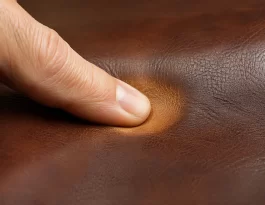
Softness and drape. This is sheepskin's defining quality. It drapes, gathers, and molds like fabric, which makes it the material of choice for slouchy totes, soft clutches, and designs built on folding, pleating, or ruching. In the hand, sheepskin feels immediately luxurious — and that first-touch impression sells bags.
Strength and durability. Here is the honest trade-off: sheepskin is the least durable of the three in structural terms. Its fiber structure is open and loose, so its tear strength is lower, and it stretches — which is a design feature for draping but a hazard at stress points like handles and seams. A sheepskin bag must be constructed carefully: reinforced at load-bearing areas, lined properly, and not overloaded. Brands that sell sheepskin must be honest with customers about care requirements.
Weight. Sheepskin is light — roughly a third lighter than cowhide at comparable area. For large bags, this makes a real difference in comfort and in shipping cost.
Goatskin: The Underrated Performer
Goatskin is the leather industry's best-kept secret. It has been used for centuries for gloves and fine bookbinding, and it combines qualities that seem contradictory: lightweight yet extremely durable, soft yet structured, fine-grained yet abrasion-resistant.
Grain and texture. Goatskin has a tight, fine, distinctive grain with a subtle natural pebbling — often described as "pebbled" or "grained" — that looks refined rather than rugged. It takes dyes beautifully and ages gracefully, developing a rich sheen with use.
Strength — the headline quality. Goatskin has the best strength-to-weight ratio of any leather. Its tight fiber structure gives it tear strength that rivals or exceeds cowhide at half the thickness, which is why goatskin gloves can be thin yet long-lasting. For bags, this means you can build a lightweight bag that is genuinely tough — the combination that luxury houses prize.
Softness and body. Goatskin sits between cowhide and sheepskin: softer and more supple than cowhide, firmer and more structured than sheepskin. It molds to the hand, holds a defined shape, and does not stretch out of control.
Price and supply. Goatskin is typically the most expensive of the three per square foot, because goats are smaller (less usable hide per animal) and supply is more limited than cattle. The cost is justified by its unique properties, and it occupies a premium niche in the market.
Head-to-Head Comparison
| Attribute | Cowhide | Sheepskin | Goatskin |
|---|---|---|---|
| Tensile strength | Highest (absolute) | Lowest | High |
| Tear strength | High | Low-moderate | Excellent (per weight) |
| Softness | Firm | Very soft | Medium-soft |
| Drape | Minimal | Exceptional | Moderate |
| Structure retention | Excellent | Poor | Good |
| Weight | Heavy | Light | Light |
| Grain | Coarse, bold | Fine, smooth | Fine, pebbled |
| Abrasion resistance | High | Moderate | Very high |
| Stretch | Low | High | Low-moderate |
| Price per sq ft | $ | $$ | $$–$$$ |
| Typical thickness | 1.2–2.4 mm | 0.8–1.4 mm | 0.6–1.2 mm |
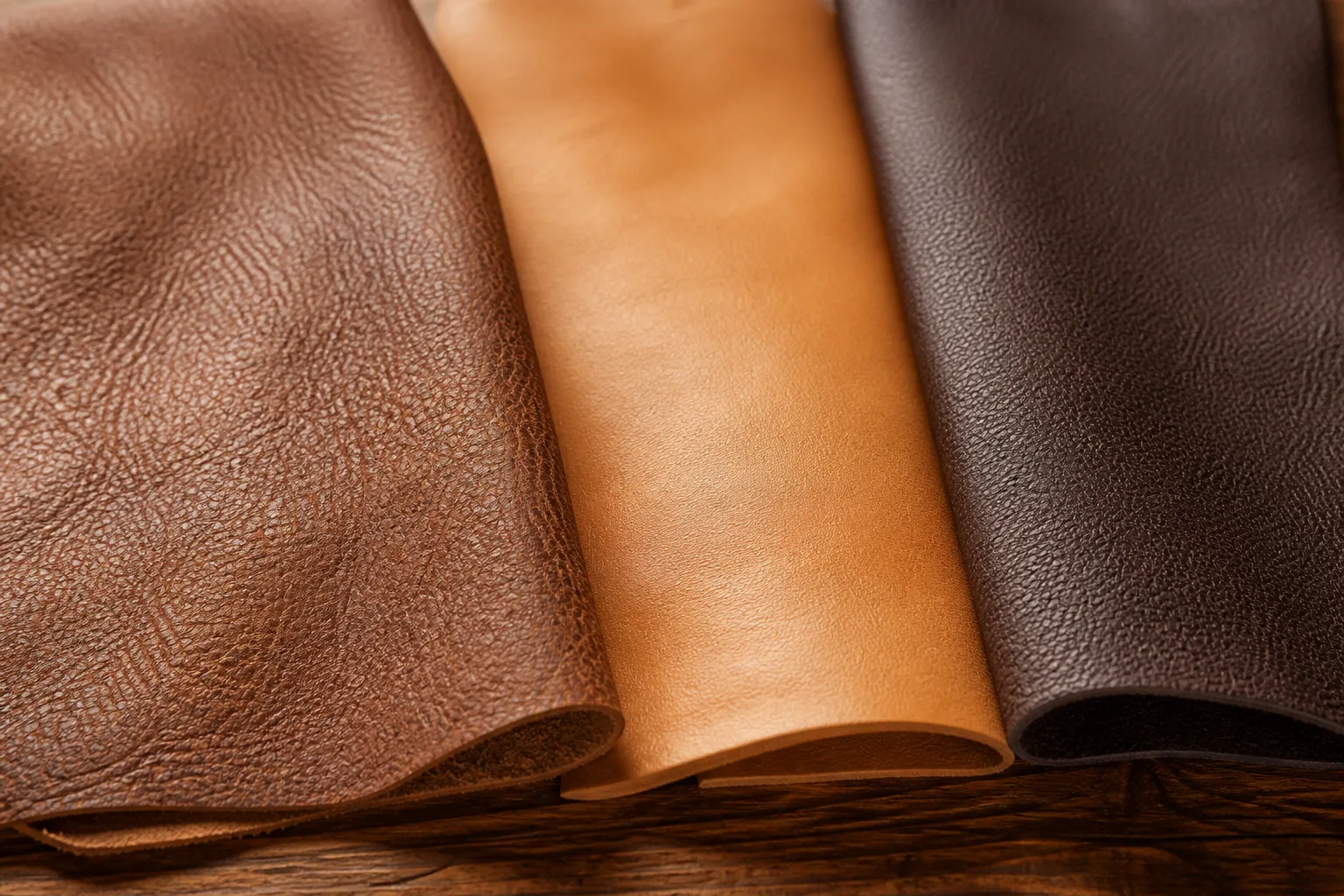
The table tells the practical story: cowhide for structure and value, sheepskin for softness and drape, goatskin for the light-and-tough premium niche.
Which Bag Styles Suit Which Leather
| Bag style | Recommended leather | Why |
|---|---|---|
| Structured work bag / briefcase | Cowhide | Thickness, strength, shape retention |
| Travel duffel / weekend bag | Cowhide | Abrasion resistance, heavy loads |
| Heritage tote | Cowhide | Bold grain, patina story, value |
| Slouchy tote / hobo | Sheepskin | Drape and softness |
| Soft clutch / evening bag | Sheepskin | Luxurious hand feel, elegance |
| Everyday crossbody | Goatskin | Light, tough, refined grain |
| Luxury handbag | Goatskin or sheepskin | Premium feel; goatskin for durability, sheepskin for softness |
| Gloves / small leather goods | Goatskin | Thin, strong, precise stitching |
| Kids' bags / light totes | Sheepskin or goatskin | Lightweight comfort |
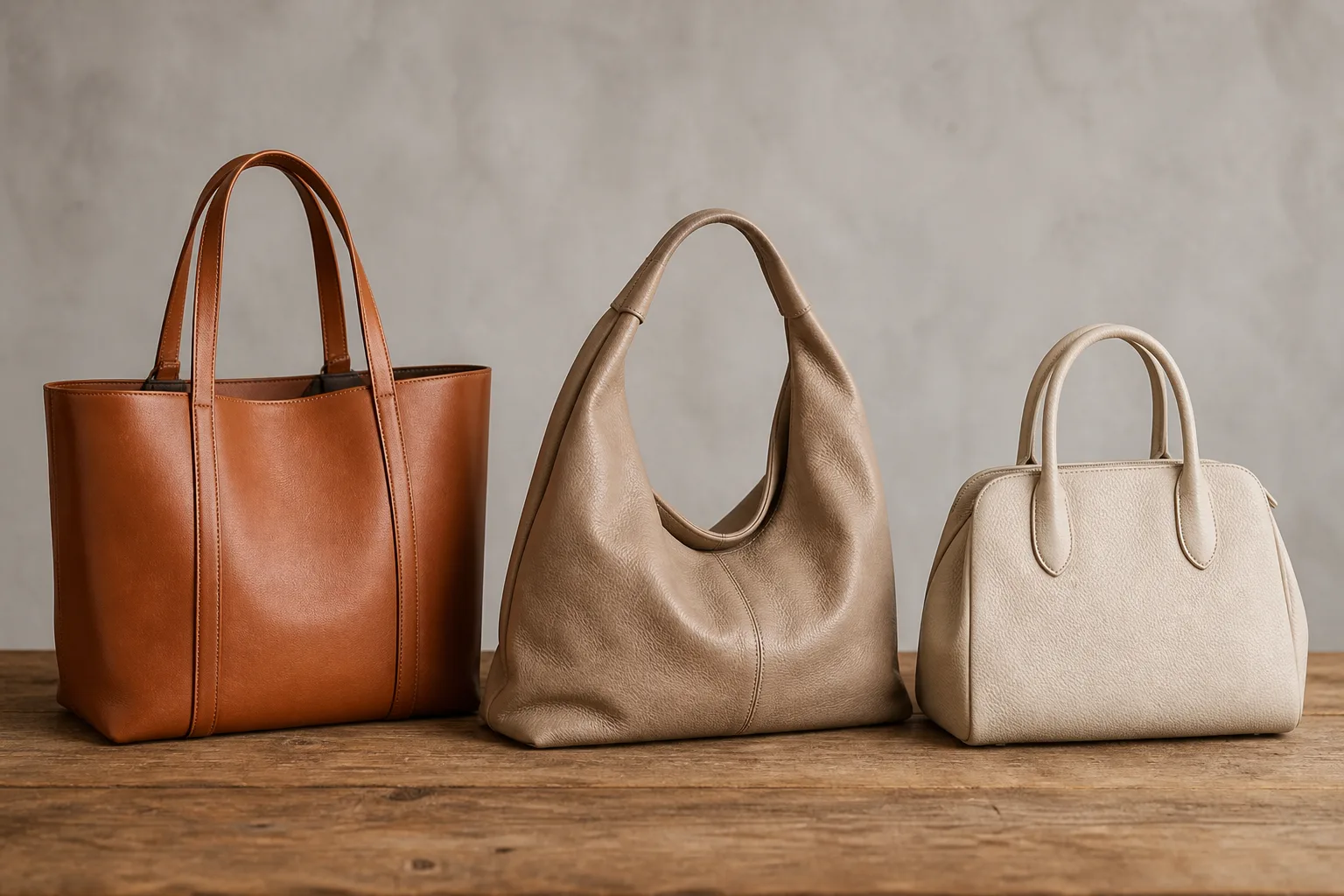
Two patterns to notice. First, silhouette drives the choice: structured silhouettes need cowhide's body; soft silhouettes need sheepskin's drape; refined silhouettes benefit from goatskin's fine grain. Second, premium brands often mix: a line may use goatskin for the bag body and sheepskin for the interior lining, or cowhide for the base and goatskin for the flap — material mixing is a legitimate design and cost tool, not a compromise.
Manufacturing Behavior: What Each Leather Does on the Floor
The three leathers behave very differently in production, and that affects your cost and lead time as much as the material price.
Cutting. Cowhide cuts the easiest: large hides, consistent thickness, forgiving panel nesting. Sheepskin is trickier — it is softer, stretches during cutting if not stabilized, and its thinner hides require more careful pattern placement. Goatskin cuts cleanly but its smaller hides mean more careful nesting to maximize yield.
Stitching. Cowhide sews predictably at standard tension. Sheepskin is the hard one: its stretchiness causes puckering, skipped stitches, and seam distortion if tension is not carefully tuned — and stitch holes can tear under stress. Goatskin sews beautifully: its tight fibers hold stitches firmly, which is why it is the traditional leather for fine glove stitching. A bag stitched in goatskin looks sharper at high SPI than the same pattern in either of the other two.
Edge finishing. Cowhide edges burnish and paint well — dense fibers, clean results. Sheepskin edges are soft and can crush during finishing; they usually need edge paint or folded edges rather than burnishing. Goatskin edges finish finely, with a crisp, tight result that suits precision detailing.
Hardware and structure. Cowhide supports heavy hardware and frames. Sheepskin needs light hardware and reinforcement at stress points. Goatskin pairs with medium hardware and holds structure better than its thinness suggests — the tight grain does the work.
Yield and waste. Cowhide yields the highest usable area per hide; sheepskin and goatskin yield less, which pushes effective material cost up beyond the raw price per square foot.
Sourcing and Price Considerations
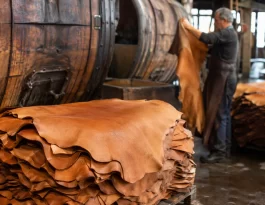
Prices fluctuate with global markets, but the relative structure is stable. At tannery level (bulk, 2026), expect cowhide finished leather around $2.00–$3.50 per square foot for bag grades, sheepskin around $3.50–$6.00, and goatskin around $4.00–$7.00 — with premium finishes and certified tanneries at the upper end of each range.
Three sourcing realities matter beyond the price list. First, thickness economics: cowhide can be split into multiple usable layers (top grain and split), which is why cowhide products exist at every price point; sheepskin and goatskin are thinner and used as single layers. Second, finish capability: cowhide takes the widest range of finishes (embossing, coatings, burnishing); sheepskin is usually finished lightly (aniline or semi-aniline) to preserve its softness; goatskin accepts both light finishes and embossing. Third, certification: if you sell into regulated markets, verify REACH compliance and consider LWG-certified tanneries; goatskin and sheepskin supply chains are smaller, so certification documentation is worth confirming early.
Sustainability and Ethical Sourcing
Sustainability is no longer a footnote for bag brands — it is a purchasing criterion, and the three leathers sit differently in the environmental conversation. Understanding the nuance lets you answer your buyers' questions honestly instead of with marketing language.
Cowhide is a byproduct of the beef industry. Cattle are not raised for their hides; leather is a co-product of meat production. This gives cowhide a genuine sustainability argument: using the hide valorizes material that would otherwise be waste. The counterweight is that cattle farming itself has a large environmental footprint, and leather's share of that burden is attributed through life-cycle analysis. For a pragmatic sustainability story, cowhide is the material you can defend: it is durable (a decade-plus of use), repairable, and biodegradable at end of life.
Sheepskin rides on the wool industry. Sheep are raised primarily for wool and meat, so sheepskin, like cowhide, is a byproduct — and wool production is generally considered lower-impact than beef. Sheepskin's sustainability case is strong on origin but weaker on longevity: a delicate sheepskin bag may not last as long, which shortens the useful-life argument. Choose sheepskin for designs that will be cared for and kept.
Goatskin is the niche option. Goat farming is smaller-scale and often part of mixed agriculture, especially in developing regions, which complicates supply-chain certification. The material itself is excellent for sustainability — long-lasting, lightweight (lower transport emissions per unit), and repairable — but brands should verify the tannery's environmental credentials rather than assume them.
Across all three, three certifications matter: LWG (Leather Working Group) for tannery environmental performance, REACH for chemical compliance in EU markets, and increasingly ISO 14001 as a baseline. Ask your tannery for documentation before you promise your buyers anything. A sustainability claim backed by a certificate survives scrutiny; a claim backed by a slogan does not.
Care and Maintenance by Leather Type
The leather you choose dictates the care card you print, the returns you absorb, and the reviews your bags earn. Each of the three species needs different instructions — and customers who are told the truth become loyal customers; those who are surprised become refunds.
Cowhide care. Cowhide is the low-maintenance member of the family. A light conditioning every two to three months keeps it supple; a dry cloth handles most dirt; and finished cowhide shrugs off light rain. Advise customers to avoid soaking and to keep the bag away from radiators and prolonged direct sun, which dry and fade the leather. For the majority of cowhide bags, care is simple enough to summarize in two lines on the care card.
Sheepskin care. Sheepskin demands the most respect. It should be protected from rain — a wet sheepskin bag must be blotted, dried slowly at room temperature, and conditioned afterward. Stains should be treated promptly with a cleaner designed for delicate leather. Advise customers to store sheepskin bags stuffed, in a dust bag, away from heat and humidity. The care commitment is real, and it should be part of the buying conversation, not a surprise in the box.
Goatskin care. Goatskin sits in the middle: it is tougher than sheepskin and needs less fussing than people expect. Its tight grain resists scuffs, and light conditioning a few times a year maintains its sheen. Like cowhide, it handles normal daily use with minimal care; unlike cowhide, its fine grain rewards gentle handling and occasional buffing with a soft cloth.
Write the care card to match the leather — and match the sales expectation to the reality. A sheepskin bag sold as "carefree" generates returns; sold as "delicate luxury that rewards attention," it generates devotion.
Common Misconceptions
"Sheepskin is fragile and will tear." Partly true, partly reputation. Sheepskin's tear strength is genuinely lower, but a well-constructed sheepskin bag — reinforced at seams and handles, properly lined — performs fine in normal use. The bags that fail are the ones built carelessly or overloaded. Sheepskin is delicate relative to cowhide, not defective.
"Goatskin is a cheap material." The opposite is usually true: goatskin is typically the most expensive of the three per square foot. Its reputation as "cheap" comes from confusion with the word "kid" (young goat) and from low-quality goat splits reaching the market. Quality goatskin is a premium material.
"Cowhide is only for rugged, masculine bags." Cowhide's range is far wider than its workwear reputation. In fine finishes — smooth aniline, polished, or burnished — cowhide produces elegant, feminine, and luxury bags. The material is neutral; the finish and design create the character.
"Thicker leather is always more durable." Not with sheepskin vs goatskin: goatskin at 0.8 mm can outlast cowhide at 1.6 mm in tear resistance per weight. Durability depends on fiber structure, not just thickness.
FAQ
Which leather is the most durable for bags?
A: In absolute terms, cowhide — it is the thickest and strongest. But goatskin offers the best strength-to-weight ratio and excellent tear strength, making it the premium choice for light-and-tough bags.
Is sheepskin leather good for everyday bags?
A: Yes, with proper construction — reinforced seams and handles, quality lining, and reasonable loads. Sheepskin is best suited to softer silhouettes; it is not the right choice for heavy-duty commuter bags.
What does goatskin leather feel like?
A: Soft and supple with a distinctive fine, pebbled grain. It is smoother and finer than cowhide but firmer than sheepskin, with a refined, luxurious hand feel.
Why is goatskin more expensive than cowhide?
A: Goats are smaller animals, so each hide yields less usable area, and goat supply chains are smaller than cattle. The tight, strong fiber structure also commands a premium.
Can the same bag design be made in all three leathers?
A: Technically yes, but the result changes: pattern sizes, hardware, edge treatment, and reinforcement all need adjustment. Always re-sample when switching species.
Which leather is best for a first bag collection?
A: Cowhide is the pragmatic default — best value, widest finish range, most predictable manufacturing. Reserve sheepskin and goatskin for designs that specifically need their properties.
How do I tell cowhide, sheepskin, and goatskin apart?
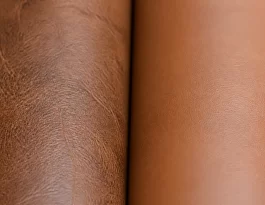
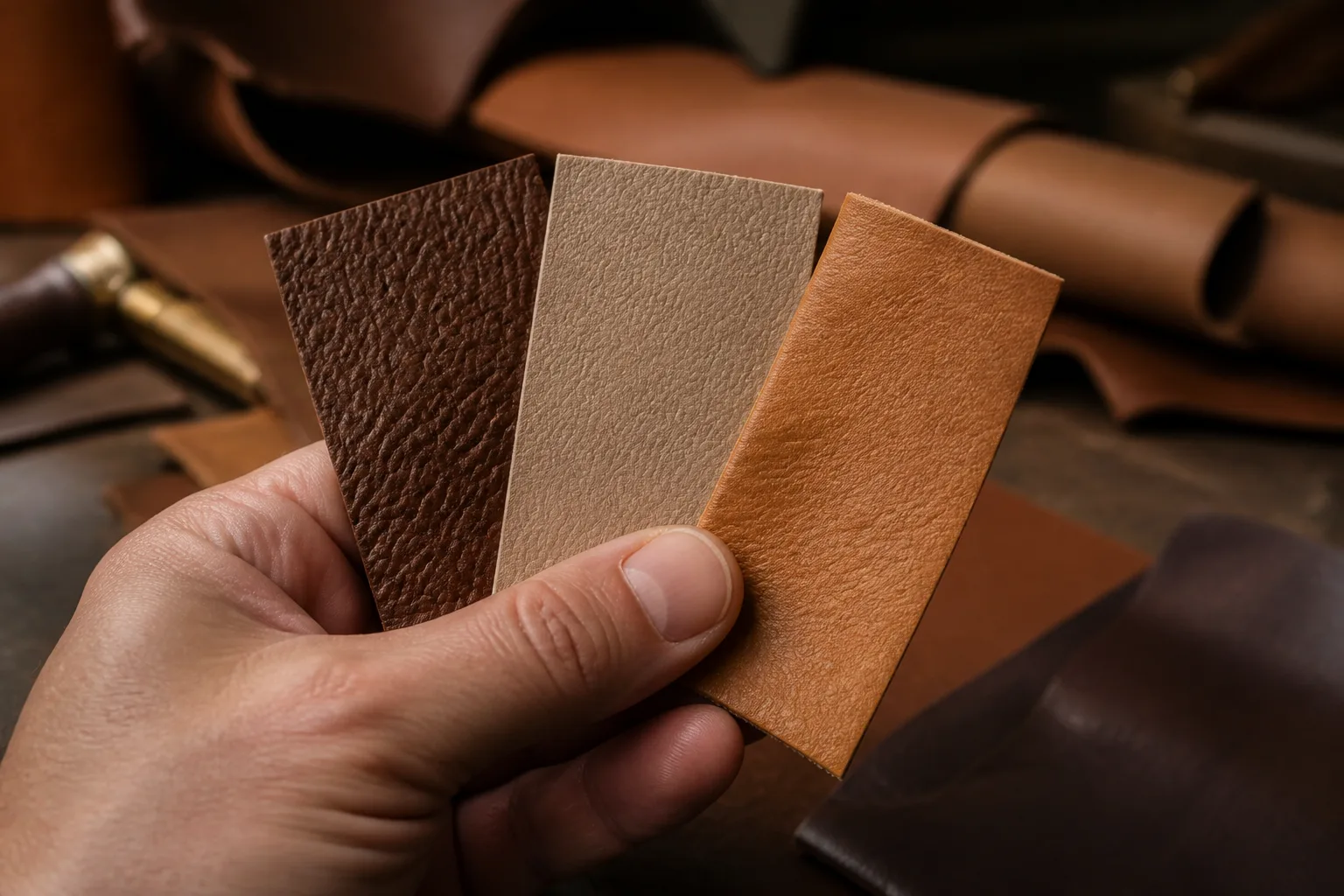
A: Look at grain and feel: cowhide has bold, open grain; sheepskin is smooth and very soft; goatskin has fine, tight pebbling. A cross-section also helps — cowhide is dense, sheepskin open, goatskin tight but thin.
Does goatskin develop a patina?
A: Yes, and beautifully. Its tight grain burnishes and develops a rich sheen with use, making it a favorite for heritage-style small goods.
How to Choose for Your Bag Line: A Decision Framework
Work through these four questions and the right species usually announces itself:
1. What silhouette are you building? Structured and architectural → cowhide. Soft, draped, or gathered → sheepskin. Refined, medium-structure → goatskin.
2. What will the bag carry, and how often? Heavy daily loads → cowhide. Light-to-medium loads with an emphasis on feel → sheepskin or goatskin. If you need light weight and toughness together → goatskin.
3. What is your price point? Value and volume → cowhide. Mid-premium softness → sheepskin. Premium light-and-tough → goatskin.
4. What is your brand story? "Built to last, heritage" → cowhide. "Soft luxury, indulgent feel" → sheepskin. "Fine craftsmanship, lightweight performance" → goatskin.
Conclusion
Cowhide, sheepskin, and goatskin are three different materials wearing the same name — and choosing between them is a design decision, not a quality judgment. Cowhide gives you structure, strength, and value, the backbone of most successful lines. Sheepskin gives you the softest, most luxurious hand feel in leather, perfect for draped and elegant silhouettes. Goatskin gives you the best of both — light, tough, and fine-grained — at a premium price and a refined character all its own.
The professional approach is to let the silhouette and the story pick the leather, then verify the choice in production: sample in the actual species, check the manufacturing behavior, and confirm the price with a real tannery quote. The bag that feels inevitable in the hand — the one where material, design, and construction finally agree — is almost always the one where the leather was chosen deliberately, for reasons exactly like the ones in this guide.
Planning a new bag line and unsure which leather fits? Contact our factory — we will prepare samples in cowhide, sheepskin, and goatskin for your specific design, with a cost comparison and manufacturing notes for each, so you can feel the difference before you commit.