How Should a Pilot Run Scale into Bulk Bag Production?
- What a Pilot Run Is For
- Defining the Pilot Size
- The Purpose Statement
- Ramp Curves and Pace
- Yield Monitoring
- Release Conditions Before Bulk
- Material Yield and the Quotation
- Tooling, Fixtures and Templates
- Training and Skill Distribution
- Common Ramp Failures
- Communication During the Ramp
- Inspection During Ramp-Up
- Costing the Ramp
- When the Pilot Fails
- Payment and Milestones
- Documentation Package
- Capacity Booking and Line Time
- Sub-Suppliers and Component Lead Times
- Packaging and Logistics Ramp
- Quality Agreement and Claims
- Pilot for Reorders and Repeat Styles
- Working With the Factory Floor
- Measuring Success at the End of Bulk
- Common Traps in the Handover
- Limits of the Pilot Method
- Supplier Scorecard During Ramp
- Shipping Schedule and Booking
- Handover to the Next Season
- Pilot Documentation Checklist
- When to Walk Away
- Auditing the Ramp
- Working Through a Trading Company
- FAQ
A pilot run proves that a bag can be made. Bulk production proves that it can be made a thousand times, on the same line, with the same material, by people who were not in the sample room when the first one was approved.
The gap between those two statements is where most sourcing problems begin. A pilot of twenty pieces hides variation that a run of two thousand exposes, and the exposure usually arrives after the deposit has been paid and the leather has been cut. This guide sets out how a bag manufacturer should plan the pilot, define its purpose, schedule the ramp, monitor yield and agree the release conditions before bulk begins.

What a Pilot Run Is For
A pilot is a test of the production system rather than a small version of the order, and treating it as the latter wastes its value.
Testing the Process
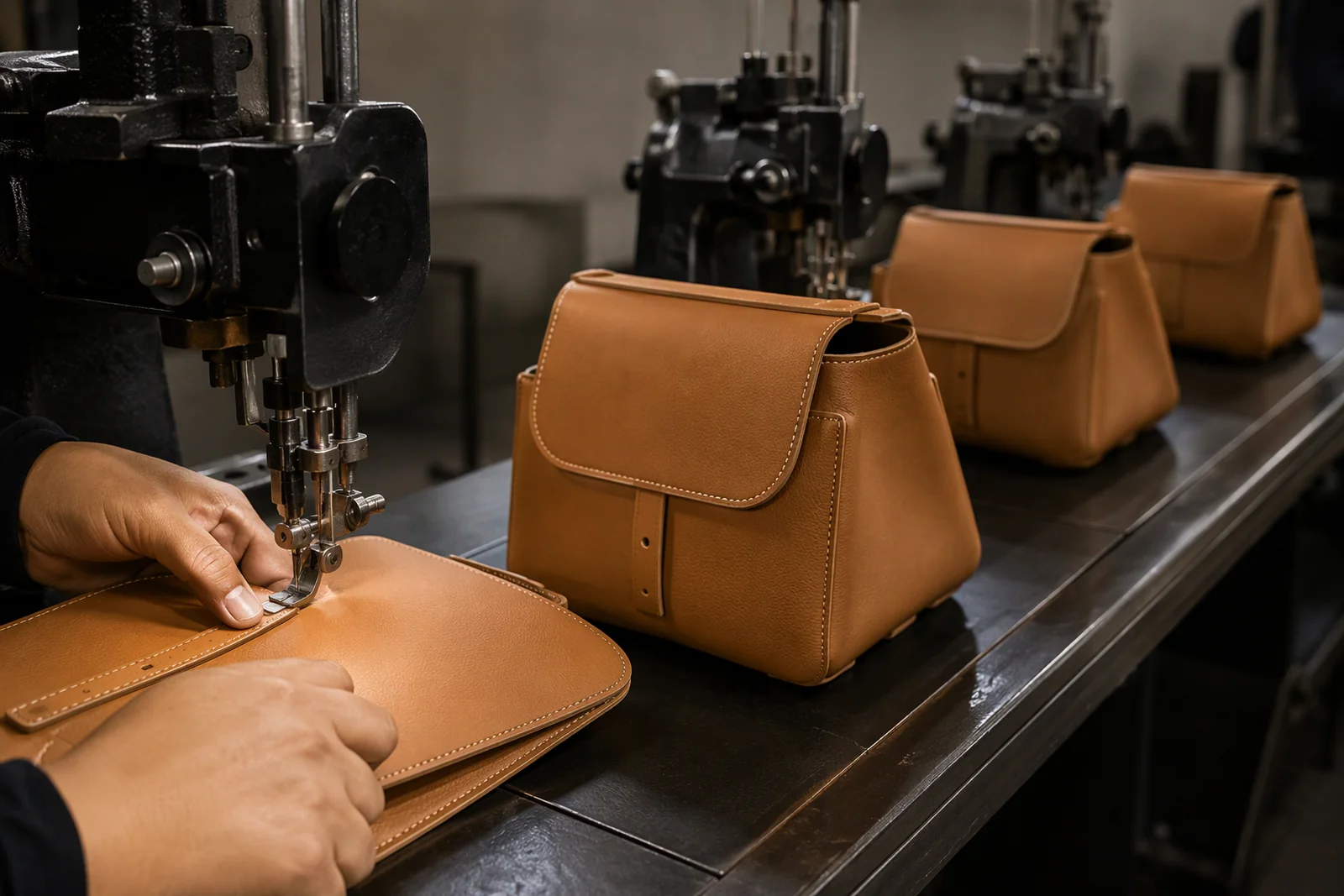
The pilot exercises the real line, the real tooling and the real operators. Its purpose is to find where the process breaks, not to deliver sellable goods quickly.
Testing the Material
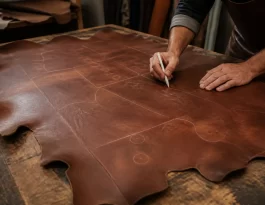
A pilot confirms that the material specified can be cut, skived, stitched and finished at production speed. A hide that behaves in the sample room can behave differently in a cutting room.
Testing the Documents
A pilot tests the specification, the bill of materials, the inspection plan and the packing instruction together. Documents that disagree are found here or nowhere.
Testing the People
A pilot shows whether the line has been trained. Most pilot failures are training failures that appear as material or machine problems.
Defining the Pilot Size
The pilot size is a statistical and practical decision, and both dimensions have to be satisfied.
The Minimum That Shows Variation
A pilot has to include more than one operator, more than one shift and more than one batch of material. A run of ten pieces made by one person in one afternoon proves very little.
The Maximum That Stays Manageable
A pilot that takes a month to complete delays the programme and drifts into bulk. Most programmes settle on a size that can be completed within one to two weeks.
Colour and Size Spread
The pilot should cover every colourway and the smallest and largest size. The middle sizes are rarely where the problems are.
| Pilot size | Covers | Risk left |
|---|---|---|
| Under 20 | One operator, one colour | Most variation hidden |
| 20 to 50 | Two operators, main colours | Shift variation hidden |
| 50 to 100 | Shifts and sizes | Minor |
| Over 100 | Full spread | Cost and delay |

The Purpose Statement
A pilot without written objectives produces opinions instead of findings, and the findings are what the ramp is built on.
What to Prove
State the three or four questions the pilot must answer: whether the seam holds at production speed, whether the material yield matches the quotation, whether the finish matches the approved sample, whether the packing protects the bag.
What to Measure
Each question needs a measure and a threshold. A pilot reported as looking good has answered nothing.
What to Record
Record the measurements, the defects and the time per operation. Time is the figure that predicts the bulk price and the delivery date.
Ramp Curves and Pace
Bulk production does not begin at full speed, and the shape of the ramp determines how much defective work reaches the customer.
Stepwise Ramp
Produce a first tranche at a reduced rate, inspect it fully, then increase. Each step is released only when the previous one is clean.
The Learning Curve
Operators speed up as they repeat an operation, and quality often dips in the middle of that curve. The ramp should be slow enough that the dip is caught inside the factory.
Ramp Duration
A ramp that is too fast pushes undiscovered defects into volume. A ramp that is too slow costs capacity. The right duration is set by the defect rate at each step, not by the calendar.
| Ramp step | Share of order | Inspection |
|---|---|---|
| First tranche | Small | Full |
| Second tranche | Moderate | Full |
| Third tranche | Larger | Sampled |
| Balance | Remaining | Sampled |
Yield Monitoring
Yield is the number that tells a buyer whether the ramp is working, and it has to be measured per operation rather than per order.
First Pass Yield
The share of pieces that pass inspection without rework. A first pass yield that stays flat through the ramp is the clearest sign that the line is stable.
Rework Rate
The share of pieces that need correction. Rework hides in labour cost and often reappears as a field failure later.
Scrap Rate
The share of material lost. A scrap rate that rises during the ramp points at cutting or at material variation rather than at sewing.
Yield by Operation
Cutting, skiving, stitching, edge finishing and packing each have their own yield. Aggregating them hides the operation that is failing.
Release Conditions Before Bulk
Bulk should begin only when a set of conditions is met, and the conditions should be agreed in writing before the pilot starts.
The Approved Sample
A signed production sample from the pilot, not from the sample room. The pilot sample is the only one made on the line that will make the order.
The Measurement Record
Dimensional and weight checks within the tolerances agreed. A bag whose dimensions drift during the pilot will drift further in bulk.
The Defect List
A list of defects found, with the corrective action for each and evidence that the action worked. An unresolved defect is a reason to delay, not a risk to accept.
The Capacity Confirmation
Written confirmation that the line, the materials and the labour are available for the bulk dates. Capacity confirmed verbally is capacity that can disappear.
| Condition | Evidence | Consequence if missing |
|---|---|---|
| Approved sample | Signed pilot piece | Disputes over appearance |
| Measurement record | Check sheet | Dimensional drift |
| Defect list closed | Corrective evidence | Repeat defects |
| Capacity confirmed | Written schedule | Late delivery |
Material Yield and the Quotation
The pilot is the first honest test of the material quantity in the quotation, and a surprise here changes the price of the whole order.
Consumption Per Bag
Measure the actual material consumed for each piece, including the loss on the cutting table. The difference between quoted and actual consumption is the most common source of a price renegotiation.
Hide Utilisation
On leather, utilisation depends on the defect map of the hide. A pilot reveals whether the mill's grading matches the factory's cutting needs.
Reorder Timing
Material for bulk has a lead time that starts after the pilot is approved. A pilot that finishes late compresses the material window and forces substitutes.
Tooling, Fixtures and Templates
Bulk depends on tooling that the pilot must prove, because a template that works for ten pieces can fail at a thousand.
Template Durability
Cutting templates, sewing gauges and folding jigs wear. A pilot should run long enough to show whether a template survives a shift of production.
Fixture Consistency
A fixture that allows the operator to place a panel slightly differently produces dimensional variation that accumulates across the bag.
Spare Tooling
Order spare templates and gauges with the pilot. A worn template discovered mid-order stops the line while a replacement is made.
Training and Skill Distribution
The pilot must involve the operators who will run the bulk, and it must show whether the skill exists across the team rather than in one person.
Named Operators
Record who made which pilot piece. When a defect appears, the record shows whether it is a person, a station or a material.
Skill Spread
If one operator produces good work and the rest do not, the process depends on a person rather than on a method. Bulk will expose that.
Training Before Ramp
Train before the ramp, not during it. Training during the ramp produces the dip in quality that the ramp is meant to avoid.
Common Ramp Failures
Five failures account for most of the trouble between a pilot and a bulk order, and each has a recognisable early sign.
The Sample Room Pilot
The pilot is made in the sample room by the sample maker. It proves nothing about the line and it produces a bulk order that cannot be repeated.
Material Substitution
A material is changed after the pilot because of availability, and the change is not re-tested. The substitution is discovered at the customer.
Compressed Ramp
The ramp is shortened to meet a delivery date. Defects that the ramp would have caught arrive in volume instead.
Undefined Release
Bulk starts without written release conditions, so the decision becomes a conversation and then a dispute.
Ignored Yield
Yield is not measured, so a falling trend is invisible until the rework cost appears in the margin.
| Failure | Early sign | Control |
|---|---|---|
| Sample room pilot | Line never ran the design | Pilot on production line |
| Substitution | New lot, no retest | Re-test on change |
| Compressed ramp | Full speed at day two | Stepwise release |
| Undefined release | Verbal go-ahead | Written conditions |
| Ignored yield | No per-operation figures | Yield tracking |
Communication During the Ramp
The ramp generates information daily, and a buyer who receives it late cannot act on it while it still matters.
Daily Reporting
A short daily report with pieces produced, defects found and issues open. Length matters less than regularity.
Escalation Rules
Agree in advance what stops the line: a defect above a stated rate, a material deviation, a failed measurement. Without rules, escalation becomes negotiation.
The Single Contact
One contact on each side for technical questions. Two contacts produce two answers and a confused line.
Inspection During Ramp-Up
Inspection intensity should fall as the ramp stabilises, and the reduction should follow evidence rather than the calendar.
Full Inspection at First
The first tranche is inspected fully. This is the only point where every piece can be examined at a cost that makes sense.
Sampling Once Stable
Once two consecutive tranches are clean, sampling can begin. The sampling plan should state the level and the acceptance rule.
Randomised Checks
Add unannounced checks during the ramp. A line that performs only when inspected is a line with a hidden problem.
| Stage | Inspection | Purpose |
|---|---|---|
| First tranche | Full | Find every defect |
| Second tranche | Full | Confirm correction |
| Third tranche | Sampled | Confirm stability |
| Balance | Sampled plus audit | Maintain control |
Costing the Ramp
The ramp has a cost that is rarely quoted, and it belongs in the price rather than in a later negotiation.
Learning Labour
Operators produce less in the first days. That difference is a real cost and it should be visible in the quotation.
Rework and Scrap
The ramp produces more scrap than steady production. A quotation that assumes steady-state scrap understates the first order.
Inspection Cost
Full inspection of the first tranche costs more than sampled inspection of the balance. It is the cheapest insurance in the programme.
When the Pilot Fails
A failed pilot is a successful outcome when it is found early, and the correct response is to fix and repeat rather than to proceed.
Diagnose Before Repeating
Identify whether the failure was material, method, machine or training. A repeat pilot without diagnosis repeats the result.
Fix and Re-Pilot
Run a second pilot of the same size with the correction applied. Shrinking the second pilot hides whether the fix holds.
Renegotiate Openly
If the failure changes the cost or the date, renegotiate immediately. A late renegotiation is usually more expensive than an early one.
Payment and Milestones
Payment terms shape behaviour during the ramp, and a schedule tied to evidence keeps the programme honest.
Deposit and Pilot Fee
A pilot is normally paid for, and it should be. A free pilot is a pilot that the factory will not resource properly.
Milestone Release
Tie the bulk payment to release conditions rather than to dates. Payment on evidence keeps the ramp on schedule; payment on calendar invites pressure to start early.
Retention
Holding a balance until the last tranche is accepted gives the buyer leverage at exactly the point where the risk is highest.
| Milestone | Evidence | Typical share |
|---|---|---|
| Pilot | Pilot report | Pilot fee |
| Bulk release | Signed conditions | Deposit |
| Mid production | Yield report | Progress payment |
| Final inspection | Passed AQL | Balance |
Documentation Package
The pilot produces the documents that bulk depends on, and they should be assembled while the pilot is running rather than afterwards.
The Production File
Specification, bill of materials, approved sample, measurement record and inspection plan, in one place and in one version.
The Defect Log
Every defect found in the pilot with its cause and correction. This log is the training document for the bulk line.
The Packing Instruction
Carton configuration, packing sequence and labelling. Packing problems discovered in bulk are expensive to correct in a warehouse.
Capacity Booking and Line Time
Capacity is the resource that disappears quietly, and booking it in writing is the only protection.
Line Time
Ask for the number of days and the number of lines allocated, not for a completion date. Days and lines can be checked; a date cannot.
Competing Orders
A factory with a large order arriving mid-programme will move labour. Written line allocation is the defence, and a penalty clause is the backstop.
Seasonal Pressure
Capacity tightens before major holidays. A programme scheduled into that window needs buffer or a different slot.
Sub-Suppliers and Component Lead Times
A bag is assembled from components that come from elsewhere, and the ramp fails at the component that was not booked.
Hardware and Zips
Metal hardware and zips have their own lead times and their own minimums. A pilot using stock hardware can hide a four-week component delay.
Lining and Interlining
Lining is often ordered per colourway, which multiplies the risk. Confirm the lining booking at the same time as the leather.
Packaging Components
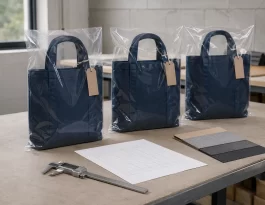
Boxes, polybags and labels are usually the last items ordered and the first to delay a shipment. Book them with the pilot.
Packaging and Logistics Ramp
The end of the line is part of the process, and packing is where a well-made bag becomes a damaged delivery.
Packing Line Capacity
Packing has its own rate. A line that produces faster than it can pack accumulates work in progress and damages it.
Carton Testing
Test the carton with finished bags before bulk. A carton that compresses in transit produces claims that look like quality failures.
Loading Sequence
Agree the loading sequence and the pallet plan. Mixed cartons loaded late are the usual source of a short shipment.
Quality Agreement and Claims
The ramp is the moment to agree what happens when something goes wrong, because afterwards the negotiation is weaker on both sides.
Defining a Defect
Major, minor and critical defects need written definitions with photographs. An undefined defect becomes a matter of opinion at the claim stage.
The AQL Level
Agree the sampling level and the acceptance number before bulk. Changing the level after inspection is the most common source of dispute.
Claim Process
State the evidence required, the response time and the remedy: rework, replacement or credit. A process agreed in advance is used; one invented later is argued.
Who Pays for Inspection
Third-party inspection costs money and someone has to own it. Agreeing that in advance removes a delay at the most sensitive moment.
Pilot for Reorders and Repeat Styles
A repeat order is not automatically safer than a first order, because the conditions that made the first one good may have changed.
Material Drift
A new dye lot or a new hide batch changes the material even when the article name is the same. A repeat should include a material check.
Line Change
The line that made the first order may be running something else. A short run-in before the repeat bulk confirms the setup.
Reduced Pilot
A repeat can use a smaller pilot than a first order, provided the material and the line are verified. Reducing every element at once removes the evidence.
Working With the Factory Floor
The pilot is run by people who will also be judged on output, and the buyer's approach during it shapes what is reported.
Ask for Problems
A pilot that reports no problems has usually not been asked properly. Invite the line to raise difficulties early and without penalty.
Visit if Possible
A visit during the pilot shows conditions that a report cannot: lighting, dust, crowding, machine condition and how work in progress is stored.
Respect the Sequence
Do not ask for a bulk date change during the pilot. Changes during a pilot are the fastest way to lose the information the pilot was meant to produce.
Measuring Success at the End of Bulk
The programme should end with a comparison against the pilot rather than with a shipment, and the comparison is what improves the next order.
Yield Against Pilot
Compare first pass yield, rework and scrap with the pilot figures. A drop in bulk is a finding, not a rounding error.
Cost Against Quotation
Compare the actual cost with the quoted cost. The difference shows whether the quotation was realistic or whether the price will move at the next order.
Time Against Plan
Compare the ramp duration with the plan. A ramp that consistently overruns is a planning input for the next programme.
Customer Feedback
Feedback on the first shipments is the only external measure. It should be collected and fed into the next pilot's purpose statement.
Common Traps in the Handover
The handover from pilot to bulk has its own set of recurring mistakes, and most of them are administrative rather than technical.
No Single Version
Two versions of the specification circulate and the line uses the older one. Version control is a quality control.
Verbal Approvals
An approval given on a phone call during the ramp is an approval that cannot be evidenced later.
Unrecorded Changes
A small change made during the ramp without a record becomes an unexplained difference in bulk.
Missing Photographs
Photographs of the approved pilot piece at each stage are the cheapest evidence available and are frequently not taken.
Limits of the Pilot Method
A pilot reduces risk and does not remove it, and stating the limits keeps expectations realistic.
What a Pilot Cannot Predict
How the bag performs in use, how a new material ages, and how a customer will treat it. Those require field data over time.
What It Cannot Cover
Every colourway at full volume or every operator on every shift. A pilot samples the system rather than exhausting it.
Where the Residual Risk Sits
In materials that change after approval, in capacity that is reallocated, and in changes made without a record. Each is manageable with documentation rather than with more pilot pieces.
Supplier Scorecard During Ramp
A scorecard kept during the ramp turns impressions into a record that supports the next negotiation.
What to Score
Yield, defect rate, response time, adherence to the release conditions and adherence to dates. Five measures are enough to compare suppliers.
When to Score
Weekly during the ramp and once at the end of bulk. A weekly figure shows direction; the final figure shows the supplier's baseline.
How to Use It
Use the scorecard at the next order rather than as a complaint. A supplier that sees the record understands what will be measured again.
| Measure | Good sign | Warning sign |
|---|---|---|
| First pass yield | Rising weekly | Flat or falling |
| Defect rate | Falling after fix | Repeating |
| Response time | Same day | Days |
| Date adherence | On plan | Slipping |
| Condition adherence | Documented | Verbal |
Shipping Schedule and Booking
Space on a vessel is a resource like line time, and it is booked before the bags exist rather than after.
Booking Lead Time
Booking must be made while the ramp is still running. Waiting for the last tranche to finish pushes the shipment into a later sailing.
Buffer Days
A short buffer between the final inspection and the cut-off absorbs a rework cycle. Without it, a small defect becomes a missed vessel.
Documents and Origin
Certificates of origin and any destination requirements take days to issue. They belong in the schedule, not in a reminder.
| Item | Lead time | Owner |
|---|---|---|
| Space booking | Weeks | Buyer or forwarder |
| Final inspection | Days | Third party |
| Origin certificate | Days | Factory |
| Carton marking | Days | Factory |
Handover to the Next Season
The knowledge from a ramp is only useful if it survives into the next programme, and that requires a short written record.
What to Keep
The approved sample, the defect log, the yield curve and the final measurement record. Four items describe the whole programme.
What to Retire
Old specifications and superseded samples. Keeping them creates the version confusion that the pilot was meant to prevent.
What to Repeat
The purpose statement of the next pilot should start from the defects found in this one. A pilot that repeats the same questions wastes its cost.
Pilot Documentation Checklist
A pilot closes with a document set, and the set is short enough to assemble while the work is happening.
Production Documents
Approved sample, measurement record, inspection plan and the release conditions as signed.
Commercial Documents
Pilot invoice or fee note, bulk purchase order, payment schedule and capacity confirmation.
Technical Documents
Defect log with corrections, material records with lots, and photographs at each production stage.
| Document | Purpose | Kept by |
|---|---|---|
| Approved sample | Appearance reference | Buyer and factory |
| Measurement record | Tolerance evidence | Buyer |
| Defect log | Training and claims | Both |
| Capacity confirmation | Schedule defence | Buyer |
When to Walk Away
Some pilot results justify ending the programme, and recognising them early saves a deposit and a season.
Repeated Failure on the Same Point
A defect that survives two corrective attempts indicates a process the factory cannot control, not a difficulty to be managed.
Material That Cannot Be Sourced
If the specified material cannot be obtained at the quoted price or lead time, the programme is built on a quotation that will not hold.
Capacity That Never Appears
A promise of line time that repeatedly moves is a statement about the factory's planning rather than about your order.
Communication Breakdown
A factory that stops reporting during the ramp will not report during bulk. Silence is a signal, not a pause.
Auditing the Ramp
An audit during the ramp checks whether what is reported matches what is happening, and it is most useful in the first week.
What to Look At
Work in progress, the defect bin, the measurement sheet and the material store. Four places show the real state of the line.
What to Ask
Ask the operator, not the manager, how the panel is placed and where it is difficult. Operators describe the problem the report omits.
What to Write
A short note with photographs and three actions. An audit without actions becomes a document nobody reads.
| Audit point | Signal | Action |
|---|---|---|
| Work in progress | Piles between stations | Rebalance line |
| Defect bin | Rework accumulating | Stop and correct |
| Measurement sheet | Blank or filled late | Reinstate checks |
| Material store | Mixed lots | Separate by lot |
Working Through a Trading Company
Many programmes run through a trading company rather than directly with the factory, and the ramp has to account for that layer.
Who Owns the Evidence
Establish who holds the pilot sample, the defect log and the measurement record. Evidence held by a party that did not make the bag is weaker.
Factory Access
Agree access to the production floor during the ramp. An intermediary that prevents a visit is preventing the audit that the pilot needs.
Responsibility for Delay
Decide in advance who carries the cost of a delay caused by a component the trader supplied. This is the most common gap in these arrangements.
| Arrangement | Visibility | Risk |
|---|---|---|
| Direct factory | Full | Low |
| Trader with factory access | Partial | Moderate |
| Trader without access | Low | High |
| Multiple traders | Very low | Very high |
FAQ
How large should a pilot run be?
A: Large enough to cover two operators, two shifts and every colourway, and small enough to finish in one or two weeks. Most programmes settle between fifty and a hundred pieces.
Should a pilot be made in the sample room?
A: No. It should run on the production line with the production operators. A sample room pilot proves the design, not the process that will make the order.
What should a pilot measure?
A: First pass yield, rework, scrap, material consumption and time per operation. Each one predicts a different part of the bulk price and delivery.
What is a stepwise ramp?
A: A schedule that produces a small tranche, inspects it fully, then increases volume only when the tranche is clean. It keeps undiscovered defects out of volume.
Why does quality dip in the middle of a ramp?
A: Because operators speed up before their habits are settled. A slow ramp catches that dip inside the factory rather than at the customer.
What release conditions should be met before bulk starts?
A: A signed pilot sample, a measurement record within tolerance, a closed defect list with evidence, and written confirmation of line time and material.
Why is first pass yield more useful than a final defect rate?
A: Because it shows how much work passed without correction. A final rate can look acceptable while rework is absorbing the margin.
How should yield be tracked?
A: Per operation, not per order. Cutting, skiving, stitching, edge finishing and packing each have their own figure, and aggregating hides the failing one.
Should payment follow dates or evidence?
A: Evidence. Tying payments to milestone documents keeps the ramp on schedule, while payment on calendar invites pressure to start bulk early.
How does the pilot protect the quoted price?
A: By measuring actual material consumption and time per operation. The gap between quoted and actual is usually found here, while it can still be renegotiated.
What if a material changes after the pilot?
A: Re-test it. A new lot or a substitute material requires its own pilot evidence, however small, before it goes into bulk.
Do repeat orders need a pilot?
A: A smaller one. Verify the material lot and the line setup, then run a short tranche. Removing every check at once removes the evidence.
How is capacity protected?
A: Ask for days and lines in writing rather than a completion date. A date cannot be checked, while allocated line time can.
What should happen when a pilot fails?
A: Diagnose the cause, correct it, and repeat a pilot of the same size. Shrinking the repeat hides whether the correction actually holds.
How does packing fit into the ramp?
A: It has its own rate and its own risks. A line that outruns packing accumulates work in progress, and a carton that was never tested produces transit damage.
When should a buyer end the programme?
A: When a defect survives two corrective attempts, when the material cannot be sourced at the quoted terms, when line time keeps moving, or when reporting stops.
Ready to stop discovering bulk problems after the deposit is paid? Write the pilot purpose before it starts, ramp in tranches that release on evidence, track yield per operation, and agree the defect definitions and line allocation in writing before bulk begins.