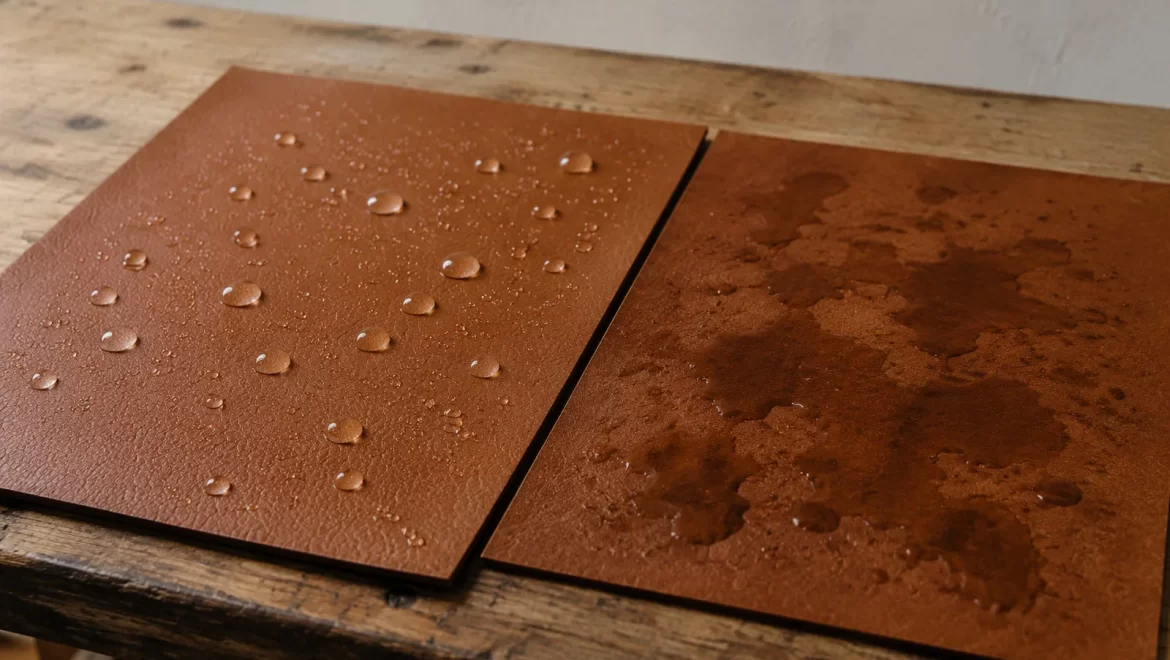
How Does Leather Absorb Water and Dry in Pet Bags?
- Why Water Behaviour Matters in a Pet Bag
- How Leather Absorbs Water
- Fibre Structure and Capillaries
- Tannage and Water Uptake
- Fatliquor and Water Repellency
- Finishing and Surface Wetting
- Thickness and Absorption Rate
- Zone Differences Across a Hide
- How Leather Dries
- Drying and Stiffening
- Distortion and Shrinkage
- Case Hardening
- Measuring Water Uptake
- Dynamic Water Resistance
- Penetration and Repenetration
- Water Vapour Transmission
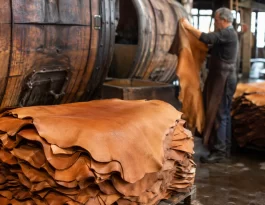
- Drying in a Workshop
- Drying Equipment
- Humidity in the Plant
- Storage of Hides and Rolls
- Mould and Mildew Risk
- Water Stains and Tides
- Rain and Daily Use
- Wet Fur and Contact Points
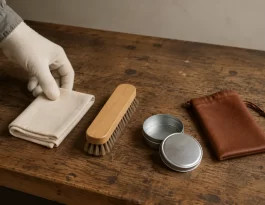
- Cleaning and Rewetting
- Oiling and Reconditioning
- Waterproof Treatments and Their Limits
- Packaging and Transit Moisture
- Container Condensation
- Water and Hardware Corrosion
- What to Specify
- What to Test at Goods-In
- Limits of Water Control
- FAQ
A pet carrier gets wet from the inside as well as the outside. Damp fur, a wet walk, a spill in the car and a wash at the tap all put water into leather, and what happens over the following hours decides whether the bag recovers or is written off.
Absorption and drying are two different properties, and a leather that performs well on the first can fail badly on the second. Understanding both lets a manufacturer specify sensibly and lets a buyer ask the right questions.
Why Water Behaviour Matters in a Pet Bag
Water is the most common cause of irreversible change in a leather bag, and in a pet carrier the exposure is more frequent than in a handbag.
The Exposure Pattern
A pet bag meets damp fur daily, rain occasionally and washing regularly. Each event adds moisture that has to leave again through evaporation.
Why Recovery Fails
Leather that dries slowly stays damp long enough for mould and odour to establish. The failure is not the wetting but the dwell time afterwards.
What Is at Stake
Stiffening, distortion, staining and smell are all consequences of water handled badly. Each is visible to the owner and none is repairable in the field.
| Event | Frequency |
|---|---|
| Damp fur | Daily |
| Rain | Occasional |
| Wash | Regular |
| Spill | Rare |
How Leather Absorbs Water
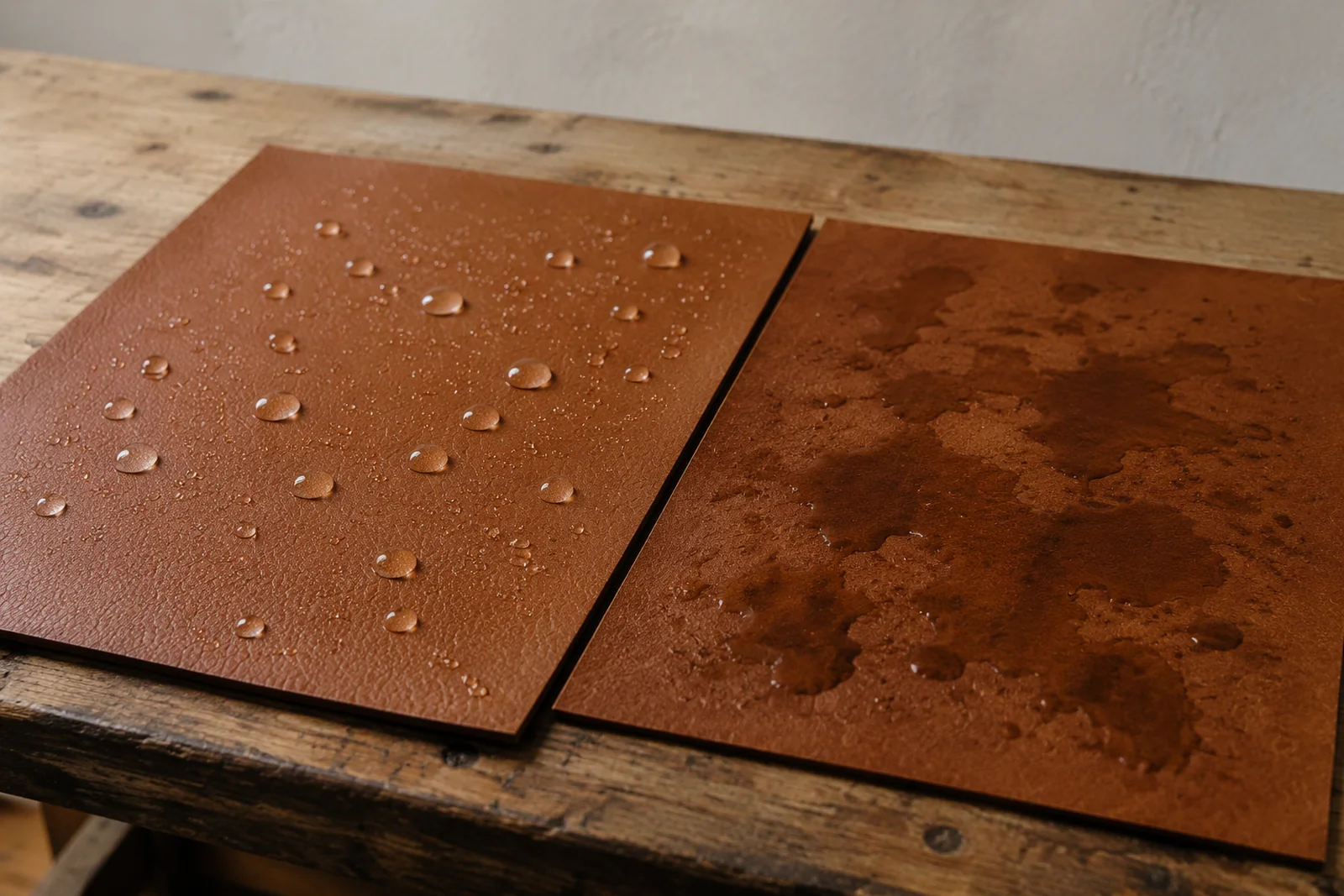
Absorption is capillary action rather than soaking, and it proceeds through the spaces between fibres rather than through the fibre material itself.
Capillary Paths
Water enters the gaps between fibre bundles and travels along them. A hide with open structure takes water fast; a dense one resists.
The Grain Barrier
The finished grain side is the main barrier, because the compacted surface layer and its finish resist wetting. The flesh side has no such barrier.
Direction Matters
Water entering from the flesh side penetrates far faster than water entering the grain. A bag wetted inside absorbs more than one wetted outside.
| Entry | Speed |
|---|---|
| Flesh | Fast |
| Grain | Slow |
| Edge | Fast |
| Stitch | Fast |
Fibre Structure and Capillaries
The openness of the fibre network sets both how fast water enters and how fast it can leave, which is why the two properties travel together.
Corium Density
The corium is a three-dimensional weave. Where the weave is tight, capillaries are narrow and movement is slow in both directions.
Loosened Structure
Mechanical loosening, whether by tumbling or by splitting near the belly, opens the network and speeds absorption and drying alike.
Why Dense Is Not Always Better
A dense hide resists water and also resists drying. In a humid climate the second effect can be the more damaging one.
| Structure | Absorb |
|---|---|
| Tight | Slow |
| Open | Fast |
| Loose zone | Fastest |
| Compacted | Slowest |
Tannage and Water Uptake
The tannage changes how much water a hide can hold, and the difference between families is large enough to drive selection.
Chrome-Tanned
Chrome tanning produces a soft, open structure that wets quickly and holds water readily. It is the least water-resistant tannage in common use.
Vegetable-Tanned
Vegetable tanning fills the structure with tannin, which occupies space that water would otherwise take. Uptake is lower and slower.
Combination Tannages
Combination tannages sit between the two. The proportion matters more than the label, so the specification should ask for it.
| Tannage | Uptake |
|---|---|
| Chrome | High |
| Vegetable | Low |
| Combination | Medium |
| Aldehyde | Medium |
Fatliquor and Water Repellency
Fatliquor is oil bound into the leather during tanning, and it is the main reason good leather does not behave like blotting paper.
What Fatliquor Does
Oil coats the fibre surfaces and lowers surface energy, so water beads rather than wets. The effect is internal and does not wear off like a coating.
Too Little and Too Much
Too little fatliquor gives a dry, absorbent leather that stiffens on drying. Too much gives a greasy surface that refuses adhesive and finish.
Migration Over Time
Fatliquor migrates slowly toward the surface, which can leave a bloom and reduce internal repellency in the core.
| Level | Behaviour |
|---|---|
| Low | Absorbs |
| Balanced | Repels |
| High | Greasy |
| Migrated | Bloom |
Finishing and Surface Wetting
The finish is the first thing water meets, and its wetting behaviour decides whether water ever reaches the fibre at all.
Film-Forming Finishes
A continuous film keeps liquid on the surface. Where the film is intact, absorption is close to zero, and where it cracks, water enters at the crack.
Open Finishes
Aniline and natural finishes leave the grain partly open, so water wets the surface quickly and penetrates locally.
Finish Wear
A finish wears at corners and edges first. The bag that was water-resistant when new becomes absorbent at exactly the places that rub.
| Finish | Wetting |
|---|---|
| Film | Slow |
| Aniline | Fast |
| Waxed | Beads |
| Worn | Local |
Thickness and Absorption Rate
Thickness changes how long water takes to cross a panel, and it changes drying time by a larger factor than most specifications assume.
Time to Saturate
Water crosses the thickness by capillary travel, so doubling the thickness roughly doubles the time to saturate but also doubles the reservoir held.
Drying Time Scaling
Drying is limited by diffusion out of the core. A thick panel can look dry on both faces while the middle is still damp.
Where Thickness Helps
A thick bottom panel resists a spill reaching the outside, while a thin wall wets through in minutes. Structure and protection favour different figures.
| Thickness | Saturate |
|---|---|
| Thin | Minutes |
| Medium | Hour |
| Thick | Hours |
| Doubled | Slower |
Zone Differences Across a Hide
Water behaviour varies by zone in the same way thickness does, so a bag built from mixed zones dries unevenly.
Belly and Flank
Belly and flank are loose and absorb quickly. A panel cut here wets through before the rest of the bag is damp.
Back and Rump
Back and rump are dense and slower. They resist water and also give it up slowly, which matters when drying a whole bag.
The Uneven Bag
A bag with a thin belly wall and a thick back panel dries with a wet patch in one place. That patch is where mould begins.
| Zone | Drying |
|---|---|
| Belly | Fast |
| Flank | Fast |
| Back | Slow |
| Rump | Slow |
How Leather Dries
Drying is evaporation from the surface balanced against diffusion from the core, and the slower of the two sets the time.
Surface Evaporation
Air movement and temperature drive evaporation. In still, cool air the surface stays wet and the core barely changes.
Core Diffusion
Moisture moves from wet fibre toward dry fibre. The gradient is small in a saturated hide, so the last part of drying is the slowest.
Equilibrium
Leather reaches equilibrium with the air around it and does not dry below that point. In a humid room, equilibrium is still damp.
| Condition | Drying |
|---|---|
| Moving air | Fast |
| Still air | Slow |
| Warm | Fast |
| Humid | Slows |
Drying and Stiffening
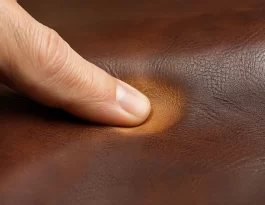
Leather stiffens when it dries from a wet state, and the stiffness is a change in the fibre network rather than a surface effect.
Why It Stiffens
As water leaves, fibre bundles come together and form new hydrogen bonds in the collapsed position. The leather keeps that arrangement.
Reversal
Working the leather mechanically while it dries breaks some of those bonds and restores softness. Left to dry untouched, it stays boardy.
Fatliquor's Role
Oil between the fibres prevents them from bonding together. A leather with adequate fatliquor dries softer than one without.
| Drying | Result |
|---|---|
| Untouched | Stiff |
| Worked | Softer |
| Oiled | Softest |
| Fast dried | Hard |
Distortion and Shrinkage
A wet panel changes dimension as it dries, and in a sewn bag the change has nowhere to go except into the shape.
Differential Shrinkage
Zones shrink by different amounts, so a panel dries out of flat. A base that was square becomes slightly dished.
Seam Stress
A lined bag has two materials drying at different rates. The seam carries the difference and puckers as a result.
Shape Loss
A structured carrier can lose its form permanently after one thorough wetting if it is dried without support.
| Effect | Cause |
|---|---|
| Dishing | Zones |
| Puckering | Layers |
| Collapse | No support |
| Curling | Edges |
Case Hardening
Fast drying hardens the outside of a panel while the core stays wet, and the result looks dry and behaves badly.
The Hard Shell
The surface bonds close and forms a stiff skin. The core underneath remains damp for days and cannot escape through the sealed surface.
Detecting It
A hardened panel feels rigid and sounds dry, yet a cut edge reveals darker fibre inside. Weight against a dry reference exposes it.
Avoiding It
Dry slowly and evenly, with air movement rather than heat. Heat is what produces a hard case while the middle is still wet.
| Sign | Meaning |
|---|---|
| Rigid | Shell |
| Dark edge | Wet core |
| Heavy | Retained |
| Crackly | Over-dried |
Measuring Water Uptake
Uptake is measured by soaking a specimen and weighing the difference, and the test conditions decide the number as much as the leather does.
The Soak Test
A weighed specimen is immersed for a stated time, blotted and weighed again. Uptake is the gain as a share of the dry mass.
Time and Temperature
Longer and warmer soaking gives higher figures. A stated result without its conditions cannot be compared with anything.
What the Number Means
Uptake describes capacity, not speed. A leather can take up a lot slowly or a little quickly, and the two behave differently in use.
| Parameter | Effect |
|---|---|
| Time | Higher |
| Temperature | Higher |
| Blotting | Lower |
| Specimen | Varies |
Dynamic Water Resistance
A bag in use meets drops and sprays rather than immersion, and a dynamic test reproduces that far better than soaking does.
The Drop Test
Water dropped onto a surface from a fixed height is timed until the surface darkens. The result describes resistance to a spill.
Flexing Under Water
Repeated flexing while wet is the harshest realistic test, because it opens the finish and pumps water through the grain.
Interpreting Results
A high static rating with a poor flex result describes a finish that survives rain but not a wet walk, which is the pet-bag case.
| Test | Describes |
|---|---|
| Drop | Spill |
| Flex | Walk |
| Spray | Rain |
| Soak | Capacity |
Penetration and Repenetration
Where a leather has dried once from wet, it often absorbs faster the second time, because the structure has been opened.
Structural Memory
Drying collapses the fibre network in a slightly different arrangement. The new arrangement sometimes wets more readily than the original.
Staining History
A water mark is a record of where water travelled further. The path stays visible because the finish and the fibre changed there.
Repeat Events
The second wetting is usually worse than the first, which is why a bag that survives one rainstorm can fail on the second.
| Event | Change |
|---|---|
| First | Wets |
| Dried | Marks |
| Second | Faster |
| Repeated | Stains |
Water Vapour Transmission
Leather passes water vapour even where it resists liquid water, and that transmission is what keeps a closed carrier from becoming a damp box.
Vapour Versus Liquid
Vapour moves through the fibre network as a gas. A finish that blocks liquid but permits vapour is the ideal for a pet carrier.
Breathability and Condensation
An animal produces moisture continuously. If the interior cannot pass it outward, condensation forms on the coolest surface inside the bag.
Where Design Helps
Vents, mesh panels and unlined openings add transmission that no leather finish can provide on its own.
| Path | Transmits |
|---|---|
| Open leather | Vapour |
| Film finish | Little |
| Vents | Much |
| Mesh | Much |
Drying in a Workshop
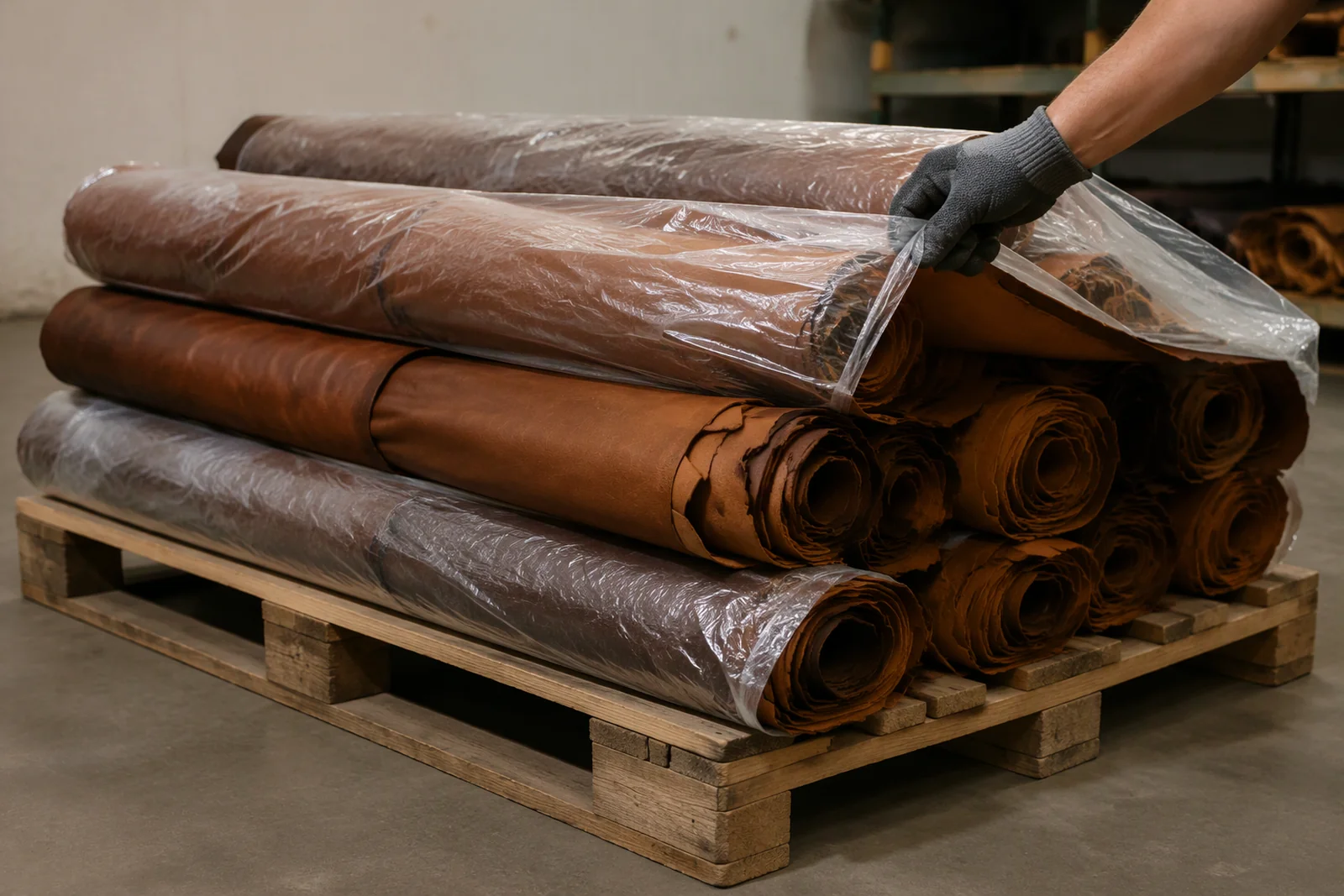
Factory drying is a process with parameters, and treating it as waiting is how wet material reaches packing.
Air Movement First
Moving air at ambient temperature dries leather more evenly than still warm air. Fans cost less to run than a heated room.
Racking and Spacing
Panels hung with space between them dry on both faces. Panels stacked or overlapped stay damp where they touch.
Time Allowance
Drying takes hours to days depending on thickness. A schedule that allows an afternoon will pack damp material.
| Practice | Result |
|---|---|
| Airflow | Even |
| Spacing | Both faces |
| Stacking | Damp spots |
| Heat only | Case |
Drying Equipment
The equipment question is smaller than it looks, because the cheapest drying room often outperforms the most expensive dryer.
Vacuum Drying
Vacuum drying pulls moisture out quickly and flattens the panel at the same time. It suits flat panels and stiffens them.
Toggle Frames
Toggling holds a wet hide under tension while it dries, which controls shrinkage and keeps the area. It is the traditional answer to distortion.
Tunnel and Room Drying
Tunnel dryers give consistent conditions and high throughput. Room drying is slower and depends entirely on air management.
| Method | Best for |
|---|---|
| Vacuum | Flat panels |
| Toggle | Area control |
| Tunnel | Volume |
| Room | Flexibility |
Humidity in the Plant
Plant humidity sets the moisture the leather reaches and keeps, so it decides the condition of material at the moment of cutting and packing.
Seasonal Swing
The same store reads very differently in a wet season and a dry one. Material measured in one month behaves differently in the next.
Measuring It
A hygrometer in the store and one at the packing bench describe two different conditions. Both matter, and neither is the weather report.
Control Options
Dehumidification is the direct answer and the expensive one. Air exchange and sensible stacking are the cheap partial answers.
| Level | Effect |
|---|---|
| High | Damp |
| Low | Brittle |
| Swinging | Cracks |
| Stable | Predictable |
Storage of Hides and Rolls
How material is stored decides the moisture it carries into production, and the effect is larger than most buyers expect.
Off the Floor
Hides stored on a concrete floor draw moisture from it. A pallet or rack is the minimum, and the gap is what matters.
Wrapped or Open
A sealed wrap holds whatever moisture was inside when it was closed. Material wrapped damp stays damp until it is opened.
Rotation
Old stock in a humid store absorbs over months. First-in-first-out is a moisture control measure as much as a stock rule.
| Practice | Effect |
|---|---|
| Pallet | Dry |
| Floor | Wicks |
| Sealed | Traps |
| Old stock | Absorbs |
Mould and Mildew Risk
Mould needs moisture, warmth and time, and a factory in a humid season can supply all three without noticing.
The Window
Mould establishes within days on damp leather at warm temperatures. The critical period is the first week after wetting.
Visible and Invisible
Surface mould is visible; the smell and the staining that follow are not always. A bag cleaned of mould still carries the history.
Prevention
Drying fast, storing dry and avoiding sealed damp packing remove the conditions rather than treating the result.
| Condition | Risk |
|---|---|
| Damp | High |
| Warm | High |
| Sealed | High |
| Dry | Low |
Water Stains and Tides
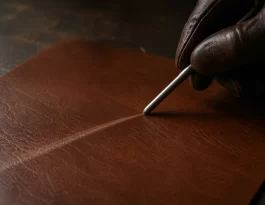
A tide mark is the visible boundary where water stopped, and once it forms it cannot be removed without refinishing the panel.
Why Tides Form
Water carries dissolved substances outward as it evaporates and deposits them at the drying edge. The ring is that deposit.
Even Wetting
Wetting a whole panel evenly prevents a boundary. Spotting a small area is what produces the ring in the first place.
Prevention in Production
Stains usually begin in the factory, from a splash on a bench or a damp hand. Covering panels during handling prevents most of them.
| Cause | Result |
|---|---|
| Spot wetting | Ring |
| Even wetting | No ring |
| Splash | Spot |
| Damp hand | Mark |
Rain and Daily Use
A pet carrier is used outdoors in weather, so rain resistance has to be judged on the bag rather than on a swatch.
Seams First
Rain reaches the interior through seams and zip tapes long before it crosses the leather. Construction decides the outcome.
Runoff Paths
Water runs down and collects at the base. A base that holds water at the seam is the most common leak location.
Drying After Use
A bag dried in a hallway overnight is dried slowly. Advising air movement and an open zip is part of the product, not an afterthought.
| Path | Priority |
|---|---|
| Seam | First |
| Zip | Second |
| Base | Third |
| Panel | Last |
Wet Fur and Contact Points
A wet animal is a continuous moisture source inside the bag, and the surfaces it presses against absorb first.
The Floor Panel
The floor takes the animal's weight and its moisture at the same time. It is the panel that fails first in every wet-weather account.
Wall Contact
Walls absorb where the animal rubs against them. The pattern of wear and the pattern of damp are usually the same shape.
Removable Inserts
A removable, washable base insert moves the moisture problem onto a part that can be dried separately, which is the practical answer.
| Contact | Absorbs |
|---|---|
| Floor | Most |
| Walls | Some |
| Threshold | Some |
| Ceiling | Little |
Cleaning and Rewetting
Cleaning puts water into the bag on purpose, so the cleaning instruction and the water behaviour have to be designed together.
Surface Cleaning
A damp cloth on a sealed surface removes soil without wetting the core. The same cloth on open leather starts a tide.
Rinsing
Rinsing a leather bag is a full wetting and should be avoided where a wipe will do. Where it is unavoidable, the whole panel is wetted evenly.
Drying After Cleaning
The bag should be opened, propped and dried with air movement. Closed and folded drying is how a cleaned bag becomes a mouldy one.
| Task | Water |
|---|---|
| Wipe | Minimal |
| Rinse | Full |
| Soak | Avoid |
| Dry | Air |
Oiling and Reconditioning
Oil restores some of what drying removed, and it is the only field remedy for a stiffened panel.
When Oiling Helps
A panel dried without enough fatliquor softens with a light oil application. The oil replaces lubrication between fibres that bonded.
What Oiling Cannot Do
Oil cannot reverse shrinkage, remove a tide mark or restore finish that has worn through. It changes feel, not structure.
Over-Oiling
Excess oil darkens the leather, transfers onto clothing and weakens adhesive at seams. A thin application worked in is the whole method.
| Condition | Oil helps |
|---|---|
| Stiff | Yes |
| Stained | No |
| Shrunk | No |
| Worn | No |
Waterproof Treatments and Their Limits
Waterproofing is sold as a solution and behaves as a delay, which is still useful if the expectation is set correctly.
Spray-On Repellents
Spray repellents raise surface tension so water beads. They wear at contact points and need reapplication, which most owners never do.
Membranes and Linings
A laminated membrane gives real waterproofing and traps vapour with it. In a pet carrier the condensation can be worse than the leak.
The Realistic Goal
Resistance buys time to dry rather than preventing wetting. A bag that resists for an hour and dries overnight performs well.
| Treatment | Effect |
|---|---|
| Spray | Delay |
| Membrane | Block |
| Wax | Slow |
| None | Wets |
Packaging and Transit Moisture
A bag can leave the factory dry and arrive damp, because a carton crossing a climate zone generates its own moisture.
Sealed Cartons
A sealed carton holds the air that was inside it at packing. Packing in a humid afternoon seals that humidity in for the voyage.
Desiccant
Desiccant absorbs what the carton contains and what leaks in. Quantity should follow volume and transit time rather than habit.
Poly Bags
A poly bag protects from dirt and also from air exchange. Sealed damp, it becomes the worst option in the carton.
| Choice | Effect |
|---|---|
| Desiccant | Protects |
| Sealed damp | Traps |
| Ventilated | Exchanges |
| Unwrapped | Scuffs |
Container Condensation
Container rain is the reason perfectly packed cartons arrive with water marks, and it is a physics problem rather than a packing fault.
Day and Night Cycling
A steel container heats by day and cools at night. Moisture evaporates from the cargo and condenses on the ceiling as it cools.
Where It Lands
Condensation drips onto the top layer. Cartons at the top of a stack carry the damage, which is why the pattern looks random.
Mitigation
Liner bags, desiccant and loading dry cargo all reduce the effect. None of them removes it, and a warranty should acknowledge that.
| Factor | Effect |
|---|---|
| Cycling | Condenses |
| Cargo moisture | Feeds |
| Liner | Reduces |
| Top layer | Exposed |
Water and Hardware Corrosion
Wet leather holds water against metal, and the combination produces corrosion that looks like a hardware fault rather than a moisture one.
Trapped Moisture
Water held in the fibre around a rivet or ring keeps the metal wet for days. Plating that would survive a splash fails under continuous damp.
Staining From Corrosion
Corrosion products stain leather, and the stain is dark and permanent. A corroded ring leaves a mark larger than the ring itself.
Ventilation at Hardware
Openings near hardware let moisture escape where it collects. A small design choice prevents a recurring claim.
| Part | Risk |
|---|---|
| Rivet | Trapped damp |
| Ring | Corrosion |
| Zip | Seizing |
| Stud | Staining |
A single water claim on a product page is worth less than one tested limit on the order. The limit travels with the lot and can be checked at receipt, while a claim cannot.
What to Specify
A water specification that can be tested fits in a short list, and each item corresponds to a failure the buyer has already seen.
Uptake Limit
State a maximum uptake under stated conditions. A limit without conditions is a number that cannot be reproduced.
Surface Resistance
State a minimum time to darkening in a drop test, and state whether flexing under water is included. The second matters more for a pet bag.
Construction Items
Name the seam treatment, the base insert and the packing desiccant. The leather is only part of the water path.
| Item | Prevents |
|---|---|
| Uptake | Saturation |
| Drop test | Spill |
| Flex test | Walk |
| Seams | Leak |
What to Test at Goods-In
Three quick checks at receipt catch the lots that will fail in a wet season, and all of them need only water, a cloth and a scale.
The Drop Check
Place a water drop on a scrap piece and time the darkening. A finish that darkens in seconds will not survive a walk.
The Wipe Check
Wipe with a damp cloth and look for finish movement and colour lift. A finish that moves under a cloth has no future.
The Weight Check
Weigh a scrap, dry it in a warm place and weigh again. A large loss signals a lot carrying more moisture than the specification allows.
| Check | Time |
|---|---|
| Drop | Minute |
| Wipe | Minute |
| Weigh | Hours |
| Record | Minute |
Limits of Water Control
Water behaviour can be measured and improved, and it cannot be eliminated in a product made from a hygroscopic material.
Leather Is Hygroscopic
Leather reaches equilibrium with the air around it, which means it is never completely dry in a humid place. Asking for more is asking for a different material.
Construction Sets the Rest
A perfect finish over an open seam still leaks. Most real failures happen at joints, zips and bases rather than across the field of a panel.
Use Decides the Outcome
A bag dried open on a chair recovers; the same bag folded in a car boot does not. The last step of water management belongs to the owner.
| Limit | Reality |
|---|---|
| Hygroscopic | Always damp |
| Seams | Leak |
| Finish wear | Local |
| User drying | Variable |
FAQ
How quickly does leather absorb water?
A: It depends on the entry face, the tannage and the density. Water entering the flesh side moves far faster than water on a finished grain, which is why a wet animal inside the bag matters more than rain outside it.
Does thicker leather absorb more water?
A: It holds more water and takes longer to saturate, because water crosses the thickness by capillary travel. Drying time scales with thickness too, and a thick panel can look dry while the core is still damp.
Why does leather harden after it gets wet?
A: As water leaves, fibre bundles come together and form new bonds in the collapsed position. Working the leather while it dries, and having enough fatliquor in it, are what keep it soft.
Can a hardened bag be softened again?
A: Partly. Light oil restores lubrication between fibres and improves feel, but it cannot reverse shrinkage, lift a tide mark or restore worn finish. Oiling changes feel rather than structure.
What causes the ring-shaped water stain?
A: Water carries dissolved material outward as it evaporates and deposits it at the drying edge. The ring is that deposit, and it cannot be removed without refinishing the panel.
Is it better to wet a whole panel than a spot?
A: Yes. Even wetting leaves no boundary for a tide to form at, which is why a full-panel clean is safer than a local spot treatment.
What is case hardening?
A: A hard dry shell over a wet core, produced by fast or hot drying. The surface closes while moisture remains inside, and the panel feels rigid yet behaves badly.
Which tannage resists water best?
A: Vegetable tanning fills the structure with tannin and takes up less water than chrome, which is open and absorbs readily. Combination tannages sit between the two, and the proportion matters more than the label.
How should uptake be measured?
A: Weigh a specimen, soak it under stated conditions, blot and weigh again. Uptake is the gain against dry mass, and a result without its time, temperature and blotting method cannot be compared with anything.
Why does a drop test matter more than a soak test?
A: A bag meets spills and rain rather than immersion. A drop test describes surface resistance, and a flexing test under water describes what a wet walk actually does.
Does waterproofing solve the problem?
A: It buys time rather than preventing wetting. Spray repellents wear at contact points and need reapplication, while membranes block vapour and can increase condensation inside a closed carrier.
Why do bags arrive damp after shipping?
A: A sealed carton holds the air that was in it at packing, and a container cycles between hot days and cool nights. Condensation forms on the ceiling and drips onto the top layer of cartons.
How much desiccant is needed?
A: Enough for the carton volume and the transit time, calculated rather than assumed. A sachet chosen by habit protects nothing, and a sealed poly bag around damp goods makes the problem worse.
Where does a wet bag usually fail first?
A: At seams, zip tapes and the base, because water travels through stitch holes faster than across a panel. The floor panel inside also absorbs first, since it takes the animal's weight and moisture together.
How should a wet bag be dried?
A: Open, propped and in moving air at ambient temperature. Still warm air causes case hardening, and folded drying in a hallway is how a damp bag becomes a mouldy one.
Does plant humidity matter for a bag made weeks later?
A: It does, because leather reaches equilibrium with the air around it. Material cut and packed in a humid season carries more moisture into the carton than the same material in a dry one.
Ready to make water a controlled variable instead of a claim? State the uptake limit and the drop and flex tests with their conditions, seal the seams and the base, dry with air rather than heat, and pack with calculated desiccant so the bag arrives as dry as it left.