How Should Leather Be Graded for Pet Claw Contact?
- Why Claw Contact Is a Grading Criterion
- How a Claw Loads Leather
- Puncture Versus Abrasion
- What Grain Does Under a Claw
- Density and Fibre Packing
- Split Depth and Claw Resistance
- Tannage and Abrasion
- Finish Systems Under Claws
- Embossed, Suede and Coated Surfaces
- Zone Selection for Contact Panels
- Thickness at Contact Panels
- Reinforcement Options
- Design Changes That Reduce Load
- Testing Claw Contact
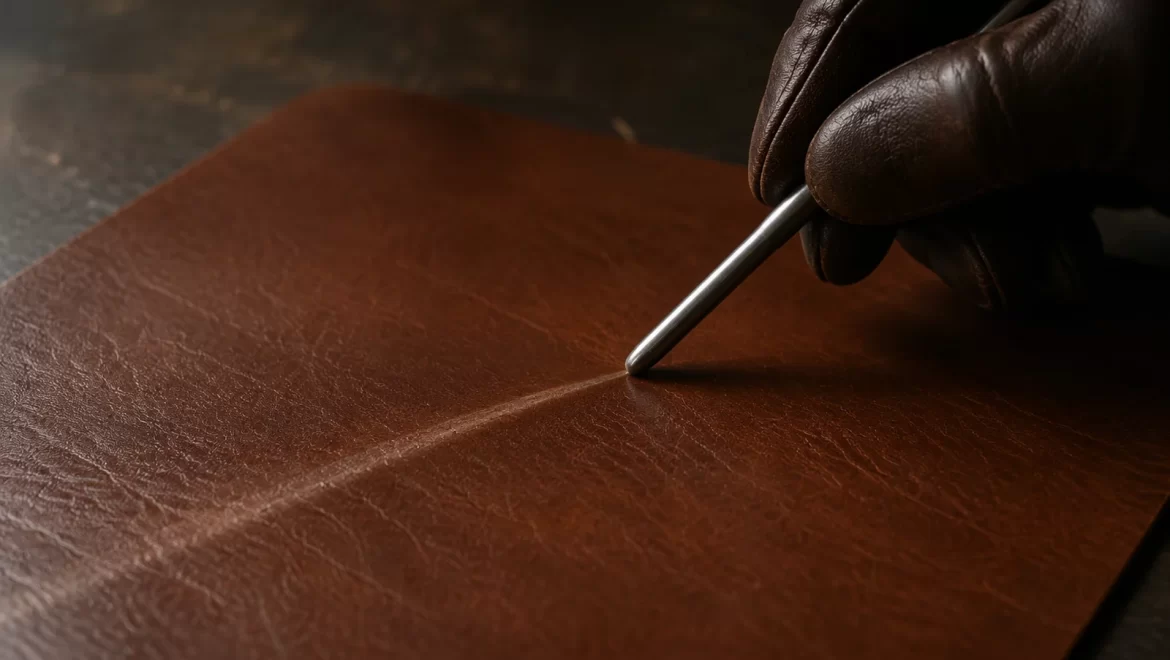
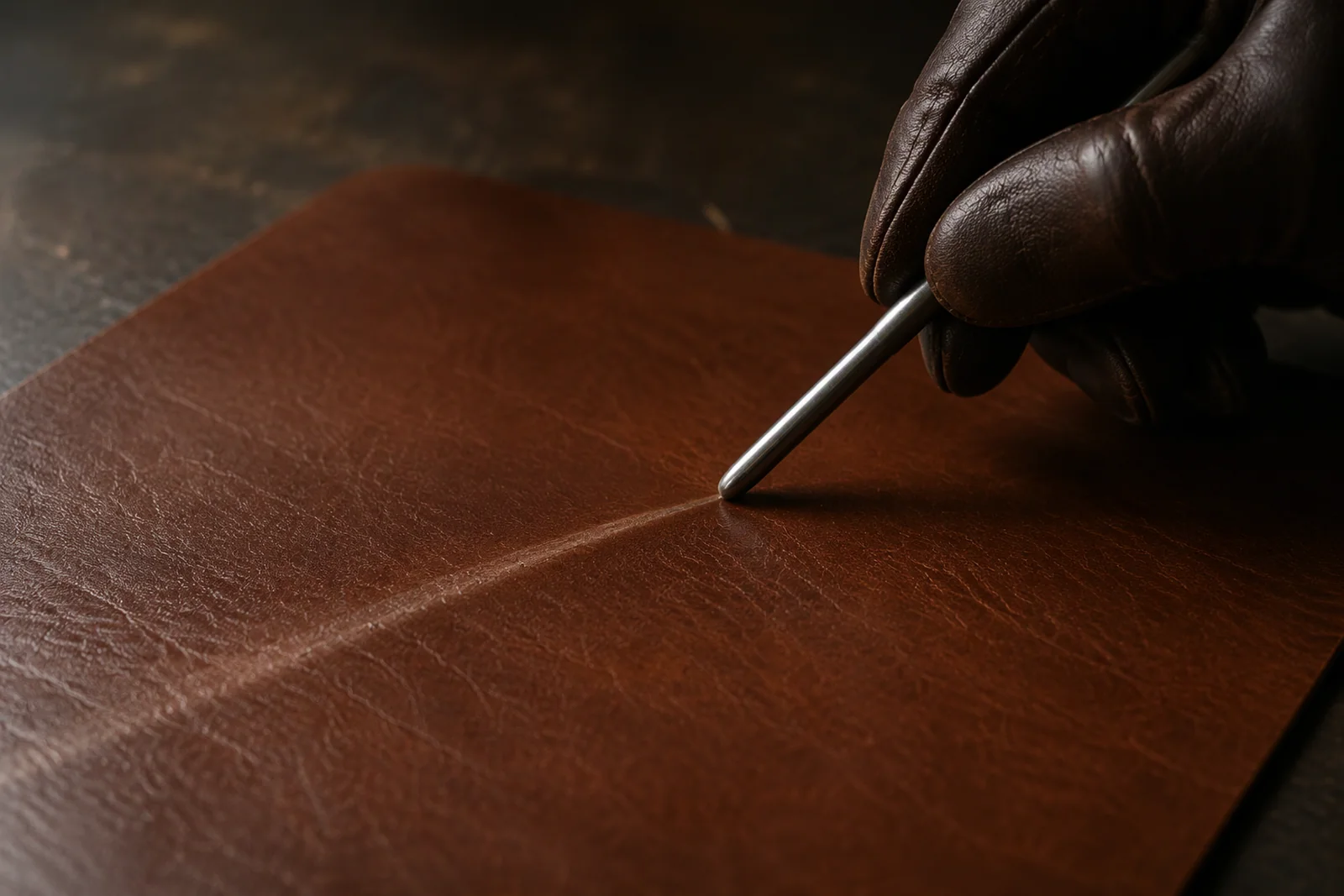
- The Scratch Test
- The Puncture Test
- Repeated Abrasion and Wear Cycles
- Scoring and Grading Scales
- Grading a Lot for Contact Panels
- Matching Grade to Panel Position
- Colour and Scratch Visibility
- Sourcing From the Right Zone
- Writing the Specification
- Incoming Checks
- Care Products and Claw Resistance
- Common Traps
- What Repair Can and Cannot Fix
- Break-In and Appearance Over Time
- Comparing Suppliers on Claw Performance
- Limits of Claw Grading
- FAQ
A pet enters a carrier four times a day, and every entry drags claws across the same panel. That panel is where a bag first looks used, and it is the panel a buyer inspects when a customer sends a photograph of a scratched interior.
Grading leather for claw contact is not the same as grading it for looks or for softness. It asks a specific question: how does this surface behave under a small, hard, repeated point load, and does the answer hold across the zones the panel will be cut from? The result is a grade that can be specified, tested and repeated.
Why Claw Contact Is a Grading Criterion
Claw damage is concentrated, predictable and visible, which makes it one of the few wear modes that can be graded before production rather than discovered afterwards.
Concentrated Load
A claw is a hard point carrying part of the animal's weight. The same force spread over a palm is harmless; concentrated on a few square millimetres it either marks the finish or lifts the grain.
Repeated Cycles
A single scratch is unremarkable. Thousands of entries over a year at the same opening produce a worn path, and the path is what customers describe as poor quality.
Where It Is Seen
Damage appears at the door opening, the floor panel and the wall the animal leans against. Those three areas decide whether a bag is judged durable.
How a Claw Loads Leather
A claw does three things at once, and each one produces a different defect that needs its own test.
Indentation
The point presses into the surface and compresses the fibre beneath. A resilient leather recovers; a soft one keeps a dent that later becomes a crack.
Lateral Drag
The animal moves while the claw is in contact, so the point slides. This is what scratches finish and lifts grain rather than puncturing it.
Tension at the Hole
When a claw does penetrate, it opens a small hole under tension and the surrounding fibre tears outward. A puncture is therefore never a clean hole.
| Action | Mechanism | Resulting defect |
|---|---|---|
| Indentation | Compression under a point | Dent, then crack |
| Lateral drag | Sliding point load | Scratch, finish removal |
| Puncture | Penetration under tension | Tear at the opening |
Puncture Versus Abrasion
Most claw damage is abrasion rather than puncture, and grading for the wrong one buys the wrong leather.
Abrasion Dominates
A walking animal drags and presses far more often than it stabs. Surface wear accumulates long before any hole appears.
Puncture Is Rare but Fatal
A puncture ruins a bag in one event and cannot be repaired invisibly. It justifies a separate, stricter requirement on floor panels.
Grading Both
Test abrasion on the panel that receives traffic and puncture on the panel that receives weight. Applying one test to both over-specifies one and under-specifies the other.
What Grain Does Under a Claw
The grain layer is the first thing a claw meets, and its behaviour decides whether damage stays cosmetic or becomes structural.
Compaction
Under a blunt point the grain compacts and polishes rather than breaking. A dense grain shows a sheen at wear points instead of a scar.
Breaking
Under a sharp drag the grain breaks and curls. Once the grain is broken, the fibre beneath is exposed and the damage accelerates with each entry.
Recovery
A grain with adequate fatliquor relaxes back after indentation. A dry grain keeps the mark, and repeated marks become a network of small cracks.
Density and Fibre Packing
Density is the property that most reliably predicts claw performance, and it is also the one least often written into a specification.
What Density Means
Density is how closely the fibre bundles are packed per unit volume. Dense leather resists a point load because the load is shared across more fibre.
How It Reads
Dense leather feels firm and slightly heavy for its thickness, resists a thumbnail and shows a fine, tight break when folded.
Where It Comes From
Density follows the zone of the hide and the animal's age. Rump and back are dense; belly and flank are not, whatever the finish suggests.
Split Depth and Claw Resistance
How deep a hide was split determines how much of the dense upper structure remains, and that decides what a claw can reach.
The Remaining Layer
Splitting removes material from the flesh side. A shallower split keeps more of the dense middle, which resists a point load far better than a thin top over open fibre.
Thin Splits
A thin split has less material to distribute the load, so the same claw force reaches deeper relative to thickness. Thin panels mark faster even when the grain is sound.
Specifying the Split
State the split as a thickness range tied to a zone, not as an average. A nominal figure that allows a thin belly panel is a specification that guarantees early wear.
| Split | Claw behaviour | Suitable panel |
|---|---|---|
| Thin | Marks early, dents | Linings, soft walls |
| Medium | Marks slowly | Doors, side walls |
| Thick | Polishes rather than marks | Floor, entry edge |
Tannage and Abrasion
The tannage changes how fibre resists a sliding point, and the difference is large enough to decide a specification on its own.
Chrome-Tanned
Chrome leather is soft and open, which is comfortable and less abrasion-resistant. It wears by polishing and then by lifting fibre.
Vegetable-Tanned
Vegetable tanning fills the structure, producing a firm surface that resists abrasion well and marks by darkening rather than by tearing.
Combination Tannages
A combination tannage can be tuned toward either behaviour. It is the usual answer where a bag must feel soft and still survive daily entry.
Finish Systems Under Claws
The finish is what a claw touches first, and its toughness matters more than its appearance in a carrier interior.
Film Thickness
A thin film follows the grain and wears through quickly at contact points. A thicker film resists longer and can look plastic, so the trade is explicit.
Film Flexibility
A hard film resists abrasion and cracks at folds. A flexible film survives folding and wears faster under a point, and neither is right for every panel.
Cross-Link Density
Better cross-linking gives a tougher surface that resists dragging. It also reduces the ability of the finish to reflow, so scratches stay visible as light lines.
| Finish type | Abrasion | Scratch visibility | Best for |
|---|---|---|---|
| Thin aniline | Low | High | Soft walls, flaps |
| Pigmented | Medium | Medium | General panels |
| Heavy coated | High | Low | Floor, entry |
Embossed, Suede and Coated Surfaces
Three surface families behave in ways that general grading rules miss, and each needs its own note on the specification.
Embossed Grain
An embossed pattern hides small scratches and its raised areas take the first wear. Deep embossing distributes contact and can look worse for longer than a flat finish.
Suede and Nubuck
A nap absorbs a claw rather than resisting it, and the mark is a flattened patch rather than a scratch. Suede interiors look worn quickly and cannot be restored by polishing.
Coated Splits
A coated split resists abrasion well because the coating carries the load. Failure comes at the edges and folds where the coating separates from the split beneath.
Zone Selection for Contact Panels
The most effective claw specification is a cutting instruction rather than a material one, because the correct zone solves most of the problem.
Back and Rump
Back and rump give the densest fibre and the best resistance to a point load. They belong on the floor, the entry edge and the base corners.
Shoulder and Neck
Shoulder is dense with a heavier grain and suits walls that take leaning contact. Neck leather is thick and firm but often heavily figured.
Belly and Flank
Belly and flank are the wrong zone for any contact panel, whatever finish is applied. They belong in gussets and internal walls that the animal rarely touches.
Thickness at Contact Panels
Thickness distributes a point load, and at contact panels it is a durability decision rather than a cost decision.
Load Spreading
A thicker panel spreads the same claw force over a larger volume of fibre. The effect is not linear, which is why a small increase at the floor is worth more than a large one at a wall.
Edge Behaviour
Thin panels at an opening roll and fray at the same time as they scratch. A slightly thicker edge keeps the opening crisp through a year of entries.
Weight Trade
Thicker panels add weight, and a carrier is already a bag with an animal in it. The extra weight belongs at the floor and not across the whole bag.
Reinforcement Options
Where the leather grade cannot be improved, reinforcement takes the load instead, and it is often the cheaper answer.
Felt and Foam Pads
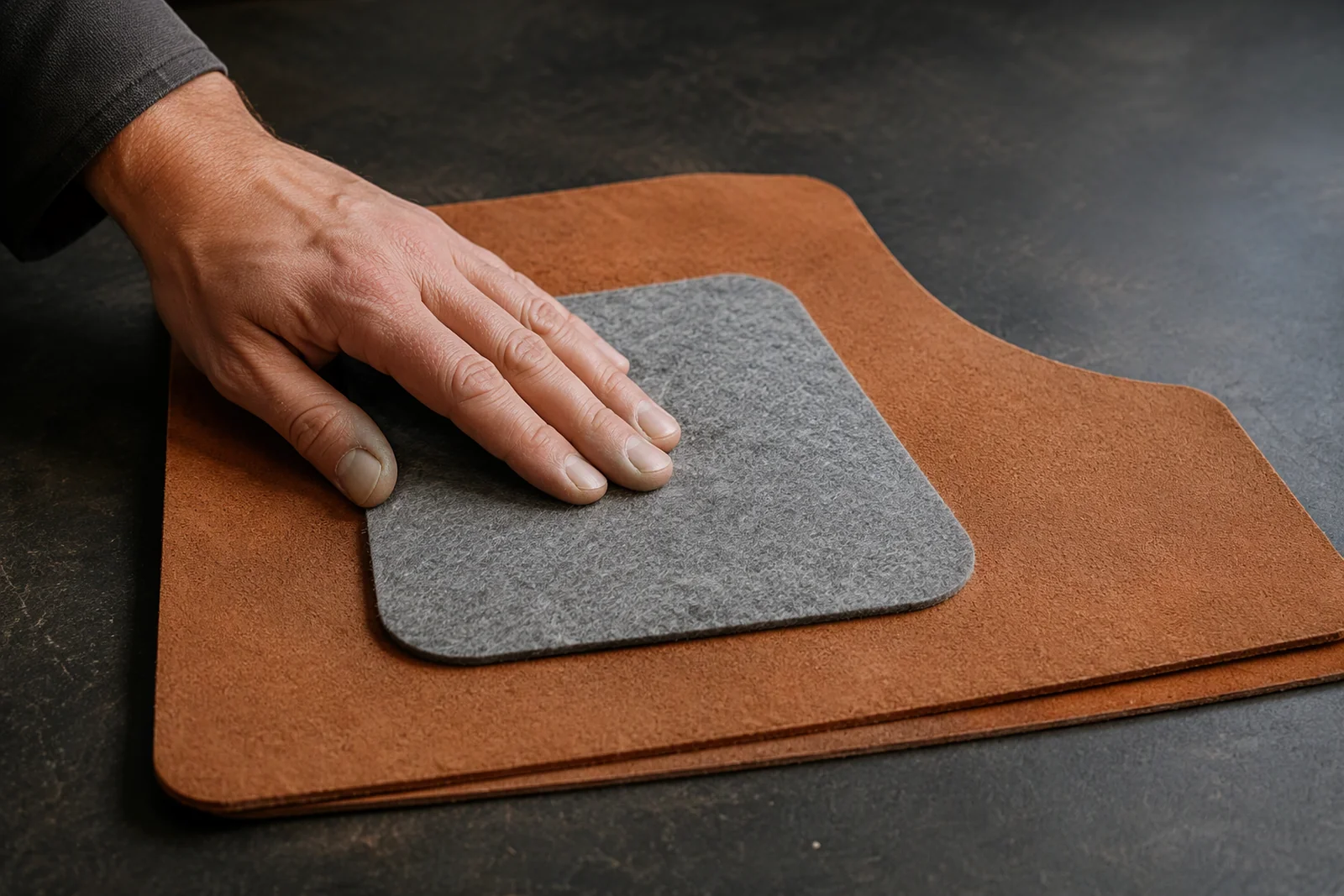
A felt pad under the floor panel absorbs point loads before they reach the leather. It also hides the panel that would otherwise show every mark.
Board Inserts
A board under a thin floor converts the panel into a stiff platform. The claw then loads the board rather than the leather, which removes the dent mechanism entirely.
Sacrificial Covers
A removable liner over the floor takes the wear and is replaced instead of the bag. From a grading standpoint, it downgrades the requirement on the leather beneath.
| Solution | Load path | Cost signal |
|---|---|---|
| Felt pad | Absorbed before leather | Low |
| Board insert | Transferred to board | Medium |
| Removable liner | Taken by liner | Low, repeat |
Design Changes That Reduce Load
Geometry changes how much claw force reaches the leather, and a small change at the opening can matter more than a grade step.
Opening Height
A higher opening makes the animal step over rather than scramble. Scrambling is where most lateral drag is generated.
Ramp and Step
A padded ramp or internal step gives the claws something to grip other than the wall. Gripping reduces sliding, and sliding is what scratches.
Edge Radius
A rounded entry edge spreads the contact over a curve instead of a line. The same claw passes with less pressure per unit area.
Testing Claw Contact
A claw test needs a point, a load and a count, and all three must be fixed before results can be compared between lots.
The Point
Use a blunt metal point of a stated radius rather than a needle. A needle tests puncture only, while a blunt point reproduces the drag that causes most damage.
The Load
Fix the load and state it. A thumb is not a repeatable load, and a test that depends on the operator's strength will disagree with itself.
The Count
Run a fixed number of strokes at a fixed speed. The value of the test lies in the count, because claw damage is cumulative rather than instantaneous.
The Scratch Test
The scratch test is the workhorse of claw grading, and it is simple enough to run at goods-in with equipment most factories already own.
Running It
Clamp the panel, apply the point at the stated load, drag across a marked line and repeat. Record the stroke at which the finish first breaks.
Reading the Surface
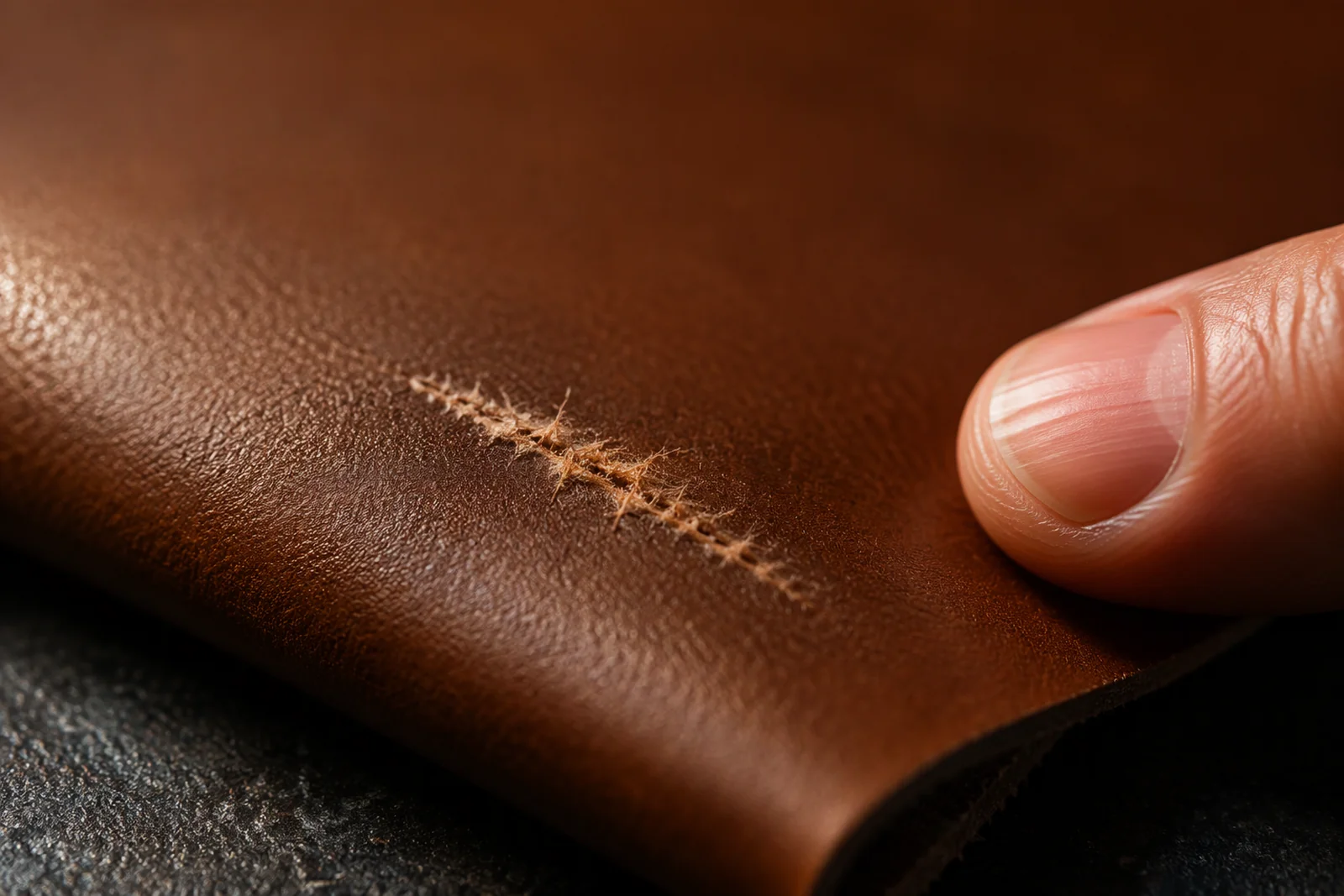
Look for three stages in order: polish, light line, and lifted fibre. The stroke count at the third stage is the useful result.
Recording It
Note strokes to first visible line and strokes to fibre lift. Two numbers describe both cosmetic and structural resistance, which a single number cannot.
| Stage | What appears | Meaning |
|---|---|---|
| Polish | Sheen at contact | Normal consolidation |
| Line | Visible scratch | Finish damaged |
| Lift | Fibre raised | Structural damage |
The Puncture Test
Puncture matters only at the floor, and a single sharp event justifies its own test rather than a share of the scratch result.
Setup
Support the panel over a ring and press a sharp point until it penetrates. Record the force at penetration and the size of the tear afterwards.
Reading the Tear
A small clean hole is more repairable than a star-shaped tear. The tear pattern separates a leather that resists well from one that fails catastrophically.
Where to Apply It
Run puncture on floor stock, not on wall stock. Applying it universally rejects material that will never see that load.
Repeated Abrasion and Wear Cycles
Claw damage accumulates, so a single-stroke result describes the material and a cycle test describes the bag.
The Cycle Test
Run the scratch test repeatedly at the same point and record the stroke at which the fibre lifts. The count corresponds to weeks of daily entry.
Setting a Threshold
Set the threshold from the bag's expected life rather than from a competitor's number. A carrier entered four times a day needs a different count from a show bag.
Wear Paths
Real wear follows a path rather than a point. Testing along a marked line reproduces the worn track at the opening more faithfully than testing one spot.
Scoring and Grading Scales
A claw grade should be a small set of steps defined by observable events, so that two inspectors reach the same answer on the same panel.
Define the Events
Anchor each step to a stroke count at a stated load: fibre lift before a low count is a fail, after a high count is a pass. Numbers travel better than adjectives.
Number of Steps
Three steps cover most programmes and are hard to argue with. Five steps allow nuance and invite disagreement unless the anchors are photographed.
Tying to the Panel
The same test on a door panel and a floor panel deserves different thresholds. State the threshold per panel position rather than per article.
| Step | Strokes to fibre lift | Applied to |
|---|---|---|
| A | High | Floor, entry edge |
| B | Medium | Walls, doors |
| C | Low | Internal, hidden |
Grading a Lot for Contact Panels
A lot grade states how much of the delivery is usable for contact panels, which is a different question from how good the lot looks.
Sample by Zone
Ask for hides, sample points in the back and rump, and grade only those. The belly will fail and its failure says nothing about the contact panels.
Report Usable Share
Report the share of sampled area that meets the contact grade. That number drives the cutting plan directly and prevents a surprise mid-order.
Separate the Streams
Grade the delivery into contact and non-contact streams at receipt. Mixing them delays the decision until cutting, when it is expensive.
Matching Grade to Panel Position
The same bag contains panels with very different claw loads, and grading per position is what keeps cost and durability aligned.
The Floor
The floor takes weight plus drag and is also the panel that cannot be replaced. It deserves the highest grade and the thickest split available.
The Entry Edge
The edge at the opening receives the most strokes and is visible in every photograph. Grade it with the floor rather than with the walls.
The Walls and Gussets
Walls take leaning contact and are the natural place to use the adjacent grade. Internal walls and gussets can take a lower grade without any visible consequence.
Colour and Scratch Visibility
A scratch is always there; whether it is seen depends on colour, finish sheen and the light the bag is opened in.
Dark and Saturated
Dark saturated colours hide fine scratches and show fibre lift as pale lines. Once a scratch reaches the fibre, contrast works against the bag.
Pale and Natural
Pale leathers show scratches as dark lines and hide fibre lift. The two colour families fail in opposite ways, which is worth noting in grading.
Sheen Level
A high sheen shows every disturbance. A matte surface scatters light and hides the same damage, so appearance grading should account for finish gloss.
Sourcing From the Right Zone
Most claw problems are solved at the order stage by buying the right zone, and lost at the cutting table by ignoring it.
Asking for Back and Rump
Specify the zone in the purchase order and in the price conversation. A tannery that quotes on average hides is quoting on a mix that includes the zones you cannot use.
Yield Implications
Buying zone-specific material costs more per hide and less per usable contact panel. Comparing the two figures rather than the first one usually reverses the decision.
Verifying the Zone
Ask for hide-area markings or a sample photographed against the whole hide. A delivery described as back leather that cannot be traced to a zone is a claim rather than a specification.
Writing the Specification
A claw specification is short, and its brevity is what makes it enforceable at a tannery that receives dozens of similar documents.
The Four Lines
Panel position, grade step, test method with load and point radius, and the sample reference. Four lines describe a claw requirement completely.
Naming the Test
State the stroke count, the load and the point radius. A test named without its parameters will be run differently by every supplier.
Reference Panel
Attach a graded panel for each step. The physical reference settles the interpretation that words leave open.
| Field | Example content | Purpose |
|---|---|---|
| Position | Floor, entry edge | Sets the threshold |
| Step | A, B or C | Sets the target |
| Method | Strokes, load, radius | Makes it repeatable |
| Reference | Panel number and date | Resolves disputes |
Incoming Checks
A claw check at goods-in needs no laboratory, and ten minutes per lot prevents a whole order from being cut from the wrong zone.
The Point and the Load
A blunt steel point and a small fixed weight are enough. Both should be marked so that the operator uses the same pair every time.
The Marked Line
Draw a line on a scrap, drag the point along it with the weight on top, and count strokes to fibre lift. The line makes the test repeatable and visible.
Recording
Note the grade, the zone sampled and the stroke count. Three fields let a later complaint be traced to the material rather than to the operator.
Care Products and Claw Resistance
What a customer applies to the interior changes how it resists a claw, and the care instruction is part of the durability specification.
Conditioners
A conditioner restores lubrication and lets a compressed surface relax. Over-application softens the grain and lowers resistance, so frequency matters more than product.
Waxes and Dressings
A wax layer fills the fine grain and reduces friction under a dragging point. It also attracts dust in a carrier and needs refreshing after cleaning.
Cleaners
A harsh cleaner strips the finish and leaves the grain exposed. Neutral cleaners keep the film intact, which is what preserves the tested performance.
| Product | Effect on claw resistance | Frequency |
|---|---|---|
| Neutral cleaner | Neutral, preserves film | As needed |
| Conditioner | Improves recovery | Light, occasional |
| Harsh solvent | Reduces, strips film | Avoid |
Common Traps
Six traps explain most claw complaints, and each one is fixed on the specification or the cutting plan rather than in production.
Grading the Average
A grade taken from a random point describes the average hide. Contact panels come from the back, so the average is the wrong number.
Trusting the Finish
A heavy finish resists a claw until it cracks, then fails faster than a moderate one. Buying on finish thickness alone buys a short life.
One Grade for the Bag
A single grade across all panels either overspends on hidden walls or underspends on the floor. Position decides the threshold.
Testing Puncture Everywhere
Puncture tests on wall stock reject material for a load it never meets, and the rejection is expensive and unnecessary.
Ignoring the Opening
The entry edge takes more strokes than any other surface and is usually graded with the walls. It belongs with the floor.
No Reference Panel
A grade described only in words drifts between suppliers. One panel per step costs nothing and prevents the drift.
What Repair Can and Cannot Fix
Repair options differ by depth of damage, and knowing which is which prevents a promise that the workshop cannot keep.
Polish-Level Marks
A mark that has not broken the finish can often be reduced with a conditioner and light friction. Restoration at this level is routine and invisible.
Broken Finish
A scratch through the film can be touched up with pigment and a fixative, and the result is visible on close inspection. It is acceptable, not invisible.
Lifted Fibre
Once fibre is raised the surface cannot be returned to its original state. Sanding makes the area thinner and lighter, and it shows as a patch.
| Damage level | Repair | Visibility |
|---|---|---|
| Polish mark | Conditioner | Low |
| Broken finish | Pigment touch-up | Moderate |
| Lifted fibre | None effective | High |
Break-In and Appearance Over Time
A carrier changes with use, and a grade should describe the change rather than claim that none will occur.
Early Appearance
The first month polishes contact points and softens the entry edge. A bag that looks unchanged after a month is often too stiff to be comfortable.
Long-Term Wear
Fibre lift at the opening is the normal end state of any leather under claws. The grade decides how many entries precede it, not whether it happens.
Setting Expectations
State the expected appearance after a year in the product documentation. A customer who expects wear judges it differently from one who expected none.
| Stage | Expected appearance | Not a defect |
|---|---|---|
| First month | Polish at contact points | Yes |
| First year | Light line at entry edge | Usually |
| Beyond | Fibre lift at opening | Depends on grade |
Comparing Suppliers on Claw Performance
Two tanneries can supply the same article name and return very different claw results, so comparison has to be on test data rather than on the label.
Same Article, Different Result
Article names describe appearance and process, not density. Two nominally identical articles from different plants can differ by a whole grade under the same test.
The Comparison Set
Test the same panel position, the same load and the same point on both. Anything else compares the test rather than the material.
Keeping the Winner
Once a supplier passes at a given step, retain its panel as the reference for that step. The reference then encodes a real result rather than a description.
Limits of Claw Grading
Grading improves the odds; it does not remove wear, and a specification should be honest about what it cannot control.
Animal Variation
Claw hardness, weight and behaviour vary by animal. A grade sets a median outcome and cannot guarantee an individual result.
Use Variation
A carrier used daily in a city differs from one used twice a month. The same grade produces very different appearances for the two owners.
What Grading Does Not Replace
Grading does not replace a floor pad, a ramp or a removable liner. The cheapest durability improvement in most carriers is a construction change, not a leather upgrade.
FAQ
Why is claw contact graded separately from other wear?
A: Because the load is different. A claw is a small hard point carrying weight and dragging, which marks and lifts grain far faster than ordinary handling. Grading it with general abrasion hides the difference.
Which panel of a pet bag needs the highest grade?
A: The floor and the entry edge. The floor carries weight plus drag and cannot be replaced; the edge takes more strokes than any other surface and appears in every photograph a customer sends.
Is a thicker leather always better against claws?
A: For load spreading, yes, within reason. Thicker panels distribute a point load over more fibre, but the benefit is worth paying for at the floor rather than across the whole bag, where it only adds weight.
Does a heavier finish protect better?
A: Only until it cracks. A thick film resists scratches longer and fails faster once it breaks, because the damaged area cannot reflow. A moderate finish on dense leather usually outlasts it.
How do you test claw resistance in a factory?
A: A blunt steel point of stated radius, a fixed load and a marked line. Drag along the line and count strokes to the first visible scratch and again to fibre lift; two numbers describe both cosmetic and structural resistance.
Why count strokes instead of judging the mark?
A: Because claw damage is cumulative. A single mark says little; the number of strokes before the fibre lifts corresponds to weeks or months of daily entry, which is what a buyer is really asking about.
Can a scratched panel be repaired?
A: It depends on depth. Polish-level marks respond to conditioner, a broken finish can be touched up with visible results on close inspection, and lifted fibre cannot be restored at all.
Should suede or nubuck be used at contact points?
A: Rarely. A nap absorbs the claw and flattens into a patch rather than scratching, and the mark cannot be polished out, so those surfaces age visibly in a carrier interior.
Does embossing help or hurt?
A: It usually helps. Raised areas take the first wear and the pattern conceals small scratches, although deep embossing can look worn sooner because the high points show contrast as they flatten.
What is the cheapest way to improve durability?
A: Change the construction. A felt pad under the floor, a ramp at the opening or a removable liner reduces the load on the leather more than moving up a grade, and costs less per bag.
How many grades should a claw specification use?
A: Three, anchored to stroke counts and tied to panel position. Beyond five steps inspectors begin to disagree by a step, and a grade nobody can reproduce protects nobody.
Should every supplier be tested?
A: Yes, and on the same panel position with the same point and load. Two tanneries can supply the same article name with a whole grade of difference in claw performance.
Does colour affect how scratches are judged?
A: It changes which damage is visible. Dark saturated colours hide fine scratches and show fibre lift as pale lines, while pale leathers show dark scratches and conceal lifted fibre.
How should expected wear be communicated?
A: State the expected appearance after a year of use in the product documentation. A customer who expects wear judges the same bag differently from one who was promised none.
What should be written on the purchase order?
A: Four lines: panel position, grade step, test method with load and point radius, and the reference panel number and date. Adjectives belong in marketing, not in a specification.
What does claw grading not solve?
A: Animal variation and use variation. A grade sets a median outcome for a defined test and cannot guarantee how one animal's claws will treat one bag over one year.
Ready to stop discovering claw damage from customer photographs? Put the highest grade and the thickest split at the floor and the entry edge, add a felt pad or a ramp before upgrading the leather, and specify the stroke count with its load and point radius so the result can be repeated.