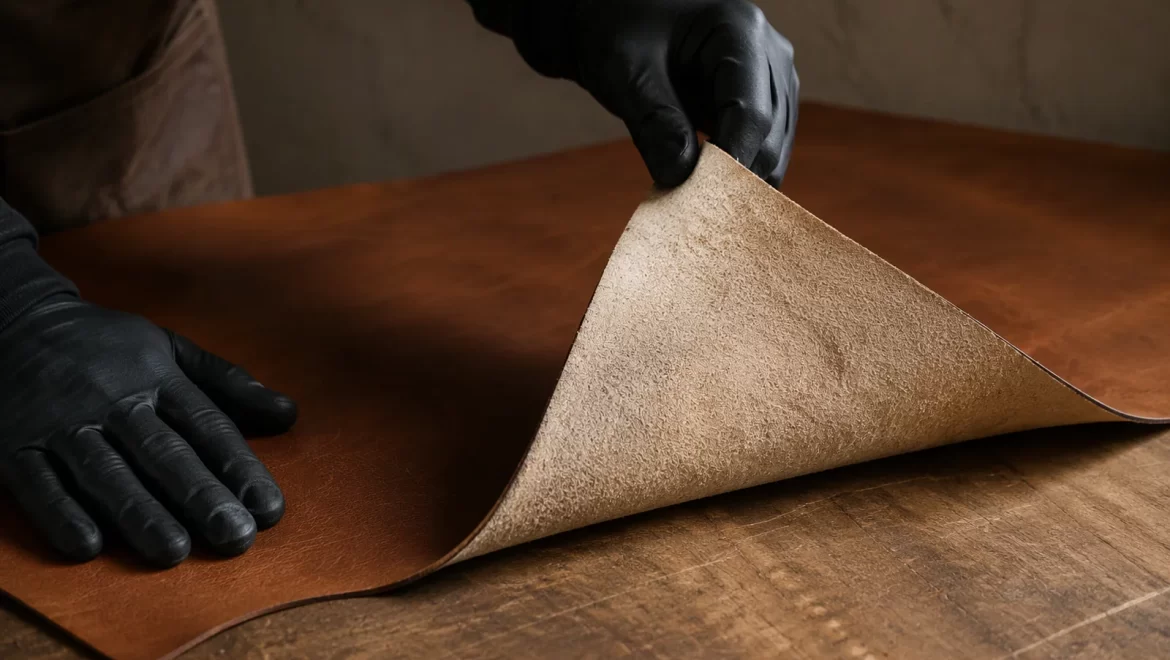
How Should Flesh-Side Treatment Be Chosen for Pet Bags?
- Why the Flesh Side Decides the Interior Experience
- What the Flesh Side Actually Is
- Splitting and the Exposed Surface
- The Untreated Flesh Side
- Buffed and Sueded Flesh
- Coated and Sealed Flesh
- Impregnated and Waxed Finishes
- Fabric-Backed and Laminated Flesh
- Comparing the Options
- Vegetan and the Flesh Question
- Chrome-Tanned Flesh Behaviour
- Pet-Specific Requirements
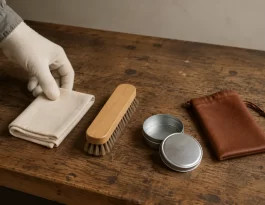
- Cleaning and Wipe-Down
- Odour and Absorption
- Hair and Claw Contact
- Lining Bonding Compatibility
- Adhesive Choice by Flesh Finish
- Sewing and Turning
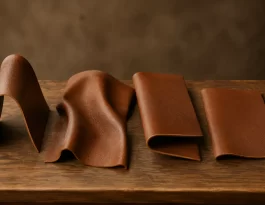
- Stiffness and Hand Feel
- Edge Treatment and Flesh Visibility
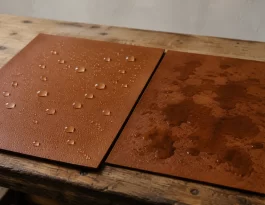
- Water and Humidity Exposure
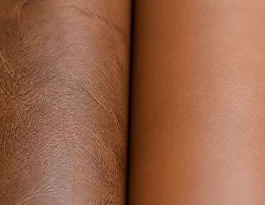
- Colour and Consistency
- Cost per Square Metre
- Minimum Order and Availability
- Writing the Specification
- Sampling and Approval
- Incoming Checks
- Common Traps
- Working With a Tannery
- What to Audit
- Limits of Flesh-Side Control
- Repair and Rework of Interior Surfaces
- Matching Interior to Climate and Market
- FAQ
Turn a pet carrier inside out and the flesh side is the surface the animal lives against. It touches paws, collects hair, absorbs what a pet brings in, and it is the first thing an owner sees when the bag opens.
Flesh-side treatment is therefore a functional decision before it is a cosmetic one. Untreated, buffed, coated, laminated and impregnated finishes behave differently against claws, moisture, adhesive and cleaning, and the choice has to be made against the use the bag will see.
Why the Flesh Side Decides the Interior Experience
The interior of a pet bag is not a lining detail. It is the surface that determines cleaning effort, odour retention and how long the bag looks acceptable.
Contact Rather Than Display
A handbag interior is looked at; a pet bag interior is used. Claws scuff it, damp fur presses into it and accidents reach it, so the finish must tolerate contact.
Cleaning Frequency
An interior that wipes clean is cleaned often, while a fibrous interior is cleaned rarely because each attempt makes it look worse.
Odour Retention
Open fibres hold oils and moisture, and a bag that holds odour cannot be recovered by wiping. Surface sealing changes what the fibre can absorb.
| Interior need | Driven by |
|---|---|
| Wipe clean | Coating |
| Claw tolerance | Buffing |
| Odour | Sealing |
| Softness | Untreated |
What the Flesh Side Actually Is
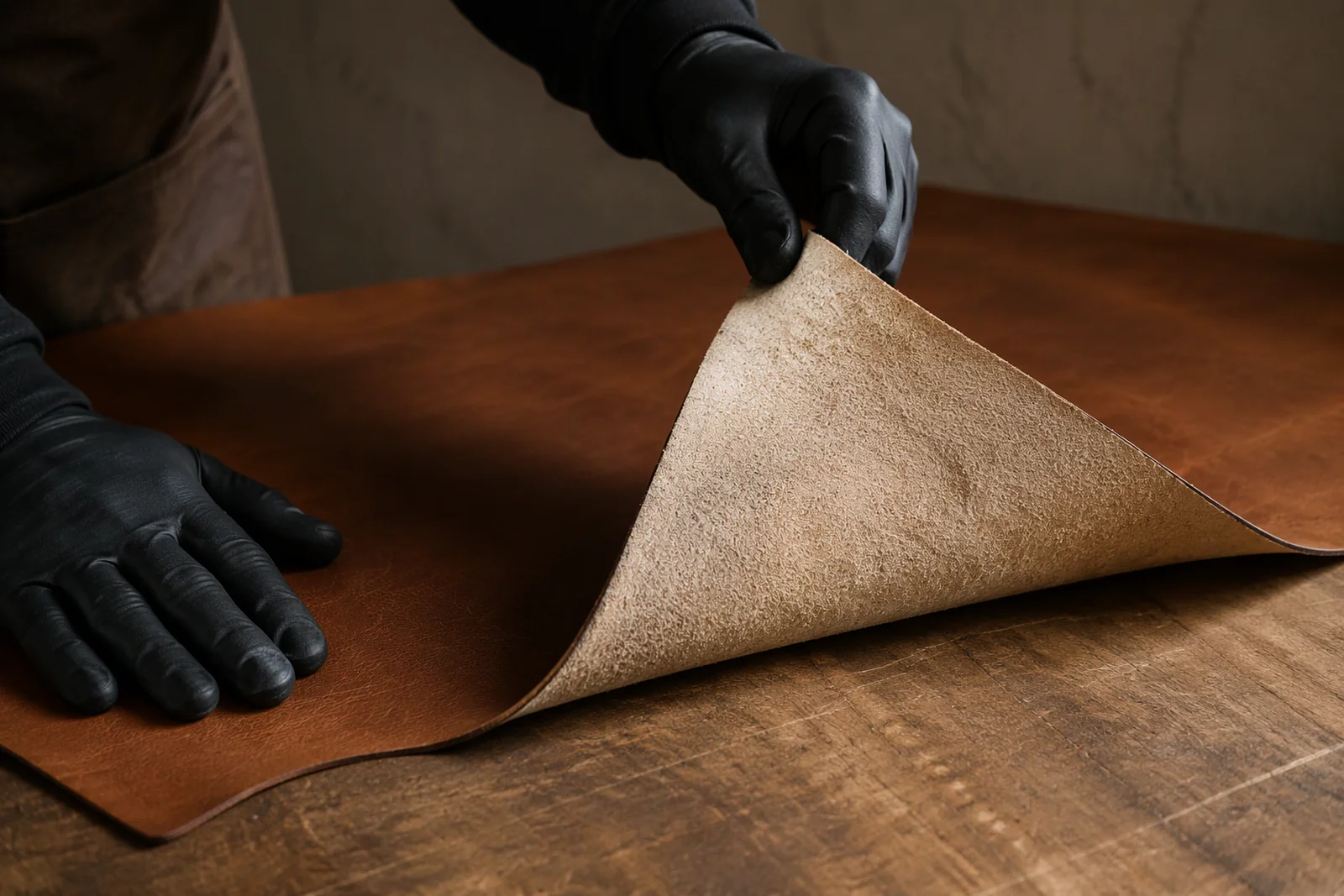
The flesh side is the inner face of the hide after the grain side has been finished, and its character comes from what the splitting machine left behind.
Fibre Ends
Splitting cuts through the corium and leaves fibre ends pointing outward. Those ends are what feel soft, what pill, and what hold dust.
Loose Versus Dense Zones
The flesh side of a belly is looser than that of the spine, so the same treatment produces different surfaces across one hide.
Splitting Depth
How much corium remains decides whether the surface can be buffed to a velvety finish or will open into coarse fibre.
| Factor | Result |
|---|---|
| Fibre ends | Softness |
| Loose zone | Pilling |
| Depth | Buffability |
| Zone | Variation |
Splitting and the Exposed Surface
Every split creates a new surface that was never designed to be seen, and treatment exists to make that surface fit for purpose.
Why Splits Need Work
A split face is fibrous and open. Left alone it sheds, absorbs and abrades, which is unacceptable on a surface a pet lies on.
Split Thickness and Finish
Thicker splits leave longer fibre ends and need more aggressive finishing. Thin splits can be sealed with a light coat.
The Cost of Not Treating
An untreated split is not free. It costs the same hide and returns a bag whose interior fails in the first month.
| Split | Finish need |
|---|---|
| Thick | Heavy |
| Thin | Light |
| Loose | Sealing |
| Dense | Buff |
The Untreated Flesh Side
The untreated surface is the cheapest option and the one that reads as natural, and it fails earliest in a pet application.
Where It Works
Untreated flesh is defensible in a bag that is lined with fabric throughout, so the raw surface is never exposed to the animal.
Where It Fails
Exposed untreated flesh sheds fibre onto a pet's coat, absorbs moisture and stains permanently from the first accident.
The Natural Look Argument
A soft raw interior is a deliberate aesthetic in some premium bags. If it is chosen, it must be lined in the contact areas rather than left bare.
| Use | Verdict |
|---|---|
| Fully lined | Acceptable |
| Exposed | Risky |
| Premium look | Line it |
| Wet climate | Avoid |
Buffed and Sueded Flesh
Buffing abrades the fibre ends into a short, even nap, producing the suede-like interior common in mid-range bags.
The Buffing Process
An abrasive drum or wheel raises the nap. The depth of cut decides whether the result is velvet or shag, and depth is set by the operator.
Nap Direction and Wear
Nap has a direction, so the surface looks different from two sides. High-contact areas flatten first, producing a patchy interior.
Suede and Dirt
A nap holds dust and hair mechanically. It looks good when new and reads as worn quickly in a working bag.
| Attribute | Behaviour |
|---|---|
| Feel | Soft |
| Cleaning | Difficult |
| Wear | Patches |
| Cost | Moderate |
Coated and Sealed Flesh
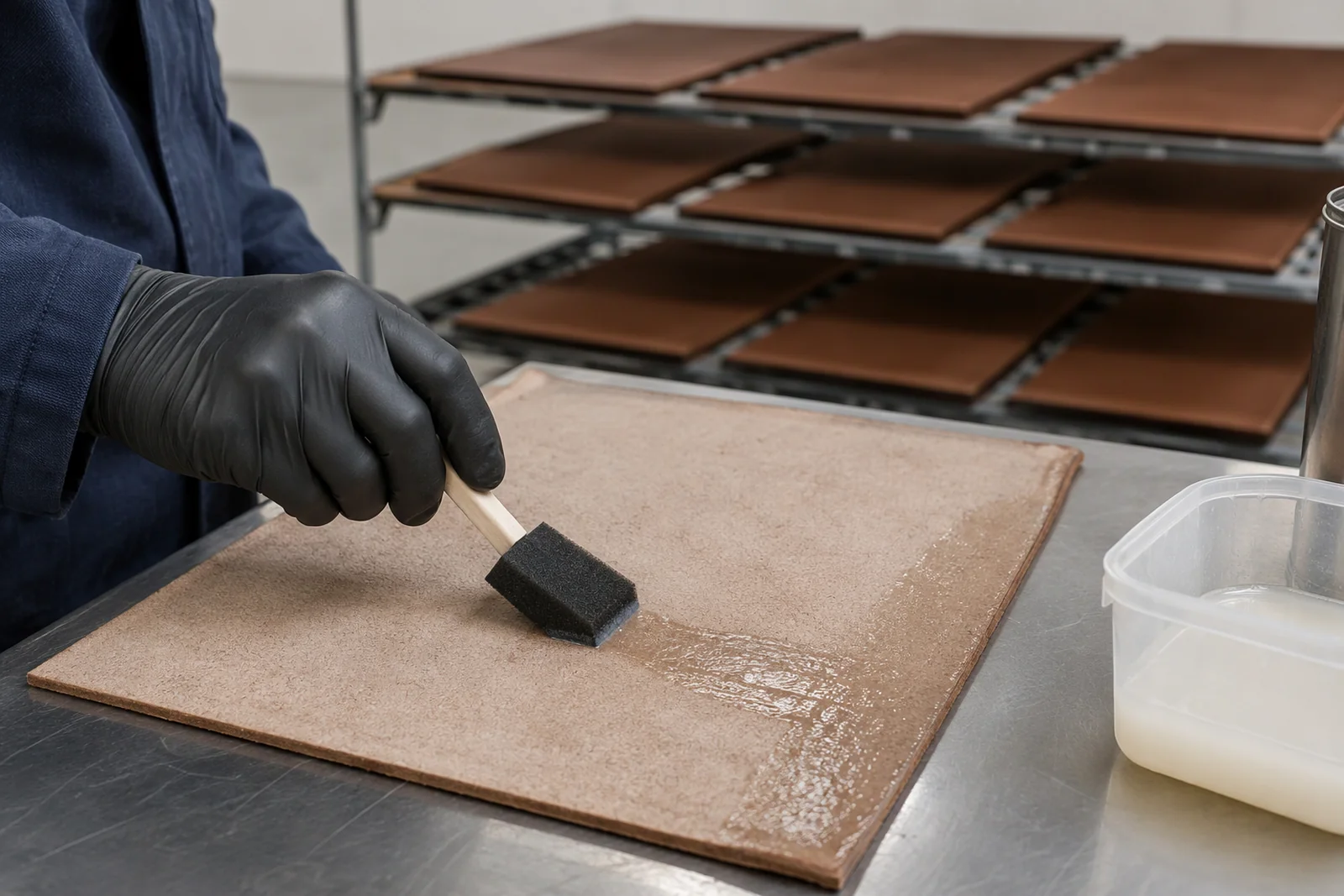
Coating closes the fibre and converts the interior into a surface that can be wiped, which is the single largest gain for a pet bag.
Film Formers
Acrylic and polyurethane dispersions form a film over the fibre. A thin film wipes clean, while a thick film cracks at folds.
Sealing Versus Coating
A sealer penetrates and binds the fibre ends without building a film, which keeps softness and reduces shedding but does not make the surface waterproof.
Breathability Trade
Any film reduces air movement. In a closed carrier that matters, because condensation has nowhere to go.
| Finish | Cleaning |
|---|---|
| Thin coat | Good |
| Thick coat | Cracks |
| Sealer | Moderate |
| None | Poor |
Impregnated and Waxed Finishes
Impregnation fills the fibre rather than covering it, which suits a bag that must stay soft and still resist soiling.
Wax and Oil
Wax and oil lubricate the fibre and repel water locally. They migrate into adjacent materials and can stain a pale lining.
Resin Impregnation
Resin impregnation adds body as well as sealing. It is the usual choice where a soft interior must also hold shape at a base panel.
Re-Treatment
Impregnated surfaces can be refreshed; coated surfaces cannot. For a long-life product, refreshability is a real advantage.
| Finish | Refresh |
|---|---|
| Wax | Yes |
| Resin | Partly |
| Coating | No |
| Raw | No |
Fabric-Backed and Laminated Flesh
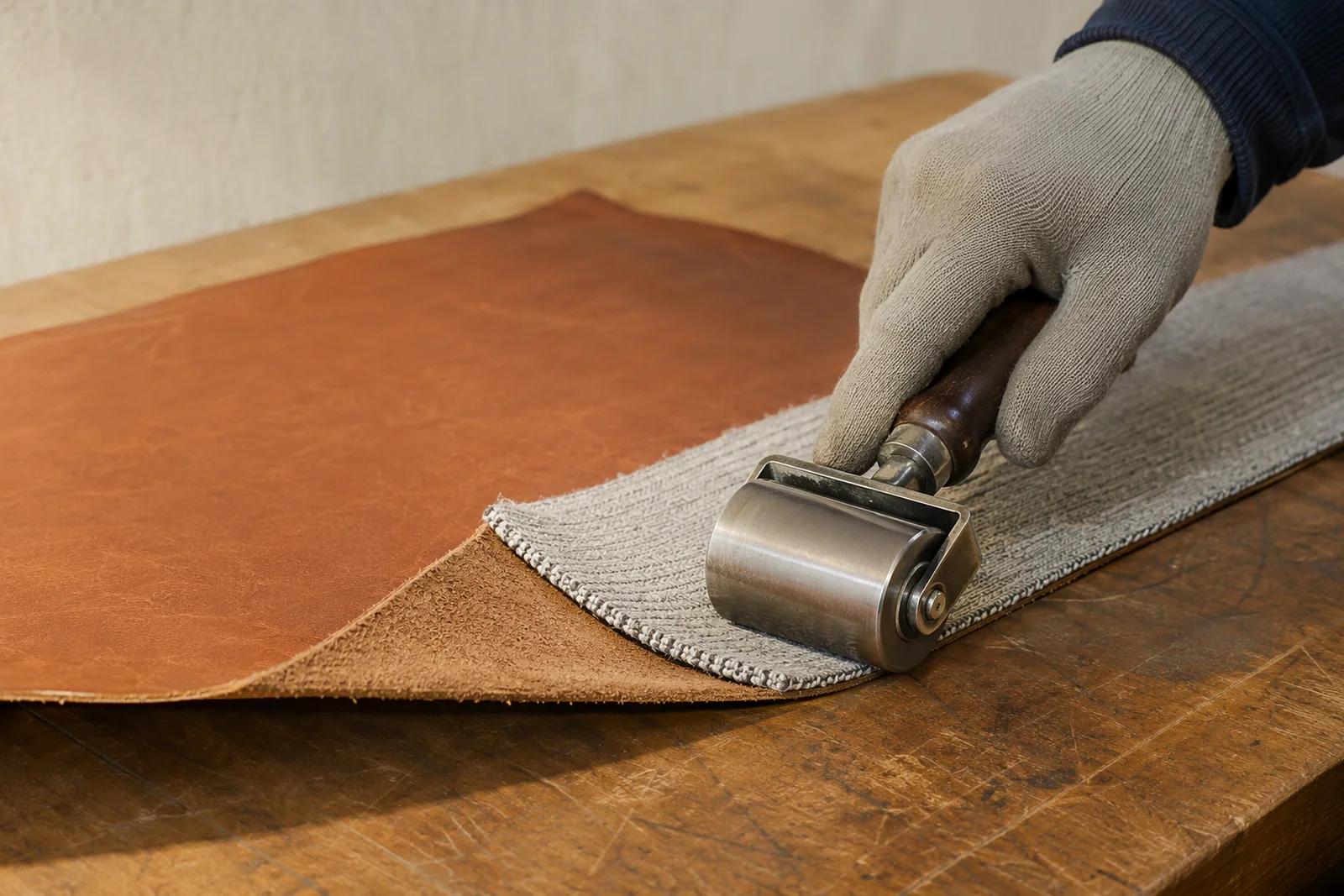
Bonding a fabric to the flesh side produces a stable interior that behaves like a textile rather than like leather, and it changes the construction options.
What Lamination Achieves
A knitted or woven backing controls stretch, hides the fibre and gives a surface the animal can lie on without shedding.
Adhesion and Delamination
The bond is only as good as the surface preparation. A laminated panel that separates at a fold cannot be repaired invisibly.
Using It as the Lining
A backed flesh side can act as its own lining, which removes one sewing operation and one layer of bulk.
| Benefit | Trade |
|---|---|
| Stable | Bulk |
| Cleanable | Weight |
| No lining | Stiffness |
| Hidden fibre | Cost |
Comparing the Options
The five main finishes trade cleaning against feel, cost and repairability, and no option wins on every axis.
The Trade Axes
Cleaning, feel, durability, cost and repairability. A specification should state which two matter most, because they usually conflict.
Where Each Sits
Untreated is soft and fails on cleaning. Buffed is soft and fails on wear. Coated wipes clean and fails at folds. Backed is stable and adds weight.
Choosing by Use
A carrier for a short vet trip and a carrier for daily commuting need different interiors, and the difference is the cleaning frequency.
| Finish | Best for |
|---|---|
| Untreated | Lined only |
| Buffed | Light use |
| Coated | Daily use |
| Backed | Structure |
Vegetan and the Flesh Question
Vegetable-tanned leather brings its own flesh-side behaviour, because the tannin fills the hide rather than sitting on the surface.
Dense and Firm
Vegetable tanning compacts the corium, so the flesh side is firmer and less likely to shed than a chrome split of the same thickness.
Colour Migration
Vegetable-tanned flesh is often left natural and darkens with handling. Against a pale lining the difference is visible at every open edge.
Moulding Compatibility
A firm flesh side holds a wet-formed shape, which suits structured carriers better than a soft chrome split does.
| Property | Behaviour |
|---|---|
| Density | High |
| Shedding | Low |
| Colour | Darkens |
| Forming | Good |
Chrome-Tanned Flesh Behaviour
Chrome splits are the default for soft pet bags, and their flesh side is loose, pale and prone to shedding unless treated.
Loose Fibre
Chrome tanning leaves the corium open, so the cut surface is fluffy and sheds onto a dark coat within days of use.
Pale and Staining
The untreated chrome flesh is pale and stains readily. Water marks and oily marks show clearly and cannot be lifted.
Treatment as Standard
For an exposed interior, treatment should be the default rather than the upgrade. A chrome split sold as ready to use usually is not.
| Property | Behaviour |
|---|---|
| Fibre | Loose |
| Colour | Pale |
| Staining | Easy |
| Default | Treat |
Pet-Specific Requirements
A pet bag interior meets conditions a handbag never does, and the specification should name them rather than assume them.
Claws and Teeth
Claws catch in a nap and pull fibre; teeth test every seam. A tight, sealed surface resists both better than a soft one.
Shed Hair
Hair is held mechanically by open fibre. A sealed surface lets it be wiped off in one pass, which matters every single day.
Accidents
Urine is warm, liquid and absorbed quickly. A sealed interior contains it long enough to be cleaned, while a fibrous one retains the smell.
| Exposure | Need |
|---|---|
| Claws | Tight surface |
| Hair | Sealed |
| Liquid | Coating |
| Odour | Non-absorb |
Cleaning and Wipe-Down
The cleaning method should be decided with the finish, because a finish that fails under the recommended cleaner is the wrong finish.
Damp Cloth
A damp cloth suits a sealed or coated surface and damages a suede nap by flattening it permanently.
Mild Soap
Mild soap lifts organic residue from a sealed surface. On untreated flesh it drives contamination deeper into the fibre.
Disinfectants
Many owners use a disinfectant spray. Coating resistance to that chemistry should be tested rather than assumed.
| Method | Suitable |
|---|---|
| Damp cloth | Coated |
| Mild soap | Sealed |
| Spray | Test first |
| Brush | Suede |
Odour and Absorption
Odour is the failure owners mention first and the one that cannot be repaired, so absorption is a specification item rather than a preference.
What Absorbs
Open fibre, untreated seams and foam padding all absorb. Sealing the leather alone does not seal the construction behind it.
Sealing the Path
Liquid travels through seams and stitch holes faster than through the surface. Taped or sealed seams matter as much as the finish.
Ventilation
A carrier with vents moves air, which dries moisture and reduces odour. A coated interior in a sealed bag holds moisture longer.
| Path | Control |
|---|---|
| Surface | Coating |
| Seams | Tape |
| Foam | Encapsulate |
| Air | Vents |
Hair and Claw Contact
Shed hair and claws are the two daily mechanical loads on the interior, and they act in opposite directions.
Hair Removal
Hair lifts off a sealed surface and is trapped by a nap. A bag that is wiped daily stays presentable; a suede interior looks worn within weeks.
Claw Abrasion
Claws abrade the high points of a nap and polish a coating. A coating wears thin at the door opening, which is where the animal enters.
Reinforcing Contact Zones
The floor and the door threshold take the most contact. A sacrificial panel or a heavier finish in those two zones extends life at little cost.
| Zone | Load |
|---|---|
| Floor | Rest |
| Threshold | Entry |
| Walls | Rubbing |
| Ceiling | Rare |
Lining Bonding Compatibility
Where a lining is bonded or stitched over the flesh side, the finish decides whether the bond holds through handling and transport.
Bond Strength
A film-coated surface can release a water-based adhesive, because the adhesive bonds to the film rather than to fibre. Surface preparation decides.
Adhesive Anchoring
A sealed but uncoated surface leaves fibre available for mechanical keying, which is why a sealer often bonds better than a heavy coat.
Stitched Lining Alternative
Stitching avoids adhesive compatibility entirely at the cost of stitch lines visible from inside and pinholes in the surface.
| Surface | Bond |
|---|---|
| Raw fibre | Strong |
| Sealed | Good |
| Coated | Weak |
| Laminated | N/A |
Adhesive Choice by Flesh Finish
The adhesive must suit the surface it meets, and a mismatch appears as bubbling or edge lift after the bag has travelled.
Water-Based Systems
Water-based adhesives suit raw and sealed flesh and fail on some coated films. They also need drying time in a humid plant.
Solvent-Based Systems
Solvent adhesives bite into coated films and are the usual choice for laminating. Ventilation and fire control become the constraint.
Heat-Activated Film
Heat-activated film gives a controlled bond and no solvent, and it requires a press and a flat surface at the moment of bonding.
| Finish | Adhesive |
|---|---|
| Raw | Water-based |
| Sealed | Water-based |
| Coated | Solvent |
| Backed | Heat film |
Sewing and Turning
A treated flesh side changes how the bag is sewn and how it behaves when turned right side out.
Feed and Friction
A coated surface slides under the presser foot and a napped one grips. Seam quality depends on adjusting the machine to the surface in hand.
Turning the Bag
Turning a lined carrier stresses the interior at every corner. A film that cracks during turning has failed before the bag is sold.
Creasing in Store
A treated interior that creases during packing holds the crease. Loose packing and tissue support reduce it.
| Stage | Risk |
|---|---|
| Sewing | Feed |
| Turning | Cracking |
| Packing | Creasing |
| Shipping | Rubbing |
Stiffness and Hand Feel
Every flesh-side treatment changes how the panel bends, and the change accumulates when two treated panels are joined.
Coating Adds Body
A film adds measurable stiffness. On a soft carrier the difference is enough to make the bag stand rather than slouch.
Backing Adds More
A laminated backing stiffens sharply and is usually confined to structural panels rather than the whole bag.
Feel at the Opening
The opening is where the owner feels the bag. A stiff rim at the mouth is unpleasant to use, whatever the interior looks like.
| Finish | Bending |
|---|---|
| Raw | Soft |
| Sealed | Slight |
| Coated | Firm |
| Backed | Stiff |
Edge Treatment and Flesh Visibility
Every open edge shows a cross-section, and the flesh side is half of what a customer sees at that line.
Painted Edges
Edge paint covers the cross-section and hides the difference between grain and flesh, which is why it suits a coated interior.
Raw Folded Edges
A raw edge on the interior shows the flesh directly. It reads as craft when the flesh is dense and as cheap when it is fluffy.
Colour Match
The flesh takes paint differently from the grain. A single colour over both faces will look uneven unless the flesh is sealed first.
| Edge | Appearance |
|---|---|
| Painted | Uniform |
| Raw | Fibrous |
| Bound | Clean |
| Folded | Soft |
Water and Humidity Exposure
A pet bag meets rain, damp fur and washing, and the interior finish decides how much of that reaches the leather structure.
Hydrophobic Versus Breathable
A hydrophobic coating keeps liquid out and also keeps moisture in. In a closed carrier the second effect can matter more.
Wicking at Seams
Water enters through stitch holes and wicks along the fibre. Seam sealing addresses the path that the surface finish cannot.
Drying Behaviour
A sealed interior dries on the surface quickly. A raw interior stays damp overnight, which is where odour begins.
| Exposure | Response |
|---|---|
| Rain | Coating |
| Damp fur | Sealed |
| Wash | Test |
| Storage | Dry |
Colour and Consistency
The interior colour is a specification, and the flesh side is where lot-to-lot variation shows most clearly.
Natural Versus Dyed
A natural flesh side varies from hide to hide and reads as inconsistency at scale. A dyed or pigmented flesh is repeatable.
Lot Variation
Two lots of the same article can differ in flesh colour even when the grain matches. The difference is visible only when the bag is open.
Retaining Swatches
Keep a retained swatch of the approved flesh finish. A colour dispute is settled by comparing surfaces rather than photographs.
| Approach | Consistency |
|---|---|
| Natural | Low |
| Pigmented | High |
| Dyed through | Medium |
| Swatch | Proof |
Cost per Square Metre
Flesh-side treatment is priced per square metre or per hide, and the cheapest line item is rarely the cheapest outcome.
Treatment as a Line Item
Sealing, coating and lamination each add cost at the tannery. The figure is small against the price of a finished bag and easy to remove in negotiation.
Sorting and Rework
An untreated interior that sheds forces a lining addition later, which costs more than the treatment would have.
Claim Cost
One returned bag for odour or staining exceeds the treatment cost for a whole run. The comparison belongs in the costing sheet.
| Item | Position |
|---|---|
| Treatment | Small |
| Lining added | Large |
| Claim | Largest |
| Removal | False saving |
Minimum Order and Availability
Treated articles are not always available in small quantities, and that constraint shapes the specification more than preference does.
Stock Articles
A tannery stocks what it sells. A treated flesh in a standard colour is usually available off the shelf; a custom treatment needs a run.
Custom Treatment Runs
A custom sealing or coating carries a minimum quantity. For a small order the practical path is to select a stock article that already has it.
Lead Time
Treatment adds a process step and therefore days. A schedule built on an untreated lead time will miss the delivery date.
| Situation | Constraint |
|---|---|
| Stock | Colour |
| Custom | Minimum |
| Lead time | Days |
| Small order | Select |
Writing the Specification
A flesh-side specification fits in six lines, and each line prevents a specific argument later.
The Six Lines
Treatment type, coverage, colour, adhesive if bonded, cleaning instruction and the retained swatch reference. Six lines define the surface.
Naming the Treatment
Write the process rather than the effect. Buffed, sealed, coated and backed describe processes, while soft and premium do not.
Stating Coverage
State whether the treatment covers the full hide or only the panels. Partial coverage produces inconsistency that looks like a defect.
| Field | Prevents |
|---|---|
| Process | Misunderstanding |
| Coverage | Patchiness |
| Colour | Mismatch |
| Cleaning | Damage |
Sampling and Approval
A flesh-side approval made from a photograph is not an approval, because the surface is judged by touch and by behaviour under a cloth.
Physical Samples
Approve on a panel, not on a swatch card. A panel shows how the surface behaves at an edge, at a stitch line and at a turn.
Testing Before Approval
Wipe with a damp cloth, press a claw-equivalent point into the surface and leave water on it. Three tests reveal most failures early.
Sign-Off Records
Record who approved which panel and when. Approval by memory is how two acceptable surfaces become one disputed bag.
| Sample | Shows |
|---|---|
| Panel | Edge |
| Swatch | Colour |
| Wipe test | Cleaning |
| Water test | Absorption |
Incoming Checks
Flesh-side checks at goods-in are quick and tactile, and they catch the deliveries that would otherwise fail in assembly.
Rub Test
Rub a dark cloth across the flesh side. Fibre on the cloth means the surface will shed onto a pet, and the lot should be questioned.
Wipe Test
Wipe with a damp cloth and look for colour lift and surface disruption. A finish that moves under a cloth will not survive cleaning.
Bond Spot Check
Where the article is laminated, peel a corner of a scrap piece. A bond that releases by hand will release in the bag.
| Check | Time |
|---|---|
| Rub | Seconds |
| Wipe | Seconds |
| Peel | Minute |
| Record | Minute |
Common Traps
Six traps explain most flesh-side failures, and each one is decided on the specification sheet rather than in production.
Assuming Treated
Buying a stock article and assuming its flesh is sealed is the most common error. The assumption is discovered by the first customer.
Coating Over Loose Fibre
A heavy coat over a fluffy split cracks and peels, because it bonds to fibre ends that are not attached to anything.
Ignoring the Seams
Sealing the surface while leaving seams unsealed addresses the smaller half of the liquid path.
Testing With Dry Cloth
A dry rub misses adhesion problems that appear the moment a damp cloth is used.
Forgetting Stiffness
A coating chosen for cleaning can stiffen a soft carrier enough to change its character, which is a design failure rather than a quality one.
No Swatch Retained
Without a retained swatch, every later batch is judged against memory and the first dispute is unresolvable.
| Trap | Cost |
|---|---|
| Assumed | Returns |
| Loose fibre | Peeling |
| Seams | Odour |
| Dry test | Late |
| Stiffness | Design |
| No swatch | Dispute |
Working With a Tannery
The tannery controls the process, so the useful conversation is about parameters rather than about adjectives.
Ask for the Process
Ask which operation is applied and at what coverage, rather than describing the effect wanted. A named process can be repeated.
Discuss the Split
The split depth sets the fibre length, and fibre length sets what treatment can succeed. That conversation belongs at the start.
Second Source
A second tannery will not match the surface exactly. Qualify it on the tests rather than on appearance alone.
| Topic | Question |
|---|---|
| Process | Which |
| Split | How deep |
| Coverage | Full |
| Match | Tested |
What to Audit
A tannery visit answers the flesh question in twenty minutes if it looks at the finishing line rather than at the sample box.
The Finishing Line
See the buffing and coating operations running on the article you buy. A process that is not running is a process that will be skipped under schedule pressure.
Coverage Practice
Ask how coverage is checked at the end of a run. A plant that checks coverage by eye will produce hides with untreated patches.
Calibration and Records
Ask when the coating applicator was last set and where the record is. A process with no record is a process that drifts.
| Check | Reveals |
|---|---|
| Line | Capability |
| Coverage | Consistency |
| Records | Discipline |
| Sample | Reality |
Limits of Flesh-Side Control
Treatment changes a surface, and it cannot change the hide underneath or the construction around it.
Fibre Quality Is Set Earlier
A loose split stays loose whatever is applied. Treatment binds fibre ends; it does not create density that was never there.
Seams Remain a Path
No surface finish seals a stitch hole. Liquid and odour travel through construction, and treatment only reduces the surface share.
Wear Is Normal
Every interior wears at the contact points. The specification should choose where wear is acceptable rather than promise that it will not occur.
| Limit | Reality |
|---|---|
| Density | Fixed |
| Seams | Open |
| Wear | Inevitable |
| Repair | Limited |
A production run should carry the approved panel beside the line, not in the office. When the surface in hand differs from the panel at the machine, the operator sees it before the bag is closed rather than after it is packed.
Repair and Rework of Interior Surfaces
An interior surface is difficult to repair and easy to replace, and knowing which it is decides how a defect is handled.
Touching Up a Coating
A thin coating can be touched up locally if the same dispersion is available. A thick film cannot, because a patch shows at the edge.
Replacing a Panel
Where the defect sits on a flat floor panel, replacement is faster than repair. Where it sits at a bonded seam, replacement means rebuilding the bag.
| Defect | Response |
|---|---|
| Thin coat | Touch up |
| Thick film | Replace |
| Flat panel | Swap |
| Seam | Rebuild |
Matching Interior to Climate and Market
The same bag sold into a humid coastal market and a dry inland one meets different interior conditions, and the finish should reflect that.
Humid Markets
In sustained humidity an unsealed interior never fully dries, so odour accumulates. Sealing plus ventilation is the combination that works.
Dry Markets
In dry conditions a heavily coated interior can crack at folds through simple flexing, and a softer sealed surface lasts longer.
Retail Expectations
Some markets read a suede interior as premium and a coated one as synthetic. The expectation is a commercial fact the specification has to respect.
| Market | Finish |
|---|---|
| Humid | Sealed |
| Dry | Softer |
| Premium | Suede |
| Working | Coated |
None of that removes the need for judgement. The specification narrows the options and the tests confirm them, while the final choice still depends on what the bag is for and what the market expects to feel when it opens.
FAQ
Why does the flesh side matter more in a pet bag than a handbag?
A: Because it is the surface the animal lives against. It meets claws, damp fur and accidents daily, while a handbag interior is mostly looked at rather than used.
Should the flesh side be left untreated?
A: Only where the bag is fully lined so the raw surface is never exposed. Exposed untreated flesh sheds fibre onto the coat and stains permanently from the first accident.
Is a suede interior a good choice for a carrier?
A: It feels good and wears poorly. The nap holds dust and hair mechanically and flattens in the contact zones, so a working bag looks worn within weeks.
What does sealing achieve compared with coating?
A: A sealer binds the fibre ends and keeps softness, while a coating builds a film that wipes clean. Sealing reduces shedding; coating resists liquid.
Does a coated interior cause condensation?
A: It reduces air movement, so a closed carrier holds moisture longer. Vents and breathable panels in the construction matter as much as the surface finish.
Can a treated interior be refreshed?
A: Wax and impregnated surfaces can be refreshed, and coatings cannot. For a long-life bag, refreshability is a genuine advantage over a thin film.
Which finish suits a laminated article?
A: A laminated article already has a fabric surface, so the coating question becomes an adhesive question. Bond strength to the film decides durability.
Why does a lining lift off a coated flesh side?
A: Because the adhesive bonds to the film rather than to fibre. A sealer that leaves fibre available for mechanical keying usually bonds better than a heavy coat.
How should a buyer test a sample?
A: Rub with a dark cloth to check shedding, wipe with a damp cloth to check colour lift, and leave water on the surface to check absorption. Three minutes reveal most failures.
Does chrome-tanned leather need treatment?
A: Yes, if the flesh is exposed. Chrome splits are pale, loose and prone to staining, so treatment should be the default rather than an upgrade.
Is vegetable-tanned flesh easier to work with?
A: It is denser and sheds less, which suits structured carriers. It also darkens with handling, which shows against a pale lining at every open edge.
Does treatment change how the bag feels?
A: Yes. A film adds stiffness and a backing adds more, so a soft carrier can lose its character. The opening is where the owner notices it first.
What about the seams?
A: A stitch hole is a path that no surface finish closes. Liquid and odour travel through construction, so seam tape matters alongside the treatment.
Why does the same article arrive with different interiors?
A: Coverage and split depth vary between runs, and a natural flesh colour varies between hides. A retained swatch is the only reliable reference.
How should the specification be written?
A: State the process rather than the effect, the coverage, the colour, the adhesive where bonded, the cleaning instruction and the retained swatch reference.
What is the most expensive mistake?
A: Assuming a stock article already has a treated flesh side. The assumption surfaces at the first customer complaint, long after the order is closed.
Ready to specify an interior that survives a pet? Rub, wipe and wet the sample before approving it, name the process rather than the effect on the order, seal the seams as well as the surface, and keep a retained swatch so the next lot is judged against a surface instead of a memory.