How Should Base Boards Resist Moisture in Pet Bags?
- Why the Base Is the Wet Panel
- What Moisture Does to a Board
- Board Types and Their Moisture Behaviour
- Edge Sealing Decides the Outcome
- Wrapping and Covering
- Load and Stiffness After Wetting
- Washability Requirements
- Fixing the Board in Place
- Condensation and Closed Bags
- Adhesives and Lamination
- Testing Moisture Resistance
- Drying Practices After a Wet Day
- Writing the Base Specification
- Sampling and Incoming Checks
- Where the Base Meets the Walls
- Zips, Grommets and Penetrations
- Repair and Replacement
- Climate and Shipping Conditions
- Common Traps
- Cost and Grade Trade
- Supplier Comparison
- Odour and Moisture
- Weight and Portability
- Documentation and Traceability
- Design Alternatives to a Board
- Heat, Cold and Ageing
- Limits of the Specification
- Interior Liner and Bedding
- FAQ
A soft carrier has one panel that must be both rigid and forgiving, and it is the only panel that will get wet. The base board turns a bag of fabric into a platform an animal can stand on, and it is the first component to fail when moisture reaches it.
Moisture resistance at the base is not a coating decision alone. It is a board choice, an edge treatment, a wrap method and a wash instruction that have to agree, and the failure appears six weeks after shipment when the panel has swollen, curled or gone soft at the corners.
Why the Base Is the Wet Panel
Water arrives at the bottom of a carrier before anywhere else, and it usually arrives from more than one direction.
Spills and Leaks
A water bowl tipped in transit, a wet animal, a leaking bottle in the same bag — the base sees liquid that the walls never do.
Floor Contact
A carrier set down on a wet pavement or a damp car boot wicks moisture through the outer fabric and into the board within minutes. This is the most common route in real use.
Cleaning
Wiping the interior is unavoidable, and it delivers moisture to the seams and the drill holes where the board is stitched. Cleaning is a moisture event, not an exception.
What Moisture Does to a Board
Four failure mechanisms follow water, and each has a different visible signature, which is how a factory tells them apart.
Swelling and Thickness Growth
A fibre board absorbs water into the fibre walls and grows in thickness. The growth is local, so the panel no longer sits flat inside its seam allowance.
Warping and Curl
Water enters one face faster than the other, and the differential strain bends the panel. A curled base lifts the corners and the bag no longer stands.
Delamination
Multi-layer boards separate at the glue line once water reaches the interface. The panel still looks intact until it is flexed, then it splits into sheets.
Softening and Loss of Rigidity
A wet board loses stiffness before it visibly changes shape. The base feels spongy under the animal, which is the earliest detectable sign.
| Mechanism | Visible sign | Timing |
|---|---|---|
| Swelling | Thickness growth, tight fit | Days |
| Warping | Corners lift | Days to weeks |
| Delamination | Layers separate on flex | Weeks |
| Softening | Spongy feel, no shape change | Immediate |
Board Types and Their Moisture Behaviour
Five board families appear in pet carriers, and they differ by an order of magnitude in how much water they tolerate.
Polypropylene Honeycomb
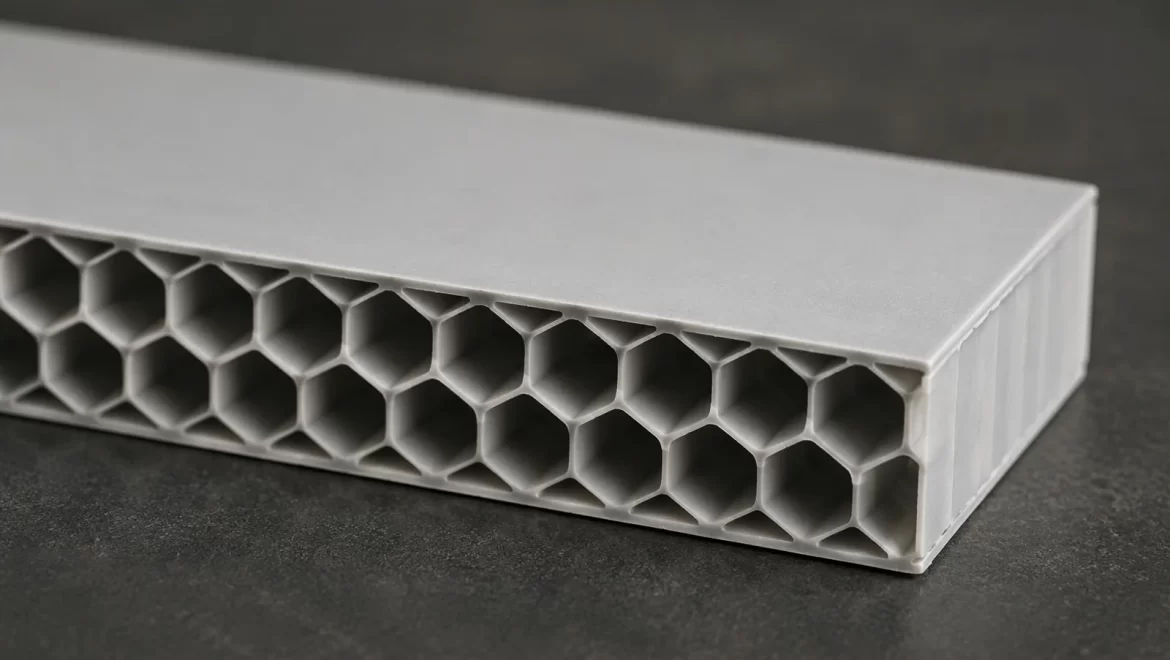
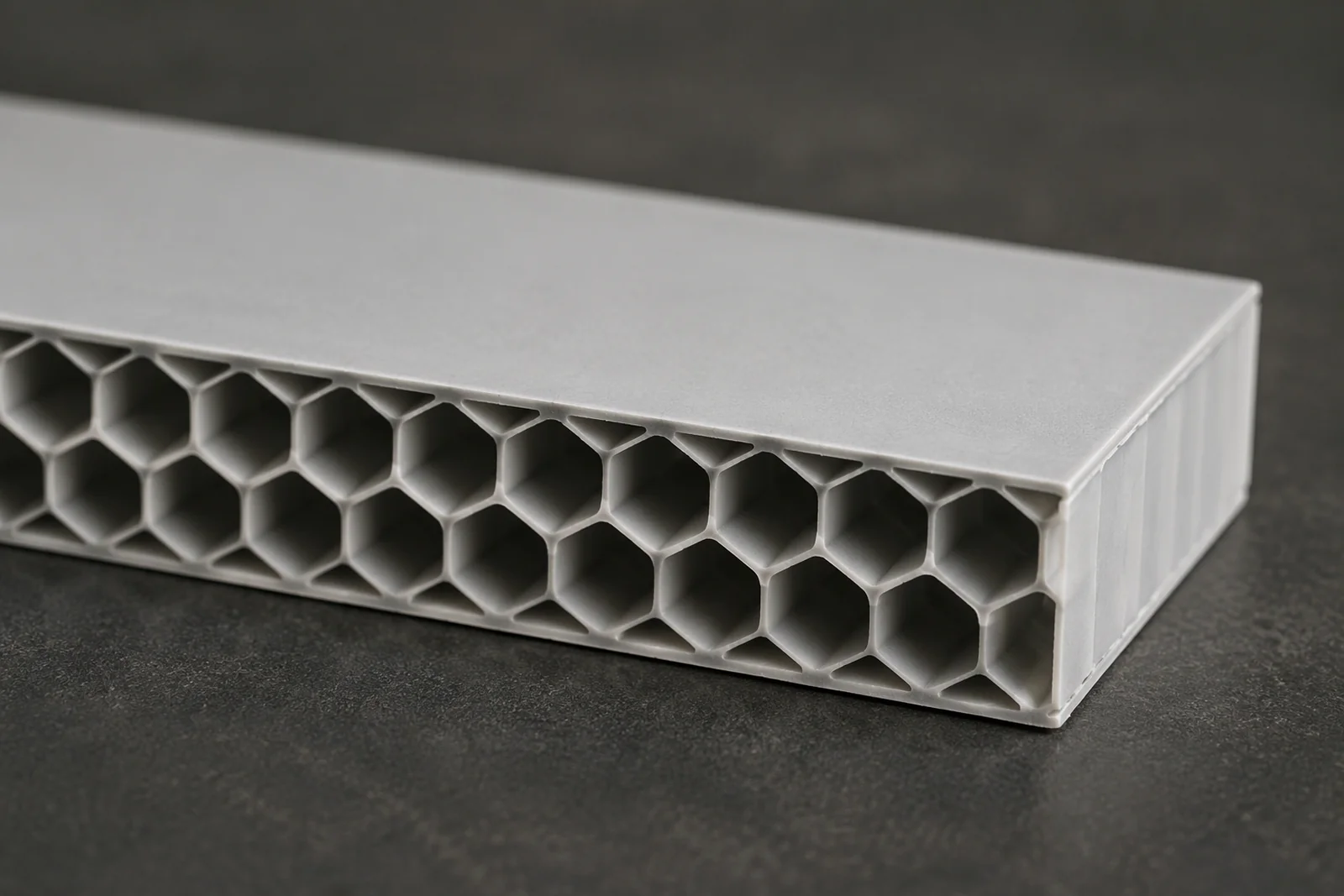
A thermoplastic honeycomb is the reference material for a washable base. It absorbs nothing, keeps stiffness when wet and returns to shape after flexing.
Polypropylene Corrugated
Twin-wall PP flutes are light and cheap and resist water well, but they crush under a point load and lose stiffness along the flute direction.
MDF and Hardboard
Wood fibre boards are stiff, flat and inexpensive, and they are the wrong choice wherever water is likely. They swell at cut edges first, then warp.
Plywood
Plywood resists water better than MDF because of its cross-laminated build, and its failure is delamination at the edges rather than overall swelling.
Coated or Foamed Boards
A foam board or a coated paper core is light and flat, and its moisture performance is entirely a function of how well the edges are sealed.
| Board | Water tolerance | Stiffness | Cost signal |
|---|---|---|---|
| PP honeycomb | High | High | Medium to high |
| PP corrugated | High | Medium | Low |
| MDF | Very low | High when dry | Low |
| Plywood | Low to medium | High | Medium |
| Coated foam | Depends on edge seal | Medium | Low |
Edge Sealing Decides the Outcome
Every board fails at its cut edge first, because the edge is where the core is exposed and where a seam is closest.
The Exposed Core
A cut MDF or plywood edge is bare fibre and takes water faster than any face. Sealing the face and leaving the edge raw is the most common specification error in the category.
Sealing Methods
Edge banding, a full wrap, a heat-sealed film or a dipped coating all work, and the choice follows the board rather than the factory's habit.
Sealing Is Not Waterproofing
A sealed edge slows ingress; it does not make a fibre board waterproof. Once water passes a seam it stays inside, which is worse than drying openly.
Wrapping and Covering
The wrap is the layer the animal stands on, and it also decides whether water can reach the board at all.
Removable Covers
A removable, washable cover is the single most effective moisture measure, because it takes the liquid and leaves the board dry. It also extends perceived life.
Bonded Wrapping
A glued wrap is cheaper and cannot be removed for cleaning. Water that passes the wrap stays against the board, and the failure is hidden until the panel deforms.
Loose Fit and Creep
A wrap applied too loosely moves against the board, abrades at the corners and opens a path at the edge. Fit matters as much as material.
Load and Stiffness After Wetting
A board is specified to carry an animal, and the specification is almost always written on dry stiffness, which is the number that matters least.
Dry Versus Wet Stiffness
A fibre board can lose most of its stiffness while still looking unchanged. The animal then stands on a panel that deflects, and deflection is what customers describe as a weak base.
Point Loads
A standing animal loads a small area, so a board must resist a point rather than a distributed weight. Honeycomb and plywood score well here; corrugated flute crushes.
Support Spacing
Stiffness falls with the span between supports. A board that passes on a small bag can fail on a large one with the same material, which is why thickness is a per-size decision.
| Support span | Required board | Reason |
|---|---|---|
| Short | PP corrugated | Load spread over short span |
| Medium | PP honeycomb | Resists point load |
| Long | Honeycomb plus rib | Span drives deflection |
| Long, wet use | Honeycomb, sealed edge | Wet stiffness retained |
Washability Requirements
If a bag is marketed as washable, the base decides whether the claim survives contact with a machine.
Hand Wash Versus Machine Wash
Machine washing soaks the board, agitates it and dries it slowly. Only a thermoplastic board with a sealed or welded wrap survives that cycle repeatedly.
Drying Time
A fibre board that takes water needs days to dry inside a closed bag. Drying time is the real constraint, not the initial absorption.
Detergent and Heat
Detergent residue attracts moisture, and heat above the board's softening point deforms it permanently. Both belong in the care instruction.
Fixing the Board in Place
A board that moves inside its pocket abrades the wrap and opens a moisture path at the seam, so retention is part of moisture design.
Stitched Perimeter
Stitching the perimeter holds the board but perforates the wrap. Each hole is a water entry point and should be placed where liquid is unlikely to sit.
Pockets and Sleeves
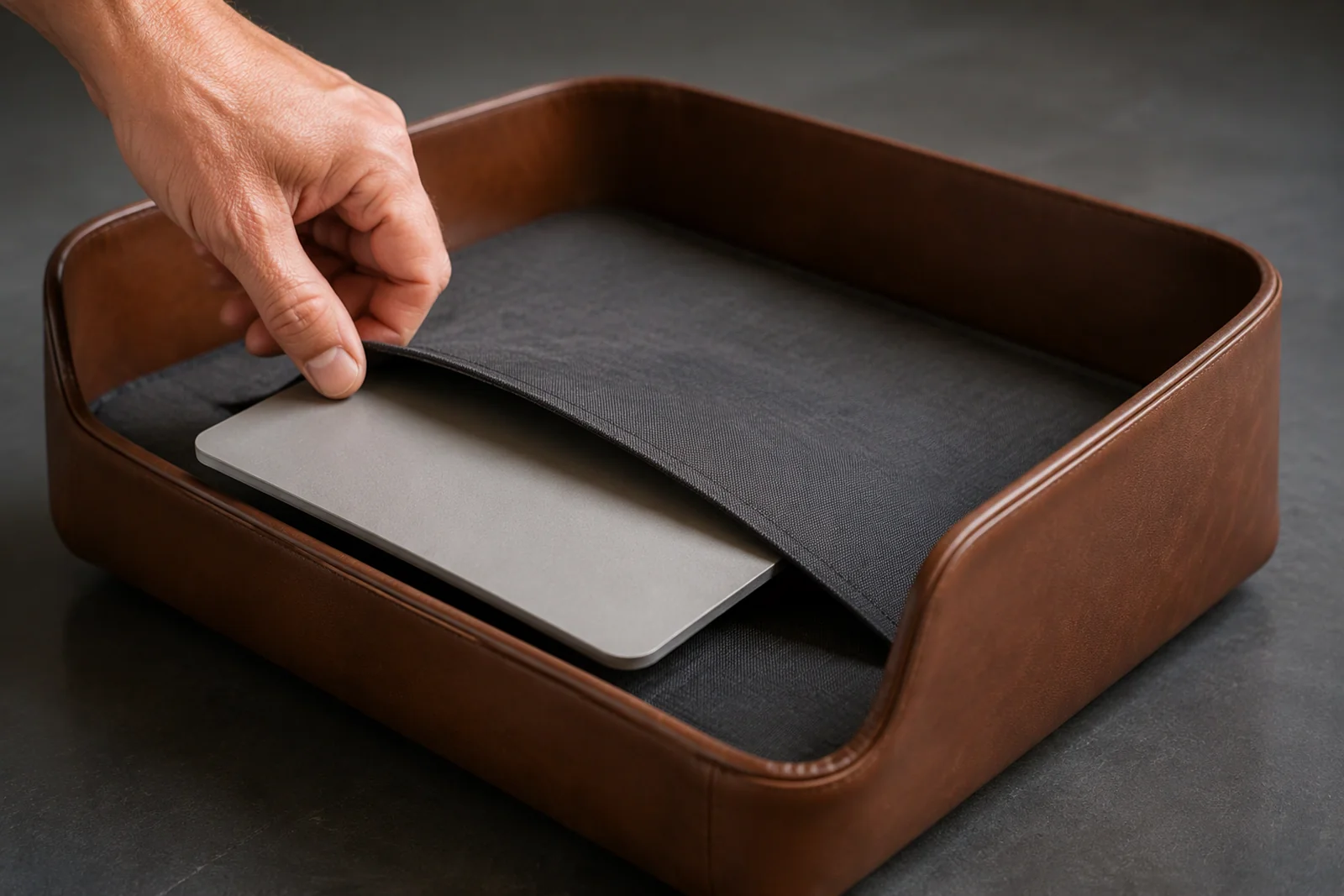
A closed sleeve keeps the board dry and allows removal for drying. It is the most moisture-friendly retention method and the easiest to service.
Hook and Loop
Hook and loop allows removal and reinsertion, and it wears out. In a pet bag the loop side also collects hair, which is a cleaning problem rather than a moisture one.
Condensation and Closed Bags
A carrier is often closed while damp, and trapped moisture does more damage than a spill because it does not leave.
The Closed Environment
A wet animal inside a zipped bag raises humidity to saturation. The base, being the coldest and lowest surface, collects the condensate.
Ventilation as a Control
Mesh panels and vent grommets let vapour escape. A fully sealed bag with a fibre base is a moisture trap regardless of how good the board is.
Drying After Use
Advise opening and airing the bag after every wet use. This single instruction removes most condensation failures and costs nothing to add.
Adhesives and Lamination
Where a board is laminated or wrapped with adhesive, the glue line becomes a moisture path and a failure origin.
Water-Based Adhesives
Water-based glue introduces moisture at lamination and leaves the interface sensitive to later water. It is cheap and it is the wrong choice for a washable base.
Hot Melt and Film
Hot melt and adhesive film are applied dry and produce a moisture-resistant bond. They cost more and they are what a washable claim requires.
Foam Interlayers
A foam interlayer improves comfort and holds water against the board. An open-cell foam in a base is a sponge, and a closed-cell foam is the correct choice.
| Adhesive | Moisture behaviour | Suitable for washing |
|---|---|---|
| Water based | Re-softens when wet | No |
| Hot melt | Resists water | Yes |
| Adhesive film | Resists water | Yes |
| Open-cell foam | Holds water | No |
Testing Moisture Resistance
A moisture test is a soak, a measure and a wait, and all three have to be fixed for the result to mean anything.
The Soak
Immerse a cut sample, edge included, for a stated time at a stated temperature. Testing a sealed sample tells you nothing about the edge that will fail first.
The Measures
Record thickness change, flatness and wet stiffness. Three numbers separate a board that swells from one that merely wets.
The Wait
Measure again after drying. A board that returns to its original shape is recoverable; one that stays warped has failed permanently.
Drying Practices After a Wet Day
A board that gets wet and dries fully usually survives; one that stays damp does not, and drying practice is a design feature rather than a customer habit.
Removing the Board
A removable board dries in hours on a rack and in days inside the bag. Designing for removal is the single most effective moisture measure available.
Air Path Through the Bag
An open bag with a vented panel dries from both faces. A closed bag with a fibre base traps vapour and holds it against the panel overnight.
Heat and Direct Sun
Warm air speeds drying and excessive heat deforms a thermoplastic core. A shaded, ventilated space is the right instruction and it is free to give.
| Drying method | Time to dry | Risk |
|---|---|---|
| Board removed, air dried | Hours | None |
| Bag open, ventilated | Under a day | Slow edges |
| Closed bag | Days | Odour, swelling |
| Direct heat | Fast | Warping |
Writing the Base Specification
A base requirement fits in a short table, and every line on it prevents a specific failure that would otherwise reach a customer.
The Required Lines
Board type and thickness, edge treatment, wrap method with removability, retention method, and the wash claim the base supports. Five lines cover the panel.
What to Avoid
Words like waterproof, water resistant and washable without a test behind them. Each is a claim the base will be judged against in use, not in the sample room.
Tying to the Care Claim
If the care label says hand wash, the base must survive hand wash. If it says machine wash, the board has to be thermoplastic with a welded or sealed wrap.
Sampling and Incoming Checks
A base check takes a knife, a ruler and a bowl of water, and it catches the wrong board before a production run consumes it.
Identifying the Board
Cut a corner and look at the core. Honeycomb, flute and fibre are obvious in a section, and a supplier substituting MDF for PP is visible in ten seconds.
Checking the Edge
Confirm the edge is sealed on the sample, not only on the drawing. An unsealed edge on a fibre board is a rejection regardless of the face quality.
The Quick Soak
Soak a cut-off for a stated time and check thickness and flatness. A fibre board shows movement within the hour; a thermoplastic one shows none.
| Check | Method | Reject if |
|---|---|---|
| Core identity | Section cut | Wrong family |
| Edge seal | Visual and flex | Bare fibre visible |
| Thickness | Caliper at points | Outside range |
| Soak response | Cut sample in water | Any swelling |
Where the Base Meets the Walls
The joint between base and wall is the first place water collects, because it is a seam at the lowest point of the bag.
The Seam as a Sump
A bound seam at the base holds a thin film of water against the board edge. The edge is the untreated core, so the seam becomes the entry point.
Rain Gutter Effect
Water running down the interior wall reaches the base seam and stops there. A small drain path or a raised seam moves it away from the board.
Sealing the Joint
Taping or welding the base seam keeps water out of the interface. In a washable bag the seam should be welded rather than stitched, since stitches perforate both layers.
Zips, Grommets and Penetrations
Every opening through the base assembly is a moisture route, and the number of them is a design decision.
Vent Grommets
A grommet through the base lets water in from the outside and condensate out. Placement matters more than the fitting: a raised grommet drains, a flush one admits.
Zip Ends
A zip that ends near the base concentrates both water and abrasion at one point. Moving the zip end up the wall removes both problems.
Rivets and Feet
Metal feet lift the bag off wet ground and are the most effective anti-wicking feature available. They also perforate the base, so each needs a sealed backing.
| Penetration | Moisture risk | Mitigation |
|---|---|---|
| Vent grommet | High if flush | Raise or omit |
| Zip end at base | High | Move up the wall |
| Metal feet | Medium | Sealed backing |
| Stitch line only | Low to medium | Seam tape |
Repair and Replacement
A base is the one component a carrier can be designed to have replaced, and that option changes how it should be built.
Removable Boards
A board in a sleeve can be replaced without touching the bag. The design cost is a sleeve; the benefit is a bag that survives a soaked base.
Replaceable Covers
A washable cover that zips off is cheaper to replace than the board and takes most of the wear. Offer it as a spare and the base lasts the life of the bag.
When Repair Is Not Possible
A bonded wrap over a swollen fibre board cannot be repaired, only replaced, and the replacement usually costs more than the bag is worth. Design out the possibility.
Climate and Shipping Conditions
A board specified in a dry sample room is tested by a container crossing a humid port, and the container is the real validation.
High Humidity
A humid climate keeps a fibre board near saturation for weeks. A board that passes a short soak can still swell in a sealed container under those conditions.
Condensation in Transit
A container crossing a temperature boundary condenses water on the inside of the walls, and the cargo at the bottom takes it. Base panels are usually at the bottom.
Desiccant and Packing
Desiccant in the carton, a moisture barrier liner and dry loading all reduce risk. They cost little and they are the difference between a clean arrival and a claim.
| Condition | Risk to base | Control |
|---|---|---|
| Humid port | Sustained absorption | PP board, desiccant |
| Temperature swing | Condensation | Barrier liner |
| Wet loading | Direct water | Dry loading rule |
| Long sea transit | Cumulative | Sealed edges |
Common Traps
Eight traps account for most base failures, and each is fixed on the specification or the drawing rather than in production.
Sealing the Face Only
The face is sealed and the cut edge is left bare, which is where water enters. Edge sealing is the whole point of the treatment.
Specifying Dry Stiffness
A board chosen on dry stiffness can go soft when wet. Wet stiffness is the number the animal will feel.
Bonding the Wrap
A glued wrap hides the board and prevents drying. It is cheaper and it converts a recoverable wetting into a permanent failure.
Open-Cell Foam
Comfort foam in a base holds water against the board. Closed-cell foam or none.
Stitching Through the Board
A stitch line through a fibre board is a row of water entry points. Retention by sleeve avoids all of them.
Ignoring the Span
Board thickness chosen for a small bag is reused on a larger one, and deflection appears. Thickness follows span.
No Feet
A base without feet wicks from a wet floor within minutes. Feet are the cheapest moisture measure in the whole design.
Claiming Waterproof
A waterproof claim on a stitched, fibre-based panel is indefensible in a claim. Claim what the test supports.
Cost and Grade Trade
Base cost is driven by board family and by sealing labour, and the cheapest upgrade is usually a design change rather than a better board.
Where the Cost Sits
A thermoplastic honeycomb costs several times an MDF board of the same thickness. The gap is real and it is much smaller than the cost of a claim.
Cheaper Routes to the Same Outcome
Feet, a removable cover and a sleeve together cost less than a board upgrade and prevent more moisture damage than any board can resist on its own.
When the Cheap Board Is Right
A carrier sold for occasional indoor use with a dry animal can use a sealed fibre board legitimately. The mistake is the same board sold for outdoor or washable use.
| Route | Cost signal | Moisture effect |
|---|---|---|
| Board upgrade | High | Large, permanent |
| Metal feet | Low | Large at floor contact |
| Removable cover | Low | Large at spills |
| Sleeve retention | Low | Large at drying |
| Sealed edges | Low | Medium, prevents entry |
Supplier Comparison
Two suppliers can quote the same board name and deliver different cores, so comparison runs on a section cut rather than a description.
Same Name, Different Core
Honeycomb, corrugated and foam cores are all sold under generic base board names. Only a section identifies what arrives.
The Comparison Set
Compare thickness, core structure, edge treatment and soak response on the same day with the same method. Anything else compares paperwork.
Retaining the Winner
Keep an accepted sample of each board grade. A retained section settles any later argument about substitution faster than a certificate.
Odour and Moisture
A damp base smells, and the smell is a symptom that customers report long before they notice deformation.
Absorption and Retention
A fibre board absorbs liquid and holds it in a closed bag. The odour is microbial growth inside the panel, which no surface cleaning reaches.
Ventilation as the Answer
A board that cannot absorb and a bag that can vent both remove the mechanism. A thermoplastic core plus a mesh panel is the combination that works.
Cleaning Agents
An enzyme cleaner on a fibre base adds moisture and does not reach the growth. On a thermoplastic core, cleaning is effective because nothing is absorbed.
Weight and Portability
A moisture-proof base is heavier than a fibre board, and the weight sits at the bottom of a bag that will be carried by a strap.
The Weight Penalty
A thermoplastic honeycomb adds weight at the base, exactly where it is least comfortable. The trade is explicit: durability against portability.
Thickness Instead of Density
Increasing thickness raises stiffness faster than it raises weight for a honeycomb core. A slightly thicker light core often beats a thin heavy one.
Balancing With the Strap
Extra base weight changes how the bag hangs, so a heavier base should be paired with a wider strap or a reinforced handle attachment.
Documentation and Traceability
A base is a bought component inside a sewn article, and without documentation a substitution is invisible until a customer reports it.
What to Record
Board designation, thickness, core type, edge treatment, wrap and retention method, plus the supplier certificate for the lot. Six fields identify the panel.
Linking to the Lot
Record the board lot with the bag lot. A moisture complaint then traces to a specific board delivery rather than to a whole season of production.
Change Control
Any board change is a re-test event. A supplier substituting an equivalent core without notice is the most common cause of an unexplained drop in durability.
Design Alternatives to a Board
A base does not have to be a board, and three alternatives remove the moisture question entirely.
Structural Padding
A dense closed-cell foam pad gives shape and comfort without absorbing water. It is lighter, softer and takes less rigidity than a board.
Framed Panels
A light frame of plastic or aluminium tube with a fabric skin gives stiffness with almost no material at the centre. It drains and dries freely.
No Base at All
A sling-style carrier with a padded floor and no rigid panel avoids the problem but offers less support. It suits small animals and short trips.
| Alternative | Stiffness | Moisture | Weight |
|---|---|---|---|
| PP board | High | Good | Medium |
| Closed-cell pad | Low to medium | Good | Low |
| Framed panel | Medium to high | Good | Low to medium |
| No base | Low | Good | Lowest |
Heat, Cold and Ageing
Temperature changes the board as much as water does, and the two effects combine in a car or a container.
Heat Softening
Thermoplastic cores soften above their service temperature. A bag left in a parked car can take a permanent set that no drying will remove.
Cold Brittleness
At low temperature a honeycomb core becomes brittle and cracks at a point load. A carrier used outdoors in winter needs a core that stays tough.
Ageing of the Wrap
The wrap ages faster than the core, and a cracked wrap exposes the board. Wrap choice is a durability decision, not a cosmetic one.
Limits of the Specification
A board specification sets a floor for the material; it does not make a bag watertight, and the difference should be stated plainly.
What It Cannot Control
The animal's behaviour, the owner's drying habits and the conditions in transit. Each can defeat a good board within weeks.
What It Should Not Promise
Waterproofing, machine washing without a thermoplastic core, or indefinite life in an outdoor carrier. Claims should follow the test, not the intention.
Where the Real Gain Is
Feet, a removable cover and a sleeve do more for moisture survival than moving from a mid grade to a top grade board, at a fraction of the cost.
Interior Liner and Bedding
The layer between the animal and the board decides how much moisture actually reaches the panel, and it is often overlooked in the base specification.
Bedding as a Buffer
A removable, absorbent pad takes spills before they reach the base. It is the cheapest moisture defence in the bag and the easiest to wash.
Liner Attachment
A liner fixed only at the perimeter leaves the centre loose, so liquid runs to the seam. A liner fitted over the whole panel keeps water spread and visible.
The Gap Between Layers
A gap between liner and board collects hair and moisture and is hard to clean. Tight lamination or full removability both avoid it, and a partial bond does neither.
| Layer | Moisture role | Best practice |
|---|---|---|
| Bedding pad | Absorbs spills | Removable, washable |
| Liner | Spreads and protects | Fitted or removable |
| Wrap | Blocks entry | Sealed edges |
| Board | Structural | Thermoplastic if washable |
FAQ
Which board is best for a washable pet carrier?
A: A polypropylene honeycomb with a sealed or welded wrap. It absorbs nothing, keeps its stiffness wet and returns to shape after flexing, which is what a machine cycle demands.
Is MDF acceptable if the faces are laminated?
A: Not where water is likely. Lamination protects the face and leaves the cut edge raw, and the edge is where a fibre board takes water first.
Why does a base board warp after it gets wet?
A: Because one face takes water faster than the other, and the differential strain bends the panel. The warp is a sign that water reached the core, not just the surface.
Can a swollen board be repaired?
A: In practice no. Thickness growth and delamination are permanent, and a bonded wrap prevents the drying that might have limited the damage.
Does edge banding make a fibre board waterproof?
A: No. Edge sealing slows ingress; it does not stop it. Once water passes a seam it stays inside the panel, which is worse than a board that can dry openly.
How thick should a base board be?
A: Thickness follows span. A short span carries a light corrugated core, a long span needs honeycomb or a rib, and the same thickness reused across sizes is a common cause of a soft base.
What is the cheapest moisture improvement?
A: Metal feet. They lift the base off wet ground and stop wicking through the outer fabric, and they cost less than any board upgrade.
Should the wrap be glued to the board?
A: Only when the base will never get wet. A glued wrap is cheaper, and it converts a recoverable wetting into a permanent failure because the panel cannot dry.
Why does a damp carrier smell even after cleaning?
A: Because the growth is inside the panel, and surface cleaning does not reach it. A thermoplastic core removes the mechanism by having nothing to absorb.
What happens to a board in a shipping container?
A: A temperature swing condenses water on the inside of the container walls, and cargo at the bottom takes it. Desiccant and a barrier liner are standard controls.
Can open-cell foam be used under the board?
A: It should not be. Open-cell foam holds water against the panel, and closed-cell foam is the correct comfort layer under a base.
Does a stitch line through the base matter?
A: It is a row of water entry points. Retaining the board in a closed sleeve avoids perforating the wrap and allows the panel to be removed for drying.
Are machines washable carriers realistic?
A: Only with a thermoplastic core and a welded or sealed wrap. A fibre board inside a machine-washed bag fails within a few cycles.
How is moisture resistance tested?
A: Soak a cut sample including its edge, then measure thickness change, flatness and wet stiffness, and measure again after drying to see whether the panel recovers.
What should the specification contain?
A: Board type and thickness, edge treatment, wrap method and removability, retention method, and the wash claim the base supports — five lines, each tied to a test.
What does a base specification not promise?
A: Waterproofing or indefinite life. Behaviour, drying habits and transit conditions can defeat a good board, and the claim should follow the test rather than the intention.
Ready to stop replacing bases after the first wet season? Put a thermoplastic core under anything described as washable, seal the cut edge rather than the face, retain the board in a sleeve, and add feet before you pay for a heavier panel.