Leather Density and Hand Feel: Beyond Thickness in Bag Leather
- Why Density and Hand Feel Matter in Bag Leather
- What Density Actually Measures
- How Tannage Sets Character
- Thickness, Substance and Firmness
- Finishing and Surface Hand
- Hide Position and Natural Variation
- Drape, Recovery and Shape Memory
- Evaluating Hand Feel Reliably
- Matching Hand Feel to Bag Style
- Specifying Density and Feel
- Batch Consistency and Sampling
- Common Misconceptions
- Wet Blue, Crust and Finished Leather
- Splitting, Shaving and Their Effect on Feel
- Climate, Storage and Seasonal Behaviour
- FAQ
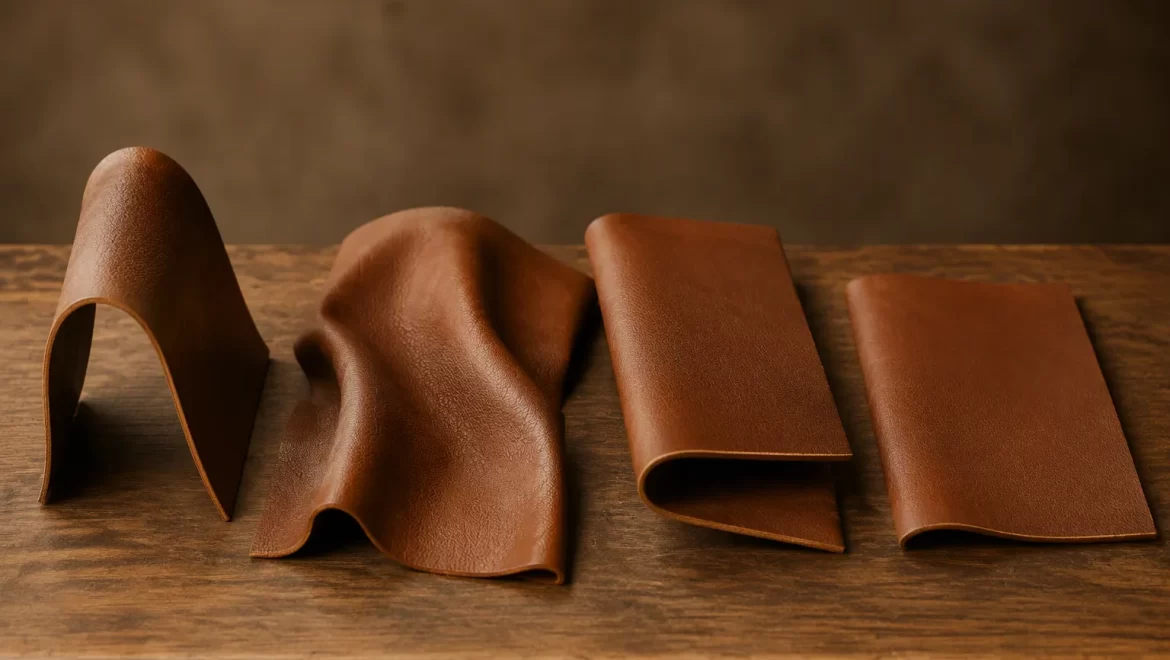
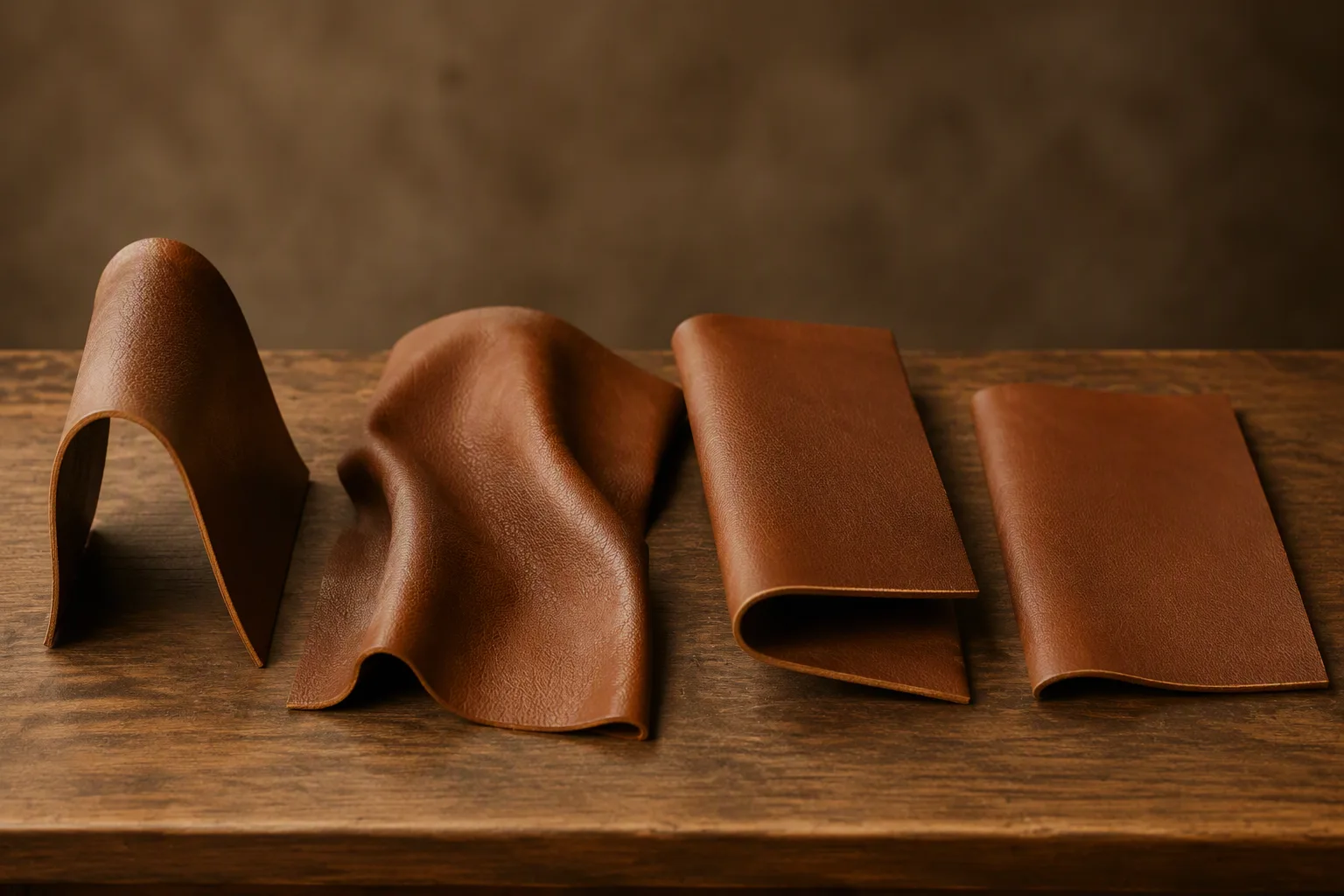
Two hides of identical thickness can produce completely different bags. One folds softly and drapes against the body; the other stands up on its own, creases sharply and feels almost rigid in the hand.
Buyers who specify only millimetres are working with a single dimension of a material that has at least five that matter. Density, firmness, temper, oil content and surface finish all shape how leather behaves, and none of them is captured by the thickness figure printed on a specification sheet.
The result is a familiar pattern: a sample is approved, a production run arrives at the agreed thickness, and the bags are wrong. They slouch where they should hold shape, or they feel stiff and plastic where the sample felt supple. The measurements were met; the material was not the same.
This guide explains what density and hand feel actually describe, how tannage, fatliquor and finishing set the character of a hide, how the position of a panel within a hide changes its behaviour, how to evaluate feel reliably rather than by impression, and how to write a specification that a tannery and a factory can both meet.
Why Density and Hand Feel Matter in Bag Leather
For a bag, the mechanical behaviour of the leather is not a cosmetic detail. It is the structure.
Structure Comes From the Material
A bag has no frame in most constructions. Shape is produced by the stiffness of the leather, the way panels fold, the recovery of the material after it is compressed, and the reinforcement at load points.
Change the density or the firmness of the leather and the whole bag changes, even when dimensions stay identical.
Where Hand Feel Determines Outcome
Hand feel determines how a flap falls, whether a tote slouches, how a strap sits on the shoulder, whether edges can be folded thin or must be turned wide, and how the bag looks after a year of use.
It also determines manufacturability: a soft, stretchy leather cannot hold a sharp corner, while an overly firm leather cannot be gathered without wrinkling.
Buyer Expectations
Two buyers in the same market can want opposite things from the same nominal material. A minimal leather brand may want a soft, slightly informal drape, while a formal brand may want a firm, structured hand that photographs as architectural.
Neither is correct in the abstract. What matters is that the requirement is expressed clearly enough for the tannery to deliver it repeatedly.
Why Thickness Alone Fails
| Property | Captured by thickness? | Effect on the bag |
|---|---|---|
| Thickness | Yes, directly | Panel weight, edge width |
| Density | No | Firmness, drape, sag resistance |
| Temper or firmness | No | Shape holding, fold behaviour |
| Oil content | No | Softness, patina, ageing |
| Surface finish | No | Sheen, scratch visibility |
| Fibre tightness | No | Strength, stretch resistance |
What Density Actually Measures
Density is the most misused word in leather specification, and the confusion starts with the fact that suppliers use it differently.
Area Weight Versus Apparent Density
In commerce, "density" often means area weight: the mass of leather per unit area, typically expressed in grams per square metre or as ounces per square foot. That figure depends on thickness as much as on the material, so a thick leather will show a high area weight without being dense in any structural sense.
Apparent density is a different quantity: mass per unit volume, which relates to how tightly the fibre structure is packed. A leather with tightly packed fibres is denser at the same thickness than one with a looser structure.
How Apparent Density Is Assessed
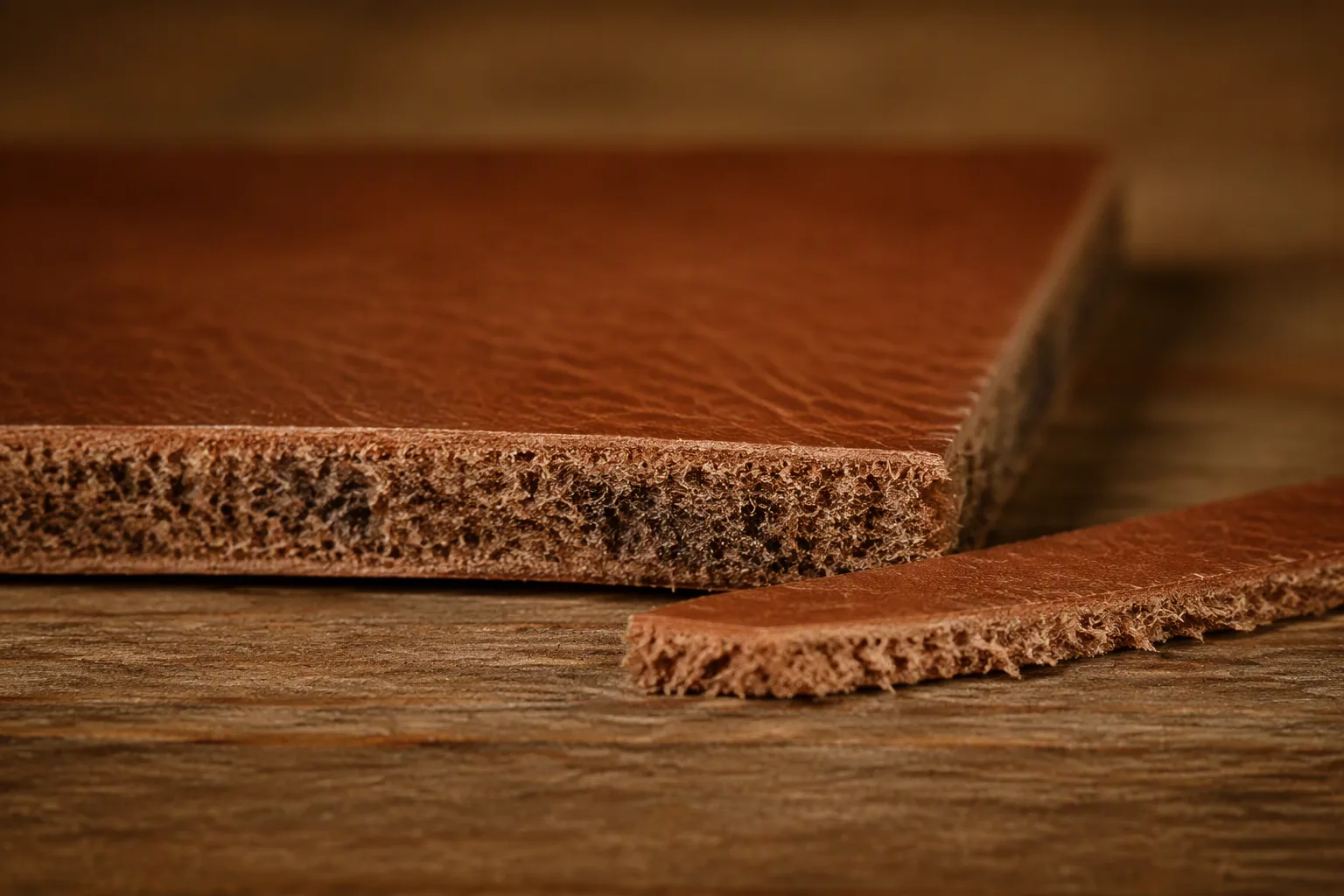
True density is rarely measured in routine trade because it requires cutting a known volume and weighing it. In practice, tanners and buyers judge it indirectly: by handling the leather, by observing how it resists compression, and by looking at the tightness of the fibre structure at a cut edge.
Cut-edge inspection is the most accessible method. A tight, uniform fibre cross-section suggests a dense structure, while an open, spongy or layered appearance suggests a looser one.
Why High Density Is Not Automatically Better
Dense leather resists sagging, holds a shape and takes a clean folded edge. It also resists dye penetration, can feel less comfortable against the body and may be harder to gather.
Soft, open leathers drape beautifully and feel warm, but they stretch, sag and lose shape in unstructured designs.
Density Vocabulary in Practice
| Term used | What it usually means | Caveat |
|---|---|---|
| Density | Area weight | Depends on thickness |
| Substance | Thickness in millimetres | Says nothing about firmness |
| Weight | Ounces per square foot | Trade convention |
| Tightness | Fibre structure | Judged visually or by hand |
| Body | Firmness | Subjective, but real |
| Temper | Stiffness and recovery | Influenced by fatliquor |
How Tannage Sets Character
The tanning system determines the basic architecture of the material long before finishing begins.
Mineral and Vegetable Tannage
Chrome tannage produces a stable, heat-resistant leather that can be made soft and is relatively uniform across a hide. Vegetable tannage produces firmer, denser-feeling leather that takes a strong crease and develops character with use.
Combination tannage, using both systems, is extremely common in bag leather and allows the tanner to tune the balance between softness and body.
Retanning and Filling
Retanning does more to hand feel than most buyers realise. Synthetic tanning agents, resin fillers and vegetable extracts are used to add body, tighten the fibre structure, improve cut-edge appearance and modify drape.
A retanning programme can make a thin leather behave in a firmer way, and it can also make a leather feel papery if the filling is overdone.
Fatliquor and Softness
Fatliquor is the oil and fat emulsion applied during and after tanning. It lubricates fibres and directly controls softness, stretch and the way leather recovers.
More fatliquor generally means softer and more pliable; less means firmer. The distribution matters as much as the quantity, because uneven penetration produces leather that feels inconsistent across the hide.
Tannage Effects
| System | Feel | Body | Notes |
|---|---|---|---|
| Chrome | Soft, uniform | Variable | Stable, widely used |
| Vegetable | Firm, dense | High | Develops character |
| Combination | Tunable | Moderate to high | Common in bags |
| Retanning with fillers | Firmer, tighter | High | Can feel papery |
| High fatliquor | Soft, pliable | Low | Stretches more |
| Low fatliquor | Firm, dry | High | Less comfortable |
Thickness, Substance and Firmness
Thickness is real and important, but it interacts with firmness in ways that a single number cannot express.
What Thickness Does Control
Thickness sets panel weight, edge width, the amount of skiving needed, the size of hardware that looks appropriate and, to a degree, the durability of a panel.
It also determines how a fold behaves. A thin leather folds into a compact, refined edge; a thick one produces a bulky edge that must be skived or turned.
The Firmness Axis
Firmness is independent of thickness. A thin leather can be firm, and a thick leather can be soft, depending on tannage, retanning and fatliquor.
This is why a 1.2 mm firm leather can hold a structured shape that a 1.6 mm soft leather cannot.
Substance and Tolerance
Thickness is measured in several places across a hide and reported as an average with a tolerance, because it varies naturally from back to belly. A specification that states a single figure without a tolerance invites disputes.
Where close thickness control matters, such as for a skived edge, the requirement should be stated as a range and verified on the production material.
Thickness and Firmness Combinations
| Combination | Behaviour | Typical use |
|---|---|---|
| Thin and firm | Light, holds shape | Structured small bags |
| Thin and soft | Drapes, folds tight | Slouchy styles |
| Thick and firm | Heavy, architectural | Structured totes |
| Thick and soft | Substantial, relaxed | Soft carryalls |
| Thin and papery | Weak, creases badly | Avoid in bags |
| Thick and spongy | Sags, poor edges | Seldom suitable |
Finishing and Surface Hand
Finishing changes what the hand feels first, and it can mask or reinforce the underlying structure.
Coatings and Their Effect
Pigmented finishes apply a polymer coat over the surface. They even out colour and defects, add a uniform hand and, in heavier applications, noticeably stiffen the leather.
Aniline finishes leave the surface largely open, which preserves natural softness and grain appearance, but also leaves more of the hide's natural variation visible.
Embossing, Plating and Milling
Embossing presses a pattern into the surface, which compresses the fibres beneath and firms the material slightly. Heavier embossing produces a more pronounced effect.
Milling, or tumbling, softens the leather mechanically and develops a grain pattern while increasing suppleness. The interaction between milling and fatliquor determines how much the leather eventually relaxes.
Surface and Structure Are Separate
A common mistake is to judge structure from the surface. A heavily coated leather can look firm and consistent while the fibre structure beneath is loose, and the bag will still sag.
The reverse also occurs: a natural, slightly uneven surface can sit on a tightly packed structure that performs well over time.
Finishing Effects on Hand
| Finish | Surface hand | Effect on structure |
|---|---|---|
| Aniline | Natural, soft | Minimal |
| Semi-aniline | Lightly protected | Slight |
| Pigmented, light coat | Uniform, slightly firm | Small |
| Pigmented, heavy coat | Firm, uniform | Can stiffen noticeably |
| Embossed | Textured, firmer | Compresses fibres |
| Milled | Soft, relaxed | Increases suppleness |
Hide Position and Natural Variation
A hide is not a uniform sheet, and the differences within a single skin are often larger than the differences between two tanneries.
Back, Belly and Shoulder
The back and butt area has the tightest fibre structure and the greatest density, which makes it the preferred source for panels that must hold shape. The belly is looser and stretchier. The shoulder sits between the two.
Panels cut from different zones behave differently after assembly, which is why two bags made from the same batch can feel different.
Practical Consequences for Cutting
Factories that understand zone behaviour cut structural panels from the back and reserve looser areas for pieces where stretch is acceptable or concealed, such as interior pockets or linings.
Where a design uses a large single panel, such as a tote body, the panel will inevitably include some variation, which is one reason large, unstructured bags sag over time.
Grading and Selection
Tanneries grade hides by size, defect level and consistency. Defect grading is well understood by buyers; structural grading is not, and it is often the hidden variable behind inconsistent feel.
Zone Behaviour
| Zone | Fibre structure | Firmness | Best use |
|---|---|---|---|
| Back and butt | Tightest | Highest | Structural panels |
| Shoulder | Medium | Medium | General panels |
| Belly | Loose | Lowest | Concealed pieces |
| Neck | Variable, wrinkled | Variable | Avoid for visible panels |
| Legs | Loose, thin | Low | Interior only |
Drape, Recovery and Shape Memory
Beyond firmness, leather has dynamic behaviour: how it moves, how it returns and how it remembers.
Drape
Drape describes how the material falls under its own weight. A leather with good drape hangs in soft curves; one without drape holds stiff angles.
Drape is what makes a saddle bag look relaxed and a formal bag look crisp, and it comes from the relationship between weight, thickness and softness.
Recovery and Crease Behaviour
Recovery describes what happens after the leather is folded and released. Good recovery means the crease relaxes; poor recovery means the fold line remains visible as a permanent mark.
This matters at every fold in a bag: flaps, gussets, straps and edge folds. A leather with poor recovery looks worn early, even when it is structurally sound.
Spring and Memory
Some leathers have a springy quality that resists compression, which is desirable at load points and uncomfortable in areas that contact the body. Others hold whatever shape they are given, which is useful in moulded designs and difficult in bags that must fold flat.
Dynamic Properties
| Property | What it describes | Where it matters |
|---|---|---|
| Drape | Fall under own weight | Soft styles, flap folds |
| Recovery | Return after folding | Flaps, gussets, edges |
| Spring | Resistance to compression | Load points, structure |
| Memory | Holding an imposed shape | Moulded designs |
| Creep | Slow stretching under load | Straps, handles |
| Sag resistance | Holding shape over time | Tote bodies |
Evaluating Hand Feel Reliably
Hand feel is subjective, but evaluation can be made consistent enough to support decisions and specifications.
Conditions and Method
Judge samples under consistent conditions, because humidity and temperature change how leather feels. Cold leather feels firmer; humid air makes it more pliable.
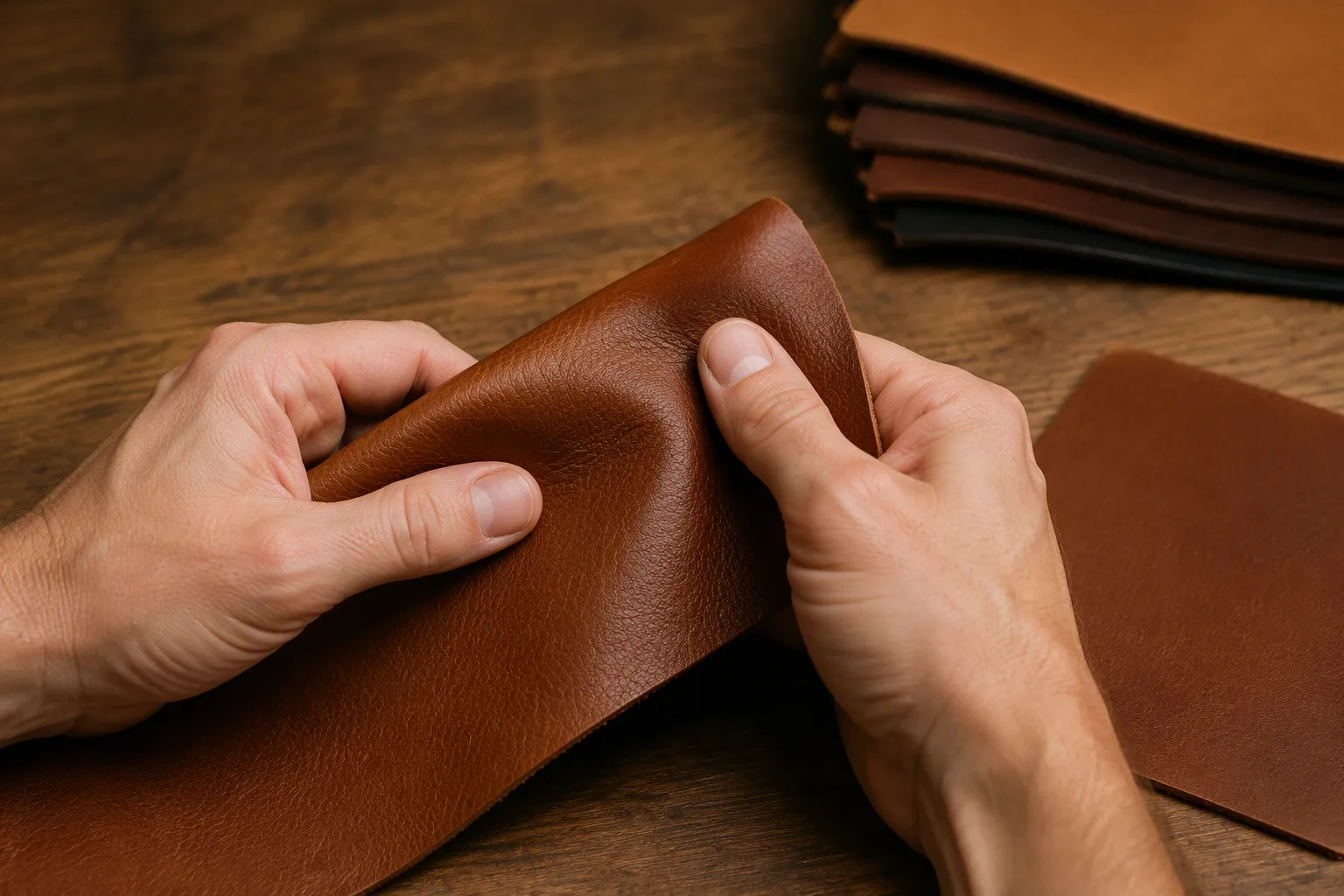
Handle the whole panel, not a small swatch, and assess it in the ways the finished bag will be used: folded, compressed, hung and flexed.
Comparison Instead of Absolute Judgement
Subjective judgement is unreliable in isolation and much more reliable in comparison. Place candidate materials side by side, in the same light, in the same order each time, and rank them rather than describing them.
Blind comparison, where the samples are unlabelled, removes the influence of price and brand expectations, which are surprisingly strong.
Vocabulary That Communicates
Shared vocabulary prevents misunderstanding. Terms such as firm, springy, dry, waxy, spongy, papery, buttery, tight and floppy are more useful than general praise, because each describes a specific behaviour the factory can act on.
Where possible, pair each word with a physical reference: a named leather that everyone involved can hold.
Evaluation Practice
| Practice | Why it improves reliability |
|---|---|
| Standard conditions | Removes humidity and heat effects |
| Full panel handling | Reveals behaviour a swatch hides |
| Side-by-side ranking | Converts opinion into comparison |
| Blind assessment | Removes price and brand bias |
| Shared vocabulary | Prevents interpretation errors |
| Physical reference | Anchors abstract descriptions |
Matching Hand Feel to Bag Style
The right hand feel follows from the design, not from a general preference.
Structured Designs
Structured bags need firm leather with good recovery and sag resistance. Soft leather in a structured pattern produces a bag that collapses at the body and creases at the corners.
Where a structured look is required from soft leather, reinforcement must supply the structure, which adds weight and reduces the natural feel.
Soft and Slouchy Designs
Slouchy designs need drape and softness, with enough fibre strength to resist excessive stretching at the handle and base. Too firm a leather in these designs produces a bag that looks rigid and refuses to fall naturally.
Hardware and Edge Compatibility
Hand feel determines edge treatment. Firm leather supports a painted edge and a folded edge with a crisp line; soft leather produces soft edges and often needs binding or a wider fold.
Hardware weight should also match the material: heavy hardware on soft leather pulls the bag out of shape over time.
Style Matching
| Style | Required feel | Avoid |
|---|---|---|
| Structured tote | Firm, good recovery | Soft, stretchy material |
| Slouchy shoulder bag | Draping, soft | Very firm, boardy material |
| Crossbody compact | Medium firm | Spongy, sagging material |
| Formal flap bag | Firm, fine grain | Loose, uneven structure |
| Drawstring | Soft, supple | Stiff, springy material |
| Handle-heavy designs | Firm at attachment | Weak, stretchy zones |
Specifying Density and Feel
A specification for hand feel must convert subjective language into something verifiable, or it will not be honoured in production.
What Can Be Measured
Thickness, area weight, tensile strength, elongation and tear strength are measurable and can be stated with tolerances. Firmness can be measured with instruments that record the force required to compress or bend a sample, though the numbers are only useful when compared against an approved reference.
Drape and recovery are difficult to measure directly and are usually handled through a reference sample.
The Reference Sample as the Standard
The practical solution is a physical reference: an approved piece of production leather, retained by the tannery, the factory and the brand, that defines the target. Every batch is compared against it.
The reference should be stored properly, because leather changes with exposure. Wrapping it, keeping it away from light and replacing it when it ages keeps the standard meaningful.
Writing Tolerances
State tolerances for measurable properties and describe the acceptable range for feel using specific behaviour: the leather must fold without cracking, must recover within a stated time after compression, and must not sag when a panel of a given size is supported at two points.
Specification Elements
| Element | Measurable? | How to specify |
|---|---|---|
| Thickness | Yes | Range with tolerance |
| Area weight | Yes | Range with tolerance |
| Strength and elongation | Yes | Minimum values |
| Firmness | Partly | Compared to reference |
| Drape | No | Reference sample |
| Recovery | Partly | Behaviour description |
| Surface finish | Partly | Reference sample and grade |
| Zone selection | Yes | Cutting instruction |
Batch Consistency and Sampling
Most disputes about hand feel arise between batches rather than within one, and consistency is a production management problem as much as a tannery problem.
Sources of Drift
Raw hide supply changes with season, origin and animal size. Chemical lots vary. Processing conditions vary between shifts. Each of these can shift feel slightly, and the effects compound.
Tanneries manage this by blending hides into production lots and by adjusting retanning and fatliquor to keep the output consistent, which is why a good tannery is defined more by consistency than by peak quality.
Sampling Discipline
Sampling should use production material, not a special selection. Where a tannery offers a "sample standard", confirm that it comes from regular production, because hand-selected samples produce expectations the line cannot meet.
Sample at the thickness and in the zone intended for production, and handle the sample in the same way the bag will be handled.
Monitoring in Production
Ask for retained samples from each production lot, and compare them against the reference at agreed intervals. Catching drift at the lot level prevents discovering it in a finished bag.
Where a design is long-running, keeping a physical archive of accepted lots makes later comparisons possible.
Consistency Controls
| Control | Purpose |
|---|---|
| Lot retention samples | Enables drift detection |
| Reference sample | Defines the target |
| Zone-level cutting plan | Reduces variation in panels |
| Tannery consistency data | Predicts stability |
| Pre-production sample check | Confirms before bulk |
| Archive of accepted lots | Supports long runs |
Common Misconceptions
Several widely held beliefs about leather feel lead buyers into specifications that cannot be met.
"Thicker Means Better"
Thickness affects weight, edge bulk and durability, but a thick, spongy leather sags and creases worse than a thinner, tightly structured one.
"Density Is Just Weight"
Area weight is not structural density. Two leathers of identical area weight and thickness can behave entirely differently depending on fibre packing and retanning.
"Soft Leather Is Lower Quality"
Softness comes from fatliquor and fibre structure, not from poor quality. Many high-value leathers are soft by design, and the appropriate question is whether the softness suits the design.
"The Sample Represents the Batch"
A sample selected to impress does not represent regular production. Confirm that the sample comes from the line and retains lot references, then compare later batches against it.
"Feel Cannot Be Specified"
Feel cannot be reduced to one number, but it can be anchored to a physical reference, described in behavioural terms and verified against retained samples. That is enough to hold a production relationship together.
Wet Blue, Crust and Finished Leather
Hand feel is established well before the leather is finished, which is why changes made late cannot rescue a material with the wrong structure.
The Wet Blue Stage
Wet blue is the stage immediately after chrome tanning, before retanning and finishing. At this point the fibre structure of the hide is largely fixed by the raw material and the tanning process.
A hide with a loose, open structure cannot be made tight by later processing. It can be made to feel firmer through filling, but the underlying behaviour remains, and the bag will still sag.
The Crust Stage
Crust is wet blue that has been retanned, fatliquored and dried. At this stage the firmness, softness and drape of the material are essentially set, and the mechanical character of the finished leather is decided.
This makes crust the most useful stage for judging whether a leather will behave correctly. Crust samples allow a buyer to assess structure before finishing coats obscure it.
What Finishing Can and Cannot Do
Finishing can modify the surface, add a small amount of firmness, even out colour and change the perceived quality of the hand. It cannot rebuild a loose fibre structure or remove an excess of filling that makes leather feel papery.
When a feel problem appears only after finishing, the cause is usually in the crust, and the corrective action belongs upstream.
Stage Characteristics
| Stage | Feel largely set? | What can still be changed |
|---|---|---|
| Wet blue | Structure yes, feel no | Retanning and fatliquor |
| Crust | Feel largely yes | Finishing effects only |
| Finished | No | Surface appearance only |
| After assembly | No | Nothing structural |
Splitting, Shaving and Their Effect on Feel
Thickness reduction is a normal production step, but how it is done affects how the remaining material behaves.
Splitting Versus Shaving
Splitting cuts a hide horizontally into layers. Shaving removes material from the flesh side to bring a hide to a target thickness, usually after tanning.
Splitting produces a top layer with the intact grain and a split with an open fibre structure. The split behaves very differently from the grain layer, which is why split leather feels softer and stretches more.
The Effect of Reduction
Reducing thickness by shaving removes some of the structure, and the resulting material is generally softer and less sag-resistant than the original. Reducing a hide aggressively to reach a thin specification can leave it weak and stretchy.
Where a thin leather is required with good body, the answer is usually a hide selected for tight structure rather than a heavily shaved hide.
Re-Tanning After Reduction
Some producers retan after shaving to restore body and improve cut-edge appearance. This works within limits, and it changes feel in ways that should be confirmed on a sample.
Reduction Effects
| Operation | Effect on feel | Notes |
|---|---|---|
| Light shaving | Minimal change | Preferred where possible |
| Heavy shaving | Softer, weaker | Structure reduced |
| Splitting to top layer | Keeps grain strength | Material-dependent |
| Split layer | Open, stretchy | Different performance |
| Retan after shaving | Restores some body | Confirm on sample |
Climate, Storage and Seasonal Behaviour
Leather responds to its environment, and seasonal conditions explain a large share of disagreements about feel.
Humidity and Flexibility
Leather absorbs moisture from the air. In a humid climate it becomes more pliable and may feel softer and heavier; in a dry climate it becomes firmer and can feel drier.
A sample assessed in a temperate sampling room may behave differently when it arrives in a humid market, which is one reason feel should be judged in conditions resembling the destination.
Temperature Effects
Cold makes leather firmer and more prone to cracking if it is folded while cold. Warm conditions soften it. Panels folded or skived in a cold workshop, particularly in winter, behave differently from the same panels worked in summer.
Storage and Transit
Leather stored for long periods changes gradually, and compressed storage can leave marks that affect perceived firmness. Finished bags stored in humid conditions may show softer, flatter panels than freshly made ones.
For long-running designs, it is worth inspecting stored goods rather than assuming they are unchanged.
Environmental Factors
| Factor | Effect on feel | Practical response |
|---|---|---|
| High humidity | Softer, more pliable | Judge in destination conditions |
| Low humidity | Firmer, drier | Avoid over-drying in storage |
| Cold workshop | Firmer, crack risk | Warm panels before folding |
| Warm workshop | Softer, easier forming | Accept slight seasonal drift |
| Long storage | Gradual change | Inspect before shipment |
| Compressed storage | Marks, flatness | Store without load on panels |
FAQ
Does higher density always mean better leather?
A: No. Dense leather holds shape and takes a clean edge, but it can be less comfortable, harder to gather and less suited to soft designs. Suitability depends on the bag, not on a general ranking.
Is density the same as thickness?
A: No. Thickness measures one dimension. Density describes how tightly the fibre structure is packed, and two leathers of identical thickness can behave completely differently.
What does area weight tell me?
A: Area weight is mass per unit area, and it depends on thickness as well as on structure. It is useful for costing and shipping, but it does not describe firmness or drape.
Can a thin leather hold a structured shape?
A: Yes. Firmness is independent of thickness, so a thin leather with tight fibres and appropriate retanning can hold structure that a thicker soft leather cannot.
Why did my production batch feel different from the sample?
A: Common causes are a sample selected specially rather than taken from the line, raw material variation between seasons, and differences in retanning or fatliquor between lots.
How can I judge hand feel consistently?
A: Judge full panels rather than small swatches, under consistent temperature and humidity, and rank candidates side by side instead of assessing each in isolation.
What causes a bag to sag over time?
A: Loose fibre structure, low sag resistance and insufficient reinforcement. It is not caused by thickness alone, and filling used to add firmness may not prevent it.
Does soft leather mean poor quality?
A: No. Softness comes from fatliquor levels and fibre structure, and many high-value leathers are soft by design. The question is whether the softness suits the intended bag.
What is crease recovery and why does it matter?
A: It describes how a fold mark relaxes after the leather is released. Poor recovery leaves permanent crease lines at flaps, gussets and edges, so the bag looks worn early.
How do I specify feel in a purchase order?
A: Combine measurable properties with tolerances and a retained physical reference sample, then describe required behaviour, such as folding without cracking and recovering after compression.
Where in a hide should structural panels be cut?
A: From the back and butt area, which has the tightest fibre structure. Belly and leg areas are looser and belong in concealed or non-structural pieces.
Does finishing change the structure beneath?
A: It changes the surface and can add some firmness, but it cannot rebuild a loose fibre structure. A heavily coated leather can look firm while performing poorly.
What is the best stage to judge feel?
A: Crust, where retanning and fatliquor have been applied but finishing coats have not yet obscured the structure. Judging at this stage avoids expensive later surprises.
Can heavy shaving make leather too soft?
A: Yes. Aggressive thickness reduction removes structure and leaves material softer, weaker and more stretchy. Where thin leather must hold shape, hide selection matters more than reduction.
Does climate affect how leather feels?
A: Considerably. Humidity makes leather more pliable and low humidity makes it firmer, so a sample judged in one climate may behave differently in the destination market.
How do I keep feel consistent across a long production run?
A: Retain a sample from every production lot, compare against the approved reference at agreed intervals, and keep a cutting plan that assigns panels by hide zone.
Ready to specify leather that behaves the way your design needs? Share your bag silhouette, target market and the feel you are trying to achieve, and we will help you translate it into a workable specification: the right tannage and retanning balance, fatliquor and finishing levels that produce the drape or firmness you want, zone-based cutting instructions, and a reference sample system that keeps every batch in line.