Waxed, Oiled or Pull-Up Leather: Which for Your Bags?
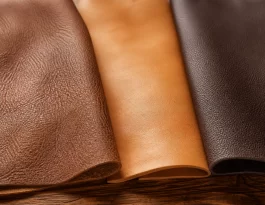
Some leather bags tell their story on the surface. A waxed leather bag darkens where it flexes, lightens where it rubs, and builds a map of use across its panels within months. An oiled leather bag deepens its tone with every season until it glows like polished wood. A pull-up leather bag changes color where your fingers press it — and customers either love that living quality or panic, thinking the bag is damaged.
If you are a brand choosing specialty finishes for your line, the first thing to understand is that you are not choosing a color. You are choosing a relationship: the leather will keep changing after it leaves the factory, and your customers need to be part of that story, not surprised by it. This guide explains waxed, oiled, and pull-up leathers from the factory side — how they are made, how they age, what they need, and which bag styles suit them best.
What Makes a Finish "Specialty"
Standard finished leather is coated to stay looking the same. Specialty finishes are engineered to change. The difference is not cosmetic decoration — it is a deliberate choice about how the leather surface behaves over time.
Standard Finishes vs Specialty Finishes
A standard pigmented finish seals the leather surface with a colored film that resists water and stays uniform. It is the workhorse of the industry: predictable, durable, and easy to maintain. A specialty finish, by contrast, leaves the leather surface partly open — waxed, oiled, or treated so the material itself responds to handling, flexing, and the environment.
The trade-off is real and should be understood before choosing. Specialty leathers offer character, patina, and a tactile experience that pigmented leather cannot match. They also demand more careful sourcing, more honest product descriptions, and more customer education — because a bag that changes color is either a feature or a complaint, depending entirely on expectation.
Why the Surface Is Left Open
Leather is a fibrous material with natural oils and pores. Standard finishes seal those pores with polymer film; specialty finishes work with them. Waxes and oils sit in and on the surface, moving with the leather as it flexes, absorbing into dry areas, and being displaced by friction.
That open, living system is why specialty leathers feel different in the hand — warmer, more supple, more "organic" — and why they age differently. Every flex redistributes a little wax or oil, every touch leaves a trace, and the surface records the bag's life. For heritage brands and premium lines, that record is the product.
The Specialty Family Tree
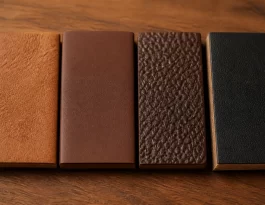
| Finish type | How it is made | Surface character | Aging behavior |
|---|---|---|---|
| Waxed | Wax impregnated and buffed into the surface | Matte, slightly dry, marked by friction | Pale rub marks, darker creases |
| Oiled | Oils soaked into the leather structure | Supple, soft, rich tone | Deepens and darkens overall |
| Pull-up | Oils and waxes inside; surface lightly finished | Silky, responds to pressure | Lightens where stretched or pressed |
| Nubuck | Buffed grain, no coating | Velvety, matte | Smooths and darkens with use |
How Waxed Leather Is Made and How It Ages
Waxed leather is the surface storyteller. It is full-grain leather impregnated with wax — usually at the tannery — then buffed to a matte, tactile finish that shows every touch.
The Waxing Process at the Factory
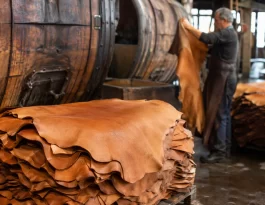
The process starts with full-grain leather, because waxing requires an intact surface. The tannery applies wax compounds — often a blend of natural and synthetic waxes — working them into the leather so the fibers absorb the wax rather than just the surface. The leather is then dried and buffed to distribute the wax evenly.
The result is leather with a dry, matte hand feel and a surface that marks easily. That marking is not a defect; it is the design. When a waxed bag flexes, the wax redistributes and the crease lines darken. When it rubs against a table edge, the wax lifts slightly and the area lightens.
What Customers See Over Time
A waxed bag lives in motion. The first months show the most change: corners lighten, handles develop a sheen where hands grip them, and creases darken along the fold lines. Some brands love this — it is honest wear, visible proof of use. Others find it too unpredictable for their market.
The marketing challenge is expectation. Customers who expect their bag to stay pristine will read the rub marks as damage. Customers who expect a living surface will read them as character. Your product page, care card, and retail training must all tell the same story before the first mark appears.
Care and Repair for Waxed Leather
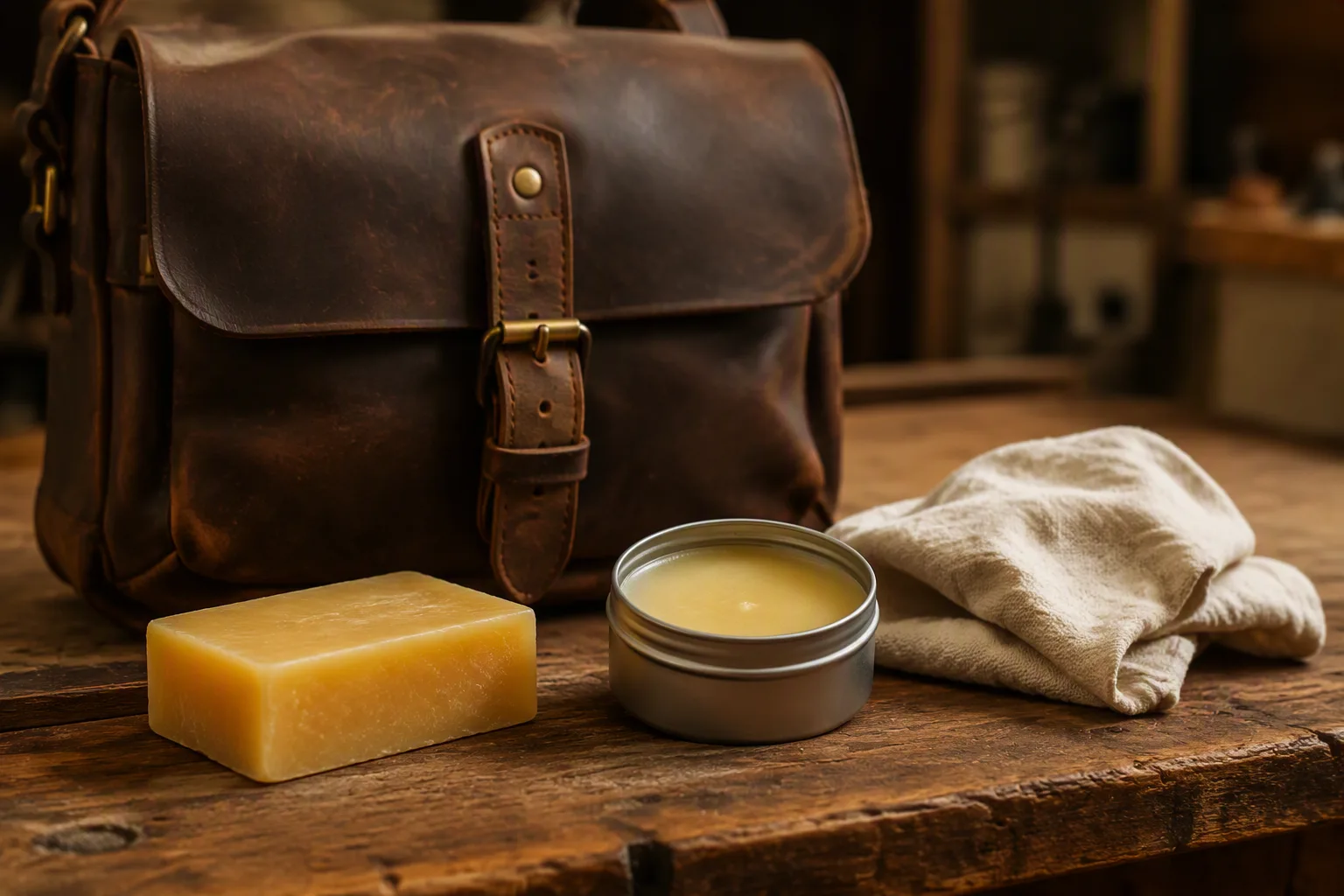
Care is simpler than customers fear. Waxed leather needs less conditioning than oiled leather, because the wax itself protects. When the surface looks dry, a wax refresher restores both protection and appearance. Marks from friction can often be blended by rubbing the area gently with a finger or soft cloth, redistributing the wax.
The two warnings are water and heat. Waxed leather is not waterproof — water spots can remain until the area is re-waxed. And heat softens wax dangerously: a waxed bag left on a car seat in summer can lose its finish in patches. Ship, store, and display waxed products with temperature in mind.
Oiled Leather: The Deep Tone That Grows
Oiled leather takes the opposite approach: instead of sitting on the surface, oils are absorbed deep into the structure, making the leather itself softer, richer, and darker over time.
How Oiling Changes the Leather Structure
At the tannery, oiled leather receives heavy oil loading during and after tanning. The oils saturate the fiber structure, lubricating each fiber. The result is leather that is unusually supple — it drapes, molds, and softens with use in ways that surface-finished leather cannot.
The structure change is why oiled leather is prized for products that flex and bend constantly: work bags, travel bags, and designs with soft, unstructured bodies. The oils also make the leather naturally water-resistant to light exposure, though they do not make it waterproof.
The Aging Story: Darker, Richer, Softer
Oiled leather ages toward deeper, richer tones. As the bag is used, the oils redistribute and the surface develops a soft glow. Flex areas soften and crease gracefully rather than cracking, because the fibers remain lubricated. Over years, an oiled bag becomes darker, glossier, and more supple — a completely different object from the one that shipped.
The aging is more predictable than waxed or pull-up, which is one reason oiled leather suits brands that want character without surprises. The color deepens evenly; there are fewer dramatic light-dark contrasts, and more of a gradual, warm maturation.
Maintenance That Feeds the Leather
Oiled leather is hungry: it needs periodic re-oiling to stay supple and protect the fibers. The care rhythm is a light conditioning every few months with a leather oil or conditioner, more often in dry climates or heavy use.
The common mistake is over-oiling — a saturated bag attracts dust and can feel greasy. The right approach is modest, regular feeding: a thin application, time to absorb, and a wipe-down after. When you set care instructions for an oiled bag, teach customers the rhythm, not just the product.
Pull-Up Leather: The Surface That Responds
Pull-up is the most misunderstood specialty finish, and the one that generates the most customer questions. It is also, done well, the most dramatic and desirable.
What Pull-Up Actually Means
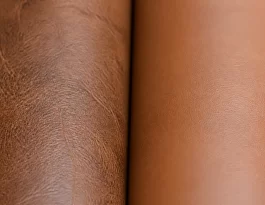
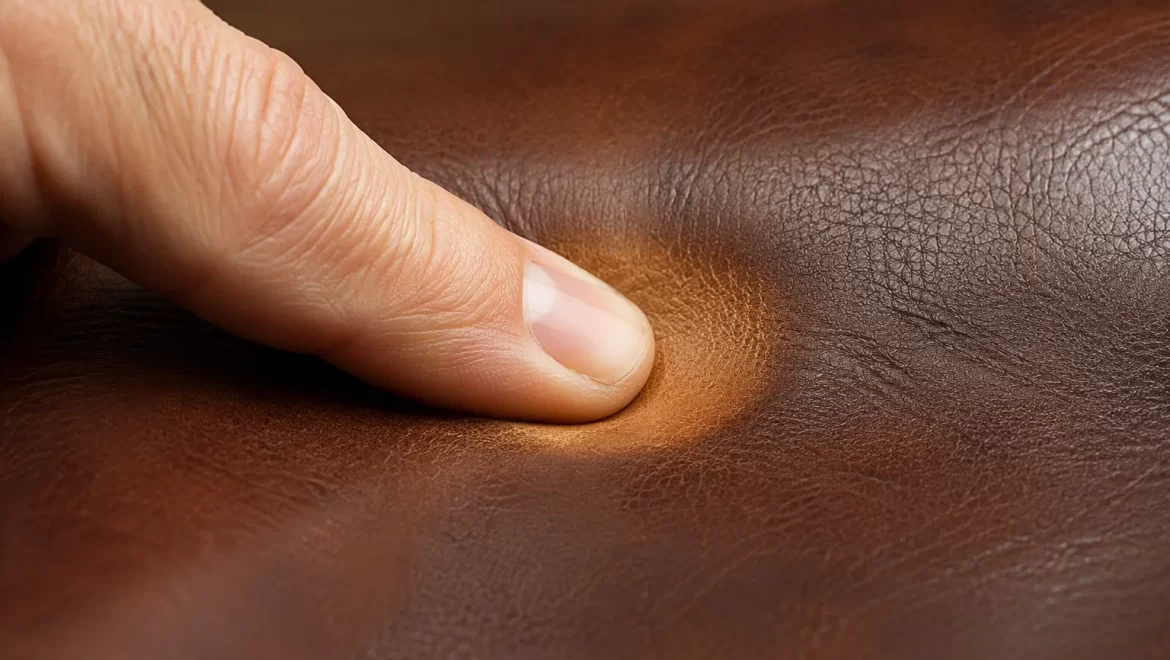
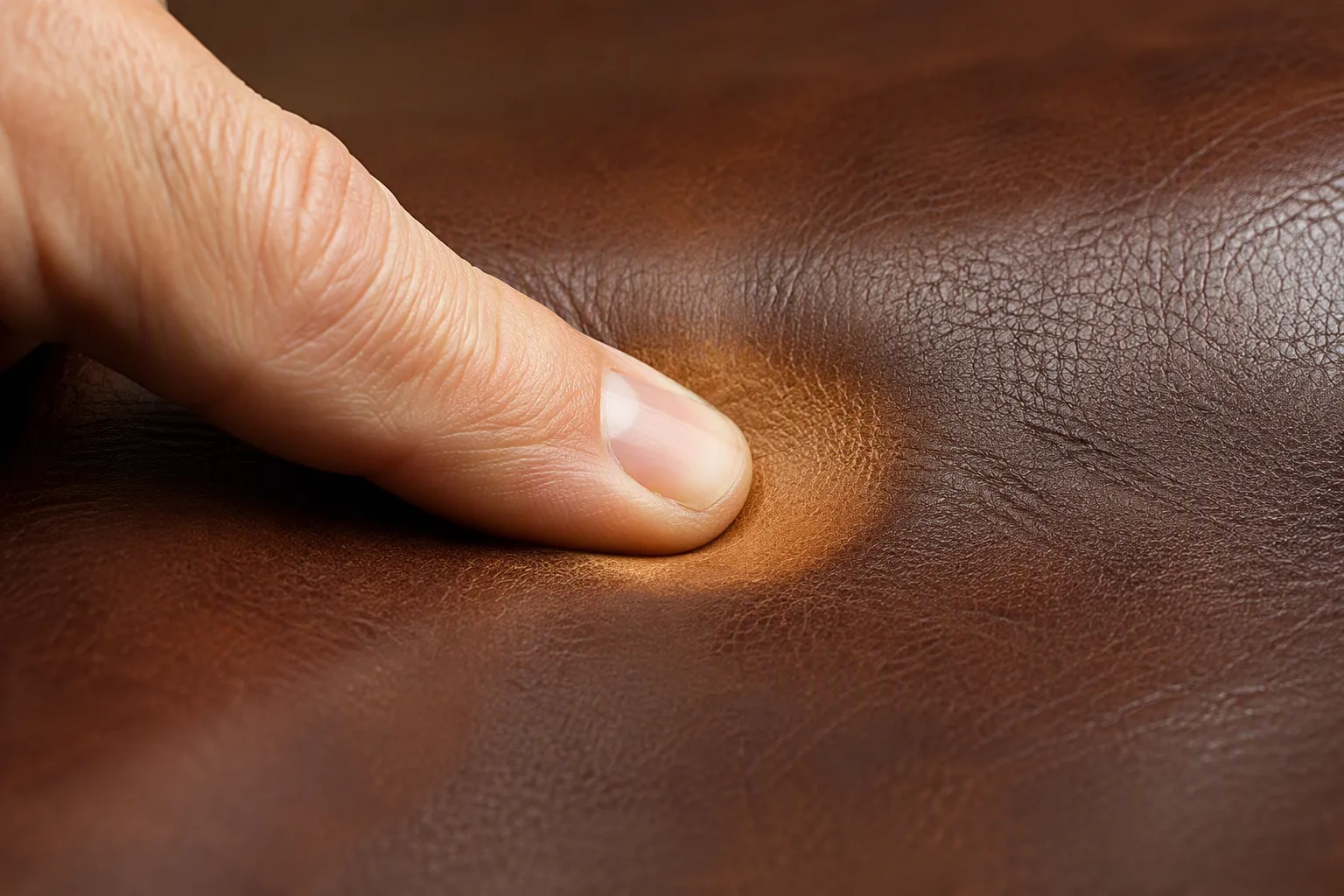
Pull-up leather is tanned and finished with oils and waxes inside the leather, then given a light, semi-transparent surface finish. When the leather is stretched or pressed, the oils and waxes shift within the structure, and the color at that point lightens — the "pull-up" effect. Flex a pull-up bag and it lightens along the crease; press a fingernail into it and the mark shows lighter for a while, then slowly blends back.
The effect is created during manufacturing by the combination of oil loading and finish chemistry. Quality pull-up uses top-grade hides, because the finish is too transparent to hide natural defects. Cheap "pull-up look" leathers use printed effects that do not move — customers can tell the difference within days.
The Effect in Daily Use
A pull-up bag is an interactive object. Every day of use leaves temporary light marks where the bag is handled, creased, or pressed — marks that blend back over hours or days as the oils redistribute. This living quality is the finish's appeal: no two bags age alike, and each bag records its owner's habits.
The trap is the same as waxed: expectation. A customer who does not understand pull-up may return the bag thinking the light marks are damage. The care card is not optional — it is part of the product. Brands that sell pull-up successfully always sell the education with it.
Choosing Pull-Up Quality at the Factory
When sourcing pull-up leather, ask three things. What is the oil loading — high enough to give a real pull-up effect, or minimal? What is the base hide quality — full-grain with clean surfaces, or lower grade relying on finish? And is the effect genuine, or a printed simulation?
Test the sample yourself: press a fingernail into the surface and watch the mark lighten and slowly return. A real pull-up responds; a printed one does not. The test takes five seconds and separates the leathers that will delight your customers from those that will disappoint them.
Matching the Finish to the Bag Style
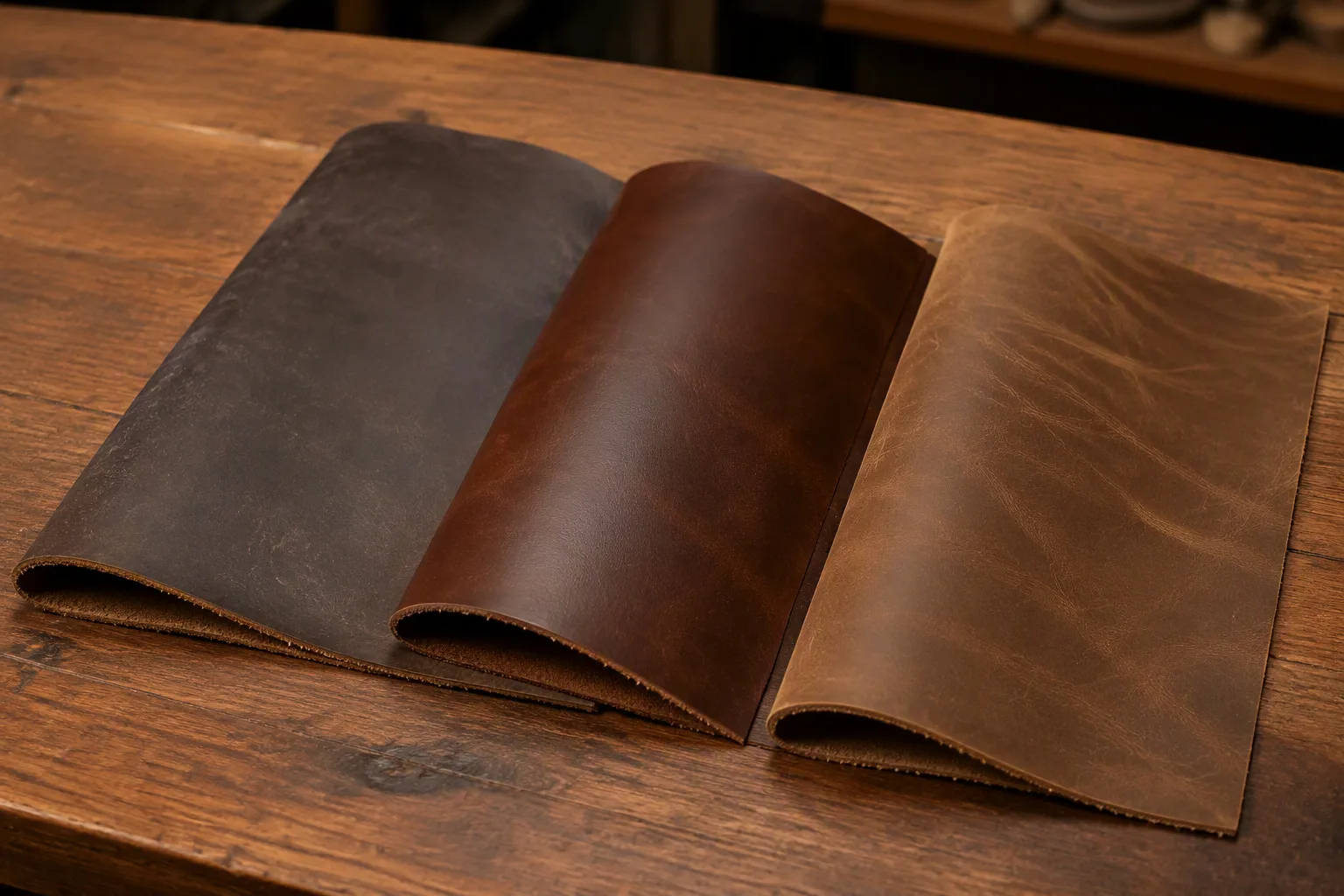
Specialty finishes are not universally better — they are differently suited. Matching the finish to the bag's role and the brand's promise is the real design decision.
Structured Bags vs Soft Bags
Structured bags — briefcases, top-handle bags, framed totes — hold their shape through interlining and tight construction. They suit oiled leather well, since its suppleness does not fight the structure, and waxed leather adds a workwear character that many briefcase customers want.
Soft and unstructured bags — hobo styles, slouchy totes, weekenders — are where pull-up shines, because the finish's movement matches the bag's movement. A pull-up slouch bag that flexes with every carry develops a beautiful, personal surface. The same finish on a rigid frame bag can look busy, since the marks concentrate in the few places that actually flex.
Which Bag Types Showcase Each Finish
| Finish | Bag types that suit it | Brand positioning |
|---|---|---|
| Waxed | Workwear totes, commuter bags, camera bags | Heritage, utility, honest wear |
| Oiled | Briefcases, travel bags, unstructured work bags | Craftsmanship, longevity, richness |
| Pull-up | Slouch totes, crossbody bags, statement styles | Premium, tactile, individual |
| Nubuck | Fashion totes, soft shoulder bags | Soft luxury, tactile finish |
Color Choice Changes the Story
Color interacts with specialty finishes more than with standard leather. Dark colors show pull-up and waxed effects more subtly — the light-dark contrast is lower, so the surface reads as "rich" rather than "marked." Light and mid-tone colors display the effects dramatically, which is either the point or a risk, depending on your market.
Warm browns and tans are the classic specialty-finish shades because they show patina beautifully. Blacks and deep browns age elegantly with less visible change. If your brand wants the leather's living quality to be the headline, choose mid-tones. If you want character with restraint, choose dark tones.
A Decision Framework: Choosing Your Finish
With the finishes explained, the choice still needs a method. Walk the decision through four filters and the right finish for your line becomes clear.
Filter One: The Bag's Use
Consider how the bag will be carried and handled. A commuter bag that lives on trains and office floors needs a finish that tolerates contact — waxed leather's workwear character fits, and its marks read as honest wear. A weekend travel bag that flexes and gets packed suits oiled leather's suppleness and low-drama aging. A fashion piece carried with care can carry pull-up's interactive drama.
Match the finish to the abuse the bag will actually take. The most common mistake is choosing a dramatic finish for a hard-use product, then spending a season explaining marks that the market reads as damage.
Filter Two: The Brand Story
Every finish tells a story, and the story must be the brand's. Heritage and utility brands have an authentic claim to waxed leather's honest wear. Craftsmanship and longevity positioning suits oiled leather's slow deepening. Premium and tactile positioning is served by pull-up's individual response — if the brand can educate its customers.
Ask what the finish adds to the brand's narrative. If it complicates the story you already tell, the leather is wrong regardless of how beautiful it is.
Filter Three: The Customer Base
Know who buys the line. A customer base of gift-buyers wants predictable products — they will not read the care card, and surface change becomes returns. Enthusiasts and collectors actively want living materials and read character as value.
The customer base decides not just the finish but the education investment. Dramatic finishes demand better product pages, care cards, and support training. A brand without the appetite for that education should choose finishes whose behavior is easier to explain.
Filter Four: The Price Point
Specialty leathers cost more and their perceived value must carry the price. At lower price points, the market expects uniformity; at premium points, it expects character. Position the finish above the price threshold where living surfaces read as quality rather than inconsistency.
The Decision Table
| Filter | Waxed | Oiled | Pull-up |
|---|---|---|---|
| Bag use | Workwear, commuter, camera | Travel, brief, soft work | Fashion, slouch, statement |
| Brand story | Heritage, utility | Craftsmanship, longevity | Premium, individual |
| Customer base | Accepting of wear marks | Broad, easy to explain | Enthusiasts, collectors |
| Care investment | Moderate (re-wax) | Low-moderate (feed oils) | Highest (educate + care) |
| Price positioning | Mid-premium | Premium | Premium-plus |
Sourcing and Manufacturing Considerations
Specialty finishes change the factory conversation too — from price and durability to handling, tolerance, and quality control. Understanding these considerations prevents surprises in production.
Yield, Handling and Cost Differences
Specialty leathers cost more per square foot than equivalent standard leather, for three reasons: they demand better base hides (pull-up especially), the finishing process is slower and more skilled, and the yield loss is higher because surface defects cannot be hidden by opaque finish.
Handling in production is also more delicate. Waxed leather marks if handled carelessly on the cutting table; oiled leather can transfer oil to work surfaces; pull-up shows pressure marks from clamps and jigs. A factory experienced with specialty leathers protects surfaces during production; one new to them will learn on your order.
Quality Control Is Different
QC for specialty leather is a different discipline. Color matching is harder because the tone shifts with handling — a panel pressed during inspection may not match the panel beside it in the photo. The inspection standard must account for the finish's natural variability and the marks that are part of the character.
The approved sample matters more than ever. Seal a sample with the exact finish, document the acceptable range of surface variation, and agree that the natural aging behavior is not a defect. Factories and buyers who skip this agreement spend the first season arguing about marks that are the product's intended behavior.
The Packaging and Care Card Are Part of the Product
Specialty finishes arrive at customers with expectations to manage. The care card should explain the aging behavior in plain language: "This leather darkens with use," "Rub marks are part of the character and blend with wear," "Light marks from handling return over time."
Packaging matters too: waxed leather can mark against printed tissue or dyed packaging, and pull-up leather should ship with enough protection that pressure marks in transit do not alarm the customer. Ship the education with the product, and the complaints become compliments.
Selling the Change: Telling Customers What to Expect
The success of a specialty-finish product line lives or dies in communication. The leather will change; the question is whether the change is a feature customers anticipate or a surprise they return.
Write the Product Story First
Before the product ships, write the story: this leather is alive, it will darken and lighten, it will record your use, and that is the point. Use product descriptions, care cards, and imagery that shows aged samples next to new ones. Show customers the destination, not just the starting point.
Photographing the aging story is powerful marketing. A waxed bag at day one beside the same bag at year two tells the product's truth better than any description. Brands that show the journey sell more specialty leather — and receive fewer returns.
Include close-up shots of the surface behavior — a finger pressing pull-up leather, a crease line on a waxed bag — so the product pages demonstrate the effect before the first customer touches it. A customer who has already seen the mark is a customer who will not return it.
Train Retail and Customer Support
Every person who touches the customer — retail staff, support agents, marketplace sellers — needs the same education. When a customer asks "why is my bag changing color?", the answer should be confident and consistent: "That is the pull-up effect — it lightens where you touch it and blends back over time. It is the leather's character."
Equip the team with the vocabulary and the confidence. A support agent who hesitates turns a feature into a complaint. One who explains it turns a question into a relationship — and often a reorder.
Set Realistic Expectations in Returns Policy
Specialty leather returns need a policy that matches the product. Natural surface variation is not a defect; aging behavior is not a defect; and the care card should state this clearly. Define what is covered — structural failures, genuine material defects — and what is the leather's intended character.
Build the Finish Into the Quality Agreement
The factory contract should name the finish's accepted behavior. Agree that pull-up marks, waxed friction lightening, and oiled deepening are product character, not defects — and put that in the inspection standard so no inspector quarantines a good bag for acting like its finish.
Specify the finish application itself: the oil loading range for pull-up, the wax formula for waxed leather, and the acceptable surface variation across a batch. When the finish's intended behavior is documented before production, the sampling debates that follow are about real defects, not about the leather doing what it was designed to do.
A clear policy protects both sides. Customers who understand the product return less; and the returns that do happen are the genuine issues, not the misread features. That is the difference between selling a material and selling an experience.
The Care Quick Reference
Care expectations vary across the three finishes, and the product documentation should make them easy to follow. A quick-reference table on the care card lets customers see the rhythm at a glance.
| Finish | Routine care | Refresh interval | Watch out for |
|---|---|---|---|
| Waxed | Wipe with dry cloth | Re-wax when surface looks dry | Water spots, heat softening |
| Oiled | Wipe, feed with light oil | Condition every 2-3 months | Over-oiling, dust attraction |
| Pull-up | Soft cloth, gentle handling | Light conditioning as needed | Heavy creams, prolonged sun |
FAQ
What is the difference between waxed, oiled and pull-up leather?
Waxed leather has wax on and in the surface, marking with use. Oiled leather has oils absorbed into the structure, deepening and softening over time. Pull-up leather shifts color where stretched or pressed, with marks that blend back. All three are specialty finishes engineered to age and change.
Does pull-up leather change color permanently?
Pull-up marks are mostly temporary — they lighten under pressure and blend back over hours or days as oils redistribute. Permanent change comes with creasing and flexing over years, which develops the patina that collectors value.
Will waxed leather scratch easily?
Waxed leather shows marks easily — that is its character — but most marks are in the wax itself, not the leather. Friction marks can often be blended by rubbing gently, and a wax refresher restores the surface when it looks dry.
Is oiled leather waterproof?
No. Oiled leather resists light moisture better than standard leather, but it is not waterproof. Prolonged wetting can wash oils out of the leather, so it should be dried slowly and re-oiled after heavy exposure.
How do I care for pull-up leather?
Pull-up leather needs light, regular conditioning with a compatible leather care product. Avoid heavy creams that clog the surface and stop the pull-up effect. Let marks blend naturally, and keep the leather away from direct heat and prolonged sun.
Which specialty finish lasts longest?
All three last well when made from quality hides and maintained properly. Oiled leather is the most forgiving of neglect because the oils protect the fibers. Waxed leather needs re-waxing when dry. Pull-up requires the most careful care but develops the most dramatic patina.
Do specialty leathers cost more than standard leather?
Yes — typically 15-30% more per square foot. The higher cost reflects better base hides, slower skilled finishing, and higher yield loss, since surface defects cannot be hidden under an opaque finish.
Can I use specialty leather for structured bags?
Yes, oiled leather works excellently for structured bags. Waxed leather suits structured workwear styles. Pull-up is best reserved for softer, unstructured designs where the finish's movement matches the bag's movement.
Why did my leather bag change color after I bought it?
If it is waxed, oiled, or pull-up leather, that change is the finish working as designed. Waxed leather darkens at creases and lightens at rub points; oiled leather deepens over time; pull-up lightens under pressure and blends back. The care card explains what to expect.
How do I verify genuine pull-up leather?
Press a fingernail into the surface: genuine pull-up lightens under pressure and slowly blends back. Printed simulation does not move. Buy from a factory that shows you the test and documents the oil loading in the spec.
Can waxed and oiled leather be combined in one bag?
Yes — mixed panels are possible and sometimes striking: oiled leather body with waxed trim, for example. The practical caution is care complexity: two finishes mean two care instructions on one product. Keep the combination purposeful, and document both finishes on the care card.
Why does my pull-up bag look lighter after handling?
The lightening is the pull-up effect working: pressure moves the oils within the leather and the color at that point lightens. It blends back over hours or days as the oils redistribute. The care card should explain this so customers read it as the finish's character, not damage.
Do specialty finishes need different stitching and construction?
Largely no — the construction rules are the same as for any quality leather bag. One practical difference: waxed leather can mark during sewing if handled roughly, so experienced factories protect panels during production. Pull-up hides best on soft constructions, as noted earlier, so the pattern and interlining choice matter more than the stitching itself.
Conclusion
Waxed, oiled, and pull-up leathers are not finishes in the decorative sense — they are systems for living surfaces, engineered to age with grace and record their use. Waxed leather tells a story of work and wear. Oiled leather deepens like fine wood. Pull-up leather responds to every touch. Each suits different bags, different brands, and different customers.
The manufacturing discipline is the same for all three: quality hides, skilled finishing, careful production handling, and QC standards that recognize the finish's natural variability. And the commercial discipline is the same too — product stories, care cards, and trained teams that turn the leather's change from a surprise into a story.
If you are choosing a specialty finish for your next line, send us your bag style and target market. We will show you samples of waxed, oiled, and pull-up leather on your construction, explain the aging behavior of each, and help you match the finish to the story your brand wants to tell.