Defects Ruin Leather Bags: How Factories Prevent Them
A leather bag is a collection of risks held together by process. The leather can have loose grain, the stitching can skip, the edge paint can crack, the hardware can tarnish — and any single failure is enough to turn a beautiful product into a returned one.
Defects do not happen because factories do not care. They happen because every material and every operation carries failure modes, and only a systematic approach stops those failure modes from becoming customer complaints.
This guide catalogs the defects we see most often in leather bag production — loose grain, shade mismatch, edge cracking, stitching failures, hardware tarnishing. It explains, from inside the factory, the root cause and the prevention system behind each one.
If you are a brand sourcing bags, this is your map of what can go wrong — and the questions that reveal whether your factory is preventing it.
The Defect Map: Where Leather Bags Fail
Before prevention, comes classification. Defects are not random accidents; they cluster into families, and each family has its own root causes and its own prevention logic. Understanding the map is the first step to reading any defect report.
The Four Defect Families
Material defects live in the leather itself: loose grain, shade variation between panels, natural marks that should have been graded out. Process defects appear in the making: stitching tension problems, edge paint bubbles, misaligned panels. Hardware defects arrive with the metal: plating wear, tarnishing, zipper teeth that catch. Assembly defects show up in the structure: warped panels, detaching lining, weak stress points.
Most factories track these four families separately, because they demand different responses. Material defects call for better leather grading and sourcing; process defects call for operator training and machine maintenance; hardware defects call for better component specs; assembly defects call for better construction standards.
The Cost of Defects: The 1-10-100 Rule
Quality people quote the 1-10-100 rule: catching a defect at inspection costs one unit, catching it after production costs ten, and catching it after the customer receives it costs one hundred. The rule explains why serious factories push quality upstream instead of relying on final inspection.
A defect found at the cutting table costs a piece of leather. The same defect found at final inspection costs the labor of the whole bag. The same defect found in a customer's hands costs return shipping, a replacement, and the trust of that customer — the most expensive currency in the business. Prevention is not a cost; it is the cheapest part of the process.
Defect Families at a Glance
| Defect family | Examples | Root cause | Prevention stage |
|---|---|---|---|
| Material | Loose grain, shade mismatch, marks | Leather grading, tannery lot variance | Incoming inspection, lot matching |
| Process | Skipped stitches, edge bubbles, puckering | Tension, training, machine condition | Inline checkpoints, operator standards |
| Hardware | Tarnishing, plating wear, zipper catch | Plating quality, material spec | Component spec, supplier audit |
| Assembly | Warped panels, lining detachment | Interlining, adhesive, construction | Construction standards, stress testing |
Leather Surface Defects: The Material's Own Failures
Leather is a natural material with natural variation — and the defects in this family are the price of that variation. The goal is not zero variation; it is controlling which variation reaches the customer.
Loose Grain: The Creased, Bubbled Surface
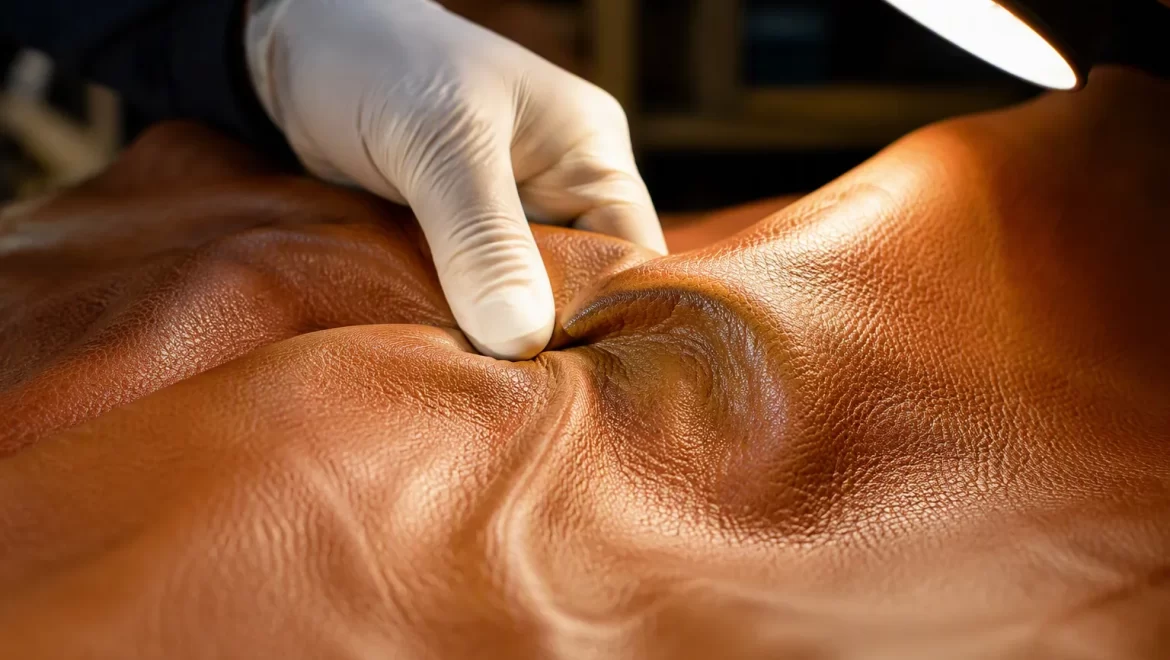
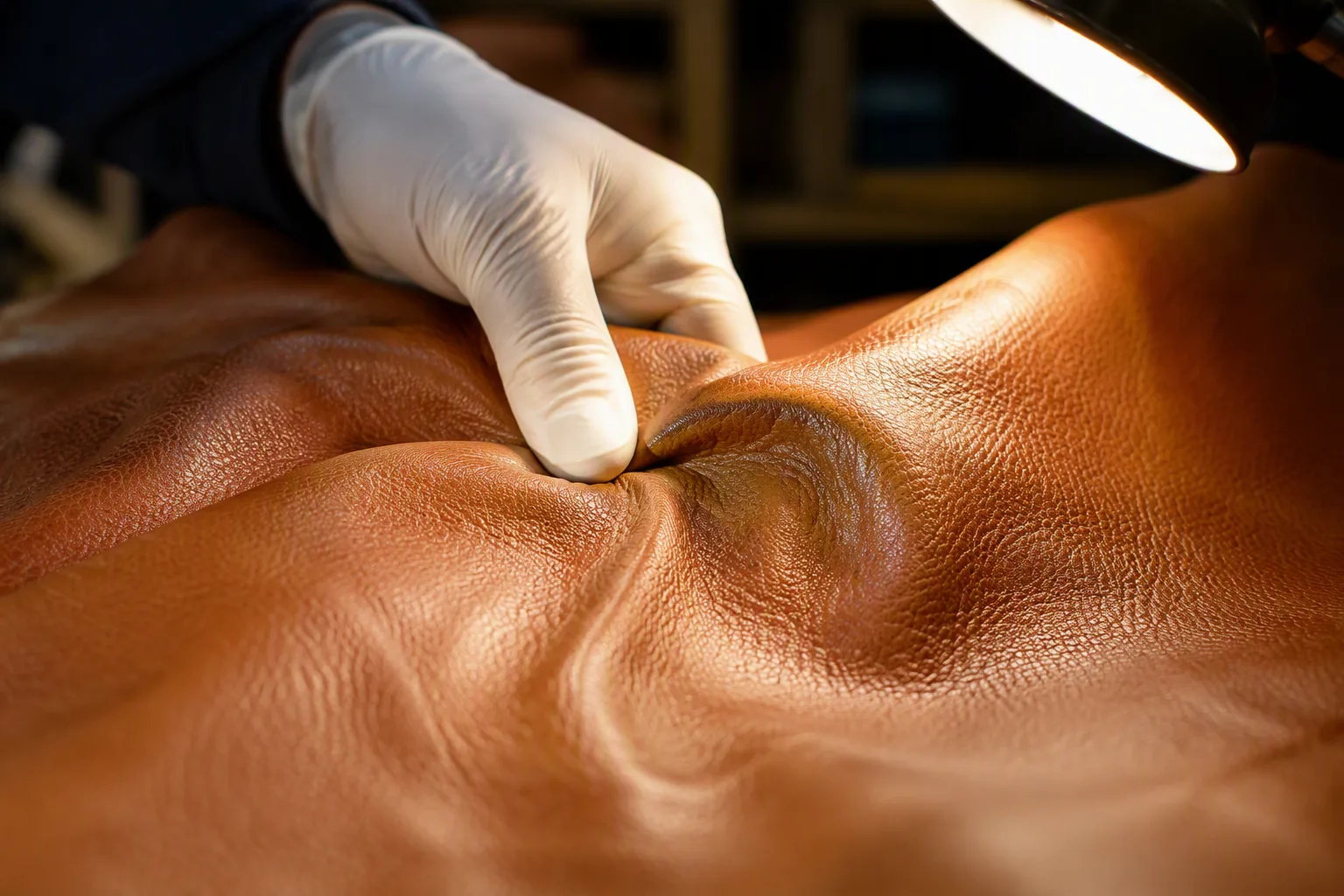
Loose grain appears as a wrinkly, baggy surface on the body of the bag — the leather's grain layer separates from the flesh side and creases when the bag flexes. It is the most serious material defect in leather goods, because it appears early in the bag's life and gets worse with use.
The root cause sits in the hide itself: certain areas of certain hides have weaker fiber structure, often in the belly and flank regions. When a factory cuts a front panel from the belly to save money, loose grain is the predictable result. It can also be induced by poor tanning or by over-thinning during splitting.
Prevention is mostly about grading and cutting discipline. Hides must be graded for quality zones, panels that flex and bear load must be cut from the firmer back and shoulder areas, and any suspicious area should fail a crease test before it is cut. A factory that cannot show you its leather grading process is a factory gambling with your panels.
Color Mismatch and Shade Shifting
Shade mismatch is the most common complaint in leather bag production — panels that were identical in the sample arrive different in the batch. Two different mechanisms cause it, and they need different fixes.
Lot variation happens when production leather comes from a different tannery lot than the sample leather, or when the factory uses two lots in one order without matching. Sun fading happens after production, when leather with poor lightfastness sits in a warehouse window or store display and shifts color unevenly.
Prevention of lot variation is a documented process: reserve the production lot, match it against the approved sample under standard light, and cut all visible panels from the same lot. Prevention of sun fading is a material spec: choose dyestuffs with adequate lightfastness for your market, and confirm the rating on the test report before production.
Surface Scratches, Finish Defects and Branding Errors
A scratch that cuts through the finish is a defect; a scratch that sits in the finish can often be polished out. Finish defects — thin coverage, cloudy patches, inconsistent sheen — come from poor finishing control at the tannery or damage during production handling.
Branding errors deserve their own category because they are fully preventable: misaligned logos, off-shade stamping, blurry embossing. Each one is a process failure — a die not seated, a temperature not set, a positioning jig skipped. The factory that catches branding errors at the first piece is a factory with a first-article inspection habit. The factory that catches them after a hundred pieces is a factory that will cost you money.
The Leather Defense: Grading and Cutting Discipline
The prevention system for material defects runs from hide to panel. Incoming hides are graded on arrival; grain quality, thickness consistency, and defects are logged per hide. Cutting layouts route each panel to the hide zone that fits its job — front panels from the back, straps from the shoulder, hidden pieces from the belly.
Between cutting and assembly, panels pass a surface check under light. The discipline looks simple, but it separates serious factories: every panel is inspected before it enters the sewing line, and any panel that fails is replaced before labor is spent on it. This single checkpoint eliminates most of the material defects that would otherwise surface in the finished bag.
Edge and Finish Defects: The Visible Craft
Edges are the most inspected part of a leather bag — and the hardest to finish well. Edge defects are what buyers and end customers notice first, which makes them disproportionately damaging to a brand's reputation.
Edge Cracking and Chipping
Edge paint that cracks or chips within months is a finish failure. The root causes are usually three: too-thin paint build, poor flexibility of the paint itself, or edges that were not sanded and primed properly before the color coats.
Leather edges absorb paint like a sponge, and a single coat will never build enough film to survive daily flexing. Serious factories apply multiple thin coats — sanding between coats — so the paint flexes with the bag instead of cracking off it. The number of coats is visible in the cross-section of a finished edge; a quality edge shows a smooth, continuous film.
Edge Paint Blobs, Roughness and Gaps
The opposite failure is equally common: edges finished thick and uneven, with paint blobs at corners, rough patches where sanding skipped, or gaps where the paint stopped short. These are process defects — speed over care, missing sanding steps, or poor corner technique.
Corners are where edge finishing fails first. Paint pools at inside corners and pulls away at outside corners unless the applicator manages the bead correctly. The inspection test is simple: run a finger along every edge and corner — smooth, continuous, and even means the finish line respected the process.
Prevention: The Multi-Coat Discipline
Edge finishing is one of the few leather operations where the factory's discipline is literally visible in the product. The standard sequence is: skive and trim the edge, sand it smooth, apply a base or primer coat, sand again, apply two to three color coats with sanding between, then finish with a top coat.
Each step has a reason, and skipping any step shows up in the final edge. When you evaluate a factory's sample, ask how many coats their standard edge gets and watch how they answer. A factory that cannot describe its edge process in steps is a factory whose edges will fail in the field.
Stitching Defects: The Seam's Failure Modes
Stitching failures are the most common premature-death cause for leather bags — and the most preventable family in this catalog, because every defect has a mechanical explanation.
Skipped Stitches and Tension Problems
A skipped stitch is a hole without a thread — a weak point that will eventually tear. The causes are machine-side: incorrect needle size for the thread, dull or bent needles, mistimed hook, or tension set too loose or too tight.
Tension problems show up as loops on the surface (too loose), puckering along the seam (too tight), or thread that breaks mid-seam (wrong tension balance between needle and bobbin). Prevention is a maintenance culture: needles changed on schedule, tension tested on scrap leather before each run, and machines serviced rather than patched.
Seam Puckering and Wavy Seams
Puckering — the wavy, gathered look along a seam — is caused by differential feed: the top layer feeding faster than the bottom layer as the machine sews. Leather and lining have different feed rates, and without proper foot pressure and feed-dog adjustment, one layer advances ahead of the other.
The fix is technical: correct presser-foot pressure, matched feed dogs, and for difficult combinations, a walking-foot or compound-feed machine. Prevention also includes technique — sewing with consistent speed and guiding the work without pulling. When you see a wavy seam on a sample, you are seeing a machine setup problem, not a one-off accident.
Prevention: The Thread, Needle and Tension System
Serious factories treat stitching as a system with three variables: thread matched to the leather and stitch type, needle matched to thread and leather thickness, and tension calibrated to the combination. They document the setup for each product and verify it at the first article.
The first-article check — sew the first piece, inspect it, adjust if needed, then run — is the single most effective stitching-defect prevention. Combined with periodic in-line checks of tension and needle condition, it keeps the seam quality that customers judge by their eyes and their hands.
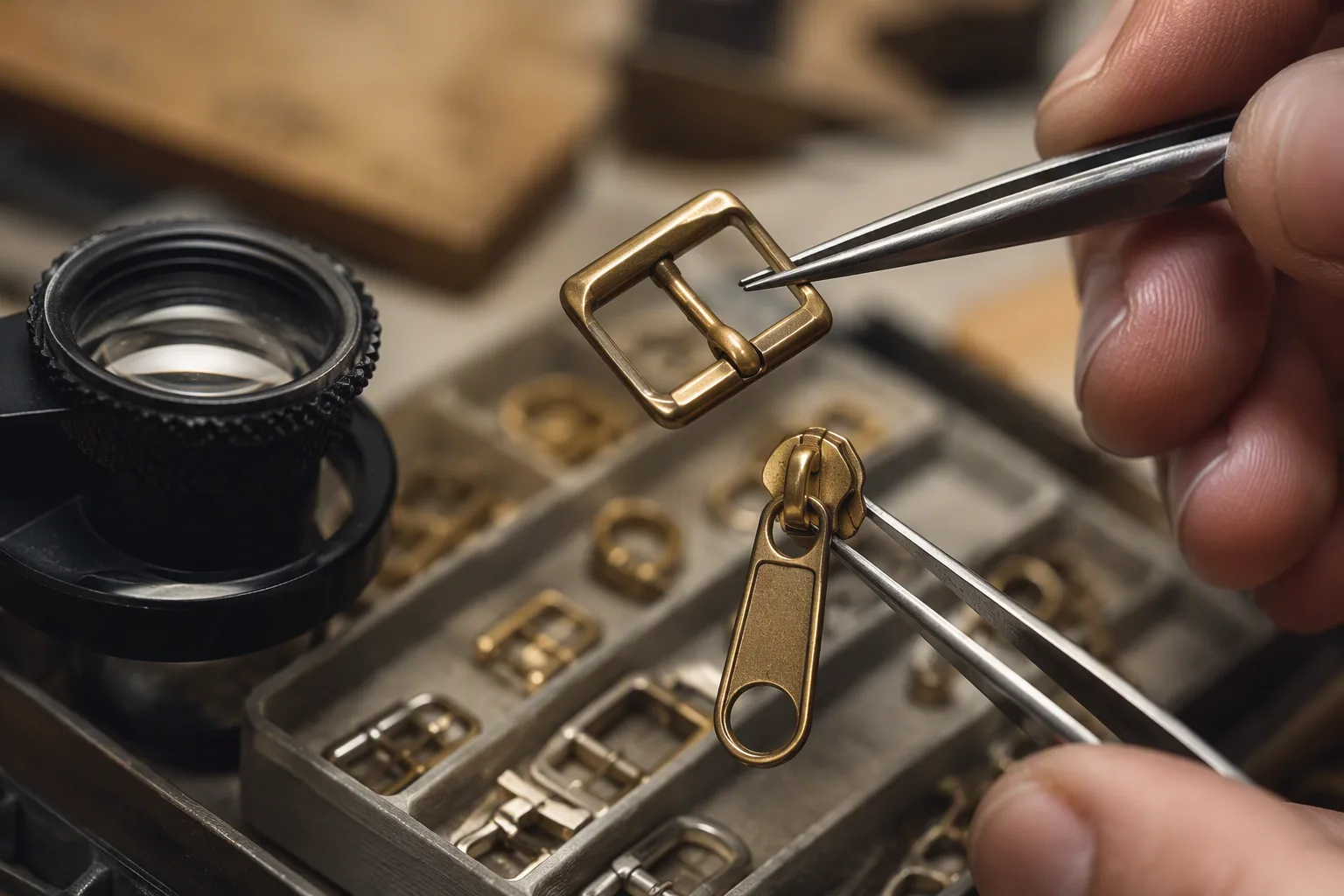
Hardware Defects: When the Metal Fails
Hardware is the jewelry of the bag — and like jewelry, its failures are noticed immediately. Tarnishing, plating wear, and zipper failures each have distinct root causes and prevention paths.
Tarnishing and Plating Wear
Tarnish — the dull, discolored film on brass and silver-tone hardware — appears when the plating is porous or too thin for the environment. Plating wear shows as the base metal showing through at corners and edges within months of use.
The root causes are specification and process: plating thickness below the standard for the application, insufficient base coats, or hardware bought from the cheapest source without a plating spec. Prevention starts with the spec: define the plating type (e.g., palladium, antique brass, or gold PVD) and its minimum thickness, and verify it with a plating thickness test on incoming hardware.
Zipper Failure and Misalignment
Zipper failures cluster into three: teeth that catch or separate, sliders that jam, and zipper tape that puckers the surrounding leather. Teeth problems come from low-grade chain or wrong slider size; tape problems come from tension during installation.
Zipper prevention is a specification discipline: choose the zipper brand and model for the application — heavier chain for stress areas like main compartments, lighter chain for interior pockets. Specify the slider size to match, and require the factory to test zippers on the finished bag — ten full open-close cycles at minimum — during inspection.
Prevention: Component Spec and Supplier Audit
Hardware defects are prevented before the hardware arrives at the sewing line. The buyer specifies the hardware material, plating type and thickness, and zipper model. The factory audits its hardware suppliers on those specs and tests incoming batches.
The visible test is the hardware review during sampling: check weight (dense metal feels substantial), check plating consistency at edges and corners, and open-close every zipper repeatedly. The invisible test is the plating spec and test certificate — the documentation that tells you the metal will still look right in year two.
Assembly and Structural Defects: The Bag's Skeleton
The bag's structure — how panels, lining, and reinforcement combine — determines whether it holds its shape for years or collapses within months. Assembly defects are the quiet killers, because they may not be visible in the showroom.
Warped Panels and Distorted Shape
A bag that warps, twists, or develops a permanent lean has a structure problem. The causes are usually three: interlining too soft for the leather weight, adhesive applied unevenly causing differential shrinkage, or panels assembled without grain-direction discipline.
Prevention starts at construction planning: the interlining weight must be matched to the leather, and the adhesive must be applied evenly and cured properly. Cutting discipline matters too — panels cut against the grain direction distort differently under load. A factory's construction spec should name the interlining, adhesive, and grain-direction rule for each product.
Lining Detachment and Wrinkling
Lining that detaches from the shell, or wrinkles and bags inside the bag, is an adhesive and assembly failure. It shows up after months of use, which makes it expensive: the bag passed inspection, shipped, sold — and failed quietly in year one.
Prevention is about the glue and the timing: correct adhesive for leather-to-fabric bonding, even application, and proper pressing and curing time before the lining is sewn in. The inspection test is the flex test — open the bag fully, flex the panels, and check for lining separation at the stress points.
Prevention: Construction Standards and Stress Testing
Structural defects demand that the factory prove its construction before mass production. The pre-production stage should include a stress test: load the finished sample with weight, flex it repeatedly, open and close every closure, and examine the structure after abuse.
The documented output is a construction standard — interlining spec, adhesive spec, reinforcement locations, stitch pattern at stress points — that the production line follows exactly. When a buyer asks "how do you prevent warping?" and the factory answers with its construction standard rather than a shrug, the prevention system is real.
The Factory Prevention System: How Defects Are Stopped
Individual fixes catch individual defects. A prevention system stops whole families. The difference is visible in factory performance over multiple orders — and it is the difference buyers should be auditing.
Incoming Material Inspection
The prevention system starts at the receiving dock. Incoming leather is checked against the approved sample: color under standard light, thickness with a gauge, surface for defects, and lot consistency. Incoming hardware is sampled for plating thickness and finish. Incoming lining is checked for shrinkage and shade.
Materials that fail are returned or quarantined before they enter production. This checkpoint alone prevents the majority of material-family defects, because most material defects arrive with the material.
Inline Checkpoints and First-Article Inspection
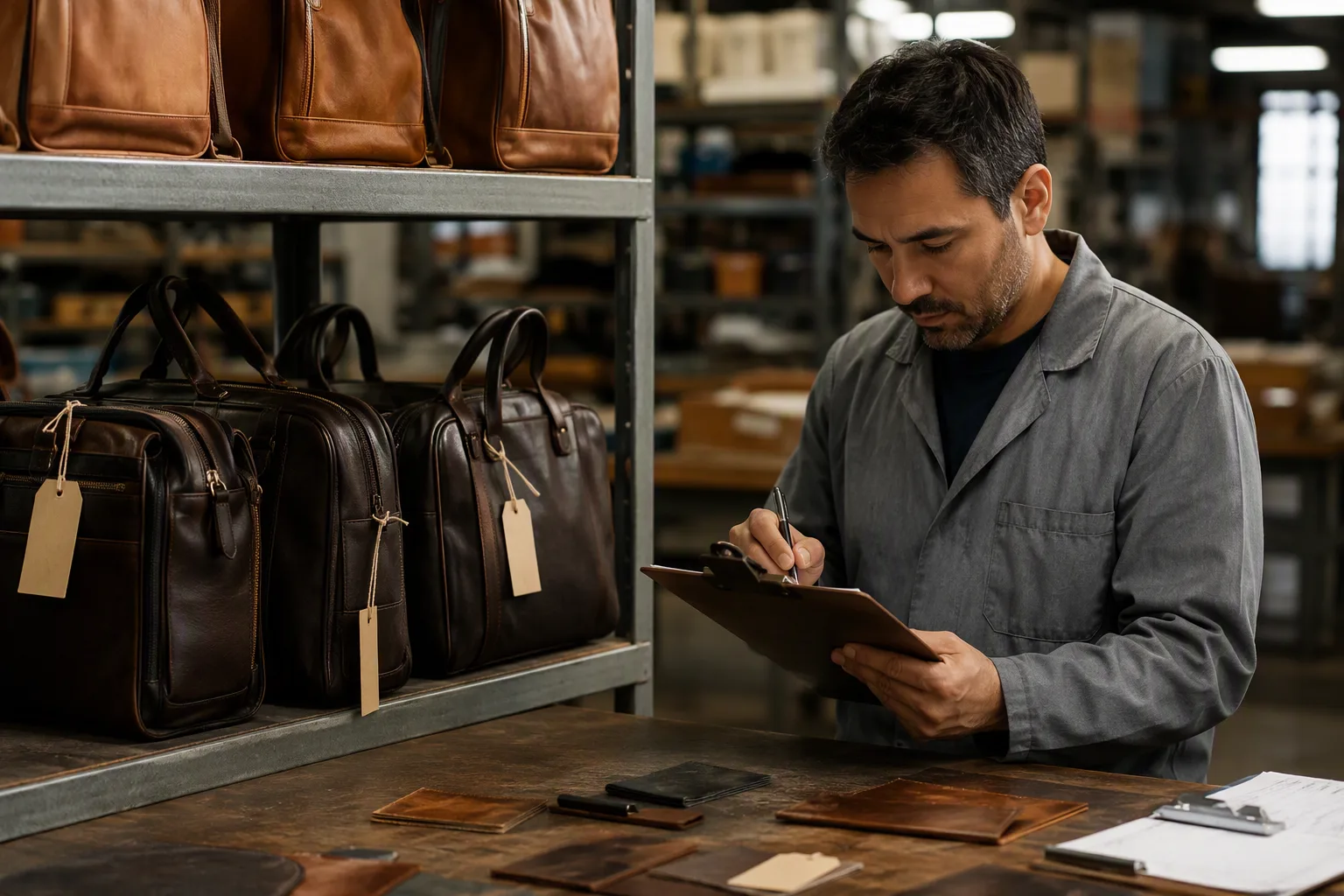
The production line runs on checkpoints. Each operation — cutting, skiving, edge preparation, first stitching, assembly, edge finishing, hardware setting — has a quality gate, and each gate starts with a first-article inspection: the first piece of each run is checked against the approved standard before the operator proceeds.
The checkpoint habit has a side benefit that shows up in data: when defects are found at the gate that catches them, the factory knows which operation caused them. The defect log becomes a map of process weaknesses, and the factory fixes the process instead of the product.
Pre-Shipment Sampling and AQL
Before shipment, the finished batch is sampled statistically. Under the AQL (Acceptable Quality Level) system, a random sample is drawn from the batch, and the number of critical, major, and minor defects in the sample determines whether the batch ships or is reworked.
| AQL level | Purpose | Typical values |
|---|---|---|
| Critical defects | Safety and function failures | Zero tolerated |
| Major defects | Visible quality failures | 2.5% |
| Minor defects | Cosmetic imperfections | 4.0% |
The AQL discipline forces the factory to measure quality instead of asserting it. When a buyer and factory agree on AQL levels in the contract, they have converted quality from an opinion into arithmetic — and arithmetic is much easier to enforce.
The Defect Log: Turning Data Into Prevention
The most advanced prevention tool is the factory's own defect history. A serious factory logs every defect by family, operation, and root cause — and reviews the log monthly to find the operations that generate the most defects.
| Defect observed | Most likely root cause | Prevention action |
|---|---|---|
| Loose grain on panels | Belly leather used for body panels | Grade hides, route panels to hide zones |
| Shade mismatch in batch | Two leather lots mixed | Lot matching before cutting |
| Edge paint chipping | Single thick coat applied | Multi-coat edge process |
| Skipped stitches | Worn needle or wrong size | Scheduled needle changes |
| Hardware tarnish | Thin plating spec | Plating thickness spec and test |
The factory that can show you its defect log — and its month-over-month trend — is a factory that treats prevention as a system, not a slogan. The factory that cannot show you a defect log is running on memory, and memory forgets.
What Buyers Should Check
Prevention is the factory's job, but verification is the buyer's. The sample stage and the pre-production stage are your windows into whether the prevention system is real.
The Sample Inspection List
When you receive a sample, work through a physical checklist: run your hand over every panel for loose grain and surface defects; compare panel shades under daylight; flex the bag and check edges for cracking; examine stitching tension and seam straightness; open and close every zipper ten times; check hardware finish at edges and corners; and load the bag to check its structure.
Photograph everything. A sample that passes this list — and the factory's response when you report anything that fails — tells you more than any certificate. The response matters most: a factory that explains the cause and proposes a fix is a factory with a prevention mindset.
Asking the Factory the Right Questions
Three questions reveal a factory's prevention system quickly. "Where do your defects come from — which operation generates the most?" tests whether they track data. "Show me your first-article inspection for this product" tests whether checkpoints are real. "What is your AQL plan and who does the sampling?" tests whether quality is measured or assumed.
Add one question about materials: "Which lot will produce my order, and how is it matched to my approved sample?" The answers separate factories that prevent defects from factories that merely ship them.
Building Defect Prevention Into Your Contract
Prevention lives in the contract too. Name the defect families that matter most to your product, agree the acceptance criteria for each, and define the response when a family exceeds its limit — rework, re-inspection, or rejection. Specify the inspection points: incoming materials, inline checkpoints, and pre-shipment sampling.
The contract should also name the evidence: first-article records, inline inspection reports, the defect log, and AQL sampling results. When the evidence is part of the deal, prevention stops being the factory's goodwill and becomes the factory's obligation. That is the difference between hoping for quality and engineering it.
FAQ
What is the most common leather bag defect?
Shade mismatch between panels is the most common complaint, followed closely by stitching tension problems and edge paint cracking. All three are preventable with lot matching, machine discipline, and a multi-coat edge process.
What does loose grain mean in leather?
Loose grain means the surface grain layer separates from the flesh layer, creating a wrinkled, baggy appearance when the leather flexes. It is most common in belly and flank areas of the hide and is prevented by grading leather and cutting panels from firmer hide zones.
Why does edge paint crack on leather bags?
Edge paint cracks when the film is too thin or too rigid, or when edges were not sanded and primed before coating. Prevention is a multi-coat process: several thin coats with sanding between, which lets the paint flex with the bag.
How can I prevent color mismatch in production?
Require the factory to reserve the production leather lot, match it against your approved sample under standard light, and cut all visible panels from the same lot. Confirm lightfastness of the dyestuff for sun-fading resistance.
Why does hardware tarnish quickly?
Tarnish appears when plating is porous or too thin for the environment. Specify the plating type and minimum thickness, and verify with a plating thickness test on incoming hardware. Choose plating suited to the market's climate.
How many stitches per inch should a leather bag have?
Six to eight stitches per inch is the standard range for main panels of quality leather bags. Even, consistent stitching at this density balances strength with appearance.
What is AQL in bag quality control?
AQL (Acceptable Quality Level) is a statistical sampling system: a random sample is drawn from a batch and inspected, and the number of defects determines whether the batch ships. Common levels are zero critical, 2.5% major, and 4.0% minor defects.
Should I inspect bags before shipment?
Yes. A pre-shipment inspection by the factory, a third party, or your own agent protects both sides. Agree the AQL levels and inspection timing in the contract before production starts.
How do I know if a factory prevents defects or just catches them?
Ask for their defect log and month-over-month trend, their first-article inspection practice, and their AQL plan. A factory that tracks defect data by operation is preventing; one that cannot show data is catching defects at the end and hoping.
What should I do if a batch arrives defective?
Document the defects with photos, compare them against the agreed AQL levels and approved sample, and invoke the contract remedy — rework, replacement, or credit. This is why the defect policy is written before production, not after.
Why do bags warp or lose their shape over time?
Warping comes from a structure mismatch: interlining too soft for the leather weight, adhesive applied unevenly, or panels cut without grain-direction discipline. The prevention is a documented construction standard — matched interlining, controlled adhesive application, and grain-direction rules — verified by stress testing the sample before production.
Conclusion
Defects in leather bags are not mysteries — they are engineering outcomes with identifiable root causes and preventable failure modes. Loose grain comes from grading shortcuts. Shade mismatch comes from lot mismanagement. Edge cracks come from single-coat finishing. Stitching failures come from machine discipline gaps. Tarnish comes from thin plating specs. Every family has a prevention, and every prevention is a process a serious factory can show you.
The factory's prevention system is visible in its process documents, its defect log, and its answers to your questions. It is visible in the sample that flexes without cracking, the batch that matches your approved shade, and the seams that hold through years of use. When you are sourcing leather bags, you are not just buying product — you are buying the system that produces it. Verify the system, and the defects take care of themselves.
If you are planning a leather bag order and want to see how a factory prevents the defects in this guide — send us your product brief and ask for our defect log and quality plan. We will show you ours, and you can judge whether the system is real.