Leather Bag Sourcing Checklist: Verify Before You Order
Sourcing leather bags is a decision tree with expensive branches. Choose the wrong supplier and you learn it in three ways: late deliveries, inconsistent quality, or a partner who vanishes when problems appear. None of that is written on a supplier's profile page. It is discoverable only through verification — a structured check of the factory's real capabilities before your money commits.
This checklist is built from the factory side of the table. It covers the eight areas we watch buyers skip most often: supplier legitimacy, production capability, leather quality, sample discipline, pricing honesty, MOQ fit, communication, and the terms that protect both sides. Work through it before ordering, and the surprises shrink dramatically.

Verify the Supplier Is a Real Factory
The first filter is the cheapest. A surprising share of "factories" are trading companies reselling production they do not control — which is fine if you know it, and dangerous if you do not. Verify before you negotiate.
Check the Registration and Location
Start with the legal identity. Ask for the business license or company registration, note the registered name, and confirm it matches the name on your contract and bank account. A mismatch is not always fraud — group companies are common — but it deserves an explanation.
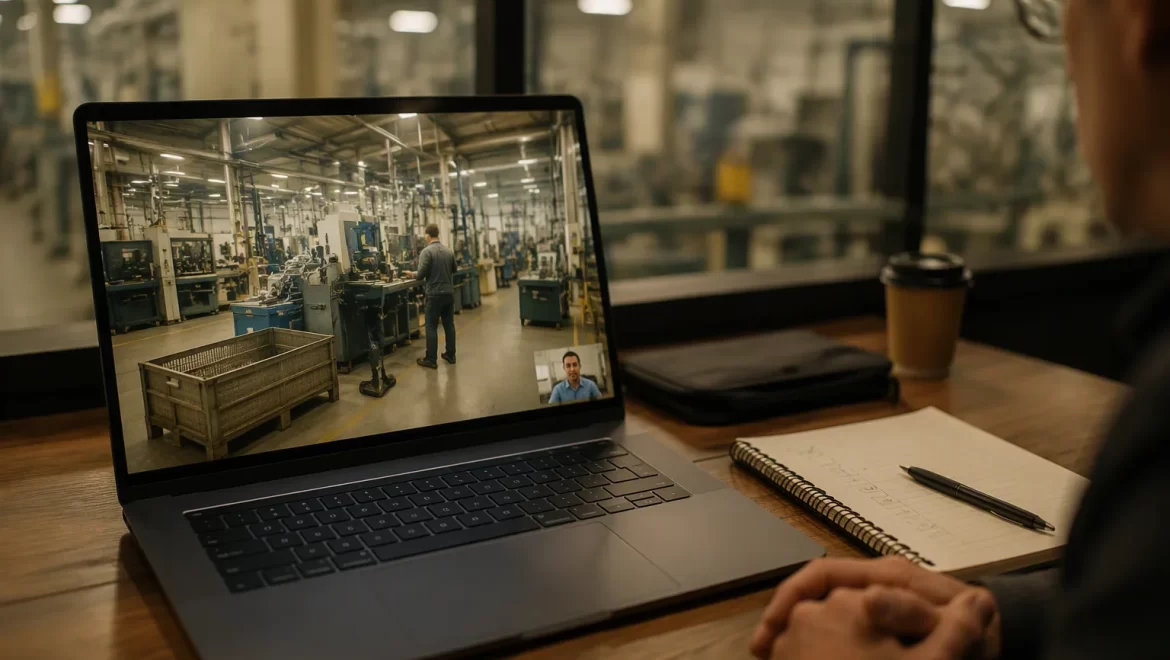
The physical location matters too. Search the factory's address, look at satellite and street views, and ask for a live video tour of the production floor. A factory that hesitates to show its workshop usually has something to hide — or is not a factory at all.
Distinguish Factory from Trading Company
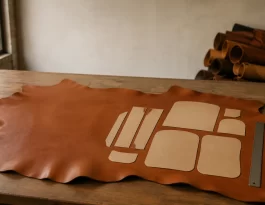
Ask direct questions only a factory can answer: what machines are on the floor, how many sewing stations, how many workers, what leather they have in stock. Ask about their cutting yield for a standard tote. A trading company answers in generalities; a factory answers in specifics.
If you choose a trading company deliberately — for curation and small-order flexibility — verify their factory partners instead, and ask for audit reports or visit records for the actual production site.
Look for Proof Beyond the Website
Marketing materials prove nothing. Ask for order history with brands in your category, request permission to contact one or two references, and check whether the factory holds certifications relevant to your market. Then run the cheapest test of all: a small trial order or a paid sample with a tight deadline. How they handle a small order predicts how they will handle a big one.
The Red Flags That Should Stop You
Some signals deserve an immediate pause, not just a note. A factory that refuses a video tour, cannot name its own machines, or asks for full prepayment on a first order is telling you something — believe it the first time.
Pressure tactics are another flag: "this price is only valid today," or "another buyer is about to take this capacity." Real factories quote prices that hold for a season, and real capacity conversations happen after trust exists, not before. Urgency manufactured during the first negotiation usually hides a weakness somewhere else.
Finally, watch the paper trail. A factory that will not put quotes, lead times, and quality terms in writing is a factory that will not honor them later. Every important promise belongs in an email or a contract — if it cannot be written, it is not a promise yet.
Assess Production Capability Honestly
Assess Production Capability Honestly
Capability is not the same as capacity. A factory can have empty sewing stations and still lack the skills your product needs. Match their real strengths to your product requirements.
Match Capability to Your Product
Ask which bag types the factory produces regularly — totes, backpacks, briefcases, travel bags — and which leathers they work with daily. A factory excellent at PU sports bags may struggle with full-grain heritage totes. Their regular work is their competence; anything else is a learning curve you will pay for.
For leather specifically, probe the finishing skills: edge painting, skiving, hand-stitching, hardware setting. These are the operations where leather bags live or die, and they are the hardest to teach quickly.
Check Equipment and Floor Conditions
During the video tour or visit, look at the machine park: flat-bed and post-bed sewing machines, skiving machines, edge-paint lines, cutting presses. Equipment age matters less than maintenance — a tidy older machine can outperform a neglected new one.
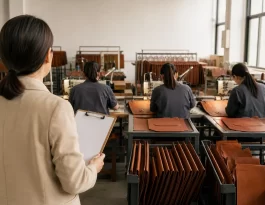
Watch the floor itself. Organized material racks, clean workstations, and workers wearing gloves when handling leather are quiet signals of process discipline. A chaotic floor produces chaotic quality.
Ask About Subcontracting
Most factories subcontract some steps — edge painting, hardware plating, or special stitching. That is normal. What matters is disclosure: which steps are outsourced, to whom, and how quality is controlled at the subcontractor. A factory that hides its subcontracting cannot audit it, and neither can you.
The Capacity Question No One Asks
Ask how the factory manages peak season. A factory running at 80% of capacity in normal months may still take your order cheerfully — then quietly outsource it, rush it, or push your delivery into overtime chaos when the busy season arrives.
The useful question is direct: "If I place a 500-piece order in October, where does it sit in your schedule?" A factory with a real planning system answers with dates and buffers. One that answers with enthusiasm alone is promising capacity it may not have. A trial order timed just before their busy season is the honest test of their scheduling discipline.

Verify Leather Quality Before Commitments
Leather is the soul of the bag and the biggest variable in the price. Verify the material before you fall in love with the product photo.
Understand Leather Grades and Finishes
Know what you are asking for. Full-grain keeps the natural surface intact and develops patina; top-grain is lightly sanded for uniformity; split leather is the lower layer, often coated to look like a full hide. Finished leathers add a protective layer that changes appearance and durability.
Ask the factory to name the exact grade, tannage (chrome or vegetable), and finish for your quotation — and put it in writing. A quote that says only "leather" is a quote that will be filled with the cheapest interpretation.
| Leather grade | Surface treatment | Typical look | Relative cost | Best suited for |
|---|---|---|---|---|
| Full-grain | None; natural surface kept | Natural marks, develops patina | Highest | Heritage, premium lines |
| Top-grain | Light sanding, light finish | Uniform, subtle grain | Medium-high | Everyday bags, balanced cost |
| Split leather | Coated to mimic grain | Imprinted, synthetic feel | Low-medium | Budget lines, PU alternatives |
| Bonded leather | Fibers re-bonded with coating | Thin, least durable | Lowest | Avoid for structural panels |
The grade is only half the story — tannage and finish matter just as much. Chrome-tanned leather is soft and supple; vegetable-tanned leather is firmer, ages beautifully, and works well with edge painting. A finish can be aniline (dye only, showing all natural character), semi-aniline, or pigmented (painted surface, most uniform and most durable against spills). Ask for all three specifications — grade, tannage, finish — on every quote.
Request Material Swatches and Test Reports
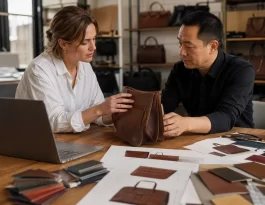
Ask for physical swatches, not photos. Leather photographs well and deceives well. Swatches let you check thickness with your fingers, smell the tannage, and see the grain character under real light.
For large orders, request test reports on key properties: tensile strength, color fastness to light and rubbing, and flex resistance. Reputable tanneries provide these; factories that stall on test reports are stalling for a reason.
Confirm the Leather Source and Consistency
Ask where the leather comes from — which tannery, which region, which species. Volume orders need consistency across lots, so confirm the factory's process for matching new leather lots to the approved sample. A shade shift between your sample and the production batch is the most common leather complaint, and it is preventable with a disciplined lot-matching process.
Use the Sample Stage as a Test
The sample is not a formality — it is your only window into the factory's interpretation of your spec. Treat it like the first production run.
Send a Complete Tech Pack
A complete tech pack includes: design sketches with measurements, material specs with swatch references, hardware descriptions, construction details, stitch specifications, and packaging requirements. The more complete the pack, the more accurate the sample — and the fewer revision rounds you will pay for.
Evaluate the Sample Like an Inspector
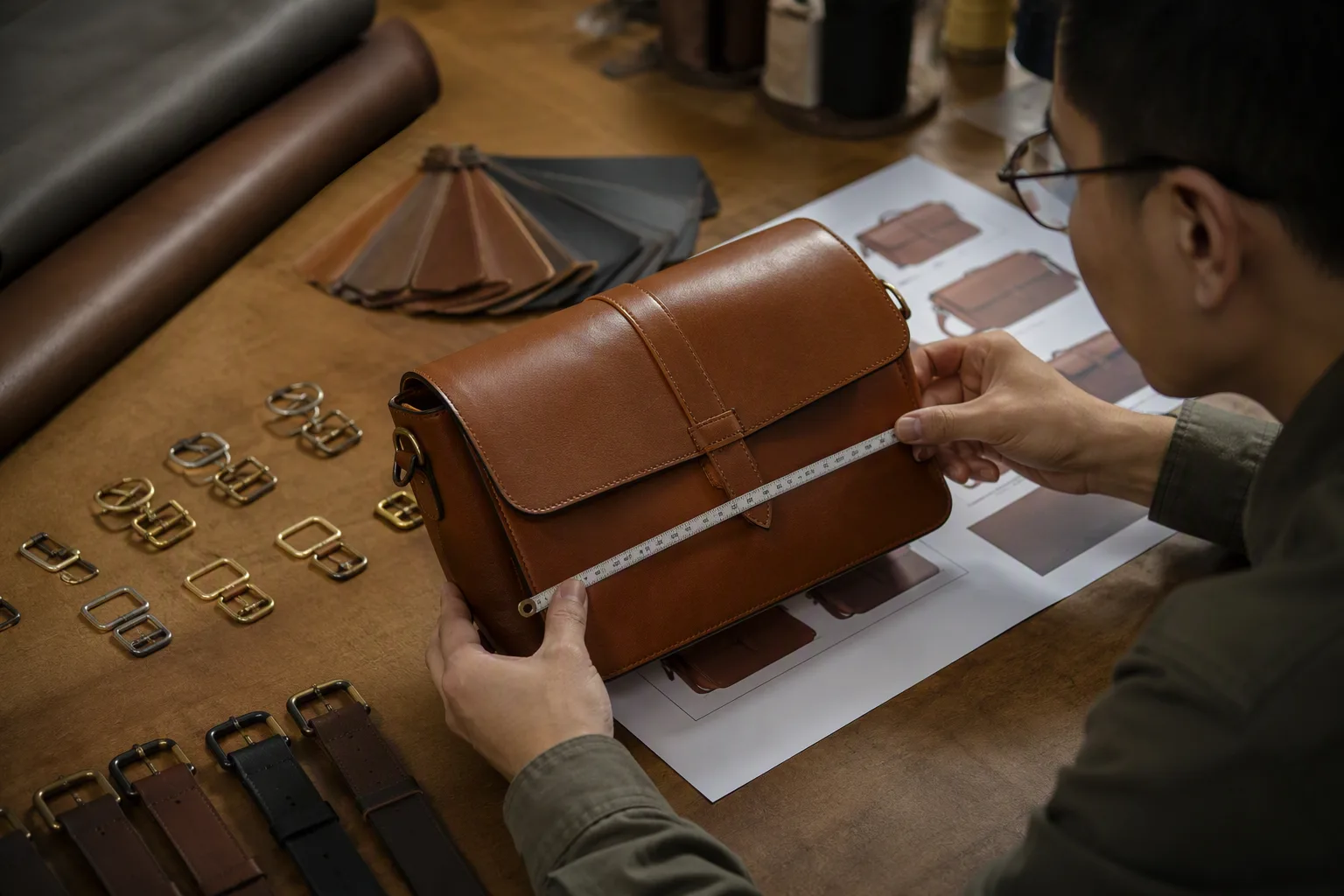
When the sample arrives, check it against the spec line by line. Measure the dimensions, test the zippers and hardware, examine the stitching consistency, and flex the bag to feel the construction. Photograph everything for the record.
Check the details most buyers miss: seam allowances even, edge paint smooth without bubbles, hardware weight and finish, lining attachment clean, and the logo application precise. These details are the difference between a factory that cares and one that merely delivers.
Budget for Revision Rounds
Rarely does the first sample satisfy completely. Budget for two to three revision rounds in your timeline and cost plan — each round takes one to two weeks. When requesting changes, send consolidated written feedback with photos and measurements, not scattered chat messages. Clear feedback is the fastest way to a sealed sample.
What Sample Defects Actually Tell You
Sample defects are information, and different defects carry different messages. Crooked stitching or uneven edges suggest operator skill gaps or rushed work — production will repeat them at scale. Wrong dimensions point to pattern or measurement issues — fixable, but verify the correction carefully. A leather shade that differs from your swatch indicates a material sourcing problem that no amount of sewing will fix.
The most telling signal is how the factory responds to its own defects. A serious factory points out flaws before you notice them, explains the cause, and proposes the correction. One that waits for you to find problems, then makes excuses, has shown you how every future disagreement will go. Sample-stage honesty is the cheapest insurance you will ever buy.
Understand Pricing and Negotiate With Knowledge
Price negotiation is where buyers either earn respect or lose it. The buyer who understands cost structure negotiates better than the buyer who only demands discounts.
Read the Quote Structure
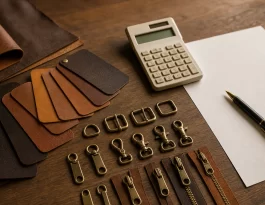
A serious quote itemizes: leather and materials, labor, packaging, and logistics. Ask what each line covers, and compare quotes at the component level, not the total. A 15% cheaper quote usually means a different leather, thinner hardware, or looser QC — not a better deal.
| Quote component | What to verify |
|---|---|
| Leather and materials | Grade, thickness, tannage, hardware material |
| Labor and construction | Stitch spec, edge finish, assembly steps |
| Packaging | Dust bags, inserts, carton quality |
| Development costs | Sampling fees, pattern charges, amortization |
| Logistics terms | FOB, CIF, or EXW — what is included |
Know the Market Range
Research typical pricing for your bag type before negotiating. A mid-size leather tote sits in a predictable range; a price far below it signals cost-cutting somewhere. A price far above it signals you are talking to a reseller with a large margin.
Negotiate Terms, Not Just Price
The most valuable negotiation wins are not price cuts. Better terms — a longer payment schedule, a clear defect policy, a written lead time, or priority production capacity — often beat a discount that someone quietly removes from the leather later. Negotiate the total value, not the unit price alone.
How to Handle a Suspiciously Low Quote
A quote 20% below the market range is not a bargain — it is a question mark. Ask the factory to walk you through the cost structure that produces such a price. Watch how the numbers behave: a lower leather grade, thinner hardware, or reduced QC sampling are legitimate explanations; a shrug is not.
Price the risk as well as the unit. A low quote followed by a failed inspection, a late shipment, or a warranty claim costs far more than the discount saved. When the price is too good, treat it as the beginning of the conversation — component-level comparison, material verification, and a trial order before volume — not as a reason to skip verification.
Confirm MOQ and Order Economics
Minimum order quantity is the arithmetic of both sides. Understand it before it surprises you.
Understand How MOQ Is Calculated
The MOQ exists because every run carries fixed costs: pattern setup, cutting templates, machine changeovers, and material minimums from tanneries. Ask what the fixed costs are for your product and how they scale with volume. The answer explains why your 200-piece order costs nearly as much per bag as a 400-piece order.
Match MOQ to Your Cash Flow
The right MOQ is the one your cash flow survives. A smaller MOQ at a higher unit price is often the smarter first order than a large MOQ that strains your working capital. Factories accommodate realistic first orders when the buyer is transparent about growth plans.
Ask About the Volume Price Curve
Ask how the unit price changes at 300, 500, and 1,000 pieces. A factory that shows you the curve transparently is a factory worth growing with. The curve also tells you when to commit to a larger order — and when to hold back.
Plan the First Order for Learning
Your first order has two jobs: delivering product and teaching you about the factory. Structure it to do both. Choose a limited colorway count — two rather than six — so shade matching stays manageable. Keep the product range narrow enough to audit properly. And build a few checkpoints into the schedule: an inline inspection mid-production, a pre-shipment check, and a formal review of the first batch before reordering.
First orders that try to do everything usually learn nothing. A small, well-verified first order teaches you the factory's real quality, timing, and honesty — and gives you the data to scale the second order with confidence. Factories respect buyers who learn before they scale.
Evaluate Communication and Responsiveness
How a factory communicates before the order predicts how it will communicate during production — and communication is where most orders quietly die.
Test Response Quality
Send a detailed inquiry and measure the reply: do they answer every question, or only the convenient ones? Do they provide numbers and specifics, or vague assurances? Do they document agreements in writing? The inquiry process is a miniature version of the production relationship.
Check Time Zone and Language Fit
Confirm the communication channel and working hours that overlap with yours. A weekly call rhythm, named contacts on both sides, and a shared document system prevent the miscommunications that cost weeks. Language matters less than clarity — the factory should repeat your requirements back in writing to confirm understanding.
Observe Their Problem Response
Ask a hypothetical problem question — a late material delivery, a shade mismatch, a QC failure — and listen to how they respond. A factory that answers with a process ("here is what we would do") is more reliable than one that answers with reassurance ("do not worry"). Process beats promises.
Build the Communication Rhythm Early
Good sourcing relationships run on rhythm, not heroics. Set the cadence in the first weeks: a fixed weekly update, named contacts on both sides, and a shared tracker for open questions. The tracker is the quiet workhorse — every open item visible, every decision dated, no question lost in a chat thread.
Agree on response-time expectations that match reality. A factory contact who replies within a day during their working hours is responsive; one who replies within a week is a risk you should price into your timeline. And when deadlines shift, good partners warn early — the warning itself is a sign of process, and early warnings are almost always actionable.
Lock the Contract and Payment Terms
The handshake matters, but the contract decides. Put the agreed quality, timeline, and remedies in writing before production starts.
Cover the Essential Clauses
The contract should name: the product specification and approved sample, quantities and MOQ, unit price and currency, delivery date and incoterms, payment schedule, defect policy with AQL levels, and remedies for late delivery or quality failure. Every clause you skip is a negotiation you lose later.
| Contract clause | What it protects |
|---|---|
| Spec and sample reference | Defines exactly what is being built |
| Payment schedule | Balances risk between buyer and factory |
| Delivery and incoterms | Fixes who pays for what, where risk transfers |
| Defect and AQL policy | Turns quality disputes into arithmetic |
| IP and exclusivity | Protects your design and market |
Choose Payment Structures Wisely
The standard 30% deposit with balance before shipment balances risk fairly. Letters of credit protect large orders and new relationships. Be cautious with any demand for full prepayment — and equally cautious about factories that accept zero deposit, since they may be pricing in risk elsewhere.
Protect Your Design Early
Register or document your design before sharing it, and sign a confidentiality agreement with the factory before sending detailed specs. For OEM programs, confirm in writing that patterns developed from your specification belong to you. For ODM selections, agree on exclusivity terms and their duration.
Plan for Disputes Before They Happen
Every long sourcing relationship eventually has a disagreement — the question is whether the contract already contains the answer. Agree on a defect remedy ladder before production: rework first, replacement second, and a refund or credit as the final step, each with clear triggers and time limits.
Decide how disputes get settled. Independent third-party inspection provides neutral evidence at the shipment stage. For larger programs, name a governing law and a dispute mechanism — arbitration is common in cross-border trade because it is faster and cheaper than litigation. The clause nobody reads is the one that saves the relationship when the container arrives with a problem. Write it while you are still friends.
FAQ
How do I verify a leather bag factory is real?
Check the business registration and address, request a live video tour of the production floor, ask factory-specific questions about machines and workers, and run a small trial order or paid sample as the final proof.
What is the difference between a factory and a trading company?
A factory owns production equipment and employs production workers. A trading company resells other factories' production. Both can deliver good products, but you must know which you are dealing with to verify quality control properly.
How much does a leather bag sample cost?
Development samples typically cost $50–$150 for a mid-size bag, covering leather, pattern work, and sewing time. Paid samples are normal and separate serious buyers from casual inquiries.
What should a complete tech pack include?
Sketches with measurements, material specs with swatches, hardware descriptions, construction details, stitch specifications, packaging requirements, and quality expectations. The more complete the pack, the fewer revision rounds.
What MOQ should I expect for custom leather bags?
Typical MOQs range from 200 to 500 pieces per colorway, depending on bag complexity and leather cost. Ask the factory how fixed costs scale with volume to understand the number.
How can I check leather quality before ordering?
Request physical swatches, not photos. For large orders, ask for test reports on tensile strength, color fastness, and flex resistance, and confirm the tannery source and lot-matching process.
What are the standard payment terms?
A 30% deposit with the balance before shipment is standard. Large or first-time orders may use letters of credit. Avoid full prepayment demands and be wary of factories demanding nothing upfront.
What AQL level should I use for leather bags?
AQL 2.5 for major defects and 4.0 for minor defects is common for bag categories, with critical defects rejected outright. Agree the levels and defect classification in writing before production.
How long does sourcing and production take?
Allow 2–4 weeks for sampling, 30–60 days for production after approval, and 1–3 weeks for shipping. Plan a full sourcing cycle of 10–14 weeks from first inquiry to delivery.
Should I visit the factory before ordering?
For your first order, yes — in person or by video tour. A floor visit reveals equipment, discipline, and honesty better than any document. For repeat orders, annual audits maintain the relationship.
How do I compare quotes from different factories?
Compare component by component, not by total only: leather grade and thickness, hardware material, stitch and edge specifications, packaging, and incoterms. A lower total usually means a lower specification somewhere. Ask each factory to quote against the same written spec, then compare like for like.
What certifications should a leather bag factory have?
Relevant certifications include ISO 9001 for quality management, BSCI or SEDEX for social compliance, and REACH or Proposition 65 compliance for materials in regulated markets. Ask which certifications your target market requires and verify the certificates are current.
How do I handle a shade difference between sample and bulk leather?
Prevention beats correction: ask the factory to reserve and match production leather against your approved swatch before cutting, and review a pre-production sample cut from the actual production lot. If a shade issue appears anyway, document it with photos and negotiate a remedy under your defect policy before shipment.
When is the best time to start sourcing for a season?
For a fall/winter launch, start sourcing 4–5 months ahead: sampling in early spring, production 3 months before launch, and shipping buffer for customs and delays. Leather suppliers and factory capacity tighten in peak seasons, so early commitment buys priority.
What incoterms should I use for leather bag orders?
FOB is the most common for factory orders — the factory bears cost and risk until the goods are loaded on the vessel, and you control the freight. CIF adds insurance and freight to the factory's side. EXW means you collect from the factory door. Choose based on your logistics capability; FOB with your own forwarder gives the most control.
How do I check stitching and hardware quality on a sample?
Run three quick tests. Pull the seam gently at stress points — the stitches should hold without gaping. Open and close every zipper ten times; it should run smoothly without catching. And check the hardware weight and finish — solid brass or zinc alloy feels dense, while thin plating feels light and will wear fast. Stitch density should look even at six to eight stitches per inch on the main panels.
Building the Checklist Into a Repeatable System
The sourcing checklist is not a one-time exercise — it is a system that compounds. After each order, review which verification steps saved you money and which you skipped and regretted. Log supplier performance: quote accuracy, sample timing, defect rates, delivery punctuality. Within three orders, you will have a supplier scorecard that makes the next sourcing decision faster and safer.
Most buyers keep this knowledge in their heads and re-learn it on every project. The buyers who win in leather goods write it down. Their supplier file — verification records, sealed samples, correspondence history, performance notes — becomes an asset that grows with every order. When a new product line needs a factory, they do not start from zero; they start from evidence.
Conclusion
Sourcing leather bags is a process of verification, not hope. The checklist in this guide — verify the supplier, assess capability, confirm leather quality, discipline the sampling, read the pricing, match the MOQ, test the communication, and lock the contract — is the same sequence our best buyers follow. Each step is cheap; skipping each step is expensive.
The factory that answers your verification questions with specifics is the factory you can work with for years. The one that deflects is the one that will deflect when problems appear — and problems always appear at some point. Run the checklist, and you will know which kind you are dealing with before your money is on the table.
If you are sourcing leather bags now — for a first order or a new supplier — send us your product brief and the questions you are unsure about. We will answer with the same specificity we ask of our own suppliers, and you can verify us the same way.