Quality Control in Leather Bag Manufacturing: 8 Checkpoints
Every leather bag passes through a moment of truth: the quality inspection. What happens at that moment decides whether the product reaches the customer as a source of pride or a source of refunds. And yet quality control is the most misunderstood stage of bag manufacturing — brands either assume the factory handles it (and never ask how) or they treat it as a single final inspection (and wonder why defects still slip through). The truth is that quality cannot be inspected into a product at the end of the line. It has to be engineered into the process, checkpoint by checkpoint, from the moment materials arrive to the moment the finished bag is packed.
This guide lays out the eight quality control checkpoints that a serious leather bag factory runs on every order — what each one checks, why it matters, and what brands should demand as evidence. If you buy bags from a factory, these checkpoints are your map for evaluating the factory's quality system. If you sell bags, they are your protection against the defects that damage brands.
The Quality Principle: Prevention Over Inspection
Before the checkpoints, the principle: quality is not what an inspection catches; it is what a process prevents. A factory that relies on final inspection to find defects is a factory that is shipping defects — it is just catching some of them. The economics are brutal and unarguable:
| Defect found at | Cost to fix | What it affects |
|---|---|---|
| Incoming material | Cents — return the material | Material cost only |
| Cutting | Low — re-cut the panel | Material and labor of one panel |
| Sewing | Moderate — re-stitch the seam | Labor and time |
| Finished inspection | High — rework or scrap the bag | Whole bag value |
| After shipping | Very high — refund, freight, reputation | Customer trust, brand equity |
The cost curve rises by an order of magnitude at each stage. This is why every serious factory builds inspection checkpoints into the process rather than at the end of it — and why the quality question to ask a factory is not "do you have QC?" but "where are your checkpoints, and what do you do with the defects you find there?"
Checkpoint 1 — Incoming Material Inspection
Quality control begins before any leather is cut. The first checkpoint examines the materials that will become the bag, and it catches problems at the cheapest possible moment.
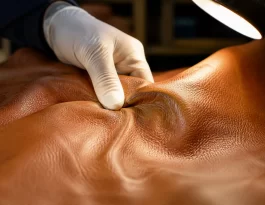
Leather inspection. Each incoming leather lot is examined for the defects that will not survive into the finished product: scars, holes, loose grain, fat wrinkles, color variation, and finish defects. Thickness is measured (the shaved thickness must match the spec within tolerance), and the lot is graded so that the best leather goes where it will be seen most. A leather inspection is not just "is it good or bad" — it is a routing decision: which parts of the hide serve which panels of the bag.
Hardware inspection. Zippers, buckles, rivets, and D-rings are verified against the BOM: correct brand, size, finish, and function. Zippers are cycled, buckles are tested, and plating is checked for defects. Hardware defects found here cost nothing; hardware defects found in a finished bag cost a rework.
Lining and component inspection. Linings, interlinings, threads, and edge-paint are checked against the spec for weight, color, and behavior. Thread strength matters: the bonded nylon thread specified in the tech pack is what keeps seams from failing under load.
The discipline of incoming inspection is simple: uninspected materials are a quality bet, and quality is not a betting business. A factory that checks every incoming lot is managing quality; a factory that trusts its suppliers is hoping.
Checkpoint 2 — Cutting and Skiving Inspection
The second checkpoint follows the cutting table, where leather panels are produced and prepared. Cutting errors are permanent — cut leather cannot be uncut — so this checkpoint is where the factory's discipline shows.
Panel dimensions. Every cut panel is verified against the pattern: correct shape, correct dimensions within tolerance, correct grain direction. A panel cut off-grain behaves differently in the finished bag — it stretches, flexes, and wears differently — so grain direction is checked, not assumed.
Leather surface quality. Each panel is examined for the defects that appear at this stage: scars that were not visible in the hide, color variation across panels that will meet at a seam, and finish damage from cutting. Panels with unacceptable defects are rejected here — before they consume stitching labor.
Skiving quality. Skived edges are checked for consistent thickness and clean cuts. Edge skiving determines how the finished bag's edges will fold and finish; a poor skive produces bulky, distorted edges that no amount of edge paint can fix.
The cutting checkpoint is the first place where the factory's yield math becomes visible: a factory that rejects defective panels here is protecting quality at a small cost; a factory that pushes marginal panels forward is saving a few cents now and spending dollars later.
Checkpoint 3 — Pre-Assembly and Edge Preparation
Before stitching, the prepared pieces pass through a checkpoint that verifies the invisible quality work: edge finishing, reinforcement placement, and adhesive application.
Edge beveling and finishing. Cut edges are beveled, and the first stages of edge finishing (edge paint application or burnishing preparation) are inspected for evenness. Edge quality is the most visible craftsmanship signal on a finished bag, and it is built here.
Reinforcement placement. Stress-point reinforcements — at handle roots, anchor points, and corners — are verified for correct position, size, and adhesion. A reinforcement that is present but mispositioned provides no protection; this checkpoint catches it before stitching locks it in.
Adhesive application. Where panels are glued before stitching (gussets, pockets, linings), the adhesive application is checked for coverage, evenness, and the correct adhesive type. Poor gluing causes delamination later — a failure that appears months after purchase and is blamed on the leather.
Hardware anchors. Rivets and anchors that are set in pre-assembly are checked for correct setting: not too loose (wobble), not too tight (cracking the leather), correctly aligned. The anchor is the hidden load-bearing structure of every handle and strap.
Checkpoint 4 — Sewing and Stitching Inspection
The sewing line is where the bag takes its structure — and where most field failures actually originate. The fourth checkpoint examines the stitching with the specificity that field data demands.
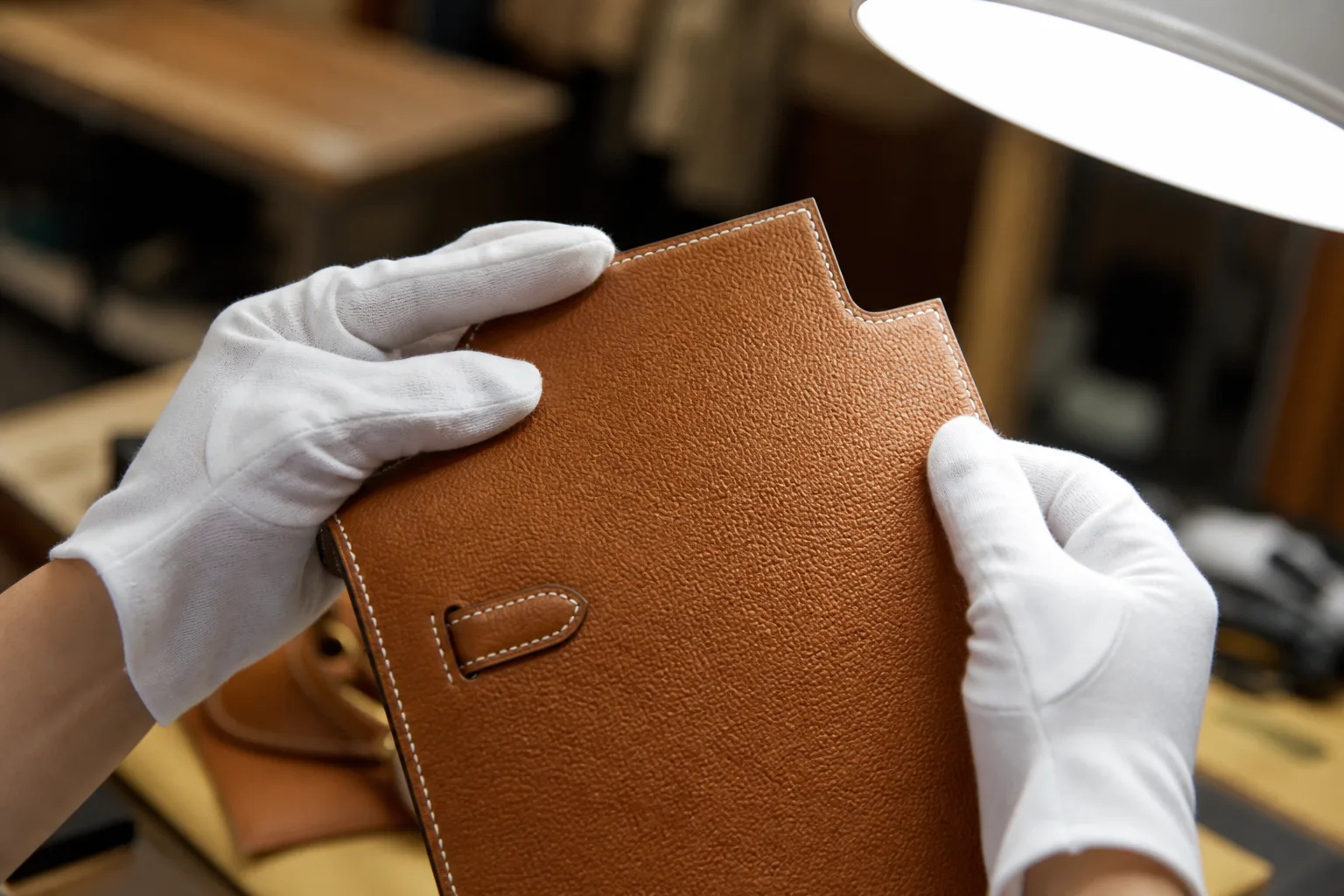
Stitch density and consistency. Stitches per inch are verified against the spec (typically 6–8 SPI for bags), and stitch consistency is checked along every seam. Consistent stitch density is what makes seams strong: too few stitches per inch and the seam fails under load; inconsistent density and the seam fails at its weakest spot.
Thread condition. Threads are checked for correct type (bonded nylon for structural seams), correct tension (loose thread = weak seam, tight thread = puckered leather), and correct color. Thread breaks and skipped stitches are flagged — every skipped stitch is a future seam failure point.
Seam construction. Seams are verified against the construction notes: turned edges, French seams, top-stitching placement, and seam allowances. The seam type determines both appearance and strength, and it must match the spec.
Stress-point stitching. Bartacks and reinforcement stitches at handle roots, strap attachments, and corners are verified for position and density. This is the stitching that carries the load, and it gets the strictest scrutiny.
The sewing checkpoint is where the factory's QC operators earn their keep. A good sewing inspector catches not just defects but drift — a subtle change in stitch tension or density that signals a machine out of adjustment — before it becomes a run of defective bags.
Checkpoint 5 — In-Process (On-Line) Inspection
Quality control in a serious factory does not wait for a batch to finish. The fifth checkpoint is the on-line inspection that runs during production, catching problems while they can still be corrected at the source.
First-article inspection. At the start of every production run — and every shift change, every machine change, and every material lot change — the first bag off the line is inspected completely. If the first article is right, the run can proceed; if not, the process is corrected before the run continues. The first-article check is the factory's way of catching process drift at the moment it starts.
Periodic sampling during the run. Throughout production, bags are pulled from the line at intervals and inspected against the full standard. This sampling catches the drift that no operator notices: a blade that has dulled, a press that has shifted, a thread tension that has changed. The interval depends on the operation's stability — tighter for sewing (high variability), looser for simple operations.
Operator self-inspection. The operators themselves check their own work at defined points — the first stitch after a change, the panel after cutting, the seam after sewing. Self-inspection is not a substitute for dedicated QC; it is the first layer of a defense-in-depth system. A factory that trains operators to inspect their own work is a factory that treats quality as everyone's job, not a department's.
The on-line inspection is the difference between quality control and quality assurance: control catches defects, assurance prevents them. On-line inspection is where prevention lives.
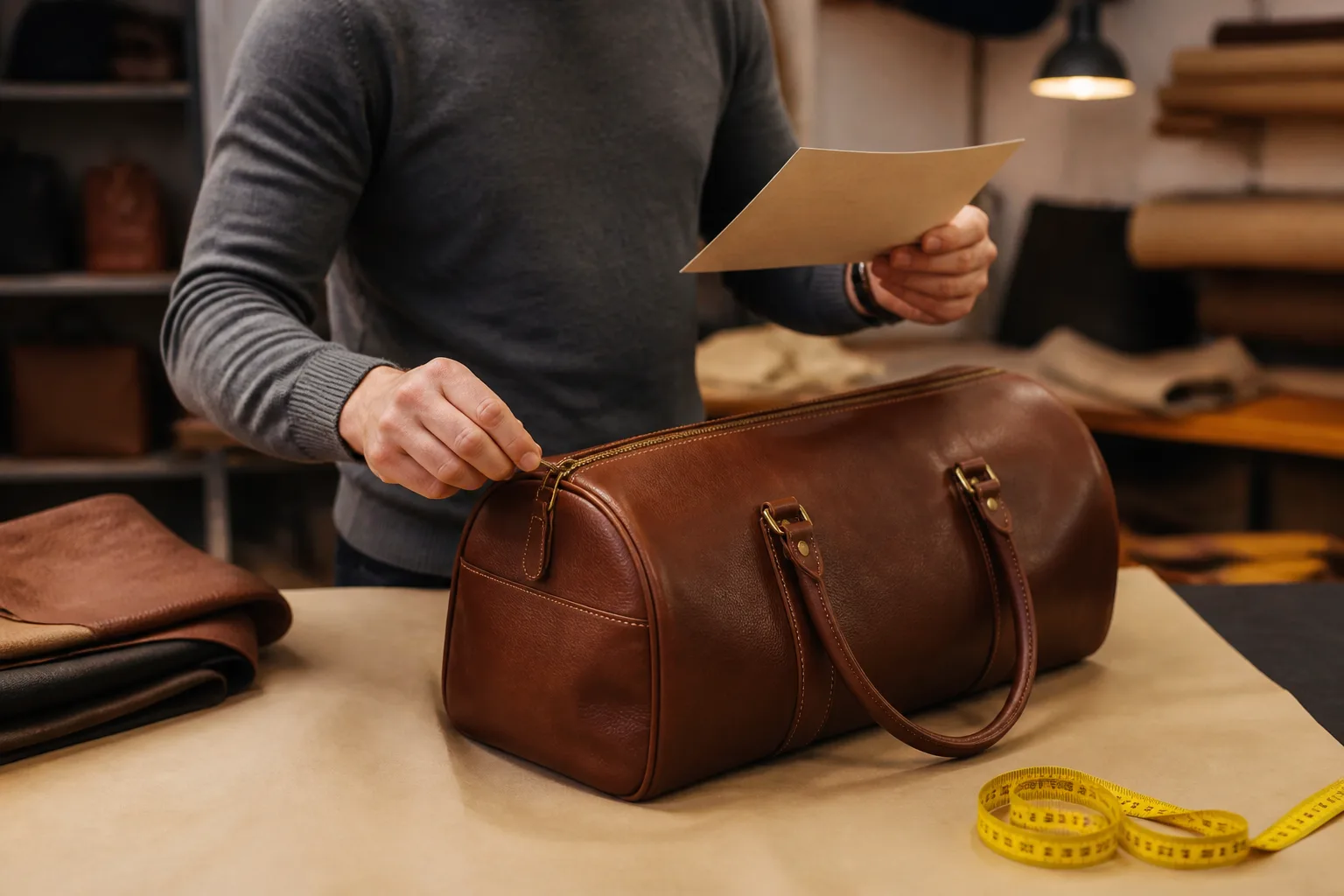
Checkpoint 6 — Finished Bag Inspection
The finished bag inspection is the comprehensive examination of the completed product — the checkpoint most brands know and expect. It is thorough, standardized, and documented.
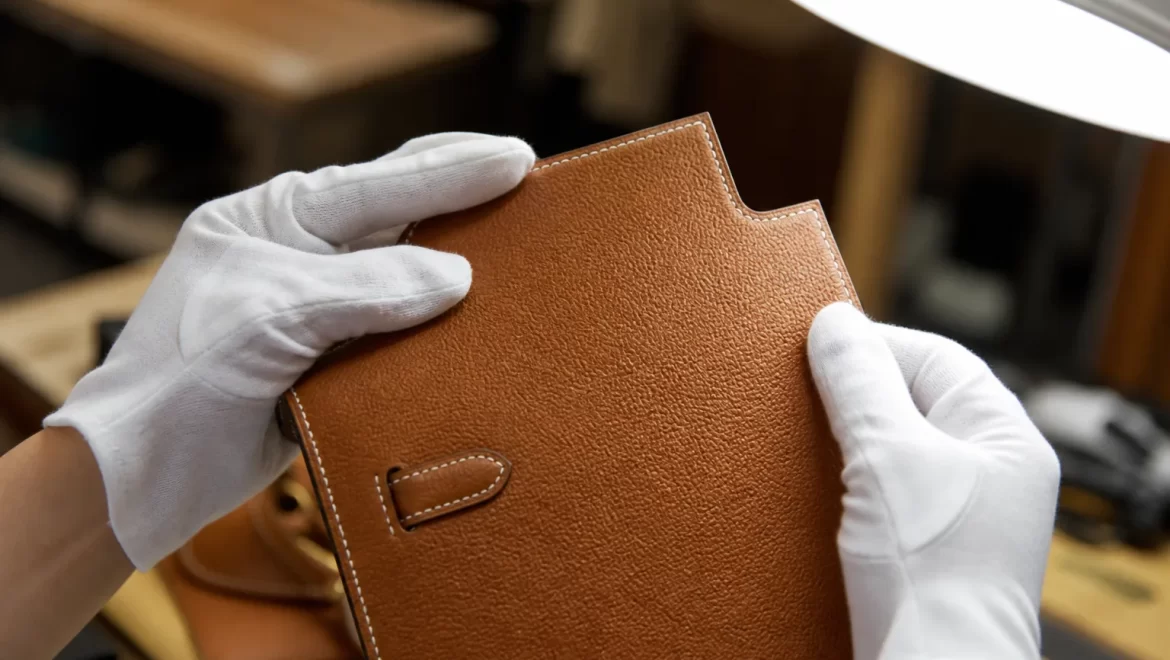
Appearance inspection. The finished bag is examined under controlled lighting against the full appearance standard: panel alignment, stitching consistency, edge finish quality, hardware placement and condition, surface condition, and overall proportion. The appearance check compares the bag to the approved sample — not to an abstract ideal, but to the specific standard the brand approved.
Function inspection. Every functional element is tested: zippers open and close smoothly through their full range, magnetic snaps engage properly, buckles and straps adjust, pockets and compartments function as designed. A bag that looks perfect but functions poorly is a defect; function is checked with the same rigor as appearance.
Measurement verification. Final dimensions are measured against the spec: height, width, depth, handle drop, strap length. Tolerance violations trigger rework — and repeated violations trigger a process review.
Structural checks. The finished bag is checked for structural soundness: handles are load-tested by hand, anchors are firm, seams hold, and the bag stands and holds its shape. The finished inspection is the last chance to catch the structural problems that cost the most downstream.
Checkpoint 7 — Random Outgoing Inspection (AQL Sampling)
No factory can inspect every bag to the same depth — and it does not need to. The seventh checkpoint is the statistical inspection that governs shipping: random sampling against an Acceptable Quality Level (AQL).
How AQL works. The standard industrial framework (based on ISO 2859) defines a sample size and acceptance criteria from the batch size and the chosen AQL level. For example, a batch of 500 bags at AQL 2.5 might require inspecting 50 bags, with acceptance if 3 or fewer critical-plus-major defects are found. The brand and factory agree on the AQL level — 2.5 for standard products, 1.0 for premium products, 4.0 for value lines.
Defect classification. Defects are classified by severity: critical (safety or total function failure), major (significant deviation from spec or appearance standard), and minor (small deviation, cosmetic, non-functional). The classification determines acceptance: any critical defect fails the lot; major defects are counted against the AQL; minor defects are counted separately.
The random selection discipline. The sample is drawn randomly from the finished batch — not from the top of the pile, not from the QC-approved pile, but truly at random. The randomness is what makes the statistics work. A factory that "samples" from a prepared pile is producing theater, not statistics.
Documentation. The AQL inspection produces a report: sample size, defects found by class, accept/reject decision, and photos of any defects. This report is the evidence the brand should demand with every shipment.
The AQL checkpoint is the factory's last line of defense before the bags leave — and the brand's first line of assurance that the shipment matches the standard.
Checkpoint 8 — Packaging and Shipment Inspection
The final checkpoint protects the product after it leaves the factory: packaging integrity, labeling accuracy, and shipment compliance. A beautiful bag damaged in transit, or a bag shipped with the wrong label, fails the customer experience just as surely as a defective seam.
Packaging inspection. Each bag is checked for correct packaging: dust bag, padding, box size and condition, and protective wrapping. Packaging is not a cosmetic afterthought; it is the product's protection between factory and customer.
Label and marking verification. Labels, hang tags, care cards, and carton markings are verified for accuracy: correct product name, SKU, size, color code, and care instructions. A mislabeled carton creates chaos in the retail chain — wrong colors shipped as right, wrong sizes sent to the wrong markets.
Carton and pallet inspection. Cartons are checked for correct packing quantity, correct carton strength for the shipment's weight, and correct palletization. Random cartons are opened and verified against the packing list — the shipment-level check that catches the errors a bag-level check misses.
Shipment documentation. The final documents are verified: packing list, invoice, and any required compliance certificates. Documentation errors delay customs and damage the brand's reliability — a checkpoint that costs nothing to run and prevents expensive delays.
The Checkpoint Evidence: What Brands Should Demand
The eight checkpoints are only meaningful if their results are documented and shared. The professional relationship between brand and factory includes a defined evidence package:
| Checkpoint | Evidence the brand should receive |
|---|---|
| Incoming material | Material inspection records, thickness/lot reports |
| Cutting/skiving | Panel inspection records, defect rejection rates |
| Pre-assembly | Edge and reinforcement inspection records |
| Sewing | Stitch density measurements, seam inspection reports |
| On-line | First-article reports, shift sampling records |
| Finished | Final inspection reports with photos, measurement sheets |
| AQL outgoing | AQL report with sample size, defect counts, decision, photos |
| Packaging | Packing list verification, carton inspection records |
Three professional rules govern this evidence. First, the reports should be real — with photos, dates, and signatures, not a generic form. Second, the brand should review them — a report that is never read protects nobody. Third, the reports should drive improvement — when defects appear, the factory should show what changed in the process, not just what was rejected. A factory that documents defects without fixing their causes is a factory that has learned to fill in forms instead of fixing quality.
Building a Quality Partnership
Quality control is not a service the factory provides; it is a partnership the brand and factory build. The brands that get the best quality from their factories do six things consistently:
Specify quality in the tech pack. Define the AQL level, the appearance standard (against the approved sample), the inspection points, and the evidence requirements before production — not after a dispute.
Approve the standard, not just the sample. The approved sample is the quality benchmark; the written quality standard is the contract. Both must be explicit.
Inspect with the factory. Independent third-party inspections (or brand inspections at key checkpoints) verify the factory's system — and demonstrate that the brand takes quality seriously, which changes the factory's behavior.
Review defect data regularly. The defect records are a window into the process: high cutting rejects suggest a leather quality problem; high sewing rejects suggest a training or machine problem. Brands that read the data catch problems early.
Celebrate good lots. Quality is driven by incentives as much as by systems. Factories that meet and exceed the standard should see the benefit — repeat orders, faster payment, more trust — while quality failures should have clear consequences.
Treat quality as continuous. The standard rises over time. A factory that has hit AQL 2.5 for two years should be challenged to reach 1.5 — and supported to get there. Quality is not a destination; it is a trajectory.

The Human Factor: Training the Inspectors
The checkpoints are only as good as the people who run them, and the people are only as good as the factory's investment in them. Quality control is a craft with its own skills — and the difference between a trained inspector and an untrained one is visible in the defect data.
What makes a good inspector. A skilled QC inspector combines three things: an eye trained on the approved standard (they know exactly what the brand approved, because they inspected the sample with the same checklist), technical knowledge (they understand why a stitch density matters, not just that it should be six per inch), and integrity (they report what they find, even when production is pushing for output). The third quality is the rarest and the most valuable; a factory that protects its inspectors from production pressure is protecting its quality system.
The training program. Serious factories train inspectors systematically: classroom instruction on the standards and defect classification, hands-on practice with defect samples, calibration sessions where inspectors inspect the same bag and compare results (to measure inter-inspector consistency), and refresher training when standards change or defect patterns emerge. A factory that can show its training records is a factory that takes inspection seriously.
Calibration and consistency. The hidden risk in any QC system is inconsistency between inspectors: one inspector accepts what another rejects, and the AQL statistics quietly stop meaning anything. Calibration sessions — where multiple inspectors evaluate the same products and the factory measures agreement — keep the standard consistent across shifts and across inspectors. Brands can participate: a calibration session with the brand's own quality team aligns everyone's eyes on the same standard.
The inspector's place in the process. Inspectors need authority, not just responsibility: the authority to stop a line, reject a lot, and escalate without being overridden by production pressure. A factory where production can override QC decisions has checkpoints in name only. The professional arrangement — which the best factories use — is quality reporting independently of production, directly to management, so that the quality voice is never silenced by output targets.
The human factor is the ninth checkpoint in practice: it is the system that keeps the other eight honest. Brands evaluating a factory should spend time with the inspectors, not just the sales team — the inspectors are the people who actually protect the product.
Digital QC: From Paper Records to Data-Driven Quality
Quality control is undergoing a quiet transformation: from paper checklists to digital records, from anecdotal defect knowledge to data-driven process control. The factories that embrace this shift are measurably better at quality — and the brands that demand it get evidence they can actually use.
What digital QC looks like. At its simplest, digital QC means inspection records captured on tablets or handhelds instead of paper: checklists with photos, timestamps, and operator IDs, stored in a system the brand can access. At its most advanced, it means defect data aggregated across stages and orders, analyzed for patterns, and fed back into process control — a factory that knows its cutting reject rate rose this month, and why, before the customer discovers it in the shipment.
The brand's advantage. Digital records change what the brand can ask for: instead of a stack of paper forms at the end of the order, the brand can see real-time inspection data, defect photos with timestamps, and trend reports across orders. Digital evidence is also harder to fake credibly — a photo with metadata, an inspection timestamp, and a consistent record trail tells a different story than a handwritten form. For the brand, the question shifts from "do you inspect?" to "show me the data."
The data that matters. Not all defect data is equal. The useful numbers are defect rates by stage (which stage creates the most defects?), defect types (what are we making wrong?), trends over time (is it getting better or worse?), and root-cause classifications (why did it happen?). A factory that tracks these four dimensions is managing quality; a factory that tracks only pass/fail is counting, not managing.
The limits of digitization. Digital tools do not replace the inspector's judgment, the calibration discipline, or the authority to stop a line — they amplify them. A factory with paper records and strong discipline beats a factory with digital records and weak discipline. The digital layer is an amplifier of the human system, not a substitute for it.
The professional question for brands is direct: can the factory show its defect data by stage and over time? If the answer is a blank look, the quality system runs on memory and hope. If the answer is a trend report, the quality system runs on data — and data-driven quality is the only kind that improves.
Common Quality Failure Patterns
The field experience of thousands of bags reveals patterns that brands should recognize — each traceable to a checkpoint being skipped or weakened:
"The good pile" problem. Finished inspection is subverted when operators sort "good" bags into a pile for inspection. The random AQL sample must come from the whole batch — this is the most common and most damaging QC integrity failure.
The unread report. Factories produce inspection reports that nobody reads. The reports exist for the brand's protection; an unread report is protection unused.
Sample-quality drift. Production quality drifts from the approved sample — different leather finish, different stitching, different hardware — without anyone being told. The finished inspection, compared against the approved sample, is the defense; it must be enforced.
Premium product, economy AQL. Brands ask for premium quality but agree to AQL 4.0 or no AQL at all. The AQL level is a written contract with the quality promise; premium products deserve AQL 1.0.
The invisible supplier. Brands buy from factories that hide their material sources. Incoming material inspection is only as good as the factory's honesty about where the leather and hardware come from — brands should know the suppliers of the components.
Rework without root cause. When defects are found, the factory reworks the defective bags but never changes the process that made them. Rework without root-cause analysis is a quality tax that never stops.
Each pattern is preventable — and each one is caught by the same discipline: checkpoints with real evidence, reviewed by people who care, driving process change.
Building Your QC Checklist for Factory Evaluation
When evaluating a factory's quality system, use a structured walkthrough. The checklist a serious brand brings to a factory visit:
- Material area: Is incoming leather inspected and graded? Are inspection records kept? Can the factory name its leather suppliers?
- Cutting: Are panels measured and checked for grain direction? What is the cutting reject rate, and what happens to rejected panels?
- Pre-assembly: Are edges and reinforcements inspected before stitching? Is adhesive application controlled?
- Sewing: Is stitch density measured? Are there first-article checks at shift and machine changes? Are operators trained in self-inspection?
- Finished inspection: What is the inspection standard — the approved sample? Is function tested, not just appearance?
- AQL: What AQL level is applied? Is the sample drawn randomly? Are reports issued with photos?
- Packaging: Is packaging inspected? Are labels verified? Are cartons opened and checked?
- Data: Does the factory track defect rates by stage? Can it show trends? Does it act on them?
The answers — and the factory's eagerness to show the evidence — tell the real story. A factory that opens its records and walks you through its checkpoints is selling quality. A factory that explains its quality philosophy without showing its records is selling words.
FAQ
What is AQL in bag manufacturing?
A: AQL (Acceptable Quality Level) is the statistical sampling standard (based on ISO 2859) used for outgoing inspection: a sample is drawn randomly from the batch and inspected, and the batch is accepted or rejected based on the number of defects found. Common levels: AQL 1.0 for premium, 2.5 for standard, 4.0 for value lines.
How many checkpoints should a factory have?
A: A serious factory runs quality control at every stage where defects are created — incoming materials, cutting, pre-assembly, sewing, in-process, finished inspection, AQL outgoing, and packaging. The eight checkpoints in this guide are the framework we use; the exact structure varies by factory, but the principle is universal: inspect at the source, not just at the end.
Can I rely on the factory's inspection alone?
A: A good factory's inspection is a strong first line — but the brand's protection comes from specifying the quality standard, reviewing the evidence, and adding independent or third-party inspections at key points. Quality is a partnership, not a delegation.
What is the difference between major and minor defects?
A: Major defects are significant deviations from spec or appearance — wrong hardware, visible stitching failure, color mismatch — and they count against the AQL acceptance number. Minor defects are small cosmetic issues that do not affect function — a tiny edge imperfection, a barely visible scratch — and they are counted separately.
Why do my bags look different from the approved sample?
A: The usual cause is production drift: different material finish, different stitching, different hardware — sometimes without the factory even noticing. The defense is a strict finished-inspection comparison against the approved sample, plus first-article checks at every run and material lot change.
What should I do when a defect is found?
A: Classify it, document it with photos, and count it against the appropriate standard. Then — more importantly — require root-cause analysis: what in the process created this defect, and what changed to prevent it? A defect without a process change is a defect that will return.
What is a first-article inspection?
A: The complete inspection of the first bag produced at the start of a production run — and at every shift change, machine change, and material change. If the first article is right, the run can proceed; if not, the process is corrected before the run continues. It is the most cost-effective checkpoint in the system.
What does "inspect at the source" mean?
A: Catching a defect where it is created — material at delivery, cutting at the table, sewing at the machine — rather than at final inspection. The cost of fixing a defect rises by an order of magnitude at each stage, so the factory's checkpoint placement is a direct measure of its quality economics.
How do I know if a factory's QC is real or theater?
A: Ask for evidence: inspection records with photos and dates, defect statistics by stage, AQL reports, and the factory's process changes after defects. A factory that shows its records is managing quality; a factory that describes its philosophy without records is selling words.
Conclusion
Quality in leather bag manufacturing is not a final inspection — it is a system of eight checkpoints, each placed where a defect is created, each with documented evidence, each driving process improvement. From incoming material inspection to packaging verification, the system catches problems at the cheapest possible moment and prevents them from becoming customer-visible failures. The checkpoints protect the product, but they do something more: they define the partnership between brand and factory. The brands that specify quality standards, review the evidence, and demand root-cause analysis get factories that treat quality as a shared goal — and they get shipments they can sell with confidence.
The professional lesson is simple and it is the whole article in one line: quality is not inspected into a bag at the end of the line; it is built into the process at every step. The factory that understands this is the factory that ships bags worth selling.
Ready to put quality control to work on your line? Contact our factory — we will share our eight-checkpoint quality system, our AQL standards, and our defect-tracking data, and we will show you how every bag is inspected from incoming leather to packed carton.