Eco-Friendly Tanning: Sustainable Leather Options for Modern Brands
Leather occupies an awkward position in the sustainability conversation. On one hand, it is a natural material — a byproduct of the food industry that would otherwise be waste, biodegradable at end of life, and durable enough to last decades. On the other hand, conventional tanning uses chromium, consumes water, and produces effluent that has given the industry a genuine environmental black mark. Consumers increasingly ask where their leather comes from, retailers increasingly demand sustainability credentials, and brands increasingly need answers that are honest, verifiable, and affordable.
The good news is that the leather industry is changing faster than its reputation. Vegetable tanning — the ancient method — has become a modern sustainability story. Chrome-free and chrome-less tanning chemistries are maturing. Recycled leather materials are finding their place. And certification systems like the Leather Working Group (LWG) now give buyers a way to verify claims instead of trusting them. This guide maps the sustainable options from a manufacturer's perspective: what each method really is, how it compares environmentally and economically, which certifications prove what, and how a brand can source leather it can defend to customers, regulators, and its own conscience.
Why Leather's Environmental Reputation Is Complicated
Before choosing a "sustainable" option, it is worth understanding why leather's footprint is genuinely complicated — because the honest answer is that leather is neither the villain its critics claim nor the saint its defenders suggest.
The byproduct argument. Cattle are raised for beef and dairy, not for leather. The hide is a co-product — if it were not tanned, it would be burned, buried, or dumped, generating methane and waste. Using the hide therefore "upcycles" a byproduct that already exists. This is leather's strongest sustainability claim, and it is real: the environmental burden of cattle farming exists regardless of leather, and leather's share is marginal. Comparisons of leather against synthetic materials are misleading on this axis — synthetic materials create their own footprint from petroleum, while leather's raw material is already "paid for" by the meat industry.
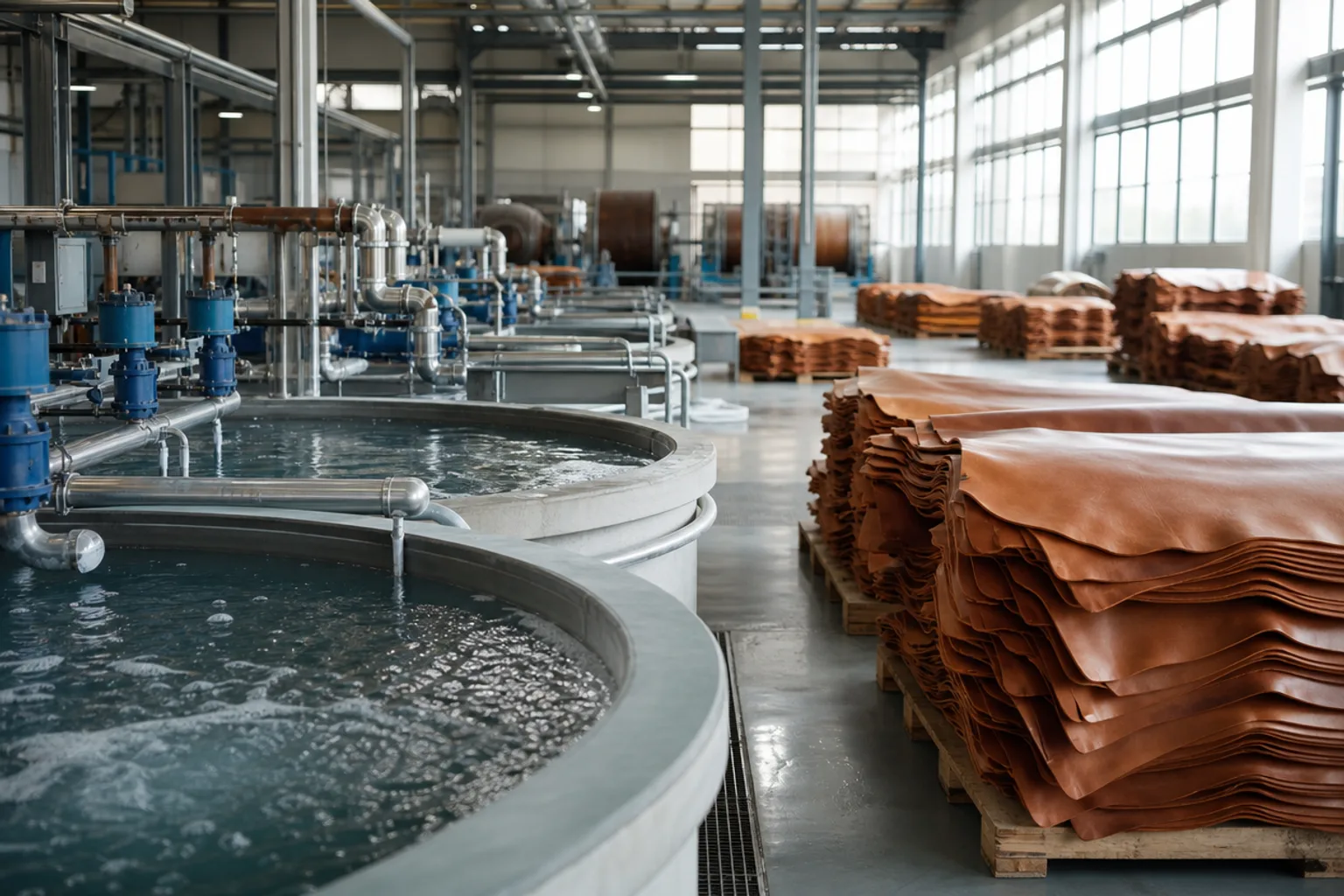
The tanning problem. The legitimate criticism is not the raw hide — it is the processing. Conventional chrome tanning uses chromium salts (chromium III, which is safe in finished leather but must be managed carefully in processing), large volumes of water, and produces effluent containing chromium, salts, and organic matter. Unmanaged effluent contaminates waterways. Modern tanneries treat and recycle their effluent, but the industry's history and its unregulated corners have earned it scrutiny. Water consumption is the second axis: tanning and finishing are water-intensive, though modern tanneries recycle heavily.
The durability counterweight. Sustainability is measured per unit of useful life, not per kilogram of material. A leather bag that lasts ten years displaces several cheaper bags made from synthetic materials that end up in landfill. On a lifecycle basis, durable natural materials frequently outperform disposable synthetics — a fact that lifecycle assessments (LCAs) increasingly confirm, and that brands can honestly put in their sustainability messaging.
The conclusion is not that leather is "green" — it is that leather's footprint is concentrated in processing, and that processing is precisely what the sustainable options address.
The Environmental Footprint of Conventional Tanning
To evaluate the alternatives, you need a baseline. Conventional chrome tanning's footprint has four main components:
| Impact area | Conventional chrome tanning |
|---|---|
| Chromium use | Chromium III salts; safe in finished leather, must be managed in effluent |
| Water consumption | High — tanning and washing cycles use large volumes (modern tanneries recycle) |
| Energy | Moderate — drums, drying, finishing |
| Effluent | Contains chromium, salts, organic load; treated tanneries recycle, unregulated ones pollute |
| Solid waste | Trimmings, shavings, sludge — increasingly recycled into secondary products |
Three notes. First, chrome itself is not the whole story — the biggest environmental risks in many tanneries are water use, energy, and effluent treatment, which exist in every tanning method. Second, modern LWG-certified chrome tanneries treat these impacts seriously — the certification audits effluent, water, energy, and chemicals, and a certified chrome tannery is often more environmentally responsible than an uncertified vegetable tannery. This is a crucial point that surprises many buyers: the method matters less than the management. Third, the traceability question — most brands cannot see past their immediate supplier, which is why certifications that audit the whole chain matter.
Vegetable Tanning: The Ancient Green Option
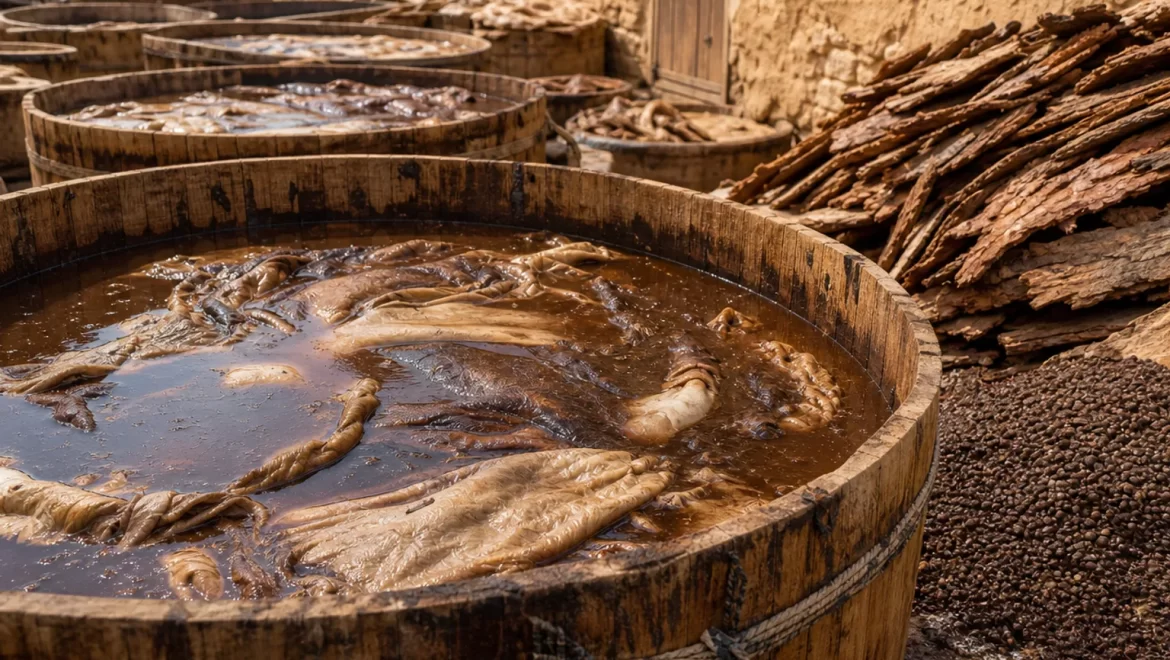
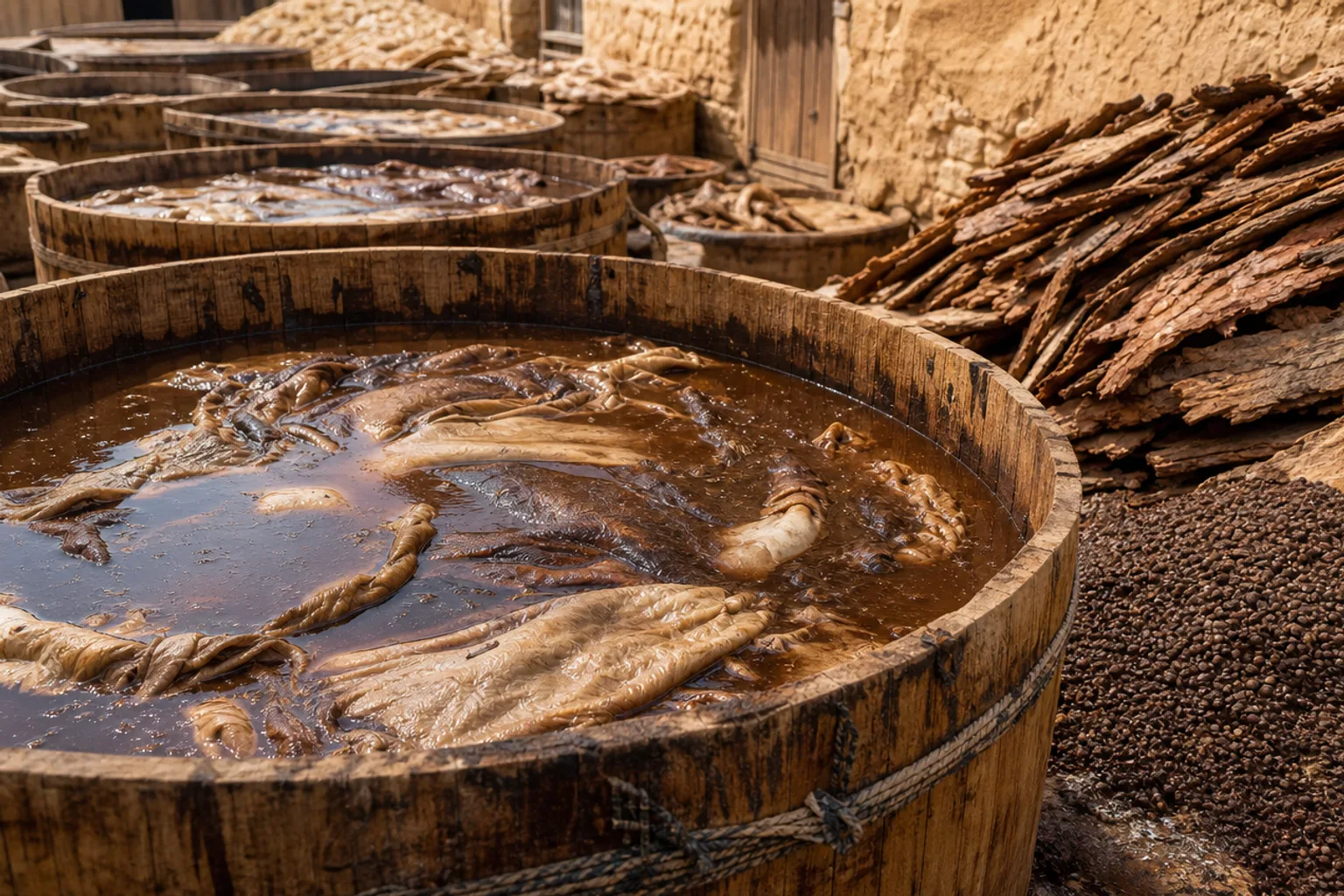
Vegetable tanning is the method humans used for millennia before chrome, and it has become the most visible "eco" option in leather. The hide is tanned with plant tannins — from tree bark (oak, chestnut, mimosa, quebracho), leaves, and fruit — over weeks in pits or drums.
The sustainability case. Vegetable tanning avoids chromium entirely, uses renewable plant tannins, and produces biodegradable leather with a classic natural character. Its tannins are often sourced from managed forestry (though some come from wild-harvested species, a point of nuance). Finished vegetable-tanned leather is non-toxic to the user and compostable at end of life under the right conditions. For brands selling an explicit "natural" story, vegetable tanning is the material that matches the message.
The trade-offs. Vegetable tanning is not footprint-free. It is slow (weeks of vat time), which ties up space and capital. It uses large volumes of water — in some estimates more than chrome tanning per hide, though it is recyclable in pit systems. It consumes significant energy for drying, and plant tannin sourcing can carry land-use and biodiversity concerns if not managed. Its leather is firmer, less water-resistant, and more expensive. And critically: an uncertified vegetable tannery can still pollute its local water with organic effluent — "natural" is not automatically "clean."
The professional reading: vegetable tanning is a strong sustainability story when the tannery is certified and the tannins are sustainably sourced; as a blanket claim, it is incomplete. It is also a materials choice with real performance differences, so it should be chosen for its character as well as its credentials.
Chrome-Free and Chrome-Less Tanning
Between traditional chrome and vegetable tanning lies a newer generation of chemistry: chrome-free tanning using alternative metals (titanium, zirconium, aluminum) and chrome-less tanning that blends reduced chrome with organic tannins. These methods aim to deliver chrome-like performance with a better environmental profile.
Why they exist. The market pull is regulatory and retail: brands and markets (notably the EU's evolving chemical regulations and major retailers' restricted-substance lists) increasingly restrict chrome in processing, and customers ask for "chrome-free" labels. Chrome-free tanning was developed to answer that demand without forcing the performance compromises of full vegetable tanning.
What they deliver. Chrome-free leather is typically softer and more water-resistant than vegetable-tanned, closer to chrome performance, while eliminating chromium from the process. The environmental profile depends on the chemistry: titanium and zirconium tanning avoid heavy-metal concerns, and aldehyde-based tanning (glutaraldehyde and related) is organic but carries its own chemical management needs. Chrome-less tanning — a small chrome content blended with plant tannins — reduces chrome while retaining most of chrome tanning's efficiency.
The caveats. Chrome-free is a claim that must be verified: "chrome-free" can mean the finished leather contains no chromium (testable), or that the process used no chromium (auditable), and the two are different. Performance varies by chemistry, and some chrome-free leathers are less dye-stable or more expensive. And environmental benefit is not automatic — a chrome-free tannery with poor effluent management is still polluting, just with different chemicals. As with everything in this guide: verify, don't assume.
Recycled and Recombined Leather
The third pillar of the sustainable options is recycled leather — and here the buyer must be sharp, because the term covers very different materials.
Recycled leather fiber (bonded-type). Leather scraps and shavings are ground, mixed with a binder (often polyurethane or latex), and pressed into sheets. The leather content can range from 10% to 90%, and the material's performance tracks the content: high-fiber recycled leather is genuinely usable, low-fiber material is essentially coated board. This is the material discussed in our guide to bonded leather — and the same rules apply: verify the fiber content, the binder, and the labeling.
Recycled content in tanned leather. Some tanneries now blend recycled leather fiber into tanned hides or offer "recycled leather" lines with certified recycled content. The claims range from modest (trim recycling into secondary products) to substantial (high-fiber sheets for bag panels).
The honest framing. Recycled leather's sustainability case is real — it keeps waste out of landfill and reduces virgin material demand — but its durability profile matters more than its recycled label. A recycled leather bag that lasts three years is less sustainable than a full-grain bag that lasts fifteen, regardless of recycled content. The professional approach: evaluate recycled materials on the same durability and performance basis as virgin materials, and treat the recycled claim as one factor among several, not the whole story.
The Big Sustainability Certifications
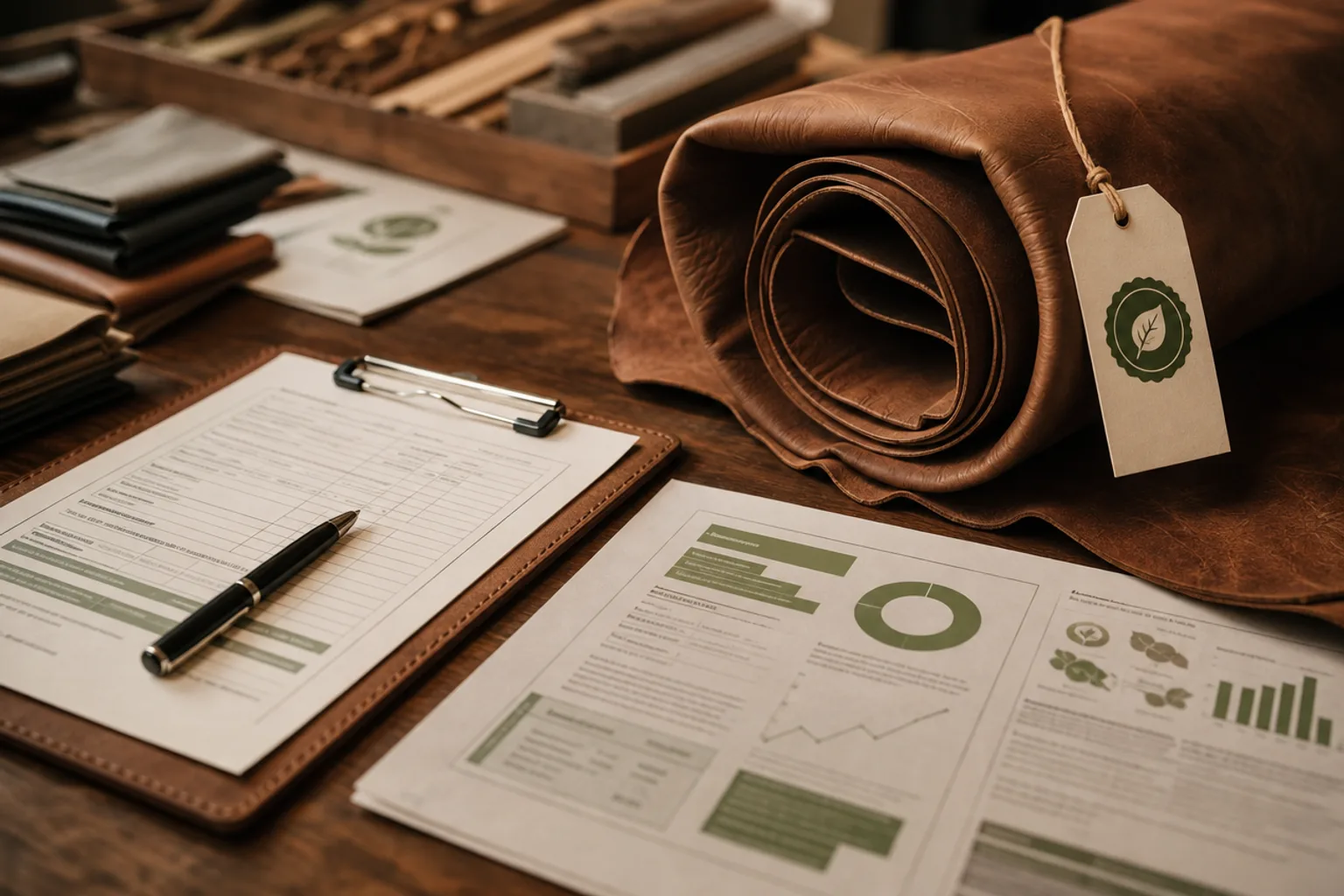
Certifications are how sustainability claims become verifiable — and they are the difference between a slogan and a spec. The ones that matter for leather:
| Certification | What it covers | What to ask for |
|---|---|---|
| LWG (Leather Working Group) | Tannery environmental performance: energy, water, effluent, chemicals, waste | Tannery's LWG rating (Gold/Silver/Bronze) — verified, audited |
| ZDHC | Chemical management in the supply chain | Tannery's ZDHC compliance/roadmap |
| REACH | Chemical safety for products sold in the EU | REACH compliance documentation |
| OEKO-TEX LEATHER STANDARD | Harmful substances in finished leather | Product-level certificate |
| ISO 14001 | Environmental management system | Facility-level certification |
| GRS (for recycled materials) | Recycled content verification | Recycled content certificate |
Three practical rules. First, LWG is the anchor: it audits the tannery's actual environmental performance and issues a verifiable rating — asking a tannery for its LWG rating is the single most powerful sustainability question a buyer can ask, because it cannot be answered with marketing. Second, chain matters: a certified tannery paired with an uncertified finishing unit is only half-verified — ask which parts of the chain are covered. Third, product-level certificates (OEKO-TEX) protect your end product against harmful substances, while process-level certifications (LWG, ZDHC) protect the environment — a serious sustainability spec includes both.
Head-to-Head: Tanning Methods and Sustainability
| Attribute | Chrome (certified) | Vegetable | Chrome-free | Recycled fiber |
|---|---|---|---|---|
| Chromium in process | Yes (managed) | No | No | No |
| Water intensity | High (recycled in good plants) | High | Moderate | Moderate |
| Renewable inputs | No | Yes (plant tannins) | Partial | Partial (recycled) |
| Performance | Excellent | Firm, less water-resistant | Near-chrome | Varies by content |
| Durability | Excellent | Excellent (structured) | Good | Varies (3–10 yrs) |
| Cost | Baseline | +30–100% | +10–40% | Varies |
| Certifiability | LWG | LWG | LWG | GRS/LWG |
| Best story | "Responsibly tanned" | "Natural, traditional" | "Chrome-free" | "Recycled content" |
The table's lesson: there is no single "most sustainable" method — there are sustainable tanneries and unsustainable ones within every method. A certified chrome tannery outperforms an uncertified vegetable tannery on the environment. The brand's job is to pick the method that fits its product and story, then verify the tannery that produces it.
What "Eco-Leather" Claims Really Mean
The market is full of eco vocabulary, and much of it is unverified. A buyer who can decode the claims avoids both greenwashing (paying for slogans) and green-fearing (avoiding good materials because of bad marketing).
Terms to distrust without documentation. "Eco leather" and "eco-friendly leather" are marketing terms with no legal definition — they tell you nothing. "Sustainable leather" is a claim, not a certification. "Vegan leather" is a different category entirely (synthetic, usually plastic-based — and its environmental profile is often worse than leather's, a fact many consumers do not know). "Recycled leather" without a recycled-content certificate and percentage is a slogan.
Terms that carry weight. "LWG-certified," "ZDHC-compliant," "REACH-compliant," "OEKO-TEX certified," "chrome-free" (with test documentation), "vegetable-tanned" (with tannin sourcing info) — these are specific, auditable claims. The difference between the two lists is documentation: a verifiable claim names its standard and can produce the certificate.
The greenwashing test. For any eco claim, ask three questions: What standard does it reference? Who audits it? What are the numbers? A claim that cannot answer all three is marketing. A claim that can — "LWG Gold tannery, verified 2025, water use 35% below sector median" — is information you can build a brand story on.
Durability Is Sustainability
The most important sustainability argument in leather — and the most underused — is durability. Sustainability metrics that count kilograms and carbon per bag miss the real question: how long does the bag last, and what does it displace?
The lifecycle math is simple and powerful. A quality full-grain or vegetable-tanned leather bag, properly made and maintained, lasts ten to twenty years. In that time, a typical consumer might otherwise buy five to ten cheaper bags made from synthetic materials, each with its own manufacturing footprint, each ending in landfill. The durable leather bag displaces those purchases. Even with tanning's environmental burden, the per-year footprint of the durable leather bag is often a fraction of the disposable alternative's — a conclusion supported by multiple lifecycle assessments of leather versus synthetic footwear and bags.
This argument has three practical uses for a brand. First, positioning: "Buy once, keep decades" is a legitimate sustainability message when the product genuinely lasts — and it is more honest than claiming an "eco" material that fails in two years. Second, product design: durability-as-sustainability means designing for repair — replaceable straps, re-stitchable seams, serviceable hardware — which extends the product's life and its sustainability story. Third, customer communication: the care card becomes part of the sustainability message — a customer who conditions and repairs the bag is participating in its longevity, and brands that teach maintenance create both loyalty and sustainability.
Sustainable Choices Beyond Tanning
Tanning is the headline, but a genuinely sustainable bag is the sum of many smaller choices — and the parts outside the leather are where brands can often move fastest.
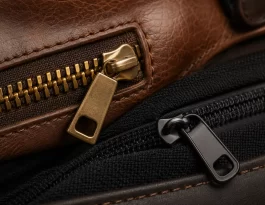
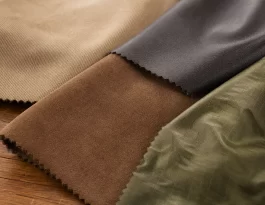
Threads and sewing. Recycled polyester thread and organic cotton thread are now standard options, and the thread choice is invisible in the product but auditable in the supply chain. Hardware. Brass and zinc alloy hardware is recyclable; choosing finishes with longer wear life (PVD over thin electroplating) extends the bag's life; some suppliers offer recycled-metal hardware. Lining. Recycled polyester (rPET) lining and organic cotton lining — the options covered in our lining guide — complete the interior story. Packaging. Dust bags in organic cotton, recycled-paper cartons, and minimal plastic move the bag's footprint meaningfully, and packaging is fully visible to customers. Finishing. Water-based edge paints and finishes, solvent-free adhesives, and low-VOC processes reduce the manufacturing footprint.
The professional approach is a whole-product sustainability spec: leather (tanning + tannery certification), thread, hardware, lining, packaging, and finishing all specified with verifiable standards. A brand that does the whole product honestly has a real story; a brand that puts an "eco" label on the leather and ignores everything else has a fragile one.
How to Source Sustainably as a Brand
Putting it all together, here is the sourcing playbook a brand can execute today:
- Define your sustainability spec — method (chrome-free/vegetable/certified chrome), certifications (LWG rating, REACH, OEKO-TEX), and recycled content targets. Write it into the tech pack and contract.
- Ask for the certificates, not the claims — LWG rating documents, REACH files, test reports. A supplier that hesitates on documentation is a supplier without documentation.
- Audit or verify the tannery — visit if possible, or use third-party audits; check the LWG certificate against the tannery's actual identity (certificate fraud exists).
- Verify the production batch — chrome-free claims should be tested on the actual production leather, not the sample; recycled content should be certified per batch.
- Budget for the premium — sustainable options cost more (see below); price the product accordingly and use the sustainability story to support the price.
- Build the honest story — document the whole chain (tanning, finishing, thread, hardware, lining, packaging) and communicate what is verifiable, with certificates linked.
Cost Structure of Sustainable Options
| Option | Typical cost premium | Notes |
|---|---|---|
| Certified chrome tannery (LWG) | +0–15% | Certification adds cost, but certified tanneries are often more efficient |
| Chrome-free tanning | +10–40% | Chemistry and smaller scale |
| Vegetable tanning | +30–100% | Time, yield, and tannin sourcing |
| Recycled leather fiber (quality) | +0–30% | Varies by content and binder |
| rPET/organic lining + packaging | +5–20% | Small per-bag impact |
Three observations. First, the cheapest sustainable step is often the tannery choice: switching to an LWG-certified chrome tannery costs little and delivers a verifiable environmental story. Second, the premium compounds — sustainable leather plus sustainable lining plus sustainable packaging can add 15–40% to material cost, which must be priced into the product, not absorbed. Third, the durability story pays for the premium: a $40 material-cost increase on a bag that lasts twice as long is a sustainability bargain, and the right marketing makes the customer see it that way.
The Consumer Shift: What Buyers Actually Care About
The sustainability conversation has moved from niche to mainstream, and the shape of that shift matters for how you position your leather. Understanding what buyers actually care about prevents both over-investing in the wrong story and under-delivering on the right one.
Younger consumers lead with values, not just price. Millennial and Gen Z buyers consistently rank sustainability and transparency among their purchasing criteria, and they research brands before buying — checking websites, reviews, and certifications. They are also more skeptical: a brand that makes a sustainability claim without evidence faces harsher judgment than a brand that makes no claim at all. For this audience, documentation is not a cost — it is the marketing.
Retailers are becoming the enforcers. Major retailers and marketplaces increasingly require suppliers to meet environmental and chemical standards — restricted-substance lists, LWG or equivalent certifications, and traceability documentation. What begins as a consumer preference becomes a commercial requirement: a brand that cannot document its chain may simply not be listed. This is the strongest practical reason to build verifiable sustainability now, before the requirement reaches your category.
Regulation is tightening. The EU's chemical and sustainability regulations are extending toward leather — REACH already governs chemicals in products, and broader due-diligence and eco-design rules are on the horizon. Brands selling into regulated markets should treat compliance documentation as a forward investment, not a paperwork burden. The brands that built the documentation early will absorb the new rules with a software update; the brands that did not will absorb them as a scramble.
Transparency is the new premium. The common thread across all three shifts is transparency: consumers, retailers, and regulators all want to see the chain. A brand that can show its tannery's LWG certificate, name its suppliers, and explain its process is offering something competitors with a bare "eco" label cannot match. In a market of slogans, documentation is the differentiator.
Building a Sustainability Roadmap for Your Brand
Sustainability does not have to be all-or-nothing — a phased roadmap lets you improve credibly while keeping your line profitable. Here is the sequence we recommend to clients:
Phase 1 — Verify what you have (0–3 months). Audit your current tannery and supply chain: What is the LWG rating? What certifications exist? What is the leather's actual composition? Most brands discover they already have more verifiable sustainability than they communicate — the first win is often documentation, not change.
Phase 2 — Upgrade the tannery (3–6 months). Move to an LWG-certified tannery if you are not already using one, and add REACH/OEKO-TEX documentation to the spec. This is the highest-impact, lowest-cost step: a modest price change buys a verified environmental story and retailer access.
Phase 3 — Change the chemistry (6–12 months). Introduce chrome-free or vegetable-tanned options where they fit the product line — a chrome-free version of a core style, a vegetable-tanned capsule for the heritage story. Test performance, price the premium, and let the market tell you where the demand is.
Phase 4 — Whole-product sustainability (12–24 months). Extend the spec beyond the leather: rPET or organic lining, recycled thread, sustainable packaging, water-based finishes. Publish the chain with certificates, and connect the story to durability and repair.
Each phase is independently valuable and independently marketable. The roadmap's value is that every step adds verifiable substance — so at any point, your sustainability claims are backed by documentation, not aspiration. And because the phases build on each other, the brand that starts now is the brand with the credible story when the next consumer, retailer, or regulation asks.
FAQ
Is vegetable-tanned leather always more sustainable than chrome-tanned?
A: Not automatically. Vegetable tanning avoids chromium but uses more time, water, and often more land via tannin sourcing. A certified chrome tannery with effluent treatment can outperform an uncertified vegetable tannery. Verify the tannery, not just the method.
What is chrome-free leather?
A: Leather tanned without chromium — using alternatives like titanium, zirconium, or aldehyde chemistry. It offers near-chrome performance with a chrome-free environmental profile, and is increasingly demanded by retailers and regulations.
What does LWG certification prove?
A: LWG audits a tannery's environmental performance — energy, water, effluent, chemicals, waste — and issues a Gold/Silver/Bronze rating. It is the leather industry's anchor certification and the most powerful verifiable claim a tannery can offer.
Is "vegan leather" more sustainable than leather?
A: Usually not. Most "vegan leather" is PVC or PU — plastic-based, petroleum-derived, and non-biodegradable. Its footprint is frequently worse than leather's, and its durability is lower. The label sounds green; the lifecycle is not.
How much more does sustainable leather cost?
A: A certified chrome tannery adds little (0–15%); chrome-free adds 10–40%; vegetable tanning adds 30–100%. The premium compounds with sustainable lining and packaging, so price the whole product's sustainability story.
What should I demand from my supplier to verify sustainability?
A: The LWG certificate (verify it against the tannery), REACH documentation, OEKO-TEX or equivalent product certificates, test reports for chrome-free claims, and recycled-content certificates (GRS) where claimed. Documentation is the difference between a claim and a spec.
Does vegetable-tanned leather perform differently?
A: Yes — it is firmer, holds structure better, develops a patina, and is less water-resistant than chrome-tanned. It suits structured, heritage, and craft designs; soft, water-resistant fashion bags are better served by chrome-free or certified chrome.
How do I communicate sustainability honestly to customers?
A: Lead with verifiable specifics — "LWG Gold tannery," "chrome-free, tested," "recycled-content lining, GRS-certified" — and connect them to durability: "built to last, designed to be repaired." Avoid unverifiable words like "eco" and "sustainable" as standalone claims.
Writing Sustainability into Your Spec and Marketing
Sustainability belongs in two documents: the tech pack (as a spec) and the marketing (as a verified story). Here is the template:
In the tech pack and contract:
- Leather: method (chrome-free/vegetable/certified chrome), tannery, LWG rating required, REACH documentation required
- Chrome-free claim: test required on production batch
- Recycled content: percentage and GRS certificate required
- Lining/thread/hardware/packaging: sustainable options per whole-product spec
- Substitution rule: no sustainability downgrade without written approval
In marketing:
- Lead with verifiable claims: certifications, test results, tannery names
- Connect sustainability to durability: the bag's lifespan is its footprint divided over years
- Show the chain: a simple "how this bag is made" page with the certifications linked
- Avoid unverifiable vocabulary: "eco," "sustainable," "green" without specifics
The unifying rule: a sustainability claim you can document is an asset; a claim you cannot document is a liability. Every certificate in your spec is a sentence you can print; every slogan in your marketing without a certificate is a risk.
Conclusion
Eco-friendly tanning is no longer a niche — it is the mainstream's direction, and the options are real: certified chrome tanneries that manage their footprint responsibly, vegetable tanning that tells the natural story, chrome-free chemistry that answers the chromium question, and recycled materials that keep waste out of landfill. The industry's complexity means there is no single "green" answer — but there is a professional method: choose the method that fits the product, verify the tannery with certifications, document the whole chain, and let durability carry the argument.
For brands, the opportunity is clear. Sustainability is a buying criterion, and leather — with its byproduct origin, its durability, and its growing certification ecosystem — has a genuinely defensible story when it is told with evidence. The brand that sources verified leather, designs for longevity, documents its chain, and communicates honestly will not just meet the demand for sustainability — it will set the standard its competitors have to chase.
Want to source sustainable leather with confidence? Contact our factory — we will prepare samples in vegetable-tanned, chrome-free, and certified-chrome leather with their LWG and test documentation, show you our whole-product sustainability options (thread, hardware, lining, packaging), and help you build a verifiable sustainability story for your line.