How Leather Grading Affects Bag Pricing and Quality
Two bags that look identical in a product photo can differ in factory price by 300% — and the single largest reason is leather grade. Leather is one of the few materials in the world where the raw input varies hide by hide: no two hides are the same, and the difference between a clean, tight-grained hide and a scarred, loose one determines whether the final bag sells for $80 or $300. Grading is the system the industry uses to sort that variation, and anyone who buys, sells, or specifies leather bags without understanding it is negotiating blind.
This guide explains leather grading the way a factory sees it: what the grades actually measure, how hides are sorted from A to C, how grade drives material cost and cutting yield, what grade means for the finished bag's quality, and — most importantly — how you can use grading as a sourcing tool to get the quality you pay for and avoid the traps that inflate your cost. Every number and example here comes from real tannery and factory practice, so you can take it straight into your next negotiation.
What Leather Grading Actually Is
Leather grading is the systematic assessment of a hide's quality for a specific use. The tannery examines each hide after tanning and drying and assigns it a grade based on visible characteristics: the number and severity of defects, the quality of the grain, the consistency of color, and the usable area after defects are excluded. The grade then determines which products the hide is sold into — a grade A hide goes to luxury handbag brands, while a grade C hide may end up as embossed budget material or even be rejected for bag use entirely.
There is no single universal grading standard. Different tanneries, regions, and market segments use different systems — some use letters (A, B, C), some use numbers (1, 2, 3), and some use descriptive terms ("select," "choice," "standard"). What matters for a buyer is not the letter but the criteria behind it. A "grade A" from one tannery can be meaningfully different from a "grade A" from another, which is why serious sourcing always pairs a grade with a written spec and a physical sample.
Three principles define honest grading. First, grading is comparative, not absolute — it ranks hides within a tannery's production, so the same physical hide could be grade A at a low-end tannery and grade C at a high-end one. Second, grading is for a purpose — a hide graded for garment use (soft, thin, drapey) is not the same selection as one graded for bag use (firm, thick, structured). Third, grading happens before finishing — the grade reflects the raw hide, and the finish applied afterward can mask or exaggerate it. Understanding these three principles protects you from treating a grade label as a universal truth.
The Grading Criteria in Detail
When a grader evaluates a hide, they work through a checklist of observable characteristics. The criteria are the same across most tanneries, even when the labels differ:
| Criterion | What the grader checks | Why it matters |
|---|---|---|
| Surface defects | Scars, scratches, insect bites, brands, cuts | Directly reduce usable area and visible quality |
| Grain quality | Tightness, evenness, natural texture | Loose grain fails under use; tight grain holds shape |
| Thin spots | Localized weak areas, especially at belly | Cause tears in production and early failure in use |
| Color consistency | Evenness of dye take-up across the hide | Inconsistent color means rejected panels |
| Stretch and looseness | How much the hide stretches; grain break | Loose leather sags in bags; tight leather holds form |
| Usable area | Square footage after defects are excluded | The true cost of the hide depends on usable yield |
The weighting of these criteria depends on the intended product. For a bag line, grain tightness and usable area dominate because bags are made from large, visible panels. For a wallet line, surface defects matter less because small pieces can be cut around them. For a garment line, softness and evenness dominate. When you ask a tannery for "bag-grade leather," you are asking them to weight these criteria for your use — and a good tannery will grade a separate selection for you rather than sell you a garment-grade hide at a bag-grade price.
Two criteria deserve special attention because they are the ones buyers misunderstand most often. Usable area is the real price driver: a grade A hide might have 92% usable area, while a grade C hide drops to 70%, meaning the same square footage of finished material costs 30% more on the C hide once waste is counted. Grain tightness is the quality driver: it determines whether a bag keeps its shape over years or sags and creases permanently. Both are invisible in a product photo and obvious on the cutting table.
Hide Anatomy: Where Grades Come From
To understand why hides vary, you need to understand the anatomy of a hide — and the fact that a single hide contains different quality zones. A cowhide is not uniform; its quality varies by region of the animal, and the grade of a hide is essentially the average of its zones weighted by how much of each zone is usable.
| Zone | Location | Quality | Best use |
|---|---|---|---|
| Back/Croupon | Center back, over the spine | Best: tight grain, few defects | Large visible panels (bag fronts) |
| Shoulder | Upper front, behind the neck | Good: some grain looseness | Medium panels, gussets |
| Belly | Lower sides, under the legs | Weakest: loose, stretchy, thin | Small pieces, linings, trims |
| Neck/Head | Front end | Variable: wrinkle lines | Non-visible parts |
A hide's grade is driven by how much of its area falls in the good zones versus the weak ones. A hide with a wide, clean croupon grades A; a hide with the croupon scarred by barbed wire or insect damage grades B or C even if the rest is fine — because the best zone, the one that would have produced the large premium panels, is compromised.
This zone structure explains several things buyers observe. It explains why a "full hide" and a "side" (half a hide, cut along the backbone) are priced differently — sides let the buyer avoid the belly entirely. It explains why a big bag costs disproportionately more than a small one: a tote needs the clean croupon zone, while a wallet can be cut entirely from smaller, lower-grade pieces. And it explains the most important pricing rule in leather: the size of your panels determines which hides you can use, and therefore what grade you must buy.
The A/B/C Grade System Explained
While every tannery has its own labels, the most common system in bag production uses A, B, and C grades. Here is what they typically mean in practice:
| Grade | Typical characteristics | Usable area | Typical end use |
|---|---|---|---|
| A | Clean surface, tight grain, minimal defects, even color | 85–95% | Luxury bags, large panels, high-end small goods |
| B | Moderate defects (small scars, minor grain variation), good overall | 75–85% | Mid-range bags, medium panels, standard lines |
| C | Significant defects, loose or uneven grain, color variation | 60–75% | Budget bags, embossed products, trims and linings |
| Reject | Structural problems: holes, tears, severe thinness | Below 60% | Sold as "leather for crafts," or downgraded to fiber |
Two important observations. First, the grade bands overlap in reality: a hide on the A/B borderline can be graded either way depending on the tannery's inventory and the buyer's tolerance. Second, grades are not fixed attributes of the hide — they are a business decision by the tannery, balancing yield, inventory, and customer relationships. A tannery that needs to move inventory may grade generously; a tannery protecting its brand may grade strictly. This is precisely why independent verification matters.
For a bag brand, the practical reading is: grade A is the premium that buys large, clean panels and consistent appearance; grade B is the workhorse that most mid-market bags are actually made from; grade C is where the savings come from but also where the quality risk lives. The skill in sourcing is not avoiding B and C — it is knowing which grade your design genuinely requires, and buying exactly that, neither more nor less.
How Grade Drives Material Cost
Grade is the single largest variable in leather material cost. The relationship is not linear — the gap between A and B is usually larger than the gap between B and C, because the supply of clean, premium hides is scarce while the supply of imperfect hides is abundant. Here are realistic bulk tannery price bands for bag-grade cowhide (2026, USD per square foot, finished leather):
| Grade | Price per sq ft (typical range) | Relative to grade B |
|---|---|---|
| A (premium) | $3.50 – $5.50 | +40–80% |
| B (standard) | $2.50 – $3.80 | Baseline |
| C (economy) | $1.80 – $2.80 | −25–35% |
| Reject/split | $1.00 – $1.80 | −50%+ |
Three compounding effects make the real cost gap even wider than the price per square foot suggests:
1. Yield loss multiplies the price difference. If a grade A hide yields 90% usable area and a grade C hide yields 65%, the effective cost per usable square foot rises from $4.90 to $3.60 for the C hide — but wait, that makes C cheaper per usable foot, so why is grade A so expensive? Because usable area is not the whole story: usable area on a C hide is scattered in small, awkward pieces, which brings us to the second effect.
2. Panel size limits what you can cut. A tote front needs a clean panel roughly 40 × 35 cm. On a grade A hide, you can cut several of these from the croupon. On a grade C hide, the clean zones are smaller and fragmented — you may not be able to cut a single large front panel from the good areas, forcing you to either cut the front from a marginal zone (quality risk) or use the hide for smaller products only. The true cost of a hide for a specific design is not its price — it is the number of usable panels of your size that come out of it.
3. Sorting and labor costs differ. Grade A hides are cut by skilled workers with careful matching; grade C hides are cut fast with less concern for appearance, but they generate more rejects in stitching and more QC failures downstream. Factories build these expected losses into the quote.
The bottom line: a mid-size tote that needs about 1.5 square feet of leather can have a material cost of $6–$9 in grade A, $4.5–$6.5 in grade B, and $3.5–$5.5 in grade C — before labor. On a 1,000-unit run, the grade decision moves your material budget by thousands of dollars, and the quality difference is visible on every single bag.
Yield, Cutting Efficiency, and Hidden Waste
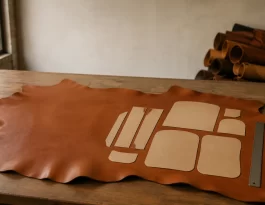
Yield — the percentage of a hide that actually becomes usable panels — is where grade quietly changes your economics. A factory does not buy leather by the square foot of hide; it buys leather by the number of panels that survive cutting. The gap between hide area and panel output is where the money really goes.
Consider a real production scenario. A factory cuts a medium tote (front, back, gussets, handles, trims) needing about 1.5 square feet of finished leather per bag. On a grade A hide of 22 square feet with 90% usable area and large clean zones, a skilled cutter may extract 12–14 complete bag sets — roughly 75–80% of the theoretical maximum, with the loss coming from zone constraints and pattern nesting. On a grade C hide of the same size with 65% usable area scattered in small zones, the same cutter may extract only 7–9 bag sets — because the front panels cannot be cut from fragmented clean areas, and more of the hide goes to trims, linings, and rejects.
That difference is the hidden cost of grade. The grade A hide costs 50% more per square foot but delivers 60% more finished bags per hide — making its effective cost per bag lower than the grade C hide for this particular design. This is the single most counterintuitive fact in leather sourcing: for large-panel designs, premium grade can be cheaper per finished bag than economy grade. For small products like wallets, the reverse is true — small panels fit in the fragment zones, so grade C becomes genuinely economical.
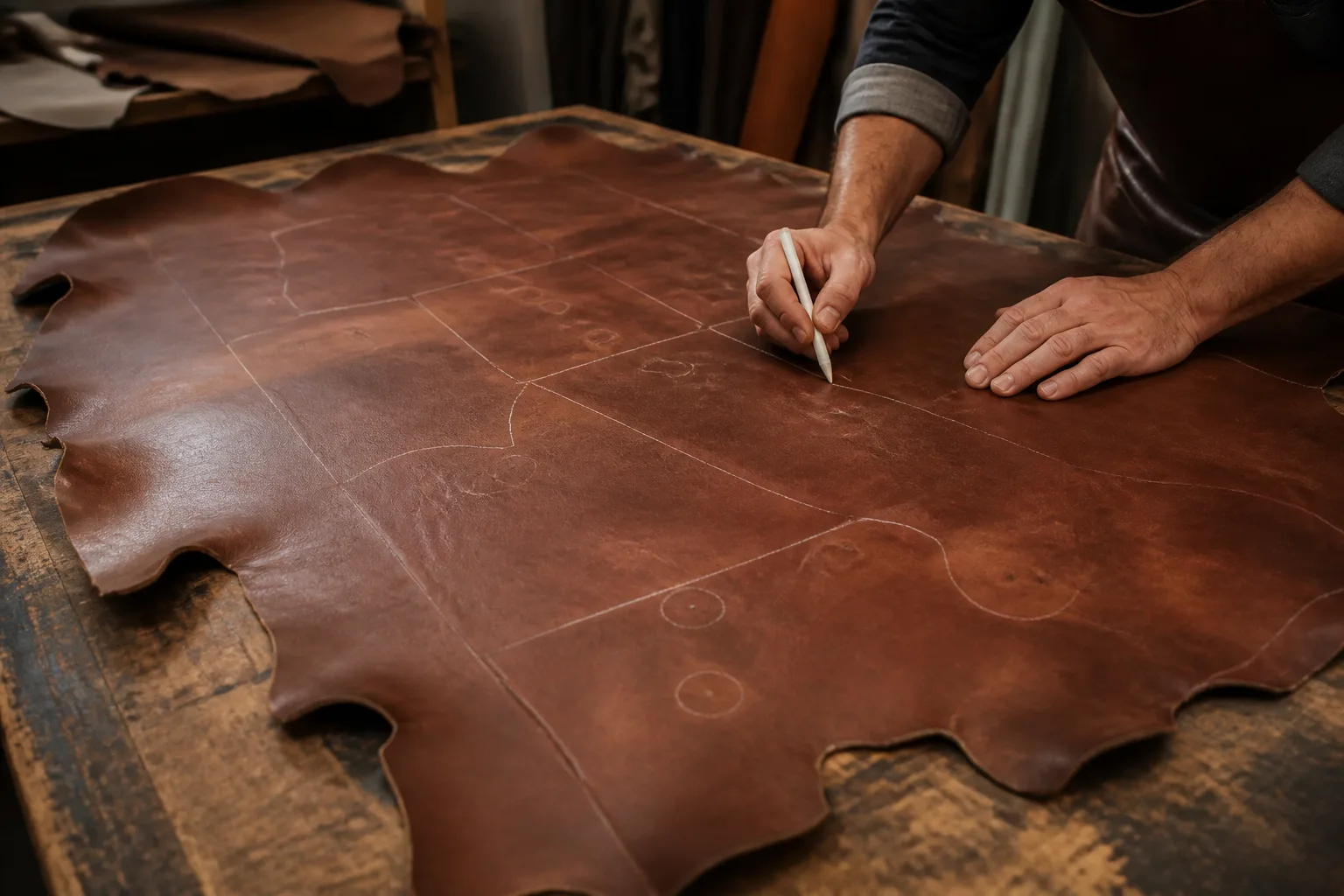
The professional method is to quote by "cost per usable panel set," not by price per square foot. Ask your factory: how many complete bag sets does this grade yield per hide, and what is the reject rate in cutting and stitching? A factory that answers with real numbers is doing honest grading economics; a factory that answers only with a per-square-foot price is leaving the real cost hidden.
Waste also flows into the finished bag's consistency. Grade A hides produce uniform panels, so a batch of 500 bags looks like 500 copies of the sample. Grade C hides force cutters to use panels from different zones with different tones and textures, so bags in the same batch can visibly differ — and a batch with visible variation generates customer complaints, returns, and brand damage that no cost saving can justify. Consistency, like yield, is a hidden line item in the grade decision.
What Grade Means for Finished-Bag Quality
The grade of the leather you choose shows up in the finished bag in four observable ways — and knowing them lets you inspect a sample like a professional.
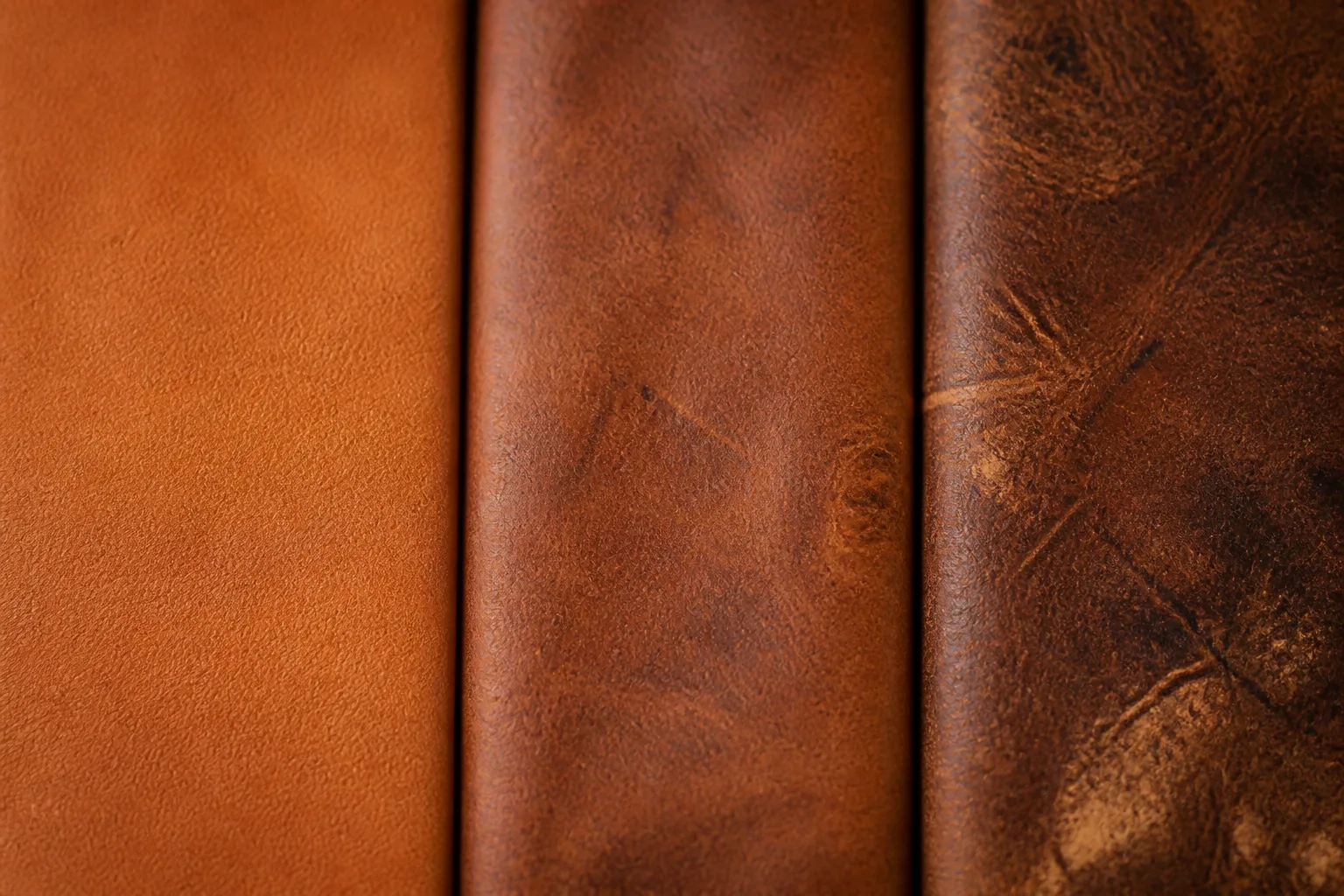
1. Surface appearance. Grade A hides give bags a clean, even, premium surface. Grade B hides show occasional natural marks — which many brands actually market as "natural character." Grade C hides show visible scars and blemishes that finishing must hide, and when it cannot, they show through as defects customers notice. The line between "natural character" (acceptable, even desirable) and "defect" (a reason for return) is a brand decision, but it is a decision you should make consciously, not one the leather makes for you.
2. Shape retention. Grain tightness is a grading criterion because it predicts structure. A bag cut from tight-grain (higher grade) leather holds its silhouette for years; a bag cut from loose-grain (lower grade) leather sags, bags out at the seams, and develops permanent creases. This is a durability difference customers feel within months, and it is the hardest quality difference to repair after manufacturing.
3. Edge and stitching behavior. Dense, tight hides cut cleanly and finish beautifully at the edges. Loose hides fuzz at the edges, hold stitches less firmly, and are more prone to stretching at seams. The difference is visible in edge quality — one of the first things an experienced buyer checks on a sample.
4. Batch consistency. As discussed, grade drives how similar bag #1 and bag #500 look. For retail and e-commerce, consistency is trust: customers compare the bag they receive with the product photo and with each other. Inconsistent batches produce bad reviews even when every individual bag is "acceptable."
| Quality dimension | Grade A | Grade B | Grade C |
|---|---|---|---|
| Surface appearance | Clean, premium | Natural marks | Visible blemishes |
| Shape retention | Excellent | Good | Fair |
| Edge/stitch quality | Excellent | Good | Variable |
| Batch consistency | High | Moderate | Low |
| Customer perception | Premium | Natural | Budget |
None of this says grade C is "bad leather" — it says grade C is different leather, suitable for different products at different price points. The quality failure is not in using grade C; it is in charging grade A prices for it, or in using it where the design demands the performance only higher grades provide.
Grade vs Finish: Two Different Axes
One of the most common sourcing confusions is mixing up two separate dimensions: grade (the raw hide quality) and finish (what is applied to the surface). A hide's grade describes the leather underneath; the finish describes the treatment on top — and the two interact in ways that can either rescue or disguise a hide.
A high-quality finish can partially compensate for a lower grade. A grade B hide with a well-executed pigmented finish — uniform color, embossed grain, protective coating — can produce a bag that looks clean and consistent. This is how budget and mid-market products deliver decent appearance: not by buying premium hides, but by finishing average hides well. The limitation is that finish cannot fix structure: a loose-grain hide finished beautifully will still sag, and a coated surface cannot replace the natural patina of a quality hide.
Conversely, a poor finish can ruin a high grade. A grade A hide finished with cheap pigment loses its natural character, and a poorly applied coating can crack, peel, or yellow — destroying the value of the premium leather underneath. This is why a cheap factory can make an expensive hide look cheap, and a skilled factory can make a mid-grade hide look expensive.
For a buyer, the lesson is to evaluate both axes separately. When you sample, ask two questions: "What grade is this hide?" and "What finish is this?" A premium-priced bag should be premium on both axes; a value-priced bag is fine on the finish axis with an honest grade. The dangerous product is the one that prices like premium on both but delivers economy on both — and that is exactly what mislabeling produces.
How Factories Grade Incoming Leather
Grading does not end at the tannery — a serious factory re-grades every incoming batch. The tannery's grade reflects its own assessment; the factory's assessment must reflect the requirements of the specific order it is cutting. The factory inspection process is the buyer's second line of defense after the tannery's own grading.
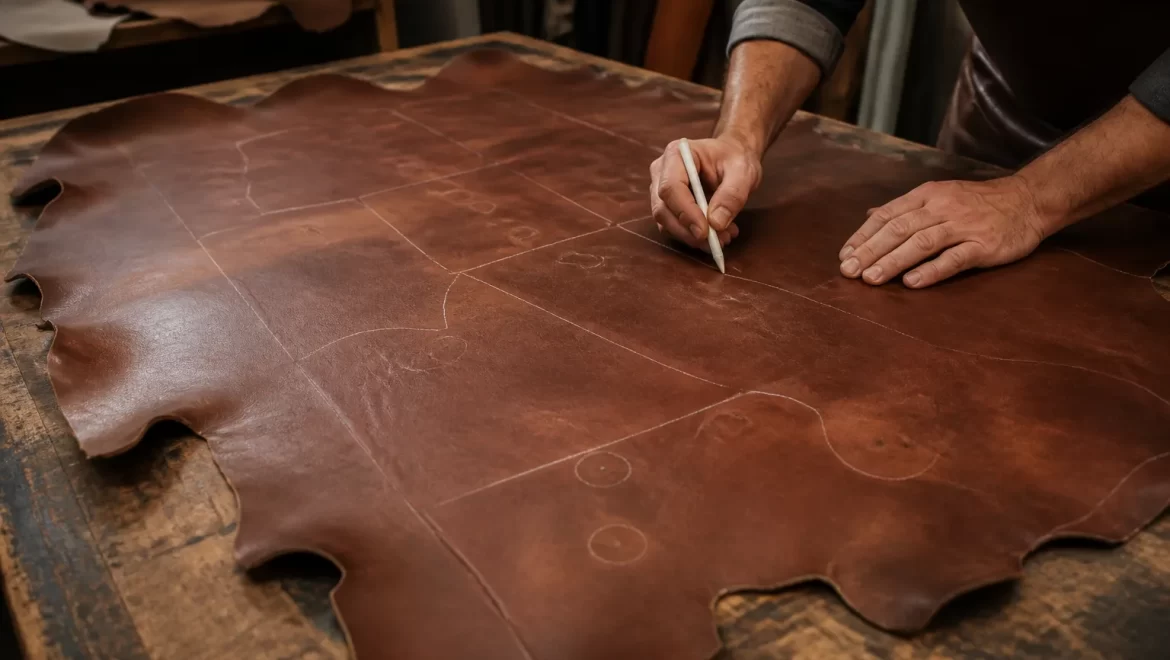
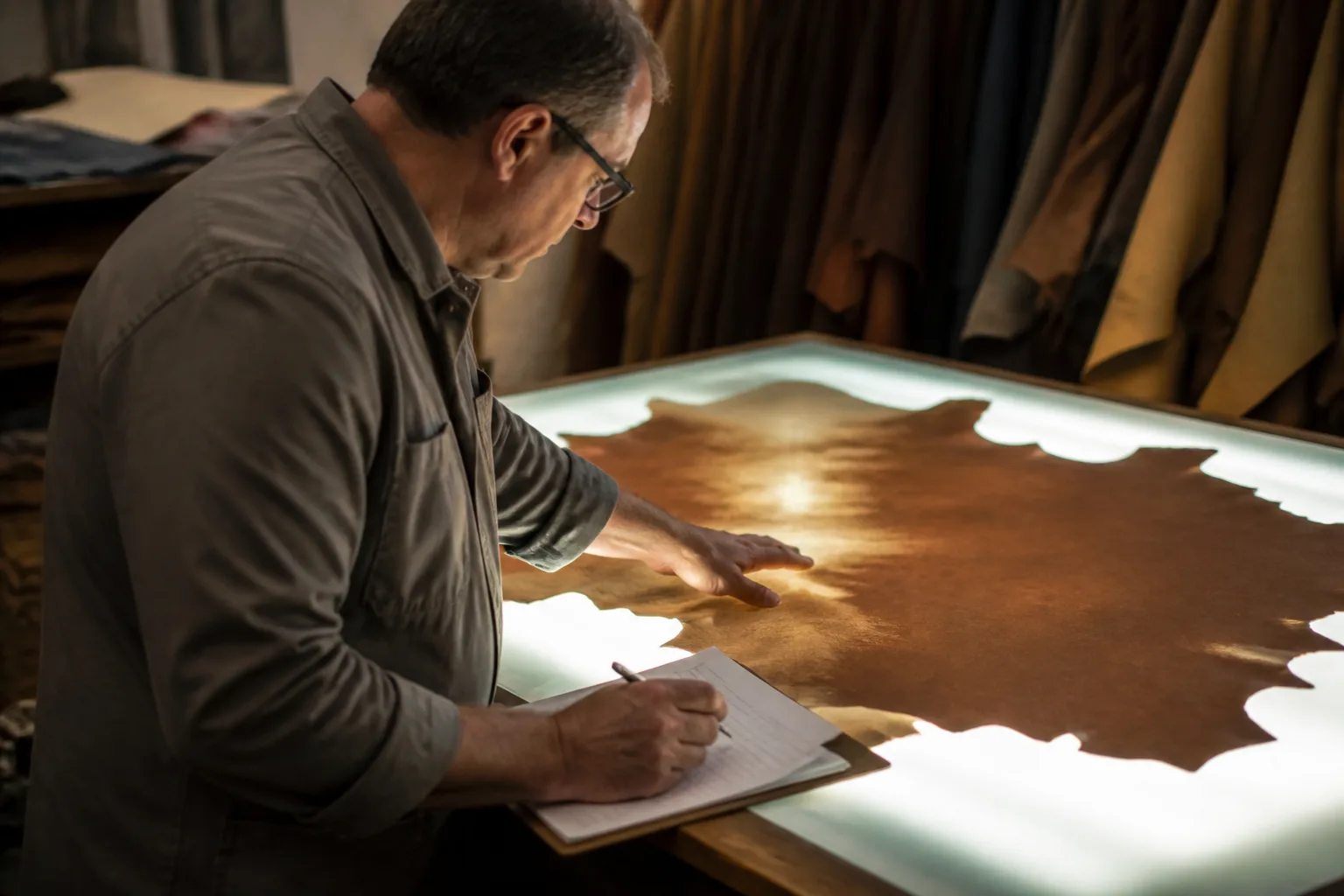
The inspection workflow typically runs like this. Incoming inspection: every hide is unrolled and examined on a light table — a backlit surface that reveals thin spots, holes, and grain damage invisible in normal light. Grading for the order: hides are sorted against the order's spec — if the order requires grade A front panels, hides are allocated accordingly, and anything below spec is set aside for renegotiation or return. Defect marking: acceptable defects are chalked or flagged so cutters avoid them. Batch recording: hide counts, grades, and usable areas are logged per order, which becomes the audit trail when a dispute arises.
This process is also where grade inflation gets caught. If a tannery ships "grade A" hides that a factory's inspectors grade as B, the factory documents the discrepancy and negotiates a credit. Factories that inspect are protecting themselves — and, by extension, protecting the buyer who works through them. A factory that skips incoming inspection is either trusting the tannery blindly (rare in practice) or quietly passing the grading risk downstream to the buyer.
When you audit a factory, ask to see the incoming inspection area and the light table. Ask how many hides in the last batch were downgraded and why. A factory that can answer with records is operating with grading discipline; a factory that cannot show you an inspection workflow is a factory where your grade spec is a hope, not a guarantee.
How Buyers Should Use Grading in Sourcing
Grading is not just the tannery's job — it is the buyer's most powerful sourcing tool, if used deliberately. Here is the professional playbook.
1. Specify the grade in the tech pack. Write the grade (A/B/C or the tannery's own label), the criteria that matter for your design (grain tightness, usable area, color consistency), and the acceptable defect level. Ambiguity in the spec is an invitation for the factory to interpret in its own favor.
2. Buy grade for the panel, not the product. The same bag in different sizes needs different grades — a large tote needs grade A panels; a matching wallet can use grade B or C. Buy per component, not per product, and your material cost drops without touching visible quality.
3. Lock the grade at sampling. The production-level sample must come from the same grade and, ideally, the same tannery batch you will use in production. A sample made from hand-picked grade A hides while production runs on grade C is the classic sample-versus-production bait-and-switch.
4. Verify incoming material. Contract the right to inspect hides at the factory (or use a third-party inspector) before cutting begins. Compare delivered grade against the spec, and check usable area with your own yield calculation.
5. Track grade economics per design. Build a simple spreadsheet: hide price, usable area, panel sets per hide, reject rate — and compare cost per finished bag across grades for each of your designs. The numbers will tell you where premium grade pays for itself and where economy grade is genuinely the smart buy.
The unifying idea: grade is a specification you control, not a fact you accept. A buyer who specifies, verifies, and tracks grading turns the most volatile cost in leather manufacturing into a predictable, negotiated variable.
Cost Structure Examples: Same Bag, Three Grades
To make the grading economics concrete, here is a realistic cost breakdown for the same medium tote (panel area ~1.5 sq ft) produced in three different grades. The numbers are representative of bulk factory costing in 2026 and are meant to show the structure — your actual quote will depend on your design, volume, and factory.
| Cost component | Grade A | Grade B | Grade C |
|---|---|---|---|
| Leather, per sq ft (hide price) | $4.20 | $3.00 | $2.20 |
| Effective leather cost per bag (after yield loss) | $8.40 | $6.00 | $5.10 |
| Lining + hardware + thread | $4.50 | $4.50 | $4.50 |
| Cutting labor (grade-adjusted) | $2.80 | $2.40 | $2.10 |
| Stitching + assembly labor | $9.00 | $9.00 | $9.00 |
| Edge finishing | $2.50 | $2.20 | $1.80 |
| QC + packaging | $2.00 | $2.00 | $2.00 |
| Factory cost per bag | $29.20 | $26.10 | $24.50 |
| Expected reject rate | 2% | 5% | 9% |
| Effective cost incl. rejects | $29.80 | $27.50 | $26.90 |
The pattern is instructive. The total cost spread between grades is narrower than the material spread — about 11% between A and C in this example — because labor dominates. Yet the retail value spread is far wider: the same bag in grade A can credibly retail at $280–$350, in grade B at $180–$240, and in grade C at $120–$160. The grade decision is not a cost decision — it is a positioning decision that happens to show up in cost.
Three strategic readings of this table. First, premium grade is not a luxury you cannot afford — it is the cheapest way to raise your retail price. Upgrading a $26 bag to a $29 bag (material share of the upgrade: ~12%) can justify a $100 retail increase when the grade is visible and honest. Second, grade C's reject rate is the hidden tax — 9% rejects on a 1,000-unit run means 90 bags to remake, with material and labor spent twice. Third, labor is your floor — below a certain price, you cannot buy quality construction regardless of grade, which is why "cheap leather, cheap labor" products fail on both axes.
Grading Traps and Mislabeling
Grading is a system of trust, and trust attracts abuse. Here are the traps to watch for — each one costs real money when it catches you.
The grade inflation game. A tannery or factory quotes "grade A" hides that its own inspectors would grade B. The simplest protection: contract a third-party inspection, or have your factory re-grade on arrival and tie payment to the actual grade received.
The hand-picked sample. The sample bag is made from the three best hides in the tannery; production runs on the average. Always require the production-level sample from the actual production batch — the same grade, the same tannery, the same finish run.
The "select" misdirection. Some sellers use premium-sounding labels — "select," "choice," "superior" — that sound like grades but are not. Ask what the label means in measurable terms: defect count per hide, usable area percentage, grain tightness rating. If the seller cannot define it, the label is marketing.
The finished-hide disguise. Heavily coated or embossed hides can hide a grade C surface completely — until the coating wears and the defects show. Ask for the un-finished or lightly finished version of the same hide for comparison, and check the cross-section.
The mixed batch. A "grade A" order arrives as a mix of A and B hides, relying on the buyer not to inspect every hide. Spot-check a statistically meaningful sample — 10–20% of the batch, measured against your spec.
The price-only negotiation. Negotiating only the per-square-foot price invites the seller to quietly shift the grade. Negotiate grade, yield, and reject rate together — the price is the last variable, not the first.
The common thread: every trap works because the buyer treats the grade label as a fact instead of a claim. Treat every grade as a claim, verify it against a written spec, and you close down the entire playbook.
FAQ
What is the difference between leather grade and leather type?
A: Grade describes the quality of the specific hide (A/B/C, based on defects, grain, yield). Type describes the cut and finishing (full-grain, top-grain, split). A hide has both: you can buy grade A full-grain or grade C full-grain — and the grade explains why two "full-grain" bags cost so differently.
Which leather grade should a new bag brand use?
A: Grade B is the pragmatic default for a first line: good quality at a workable price, with natural character that mid-market customers accept. Upgrade to grade A for large panels and premium positioning; drop to grade C only for small products or clearly budget lines.
Is higher grade always better value?
A: No. For large-panel designs, grade A can be cheaper per finished bag (better yield, lower rejects). For small products, grade C is genuinely more economical. Value depends on the design's panel sizes and quality requirements, not the grade alone.
How can I verify the grade of leather I receive?
A: Light-table inspection reveals defects and thin spots; a cross-section shows grain density; and a yield test (cutting a known pattern from a hide sample) measures usable area. Contract third-party inspection for high-value orders.
Why do two tanneries grade the same hide differently?
A: Grading is comparative within each tannery's production and purpose. The same hide can be grade A at a low-end tannery and grade C at a high-end one. Always pair a grade with a written spec and physical sample.
Does grade affect the bag's warranty risk?
A: Yes, significantly. Lower grades have higher defect rates, looser grain (sag risk), and more visible blemishes — all of which generate returns. Build expected reject rates and return allowances into your costing for each grade.
Can finishing make a lower grade look like a higher one?
A: Visually, sometimes. A quality pigmented finish can make a grade B or C hide look clean and even. Structurally, no — finish cannot fix loose grain or weak zones. Judge both the surface and the underlying hide.
What should I put in the contract about grading?
A: The grade, the criteria behind it (defects per hide, usable area, grain tightness), the right to inspect before cutting, the reject-rate commitment, and the remedy if the delivered grade falls short (credit or rework). A grade in the contract without verification rights is a wish.
Building a Grading-Aware Sourcing Strategy
The final step is to make grading part of your standing sourcing process rather than a one-time consideration. A grading-aware strategy has four pillars:
1. Know your grade requirements per design. Build a matrix: for each product in your line, the minimum grade, the panel sizes that drive it, and the finish requirements. This matrix becomes the reference for every quote and every sample approval.
2. Standardize your verification workflow. Every production batch goes through: grade spec review → incoming inspection (yield and defect check) → production-level sample approval → spot-check during cutting. Make the workflow a contract clause, not a favor.
3. Track grade economics continuously. Maintain the cost-per-finished-bag model per design and per grade, updated with real yield and reject data from each production run. Over time, you will know exactly what each grade really costs you — including the hidden lines.
4. Build long-term relationships with graders. Work with a small number of tanneries and factories whose grading you have verified across multiple orders. Grading trust is earned in batches, and a supplier who has been honest through five orders is worth more than a cheaper quote from an unknown one.
The payoff is compound: better margins (buying the right grade, not the cheapest), better quality (specifying what you need, not hoping), fewer disputes (verification rights), and stronger positioning (honest grading as a brand asset). In a market where most competitors buy labels instead of grades, the buyer who understands grading is playing a different game — and it is a game you can win.
Conclusion
Leather grading is the invisible engine of bag pricing. It determines what a hide costs, how much of it becomes usable panels, how consistent your bags are, how they hold their shape, and how long they last — and it explains why two bags that look identical in photos can differ in price by 300%. The grade is not a fixed fact handed down by the tannery; it is a specification you choose, a claim you verify, and an economics model you manage.
For buyers, the professional path is clear: understand the criteria, specify the grade in your tech pack, verify what arrives, and track the real cost per finished bag across grades. For factories, the same discipline is how reputations are built. And for brands, honest grading is not a cost — it is a positioning advantage that customers can feel in the hand and trust in the purchase. The bag that wins the market is rarely the one with the best marketing; it is the one whose grade, price, and quality finally tell the same story.
Ready to put grading to work for your line? Contact our factory with your designs — we will prepare a grade-by-grade cost comparison for your specific bags, send samples of each grade from the same tannery, and walk you through our incoming inspection records so you can verify exactly what you are buying.