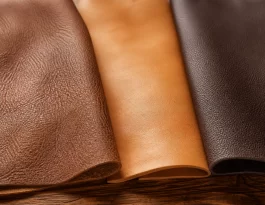
Vegetable-Tanned vs Chrome-Tanned Leather: Impact on Bag Quality and Durability
Every leather bag you have ever held was made possible by one invisible step: tanning. Before tanning, a hide is little more than raw protein that rots, stiffens, and hardens within days. Tanning transforms that unstable material into the supple, durable leather we use to build bags — and the method chosen changes everything downstream: how the bag feels in the hand, how it ages, how it reacts to rain, how much it costs, and even how it is cut and stitched on the factory floor.
For bag brands, the tanning question usually comes down to two names: vegetable tanning and chrome tanning. These two methods dominate the market — chrome-tanned leather accounts for roughly 80–85% of global leather production, while vegetable tanning holds a smaller but premium share. Yet percentage of production says nothing about which is right for your bag line. That depends on the bag, the customer, and the story you are selling.
This guide explains both processes from a bag manufacturer's perspective: what actually happens inside the tannery, how the two leathers differ in strength, patina, water resistance, workability, and cost, and how to match each one to the right bag styles. By the end, you will know exactly what to specify on your next tech pack — and what questions to ask your tannery before you commit.
What Tanning Actually Does
To understand why tanning method matters, you need a one-paragraph lesson in hide chemistry. A raw hide is mostly collagen — long protein fibers bundled into a network that gives skin its strength. Untreated, that network is vulnerable: bacteria attack it, water swells it, and drying makes it stiff as a board. The fibers are also "sticky" — once dried, they bond together and the hide becomes inflexible and unusable.
Tanning solves this by inserting stabilizing agents between the collagen fibers. These agents — the tannins — cross-link the protein chains so they can no longer rot or bond irreversibly. The leather keeps its flexibility when dry, resists decay, and gains the durability we expect from a quality bag.
The two dominant methods use completely different chemistry:
| Method | Stabilizing agent | Typical duration | Water resistance |
|---|---|---|---|
| Vegetable tanning | Plant tannins (tree bark, leaves, fruit) | 30–60+ days in pits/drums | Low-moderate; absorbs water |
| Chrome tanning | Chromium salts (chromium III sulfate) | Hours to 2–3 days | High; water-repellent fibers |
That difference in chemistry — slow, organic, water-loving versus fast, mineral, water-resistant — drives nearly every practical difference you will see in the finished bag.
Vegetable Tanning Explained
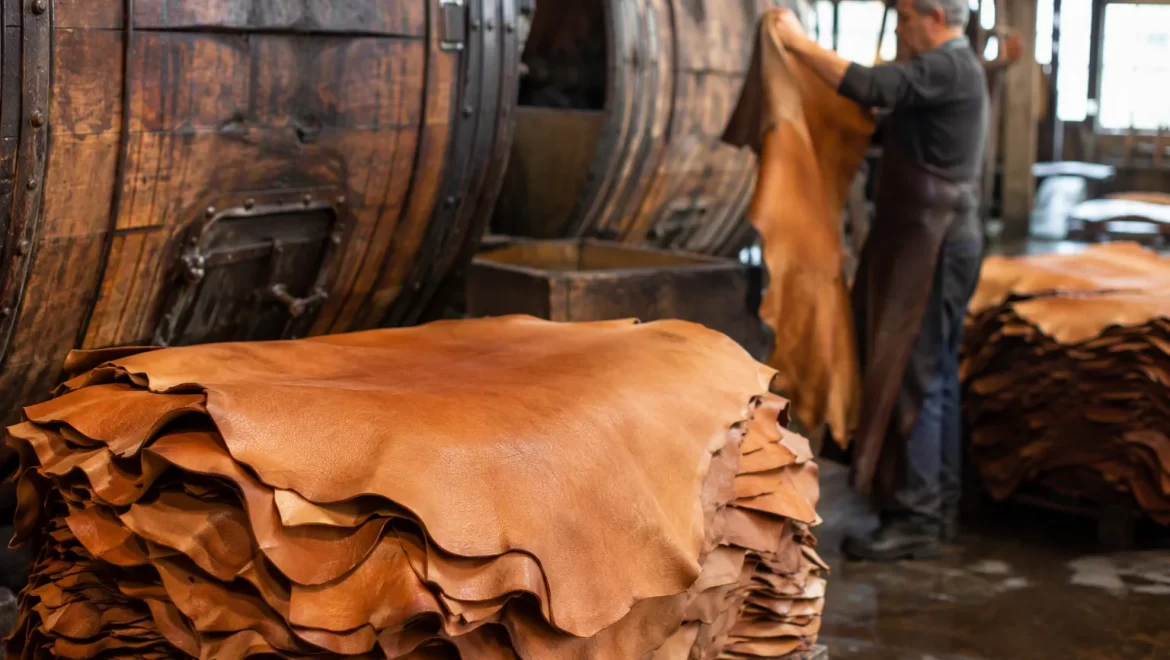
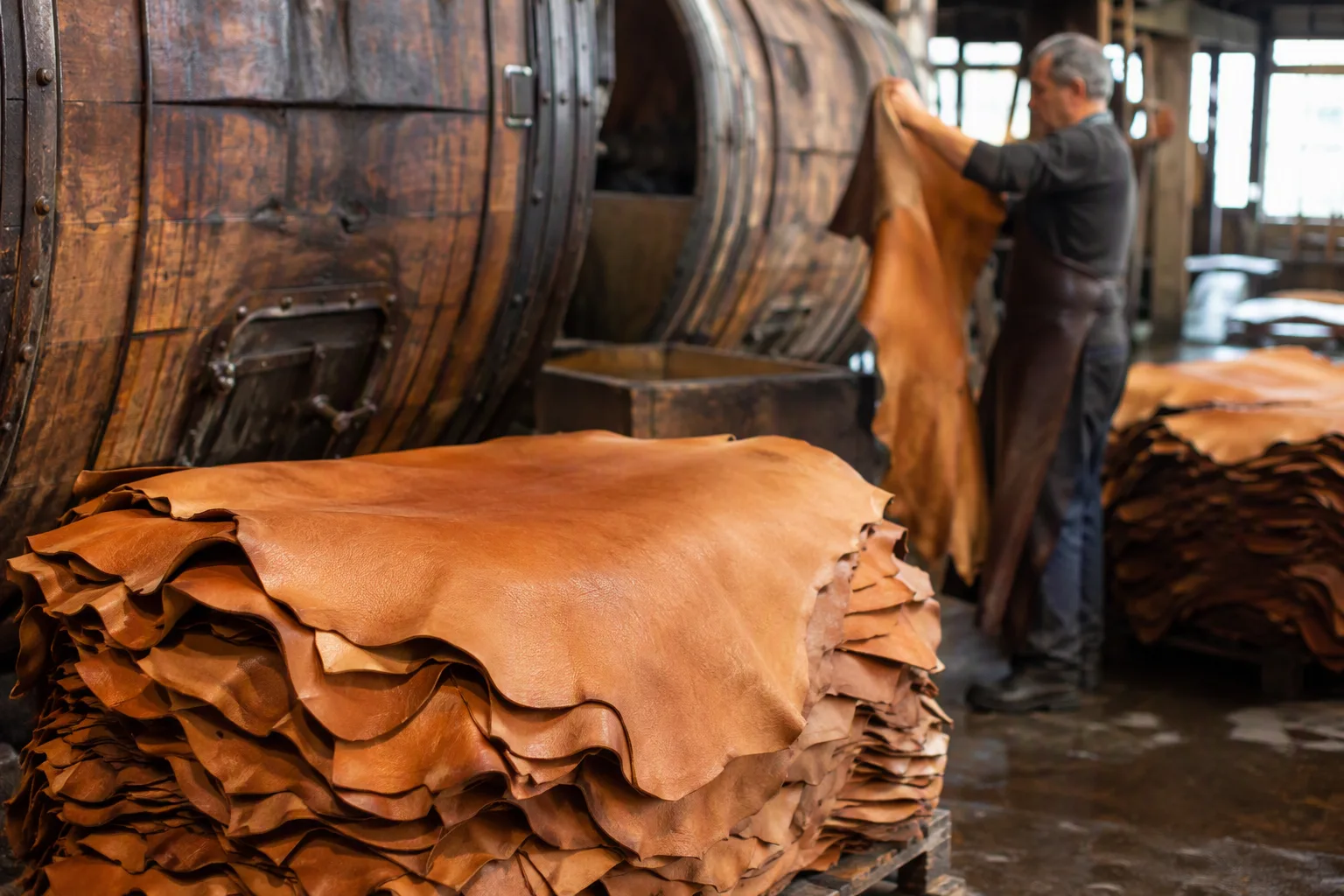
Vegetable tanning is the ancient method, practiced for thousands of years. The hide is soaked in progressively stronger baths of plant tannin — traditionally from oak, chestnut, mimosa, and quebracho bark — either in large pits (pit tanning) or rotating drums (drum tanning). The tannins slowly penetrate the hide fiber by fiber, which is why the process takes weeks rather than hours. A full vegetable tan can run 30 to 60 days, and some traditional tanneries extend it to several months for the finest results.
The result is a leather with several signature characteristics:
Warm, natural color. Vegetable-tanned leather takes on the rich tan and honey tones of the tannins themselves, and it dyes beautifully with aniline colors that let the natural surface show through.
Firm, dense body. Because plant tannins bind the fibers tightly, vegetable-tanned leather is stiff and structured when new. It holds its shape — ideal for bags that need architectural form rather than slouch.
A legendary patina. This is vegetable tanning's most celebrated trait. Over months and years of use, the leather darkens, burnishes at edges and corners, and develops a deep, personal glow. No two used bags age alike. For heritage and craftsmanship brands, this aging process is the entire sales story.
Water sensitivity. The trade-off is real: vegetable-tanned leather absorbs water readily. A rain shower can leave dark water spots, and wet leather needs careful drying. It is also more vulnerable to staining from inks, oils, and denim transfer. This is not a flaw if the customer understands the leather — it is a maintenance commitment.
Chrome Tanning Explained
Chrome tanning was industrialized in the late 19th century and quickly became the world's default method. The hide is processed in rotating drums with chromium salts (specifically chromium III sulfate), which bind to the collagen fibers in a matter of hours. The full process — from raw hide to tanned crust — typically takes one to three days, a dramatic contrast to vegetable tanning's weeks.
The resulting leather behaves very differently:
Softness and pliability. Chrome-tanned leather is naturally soft and supple, draping and slouching in ways that vegetable-tanned leather cannot match. This is why the vast majority of fashion handbags, wallets, and soft totes use chrome tanning.
Excellent water resistance. The chromium-treated fibers are far less hydrophilic. Chrome-tanned leather shrugs off rain far better, dries without heavy spotting, and is much easier to live with in daily use.
Color versatility. Chrome-tanned crust is typically pale blue-gray ("wet blue"), which accepts an enormous range of dyes and finishes — from saturated fashion colors to metallic and embossed treatments. Designers get a much wider palette.
Less dramatic aging. Chrome-tanned leather does not develop the same rich patina. It wears, softens, and may develop a mild sheen, but the surface story stays comparatively static. That is a feature for fashion lines and a drawback for heritage positioning.
One additional consideration: chrome tanning uses chromium and produces chrome-containing waste, which has made it the focus of sustainability scrutiny. Modern tanneries manage and recycle chrome effluent under certifications like LWG (Leather Working Group), and chrome-free and chrome-less alternatives are growing — a topic we will touch on in sourcing.
Vegetable vs Chrome: Head-to-Head Comparison
| Attribute | Vegetable-tanned | Chrome-tanned |
|---|---|---|
| Tanning time | 30–60+ days | 1–3 days |
| Fiber feel | Firm, dense, structured | Soft, supple, pliable |
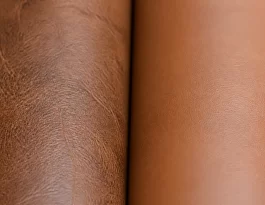
| Patina | Rich, dramatic, personal | Subtle; minimal color change |
| Water resistance | Low — absorbs water, spots | High — sheds water, dries clean |
| Stain resistance | Low-moderate | Moderate-high (with finish) |
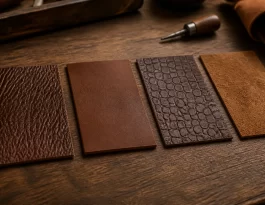
| Color range | Natural tones; aniline-dye friendly | Extremely wide; fashion colors easy |
| Strength (tear/tensile) | Very high, dense fibers | High, but softer structure |
| Shape retention | Excellent — holds structure | Lower — drapes and slouches |
| Price per sq ft | 30–100% higher | Standard market rate |
| Edge finishing | Burnishes beautifully | Needs sealing; softer edges |
| Best positioning | Heritage, luxury, craft, work bags | Fashion, everyday, soft silhouettes |
The table is the quick answer. The longer answer — and the part that affects your production cost and your customer's satisfaction — is how each leather behaves once it reaches a bag factory.
How Each Leather Behaves in Bag Manufacturing
On the production floor, vegetable and chrome tannages are almost different materials to work with. Your pattern maker, cutter, and stitching team will have strong opinions about each.
Cutting. Vegetable-tanned leather cuts cleanly and holds a crisp edge, but it is firmer, which means panels must be positioned carefully and the leather may require a settling period after cutting to avoid distortion. Chrome-tanned leather is more forgiving to cut, lays flatter, and its consistency makes panel nesting easier — a real yield advantage at scale.
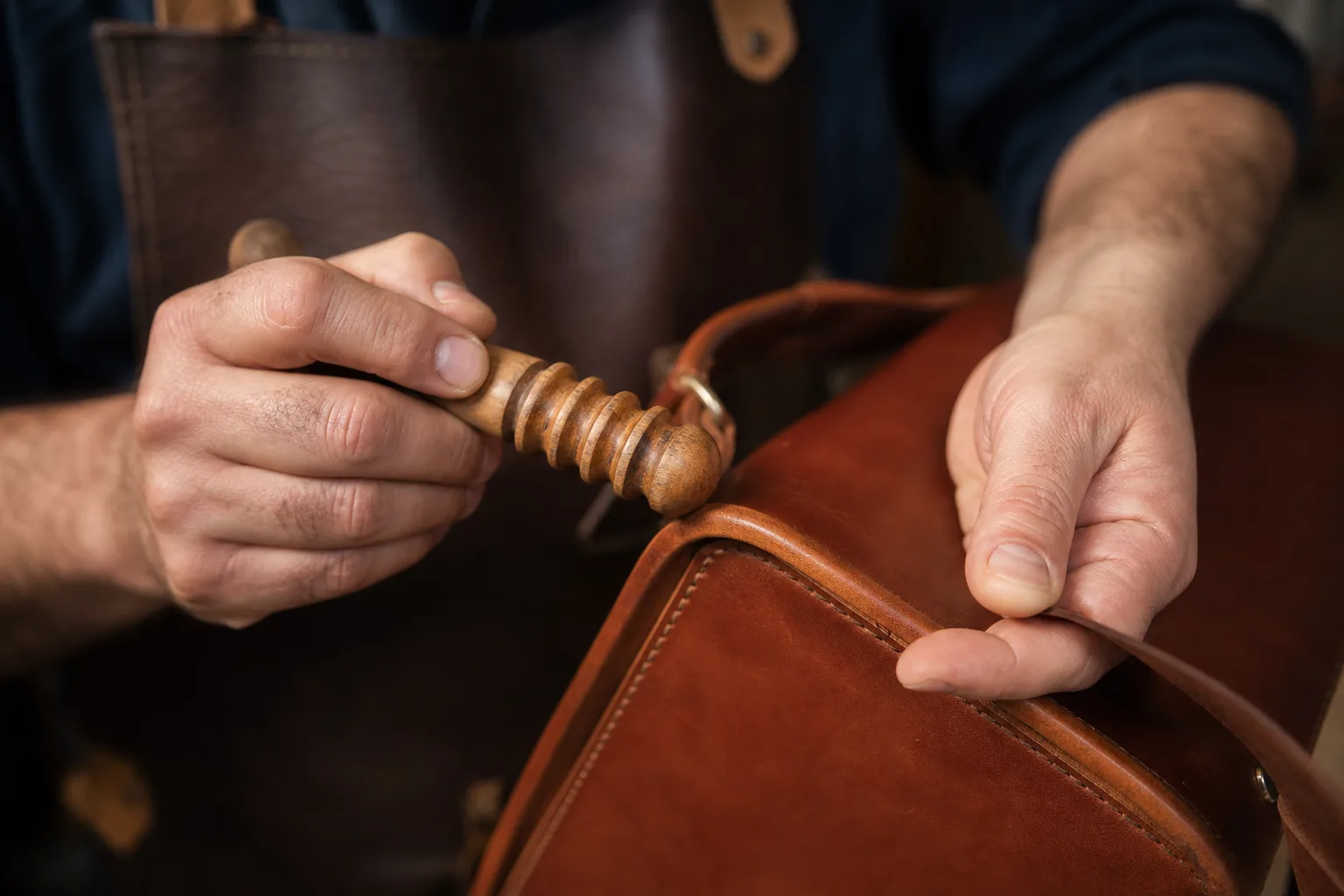
Skiving and edge work. Vegetable-tanned edges are a craftsman's dream: they skive cleanly, and edge burnishing produces that smooth, sealed, waxed finish that signals quality at the $400+ price point. Chrome-tanned leather has a softer, more porous edge that typically requires edge paint or a binding rather than burnishing — faster to produce, but a different aesthetic.
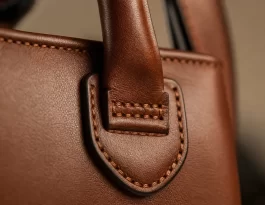
Stitching. Vegetable-tanned leather holds stitches with a firm, precise seat; high SPI (stitches per inch) work looks sharp. Chrome-tanned leather is easier to sew quickly but can show puckering if thread tension is not carefully set, especially on soft hides.
Hardware and assembly. Vegetable-tanned leather's stiffness supports heavy hardware and structured frames without deformation — ideal for work bags and briefcases. Chrome-tanned leather pairs better with lighter hardware and soft construction, and it can stretch around rivets if under-speced.
Sampling note. Because vegetable tanning is slower and each batch carries more natural variation, sampling for vegetable-tanned bags takes longer and requires the factory to work from the same tannery batch you will use in production. Chrome tanning, with its consistent supply, is easier to sample quickly and reproduce at scale.
Durability and Aging in Real Use
"Which lasts longer?" is the question every brand eventually asks, and the honest answer is: they fail differently, not one simply "better" than the other.
Vegetable-tanned leather has outstanding structural durability. Its dense fibers resist stretching, hold stitches, and develop character rather than wear fatigue — a well-made vegetable-tanned bag can genuinely last decades and look better each year. Its vulnerability is environmental: water, sun, and neglect can stain, stiffen, or fade it. The leather demands care: conditioning, protection from downpours, and occasional cleaning. Customers who adopt the care ritual are rewarded for life; customers who don't may see spotting and drying.
Chrome-tanned leather is the low-maintenance workhorse. It shrugs off daily weather, requires almost no care, and keeps its appearance for years. Its failure mode is different: the finish and surface can eventually show wear — scuffs, rubbed corners, or, on cheap hides, surface cracking — while the underlying leather remains intact. Structural failure is rare in well-made bags; the "aging" story is simply less interesting.
For a bag manufacturer, the practical implication is this: if your brand sells a product with a lifetime warranty and a heritage story, vegetable tanning matches the promise. If your brand sells everyday bags that must survive commutes, rain, and neglect, chrome tanning is the responsible engineering choice.
Cost and Sourcing Considerations
Vegetable tanning is more expensive for three structural reasons: the raw materials (plant tannins and large volumes of water), the time (weeks of vat occupancy per batch), and the yield (natural hide variation reduces usable footage). At tannery level, expect vegetable-tanned leather to cost roughly 30–100% more per square foot than comparable chrome-tanned leather, depending on tannery, hide origin, and finish.
Chrome tanning's speed and consistency keep it cheaper and more abundant, which is why it dominates mid-market and fashion production. The supply chain is deeper: more tanneries, more finishes, faster lead times, easier reorders.
Sustainability adds a third dimension. Chrome tanning carries an environmental burden — chromium waste and effluent — although LWG-certified tanneries manage this rigorously. Vegetable tanning is often marketed as "eco" because plant tannins are renewable, but the truth is more nuanced: vegetable tanning uses enormous amounts of water and land, and some plant tannins are harvested from threatened tree species. The most responsible sourcing question is not "which tannage is green" but "which tannery is certified and audited." Specify LWG Gold or Silver, ask for chrome-free options when needed, and verify the tannery's effluent records — a serious buyer checks documentation, not marketing labels.
Which Bags Should Use Which
| Bag style | Recommended tannage | Why |
|---|---|---|
| Heritage / craft totes | Vegetable | Patina story, structure, premium positioning |
| Structured work bags, briefcases | Vegetable | Firm body, burnished edges, shape retention |
| Luxury wallets and small goods | Vegetable | Dense fibers, crisp edges, ages beautifully in the hand |
| Everyday fashion handbags | Chrome | Softness, drape, color range, low maintenance |
| Travel and commuter bags | Chrome | Water resistance, daily abuse tolerance |
| Soft shoulder and slouch totes | Chrome | Pliability and relaxed silhouettes |
| Diaper / family bags | Chrome | Spill resistance and easy care |
| Capsule "forever" collections | Vegetable | One-of-one patina, lifetime positioning |
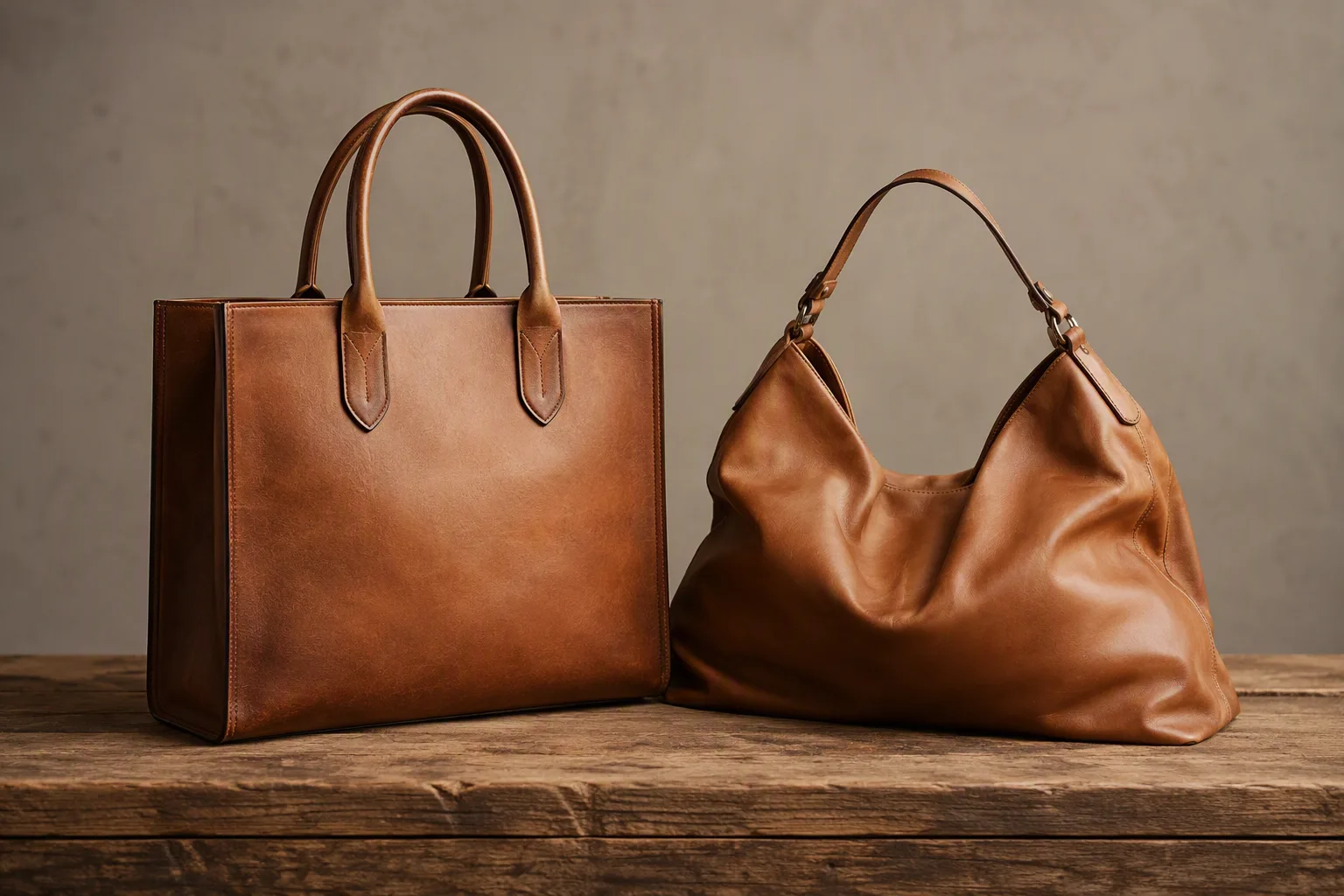
One strategy we see succeed repeatedly: brands run a chrome-tanned core line for volume and a vegetable-tanned capsule for brand elevation. The capsule tests the heritage story at low risk, and the core line funds the business. The two materials then reinforce each other instead of competing.
Care and Maintenance: What Your Customers Need to Know
The tannage you choose quietly determines the care instructions you must print, the returns you will receive, and the reviews your bags earn. Care differences are not cosmetic — they are a product-specification decision.
Vegetable-tanned leather care. Vegetable-tanned bags are living products. They need a conditioning routine: a quality leather balm or conditioner applied every two to three months keeps the fibers supple and prevents drying and cracking. The customer should avoid soaking the bag, drying it near heat, or leaving it in direct sun for long periods — all three accelerate fading and stiffening. If the bag gets wet, blot it, let it dry slowly at room temperature away from radiators, and condition it afterward. Because vegetable tanning is water-loving, a stray rain shower is recoverable; neglect is the real enemy.
Chrome-tanned leather care. Chrome-tanned bags are designed for low maintenance. A gentle wipe with a damp cloth handles most dirt; occasional conditioning is optional rather than essential. The customer should still avoid extreme heat and long sun exposure, which can fade dyes and dry the surface finish, but the bag tolerates real-world neglect far better. The main care risk for chrome tanning is surface scuffing on light colors, which is a finish issue rather than a structural one.
What this means for your brand. If you sell vegetable-tanned bags, include a care card, a small conditioner, and clear usage guidance — this is a genuine customer-education cost. Expect a handful of "my bag got spotted" queries, and treat them as training moments, not defects. If you sell chrome-tanned bags, you can ship with a simple care note and expect fewer care-related returns. Brands that match their care documentation to the tannage they chose consistently see higher satisfaction scores than brands that use a generic care card for both.
Hidden Supply-Chain Factors to Negotiate
Beyond price per square foot, four supply-chain realities separate the two tannages in practice — and each is negotiable if you know what to ask.
1. Lead time. Vegetable-tanned leather is produced in batches with weeks-long processing cycles, so tannery lead times run longer and reorders of the same tone are harder to guarantee. Plan your production calendar around this: a vegetable-tanned collection needs earlier material commitments. Chrome tanning, by contrast, offers faster, more flexible supply — a real advantage for seasonal fashion lines with tight deadlines.
2. Moisture content and weight. Vegetable-tanned leather contains more residual moisture and is heavier per square foot than chrome-tanned leather. For shipping-heavy categories like travel bags or for brands paying airfreight, the weight difference compounds across a container. Your landed cost model should use the actual finished weights of each tannage, not a generic leather weight.
3. Tone consistency across batches. Chrome tanning produces highly consistent dye lots, making reorders predictable. Vegetable tanning's natural variation means a reorder may arrive noticeably lighter or darker than the original production run — a risk you manage by ordering the full collection's material at once, or by building tone tolerance into your QC spec.
4. Certification documentation. If you sell into EU markets or retail chains with sustainability requirements, you will need REACH compliance documentation, and increasingly LWG certification, for your leather. Vegetable-tanned leather from small traditional tanneries may lack modern certifications even though its process is "natural," while chrome tanneries serving export markets usually have the paperwork ready. Verify certificates during sourcing, not after your buyer asks for them.
These four factors rarely appear in a tannery's price list, but they routinely decide whether a collection ships on time, lands at the planned cost, and passes its buyer's compliance review. A manufacturer that manages both tannages will flag them before you sign — that is the kind of partner worth keeping.
FAQ
Q: Is vegetable-tanned leather more durable than chrome-tanned? A: In structural terms, yes — its dense fibers resist stretching and hold shape longer. But chrome-tanned leather tolerates water and daily wear better. "Durable" depends on whether you mean structure or resistance to environment.
Q: Does vegetable-tanned leather really patina? A: Yes, and that is its defining feature. It darkens and burnishes with use, developing a unique, rich surface over months and years. Chrome-tanned leather changes far less.
Q: Can vegetable-tanned leather get wet? A: It can, but it absorbs water and spots easily. Dry it slowly at room temperature, condition it afterward, and avoid repeated soakings. Chrome-tanned leather handles wet conditions much better.
Q: Why is most leather chrome-tanned? A: Speed and cost. Chrome tanning takes days instead of weeks and produces consistent, affordable, soft leather — roughly 80–85% of global production uses it.
Q: Is chrome-tanned leather safe? A: Properly tanned chrome leather uses chromium III (trivalent), which is safe in finished goods; the concern is tannery waste during production. Buy from LWG-certified tanneries that manage effluent responsibly.
Q: Which tannage should a new bag brand choose for a first line? A: For a first line with retail prices below roughly $250, chrome tanning is the pragmatic choice: predictable cost, easy care, wide colors. Reserve vegetable tanning for a small premium capsule.
Q: Can the same bag design be made in both tannages? A: Technically yes, but expect changes: vegetable-tanned panels sit differently, edges finish differently, and hardware may need upgrading to match the stiffer body. Re-sample before committing.
Q: Does tanning affect the leather's smell? A: Yes. Vegetable-tanned leather has a distinctive, pleasant natural scent. Chrome-tanned leather has a milder, more neutral smell. Some customers care deeply about this detail.
How to Choose for Your Bag Line: A Decision Framework
Walk through these five questions, in order, and the right tannage usually reveals itself:
1. What retail price are you targeting? Above roughly $250–300, vegetable tanning becomes credible and is often expected; below that, chrome tanning protects your margin.
2. How will the bag be used? Daily commutes, rain, children, and neglect all point to chrome. Weekend use, careful owners, and a "forever product" story point to vegetable.
3. What silhouette do you need? Structured, architectural shapes need vegetable tanning's firm body. Soft, slouchy, draped silhouettes need chrome tanning's pliability.
4. What is your brand narrative? If you sell "it gets better with age," you must use vegetable tanning to be honest. If you sell "beautiful and easy, every day," chrome delivers the promise.
5. What is your production volume? Large, repeatable runs favor chrome's consistency and yield. Small capsules can absorb vegetable tanning's cost and variation — and turn variation into a selling point.
The best factories can produce both, and the best brands use both deliberately. The mistake is choosing by habit rather than by design.
Conclusion
Vegetable and chrome tanning are not one "good" method and one "cheap" method. They are two different materials with two different personalities. Vegetable tanning gives you structure, a legendary patina, and a craft story — at a higher price and with a maintenance commitment. Chrome tanning gives you softness, water resistance, color range, and cost efficiency — with a quieter aging story.
For a bag manufacturer, the professional answer is the same as it always is: match the material to the collection. Define the price, the use, the silhouette, the story, and the volume first — then let the tannage follow. When you sit down with your factory to plan a new line, ask for both tannages on the table, handle them side by side, and decide with your hands as much as your spreadsheet. The right leather for your bag line is the one that honestly serves the promise your brand makes — and with vegetable and chrome tanning both available, you never have to compromise the story to hit the price.
Planning a new collection? Contact our factory for a vegetable vs chrome tannage comparison — we can prepare burnished-edge samples of both and a cost estimate for your specific bag designs.