How Should Odour Be Controlled and Tested in Pet Bag Production?
- Why Odour Belongs to Production, Not to Aftercare
- Mapping Where Odour Comes From
- Leather and Tannery Residues
- Linings, Coatings and Backing
- Adhesives and Bonding
- Foam, Board and Padding
- Packaging and Storage
- Reading Odour Types Before Judging Them
- A Container Test Anyone Can Repeat
- Setting an Acceptance Scale
- Air-Out and Ventilation Practice
- Controlling Odour at Material Intake
- Heat, Pressing and Fume
- Batch Hold and Release
- Rework and the Limits of Remediation
- Regulatory Expectations Around Odour
- Linking Odour to Complaints
- Establishing a Baseline at Sampling
- The Process Card and Its Records
- Briefing Suppliers Without Ambiguity
- Training the People Who Judge
- Common Traps in Odour Programmes
- A Worked Programme for a Lined Carrier
- What Poor Odour Control Costs
- Working With the Adhesive Supplier
- What a Buyer Should Ask For
- FAQ
A pet bag that smells of solvent, glue or tannery will be returned even if every stitch is perfect, and the complaint will arrive weeks after the shipment has been accepted. Odour is the one quality characteristic that cannot be inspected by eye.
It is also the characteristic most often left out of a specification, because it is difficult to write down and easy to assume. The result is that two factories can build to the same drawing and deliver bags that smell entirely different.
Why Odour Belongs to Production, Not to Aftercare
Odour is decided long before the bag reaches a customer, and almost every cause sits in a documented process step.
It Is a Process Output
Adhesive dosage, drying time, ventilation and packing all change what a bag smells like. Each of those is a settable parameter, which means odour is controllable rather than accidental.
It Cannot Be Seen at Inspection
An inspector can measure a seam and photograph a colour. Odour has no equivalent image, so the check has to be procedural and recorded, or it does not happen.
Why Returns Cluster
Odour complaints arrive in clusters, because the bags in a complaint share a batch of adhesive, foam or lining. The pattern is a clue, and it is only readable if batches are traceable.
| Characteristic | Measurable by eye |
|---|---|
| Seam strength | Partly |
| Colour | Yes |
| Odour | No |
| Hardware function | Yes |
Mapping Where Odour Comes From
Before any control is written, the sources have to be listed, because a bag is assembled from a dozen materials that each contribute something.
The Short List
Leather, lining, coating, adhesive, foam, board, thread, hardware plating and packaging are the nine contributors in a typical pet bag. Most programmes find two that matter and treat the rest as noise.
Which Ones Dominate
Adhesive and lining dominate in coated and laminated constructions, while leather and tannery residues dominate in unfinished or vegetable-tanned articles. The mix changes with the construction.
Why the List Must Be Written
A source that is not on the list cannot be sampled, and a source that is not sampled cannot be cleared. Writing nine lines is the cheapest step in the whole programme.
| Source | Typical contribution |
|---|---|
| Leather | Tannery residues |
| Lining | Coating solvent |
| Adhesive | Solvent or resin |
| Foam | Residual blowing agent |
Leather and Tannery Residues
Leather smells of what was done to it, and the smell that remains after finishing is a record of the last process it saw.
Fat and Oil Residue
Fat liquors used in tanning carry their own odour, and an over-fat article can smell rancid in warm storage. The smell appears after packing rather than at inspection.
Vegetable Tanning
Vegetable-tanned leather has a characteristic woody smell that most buyers consider acceptable and some consider strong. It fades with airing, but the fade takes longer than a production schedule allows.
Finishing Solvents
Top finishes and lacquers carry solvent that must be driven off in drying. A panel stacked before the solvent has left will trap it under the next panel.
| Residue | Behaviour |
|---|---|
| Fat liquor | Develops with heat |
| Vegetable tannin | Fades slowly |
| Finish solvent | Traps in stack |
| Retanning salts | Detected when damp |
Linings, Coatings and Backing
The inside of a pet bag is a closed space, so lining odour reaches the animal directly and stays there longer than any outer smell.
Coated Linings
A coated lining carries solvent from its own manufacture, and in a closed bag that solvent has nowhere to go. It is the most common single cause of complaint in lined carriers.
Bonded Backing
A lining bonded to foam with adhesive combines two sources in one panel. Where bonding is done in-house, the adhesive choice is the factory's, and it should not be left to convenience.
| Lining type | Odour risk |
|---|---|
| Coated woven | High |
| Bonded foam | High |
| Uncoated cotton | Low |
| Mesh | Low to moderate |
Adhesives and Bonding
Adhesive is the most controllable odour source in a bag factory, and the most frequently overlooked because it is bought as a consumable rather than as a material.
Solvent Versus Water-Based
A water-based adhesive carries far less odour at the same bond strength, and its penalty is a longer open time and a greater sensitivity to workshop humidity. That trade is worth making on any bag with a closed interior.
Dosage and Coverage
More adhesive does not bond better; it cures more slowly and releases more into the panel. A roller or spray set to the specified coat weight removes most of the excess that hand application creates.
Curing Before Packing
Adhesive continues to release while it cures, and a bag packed on the day of bonding will release inside the carton. A stated curing interval before packing is the cheapest control available.
| Adhesive | Odour | Cure time |
|---|---|---|
| Solvent-based | High | Fast |
| Water-based | Low | Slower |
| Hot melt | Low | Immediate |
| Two-part | Moderate | Fixed |
Foam, Board and Padding
The structural layers are hidden, which is why their contribution is discovered late and blamed on the wrong material.
Foam Residuals
Flexible foam can retain residues from its own manufacture, and a cheap foam in a sealed base panel will smell for months. Density and source matter more than price per sheet.
Board and Adhesive Film
A laminated board combines a substrate with a film adhesive, and the film is often the odour source rather than the board. Asking for the film specification is a reasonable request.
Padding and Wadding
Polyester wadding is usually neutral, but a recycled or reprocessed fill can carry odour that reappears when the bag is warm. A sample kept in a closed bag for a week will show it.
| Layer | Risk |
|---|---|
| Flexible foam | Residual agent |
| Laminated board | Film adhesive |
| Polyester wadding | Usually neutral |
| Recycled fill | Variable |
Packaging and Storage
A bag that is clean when it leaves the line can still pick up odour from what surrounds it, and the carton is part of the product.
Cartons and Inserts
Recycled board can carry a musty or chemical smell that transfers to leather in a sealed carton. Printing inks and varnishes add to it, and a carton liner separates the two.
Poly Bags and Desiccant
A sealed poly bag traps whatever the bag releases, which is why an air hole or a short open interval before sealing makes a visible difference. Desiccant controls moisture, not odour, and should not be relied on for it.
Warehouse Conditions
A warehouse that is warm and closed concentrates odour, while one that is ventilated disperses it. Two identical shipments stored differently will be judged differently.
| Packaging element | Contribution |
|---|---|
| Recycled carton | Musty |
| Printing ink | Solvent |
| Sealed poly bag | Traps |
| Ventilated store | Disperses |

Reading Odour Types Before Judging Them
The type of smell narrows the source faster than any test, and an assessor who can name it saves a week of investigation.
Solvent and Glue
A sharp, sweet or headache-inducing smell points to adhesive, coating or printing. It usually fades with airing, which makes it tempting to dismiss rather than to fix.
Animal and Tannery
A hide-like or fatty smell points to leather, and it intensifies with warmth. Airing helps, but a strongly over-fat article will return to the same state in a warm car.
Musty and Damp
A musty smell indicates moisture, and moisture in a bag means a storage or drying problem rather than a material problem. Treating it as an odour issue alone will not hold.
| Smell | Likely source |
|---|---|
| Sharp solvent | Adhesive, coating |
| Fatty hide | Leather |
| Musty | Moisture |
| Sweet chemical | Foam, ink |
A Container Test Anyone Can Repeat
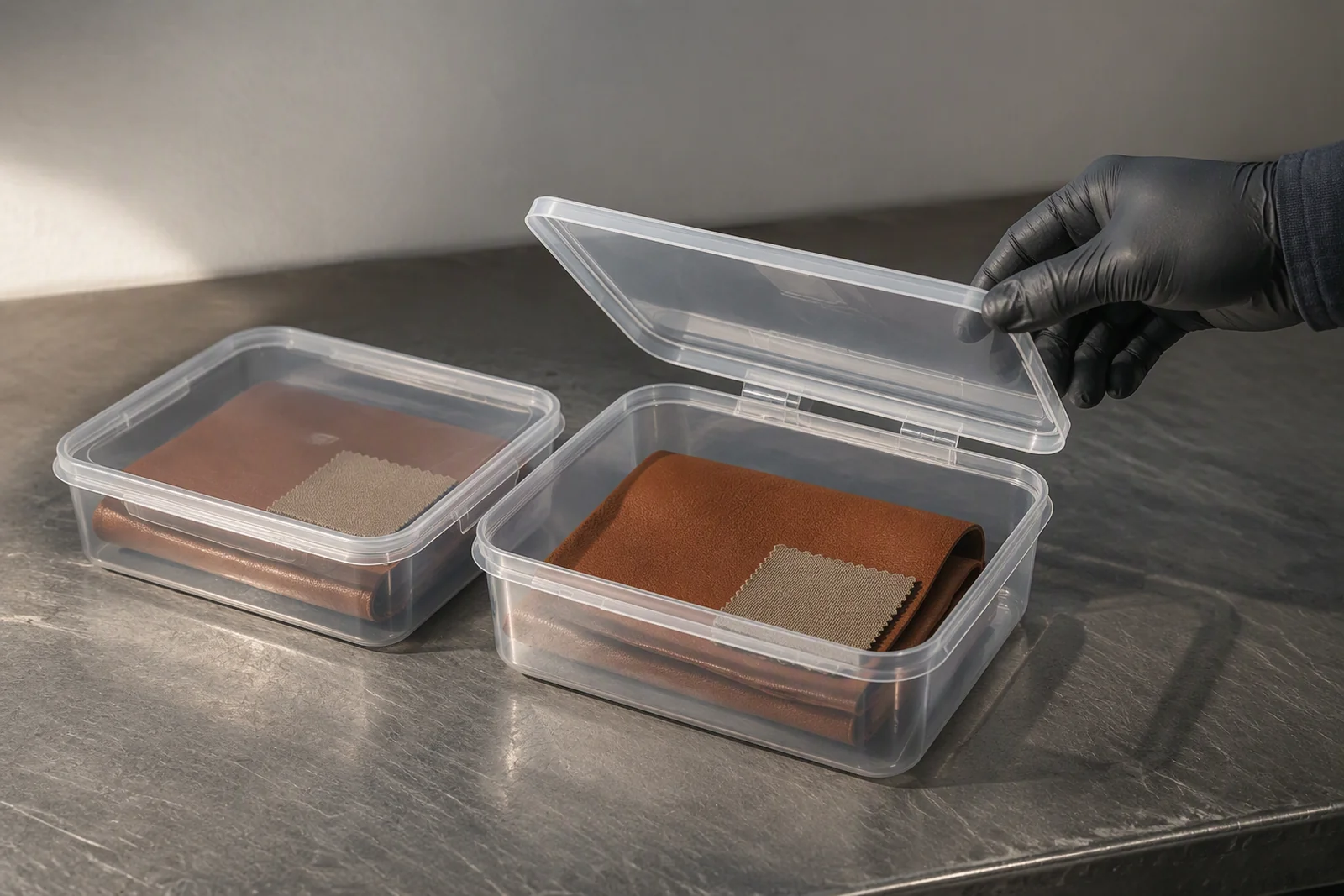
A bag cannot be sniffed reproducibly in an open room, but it can be judged inside a closed container under stated conditions.
The Method
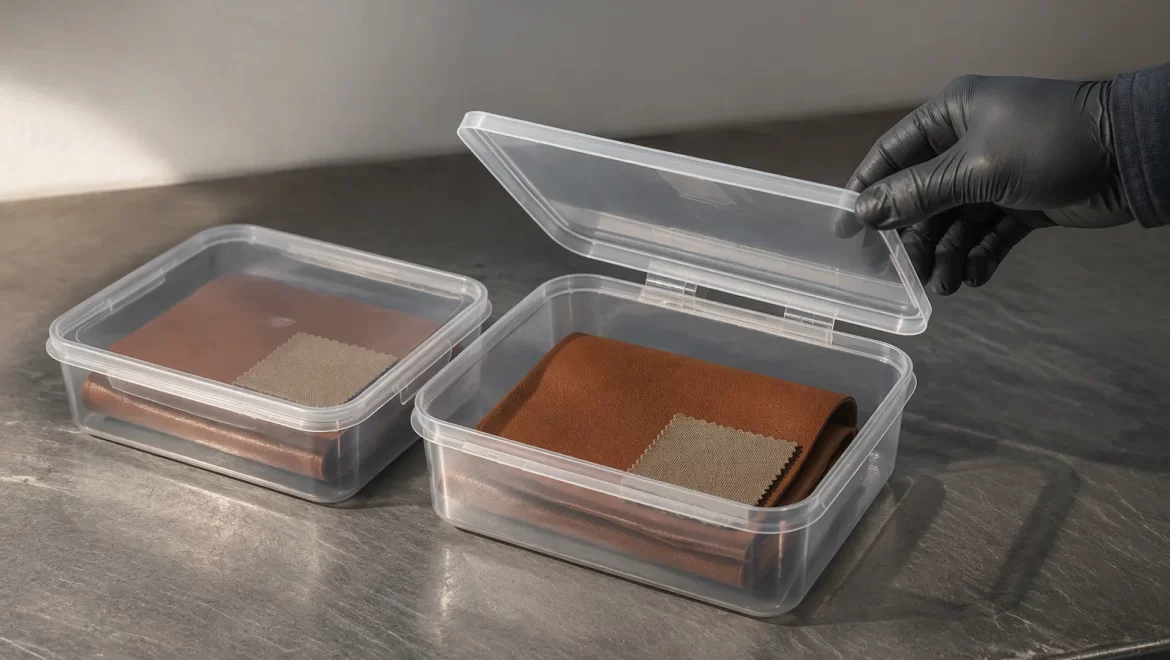
Place the bag, or a cut panel, in a clean container of known volume, close it for a fixed interval at a stated temperature, then open and assess immediately. The interval and temperature are the two variables that must be written down.
Panel Versus Whole Bag
A panel test isolates a material, while a bag test shows what the customer will actually experience. Both are useful: the panel finds the source, the bag confirms the result.
Recording the Result
Record intensity on a simple scale with a short description of the smell. A number without a description cannot be compared between assessors or seasons.
| Test | Answers |
|---|---|
| Panel in jar | Which material |
| Bag in bag | What customer gets |
| Cut sample | Adhesive contribution |
| Carton test | Packaging effect |
Setting an Acceptance Scale
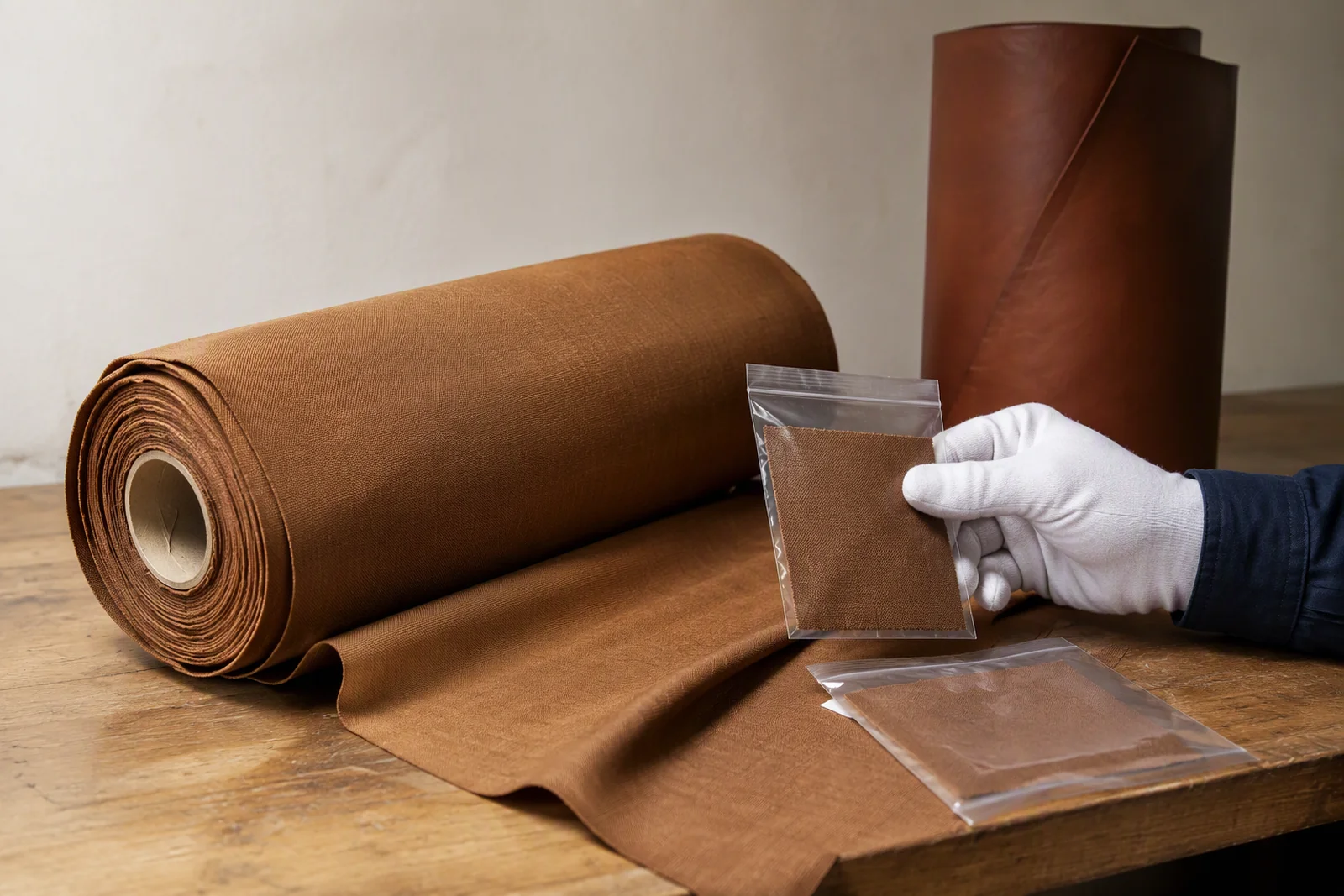
A scale is only useful if it is anchored by physical references, because "slight" means different things to a buyer and a line supervisor.
Four Levels
A workable scale runs from no perceptible smell, through perceptible but acceptable, to clearly noticeable, to strong. Four levels are enough to separate release from hold.
Anchoring With Samples
Keep one retained bag or panel for each level and refresh them each season. An anchored scale survives staff changes; a remembered one does not.
Who Judges
Two trained assessors judging independently, with a third brought in when they disagree. A single assessor's judgement cannot be defended in a claim.
| Level | Action |
|---|---|
| None | Release |
| Acceptable | Release |
| Noticeable | Air out |
| Strong | Hold |
Air-Out and Ventilation Practice
Airing is the standard remedy, and it is frequently prescribed without the two details that make it work: time and air movement.
Hours Versus Days
A solvent smell in a coated lining often needs days rather than hours, and a schedule that allows an afternoon will release bags that still smell. The interval should be set from the test, not from the calendar.
Racking matters as much as the fan. Bags laid flat on a table release from one surface, while bags hung or stood apart release from both faces and from the interior. A simple rail with hooks converts a corner of the packing area into an effective airing station, and the same rail makes the waiting bags visible to whoever is planning the shipment.
Air Movement
Still air inside a closed room does not carry anything away. Racking with space between bags and a fan moving air across the surface halves the time in most workshops.
Airing Before or After Packing
Airing before packing is effective; airing after packing is not, because the carton is closed again. The sequence matters more than the total time.
| Approach | Effect |
|---|---|
| Still air, hours | Weak |
| Moving air, days | Strong |
| After packing | None |
| Before packing | Reliable |
Controlling Odour at Material Intake
The cheapest control point is the goods-inward bay, because a material that is refused never becomes a bag that has to be aired.
A Smell Check on Receipt
Open a roll or a bundle and assess it in the receiving area, using the same scale as the finished bag. It takes a minute and catches most problems before cutting.
Retained Samples
Keep a labelled sample of each incoming lot, sealed, for the life of the order. When a complaint arrives, the retained sample answers whether the material or the process was responsible.
Supplier Declarations
Ask for a written statement of odour-relevant composition, such as adhesive type and solvent content. A supplier who cannot provide one is a risk that should be priced.
| Intake control | Catches |
|---|---|
| Smell check | Obvious faults |
| Retained sample | Attribution |
| Declaration | Hidden content |
| Lot marking | Traceability |
Heat, Pressing and Fume
Heat accelerates release, which is why a bag that passes in a cool inspection room can fail in a warm warehouse.
Heat Sets and Releases
Pressing drives solvent out of a panel and into the air of the workshop, which is good for the bag and bad for the room. Extraction at the press protects both.
The Warm Test
Judging odour at room temperature alone understates the problem. A short warm interval before assessment shows what a customer will experience in a car.
Cooling Before Packing
A bag packed warm continues to release inside the carton. Cooling to room temperature before packing removes that release from the customer's first impression.
| Condition | Odour behaviour |
|---|---|
| Cool room | Understated |
| Warm store | Amplified |
| Press extraction | Reduces |
| Warm packing | Traps |
Batch Hold and Release
Odour is a hold reason rather than a defect class, because a held batch may become acceptable with time and a defect will not.
Quarantine, Not Rejection
Move a suspect batch to a ventilated hold area with a label stating date, reason and re-test date. Rejection should wait until the re-test has been done.
Re-Test Interval
Set the re-test from the test data, typically several days for a solvent smell. A single re-test that fails is evidence, and it justifies a conversation with the supplier.
Release Authority
The person who releases a held batch should be named, not assumed. Without a named authority, pressure to ship quietly overrides the hold.
| Stage | Record |
|---|---|
| Hold | Date, reason |
| Airing | Location |
| Re-test | Result |
| Release | Name |
Rework and the Limits of Remediation
Some batches can be saved and some cannot, and the difference is usually how deeply the source sits in the construction.
What Airing Can Fix
A solvent smell held in a lining or on the surface can be aired out, provided there is time and air movement. This is the majority of cases and the cheapest outcome.
What Airing Cannot Fix
Odour from foam inside a sealed base, or from a board laminated with a film adhesive, will return as soon as the bag is closed again. These batches have to be rebuilt.
The Cost of Rebuilding
Rebuilding a base panel costs the panel, the labour and the schedule. Comparing that cost against the cost of changing adhesive or foam at the source is the argument that usually wins.
| Source | Recoverable |
|---|---|
| Surface solvent | Yes |
| Lining solvent | Usually |
| Sealed foam | No |
| Laminated board | No |
Regulatory Expectations Around Odour
Odour itself is rarely regulated, but the substances that cause it frequently are, and the two questions should be asked together.
Volatile Content
Restrictions on volatile content in adhesives, coatings and finishes differ by market, and the applicable limits should be confirmed for each destination before a material is approved.
Declarations and Documentation
A supplier declaration of composition is the practical document, because it underpins both the odour programme and any chemical compliance file. Collect it at approval, not at shipment.
Where the Two Meet
A material that passes a chemical limit can still smell, and a material that smells can still comply. Compliance is not a substitute for the container test.
| Question | Owner |
|---|---|
| Volatile limits | Buyer |
| Declarations | Supplier |
| Container test | Factory |
| Market rules | Buyer |
Linking Odour to Complaints
A complaint is data, and how it is recorded decides whether it can be traced back to a material lot.
What to Ask
Ask when the smell was noticed, whether the bag was warm, and whether other bags from the same order smell the same. Three questions separate a material fault from a storage fault.
Matching the Batch
Compare the complaint against the retained samples and the packing date. If the retained sample smells and the current production does not, the cause is historical rather than current.
Feeding It Back
The finding should reach the material approval file, not only the complaint log. An adhesive that caused returns last season should be a different adhesive this season.
| Question | Reveals |
|---|---|
| When noticed | Use conditions |
| Warmth | Release behaviour |
| Same order | Batch scope |
| Retained sample | Attribution |
Establishing a Baseline at Sampling
The sample stage is the last moment when a material can be changed cheaply, so the odour baseline belongs in the sample approval.
Test the Sample Like a Shipment
Put the approved sample in a sealed bag for the same interval used in production testing, then assess it. A sample that smells after a week will not improve in a container.
Record the Reference
Keep the result with the sample and the specification. It becomes the anchor for every later comparison and the evidence if a bulk batch differs.
Approve the Construction, Not the Bag
Note which lining, adhesive and foam were used in the approved sample. Approvals that name only the bag allow substitutions that change the smell.
| Sample record | Purpose |
|---|---|
| Container result | Baseline |
| Materials named | Substitution control |
| Adhesive type | Odour source |
| Seal date | Comparison |
The Process Card and Its Records
Odour control survives a shift change only if the settings and the judgements are written where the next person will look.
What Goes on the Card
Container volume, interval, temperature, the four-level scale, the airing interval before packing, the adhesive type and the named release authority. Eight entries cover the programme.
Where the Results Go
A simple log per batch, recording the level at inspection and the level after airing. Two numbers per batch are enough to show a trend over a season.
Why Trends Matter
A single release at level two is unremarkable; five in a row means a material has changed. The log is what makes that visible before the complaints arrive.
| Record | Frequency |
|---|---|
| Card values | Per style |
| Inspection level | Per batch |
| Aired level | Per batch |
| Trend review | Monthly |
Briefing Suppliers Without Ambiguity
A supplier will meet an odour requirement only if the requirement is stated as a test rather than as an adjective.
State the Test
Describe the container, the interval, the temperature and the scale, and ask for the result on a sample. "Low odour" cannot be verified; a container result can.
Ask for the Substitution Rule
Require written notice before any change of adhesive, lining or foam source. Odour problems usually arrive with an unannounced substitution rather than with an existing material.
Agree the Hold Consequence
State that a batch failing the test will be held and aired at the factory's cost, and re-tested before shipment. A stated consequence changes how the material is chosen.
| Brief element | Effect |
|---|---|
| Test method | Verifiable |
| Sample result | Baseline |
| Substitution notice | Prevents drift |
| Hold clause | Aligns cost |
Training the People Who Judge
Odour assessment is a skill with a short working life, and an untrained assessor is worse than no assessor because the result looks like data.
Calibration Sessions
Run a session each season using the anchored samples and let assessors score them. Anyone who scores the anchors wrongly is re-briefed before judging production.
Rotating the Duty
An assessor who smells bags all day loses sensitivity by the afternoon. Rotating the duty across two or three people keeps the judgements usable.
Protecting the Assessor
Work in a ventilated area and limit the number of judgments per session. An assessor with a headache cannot judge a solvent smell fairly.
| Practice | Purpose |
|---|---|
| Anchors | Calibration |
| Rotation | Freshness |
| Limits | Accuracy |
| Ventilation | Safety |
Common Traps in Odour Programmes
The same five mistakes undo otherwise sound programmes, and each one is avoidable with a sentence in the specification.
Masking Instead of Removing
Fragrance sprays and sachets hide a smell for a week and return it later with interest. They also make the source impossible to find afterwards.
Testing Only the Finished Bag
A bag test tells you it smells, not what smells. Without panel tests, every investigation starts from the beginning.
Testing in a Cold Room
An assessment made in a cold inspection room will pass a bag that fails in a warm car. The test temperature is part of the method.
No Retained Sample
Without a sealed sample from each lot, a complaint cannot be attributed and the supplier cannot be challenged.
Release Without a Name
A hold that nobody owns is a hold that ends when the container is due.
| Trap | Cost |
|---|---|
| Masking | Recurrence |
| Bag only | Slow diagnosis |
| Cold room | Field failure |
| No sample | No attribution |
| Unnamed release | Shipment risk |
A Worked Programme for a Lined Carrier
A short sequence shows how the pieces connect, using a lined carrier with a laminated base as the example.
Week One: Find the Source
Panel tests on the leather, lining, foam and board, each sealed for the same interval. In this example the lining and the base board both score high, and the leather is neutral.
Week Two: Change and Confirm
The lining is replaced with an uncoated alternative and the board with one laminated using a different film. Both are re-tested before any cutting is scheduled.
Week Three: Set the Line
The container test, the airing interval and the packing rule are written on the card, and the two assessors are calibrated against the new anchors.
| Week | Output |
|---|---|
| One | Source identified |
| Two | Materials changed |
| Three | Line settings |
| Four | First batch logged |
What Poor Odour Control Costs
The cost is easy to underestimate because it appears after the goods have been accepted and paid for.
Returns and Freight
A returned bag costs the outbound freight, the return freight and the handling, and it usually cannot be resold at full value. None of that appears in a unit price.
Airing as Hidden Capacity
Airing takes floor space and time, and space occupied by bags waiting to be released is space not making anything. Many factories discover this during a peak season.
The Reputation Channel
A smell is described in reviews more readily than a loose thread, because it is immediate and personal. That description travels further than a specification does.
| Cost | Timing |
|---|---|
| Returns | After delivery |
| Airing space | During season |
| Rework | Before shipment |
| Reviews | Long term |
Working With the Adhesive Supplier
The adhesive supplier knows more about the odour profile of a product than the bag factory ever will, and that knowledge is free if it is asked for.
Asking the Right Question
Ask which product in the range has the lowest residual volatile content at the required bond strength, rather than asking for the cheapest adhesive that works.
Trials Instead of Assumptions
A trial on twenty bags with two candidate adhesives costs a day and settles the question. Assumption based on price or on a datasheet settles nothing.
The Bond Must Hold
A low-odour adhesive that fails on a curved seam is not an improvement. The trial must include the hardest bond in the construction, not the easiest.
| Criterion | Check |
|---|---|
| Residual content | Datasheet |
| Bond strength | Trial |
| Open time | Line trial |
| Cure interval | Record |
What a Buyer Should Ask For
A buyer can verify an odour programme in four questions, and none of them requires a laboratory.
The Four Questions
What is the container method, what interval and temperature are used, what are the four anchor samples, and who releases a held batch. A factory that answers all four has a programme.
The Sample Request
Ask for a sealed production bag, not a hand-made sample, opened on a video call. The difference between the two is often the whole answer.
The Substitution Clause
Confirm in writing that adhesive, lining and foam sources will not change without notice. This one clause prevents most of the problems that would otherwise appear a season later.
| Question | Confirms |
|---|---|
| Method | Programme exists |
| Interval | Comparable |
| Anchors | Calibrated |
| Release name | Authority |
FAQ
Why does a new pet bag smell of glue or solvent?
A: Adhesive and coated lining are the usual sources. Solvent released during curing has nowhere to go in a closed bag, so it concentrates until the bag is opened and aired.
How long should a bag be aired before packing?
A: Long enough for the container test to pass, which is often several days for a solvent smell rather than a few hours. The interval should be set from test data rather than from the production calendar.
Does airing fix every odour problem?
A: No. Odour held in foam inside a sealed base panel, or in a board laminated with a film adhesive, returns as soon as the bag is closed again. Those batches have to be rebuilt.
How can odour be tested without a laboratory?
A: Seal the bag or a cut panel in a clean container of known volume for a fixed interval at a stated temperature, then open and assess immediately. The interval and temperature must be written down.
Should a panel or a whole bag be tested?
A: Both, for different reasons. A panel test identifies which material is responsible, while a bag test shows what a customer will actually experience.
What temperature should the test be run at?
A: A temperature that reflects real use rather than a cold inspection room, because heat accelerates release. A bag that passes cold can fail in a warm car.
How is an acceptable level defined?
A: With a four-level scale anchored by retained physical samples: no perceptible smell, perceptible but acceptable, clearly noticeable, and strong. Without anchors the words mean different things to different people.
Who should judge the smell?
A: Two trained assessors judging independently, with a third involved when they disagree. A single assessor's opinion cannot be defended in a claim.
What causes a musty rather than a chemical smell?
A: Moisture. It points to a drying or storage problem rather than a material problem, and treating it as an odour issue alone will not prevent it returning.
Can fragrance be used to mask a smell?
A: It hides the problem for a short period and returns it later, while making the original source much harder to find. Masking is the most common trap in odour programmes.
How should an incoming material be checked?
A: Open a roll or bundle in the receiving area and assess it on the same scale used for finished bags. A retained sealed sample from each lot then allows later attribution.
What is the cheapest control point?
A: Goods inward. A material refused at receipt never becomes a bag that has to be aired, held or rebuilt, and the check takes about a minute.
What makes odour worse after packing?
A: Packing a warm bag into a sealed poly bag inside a carton. Cooling to room temperature and leaving a short open interval before sealing removes most of the effect.
Does odour compliance equal chemical compliance?
A: No. A material can meet a volatile limit and still smell, and a material that smells can still comply. The container test is a separate check from the compliance file.
How should a suspect batch be handled?
A: Quarantine it in a ventilated area with a label recording date and reason, re-test after a stated interval, and release only by a named authority.
What should be recorded on the process card?
A: Container volume, interval, temperature, the scale, the airing interval before packing, the adhesive type and the release authority. Eight entries cover the programme.
Ready to treat smell as a settable parameter rather than a surprise? Map the nine sources, test panels before bags, anchor a four-level scale with retained samples, change the adhesive and lining at the source instead of masking, and air before packing rather than after. Then write the method on a card and name the person who can release a held batch.