Deposits, Balances and Payment Terms in Bag Manufacturing
- Why Payment Terms Matter as Much as Price
- The Standard Payment Structure
- Payment Methods: T/T, L/C and Others
- Balance Against Inspection
- How Terms Change With Order Size
- Tooling, Sampling and Their Payment
- Protecting Both Sides
- Costs Associated With Payment
- Red Flags in Payment Negotiations
- Documentation and Records
- Payment Structure by Product and Program Type
- Common Misconceptions About Payment Terms
- Negotiating Payment Terms
- Managing Payments Across a Season
- Recording and Reviewing Payment Performance
- FAQ
Price gets the attention in supplier negotiations, but payment terms decide how much of your money is at risk, how much working capital the order consumes, and how much leverage you hold if something goes wrong. A factory offering a lower unit price with full prepayment is often more expensive than one quoting slightly higher with a balanced schedule.
Payment terms in leather bag manufacturing follow recognizable patterns. Factories ask for a deposit because leather and hardware must be purchased before production. Buyers hold back a balance because they need the goods to match the approved sample. The structure that works for both sides is a sequence of payments tied to verifiable milestones.
This guide explains how payment structures are built, what deposit and balance arrangements are common in the industry, how payment methods differ in cost and protection, how terms shift with order size, and which arrangements protect the buyer without making the factory carry unreasonable risk.
Why Payment Terms Matter as Much as Price
Payment structure affects three things that do not appear on a quotation: the cost of capital, the allocation of risk, and the buyer's leverage during production.
The Cost of Capital in an Order
Every payment made before delivery is money the buyer cannot use elsewhere. A deposit paid months ahead of shipment ties up working capital, and on a large order that cost is measurable.
Two suppliers quoting the same price with different payment schedules are not offering the same deal. The one requiring less cash earlier is effectively cheaper, even when the invoice total is identical.
How Risk Is Allocated
Payment terms distribute risk between the two parties. Large early payments shift risk toward the buyer, who has paid before seeing finished goods. Large deferred payments shift risk toward the factory, which funds materials and labor before receiving full payment.
Neither extreme works well. A structure where each payment follows a verifiable milestone keeps both sides exposed in proportion to what each controls.
Why Terms Are Negotiable and Price Often Is Not
Factories can rarely move far on material cost, since leather and hardware are purchased at market rates. Payment timing, by contrast, is a financing question the factory can often adjust, particularly when the buyer's order helps fill a slower production period.
Buyers who cannot obtain a lower price can frequently obtain better terms, which carry real value.
The Standard Payment Structure
Most leather goods orders use a three-part structure: a deposit, an optional mid-production payment, and a balance. The proportions vary with order size, relationship and product complexity.
Deposit at Order Confirmation
The deposit funds material purchasing. Leather is bought in hides for a specific order, hardware is ordered from suppliers with their own lead times, and production slots are reserved.
Because the deposit is genuinely consumed by material purchasing, factories resist reducing it substantially. The deposit is also the factory's protection against a buyer who cancels after materials are committed.
Mid-Production Payments
Larger or longer orders sometimes include a payment when production reaches a defined stage, such as after cutting or before assembly. This reduces the factory's financing burden and gives the buyer an additional checkpoint.
Mid-production payments are most common on custom programs with tooling investment or on orders that run over several months.
Balance Before Shipment or Against Documents
The balance is the buyer's principal protection. Common arrangements include payment before shipment, payment against a copy of the shipping documents, or payment after inspection results. The later the balance, the more leverage the buyer retains.
Factories typically prefer payment before shipment because it removes their exposure. Buyers prefer payment against documents or after inspection because it ties payment to evidence.
| Structure element | Typical share of order value | Trigger | Protects |
|---|---|---|---|
| Deposit | Substantial share, commonly around one third | Order confirmation | Factory materials |
| Mid-production | Where used, a smaller share | Defined production stage | Factory cash flow |
| Balance | Remainder | Before shipment or against documents | Buyer |
| Tooling and sampling | Separate, often at development | Sample or tooling approval | Factory investment |
Why Ratios Vary
A factory with years of experience with a buyer may accept a smaller deposit, while a first order may require a larger one. Product customization raises the deposit because more material and tooling is committed. Long lead-time materials tend to increase the deposit request as well.
Payment Methods: T/T, L/C and Others
The payment method determines cost, speed and the level of protection each party receives. Most leather goods trade uses telegraphic transfer, with letters of credit used for larger or less established relationships.
| Method | Cost level | Speed | Buyer protection | Typical use |
|---|---|---|---|---|
| Telegraphic transfer | Low | Fast | Depends on schedule | Most orders |
| Letter of credit | Moderate to high | Slower | Strong, if correctly worded | Large or new relationships |
| Documents against payment | Low to moderate | Moderate | Moderate | Established trade routes |
| Documents against acceptance | Low | Moderate | Weak for seller | Trusted long-term buyers |
| Platform escrow | Moderate | Fast | Strong | Small orders, marketplaces |
Telegraphic Transfer
Bank transfer is the default. The critical details are the account name matching the contracting entity, the currency, and whether bank charges are shared or borne by one side.
The most common problem with transfers is not the transfer itself but the account: buyers should confirm that the beneficiary name matches the supplier named in the contract, and treat account changes as a serious signal requiring verification through an independent channel.
Letters of Credit
A letter of credit substitutes bank undertaking for commercial trust. The bank pays against compliant documents rather than against the goods, which means the documentation must match the credit terms precisely.
Buyers using letters of credit should draft terms that match their inspection arrangements. A credit requiring only a shipping document provides little quality protection; one requiring an inspection certificate from a named party ties payment to verified goods.
Costs include issuance fees, advising and confirming bank charges, and amendments. On smaller orders those costs can be disproportionate.
Other Instruments
Documents against payment and documents against acceptance shift control to the banks holding the shipping documents. Platform escrow suits small marketplace orders, where the amounts and the relationship do not justify bank instruments.
| Instrument | Who carries risk | Documentation sensitivity |
|---|---|---|
| Transfer before shipment | Buyer | Low |
| Transfer against documents | Shared | Moderate |
| Letter of credit | Bank intermediary | High |
| Documents against payment | Shared, bank controlled | Moderate |
| Escrow | Platform | Low |
Balance Against Inspection
Paying the balance after inspection is the arrangement that most directly protects quality. It is also the arrangement most often misunderstood in execution.
What the Arrangement Actually Means
A payment tied to inspection means the balance becomes payable when an inspection produces an acceptable result, using a defined standard and an identified inspector.
For this to work, three things must be agreed in advance: the inspection standard, including defect classification and acceptance limits; the inspection body, whether a third party or the buyer's own team; and the timing, so inspection happens before shipment rather than after.
Making It Executable
The arrangement should be written into the contract and, where a letter of credit is used, into the credit terms. A payment condition that exists only in correspondence is difficult to enforce when the goods are already packed.
Practical structures include a balance released against a third-party inspection report showing a passing result, or a defined portion of the balance retained until the report is received.
Where It Runs Into Resistance
Factories resist inspection-linked balances for two reasons: they may have financed materials and labor through the entire production cycle, and an inspection that fails delays payment even when the defects are minor and correctable.
The workable compromise is graduated: the balance is payable against a passing report, with a defined process for isolated defects, such as rework before shipment or a negotiated allowance.
Balancing Protection With Workability
Buyers should recognize that a factory funding an entire order out of its own cash flow is a factory under financial strain, which is itself a risk. A structure with a meaningful deposit and a balance against inspection gives the buyer leverage while keeping the supplier solvent.

How Terms Change With Order Size
Payment structures track order size and relationship depth. Understanding the pattern helps a buyer know what is reasonable to request.
| Order situation | Deposit tendency | Balance tendency | Notes |
|---|---|---|---|
| First small order | Larger share requested | Before shipment | Tooling often separate |
| Repeat order | Moderate share | Against documents | Relationship reduces risk |
| Custom program | Larger share | Milestone-based | Tooling and materials committed |
| Large volume order | Negotiable, sometimes lower share | Against inspection or milestones | Financing cost matters |
| Long-term program | Lowest share | Scheduled terms | Occasionally credit terms |
First Orders
New relationships carry the most risk for the factory, which is reflected in the deposit request and the timing of the balance. Buyers on their first order should focus on tying the balance to inspection rather than on reducing the deposit.
Repeat and Established Orders
Once a supplier has demonstrated reliability over several orders, terms typically improve: the deposit share can fall, the balance may move to documents, and in long relationships limited credit terms sometimes appear.
Terms are earned. A buyer asking for supplier-friendly protection without a track record is asking the factory to trust rather than to verify.
Custom Programs and Tooling
Custom work commits the factory to tooling, patterns and material purchasing before a single unit is produced. The deposit request reflects that commitment, and the buyer should expect tooling costs to be handled separately from production payments.
Large Volume Orders
On large orders, factory financing becomes a material factor. A factory that must fund the entire production cycle may lack the cash to purchase leather in the optimal quantity or to maintain production pace.
Staged payments reduce that pressure, and buyers benefit when the supplier can buy materials efficiently.
Tooling, Sampling and Their Payment
Tooling and sampling are development costs rather than production costs, and they follow a different logic.
When These Payments Occur
Cutting dies, hardware molds, printing plates and sample development are typically paid at approval, before production begins. Factories treat them as a separate transaction because the investment is made for a specific buyer's design.
Ownership and Portability
Buyers paying for tooling should confirm in writing that they own it and can have it transferred. Tooling ownership preserves the buyer's ability to change suppliers without repaying development costs, which is a meaningful source of leverage later.
Amortization and Credit
Some factories amortize tooling across production volume, crediting the cost against the order or refunding it once a defined quantity has been produced. Others charge tooling separately and never return it.
Both approaches are acceptable, but the arrangement should be documented rather than assumed, and a credit against volume should specify the quantity threshold.
| Development item | Typical payment timing | Ownership question |
|---|---|---|
| Cutting dies | At die approval | Buyer owns or factory retains |
| Hardware molds | At mold approval | Specify transferability |
| Printing plates | At artwork approval | Rarely transferable |
| Sample development | Per sample round | Not applicable |
| Revision rounds | Per additional round | Number of free rounds to agree |
Protecting Both Sides
A payment structure that only protects the buyer pushes risk onto the factory, which eventually shows up as reduced attention, substituted materials or refusal to take the next order.
Buyer Protections That Work
Effective buyer protections are milestone-based: a defined deposit that funds materials, a balance tied to inspection results, agreed acceptance criteria and documented tooling ownership.
These protections are concrete and verifiable, which makes them more effective than general assurances about quality.
Supplier Protections That Are Reasonable
Factories reasonably protect themselves with a deposit that covers material purchasing, payment for tooling before production, and balance terms that do not leave them financing the entire order.
Buyers who understand these needs negotiate better, because they propose structures that address them while keeping verification in place.
Contract Elements Worth Documenting
Payment schedule and triggers, inspection standard and inspector, tooling ownership and transferability, currency and charges allocation, delivery term, and the process for handling a failed inspection should all appear in writing.
| Protection | Instrument | Verification point |
|---|---|---|
| Material funding | Deposit at confirmation | Material purchase records |
| Quality conformance | Balance against inspection | Inspection report |
| Tooling ownership | Written clause | Transfer on request |
| Schedule adherence | Milestone payments | Production stage evidence |
| Currency risk | Fixed currency clause | Invoice currency |
| Dispute handling | Defined inspection process | Report and rework record |
Costs Associated With Payment
Payment methods carry costs that belong in the total cost calculation even though they never appear on a quotation.
Transfer Fees and Intermediary Charges
International transfers involve sending bank charges, receiving bank charges and sometimes intermediary bank charges. Whether these are shared or borne by one party should be stated, since the difference affects the actual amount received.
Letter of Credit Costs
Issuance, advising, confirmation and amendment fees make letters of credit relatively expensive. They remain worthwhile where the transaction size justifies bank intermediation or where the relationship is new.
Currency Conversion and Timing
Paying in the supplier's currency may reduce their exchange exposure and improve the price, while exposing the buyer to currency movement. Paying in the buyer's currency shifts that exposure to the factory.
Whichever currency is chosen, the conversion spread and the timing of the conversion are real costs that deserve a place in the landed cost estimate.
Working Capital Effect
The largest payment-related cost is often invisible: the financing cost of capital tied up between payment and sale. Comparing two suppliers with identical prices should include comparing when the money leaves the buyer's account.
Red Flags in Payment Negotiations
Payment is the area where sourcing risk concentrates, and a few patterns deserve immediate attention.
Requests for Full Prepayment
Full prepayment on a first order removes the buyer's leverage entirely. It is sometimes requested by very small workshops, but on any significant order it should prompt further verification of the supplier.
Beneficiary Details That Do Not Match
When the bank account beneficiary differs from the contracting entity, the buyer should require a written explanation and verify it independently. Mismatched beneficiaries are the most common mechanism in sourcing fraud.
Frequent Account Changes
Changes to bank details partway through a relationship should never be actioned from an email alone. Verification through an independent channel, such as a previously confirmed telephone number, is essential.
Refusal of Any Inspection Arrangement
A supplier unwilling to accept third-party inspection before the balance is paid is limiting the buyer's ability to verify quality before funds leave. That refusal is information about how the relationship will proceed.
| Red flag | Underlying risk | Practical response |
|---|---|---|
| Full prepayment request | Total buyer exposure | Verify supplier, consider escrow |
| Beneficiary mismatch | Fraud or undisclosed agent | Independent verification |
| Bank detail changes | Interception fraud | Verify by phone |
| No inspection allowed | Quality unverified before payment | Require inspection clause |
| No written schedule | Disputes at payment time | Contract with milestones |
| Pressure to bypass contract | Reduced legal recourse | Insist on documentation |
Documentation and Records
Payment in international trade moves against documents. Knowing which documents trigger which payment keeps both sides aligned.
| Document | Purpose | Payment role |
|---|---|---|
| Proforma invoice | Offer and order basis | Basis for deposit |
| Sales contract or PO | Terms and obligations | Reference for disputes |
| Commercial invoice | Customs and payment basis | Balance trigger |
| Packing list | Contents and weights | Customs and receiving |
| Bill of lading | Title and delivery | Balance against documents |
| Inspection certificate | Quality verification | Balance against inspection |
| Certificate of origin | Duty treatment | Customs clearance |
Proforma Invoice Discipline
The proforma invoice sets expectations. Payment schedule, trade term, specification summary, lead time and validity should all appear on it, and it should be issued by the same entity that will receive payment.
Documents and the Balance
When the balance is paid against documents, the buyer should confirm which documents, issued by whom, and whether an inspection certificate is among them. That single detail determines whether the payment is tied to quality or only to shipment.
Payment Structure by Product and Program Type
Payment design should reflect the risk the factory is carrying and the verification the buyer needs, both of which vary by what is being made.
| Program type | Factory risk | Buyer verification need | Typical structure |
|---|---|---|---|
| Standard stock design | Low, reusable materials | Moderate | Deposit plus balance against documents |
| Modified stock design | Moderate | Moderate to high | Deposit plus balance against inspection |
| Full custom development | High, tooling plus materials | High | Tooling at approval, staged production payments |
| Multi-style collection | Moderate, shared materials | Moderate | Sequenced deposits by style |
| Small trial order | Low value, high setup share | Low to moderate | Deposit plus prepayment balance |
| Repeat production | Low, known process | Low | Deposit plus balance against documents |
Standard and Modified Stock Designs
Where materials are common and patterns already exist, the factory's exposure is limited and a simpler structure is usually acceptable. The buyer's main interest is confirming that the goods match the approved sample, which an inspection-linked balance achieves.
Full Custom Development
Custom work concentrates risk on both sides: the factory invests in tooling and materials for a design nobody else can use, while the buyer has no prior production to rely on. The workable answer is explicit staging: tooling paid at approval, deposits funding materials, and a balance released against inspection.
Multi-Style Collections
Collections spread across several styles create a coordination problem. Deposits sequenced by production order keep material purchasing funded without requiring the buyer to fund the entire collection at once.
Trial Orders
Small trial orders carry a high setup share relative to their value. Factories often price them with a larger deposit and require payment before shipment, which is a reasonable reflection of the effort involved. Buyers can improve terms on the following order by establishing a record.
Common Misconceptions About Payment Terms
Several assumptions about payment lead buyers into structures that are worse than they appear.
"Payment Terms Do Not Affect the Price"
Payment timing is financing. A supplier funding an order from its own cash flow prices that cost in, and a buyer financing through early payment gives up the use of that capital.
"A Smaller Deposit Is Always Safer"
A deposit too small to fund material purchasing pushes the factory to finance leather and hardware, which can lead to substituted materials, delayed production or financial strain. Safety comes from milestone structure, not from minimizing the deposit alone.
"Letters of Credit Are Only for Large Buyers"
Letters of credit are available to any buyer with a bank relationship and are worth their cost when the transaction size or the supplier relationship justifies bank intermediation.
"Verbal Agreements Are Enough Between Partners"
Payment disputes almost always involve an item that was agreed in conversation and never written down. Documentation is not a sign of distrust; it is what makes a smooth relationship possible.
"Paying Early Builds Trust and Improves Price"
Early payment may improve terms over time, but it should be exchanged for something concrete: a price reduction, priority scheduling or improved payment terms on future orders.

Negotiating Payment Terms
Payment terms are negotiated like any other commercial term: they improve when the buyer offers something the factory values, and stall when the buyer asks for protection without offering anything in return.
What a Buyer Can Trade
Volume, predictability, schedule flexibility, a simpler deposit structure, faster decisions on samples and a longer horizon of orders are all things factories value. Each can support a request for better terms.
The most effective trade for a first order is a committed reorder: a buyer willing to commit to a follow-up order in exchange for a structure that funds material purchasing but ties the balance to inspection.
Proposing a Structure Rather Than Requesting a Concession
Buyers get further by proposing a complete schedule than by asking for a reduction in the deposit alone. A proposal that pays for materials early, ties the balance to verification and defines what happens if inspection fails addresses the factory's concerns while protecting the buyer.
Escalating Terms Over Time
Payment terms should improve as a relationship matures. Buyers can propose a schedule of improvements — for example, a lower deposit share or a later balance trigger after a defined number of completed orders — so both sides know what is being earned.
When to Walk Away
A supplier who insists on structures that leave the buyer with no verification before full payment, or who resists documenting the schedule, is describing how future disputes will be handled. It is reasonable to treat that as a decisive signal.
| Buyer offer | Terms improvement to request |
|---|---|
| Committed reorder | Balance against inspection |
| Larger volume | Reduced deposit share |
| Flexible delivery window | Milestone-based schedule |
| Faster sample approvals | Shorter balance trigger |
| Multi-season commitment | Staged terms improvement |
| Simple payment structure | Reduced intermediary fees |
Managing Payments Across a Season
Brands placing several orders in a season face a portfolio problem: each order's schedule affects the total cash requirement and the risk profile of the season.
| Season stage | Cash outgoing | Risk to monitor |
|---|---|---|
| Development | Tooling and samples | Sample approval delays |
| Order placement | Deposits across styles | Material availability |
| Production | Mid-production payments | Schedule slippage |
| Pre-shipment | Balances | Inspection results |
| In transit | Freight and duty | Clearance delays |
| Arrival | Destination charges | Quality claims window |
Sequencing Deposits
When several styles are produced by one factory, buyers can often sequence deposits by production order rather than paying for everything at once. This keeps material purchasing funded while spreading the buyer's cash requirement across the season.
Keeping a Reserve for Destination Costs
Destination charges, duty and inland delivery arrive after the product is paid for. Buyers who budget only the product cost and freight discover a cash shortfall precisely when goods need clearing.
Handling Claims and Retentions
Where a defect appears after arrival, the practical remedy is usually a credit against the next order rather than a refund. Framing this possibility in advance, with a defined claims window and evidence requirement, makes the conversation manageable when it happens.
Recording and Reviewing Payment Performance
Payment records serve compliance, accounting and negotiation at once. A well-kept record shows what was paid, when, against what milestone and with what result.
What to Record for Each Order
Record the agreed schedule, the actual dates, the documents that triggered each payment, the inspection result and any claim or credit. Over a year, this record shows which suppliers deliver on schedule and which consume management time.
Using Records in the Next Negotiation
A buyer who can show a supplier a clean history of on-time payments and settled claims has a concrete basis for requesting better terms. Reliability is a negotiation asset, and documentation is what makes it visible.
Internal Controls Worth Having
Segregate responsibility for approving payments from the person managing the supplier relationship, verify bank detail changes through an independent channel, and require inspection evidence before releasing a balance tied to quality.
FAQ
What deposit percentage is typical for leather bag orders?
A: Industry practice commonly falls in a range where the deposit funds material purchasing, often around a third of order value, with variation by customization level, material lead time and relationship history. The structure matters more than the exact figure.
Why do factories require a deposit at all?
A: Because materials must be purchased before production. Leather is bought in hides for a specific order and hardware is ordered from suppliers with their own lead times, so the deposit funds commitments the factory makes on the buyer's behalf.
Should I pay the balance before or after shipment?
A: A balance paid against documents or against inspection keeps more leverage with the buyer. Payment before shipment is more common with new suppliers, and it is reasonable to request a later trigger as the relationship develops.
What does "balance against inspection" mean in practice?
A: The balance becomes payable when an agreed inspection produces an acceptable result, using a defined standard and an identified inspector. The standard, inspector and timing must be documented before production.
Is a letter of credit worth the cost?
A: For larger orders or new suppliers, the bank's undertaking can justify the fees. On small orders the issuance and amendment charges can be disproportionate to the protection gained.
How do I verify the supplier's bank account?
A: Confirm that the beneficiary name matches the contracting entity, and verify any bank detail change through a previously established channel such as a known telephone number rather than by replying to the email that requested the change.
Are payment terms different for tooling and samples?
A: Yes. Tooling, molds and sample development are usually paid at approval because they are investments made for a specific design. They are separate from production payments and should specify ownership and transferability.
Can payment terms be improved on repeat orders?
A: Terms typically improve as a relationship matures. Common changes include a lower deposit share, a balance moved to documents, and defined improvements after a set number of completed orders.
What happens if the inspection fails?
A: The contract should define the process: rework before shipment, a specified allowance, or rejection with a defined remedy. Without that definition, a failed inspection becomes a negotiation under pressure.
Should I pay in my currency or the supplier's?
A: Paying in the supplier's currency often supports a better price while exposing you to currency movement. Paying in yours shifts that exposure to the factory. Either way, the conversion spread is a real cost.
How much working capital should I reserve beyond the product cost?
A: Reserve for freight, insurance, duty, destination charges and inland delivery, which arrive after the product is paid for. Underestimating these is one of the most common causes of cash shortfalls at arrival.
Is full prepayment ever reasonable?
A: It is occasionally requested by very small workshops with limited financing. On any significant order it leaves the buyer with no verification before funds leave, so it should trigger additional due diligence or an alternative structure.
What documents should trigger the balance payment?
A: Typically a commercial invoice, packing list and bill of lading, and where quality protection matters, an inspection certificate from an agreed party. Which documents trigger payment should be written into the contract.
How do payment terms interact with the trade term?
A: The trade term defines where responsibility for goods and costs transfers, while payment terms define when money moves. They should be aligned so that payment triggers occur at points the buyer can verify.
What is a reasonable claims window after arrival?
A: Long enough to inspect a representative sample and raise issues, and short enough to be workable for both sides. It should be written into the contract along with the evidence required to support a claim.
Can payment terms be used to reduce the unit price?
A: Occasionally. A buyer willing to pay earlier or in a simpler structure may obtain a modest reduction, but the reduction rarely matches the cost of the capital given up. Better terms usually deliver more value than a marginal price concession.
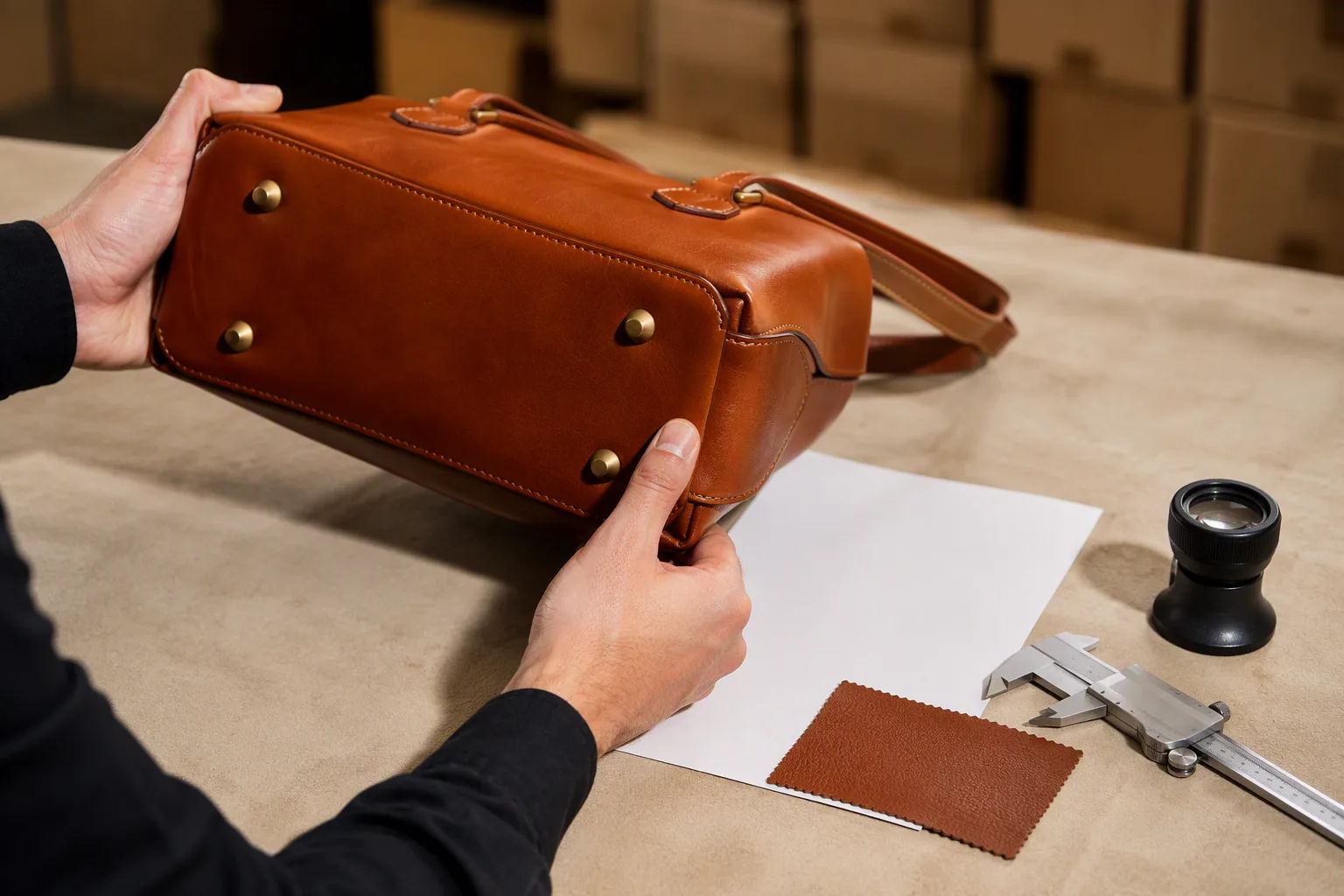
Ready to structure payments around milestones instead of trust alone? Tell us your order size and target delivery window and we will propose a payment schedule tied to verifiable stages — deposit against material purchasing, tooling handled transparently, and balance released against a third-party inspection report that your team can review before funds move.