AQL Inspection for Pet Bags: Reading the Numbers
- Why AQL Exists in Bag Production
- What AQL Actually Is
- Choosing an Inspection Level
- Batch Size and Sample Size
- Acceptance and Rejection Numbers
- What AQL Does Not Guarantee
- Writing AQL Into the Order
- In-Line or Final: Where to Inspect
- Briefing the Inspector
- Reading an Inspection Report
- Common Misreadings and Mistakes
- Using Inspection Results to Improve
- Special Considerations for Pet Bag Shipments
- FAQ
AQL inspection is the part of quality control that most buyers delegate without understanding. The report arrives with a pass or fail box ticked, and the numbers that produced that verdict go unread.
Those numbers are worth reading. They state how many units were checked, how many defects were found, and how many defects the order was allowed to contain. They also reveal what the inspection did not cover, which is often the more useful information.
This guide explains what AQL is, how sample sizes and acceptance limits follow from the order quantity, how to choose an inspection level that matches the product, and how to read an inspection report critically before accepting its conclusion.
Why AQL Exists in Bag Production
Inspecting every unit is impossible in practice for most orders, so a sampling rule is needed to convert a partial check into a decision. AQL is that rule.
The Problem With Visual Inspection Without a Rule
Where no acceptance rule exists, the outcome depends on the inspector's judgement and on the mood of the day. A batch of three hundred bags may be rejected in one factory and accepted in another with identical defect rates.
A defined acceptance number removes that variability. Both sides know in advance how many defects will pass and how many will fail, and the argument moves from opinion to arithmetic.
What AQL Balances
AQL balances two costs: the cost of accepting a bad batch and the cost of rejecting a good one. Set the limit too tightly and usable orders are rejected repeatedly; set it too loosely and defective goods reach customers.
The right setting depends on the product and the channel. A high-volume commodity item with easy returns can tolerate more than a branded product where a single visible defect damages trust.
Where AQL Sits in the Quality System
AQL governs final inspection, and it is only one layer of control. In-line checks, first-article approval and material inspection all reduce the defect rate before final inspection takes place.
Where a factory relies on final AQL inspection alone, the inspection becomes a filter rather than a control. The defects still exist; some of them are simply removed from the shipment.
What AQL Actually Is
Three elements produce an AQL decision: the order quantity, the inspection level and the accepted quality limit. Each is chosen, not measured.
The Statistical Basis
AQL is a sampling scheme. A specified number of units is drawn at random from the batch, inspected, and the number of defects is compared against an acceptance number.
The scheme is designed so that batches at or better than the stated quality limit will usually be accepted, and batches materially worse will usually be rejected. It does not certify that the batch meets the limit; it produces a decision with defined risk.
Inspection Levels
Inspection level determines how many units are sampled relative to the batch size. The general levels are conventionally labelled I, II and III, with Level II used by default in most consumer goods inspection.
Level I samples fewer units and is used where the product is simple or history is good. Level III samples more and is used where the product is complex or the consequence of a defect is serious.
Reading the Values
Once the sample size is known, the acceptance number follows from the chosen quality limit. The acceptance number is the maximum number of defects allowed; one more produces a rejection.
Higher quality limits allow more defects, which is why a category such as stitching may be set at a looser limit than a function-critical item such as a closure.
| Element | What it sets | Chosen by |
|---|---|---|
| Batch size | Which sample size band applies | The order, not the buyer |
| Inspection level | How many units are sampled | Buyer, with supplier agreement |
| Quality limit | How many defects are tolerated | Buyer, by defect category |
| Acceptance number | The pass or fail threshold | Looked up from the tables |
Sampling Risk in Plain Terms
Every sampling scheme carries two risks: rejecting a batch that was good enough, and accepting one that was not. The tables are arranged so that both risks are known in advance rather than discovered after the fact.
Tighter limits reduce the chance of accepting a poor batch and raise the chance of rejecting a usable one. That trade is the whole of the design decision, and it belongs to the buyer rather than to the inspector.
Choosing an Inspection Level
Most orders never discuss inspection level and are inspected at the default. That is usually fine, and occasionally it is an expensive default.
The Default Level
The default general level used across consumer goods inspection is known as Level II. Unless the purchase order states otherwise, an inspection agency will normally apply it.
For a mid-sized bag order, Level II produces a sample that is usually between fifty and two hundred units, which is enough to detect systematic defects without inspecting the whole batch.
Sampling Less: Level I
Level I samples roughly half as many units as Level II. It is used where the product is simple, the process is stable and previous shipments have been clean.
Where a supplier has delivered several consecutive clean batches, moving to Level I reduces inspection cost. The trade-off is a smaller sample and therefore a higher chance of missing a low-rate defect.
Sampling More: Level III
Level III roughly doubles the Level II sample. It is appropriate for complex constructions, new suppliers, first orders of a new style and products where a defect has serious consequences.
For pet carriers, the functional risk raises the case for Level III or for tightened limits on specific defect categories rather than for a wholesale heavier inspection.
| Situation | Suggested level | Reasoning |
|---|---|---|
| Established supplier, stable style | Level I | History reduces the need for volume |
| Standard repeat order | Level II | Default balance of cost and detection |
| New supplier or new style | Level III | Unknown process behaviour |
| Function-critical product | Level III, or tightened limits | Defect consequence is high |
| Deep discount, high volume | Level II with defined critical defects | Cost matters, critical must hold |
Batch Size and Sample Size
Sample size follows from batch size through a code letter, and the code letter is what the acceptance tables are indexed by.
Reading the Batch Bands
Batch quantity is matched to a band. Each band corresponds to a sample size code letter, and the code letter determines the number of units inspected.
The relationship is not proportional. A batch twice the size does not require twice the sample, because sampling risk falls with the square root of sample size rather than linearly.
Code Letters and Sample Sizes
The table below shows the sample sizes that correspond to the batch bands at the default inspection level. These are the standard published values; buyers should confirm the edition in use with their inspection provider.
| Batch quantity | Code letter | Sample size |
|---|---|---|
| 91 – 150 | F | 20 |
| 151 – 280 | G | 32 |
| 281 – 500 | H | 50 |
| 501 – 1200 | J | 80 |
| 1201 – 3200 | K | 125 |
| 3201 – 10000 | L | 200 |
| 10001 – 35000 | M | 315 |
How the Sample Is Drawn
The sample must be drawn at random from the whole batch, including cartons from different production days. Where an inspector samples only from the top of the pallet, the result describes those cartons rather than the order.
Randomisation is the part of the scheme most often compromised in practice. It is worth stating in the order that the sample must be drawn across the finished batch and across carton positions.

Acceptance and Rejection Numbers
The acceptance number is the decision threshold, and it changes with both the sample size and the quality limit chosen.
The Two Numbers
Each combination of sample size and quality limit produces two numbers: the acceptance number and the rejection number, which is the acceptance number plus one. A batch with defects at or below the acceptance number passes; at or above the rejection number it fails.
Where defect counts fall between defined limits for different categories, the final verdict follows the strictest category that failed rather than an average.
Reading the Table by Quality Limit
The table below shows acceptance numbers for common quality limits at the sample sizes most relevant to bag orders. Higher limits tolerate more defects.
| Sample size | Limit 1.0 | Limit 1.5 | Limit 2.5 | Limit 4.0 |
|---|---|---|---|---|
| 32 | 0 | 1 | 2 | 3 |
| 50 | 1 | 2 | 3 | 5 |
| 80 | 2 | 3 | 5 | 7 |
| 125 | 3 | 5 | 7 | 10 |
| 200 | 5 | 7 | 10 | 14 |
| 315 | 7 | 10 | 14 | 21 |
Setting Limits by Defect Category
Critical defects, which can cause injury or make the product unusable, are normally set at zero acceptance regardless of limit. Major defects, which affect function or saleability, take a tighter limit than minor cosmetic defects.
Applying one limit to everything is the commonest specification error. It either fails batches for cosmetic reasons or tolerates functional defects that should never ship.
| Defect category | Typical limit | Consequence of accepting |
|---|---|---|
| Critical | Zero acceptance | Injury risk, returns, regulatory exposure |
| Major, functional | 1.0 to 1.5 | Product fails in use, warranty claims |
| Major, visual | 2.5 | Customer dissatisfaction, markdowns |
| Minor, cosmetic | 4.0 | Slight loss of perceived quality |
What AQL Does Not Guarantee
An AQL pass is a decision, not a certificate. Treating it as proof of quality causes most of the disappointment that follows a clean report.
It Does Not Guarantee Zero Defects
A passing batch may contain defects, up to and including the acceptance number found in the sample, plus any present in the unsampled portion. A pass means the batch is likely to be at or better than the stated limit.
For a shipment of several thousand bags with an acceptance number of ten, the sample found up to ten majors and the batch still passed. The remaining units were not inspected.
It Does Not Guarantee Consistency
AQL measures one batch at a time. It says nothing about whether the next order will perform the same way, particularly where materials change between orders.
Trend tracking across batches is what reveals consistency. A supplier that passes at the limit every time is different from one that passes with zero defects and has done so for a year.
It Does Not Cover Everything That Matters
Inspection verifies what can be seen and tested in a few hours. It says nothing about durability over months of use, long-term colour behaviour or the performance of an untested component.
Those questions belong to laboratory testing, wear trials and material verification rather than to final inspection.
| Question | AQL answers it | AQL does not answer it |
|---|---|---|
| Does this batch pass the agreed limits | Yes | — |
| Are there any defects at all | Partly, within the sample | Defects in unsampled units |
| Will the next order be the same | No | Consistency over time |
| Will it last a year of use | No | Durability |
| Are materials as specified | Partly | Material composition and grade |
Writing AQL Into the Order
An AQL clause only works if the order states the level, the limits and the defect definitions that will be applied.
The Minimum Clause
At minimum the purchase order should state the inspection level, the quality limit by defect category, who pays for inspection, and that the result governs acceptance of the shipment.
Where inspection is carried out by a third party, the clause should name the agency or the standard of competence required, so that a factory-appointed inspector is not mistaken for an independent one.
Defining Defects Before the Inspection
Defect definitions should be written before production, not negotiated after a failure. A photograph-based defect list, agreed with the supplier, removes most disagreement about what counts.
Where the list is vague, both the factory and the inspector interpret it, and the buyer discovers the interpretation only when the report arrives.
Acceptance and Remedies
The clause should also state what happens on failure: rework, re-inspection at whose cost, sorting, or rejection of the batch. Without a stated remedy, a failed inspection produces a discussion rather than an action.
Where a batch is rejected, the sequence matters. Rework followed by re-inspection is a different commercial position from rejection and remanufacture, and the supplier should know which applies.
| Clause element | What it should state | Why it matters |
|---|---|---|
| Level and limits | Level II, limits by category | Removes discretion |
| Defect definitions | Written list with photographs | Prevents post-hoc argument |
| Inspector | Third-party, named or qualified | Independence of the verdict |
| Cost | Who pays, including re-inspection | Makes failure consequential |
| Remedy | Rework, sort, reject, or credit | Turns failure into action |
In-Line or Final: Where to Inspect
Final inspection is the last chance, not the best one. Inspections earlier in production catch defects while they are still cheap to fix.
In-Line Checkpoints
In-line checks are placed at the operations where defects originate: cutting, skiving, stitching at stress points, hardware attachment and final assembly. Each checkpoint verifies a small number of characteristics.
Detecting a repeat defect at stitching rather than at final inspection avoids finishing an entire batch with the same fault. The saving is in rework avoided, not in inspection effort.
First-Article Approval
First-article approval requires the first unit off the line to be checked against the sealed sample before production continues. It catches set-up errors at the only moment when correcting them is nearly free.
Where production runs across shifts or after a line change, first-article approval should be repeated. A machine reset can reintroduce the fault that was corrected earlier.
Final Inspection and How the Layers Combine
Final AQL inspection remains necessary because it verifies the shipment as a whole: quantity, packing, carton marking and the accumulated effect of every earlier operation.
The three layers address different risks. In-line checks control the process, first-article approval controls set-up, and final inspection verifies the batch. Removing any one of them shifts its risk onto the others.
Briefing the Inspector
An inspection is only as good as the brief behind it. Most weak reports trace back to a brief that named a quantity and nothing else.
What the Brief Must Contain
The brief should carry the purchase order reference, the inspection level, the limits by defect category, the written defect list with photographs, the measurement points and tolerances, and the sealed sample reference.
It should also state the packaging and carton requirements, because packing defects are among the most common reasons a shipment is held at destination rather than at the factory gate.
Sample Drawing Instructions
Instructions on how to draw the sample belong in the brief: across finished cartons, across production days where identifiable, and from the whole batch rather than the accessible front row.
Where an inspector cannot identify production days, the report should say so. A report that is silent on sample drawing is weaker than one that documents the limitation.
Photographic Requirements
The report should contain photographs of every defect found, not only representative examples, plus general views of the packed cartons and the inspection set-up.
Photographs convert the report from a verdict into evidence. Where a defect is disputed later, the photograph is usually the only record of it.
Reading an Inspection Report
An inspection report contains a verdict, and the verdict is the least informative part of it. The details above the verdict are what determine whether the pass actually means anything.
Check the Sample Size and the Drawing
Confirm that the sample size matches the batch band and the stated level. Where the inspector used a smaller sample than the level requires, the acceptance numbers no longer apply as stated.
Then check how the sample was drawn. Where the report states that units were taken from finished cartons across the batch, the result describes the shipment; where it is unclear, the confidence of the verdict falls.
Check the Defect Count Against the Acceptance Number
Read the defect counts by category and compare them with the acceptance numbers. A pass at the limit, with majors clustered near the threshold, describes a different risk from a pass with no majors at all.
The distribution matters as much as the total. Ten minors spread across ten units is a different situation from ten minors on one unit, which usually points to a single faulty operation.
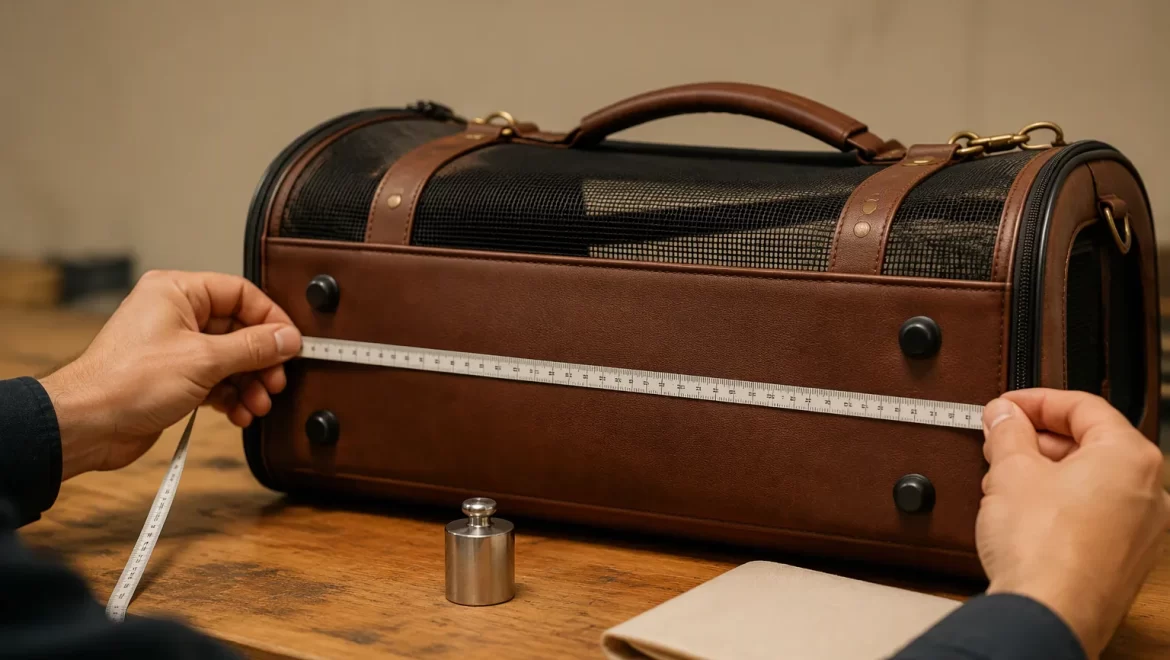
Read the Measurements
Dimensional checks show whether the batch is centred on the specification or sitting at one edge of the tolerance. A batch inside tolerance but consistently at the upper limit will drift out of tolerance on the next run.
Measurements also reveal whether the sample matches the sealed reference. Where the report shows dimensions without a comparison, ask for the reference values.
| Report element | What to verify | Warning sign |
|---|---|---|
| Sample size | Matches batch band and level | Smaller sample than the level requires |
| Sample drawing | Across cartons and production days | Source of units unstated |
| Defect counts | By category, against acceptance numbers | Only a total given, no breakdown |
| Defect photographs | One per defect found | No photographs, or one example only |
| Measurements | Compared with specification and reference | Values listed without tolerance |
| Packing and carton checks | Markings, quantity, packing method | Section left blank or cursory |
Timing the Inspection
Inspection should take place when the batch is complete and packed but before it is loaded. Inspecting earlier leaves part of the batch unchecked; inspecting after loading removes the option of correcting anything.
Where a shipment is consolidated from several production runs, each run should be checkable in its own cartons. Mixed cartons make both the sample drawing and any subsequent sorting considerably harder.
Common Misreadings and Mistakes
The same few errors appear in AQL discussions, and each has a straightforward correction.
Treating a Pass as a Zero-Defect Statement
A pass confirms that the count found in the sample was inside the acceptance number. It does not mean the batch is free of defects.
Where a buyer needs a cleaner result, the route is a lower limit or a higher inspection level, not a re-reading of the report.
Confusing the Limit With a Percentage
The quality limit is not a percentage of the batch that may be defective, and reading it as one leads to expectations the scheme cannot meet.
The limit applies to the sampling scheme's decision rule. The proportion of defects in an accepted batch is not fixed by it and can vary with the true quality of the batch.
Comparing Reports Across Different Levels
Two suppliers' reports can only be compared where the batch bands, levels and limits are the same. Reports at different levels describe different amounts of evidence.
Where a comparison is required, the cleanest approach is to fix one scheme across suppliers and apply it consistently, so that the numbers mean the same thing.
| Misreading | What is actually true | Practical correction |
|---|---|---|
| A pass means no defects | Defects up to the acceptance number may be present | Judge against the limit, not against zero |
| The limit is a percentage | It is a decision rule, not a batch proportion | Estimate batch quality separately |
| Any two reports compare | Only at the same level and limits | Fix one scheme across suppliers |
| Re-inspection changes the batch | It changes the sample, not the goods | Fix the process, then re-inspect |
Using Inspection Results to Improve
An inspection report is most valuable after the shipment has been accepted, when the numbers are used to decide what to change rather than what to ship.
Tracking Defect Types Over Time
Recording defect types per batch turns separate reports into a trend. A category that appears in every batch, even at low counts, points to an operation that is not under control.
The trend also shows whether a corrective action worked. Where a defect type falls after a change and stays low across two or three orders, the fix has held.
Building a Defect Library
Photographs of defects, collected over time, become the basis of the defect list used in the order clause. Definitions improve as more examples accumulate.
A supplier who has seen the photographs before production is far less likely to produce the same fault than one who is told about it after inspection.
Deciding When to Change the Scheme
The inspection scheme should change when the evidence supports it. A supplier with several consecutive batches at zero majors may justify Level I; a supplier whose defects cluster at the limit may justify Level III or tightened limits.
Changing the scheme without evidence removes the comparability of the reports and usually increases cost without reducing risk.
| Signal in the data | Interpretation | Practical response |
|---|---|---|
| Zero majors across several batches | Process under control | Move toward Level I |
| Counts consistently at the acceptance number | Process at the edge of the limit | Keep Level II, target the operation |
| One category recurring every batch | Uncontrolled operation | In-line check at that station |
| Defects concentrated in one carton | Localised fault, often one shift | Trace production day and operator |
| Measurements drifting toward one tolerance | Set-up or material variation | Re-check first article and materials |

Records to Keep After the Inspection
Reports, defect photographs and measurement sheets should be filed per order and kept with the sealed sample and the agreed defect list. Together they form the quality record for the style.
Where a reorder is placed months later, that record is what allows a new inspection to be compared against the last one. Without it, each shipment is judged in isolation and drift goes unnoticed.
Special Considerations for Pet Bag Shipments
Pet products carry a few risks that differ from general bag categories, and the inspection scheme should reflect them rather than treat the order as generic.
Function Over Appearance
A carrier whose zip fails, whose base sags or whose closure releases is unusable regardless of how clean the stitching looks. Functional checks therefore deserve explicit limits rather than a share of a single cosmetic limit.
Where the product carries an animal, the consequence of a closure failure is higher than scuffing on a panel, and the acceptance limit should reflect that difference.
Cleanability and Odour
Interior materials that hold odour or cannot be wiped clean generate returns that are difficult to argue against. Where a wipe-clean interior is specified, inspection should include a cleanability check against the agreed method.
Odour from adhesives, linings or packaging is best assessed at the factory, since it becomes far harder to address once the shipment has been sealed in cartons and shipped.
Sharp Edges, Burrs and Small Parts
Metal hardware and mesh edges should be checked for burrs and sharp transitions, both because they risk injury to the animal and because they damage stitching during assembly.
Where a product includes small components, the specification should state the attachment requirement and the inspection should verify that each component resists a defined pull, not merely that it is present.
| Risk area | Inspection focus | Suggested treatment |
|---|---|---|
| Closures and zips | Function under load, full travel | Major, tight limit |
| Base and structure | Sag under working load | Major, tight limit |
| Interior cleanability | Wipe test per agreed method | Major for specified interiors |
| Odour | Assessment at factory, before packing | Major where noticeable |
| Edges and small parts | Burrs, sharp transitions, pull test | Critical for sharp edges |
FAQ
What does AQL stand for in bag inspection?
A: Accepted quality limit. It defines how many defects a sampled batch may contain and still be accepted, and it produces a pass or fail decision rather than a measurement of quality.
How many bags are inspected in an AQL check?
A: The number follows from the batch size and the inspection level. At the default level, a batch of 281 to 500 units is sampled at 50 pieces, and a batch of 501 to 1200 units at 80 pieces.
What is the difference between inspection level I, II and III?
A: The level sets how many units are sampled. Level I samples least, Level II is the default, and Level III samples most and is used for new suppliers, new styles and function-critical products.
Is a passing AQL report proof of good quality?
A: No. A pass means the defect count in the sample was within the acceptance number. Defects may still exist in the sampled and unsampled units.
What is the acceptance number?
A: The maximum number of defects allowed in the sample for a pass. One more defect produces a rejection, and the acceptance number depends on both sample size and the quality limit chosen.
Should all defects share one quality limit?
A: No. Critical defects are normally zero acceptance, function-critical majors take a tight limit, and cosmetic minors take a looser one. A single limit either fails batches for cosmetics or lets functional faults through.
Who should pay for the inspection?
A: This is commercial and should be stated in the order. Third-party inspection is usually paid by the buyer, with re-inspection after a failed batch normally charged to the supplier.
Can the factory's own inspector be used?
A: It is possible, but the independence of the verdict is weaker. Where a third party is required, name the agency or the competence standard in the order clause.
What happens if a batch fails inspection?
A: The order clause should state the remedy: rework and re-inspection, sorting, rejection or a credit. Without a stated remedy a failed inspection produces discussion rather than action.
Does re-inspection improve the batch?
A: It changes the sample, not the goods. Where a batch failed on a systematic fault, the process must be corrected before re-inspection, otherwise the same fault remains in the unsampled units.
How do I define defects before production?
A: Write a defect list with photographs, agreed with the supplier before production starts. Definitions negotiated after a failure are the main source of disputes.
Should in-line checks replace final inspection?
A: No. In-line checks control the process, first-article approval controls set-up, and final inspection verifies the shipment. Removing one shifts its risk onto the others.
What should an inspection report contain?
A: Sample size and drawing method, defect counts by category against the acceptance numbers, photographs of every defect, measurements against specification and reference, and packing and carton checks.
Why do measurements matter in the report?
A: They show whether the batch is centred on the specification or drifting toward a tolerance limit. A batch at the edge of tolerance is likely to fall outside it on the next run.
When should the inspection scheme be changed?
A: When the evidence supports it: several clean batches may justify Level I, while recurring defects at the acceptance number justify Level III or tightened limits on that category.
Are pet bags inspected differently from other bags?
A: The scheme is the same, but function deserves its own tight limits because a failed closure or zip makes the product unusable, and cleanability, odour and sharp edges need explicit checks.
Ready to write an inspection clause that survives a failed shipment? State the level, the limits and the defect definitions before production, require a third-party inspector, document the sample drawing, and treat the report as evidence rather than as permission to ship.