Pre-Production vs Salesman Samples: What Each One Tells You
- Why Sample Types Matter in Bag Sourcing
- The Sample Family: Development, Salesman and Pre-Production
- Development and Proto Samples
- Fit and Wear Samples
- Salesman Samples: Built to Sell
- Pre-Production Samples: The Lock-In
- What Each Sample Cannot Prove
- Using Samples to Control Production
- Sample Approval Workflow and Sign-Off
- Common Sample Traps
- Timelines and Costs of Sampling
- Handling Disputes with Samples
- A Pre-Production Sample Checklist
- FAQ
In bag sourcing, the word sample covers several different objects with different purposes, different costs and very different levels of authority. Treating them as one thing is how brands end up approving a bag that the factory never actually agreed to make.
A development sample answers whether the design works. A salesman sample answers whether buyers will order it. A pre-production sample answers whether the factory can repeat it. Only the last of those is a production document, and it is the one that wins arguments later.
Understanding the sequence lets a buying team use each sample for its real purpose, avoid the trap of selling from a sample built by a sample room, and enter production with a sealed reference that both sides have signed.
Why Sample Types Matter in Bag Sourcing
Samples are the only physical evidence in a sourcing process that otherwise runs on drawings, messages and quotations. Their authority depends entirely on what they were made to prove.
The Cost of Confusing the Types
When a salesman sample is treated as a production standard, the difference appears at the first bulk delivery. Materials may differ, dimensions may shift slightly, and the finish may come from a different supplier.
Resolving that at delivery is expensive for both sides. The bag exists, the money has been spent, and the discussion becomes about who accepted what rather than about how to build the bag correctly.
Why Each Sample Exists
Each sample answers a question that cannot be answered on paper. Development samples test whether the design can be built. Salesman samples test commercial appeal and generate orders. Pre-production samples test reproducibility.
Skipping a stage saves a few weeks and a sample fee. It typically costs more than that later, because the unverified question does not disappear; it simply arrives at a worse moment.
What a Sample Is Not
A sample is not proof of production capability on its own. Sample rooms are often staffed by the most experienced makers, working with the best available materials at a relaxed pace.
Volume production is different: less experienced operators, tighter time per unit, and materials drawn from a bulk order. A sample made under sample-room conditions proves the design, not the factory's ability to repeat it.
It helps to separate the questions a sample can settle from those it cannot.
| Question | What a sample settles | What stays open |
|---|---|---|
| Is the design buildable | Yes, in skilled hands | Line-level repeatability |
| Will it carry and wear | Yes, within the tested period | Long-term behaviour |
| Can it be produced | Yes, if made on the line | Consistency across bulk batches |
The Sample Family: Development, Salesman and Pre-Production
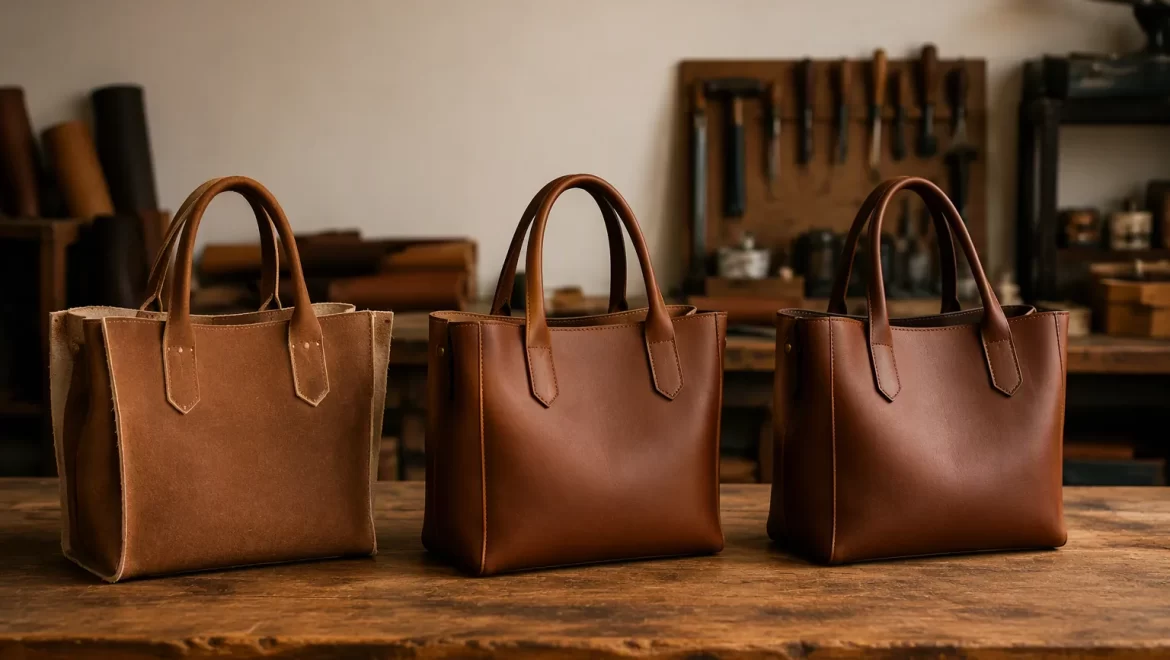
Three sample types carry the sourcing process, and each has a distinct role, cost profile and approval status.
Development Samples
Also called proto or fit samples, these are made early to test proportion, structure and construction method. They are expected to change, and they are usually made in whatever material is available.
A development sample does not need to be beautiful. It needs to answer whether the bag works: does it hold its shape, does the closure function, does the strap carry the intended load comfortably.
Salesman Samples
A salesman sample is built for presentation. It is finished to a high standard, uses the intended leather where possible, and is photographed for catalogues and shown to buyers.
Its purpose is commercial: to obtain orders. Its authority is deliberately limited, because it may be produced in a sample room with materials that will not match the bulk order exactly.
Pre-Production Samples
The pre-production sample, sometimes called a PP sample, is made on or from the production line using the actual materials, hardware and packaging of the bulk order. It is the reference against which production is inspected.
Once approved and sealed, it becomes the production standard. Colour, construction, dimensions and finish are all measured against it, and it is the object that settles disagreements.
| Sample type | Question answered | Typical materials | Authority |
|---|---|---|---|
| Development or proto | Does the design work | Any available material | Design reference only |
| Fit or wear sample | Does it carry and wear well | Close to intended | Design refinement |
| Salesman sample | Will buyers order it | Intended or near-intended | Commercial, not production |
| Pre-production sample | Can the factory repeat it | Actual production materials | Production standard when sealed |
| Golden or sealed sample | What was approved | Production materials | Binding reference |
Samples as Cost Control
Sampling is often treated as a development expense, but its real function is cost control. A problem found on a sample costs a sample revision; the same problem found on a bulk delivery costs rework, freight, and possibly the margin on the order.
Where a programme is under price pressure, the temptation is to sample less and start production sooner. That trade usually reverses: unverified questions do not disappear, they arrive at the point where correction is most expensive.
Development and Proto Samples
Development samples exist to be criticised. Their value lies in what the team learns, not in how they look.
What They Verify
Proto samples test proportion, gusset depth, opening access, strap geometry and the sequence of assembly. They also reveal whether the pattern works with the chosen leather thickness and stiffness.
Because they are built quickly, proto samples are the cheapest place to change the design. A proportion that feels wrong at this stage costs a pattern revision; the same discovery after tooling and bulk materials are committed costs far more.
What They Do Not Verify
Development samples say nothing about production consistency, batch colour or the behaviour of hardware from a bulk plating run. They are made in small quantity, often with materials that will not be repeated.
They also do not verify cost. A sample made without production constraints can be built in a way that is not commercially repeatable, which is why the quotation should be revisited after the design is fixed.
When to Stop Developing
Development should end when the two open questions are answered: does the design meet its function, and is the construction method settled. Continuing to iterate on aesthetics past that point delays everything behind it.
A useful discipline is to cap development rounds in advance and require a written decision at each one: proceed, revise, or stop. Open-ended development is the most common cause of a slipped launch.
Fit and Wear Samples
Between the first proto and the decision to produce sits a sample that is carried rather than inspected. It is cheap and it catches problems that no drawing review will reveal.
Carrying the Bag in Real Conditions
A wear sample is loaded with the things the bag is meant to hold and carried for days. Weight distribution, strap comfort, closure behaviour and how the bag sits against the body all become obvious.
This is also where proportion problems surface. A bag that looked balanced on a bench can hang awkwardly when loaded, and a strap that seems generous can sit uncomfortably on a shoulder after an hour.
Wear Points and Abrasion
Repeated carrying reveals where the bag rubs: against a hip, under an arm, along a clothing seam. Edge paint, corner reinforcement and lining behaviour all show up here rather than in a photograph.
Where a design uses edge paint on a high-contact edge, a wear sample is the only reliable way to judge whether the finish will survive normal use.
Feedback That Is Usable
Wear feedback is most useful when it is specific: which point bothered the wearer, at what load, after how long. General impressions such as "feels heavy" are difficult to act on.
Photographs of the wear points, taken after the test period, give the factory something concrete to change. They also become part of the record if the issue returns on production.
Salesman Samples: Built to Sell
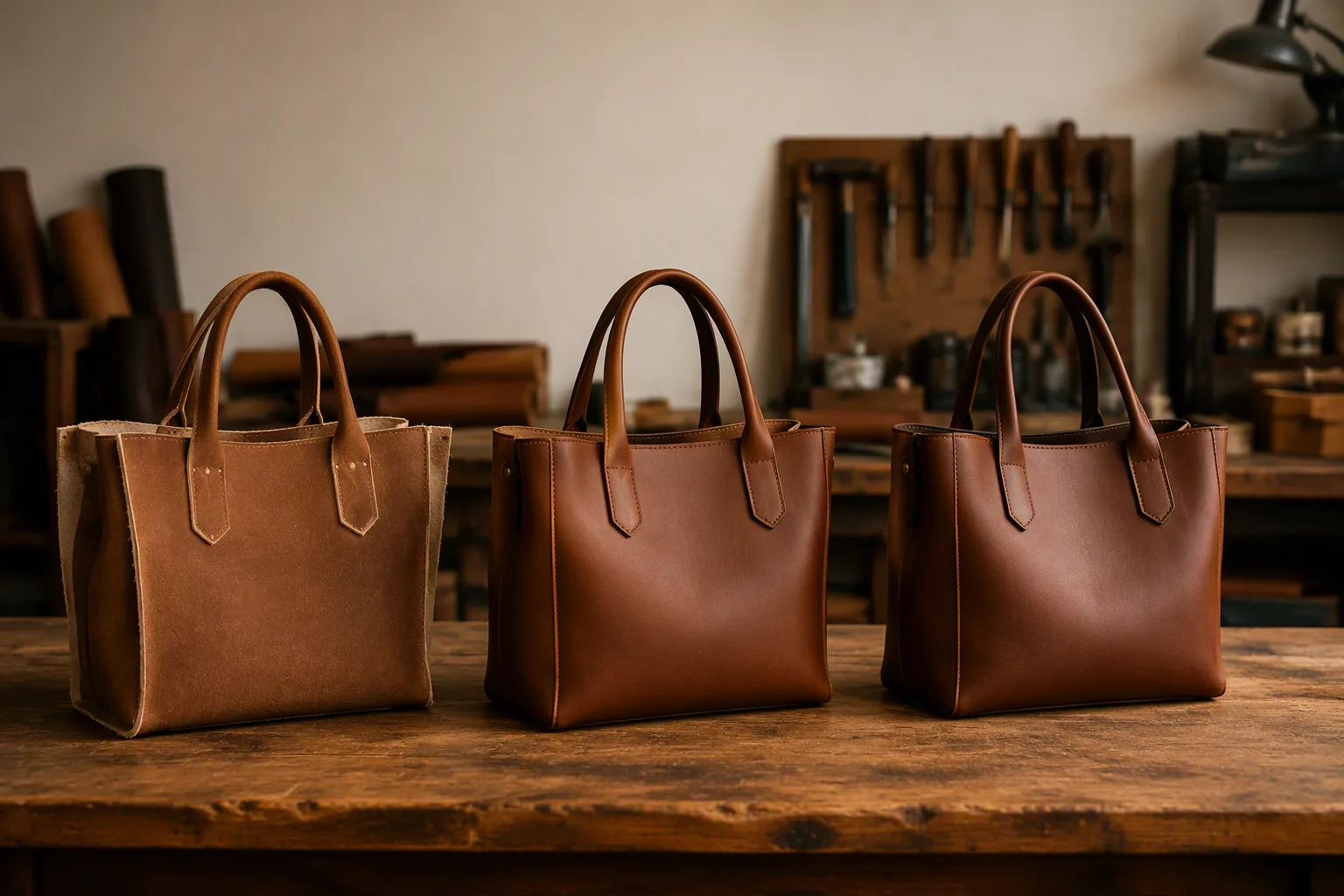
The salesman sample serves the commercial stage of the process, and its specification should reflect that purpose without being mistaken for a production commitment.
Purpose and Specification Level
A salesman sample is built to be photographed and handled by buyers. It uses the intended leather where available, is finished cleanly and is presented in the intended colour.
Its specification is usually close to the final design but deliberately short of a production document. Where a material is not yet available in production grade, a substitute may be used for the sample stage.
What It Can Prove
A good salesman sample proves the design reads well in photographs, that the proportions work visually and that the hardware complements the leather. That is genuine and necessary information.
It also produces the first realistic sense of the product's market position, which affects pricing and order quantities more than any drawing can.
The Risk of Selling From a Sample Room
The main risk is treatability: orders taken from a hand-built sample with sample-room craftsmanship can create expectations that volume production cannot meet. The gap is usually in consistency, not in design.
The mitigation is disclosure. Where the salesman sample differs from what will be produced, that difference should be recorded before orders are taken, so that the sales team is not selling a specification the factory never agreed to.
| Aspect | Salesman sample | Production | Risk if confused |
|---|---|---|---|
| Craftsmanship | Sample-room level | Line level, per-unit time limited | Higher expectations than delivery |
| Material | Intended or near-intended | Bulk batch | Colour or hand-feel difference |
| Hardware | Premium finishing, small quantity | Plating batch | Finish tone and wear differences |
| Colour | Best available match | Batch colour | Visible shade difference |
| Branding | Often hand-finished | Production stamps or labels | Label and detail mismatch |
Presentation quality and production quality are measured against different standards.
| Judged on | Salesman sample | Pre-production sample |
|---|---|---|
| Craftsmanship | Sample-room finish | Production-line workmanship |
| Materials | Intended or near-intended | Actual bulk materials |
| Purpose | Selling the range | Defining the delivery |
Pre-Production Samples: The Lock-In
The pre-production sample is where the sourcing process stops negotiating and starts documenting. It is the single most important physical object in the project.
Made With Production Materials
A genuine pre-production sample uses the actual leather, lining, thread, hardware and edge paint that will be used in bulk. Where a substitute is unavoidable, the substitution must be recorded and replaced before bulk production.
Where the sample is made with different materials, it cannot function as a production standard. Its role is to close that gap, not to illustrate intent.
Built on or From the Line
Ideally the pre-production sample is made on the production line by the operators who will make the bulk order, using the same patterns and the same equipment. This exposes tooling, machine and process issues that a sample room will not.
Where the sample room makes the pre-production sample, at least the patterns, the materials and the process sequence should match production.
The Approval That Becomes a Standard
Once the pre-production sample is approved, it is signed by both parties, sealed with the date and any remarks, and retained as the reference. From that point, defects are defined against the sample rather than against opinion.
The sealed sample should be stored under controlled conditions and photographed in detail. Photographs lose colour fidelity but they preserve construction detail, which is what most disputes concern.
What Each Sample Cannot Prove
Knowing the limits of a sample prevents a team from treating a partial answer as a complete one.
Production Variation
No sample, however carefully made, demonstrates the range of variation a bulk run will produce. Colour across dye lots, dimension drift across batches and hardware finish variation all fall outside what a single sample can show.
Variation is controlled by specification and inspection, not by sample approval. The sample defines the target; the inspection plan defines how close the run must stay to it.
Factory Capability
A sample made in a sample room proves that the design is buildable by skilled hands. It does not prove that the line can hit the same standard at production pace, with the operators assigned to the order.
This distinction matters most with complex constructions, tight tolerances and unusual materials. Where a design is demanding, an on-line pre-production sample is the only reliable test.
Commercial Reality
A sample cannot show whether a price is achievable at volume, whether a lead time is realistic under load, or whether a supplier will still be available next season. Those are commercial questions that sampling does not answer.
Treating sample approval as the end of due diligence is a common mistake. Supplier capability, capacity and continuity remain separate questions throughout the relationship.
Using Samples to Control Production
A sample only controls production if it is identifiable, sealed and referenced in the documents the factory works from.
Sealing and Identification
The approved sample should be signed by both parties, dated, and marked with the style reference. Where a bag has several colourways, each needs its own sealed sample, because one sample cannot represent a colour range.
Seals and labels must be tamper-evident enough that a substituted sample is detectable. The purpose is not formality; it is to make the reference stable over months of storage.
Storing and Refreshing References
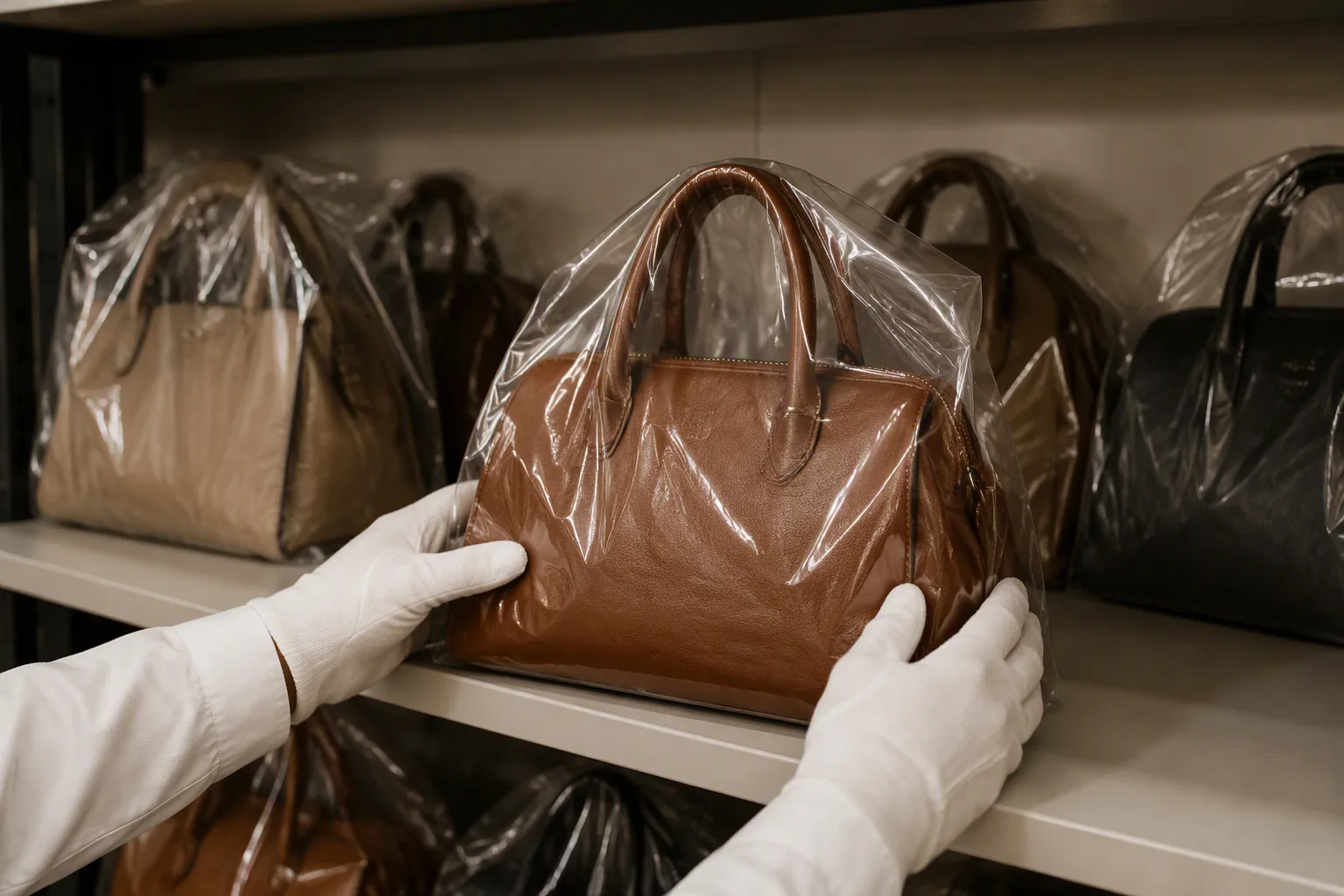
Sealed samples age. Leather darkens, dust settles, and handling softens edges. A reference that has been passed around for a year is not the same object that was approved.
Storage should be flat, dark and sealed, with a photographic record taken at approval. Where a reference has visibly changed, replacing it with a verified duplicate keeps production aligned with the original decision.
Referencing the Sample in Production Documents
The production documents should name the sealed sample as the standard for materials, construction and finish, and reference its date and identification. Inspection then measures against a named object rather than a description.
Where the sample and the written specification disagree, the conflict should be resolved before production and the resolution recorded. Leaving a contradiction in the file guarantees that someone follows the wrong one.
| Control | Purpose | Practical requirement |
|---|---|---|
| Signed and dated seal | Identifies what was approved | Both parties sign, date recorded |
| One sample per colourway | Represents the range | Separate approval for each colour |
| Controlled storage | Keeps the reference stable | Flat, dark, sealed, inspected |
| Photographic record | Preserves construction detail | Detail shots at approval |
| Named in production documents | Makes inspection possible | Style reference and date cited |
Sample Approval Workflow and Sign-Off
Approval is a decision with consequences, and the workflow should make clear who decides, what they are deciding, and what happens next.
Who Approves and What It Means
Approval authority should sit with one named person or a defined group, and their approval should mean the sample is production-ready in their judgement. Where several people must agree, the workflow should define the sequence rather than allow parallel verdicts.
Approving a pre-production sample is a commitment to a specification. It should follow a checklist review rather than a visual impression, because visual review reliably misses dimensions and internal construction.
Recording Comments and Corrections
Comments made during sample review should be written, dated and attached to the sample record. Verbal comments leave no trace and cannot be verified later.
Where corrections are requested, the corrected sample should be re-submitted and re-approved rather than assumed acceptable. The final approved version is what becomes the standard, and earlier versions must be marked as superseded.
Rejecting a Sample
Rejection should state the specific defect and the requirement it fails, not a general judgement. A vague rejection produces another sample with the same problem, because the factory has no actionable information.
Where a sample is rejected, retaining it as a record is useful. It shows what was declined and why, which prevents the same version being resubmitted later in the project.
Common Sample Traps
Sample disputes follow a small number of patterns. Recognising them in advance removes most of the cost of getting it wrong.
The Sample-Made-by-Sample-Room Trap
Sample rooms are usually the factory's best bench, staffed by the most skilled makers and given more time per unit. A bag made there can be noticeably better than the same bag made on the line.
Where a design is difficult, this gap is the most likely source of a delivery that fails comparison with the approved sample. An on-line pre-production sample closes the gap before bulk begins.
The Material Substitution Trap
Substitutions happen for good reasons: a material is out of stock, a shade is unavailable, or a sample needs to be produced quickly. The problem is not the substitution itself but the absence of a record.
Every substitution should be recorded on the sample and replaced before bulk production. Where a brand supplies its own leather, that material must be used for the pre-production sample, not a similar one.
The Colour Drift Trap
A salesman sample approved in one season may not be reproducible in the next. Where a colour standard is not retained, the next batch will be matched to memory rather than to a physical reference.
Retaining the master colour swatch and re-verifying it against the pre-production sample each season keeps the colour stable across the life of the product.
The Moving Target Trap
Repeatedly revising a sample without re-approving the whole specification lets small changes accumulate. The bag that eventually enters production is not the bag that was approved at the start.
Each revision should produce a new approved version with a superseded mark on the previous one. A single current standard, clearly identified, prevents the accumulation of unapproved changes.
| Trap | How it appears | Prevention |
|---|---|---|
| Sample-room build | Bulk delivery lacks sample craftsmanship | On-line pre-production sample |
| Material substitution | Colour or hand feel differs in bulk | Record substitutions, replace before bulk |
| Colour drift | New batch differs from approved shade | Retain and re-verify master swatch |
| Moving target | Final bag differs from first approval | Version control, supersede old samples |
| Undocumented verbal change | Factory and brand disagree on what was agreed | Written, dated comments only |
The three sample types differ in what they consume as much as in what they prove.
| Sample type | Main consumption | Reusable as a standard |
|---|---|---|
| Development | Design time | No |
| Salesman | Presentation time and materials | No |
| Pre-production | Bulk materials and line time | Yes, when sealed |
Timelines and Costs of Sampling
Sampling consumes calendar time and money, and both are predictable enough to plan for rather than discover.
How Long Sampling Takes
Development sampling depends on how quickly decisions are made rather than on how fast the factory works. Pre-production sampling depends on material availability, and it can only begin once the bulk materials are in hand.
Where a launch date is fixed, sampling should be scheduled backwards from it, with the pre-production sample treated as a hard gate rather than a formality.
Sample Fees and Credits
Most factories charge a sample fee, particularly for pre-production samples using production materials. Many credit part or all of that fee against the first bulk order, which is worth confirming in writing at quotation stage.
Where several rounds are expected, the cumulative sample cost should be anticipated. It is a real part of development cost and is often underestimated in the initial budget.
Sample Materials and Logistics
Samples require materials to be sourced, sometimes in small quantities at disproportionate cost. Where a brand supplies materials, shipping and customs add their own lead time and should be planned as part of the sample schedule.
Where the sample must cross a border for approval, the transit time belongs in the plan. Approval cannot happen while the sample is in transit, and this is a recurring cause of missed schedules.
| Stage | Main time driver | Controllable by | Typical constraint |
|---|---|---|---|
| Development sampling | Speed of design decisions | Brand | Iteration count |
| Salesman sample | Material availability | Brand and factory | Presentation timeline |
| Pre-production sample | Bulk material arrival | Factory | Material lead time |
| Approval | Review and sign-off speed | Brand | Reviewer availability |
| Sample logistics | Shipping and customs | Both | Border clearance |
Handling Disputes with Samples
When a delivery is questioned, the outcome depends almost entirely on what was documented before production started.
The Role of the Sealed Sample
A sealed, signed and dated sample converts a subjective argument into a comparison. The question changes from whether the delivery is acceptable to how far it departs from the agreed reference.
Where no sealed sample exists, the discussion usually turns on messages and photographs, and resolution becomes a negotiation between unequal positions rather than a verification.
Measuring the Departure
A dispute should be framed in measurable terms: dimension at named points, colour against the master swatch under the agreed light, construction detail against the sealed sample's photographs.
Where a departure is measurable and outside the agreed tolerance, it is a defect. Where it is measurable and inside tolerance, it is a difference the specification permits, and renegotiating it after delivery is difficult.
Reaching a Practical Resolution
Resolution usually takes one of three forms: rework of the defective units, a price adjustment accepted by both sides, or acceptance as-is with the deviation recorded for the next order.
Recording the outcome matters as much as reaching it. Where a deviation is accepted for one order, the record prevents it being treated as a precedent for the next without discussion.
| Dispute type | Evidence needed | Practical resolution |
|---|---|---|
| Dimension difference | Named measurement points, tolerance | Rework or adjustment |
| Colour difference | Master swatch, agreed light condition | Sorting, adjustment or acceptance |
| Construction difference | Sealed sample, approval photographs | Rework of the affected operation |
| Material deviation | Material specification, substitution record | Replacement or recorded acceptance |
| Finish inconsistency | Finish standard, sample photographs | Sorting and rework |
Scheduling Sampling Into the Launch Plan
A launch calendar should show sampling as dated gates rather than as an open block. Each gate has an owner, an input that must be present, and a decision that must be made before the next stage can start.
Where the calendar treats sampling as float that can absorb delays from other workstreams, the pre-production gate is usually the first thing to be compressed, which is exactly the wrong place to save time.
A Pre-Production Sample Checklist
The pre-production sample is the last cheap opportunity to catch a problem. A checklist review makes that opportunity reliable.
What to Measure
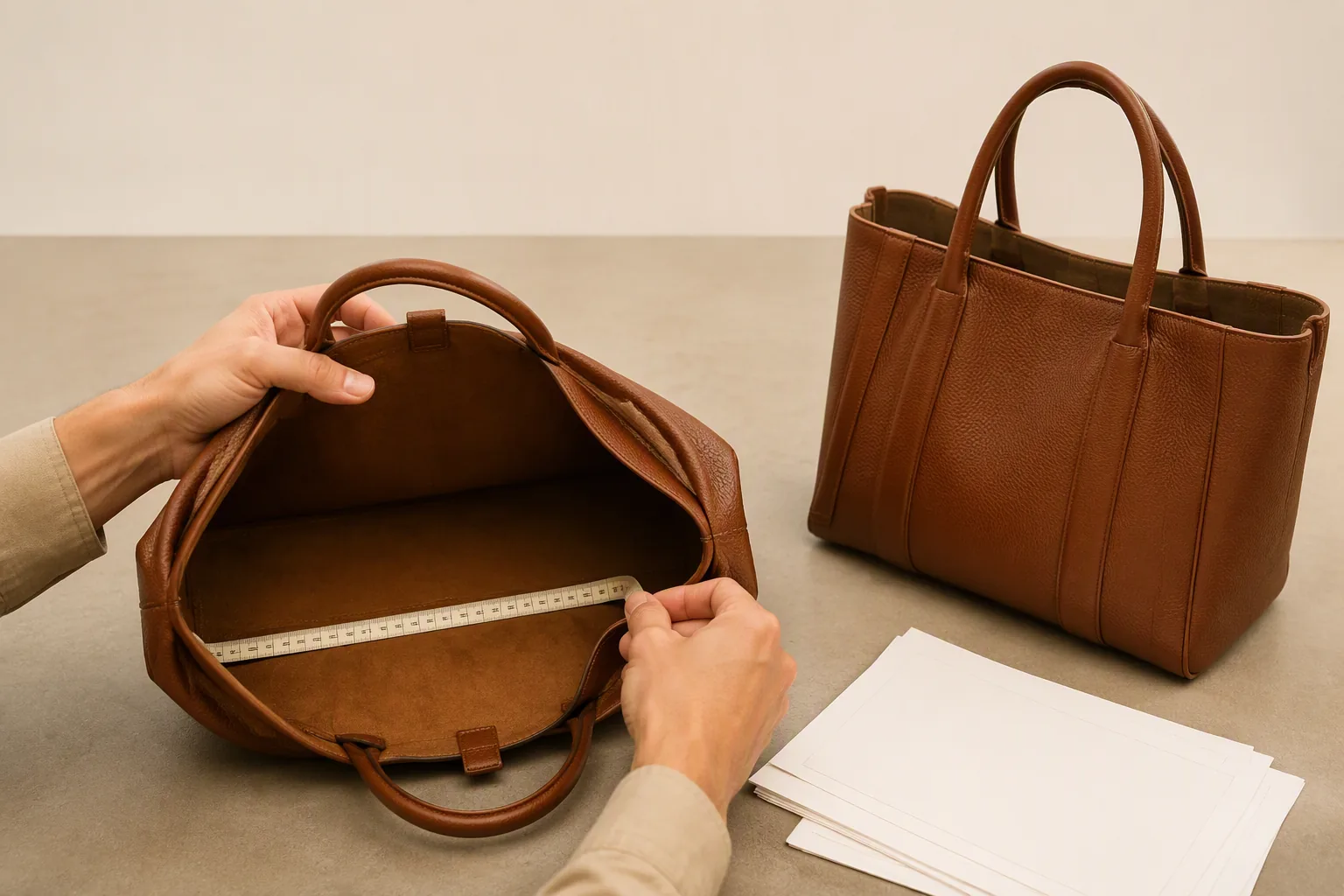
Measure every dimension named in the specification at the stated points, and record the results alongside the stated tolerance. Eyeballing proportions misses the small dimensional shifts that create assembly problems.
Check the internal construction as well as the exterior: reinforcement placement, lining attachment, edge treatment and the sequence of stitching at stress points.
What to Check Functionally
Load the bag to the intended working weight and confirm that the closure holds, the strap attachments do not distort and the base does not sag beyond the design intent.
Operate every moving part: zips run their full length, closures open and close with the intended force, and hardware does not catch or bind. Function is the one area where a sample can be checked exhaustively at low cost.
What to Document Before Signing
Photograph the sample from every angle, including the interior and all construction details, and attach the photographs to the approval record. Note the material references, hardware references and colour standard used.
Where any deviation is accepted, state it explicitly on the approval so the record shows a decision rather than an oversight. An approval with no recorded exceptions is a strong position to hold afterwards.
Retaining References After the Order
The value of a sealed sample shows up on the second order, not the first. Reorders are approved against the record, so the reference, the drawings and the approval photographs need to survive the interval between programmes.
Keeping one file per style, updated at each approval, turns a reorder into a repeat rather than a new development cycle. The cost of maintaining it is small; the cost of rebuilding it from messages and memory is not.
FAQ
What is the difference between a salesman sample and a pre-production sample?
A: A salesman sample is built for presentation and selling, often in a sample room. A pre-production sample is made with production materials, ideally on the production line, and becomes the production standard once sealed.
Is a salesman sample good enough as a production reference?
A: No. It is usually made with sample-room craftsmanship and sometimes with near-intended materials, so it cannot define what volume production should deliver.
How many sample rounds should I expect in bag sourcing?
A: Typically development rounds to settle the design, a wear or fit round, a salesman sample for selling, and a pre-production round. Difficult constructions or new materials add rounds.
What should a pre-production sample use?
A: The actual leather, lining, thread, hardware, edge paint and packaging of the bulk order. Where a substitution is unavoidable, it must be recorded and replaced before bulk production.
Should the pre-production sample be made in the sample room or on the line?
A: On the production line, by the operators who will make the order, using the production patterns and equipment. This exposes tooling and process issues that a sample room does not.
Why does my bulk delivery look different from the sample?
A: The most common causes are sample-room craftsmanship, a material substitution made without a record, colour drift between dye lots, or hardware from a different plating batch.
Does a sample prove the factory's production capability?
A: No. It proves the design is buildable by skilled hands. Production capability is a separate question involving line operators, pace and bulk materials.
How should an approved sample be stored?
A: Flat, in the dark and sealed, with a photographic record taken at approval. Leather references change with light and handling, so they need periodic verification and replacement.
Do I need a separate sample for each colourway?
A: Yes. One sample cannot represent a colour range. Each colourway needs its own approved reference, matched to its own master swatch.
What should I measure when reviewing a pre-production sample?
A: Every dimension named in the specification at the stated points, against the stated tolerance, plus internal construction such as reinforcement placement and lining attachment.
What functional checks belong on a pre-production sample?
A: Load it to the working weight, operate every zip and closure through full travel, and confirm that strap attachments and the base behave as designed under load.
Who should approve the pre-production sample?
A: One named person or a defined group, using a checklist. Parallel approval by several reviewers produces contradictory comments and delays.
What happens if I approve a sample with a deviation?
A: The deviation should be stated explicitly on the approval so the record shows a decision. An unrecorded deviation becomes an argument later and may be repeated without agreement.
Are sample fees refundable?
A: Many factories credit part or all of the sample fee against the first bulk order, but this is commercial and should be confirmed in writing at quotation stage rather than assumed.
Why do sampling schedules slip?
A: Usually because a decision, a bulk material or a border clearance is late, not because the factory is slow. Pre-production sampling cannot start before the production materials arrive.
How do I resolve a dispute about a delivery?
A: Compare it against the sealed sample and the agreed tolerances, express the difference in measurable terms, then choose between rework, a price adjustment or recorded acceptance.
Ready to run sampling that closes questions instead of creating them? Cap the development rounds, approve a salesman sample only for selling, make the pre-production sample with production materials on the line, and seal it as the standard both sides sign.