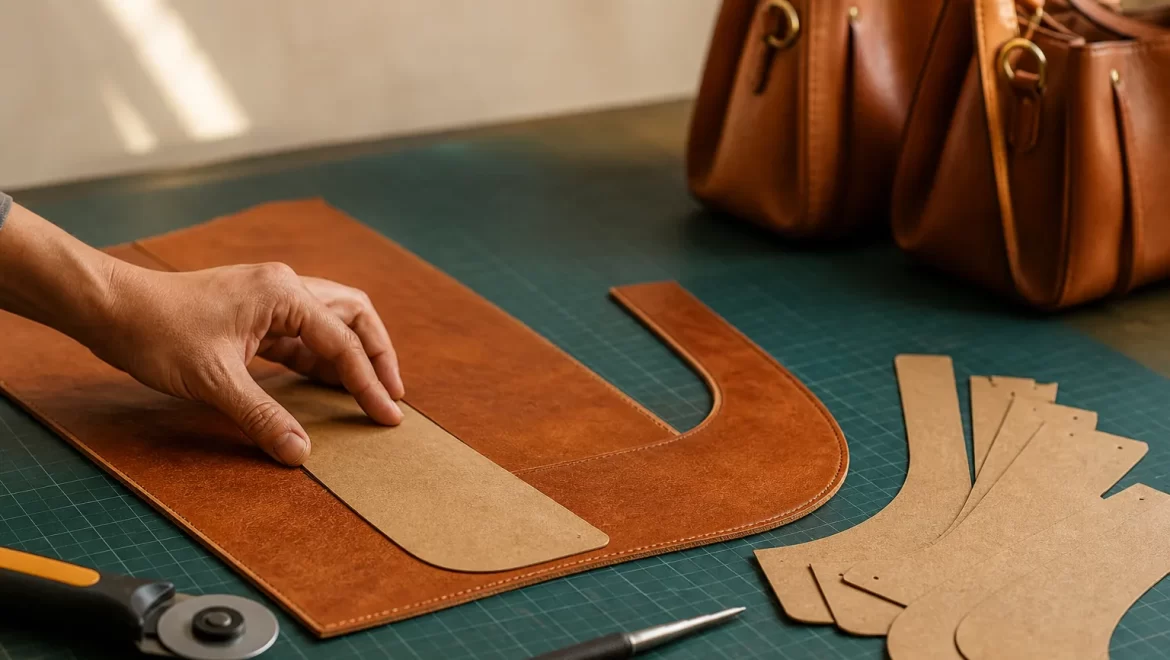
Gussets and Bellows: Expanding Bag Capacity Without Losing Shape
- What Gussets and Bellows Actually Are
- How Gussets Change Capacity and Shape
- Cutting and Assembling Gussets
- Bellows Construction: Pleats That Move
- Gussets versus Bellows: The Structural Trade-off
- Common Defects in Gusset and Bellows Construction
- Reinforcement: Keeping Deep Gussets From Sagging
- Lining and Gussets: Hidden Requirements
- Specifying Gussets and Bellows in a Tech Pack
- Choosing Materials for Gussets and Bellows
- Production Consistency: Keeping Every Gusset Identical
- Cost Drivers: What Really Moves the Price
- Side Panels and the Customer Experience
- Matching Gusset Design to Bag Category
- FAQ
Two bags can measure the same on paper and behave completely differently in daily use. The difference usually comes down to one component: the side panel. A well-designed gusset or bellows section lets a bag swallow a laptop, a change of clothes or a full day of gear while still holding a clean, upright silhouette when it is nearly empty.
For brands developing a new line, this is not a cosmetic detail. The gusset decision determines capacity, material consumption, assembly labor, structural rigidity and how the finished bag ages. Get it right and the bag sells itself; get it wrong and returns start arriving with the same complaint.
This guide walks through both constructions from the factory floor: how side panels are cut and assembled, how bellows pleats are formed, how each approach handles load, and how to specify either one in a tech pack.
What Gussets and Bellows Actually Are
Both terms describe the side and bottom structure of a bag, but they belong to different families of construction and produce different behavior in use.
The Gusset: A Shaped Side Panel
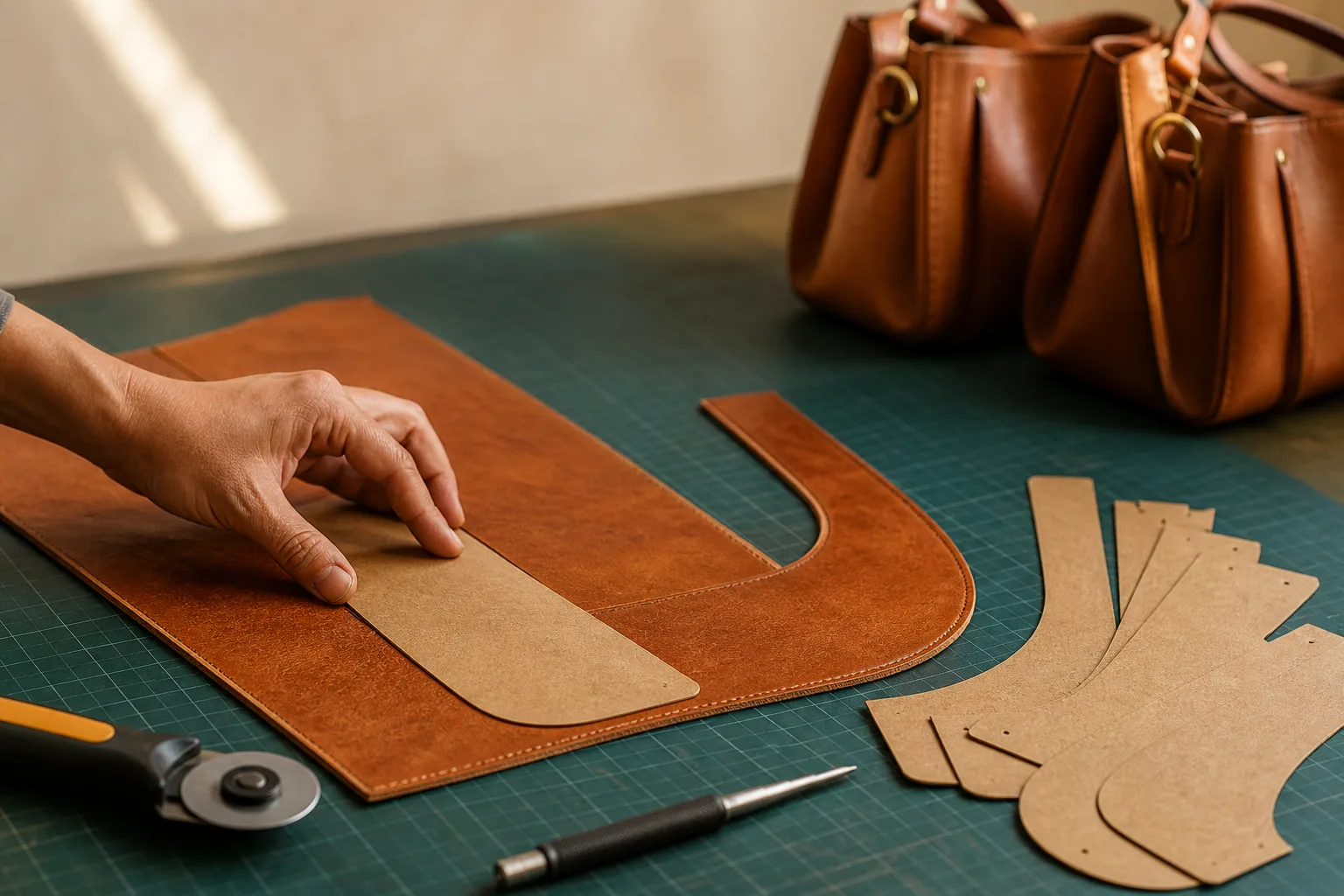
A gusset is a separate panel, or set of panels, that forms the sides and often the bottom of the bag. It is cut to a specific depth, stitched to the front and back bodies, and creates the interior volume that makes a bag useful.
Gussets can run around three sides as a single U-shaped piece, or be built as two side panels plus a base. The choice affects seam count, material yield and how crisply the bag holds its corners.
The Bellows: Folds That Open and Close
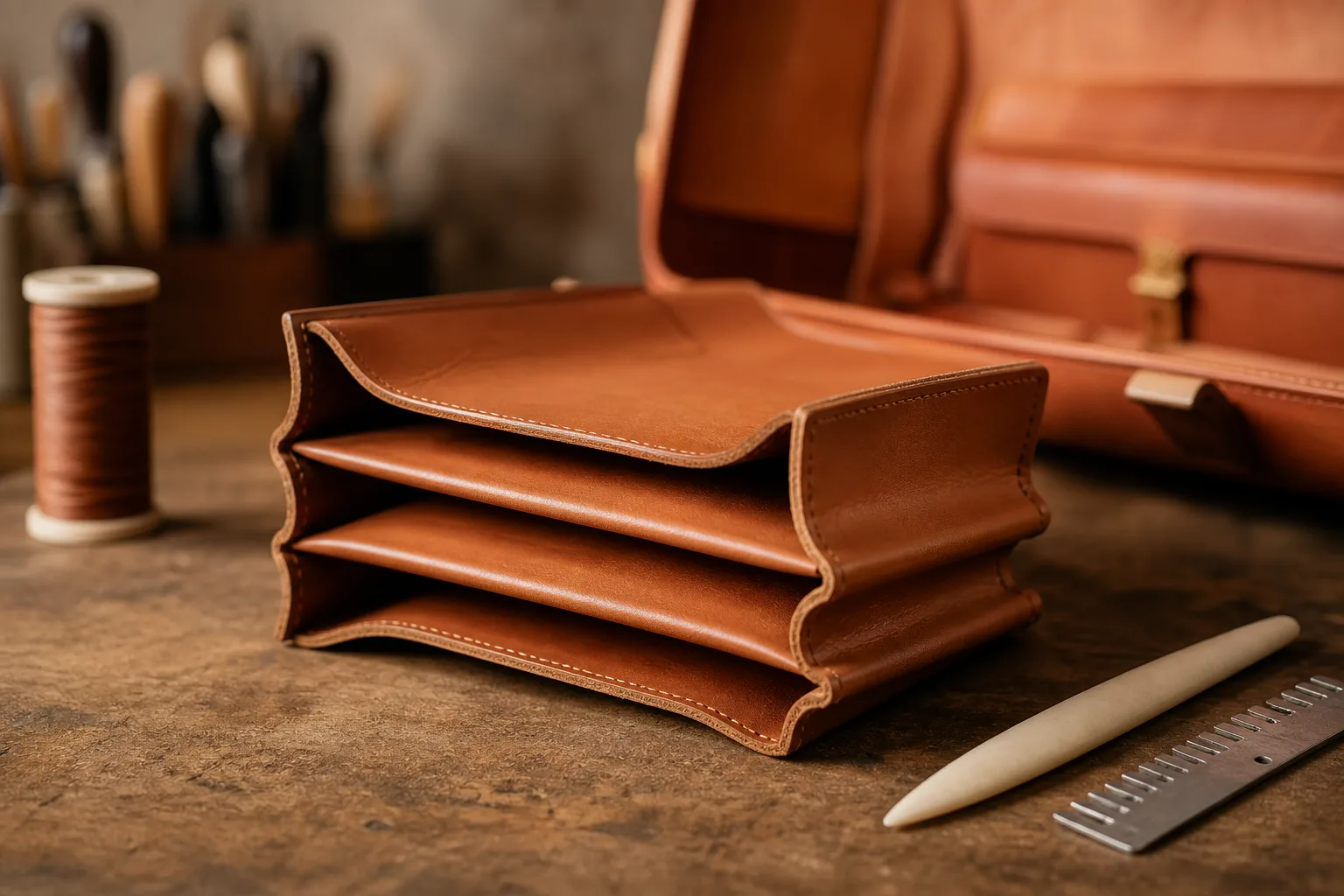
A bellows is a pleated side section that expands when the bag is loaded and compresses when it is empty. The construction looks like an accordion, with folds formed into the side material and held in place by stitching or reinforcement.
Bellows are common in camera bags, tool bags, briefcases and any style where the depth needs to flex. They add capacity on demand rather than holding a fixed volume.
When a Bag Uses Both
Many practical designs combine the two. A tote might use a deep U-shaped gusset for its main body and a small bellows pocket on the front. A briefcase might use a bellows main compartment with structured gusset corners.
This combination is where the factory's experience shows, because the two systems flex differently and the junction between them must be reinforced carefully.
How Gussets Change Capacity and Shape
The gusset depth is the single most powerful lever on a bag's usable volume, and it also shapes how the bag reads visually.
The Capacity Arithmetic
Usable capacity is roughly length times height times depth, but real bags lose volume to construction. Panels, seams and reinforcement consume space that geometry alone does not capture.
A 38 by 28 centimeter bag with a 6 centimeter gusset holds considerably less than the same bag with a 12 centimeter gusset, and the difference is far more noticeable in use than the numbers suggest.
| Gusset depth | Typical capacity | Best suited to |
|---|---|---|
| 4–6 cm | Slim, flat profile | Documents, tablets, evening use |
| 8–10 cm | Everyday volume | Handbags, small totes |
| 12–15 cm | Full day capacity | Work totes, shoulder bags |
| 18–25 cm | Travel volume | Duffels, weekender bags |
Depth and Silhouette
Deeper gussets do not simply make a bag larger. They change its proportions, its balance on the shoulder and the way it holds its shape when partially loaded.
A deep gusset on a soft leather bag will bulge outward under load unless it is reinforced or the leather is firm enough to resist. Factories either add structure or choose a leather with the right temper for the depth specified.
Gusset Shape: Straight, Tapered or Curved
Gussets are not always rectangular. Tapered gussets make a bag narrower at the base, which reduces capacity but improves stability and visual elegance. Curved gussets follow the bag's silhouette and require more careful cutting and assembly.
Each variation adds cutting complexity. A tapered gusset consumes slightly less material but takes longer to align during stitching, and the trade is rarely obvious until sampling.
Cutting and Assembling Gussets
The gusset is usually one of the most demanding parts of a bag to cut and assemble, because it meets multiple panels at precise angles.
Cutting Direction and Stretch Control
Leather has a direction of stretch, and gussets must be cut in the correct orientation so the panel does not distort under load. Cut against the natural stretch and the gusset will sag; cut along it and the bag keeps its shape.
Factories mark the direction on the pattern and check the first panels of every production run. For soft leathers this is not optional, it is the difference between a bag that holds its lines and one that collapses.
Edge Preparation
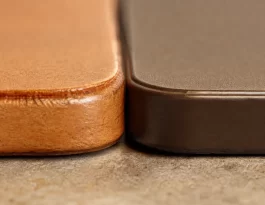
Gusset edges that will be stitched to the body are usually skived and folded, which reduces bulk at the seam and produces a cleaner interior. Deep gussets push this preparation to its limits because the fold follows a long, often curved path.
On heavy bags, factories sometimes reinforce the gusset edge with a thin strip of firm leather or a bonded reinforcement before folding, so the edge resists stretching during assembly.
Stitching Sequence and Corners
Gussets are stitched to the body in a defined sequence. U-shaped gussets typically attach at the side seams first, then around the base, allowing the assembler to control alignment as they work.
Corners are the critical point. At each corner, two seams meet at a right angle, and the leather must be handled so the layers do not bunch or leave a gap. Factories use corner templates or pre-marked stitch points to keep every bag identical.
| Step | Operation | Quality check |
|---|---|---|
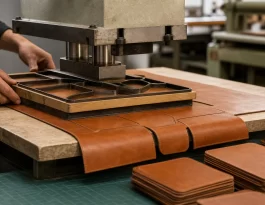
| 1 | Cut gusset to template | Grain direction correct, dimensions within tolerance |
| 2 | Skive and fold edges | Uniform taper, no thinning through grain |
| 3 | Reinforce deep-gusset edges | Bonded strip flat, no wrinkles |
| 4 | Attach to side seams | Alignment marks match body |
| 5 | Close base corners | No gap, layers flat |
| 6 | Final stitch and press | Even stitch run, corners crisp |
Bellows Construction: Pleats That Move
Bellows sections turn a single panel into a controlled fold structure, and the craftsmanship lies in making every pleat identical.
Forming the Pleats
Pleats are formed by marking fold lines on the side panel, pressing the folds with a heated tool or a bone folder, and then locking them in place with stitching or reinforcement tape. The folds must be sharp and even, because uneven pleats make the bag look handmade in the wrong way.
Some factories pre-crease the panel on a heated plate, which sets the fold so the leather does not want to spring open during stitching. Others rely on skilled hand pressing, which is slower but gentler on delicate finishes.
Expansion Range and Material Use
A bellows section expands from its compressed depth to its fully open depth, and the difference is the bag's flexible capacity. To allow that movement, the panel must contain enough material to unfold.
This means a bellows side uses more leather than a fixed gusset of the same compressed depth. The extra material is the cost of the flexibility, and it is a legitimate part of the price difference between the two constructions.
Pleat Depth and Count
The number and depth of pleats determine how the bag expands and how it looks. Two deep pleats give a bold, structured accordion; four shallow pleats give a smoother, more refined line with less expansion per fold.
| Pleat count | Expansion behavior | Visual character |
|---|---|---|
| 2 deep pleats | Large single-step expansion | Bold, utilitarian |
| 3 medium pleats | Balanced expansion | Classic briefcase look |
| 4–5 shallow pleats | Gradual expansion | Refined, dressy |
| Edge-mounted single fold | Limited expansion | Minimal, modern |
Reinforcing the Pleat Edges
The fold edges of a bellows take the most stress, because they flex every time the bag is opened. Factories reinforce these edges with stitching, edge paint, or a thin bonded strip, and inspect them for cracking during sampling.
A bellows that is not reinforced at the fold edges will eventually show wear lines exactly where the material bends most often, which is why this step matters more than it appears on a spec sheet.
Gussets versus Bellows: The Structural Trade-off
Choosing between the two constructions is not a matter of one being better. Each solves a different problem, and the right answer depends on how the bag will be used.
Structural Strength
A fixed gusset is inherently more rigid. The panel holds its depth, the corners carry load in compression, and the bag does not need extra reinforcement to stay upright.
A bellows is more flexible and therefore less rigid by design. Its strength comes from the reinforced fold edges and the quality of the stitching, not from the panel itself.
Capacity Behavior
Gussets provide a fixed, predictable volume. Customers know exactly what fits, which is why technical and professional bags favor them.
Bellows provide variable volume, expanding as contents demand. This is ideal for gear that changes size, but the bag's silhouette changes with the load, which some buyers consider less polished.
Assembly Labor and Cost
Bellows construction generally takes longer to assemble, because every pleat must be formed, aligned and locked consistently. Gussets are simpler to assemble but consume more reinforcement material in deep configurations.
| Factor | Fixed gusset | Bellows |
|---|---|---|
| Rigidity | High, self-supporting | Moderate, needs reinforced folds |
| Capacity | Fixed and predictable | Variable with load |
| Assembly time | Moderate | High |
| Material use | Lower | Higher (extra panel for expansion) |
| Silhouette when empty | Holds shape | Compresses, softens |
| Typical uses | Totes, work bags, structured handbags | Camera bags, briefcases, tool bags |
Which to Specify
Specify a gusset when the bag must hold a defined shape and volume, when the design is structured or formal, and when cost control matters. Specify a bellows when capacity must flex, when the bag carries equipment of varying size, or when the accordion look itself is part of the design language.
Many lines use both, and the mixing is deliberate: a structured gusseted main body with a bellows outer pocket gives the best of each behavior.
Common Defects in Gusset and Bellows Construction
Side panel construction produces a specific set of defects, and knowing them makes sample inspection far more effective.
| Defect | Root cause | Prevention |
|---|---|---|
| Twisted or skewed gusset | Grain direction wrong, panel cut off-square | Direction markings, template checks |
| Bulging under load | Insufficient reinforcement, soft leather too deep | Add stiffener or reduce depth |
| Corner gap or burst stitch | Poor corner preparation, weak thread | Corner templates, correct needle and thread |
| Uneven pleat width | Inconsistent pressing, no fold guide | Heated pre-crease, pleat gauge |
| Lining pull at gusset | Lining cut without expansion allowance | Add allowance, match seam alignment |
| Crease cracking at pleat folds | Unreinforced fold edges, dry leather | Edge reinforcement, correct conditioning |
Gusset Distortion
A distorted gusset usually traces back to cutting. If the panel was cut off-square or against the natural stretch direction, the bag will lean, twist or bulge, and no amount of pressing will correct it after assembly.
Factories prevent this with marked patterns, cutting checks on the first pieces of each run, and by rejecting hides with soft, uneven areas where the gusset will sit.
Corner Failures
Corners carry the highest stress in any bag. A corner that is under-reinforced, stitched with the wrong thread, or assembled with bunched layers will fail early, often at the stitch line itself.
The fix is procedural: proper corner preparation, correct thread and needle combination, and a final inspection that flexes every corner before the bag leaves the line.
Lining Problems Specific to Side Panels
Linings are cut flat but must follow a three-dimensional gusset, and if the lining lacks expansion allowance it will pull, pucker or tear at the seam.
Factories add a small allowance at gusset seams and align lining seams with the outer seams so the bag opens smoothly. Miss this and the interior looks wrong even though the exterior is perfect.
Reinforcement: Keeping Deep Gussets From Sagging
Deep gussets on soft leather will sag unless the structure is supported. Factories solve this with a combination of materials and construction choices.
Stiffener Materials
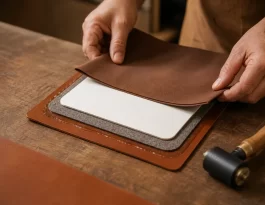
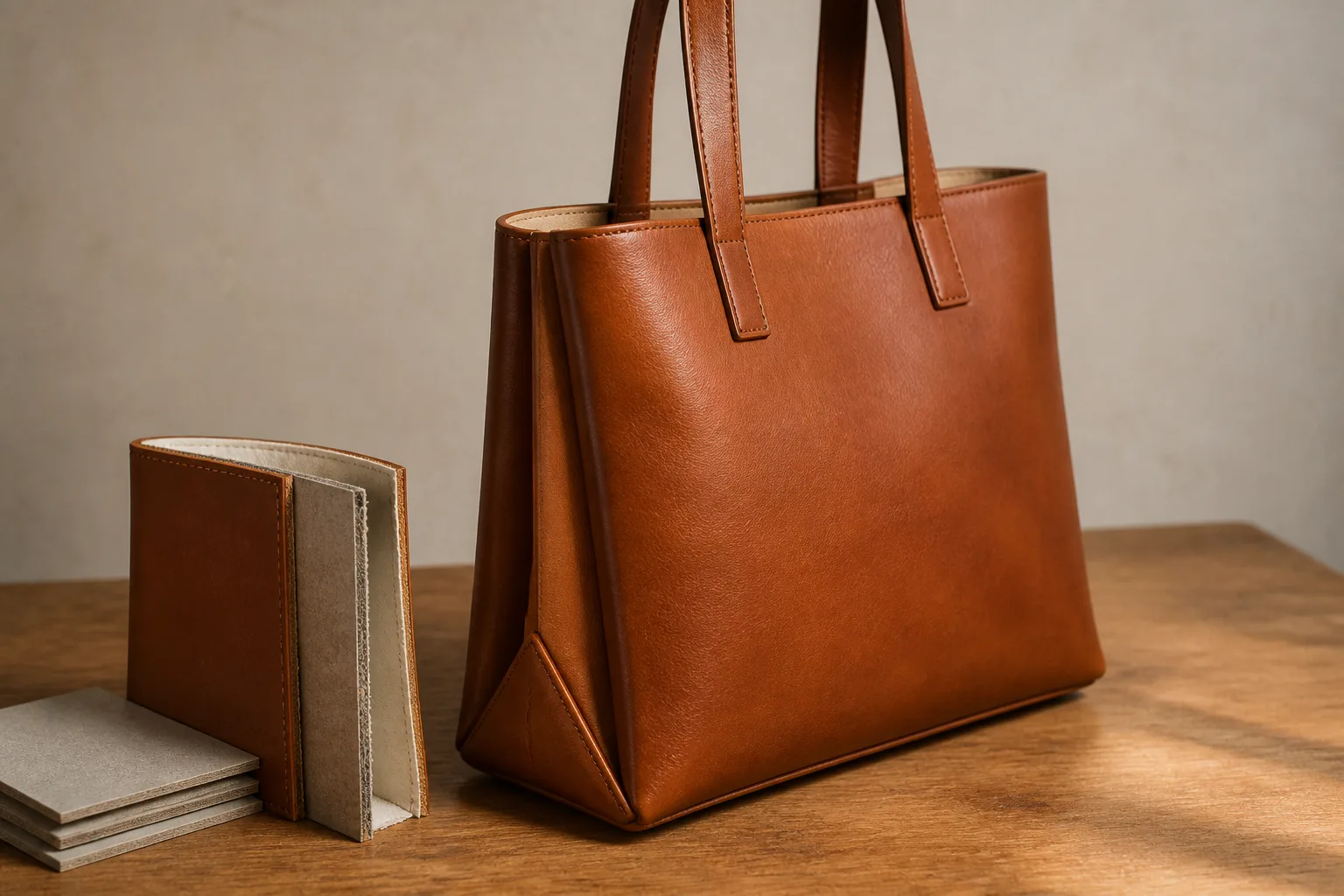
Bag stiffeners range from pressed fiberboard to polypropylene sheet to firm leather strips. The choice depends on the desired hand: a rigid bag uses a stiff board, while a soft bag might only need a firm leather edge to keep the line.
Reinforcement is usually inserted between the outer leather and the lining, either bonded or held in a sleeve, so it does not show through the surface.
Base and Corner Support
The base of a deep-gusset bag takes the weight of everything inside. Factories add a base panel, reinforced corners, or both, so the bag does not bow or develop sag lines at the bottom edges.
Metal feet are a common companion to this reinforcement, raising the base off surfaces and protecting the leather at the highest wear points.
Edge Stays and Binding
Long gusset edges sometimes carry a thin stay, a narrow strip of firm leather or a bonded tape, that keeps the edge straight along its length. This is especially important on tall totes where a soft gusset edge would otherwise wave.
Edge staying adds a small amount of material and labor but delivers a visibly cleaner line, which is why good factories include it on structured styles without being asked.
Lining and Gussets: Hidden Requirements
The interior of the bag is where gusset construction most often goes wrong, because lining problems are invisible until the customer opens the bag.
Expansion Allowance
A lining that fits the gusset exactly when the bag is empty will strain as soon as the gusset is loaded. Factories add a small allowance so the lining moves with the panel instead of fighting it.
Too much allowance creates folds and wrinkles inside; too little causes pulling and, in extreme cases, tearing at the seam. The correct amount depends on gusset depth and lining material.
Seam Alignment
Lining seams should sit directly behind outer seams, or be positioned deliberately where they will not be seen. Misaligned seams create bulk, and they make the interior look unfinished even on an otherwise well-made bag.
Buyers should check seam alignment in the sample by opening the bag fully and examining the interior at the gusset corners, where misalignment is easiest to spot.
Pocket Placement Around the Gusset
Interior pockets must respect the gusset geometry. A pocket that spans a gusset fold will not sit flat, and a pocket placed too close to the base will be crushed when the bag is loaded.
Factories position pockets after the gusset depth is locked, and buyers should confirm pocket dimensions and placement on the physical sample rather than on a flat drawing.
Specifying Gussets and Bellows in a Tech Pack
Vague gusset specs produce vague samples. The fix is to define geometry, materials and assembly requirements numerically.
Dimensions and Tolerances
State the gusset depth in millimeters and give a tolerance, typically plus or minus 2 millimeters on a soft bag and plus or minus 1 millimeter on a structured one. Depth is measured internally, not from the outside of the seam.
Also specify the gusset shape: straight, tapered or curved, and whether it runs as a U-shaped single panel or as separate side and base pieces.
Pleat Specifications for Bellows
For bellows sections, define the number of pleats, the depth of each pleat, and the nominal compressed depth of the section. Add the reinforcement requirement for the fold edges, since this drives durability.
| Spec element | What to write | Why it matters |
|---|---|---|
| Gusset type | "U-shaped gusset, 3 sides" | Determines assembly and seam count |
| Depth | "12 cm internal, ±2 mm" | Core capacity control |
| Pleat count | "3 pleats at 30 mm" | Expansion behavior and look |
| Edge treatment | "Skived, folded, reinforced stay" | Clean lines and durability |
| Reinforcement | "1.0 mm PP board in base and sides" | Prevents sagging |
| Lining allowance | "6 mm expansion allowance at gusset" | Prevents pulling and tears |
| Corner spec | "Mitered, double-stitched, reinforced" | Load-bearing reliability |
Sample Validation
Before approving production, ask for a loaded sample. Fill the bag with the weight it is designed to carry, close it, and examine the gusset lines, corners and base.
A gusset that bows, a bellows that will not return to shape when emptied, or corners that show stitch strain under load are all grounds for revision before tooling and bulk materials are committed.
Choosing Materials for Gussets and Bellows
The material palette behind a side panel decides how the construction behaves under load. Factories select leather, reinforcement and lining as a matched set, not as independent choices.
Leather Thickness and Temper
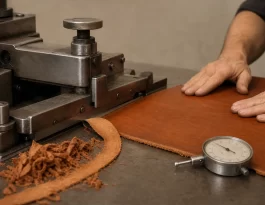
Gussets are usually cut from the same leather as the body, but the temper matters more here because the panel must resist distortion. Firm, dense leathers of 1.2 to 1.5 millimeters hold gusset lines well and suit deep configurations.
Softer, stretchier leathers demand either shallower gussets or added reinforcement. A factory that accepts a 20 centimeter gusset in a soft lambskin without reinforcement is promising a bag that will bow, and the sample will show it.
Reinforcement Material Options
Reinforcement is where structure is engineered into the bag. The options differ in rigidity, weight and how easily they are worked into a curved panel.
| Material | Rigidity | Weight | Typical use |
|---|---|---|---|
| Polypropylene board 0.6–1.2 mm | High | Light | Structured totes, bases |
| Pressed fiberboard | Very high | Moderate | Framed business bags |
| Firm leather strip | Moderate | Light | Edge stays, soft structured bags |
| EVA foam 2–3 mm | Low | Very light | Padded camera and equipment bags |
| Bonded reinforcement tape | Low | Negligible | Pleat edges, seam support |
Lining Materials for a Three-Dimensional Interior
Lining choice affects how the interior moves with the gusset. Stable, low-stretch linings suit structured bags because they hold a clean line and do not bag out with use.
Softer linings with a little give are easier to fit around deep or pleated sections, but they can wrinkle inside a structured shell. The right pairing depends on the outer construction, and factories usually test two options before locking the spec.
Production Consistency: Keeping Every Gusset Identical
A perfect sample is only meaningful if the hundredth bag matches it. Side panel construction is where consistency is most easily lost, because alignment depends on operator skill.
Templates, Gauges and Work Aids
Factories that produce consistent gussets invest in physical work aids: cutting templates with grain-direction marks, corner guides for assembly, and pleat gauges that set fold spacing to the millimeter.
These aids remove judgment from repetitive steps. A pleat gauge, for example, makes every pleat on every bag identical without relying on an operator's eye, which matters most on multi-pleat bellows sections.
In-Process Sampling
Rather than inspecting only finished goods, good factories pull pieces during assembly: a cut gusset panel, a folded edge, a stitched corner, a formed pleat. Checking at each stage catches drift before it multiplies across a production run.
Buyers can ask for these in-process checkpoints in the quality plan. It is a reasonable request, and factories that work this way generally welcome it because rework at the end of the line costs far more than correction in the middle.
Cost Drivers: What Really Moves the Price
Gusset and bellows decisions influence cost in ways that are easy to miss in a quotation, and understanding them helps buyers negotiate on facts rather than assumptions.
Panel Count and Leather Yield
Every additional panel adds cutting time, edge preparation and a seam. A three-piece gusset consumes more labor and more leather than a single U-shaped panel of the same final depth.
Deep gussets also reduce yield, because longer panels must avoid flaws in the hide. On expensive leathers this can move cost more than the assembly itself.
Assembly Labor
Bellows sections are labor intensive because pleats must be formed and locked consistently. Skilled pleating and careful corner work are the two biggest labor drivers in side panel construction.
Gussets are faster to assemble but demand accurate alignment, and misaligned gussets create rework that erases the labor advantage quickly.
Reinforcement and Materials
Stiffeners, edge stays and reinforcement tapes are inexpensive individually but add up across a full bag. A structured design with reinforced gussets, base board, corner stays and feet carries noticeably more material cost than a soft bag of the same size.
For most brands, the reinforcement spend is worth it: it is the difference between a bag that holds its shape for years and one that collapses in months.
Side Panels and the Customer Experience
Side panel design decides how a bag feels in daily use long before any customer reads a spec sheet, and those small behaviors drive reviews, repeat purchases and returns.
Opening Width and Access
A deep gusset gives volume, but if the opening stays narrow the bag becomes a container you must dig into. Factories can widen the mouth, add a frame, or shape the gusset so the bag opens like a mouth rather than a slot.
Buyers should test access with the bag loaded: reach for an item at the bottom and see whether the opening allows a hand and a laptop to pass comfortably. This is the kind of detail that shows up in customer reviews.
Balance on the Shoulder and in the Hand
Depth shifts a bag's center of gravity. A very deep, heavily loaded tote pulls away from the body when carried on the shoulder, while a shallow bag sits closer but carries less.
Adjusting strap length, adding a base board, or slightly tapering the gusset all change how the bag hangs. Factories usually settle this during sampling by loading the bag and walking it, a simple test that catches most balance complaints early.
How the Bag Ages
Structured gussets hold their shape but can develop creases at the corners over years of use. Bellows sections soften and take on the character of the leather, which many buyers consider a feature rather than a flaw.
Choosing a construction means choosing how the bag will look after two years, not only on the first day. Explaining that trajectory in product copy sets accurate expectations and reduces returns from customers who expected a soft bag to stay rigid.
Matching Gusset Design to Bag Category
Different bag categories have evolved different side panel conventions for good reasons. Matching the convention to the category shortens development and reduces risk.
| Bag category | Typical side construction | Depth range | Key requirement |
|---|---|---|---|
| Tote | U-shaped gusset | 10–15 cm | Holds shape with light loads |
| Structured handbag | Gusset with board reinforcement | 8–12 cm | Crisp silhouette |
| Briefcase | Bellows main compartment | 8–12 cm | Expands for documents |
| Camera / tool bag | Multi-pleat bellows | 10–18 cm | Variable equipment capacity |
| Duffel / weekender | Wide double gusset | 20–30 cm | Volume plus base support |
| Backpack | Gusset with panel support | 10–16 cm | Load transfer to base |
Totes and Shoulder Bags
Totes need volume without sag, so a U-shaped gusset with a firm base and edge stays is the standard solution. Depth usually sits between 10 and 15 centimeters, which covers a laptop, a folder and everyday items.
Briefcases and Business Bags
Business bags favor a bellows main section that expands from slim to full, letting the bag carry documents and a laptop on different days without changing shape permanently.
Camera, Tool and Equipment Bags
These bags carry gear of varying size and weight, so multi-pleat bellows with reinforced fold edges and a well-supported base are the norm. Capacity flexibility matters more here than a rigid silhouette.
Duffels and Travel Bags
Travel bags combine a deep gusset for volume with a reinforced base to carry heavy loads. Depth often reaches 20 to 30 centimeters, and the base structure becomes a major design consideration.
FAQ
What is a gusset on a bag?
A: A gusset is the side or bottom panel that gives a bag its depth and interior volume. It is cut to a fixed dimension, stitched to the front and back bodies, and defines how much the bag can hold.
What is a bellows on a bag?
A: A bellows is a pleated side section that expands when the bag is loaded and compresses when empty. The accordion folds provide flexible capacity rather than a fixed volume.
What is the difference between a gusset and a bellows?
A: A gusset is a fixed-depth panel that holds a set volume and stays rigid; a bellows is a folding section that changes depth with its contents. Gussets favor structure, bellows favor flexibility.
How deep should a bag gusset be?
A: Depth depends on use: 4 to 6 centimeters for slim document bags, 8 to 10 centimeters for everyday handbags, 12 to 15 centimeters for work totes, and 18 centimeters or more for travel bags.
Does a wider gusset always mean more capacity?
A: Wider gussets increase volume, but soft leather gussets can bulge or sag under load, and very deep gussets reduce leather yield and add reinforcement cost. The useful gain depends on structure, not depth alone.
Why do my samples show bulging at the gusset?
A: Bulging usually means the gusset is too deep for the leather's temper, or reinforcement is missing. Adding a stiffener, a base board or an edge stay, or reducing effective depth, resolves most cases.
How are bellows pleats formed?
A: Pleats are marked, pressed with a heated plate or a bone folder, then locked with stitching or reinforcement tape. Consistent pleat forming is what separates good bellows construction from poor.
Do bellows use more leather than gussets?
A: Yes. A bellows needs extra panel material so the folds can expand. That additional material is a legitimate cost difference between the two constructions.
How many pleats should a bellows bag have?
A: Two deep pleats give bold, large-step expansion; three medium pleats are the classic briefcase configuration; four or five shallow pleats give smoother expansion and a more refined look.
What reinforcement does a deep gusset need?
A: Deep gussets typically need a stiffener such as polypropylene board or firm leather between outer and lining, a reinforced base, and often edge stays to keep long gusset edges straight.
Why does the lining pull at the gusset corners?
A: The lining was cut without enough expansion allowance for a three-dimensional gusset. Factories add a small allowance and align lining seams with outer seams to prevent pulling and tearing.
Can a bag use both a gusset and a bellows?
A: Yes, and many do. A structured gusseted main body with a bellows outer pocket or an expanding business compartment combines the rigidity of one with the flexibility of the other.
What defects should I check for on gusset construction?
A: Look for twisted or skewed panels, bulging under load, gaps or strain at corners, lining pull, and uneven lines along the gusset edge. Test each with the bag loaded, not empty.
How do I specify gusset depth in a tech pack?
A: State the internal depth in millimeters with a tolerance, the gusset shape and panel configuration, edge treatment, reinforcement type, and lining allowance. Also define whether depth is measured inside the seam.
Is bellows construction more expensive?
A: Generally yes. Pleating, consistent fold formation and reinforcement add labor and material. The premium buys flexible capacity and, in equipment bags, functionality that a fixed gusset cannot match.
Which is better for a laptop bag?
A: Most laptop bags use a gusset of 8 to 12 centimeters with a reinforced base for stability and protection. A bellows works when the bag must also carry bulky items such as clothing or equipment on some trips.
Ready to design the right side panel for your next bag line? Send us your sketch or tech pack and we will recommend a gusset or bellows construction, with depth, pleat count, reinforcement and tolerance values, plus a loaded sample so you can test the structure before production.