Choosing the Right Lining Fabric for Leather Bags
Open any leather bag and the first thing you see is the lining. It is the surface that touches your hand every time you reach inside, the layer that protects your belongings from the leather's natural dyes and rough edges, and the material that quietly determines how the bag feels to use. Yet for most brands, the lining is an afterthought — chosen from a factory's standard options without a second look, specified as "cotton twill" or "polyester" and never examined again.
The lining deserves better. It is one of the few components in a leather bag where a modest investment produces visible, tactile, and functional improvements — and one of the first places where cheap manufacturing shows. A great lining makes a good bag feel great; a cheap lining makes a great bag feel disappointing. This guide walks through the lining decision from the factory floor: what the main lining fabrics are, how they compare in weight, durability, feel, and cost, which lining suits which bag style, and how to write a lining spec that protects your quality. By the end, choosing a lining will feel like the design decision it actually is.
Why Lining Matters More Than It Seems
The lining is the most-touched surface in a bag after the handles — every item that goes in and out brushes against it, and every hand that reaches in feels it. That constant contact makes the lining a disproportionately powerful quality signal, for three reasons.
First, the lining sets the "first-use" impression. When a customer opens a new leather bag, the lining is what they see and touch first — before the leather, before the hardware. A smooth, substantial, well-finished lining instantly reads as premium; a flimsy, shiny, static-prone lining reads as cheap, regardless of the leather outside. The lining is the unboxing moment's texture.
Second, the lining protects the bag and its contents. It shields the leather's interior from the sharp corners of keys and the abrasion of daily contents, protecting the leather's surface and structure. It also protects the contents: a lining with the wrong finish can transfer dye, snag delicate items, or fail to cushion impact. A bag's interior is where its daily abuse happens, and the lining absorbs most of it.
Third, the lining carries the details that define quality. Interior pockets, card slots, zip compartments, branded labels, and the neatness of the stitching all live on the lining. A bag with a well-executed lined interior — clean seams, functional pockets, a tasteful label — feels finished in a way that a bag with a bare or sloppy interior never does. The lining is where craftsmanship becomes visible from the inside.
None of this means the most expensive lining is always the right choice. It means the lining should be a deliberate decision, matched to the bag's price point, use, and brand story — exactly the way the leather itself is chosen.
The Lining's Real Job
Before comparing fabrics, it helps to define what a lining must do. In production terms, the lining has four jobs, and each job has measurable requirements:
1. Protection. The lining must prevent the leather's interior from being abraded, stained, or stretched by contents, and prevent contents from being damaged by the leather. Key properties: abrasion resistance, dye fastness (no color transfer), and edge quality (no raw edges catching on contents).
2. Structure. The lining is part of the bag's construction stack — it holds pockets, anchors interior organization, and, in some constructions, contributes to the bag's shape retention. Key properties: dimensional stability (no stretching out of shape), tear strength at pocket seams, and compatibility with the bag's interlining.
3. Feel. The lining is felt every time the bag is used. Key properties: hand feel (smooth, soft, or structured as the design requires), weight (light enough not to add burden, substantial enough to feel quality), and temperature behavior (no clammy synthetic feel in summer, no ice-cold touch in winter).
4. Function. The lining must work with the bag's intended use: easy to wipe clean for family bags, water-resistant for travel bags, breathable for bags holding electronics. Key properties: cleanability, moisture behavior, static behavior, and pocket performance.
When a factory proposes a lining, ask how it performs on these four jobs — not just what it costs per meter. The right lining is the one that balances all four for your specific bag, and the balance differs from product to product.
The Main Lining Options at a Glance
| Lining | Weight (gsm) | Feel | Durability | Water resistance | Relative cost |
|---|---|---|---|---|---|
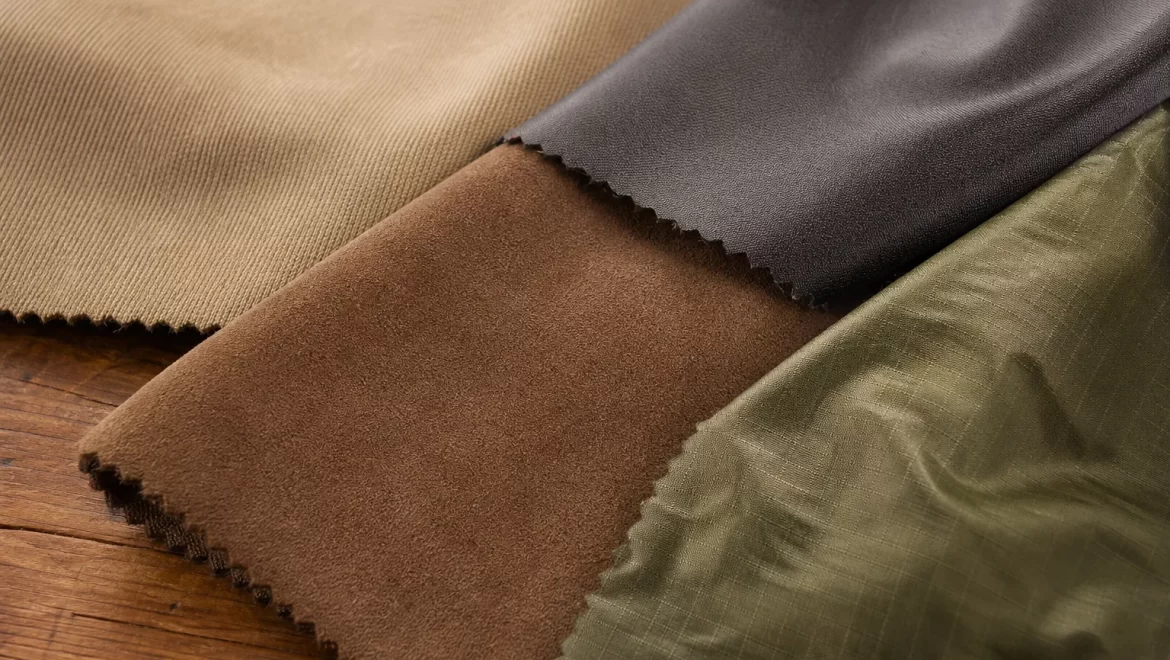
| Cotton twill | 180–300 | Soft, natural, premium | Good | Low | $$ |
| Polyester / blends | 150–250 | Smooth, practical | Good | Moderate | $ |
| Microfiber (suede) | 200–350 | Plush, luxe | Very good | Good | $$$ |
| Nylon | 120–220 | Light, technical | Very good | High | $–$$ |
| Leather lining | 400–700+ | Ultimate luxury | Excellent | Varies | $$$$ |
The table is the map; the sections below are the terrain. Each lining has a personality, a best-use case, and a set of production behaviors that affect your cost and lead time — and knowing all three is what turns lining selection from a guess into a specification.
Cotton Twill: The Classic Premium Lining
Cotton twill is the traditional lining of quality bags, and it remains the default for brands that want a natural, premium interior. Twill is a weave — diagonal ribs created by the fabric structure — that gives cotton strength and a subtle texture; the same weave used in chino trousers and denim.
Why brands choose it. Cotton twill feels soft, breathable, and genuinely natural in the hand. It ages gracefully, softens with use, and develops a patina-like quality that matches the leather's own aging — the interior story mirrors the exterior. It accepts printing and dyeing beautifully, which makes it the natural canvas for branded linings, patterns, and signature colors. For heritage, craft, and premium lines, cotton twill is the lining that completes the story.
The trade-offs. Cotton twill has low water resistance — a spilled bottle soaks in and stains. It is also heavier than synthetics at equivalent durability, adding weight to the bag. Its dye fastness must be verified: cheap cotton linings with poor dyeing can transfer color to light-colored contents, especially when damp. And cotton prices fluctuate with commodity markets, making cost less predictable than synthetics.
Where it belongs. Heritage totes, luxury handbags, wallets, and any bag where the interior should feel as considered as the exterior. Cotton twill is also the safe premium default for a first collection — it is hard to go wrong with a good cotton twill in a tasteful color.
Polyester and Blends: The Practical Workhorse
Polyester lining — and its blends with cotton, rayon, or viscose — is the workhorse of the bag industry. It is what most mid-market bags are actually lined with, and it earns its dominance through practicality rather than romance.
Why brands choose it. Polyester is durable, color-fast, and inexpensive. It resists water better than cotton, wipes clean easily, and holds its color and shape through years of use. Its low cost keeps the bag's price competitive, and its availability in every color and finish makes sourcing trivial. For volume production, polyester is the lining that lets a factory deliver consistent interiors at scale.
The trade-offs. The feel is the weakness: plain polyester can feel smooth and slightly synthetic, and cheap polyester linings feel flimsy and generate static — the lining that grabs your sleeve when you reach in. The solution used by quality factories is blending: a cotton-polyester blend (for example 65/35) keeps the cost advantage while restoring a more natural hand feel, and a poly-cotton twill construction mimics cotton twill's texture at a lower price. The skill is in choosing the right blend and finish, not in avoiding polyester altogether.
Where it belongs. Everyday handbags, backpacks, travel bags, and any product where durability, cleanability, and cost matter more than natural luxury. Polyester blends are also the standard for bags that will face weather and spills, where cotton's absorbency would be a liability.
Microfiber: The Luxe Performer
Microfiber — specifically microfiber suede, also called microsuede — is the premium synthetic lining that has displaced real suede in most bag production. It is made from ultra-fine polyester and polyamide fibers (each fiber a fraction of the thickness of silk) that are split and napped to create a soft, suede-like surface.
Why brands choose it. Microfiber suede looks and feels luxurious — plush, velvety, and immediately premium to the touch — at a fraction of the cost of real suede or leather lining. It is also remarkably durable: the ultra-fine fibers resist pilling and wear, and the fabric has excellent tear strength. It resists water better than cotton, cleans more easily than real suede, and its plush surface protects delicate contents (glasses, jewelry, electronics) from scratches. For premium bags that want a luxurious interior without leather-lining cost, microfiber is the professional's choice.
The trade-offs. Microfiber is heavier and more expensive than plain polyester, and its plushness means pockets must be constructed carefully to avoid bulk. The very softness that feels luxurious can also trap dust and lint, which shows on darker colors. And like all synthetics, it lacks the natural breathability and aging character of cotton — the interior will not "live" the way cotton does.
Where it belongs. Luxury handbags, glasses cases, jewelry rolls, electronics sleeves, and any premium product where the interior touch matters. Microfiber is also the standard lining for the inside of the flap and the underside of straps, where its softness protects both the leather and the wearer.
Nylon: The Lightweight Utility Choice
Nylon lining is the technical option — light, strong, and water-resistant. It is the fabric of performance bags: backpacks, diaper bags, travel organizers, and anything built for daily utility rather than luxury.
Why brands choose it. Nylon is extremely strong for its weight — a thin nylon lining adds almost no weight to a bag while providing real tear resistance and water resistance. It is easy to clean, dries quickly, and behaves predictably in production. For bags that will be carried hard and cleaned often, nylon is the rational engineering choice.
The trade-offs. Nylon feels technical rather than luxurious — smooth, cool, and slightly slippery — and its appearance is utilitarian. It also shows wear differently: over years, nylon can develop a sheen or become stiff, and cheap nylon can pill. Brands choose nylon for function and accept the trade in feel; the professional approach is to use nylon where it belongs and a warmer fabric where the brand story needs warmth.
Where it belongs. Backpacks, travel bags, diaper bags, work bags with heavy interior use, and the interior of bags where water resistance is a priority. A common professional pattern is a hybrid interior: nylon for the main compartment (function) with a cotton or microfiber pocket panel where the hand lingers (feel).
Leather Linings: The Ultimate Luxury
Leather linings — usually thin, soft leather (often lambskin or soft cowhide splits) — represent the peak of interior luxury. A leather-lined bag is the interior equivalent of full-grain exterior: rare, expensive, and immediately recognizable to anyone who knows bags.
Why brands choose it. Leather lining is the most tactile, most luxurious interior surface available. It breathes, ages, and patinas like the exterior leather, creating a fully leather experience. It also protects contents with genuine material quality, and it elevates the unboxing moment to something ceremonial. For flagship pieces and limited editions, leather lining is how a brand signals absolute commitment to craft.
The trade-offs. The cost is severe: leather lining adds several dollars to the factory cost of even a mid-size bag, and it demands the same care as exterior leather — condition, protect from water, repair when scratched. It is also heavy, and its installation is labor-intensive (leather must be skived, edged, and sewn with the same care as the exterior). A leather-lined bag is a statement, and the statement includes its price and its maintenance.
Where it belongs. Flagship luxury handbags, heritage pieces, jewelry and watch cases, and limited collections. The professional practice is often partial leather lining — a leather-lined flap or main compartment with fabric elsewhere — which captures the luxury feel at a controlled cost.
Head-to-Head Comparison
| Attribute | Cotton twill | Polyester/blend | Microfiber suede | Nylon | Leather |
|---|---|---|---|---|---|
| Hand feel | Soft, natural | Smooth, practical | Plush, luxe | Cool, technical | Ultimate luxe |
| Weight (gsm) | 180–300 | 150–250 | 200–350 | 120–220 | 400–700+ |
| Durability | Good | Good | Very good | Very good | Excellent |
| Tear strength | Moderate | Good | Very good | Excellent | Excellent |
| Water resistance | Low | Moderate | Good | High | Varies |
| Cleanability | Fair | Good | Good | Excellent | Fair |
| Breathability | Excellent | Low | Low | Low | Excellent |
| Aging character | Patinas | Static look | Maintains | Wears | Patinas |
| Cost per meter | $$ | $ | $$$ | $–$$ | $$$$ |
| Best positioning | Heritage/premium | Mid-market | Luxury | Utility/technical | Flagship |
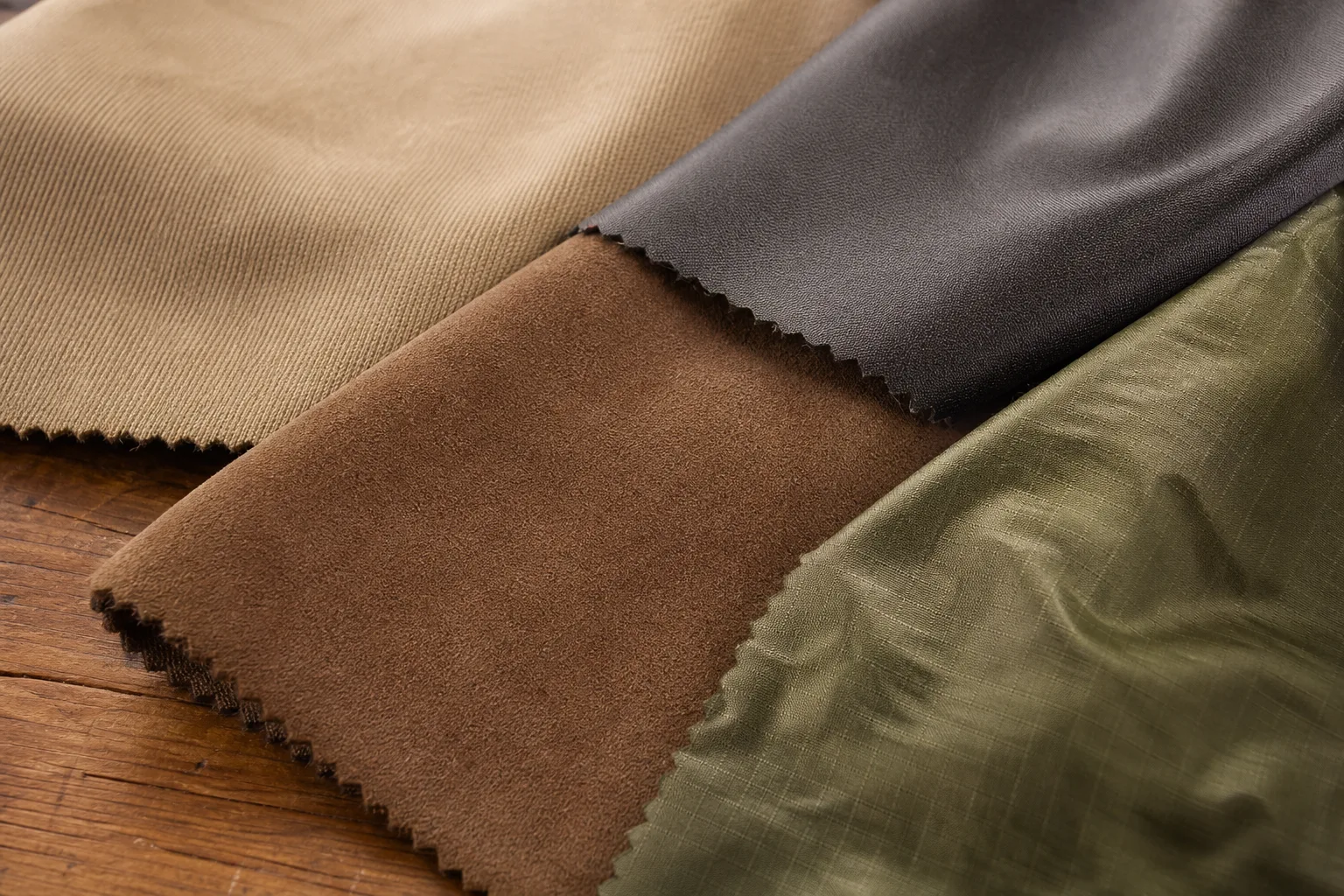
The pattern across all five: no lining wins on every axis. Cotton and leather win on feel and aging; polyester and nylon win on cost and practicality; microfiber wins on the luxury-practical balance. The right choice is the one that matches the bag's promise — and the wrong choice is almost always the one chosen without thinking.
How Lining Affects Manufacturing
The lining decision does not stop at the fabric — it changes how the bag is built, how long it takes, and what it costs. A professional factory thinks about lining behavior before the first sample is cut.
Sewing behavior. Each lining fabric sews differently. Cotton twill cuts and sews cleanly with standard settings. Polyester can be slippery, shifting under the presser foot and causing seam misalignment unless stabilized. Microfiber's nap can hide stitch lines and requires careful thread matching. Nylon sews fast but can pucker if tension is not tuned. Leather lining demands the full leather treatment — skiving, specialized needles, and edge finishing. A factory that knows its linings sets the right machine parameters the first time; one that does not produces wavy seams and returns.
Pocket and construction details. Pockets, card slots, and zip compartments are sewn on the lining before it is installed, so the lining's behavior affects the quality of every interior detail. A stretchy lining makes pocket alignment drift; a stiff lining makes pockets bulge; a slippery lining makes zip installation puckered. The lining's dimensional stability is a construction quality issue, not just a feel issue.
Cost and lead time. Lining typically represents 5–15% of a bag's material cost, but its manufacturing impact is larger: installation labor, special handling, and rejects all scale with the lining's difficulty. Exotic linings (leather, specialty microfiber) may also carry longer sourcing lead times, affecting your production schedule. When comparing factory quotes, ask what lining is assumed and what the lining line costs — a $2 lining difference can hide a $4 labor difference.
Dye fastness testing. Whatever the fabric, test dye fastness before production: rub a damp white cloth against the lining and check for transfer. This single test prevents the most common lining complaint — colored linings staining light-colored contents.
Interior-exterior color harmony. The lining color is part of the bag's visual identity, and the professional approach treats interior and exterior as one palette. A tonal lining (a shade or two lighter or darker than the leather) reads as refined and cohesive; a contrasting lining (a signature color) adds personality and recognition; a neutral lining (cream, taupe, charcoal) is the safe premium default that lets the leather star. Whichever direction you choose, specify the exact color with a physical reference and hold it across batches — a lining that drifts between beige and pink between production runs is a brand inconsistency customers will notice inside every bag.
Fabric direction and nap. Some lining fabrics have a direction or nap — brushed surfaces, twill diagonal, or printed patterns — and careless cutting can produce panels that clash inside the bag. Specify the fabric's directional handling in the tech pack (nap direction consistent, pattern aligned at seams) so the interior looks intentional rather than assembled from random off-cuts. This detail matters most on large interior panels and flap interiors, where the eye reads the surface as a whole.
Matching Lining to Bag Style
| Bag style | Recommended lining | Why |
|---|---|---|
| Heritage tote | Cotton twill | Natural, ages with leather, premium feel |
| Luxury handbag | Microfiber suede or leather | Plush interior, protection, luxe touch |
| Everyday handbag | Cotton-poly blend | Cost, durability, pleasant feel |
| Backpack / commuter | Nylon or polyester | Weight, strength, cleanability |
| Travel bag | Nylon | Water resistance, easy clean, light |
| Diaper / family bag | Nylon or polyester | Spill-proof, wipe-clean |
| Work / laptop bag | Nylon or cotton blend | Organizer pockets, daily abuse |
| Jewelry / glasses case | Microfiber | Scratch protection, plush feel |
| Wallet / small goods | Cotton twill or microfiber | Premium interior, slim profile |
| Flagship / limited edition | Leather | Absolute luxury, full-craft story |
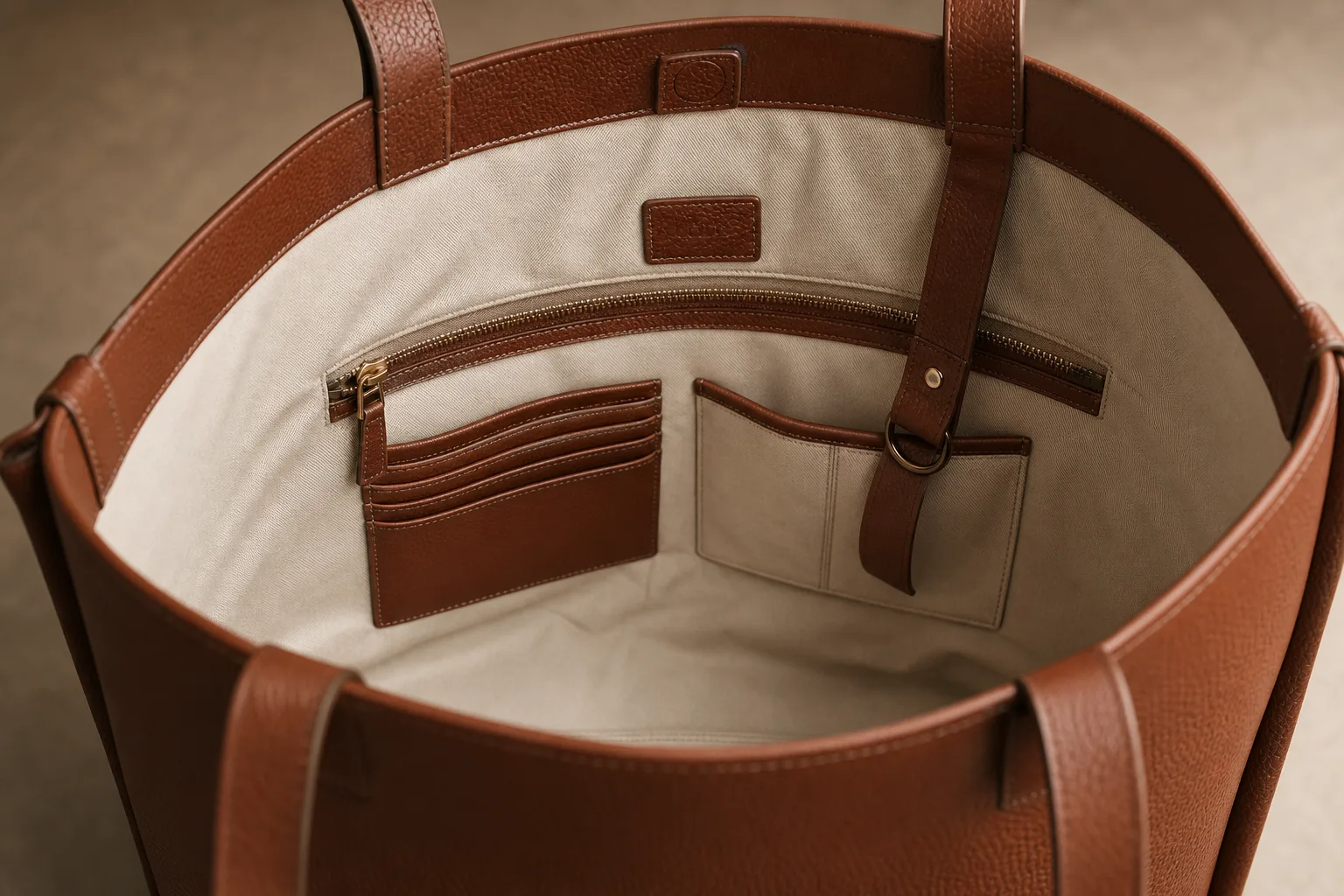
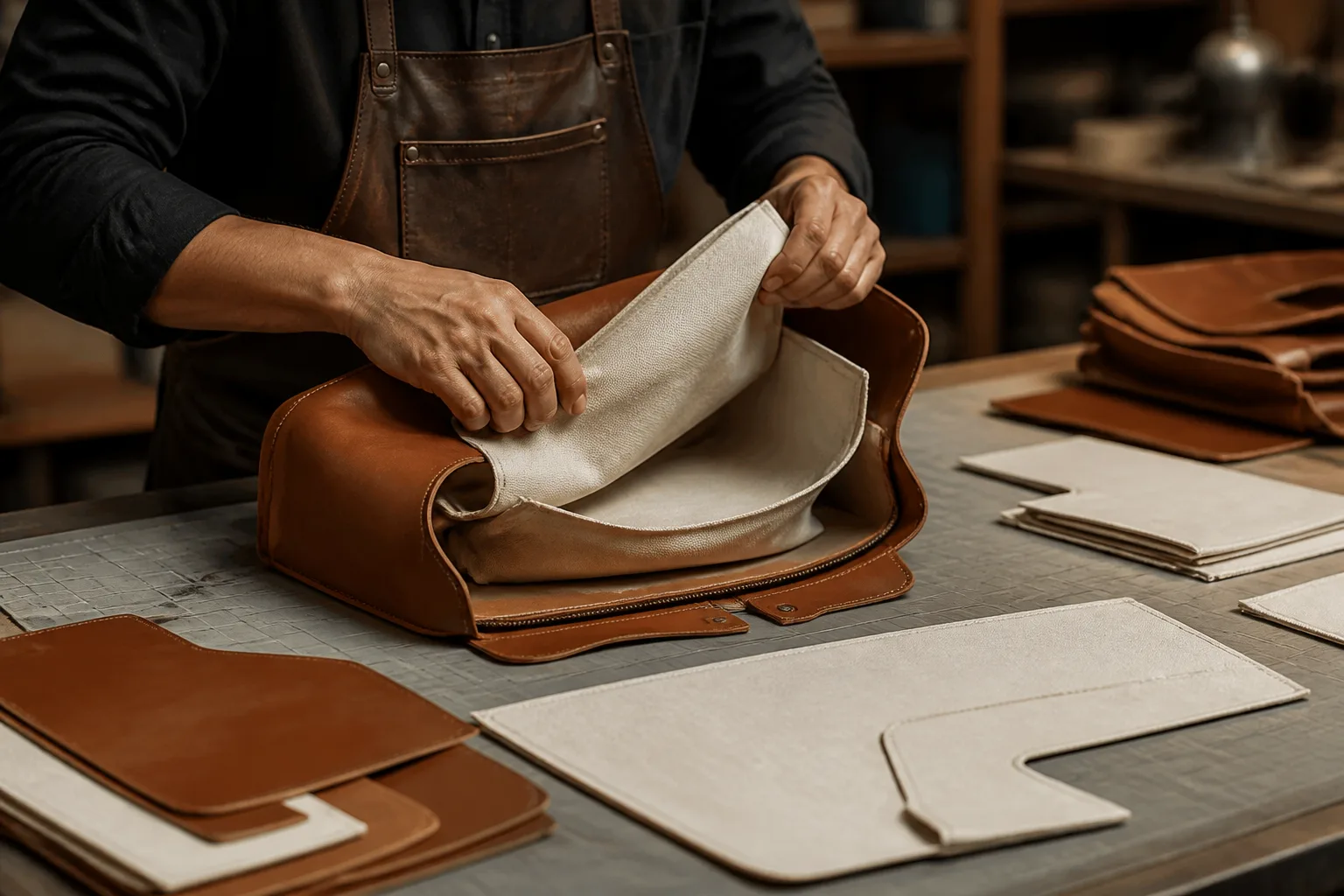
The matrix follows a simple logic: the more the bag faces water, weight, and daily abuse, the more the lining leans technical (nylon, polyester); the more the bag sells on feel and story, the more the lining leans natural and luxurious (cotton, microfiber, leather). A brand can — and often should — run different linings across its line: nylon inside the commuter backpack, cotton twill inside the heritage tote, microfiber inside the luxury clutch. The lining is a per-product decision, not a brand-wide default.
Sustainable Lining Options
Sustainability is now a purchasing criterion in bag retail, and the lining is one of the easiest places to deliver an honest eco story — because it is a smaller material quantity with growing sustainable options. Four choices dominate the current market:
Recycled polyester (rPET). Made from recycled plastic bottles, rPET delivers the same durability and cleanability as virgin polyester with a fraction of the footprint. It is the standard sustainable option for utility bags, and it is now available at near-parity pricing with virgin polyester. The certification to ask for is GRS (Global Recycled Standard), which verifies the recycled content claim.
Organic cotton. Cotton grown without synthetic pesticides and fertilizers, typically certified by GOTS (Global Organic Textile Standard). Organic cotton twill gives the heritage brand its natural premium feel with a certified eco story. The trade-off is price — organic cotton runs 20–40% above conventional — and the need to verify the full chain of custody, not just the fiber.
Tencel / Lyocell. A wood-pulp fiber produced in a closed-loop solvent process, Tencel is soft, breathable, and biodegradable — a genuinely strong sustainability profile with a luxuriously smooth hand feel. It is increasingly used for premium interiors, blending well with cotton or microfiber construction.
Hemp and bast-fiber blends. Hemp is one of the most sustainable fibers available — fast-growing, low-water, no pesticides — and modern hemp blends are far softer than historical hemp. For utility and travel bags with a natural-technical character, hemp-cotton blends offer a distinctive story.
Three rules for sustainable lining sourcing: verify with certifications (GRS, GOTS, OEKO-TEX) rather than trusting claims; specify the recycled or organic content percentage in the tech pack so it cannot drift in production; and balance the story with performance — a sustainable lining that fails durability tests is not actually sustainable, because the bag it is in gets replaced sooner.
Lining, Branding, and the Unboxing Experience
The lining is also a branding surface — and one of the most underused. When a customer opens a new bag, the lining is the largest visible area they encounter, which makes it the ideal place for brand identity executed with restraint.
Branded lining. A printed or jacquard-woven lining with the brand's pattern, monogram, or signature color turns the interior into a brand moment. Heritage houses have done this for generations — the branded lining is instantly recognizable and signals that the brand thinks about every surface. The cost is modest (printing adds a small per-meter premium; jacquard weaving more) and the effect on perceived value is disproportionate.
Interior details. The lining carries the functional details that define a premium interior: card slots with clean edges, zip pockets with proper pulls, a small brand label or serial patch, and thoughtful touches like a key loop or pen holder. These details are the difference between an interior that looks assembled and one that looks designed.
The unboxing standard. Premium brands ship with a consistent interior standard: lining colors that match the brand palette, labels that are straight, pockets that work, and a clean first impression. This standard is a quality-control matter, not a luxury — a mid-market bag with a well-executed branded interior out-feels a premium bag with a sloppy one.
The professional rule: design the interior as deliberately as the exterior. The customer opens the bag every time they use it — the interior is part of the product, not packaging for it.
Common Lining Failures and How to Prevent Them
| Failure | What happens | Root cause | Prevention |
|---|---|---|---|
| Color transfer | Lining stains contents | Poor dye fastness | Dye fastness test before production |
| Seam ripping | Pocket seams fail under load | Weak thread, wrong tension | Match thread to fabric, test pockets |
| Puckered zips | Zip pockets wavy | Slippery fabric, tension | Stabilize fabric, experienced operators |
| Static cling | Lining grabs contents/clothes | Cheap synthetic, dry climate | Anti-static finish, blend with cotton |
| Pilling | Lining surface balls up | Low-grade fiber | Spec quality yarns, test abrasion |
| Stretching out | Lining sags from shape | Loose weave, no stabilization | Interlining, denser weave |
| Shrinkage | Lining pulls seams after wash | Unwashed fabric | Pre-shrunk lining, steam setting |
| Bulky pockets | Pockets bulge through leather | Thick lining, bad construction | Match lining weight to pocket design |
The pattern is familiar: most lining failures are specification failures, not material failures. A lining chosen without a spec — no dye fastness requirement, no abrasion test, no pre-shrink requirement — fails in exactly the ways the spec would have caught. The fix is not a better fabric; it is a better spec.
FAQ
What is the best lining for a leather bag?
A: There is no single best — it depends on the bag. Cotton twill for heritage and premium feel, microfiber suede for luxury softness and protection, nylon for utility and water resistance, polyester blends for cost-effective durability. Match the lining to the bag's use and story.
Is cotton or polyester lining better?
A: Cotton feels more natural and premium but absorbs water and costs more; polyester is durable, cleanable, and cheap but can feel synthetic. A cotton-polyester blend is the professional middle ground.
How much does lining affect the cost of a bag?
A: Lining typically represents 5–15% of material cost, but its manufacturing impact (sewing behavior, pockets, rejects) can double that. Leather lining can add several dollars to a mid-size bag's factory cost.
Can I use leather lining in a mid-market bag?
A: Full leather lining is usually cost-prohibitive below premium pricing. A common compromise is partial leather lining — leather flap or main compartment, fabric elsewhere — which captures much of the luxury feel at controlled cost.
How do I stop lining from transferring color?
A: Test dye fastness before production: rub a damp white cloth on the lining and check for transfer. Specify the test in your tech pack and test every new dye lot.
What lining is best for bags that get wet?
A: Nylon is the most water-resistant standard lining; polyester is also good. Avoid cotton for wet-use bags, and seal interior seams if full water resistance is required.
Does the lining affect the bag's shape?
A: Yes — the lining is part of the construction stack. A dimensional-stable lining (cotton twill, stabilized polyester) helps the bag hold shape; a stretchy lining contributes to sagging. Interlining can compensate but adds cost.
What should I write in my lining spec?
A: Fabric (fiber content and weave), weight (gsm), color (with physical reference), dye fastness requirement, pre-shrink requirement, pocket construction details, and the lining sample approval gate. Ambiguity in the lining spec is an invitation to substitute.
Writing the Lining Spec in Your Tech Pack
A professional lining spec removes all ambiguity. Here is the template we use with clients:
- Fabric: Cotton twill, 65% cotton / 35% polyester blend (or as specified), weight 200 gsm ± 10
- Color: Brand color X, physical swatch reference provided; no color variation between batches
- Dye fastness: No transfer on damp white cloth rub test (per ISO 105-X12, rating ≥ 4)
- Construction: Pre-shrunk; dimensional stability within 3% after washing/drying
- Pockets: As per design; all pocket seams reinforced, zip pockets stabilized
- Labeling: Brand label sewn straight, position as per tech pack drawing
- QC: Lining inspected on production-level sample and at final QC (seams, pockets, labels)
- Substitution rule: No lining substitution without written approval
That last line matters more than it looks: the substitution rule prevents the quiet downgrade from a 200 gsm cotton-blend to a 140 gsm plain polyester that the factory happens to have in stock. Every material in the bag deserves the same protection — and the lining, being the most-touched surface, deserves it most of all.
Conclusion
The lining is the most-touched, most-seen, and most-underrated surface in a leather bag. It sets the first impression, absorbs daily abuse, carries the interior details, and signals quality to every hand that reaches inside. Choosing it well is not about picking the most expensive fabric — it is about matching the fabric to the bag's use, price, and story: cotton twill for heritage warmth, microfiber for luxury softness, nylon for utility and weather, polyester blends for cost-effective durability, and leather for absolute craft.
The professional approach is to treat the lining as a specification, not an afterthought: choose it deliberately, specify it precisely, test it for dye fastness and durability, sample it in the actual bag, and protect it with a substitution rule. A bag whose interior is as considered as its exterior is a bag that feels finished from every angle — and that is the feeling customers remember, and the reason they come back.
Designing a new bag and want to feel the lining options for yourself? Contact our factory — we will prepare lined samples in cotton twill, cotton-poly blend, microfiber suede, nylon, and leather on your design, with a cost comparison per lining, so you can choose with the fabric in your hand.