How Do You Manage Two Bag Suppliers Without Splitting Quality?
- Why Two Suppliers Change the Problem
- Choosing What to Split
- Keeping One Specification Across Two Lines
- Materials and Colour Consistency
- Tooling, Patterns and Duplication
- Allocation and Order Planning
- Comparing Quality Between Two Lines
- Communication and Single Points of Contact
- Preventing Drift Over Time
- Cost, MOQ and the Economics of Splitting
- Exit, Reallocation and Concentration Risk
- Contracts and Intellectual Property
- A Launch Sequence for Two Lines
- Keeping Records for Two Lines
- FAQ
Dual sourcing is sold as risk reduction, and it is, but the risk it removes is replaced by a different one: two factories interpreting the same product in two ways. The delivery risk falls while the consistency risk rises.
That trade is manageable, and it is managed almost entirely through documents and comparison rather than through goodwill. Two suppliers will not converge by themselves; they converge because one specification, one reference and one measurement routine are imposed on both.
Why Two Suppliers Change the Problem
A single supplier has one interpretation, one set of habits and one trajectory. Adding a second multiplies the number of interpretations and creates a comparison problem that did not previously exist.
What Dual Sourcing Buys
The obvious benefit is continuity when one factory is full, late or unavailable. The second benefit is commercial: a qualified alternative changes the tone of a price discussion without requiring a threat.
There is a third benefit that is often missed. Watching two factories make the same bag shows which problems belong to the design and which belong to a particular line, which is information a single supplier cannot provide.
What It Costs
Every duplicated item carries a cost: patterns, boards, dies, seals, training and inspection routines. Beyond the direct cost, split volumes reduce the quantity at each factory, which affects price and sometimes priority.
Management attention is the largest cost. Two suppliers mean two schedules, two quality records and two conversations, and the second one is usually the first to be neglected.
Budgeting for that attention is part of the decision: if nobody has a day a week for the second line, the split will run on the first line's paperwork and the second line's assumptions.
The Failure Mode to Avoid
The characteristic failure of dual sourcing is drift: both factories start from the same sample and end, six months later, with two slightly different products that no longer share a colour, a temper or a stitch density.
| Aspect | Single supplier | Two suppliers |
|---|---|---|
| Interpretation | One | Two, diverging over time |
| Continuity risk | High | Lower |
| Tooling cost | Once | Twice |
| Comparison data | None | Strong |
Choosing What to Split
Dual sourcing is not one decision but a set of them, and splitting by the wrong dimension creates more work than it removes.
Splitting by Style
The cleanest split gives each factory a different style or family, so the two lines never make the same product. Consistency risk falls to near zero and the duplicated tooling is limited to shared components.
The trade-off is that the split does not provide cover for a single high-volume style, which is often exactly the style that needs it.
In practice, most programmes split by style for the range and keep one volume style at one factory, accepting a concentration on the product that matters most.
Splitting by Volume
Dividing one style between two factories provides real cover and keeps the product identical in intent, at the cost of duplicated tooling and a permanent comparison task. This is the version that needs the most discipline.
Splitting by Component
Panels, linings or sub-assemblies can be made by different suppliers and assembled by one. This is common in practice and rarely declared, and it moves the consistency problem to the assembly stage.
The assembly factory then inspects incoming panels against a tolerance rather than a sample, which works only if the tolerance is written and the panels arrive with a lot reference.
Splitting by Market or Colourway
A factory can take a market or a colourway, which keeps the products distinct at the point of sale. It suits ranges with regional variants and avoids the direct comparison of two identical bags.
The risk moves to the market: a complaint about one region's bag is not automatically resolved by the other factory's output, which can make diagnosis slower rather than faster.
| Split by | Consistency risk | Tooling duplication |
|---|---|---|
| Style | Low | Low |
| Volume | High | High |
| Component | Medium | Medium |
| Market or colour | Low | Medium |
Keeping One Specification Across Two Lines
The specification is the only thing both factories can be held to, and it has to be identical rather than equivalent.
One Document, Two Recipients
Issue the same revision to both suppliers on the same day, with the same attachments and the same revision number. Sending one factory an email summary and the other a spreadsheet creates the drift before production starts.
The practical rule is that the document sent is the document the other receives, forwarded rather than retyped. Anything retyped acquires small differences that later look like interpretation.
Revision Control
Every change should reach both factories at once, and each should confirm receipt. Where one confirms and the other does not, the order should wait rather than proceed on assumption.
A simple acknowledgement line on the issue sheet, with a date and a name per factory, gives the planner something to check before releasing material. Without it, the assumption is always that both are current.
Wording That Leaves No Choice
A specification that says "approximately" or "as discussed" gives each factory a different latitude. Dimensions, tolerances and colours should be stated as values, with a reference sample naming the accepted range.
Where a value cannot be stated, the reference sample should at least be sealed and duplicated, so that both factories are judging the same object rather than describing an impression of it.
The Sealed Reference
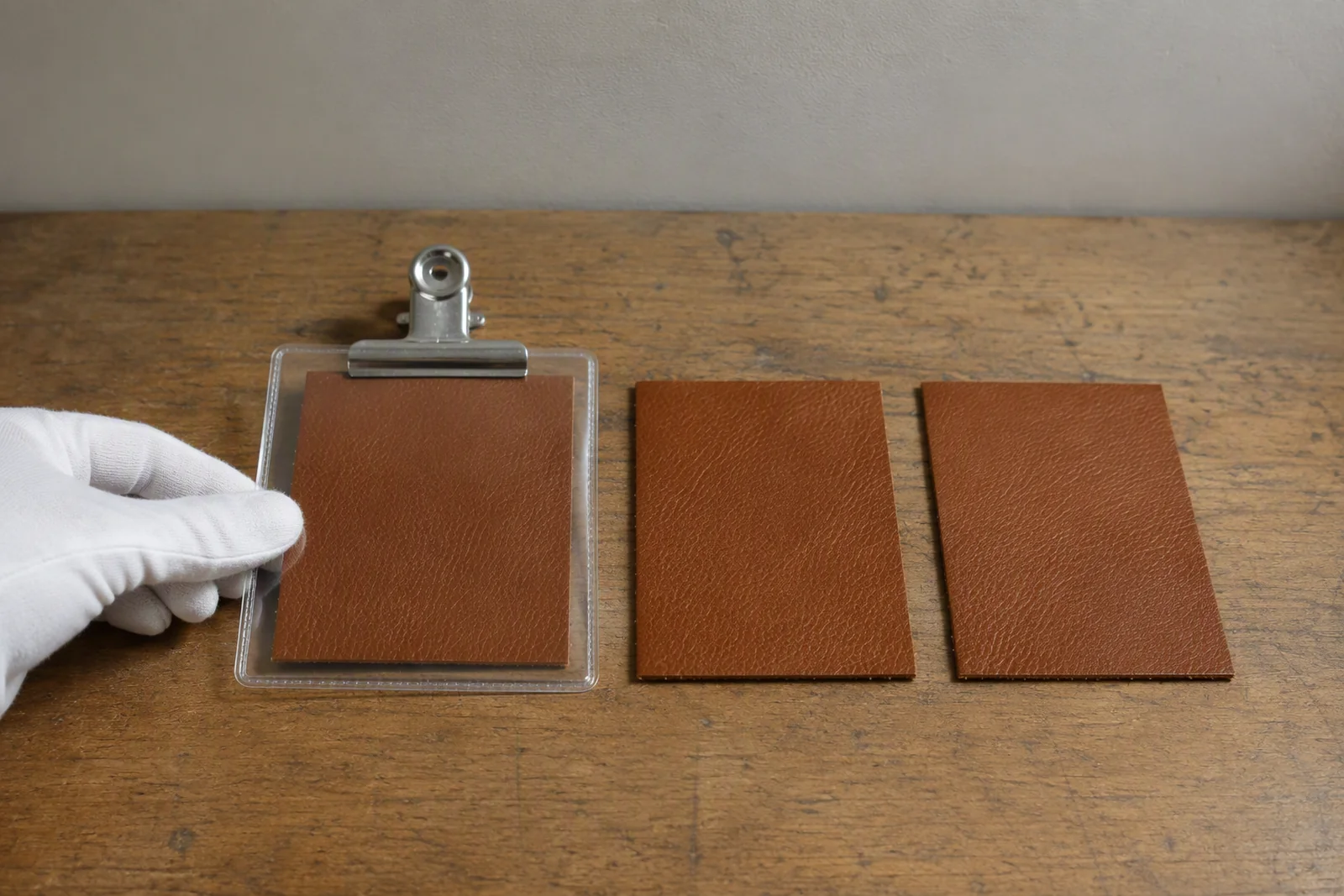
Both factories should hold a sealed reference from the same approved batch, ideally cut from the same material.
Sealing matters because handling changes a sample: edges soften, surfaces darken and the reference drifts towards the product rather than the standard. Two references from two batches reintroduce the variation the specification was meant to remove.
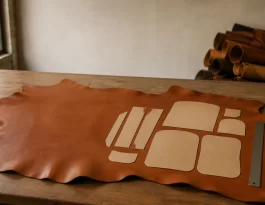
Cutting both references from a single hide is the cheapest way to remove material variation from the comparison, and it costs nothing beyond the planning of the cut.
| Item | Control |
|---|---|
| Revision | Same number, same day |
| Changes | Confirmed by both |
| Tolerances | Stated as values |
| Reference | Same batch, sealed |

Materials and Colour Consistency
Two factories buying the same article from different lots will produce two colours, and the difference appears on the shelf rather than in the factory.
Buying Material Together
Where possible, buy the leather, lining and hardware centrally and issue to both factories. This removes the largest single source of difference and simplifies the colour argument to one decision.
It also concentrates the risk, since one material decision now affects both lines at once, which is why the incoming inspection on that lot deserves more attention than it usually receives.
Shade Ranges and Cards
Where central buying is impractical, both factories should work from the same physical shade cards and the same acceptance range. Photographs on a phone are not a colour reference, because the screen and the light change the judgement.
Hardware and Trims
Hardware finishes vary by plating batch, so the trim should come from one supplier or be specified with a colour reference that both factories can match. Two slightly different ring colours read as two different products.
Keeping a hardware reference board at both factories, updated when the plating batch changes, is a small control with a large effect on how the range is read on a shelf.
Documenting What Was Used
Record the lot number of each material on each order. When a complaint arrives, the lot identifies whether the difference came from the material or from the making.
That distinction decides who investigates and who pays, so the record has commercial value as well as technical value, and it should be kept with the order rather than with the material.
| Material | Best control |
|---|---|
| Leather | Central buy, same lot |
| Lining | Same article, same dye lot |
| Hardware | One supplier or matched reference |
| Thread | Specified ticket and colour |
Tooling, Patterns and Duplication
Whatever one factory had to build, the second will need as well, and the duplication is cheaper when it is planned than when it is discovered.
Patterns and Boards
Paper patterns can be copied accurately if the same file is issued and the cutting method matches. Boards and templates cannot be copied from a photograph, so each factory needs its own set, made to the same drawing.
Dies and Moulds
Where a die or mould is involved, the two tools should be made to the same drawing by the same toolmaker if possible. Two tools made independently will produce two slightly different parts.
Where a single toolmaker cannot serve both, ask for the drawing and the measured output of each tool, and compare the first parts rather than the tools themselves.
Ownership of the tool should be agreed in writing, because a tool held by a factory that no longer supplies you is a tool you cannot move.
The clause is only useful with a retrieval procedure: who crates it, who pays the freight, and what condition it is expected to be in when collected.
Training the Second Line
A second factory making the same bag for the first time needs the sample, the specification and often a person. Sending a technician to run the first pilot batch is usually cheaper than correcting the first bulk.
The technician carries the unspoken parts of the method: how the panel is held, where the seam is eased, when the machine is stopped. Those are rarely written down and always visible in the output.
| Item | Duplication note |
|---|---|
| Patterns | Same file, same copy method |
| Boards | Made per factory to same drawing |
| Dies | Same drawing, same toolmaker |
| Training | Pilot batch with support |
Allocation and Order Planning
Allocation is a commercial decision with a quality consequence, because each factory's share determines how well it knows the product.
Setting the Split
A common starting point is a majority share to the primary and a smaller share to the secondary, enough to keep the second line familiar without diluting the main order.
A secondary share that is too small produces a line that never gains fluency, so the cover it provides is theoretical.
Fluency needs repetition, and repetition needs volume. A share that runs once a year keeps the paperwork current and the hands unfamiliar, which is the worst of both positions.
Sequencing Across Two Calendars
Place orders so that the two factories are not both ramping at the same moment. Staggered starts give you the attention of one line while the other is running a known product.
This also spreads the inspection load, since a new style and a repeat style can be checked by the same person on different days rather than on the same afternoon.
Capacity Reservations
If the second supplier is expected to be available in an emergency, that availability has to be paid for in some way, usually through a minimum annual volume or a standing reservation.
Switching Cost
Moving a style between factories is not free: patterns, boards, training and the first-batch learning curve all travel with it. Allocation should be stable enough that the switching cost is recovered.
A useful discipline is to change allocation only at defined points in the calendar, so that the learning cost is paid once per season rather than once per order.
| Decision | Consequence |
|---|---|
| Large secondary share | Real cover, higher cost |
| Tiny secondary share | Cover on paper only |
| Staggered starts | Attention where needed |
| Frequent switching | Repeated learning cost |
Comparing Quality Between Two Lines
Two lines cannot be compared on impressions, and a comparison that is not measured becomes a preference for whoever is more agreeable.
The Same Measurement, Both Factories
Use the same checklist, the same sampling level and the same definitions on both sides. Where the checklist differs, the result reflects the checklist rather than the quality.
Aligning the checklist is unglamorous work: the same defect names, the same severity definitions, the same sampling level. It is also the only way two inspection reports can be read side by side.
Side-by-Side Inspection
Inspect the two outputs together, on the same table, under the same light. Differences that are invisible when the bags are examined in separate visits become obvious when they are adjacent.
The comparison should include the parts that are usually hidden: the interior seam, the base edge, the underside of the handle. Those are where two lines diverge first.
Comparing Defect Patterns
Record defects by type and stage rather than by count alone. Two factories may have the same defect rate for entirely different reasons, and the pattern tells you which problem to address.
A line with many minor edge defects needs a tooling fix; a line with few but critical seam failures needs training or supervision. The rate alone cannot distinguish the two.
When the Lines Disagree
Where one line is consistently better, the question is whether the difference is skill, tooling or material. Resolving it usually means moving a tool, a technician or a material lot rather than issuing a warning.
A warning changes attention for a week; a guide, a folder or a shared lot changes the output permanently. The cheaper intervention is almost always the physical one.
| Measure | What to compare |
|---|---|
| AQL result | Same level, same definitions |
| Defect type | Pattern, not just rate |
| Critical operations | Same checklist item |
| Rework hours | Per hundred units |
Communication and Single Points of Contact
Two suppliers double the messages, and the messages will diverge unless one person owns the product.
That person also becomes the memory of the programme, which matters when the same question is asked again eight months later by a different factory.
One Owner on Your Side
Name one person who answers product questions for both factories. Where each factory talks to a different buyer, the two relationships develop their own interpretations and the differences arrive as facts.
The fix is procedural rather than personal: a single question log, visible to both, with answers written once and reused. Questions that arrive twice should be answered once.
One Channel per Topic
Keep technical questions in one channel and commercial questions in another, and copy both factories on technical answers so neither is working from a private version.
The habit costs a line of text and prevents the most common dual-sourcing failure, which is two factories holding two slightly different beliefs about what was agreed.
Sharing What Was Learned
When one factory solves a problem, the solution should reach the other. Factories rarely share among themselves, and the buyer is the only natural conduit.
A short monthly note describing what changed and why is enough. It also prevents the second factory from solving a problem that the first has already solved, which is otherwise a reliable source of divergence.
Language and Translation
Where the two factories work in different languages, translate the specification once and issue the translated version to both, rather than allowing each relationship to translate informally.
| Topic | Owner |
|---|---|
| Specification | Product owner |
| Sampling | Product owner |
| Prices | Commercial |
| Delivery | Planning |
Preventing Drift Over Time
Drift is slow and invisible per order, which is why it is caught by comparison rather than by inspection.
Scheduled Side-by-Side Reviews
Twice a year, put the current output of both factories next to each other with the sealed reference. Measure the differences that matter: stitch density, edge thickness, colour, hardware position.
Re-Approving the Reference
Where a change is accepted, update the sealed reference for both factories at once. A reference that is updated at one factory becomes a new source of difference.
The reference should carry a revision mark and a date, and both factories should be asked to confirm which revision they hold, in writing, at the start of each season.
Watching for Silent Substitutions
A factory that changes a lining, a thread or an interlining without telling you will drift first. Comparing material lots on each order is the cheapest detector.
A photograph of the lot label with the order file takes seconds and settles the question months later, when the physical label has long been cut up and thrown away.
Drift in People
The operator who made the original sample eventually leaves the line. Re-training against the reference, rather than against the person, keeps the standard when the person changes.
| Drift signal | Detector |
|---|---|
| Colour shift | Same-light comparison |
| Stitch change | Counted density |
| Material swap | Lot records |
| Skill loss | New-operator audit |
Cost, MOQ and the Economics of Splitting
Splitting volume across two factories changes the price at both, and the arithmetic should be done before the decision rather than after the first quotation.
Volume Thresholds
Most factories price against quantity bands, so halving an order can move both halves into a worse band.
The band structure should be asked for explicitly, because the difference between two adjacent bands is often larger than the saving the second source is meant to deliver. The cost of cover is the difference between the two prices, not the average.
Duplicated Fixed Costs
Patterns, boards, dies, seals and training are paid twice. Where a die or a mould is involved, the duplication can exceed the savings that dual sourcing provides in a single season.
For those products the argument usually shifts from duplicating the tool to sharing it, with one factory cutting or forming for both, which reintroduces a single point of failure by a different route.
Minimum Order Quantities
Each factory applies its own minimum for materials, which can force larger buys than the split volume justifies. Central material buying can offset this, at the cost of holding the stock yourself.
The Value of Leverage
Part of the return from dual sourcing is commercial rather than operational: a qualified second source changes the negotiating position. That value is real but should not be counted as a cost saving in the budget.
Counting leverage as savings tends to produce a business case that only works in the first negotiation, and then requires the split to be justified again every season on operational grounds alone.
| Cost item | Effect of splitting |
|---|---|
| Unit price | Worse band, both sides |
| Tooling | Paid twice |
| Material MOQ | Higher total buy |
| Freight | Two lanes, not one |
Exit, Reallocation and Concentration Risk
Dual sourcing exists to be used in a bad week, and the plan for that week should exist before it arrives.
Moving Volume in a Hurry
Reallocating to the second factory takes time even when it is qualified: materials must be bought, boards built and a pilot run reviewed. The realistic lead time should be written down, because it is longer than the optimistic one.
A useful exercise is to plan a reallocation as though it were happening now, then note every step that would have to occur. The list is the plan, and the plan is what makes the second source real.
Keeping the Second Line Warm
A second factory that has made nothing for a year is no longer a qualified alternative. A small recurring order keeps the patterns current and the relationship live.
It also produces real data: an annual order gives one inspection result per year, which is not enough to see a trend in either direction.
The Tool Question
Tools held at the factory you are leaving are a lever in someone else's hand. Ownership and retrieval rights should be agreed when the tool is paid for, not when the relationship ends.
Concentration After the Split
Dual sourcing can recreate concentration without anyone noticing, for example when both factories buy hardware from the same sub-supplier.
Asking each factory for its hardware and plating supplier, then comparing the names, takes a short conversation and often reveals an overlap nobody planned. Mapping the second tier is part of the exercise.
Two factories using the same plating shop, the same thread supplier or the same die maker share a failure that no allocation decision can offset, and the map is the only way to see it.
| Risk | Mitigation |
|---|---|
| Slow reallocation | Written lead time and pilot |
| Cold second line | Small recurring order |
| Tool hostage | Ownership and retrieval |
| Shared sub-tier | Mapped and named |
Contracts and Intellectual Property
Two suppliers means two sets of terms, and the terms decide what happens when the relationship sours.
Confidentiality Across Both
Each factory should be bound to the same confidentiality terms, including the obligation not to share the product with the other. Where one learns that the other makes the same bag, price information travels quickly.
Ownership of Tools and Patterns
State who owns the patterns, boards and dies, and where they must be returned. The clause matters most at the end, which is when it is least convenient to negotiate.
Non-Circumvention and Exclusivity
Exclusivity is usually refused in dual sourcing, and it should be, because the point of two suppliers is flexibility. What can be agreed is that neither factory sells the exact product to your market.
Warranty and Cost of Failure
Warranty terms should be comparable across both, so that a fault is handled the same way whichever line made the bag.
Comparable terms also make the comparison fair, because a factory carrying a longer warranty is pricing a different level of risk into its quotation. Where one factory carries a weaker warranty, the difference surfaces as an internal argument rather than a customer one.
| Clause | Why it matters |
|---|---|
| Confidentiality | Stops cross-talk |
| Tool ownership | Enables exit |
| Market exclusion | Protects the range |
| Warranty parity | Even handling |
A Launch Sequence for Two Lines
The order in which the second line is brought up decides how much of the first year is spent correcting differences.
Start With a Trial Batch
Run a small batch at the second factory before allocating a real share. The trial should use the same material lot and the same specification as the first factory's current production, so the comparison is fair.
Compare Before Committing Volume
Inspect the trial beside the first factory's output rather than against the sealed reference alone. The reference sets the standard; the sibling line shows what the standard looks like in production.
Set the Review Gate
Decide in advance what result allows the volume to move: a defect rate within a stated band, critical operations passing on the same checklist, and colour within the agreed range.
Ramp in Steps
Increase the second share in steps rather than in one move, with a review after each. A share that grows faster than the learning curve produces a month of avoidable defects.
Keeping Records for Two Lines
Records are the only way to compare two factories over a year, because memory keeps the last order and forgets the one before.
One Template for Both
Use a single inspection template with a factory field rather than two templates. Two templates make the numbers incomparable at the point when comparison matters most.
Order-Level Traceability
Record the material lots, the tooling used and the inspector for each order. When a difference appears, the record identifies whether it followed a lot, a tool or a person.
A Simple Comparison Sheet
One page per quarter with both factories on it, the same four measures, and the direction of travel. A single page is more likely to be read than a folder of reports.
The page should carry the four measures, the direction of each since the previous quarter, and one line naming the action taken. Anything longer becomes a report about reports, and the comparison stops being made.
FAQ
Is dual sourcing worth it for a bag programme?
A: It is worth it when continuity matters more than the cost of duplicated tooling and split volume. For a small range with short runs, the overhead often outweighs the cover.
How should the volume be split between two factories?
A: A majority share to the primary and a share large enough to keep the second line fluent is the usual pattern. A secondary share that is too small provides cover on paper only.
Should both factories make the same style?
A: Only if you accept a permanent comparison task. Splitting by style removes most of the consistency risk; splitting by volume provides better cover but requires the most discipline.
How do you keep specifications identical?
A: Issue one document, one revision number and one change date to both factories, require confirmation of receipt, and avoid verbal or summarised versions on either side.
How do you handle colour differences between suppliers?
A: Buy leather and trims centrally where possible, and where not, use the same physical shade cards and acceptance range at both factories. Screen images are not a colour reference.
Do both factories need their own patterns and boards?
A: Yes for boards and templates, which cannot be copied reliably from a sample. Patterns can be duplicated from the same file, and dies should be made to the same drawing.
How do you compare quality between two lines?
A: Use one checklist, one sampling level and one set of definitions, then inspect both outputs side by side under the same light. Compare defect patterns, not only rates.
What is the biggest risk in dual sourcing?
A: Drift. Both factories start from the same sample and gradually diverge in colour, temper and stitch density, and the difference is invisible unless it is measured.
How often should the two lines be reviewed together?
A: Twice a year is a practical minimum for a steady range, with a review after every significant change in material, tooling or personnel.
Should the second factory know it is a second source?
A: Yes. Pretending otherwise damages the relationship and removes the benefit, which depends on the second line being willing and ready when needed.
How do you keep a second supplier ready?
A: Give it a small recurring order, keep its patterns current and review its output against the reference. A factory that has made nothing for a year is no longer qualified.
Who should own the tooling?
A: The buyer, stated in writing, with a defined retrieval process. A tool held by a factory you are leaving is a lever in someone else's hand.
Does dual sourcing reduce price?
A: It can improve the negotiating position, but the direct effect on unit price is often negative because both halves fall into worse quantity bands.
How long does it take to move volume in an emergency?
A: Longer than expected: materials, boards, a pilot batch and an inspection all have to happen. The realistic lead time should be written down before it is needed.
Can both factories share a sub-supplier?
A: They can, but it recreates concentration. Map the second tier, because a shared hardware or plating supplier can remove the cover the split was meant to provide.
What should be agreed in the contract?
A: Confidentiality on both sides, ownership and return of tools and patterns, a market exclusion clause, and comparable warranty terms so faults are handled the same way.
Ready to run two factories as one programme? Split by the dimension that limits the risk you actually carry, issue one specification and one sealed reference to both, buy materials centrally where you can, and compare the two outputs side by side twice a year. Then write down the reallocation lead time before you need it, and keep the second line warm with a small recurring order.