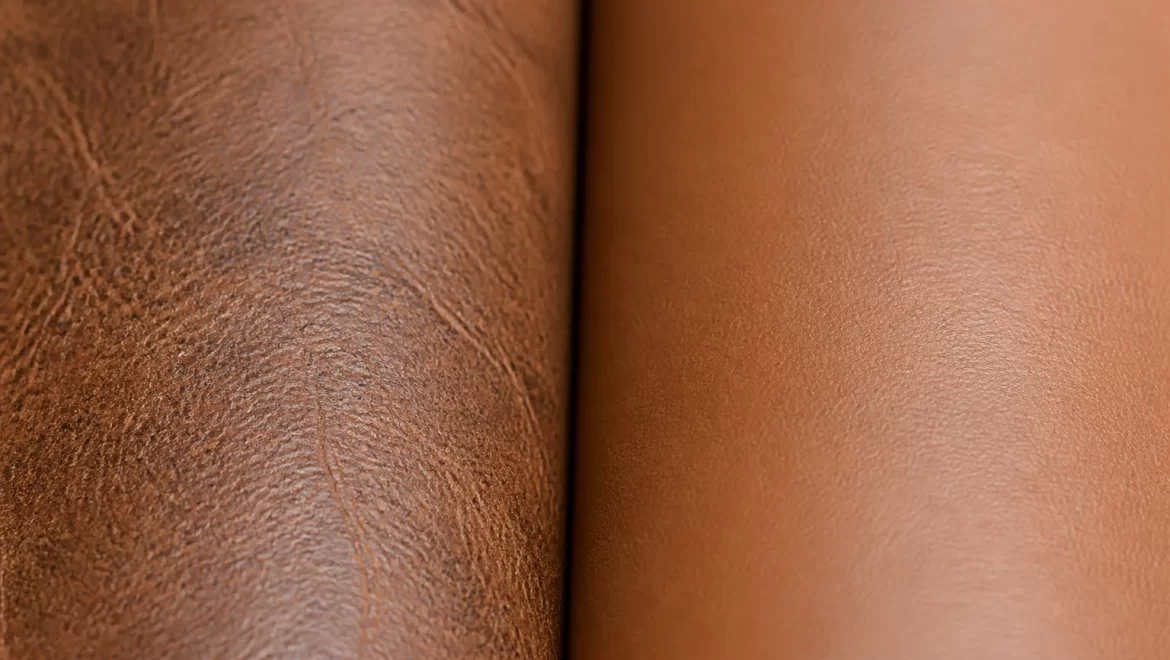
Full-Grain vs Top-Grain Leather: Which Is Right for Your Bag Line?
Every bag brand eventually faces the same sourcing decision: should your next collection be built on full-grain leather or top-grain leather? The answer determines not only how a bag looks on day one, but how it ages over five or ten years, how much it costs to produce, how consistent your yield is across production runs, and ultimately how your brand is perceived in the market. As a bag manufacturer, we handle both materials daily, and the honest answer is that neither grade is universally "better." Each one earns its place depending on the bag style, the price point, and the story you want to tell.
This guide breaks the comparison down from a factory perspective: what the terms actually mean, how the two grades differ in structure and performance, what they cost to source, how they behave on the production floor, and how to verify that the leather you are quoted is genuinely what arrives at your door. If you are planning a new bag line — whether a luxury tote, a rugged travel collection, or a mid-market fashion range — this is the decision framework our own production team uses with every OEM and ODM client.
What "Grain" Actually Means in Leather
To compare full-grain and top-grain leather properly, you need to understand one basic fact about hide anatomy: a hide is not a uniform sheet of material. It has layers, and the layer that matters most for bags is the grain layer — the dense, tightly packed fiber structure on the outer surface of the animal's skin, the side that once carried hair.
Below the grain sits the corium (also called the split layer), a looser, more fibrous region that is softer and significantly weaker. The grain layer is what gives leather its natural surface character: the fine pores, the subtle texture, the small marks and growth lines that make every hide unique. It is also the strongest part of the hide, because its fibers are interwoven much more tightly than anything below it.
Here is the key distinction the entire industry is built on:
| Term | What it means | Surface treatment |
|---|---|---|
| Full-grain leather | The grain layer is kept completely intact; nothing is sanded, buffed, or corrected away | None — natural surface retained |
| Top-grain leather | The outermost grain surface is sanded or buffed to remove imperfections, then usually finished or embossed | Light sanding + finish (pigment, aniline dye, or embossing) |
The difference sounds small — a few fractions of a millimeter of surface — but it cascades through durability, patina, water resistance, cost, and manufacturing behavior. A bag factory makes very different cutting, stitching, and edge-finishing decisions depending on which side of that line a leather sits.
Full-Grain Leather Defined
Full-grain leather is the highest grade of leather available, and the definition is simple: the hide's original grain surface is left untouched. No sanding removes the natural texture. No heavy pigment coat hides the surface. The leather retains its inherent markings — growth lines, healed scars, insect bites, grain variation — as part of its character.
From a bag manufacturer's perspective, full-grain leather offers three decisive advantages:
1. Maximum fiber strength. Because the dense grain layer is never abraded, full-grain leather has the highest tensile and tear strength of any leather grade. For bags that carry weight — travel duffels, laptop totes, diaper bags, work bags — this translates directly into longer life. A full-grain bag that is well constructed will typically outlast a top-grain equivalent made from the same hide.
2. A genuine patina. Full-grain leather ages. As it is handled, flexed, and exposed to light, it darkens, burnishes at stress points, and develops a rich, uneven glow that no finish can replicate. Brands that sell "heritage" positioning rely on this: the bag becomes more beautiful with use, and the customer relationship deepens over years rather than weeks.
3. Breathability and natural feel. Because the surface is not sealed under heavy finish, full-grain leather breathes and feels supple in the hand. It also responds well to conditioning, which matters for high-end retail environments where customers touch the product.
The trade-offs are equally real. Full-grain hides show natural markings, so yield per hide is lower — cutting around defects wastes more square footage. Color application is usually aniline or semi-aniline, which offers less protection against stains and water. And the material cost is the highest of any leather grade. For a brand, full-grain is a quality statement; for a factory, it is a material that demands skilled cutting and more careful QC.
Top-Grain Leather Defined
Top-grain leather is the second-highest grade, and it is what most mid-market "genuine leather" bags actually use — although many brands market it under vaguer labels. The defining process is that the outermost grain surface is lightly sanded or buffed to remove surface imperfections, after which a finish is applied. That finish is typically a pigmented coating, a polyurethane layer, or an embossed texture pressed to mimic a more expensive grain.
Because the sanding removes the natural surface, top-grain leather is then "corrected" — hence the industry term corrected-grain leather, which for most practical purposes means the same thing as top-grain when the correction is light.
For a bag manufacturer, top-grain leather's advantages are the opposite of full-grain's weaknesses:
1. Visual consistency. After sanding and finishing, every panel looks nearly identical. There are no surprise scars or grain variations in the middle of a production run. This is extremely valuable for fashion lines where a customer expects 500 bags to look like 500 copies of the sample.
2. Easier care and stain resistance. The pigmented or coated surface resists water, ink, and everyday stains far better than aniline full-grain. This is why top-grain is the default for everyday handbags, work totes, and travel bags that will face rain, coffee, and crowded commutes.
3. Better yield and lower cost. Sanding hides surface defects, so a higher percentage of each hide is usable. Combined with a lower raw-material price per square foot, top-grain leather typically lands 20–40% below full-grain at the same tannery, before any manufacturing differences.
The trade-off: top-grain leather will never develop a true patina in the way full-grain does — the finish blocks it. Its surface can also crack or peel at stress points over very long use if the finish is low quality. And at the entry level, "top-grain" can shade into heavily corrected, heavily coated material that is closer to a leather-look product than to genuine full-grain character.
Full-Grain vs Top-Grain: Head-to-Head Comparison
| Attribute | Full-grain leather | Top-grain leather |
|---|---|---|
| Surface | Natural, unaltered grain | Sanded/buffed, then finished |
| Fiber strength | Highest (dense intact grain layer) | High, but reduced by surface removal |
| Durability | Excellent; improves with age | Very good; finish protects surface |
| Patina | Develops rich, unique patina | Minimal; blocked by finish |
| Stain/water resistance | Lower (aniline/semi-aniline) | Higher (pigmented/coated finish) |
| Appearance consistency | Natural variation visible | Highly uniform across panels |
| Price per sq ft | Highest | 20–40% lower |
| Cutting yield | Lower (cut around defects) | Higher (defects sanded away) |
| Best bag types | Heritage, luxury, travel, work bags | Fashion, everyday, mid-market lines |
| Care requirement | Conditioning needed | Low maintenance |
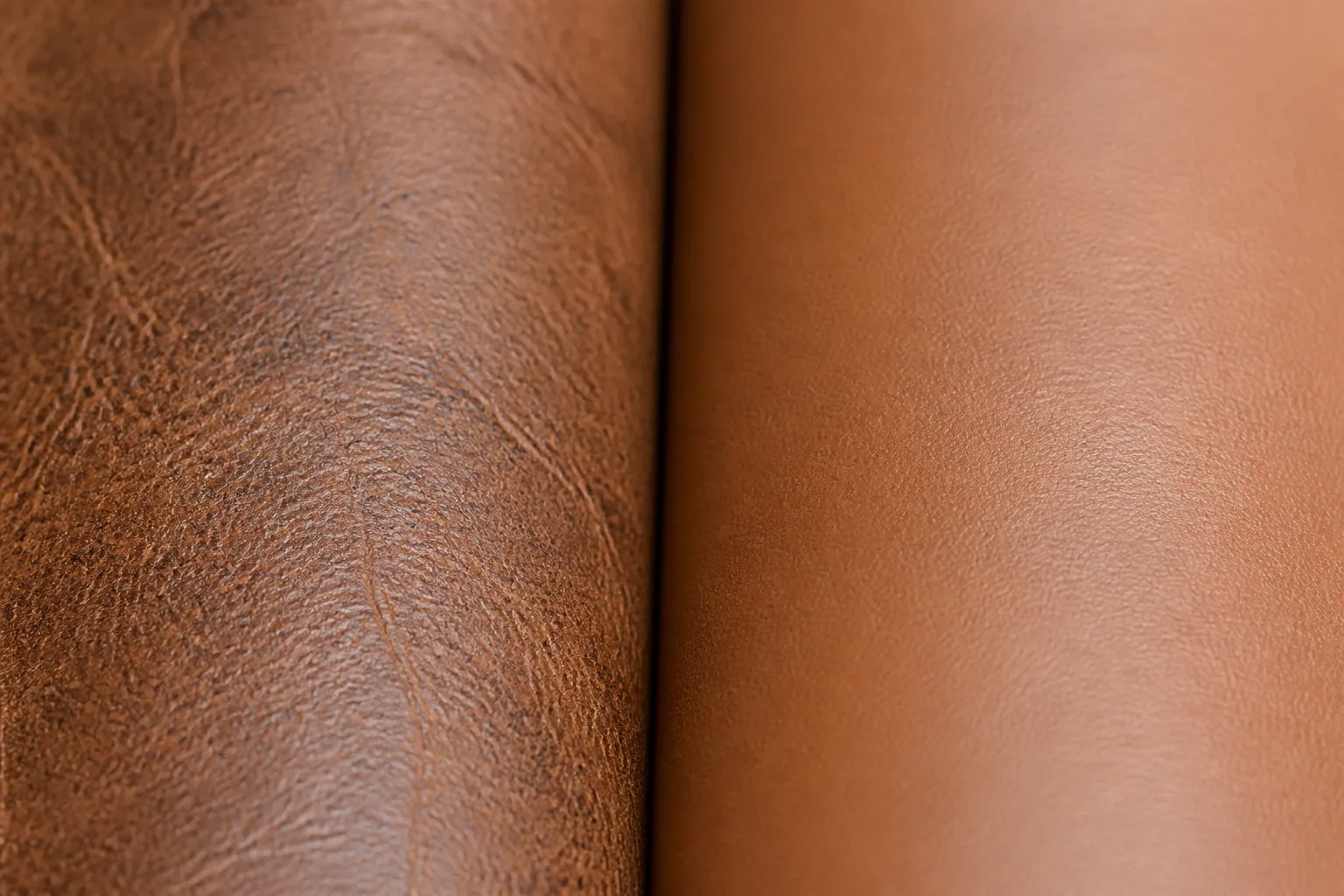
The table is the short answer; the long answer is that these two grades are not competitors so much as two different product positions. A brand can — and many do — run a full-grain flagship line and a top-grain entry line from the same factory, targeting different customers with the same brand story.
Manufacturing Realities: Cutting, Yield, and Consistency
From the factory floor, the differences between full-grain and top-grain show up long before a bag is stitched. They appear at the cutting table, and they affect your landed cost more than the price per square foot alone.
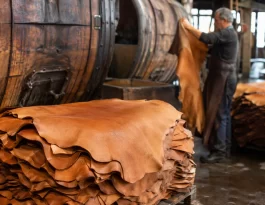
Cutting full-grain is a skilled job. Because natural markings and variations must be avoided or placed strategically, our cutters sort each hide panel by hand, matching grain tone across the bag's visible surfaces. A tote bag can require panels from two or three different areas of the hide, and color-matched cutting reduces usable yield by 10–15% compared with a leather where every square inch is acceptable. This labor and material cost is real, and it is why a full-grain bag is not simply "the same bag in better leather."
Top-grain cuts fast and clean. With a uniform finished surface, panels can be nested more tightly, defects are rare, and cutting can be done in larger batches with less inspection time. For a production run of 1,000 identical bags, top-grain is dramatically more efficient. The savings compound: less cutting time, less waste, fewer rejected panels, faster QC.
Consistency matters at scale. If you are producing 500–5,000 units of one design, top-grain gives you the repeatability that retail chains and e-commerce operations demand. If you are producing a limited capsule of 100–300 heritage pieces, full-grain's natural variation is a feature — every bag is technically one-of-one, which is a legitimate marketing story.
Edge finishing differs too. Full-grain edges absorb edge paint and burnish beautifully because the fibers are dense. Top-grain edges, depending on the finish, can require more passes of edge paint to achieve the same sealed look, and low-cost top-grain with a heavy PU coat can be harder to finish cleanly at the edges. This is a small detail, but it is one of the places where a trained buyer can spot manufacturing quality.
Which Bag Styles Suit Each Grade
The correct answer to "which is better" is almost always "it depends on the bag." Here is the pattern we see across real production orders, mapped by bag type:
| Bag style | Recommended grade | Why |
|---|---|---|
| Heritage / luxury totes | Full-grain | Patina story, premium positioning, lower volumes |
| Work and laptop bags | Full-grain or top-grain | Full-grain for durability; top-grain for uniform corporate looks |
| Travel duffels | Full-grain | Weight-bearing, abrasion resistance, ages well |
| Everyday handbags | Top-grain | Stain resistance, consistency, balanced cost |
| Fashion / seasonal lines | Top-grain | Rapid production, uniform appearance, controlled cost |
| Backpacks (school/commuter) | Top-grain | Durability at price point, easy care |
| Diaper bags / family bags | Top-grain | Spill resistance and cleanability are critical |
| Small goods (wallets, cardholders) | Full-grain | Small panels mean defects are avoidable; luxury feel in hand |
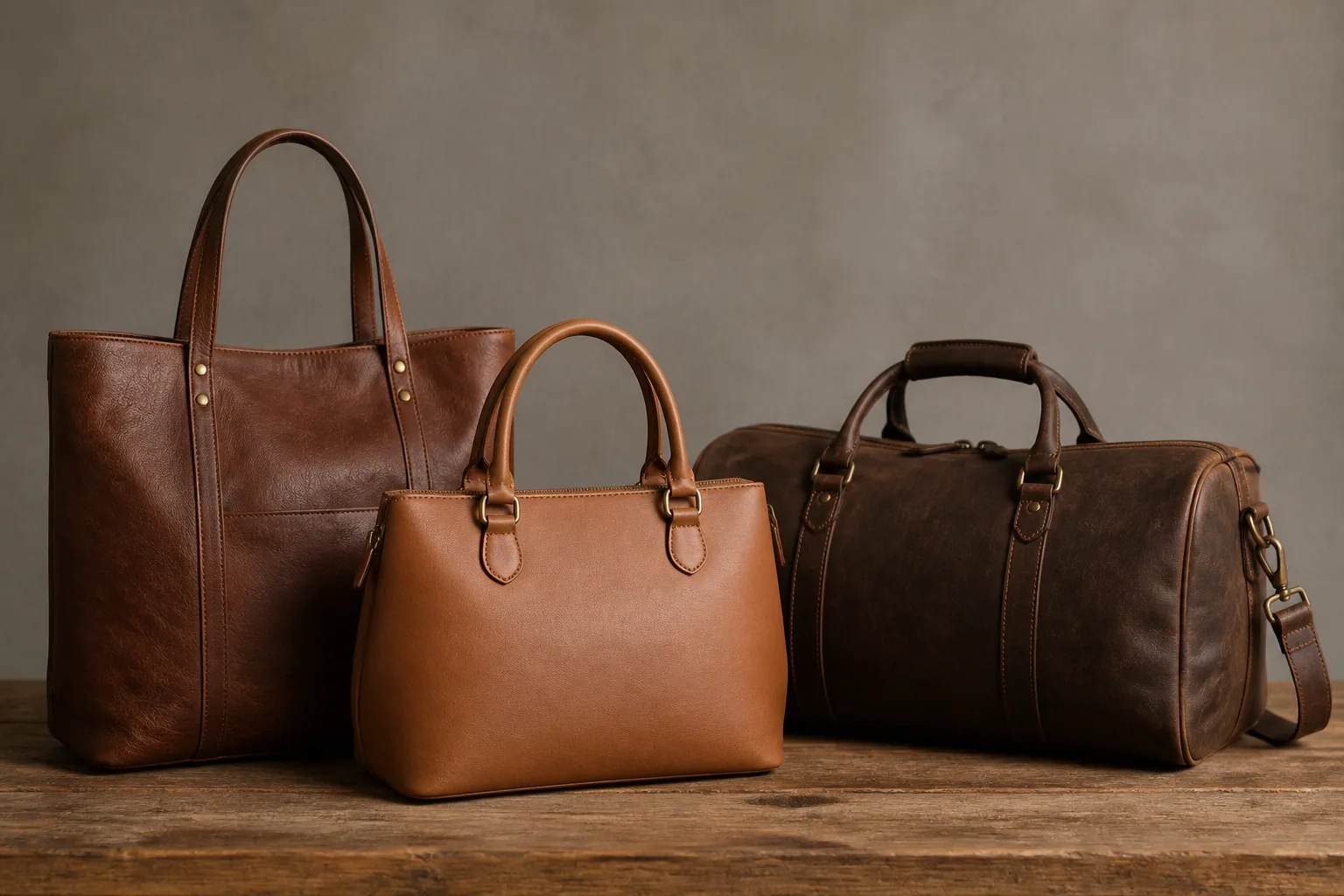
Two rules of thumb from our production team: if the bag will be carried daily in variable weather, lean top-grain; if the bag is a statement piece meant to last a decade and tell a story, lean full-grain. And if your line spans both, structure the range so the two grades don't compete for the same customer — that is a positioning problem, not a material problem.
Cost Structure and Pricing Impact
Price is where the full-grain vs top-grain decision becomes concrete, so let's put numbers on it. The following ranges reflect typical tannery pricing for cowhide leathers used in bag production (2026, FOB per square foot, bulk orders):
| Cost component | Full-grain (aniline/semi-aniline) | Top-grain (pigmented) |
|---|---|---|
| Raw leather, per sq ft | $3.20–$5.50 | $2.20–$3.80 |
| Cutting yield loss vs. theoretical | 15–25% (defects + matching) | 8–12% |
| Effective material cost, per bag (1.5 sq ft panel area) | $5.6–$11.0 | $3.6–$6.4 |
| Labor (cutting + QC intensity) | Higher | Standard |
| Typical retail positioning | $250–$800+ | $120–$350 |
Note that these are material-level comparisons; labor, hardware, lining, and overhead dominate the final factory price. The practical takeaway: switching a bag design from top-grain to full-grain typically raises the factory cost per bag by roughly 30–60% on material alone, which translates into a retail price increase of about 40–80% if you protect your margin. That is a meaningful positioning decision — full-grain is not a free upgrade, and top-grain is not a "cheap" material. Both are legitimate; they serve different customers.
Hidden costs buyers frequently miss. Beyond the price per square foot, three less obvious factors move your final cost per bag. First, minimum order implications: full-grain hides are bought as whole hides or side-by-side lots, and if a tannery's hide selection for a given grade is limited, you may need to accept a larger order just to secure a consistent tone. Second, sampling lead time: full-grain requires color-matching and grain-matching samples that can add one to two weeks to the sampling cycle, because the factory must cut from actual production hides rather than a standard finished sheet. Third, rework risk: a full-grain panel with a misplaced defect may be rejected at final QC, and because full-grain hides cannot be "patched" with finish, the panel is written off. Top-grain, by contrast, absorbs minor surface issues under its finish, which is why its QC pass rate is consistently higher. When we price a new bag design for clients, we quote both grades with these three factors included — the difference is usually larger than the raw-material spread alone suggests.
How to Verify Grade at the Factory
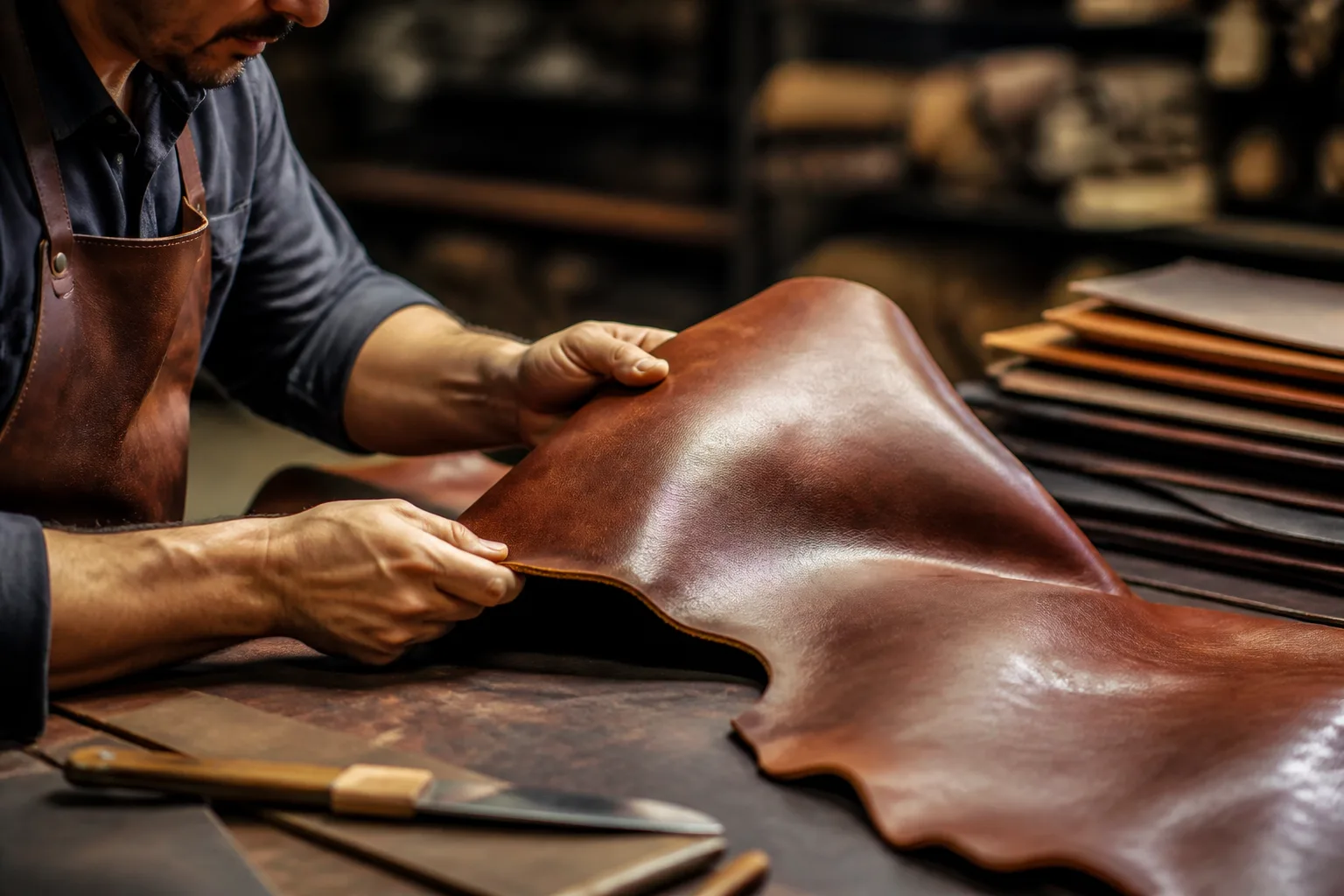
One of the most common questions we hear from buyers is: "How do I know the factory is actually giving me full-grain and not top-grain?" It is a fair question, because the two can look similar in a finished bag, and some suppliers blur the line. Here are the checks our own QC uses, and that you can request or perform during a factory visit or sample review:
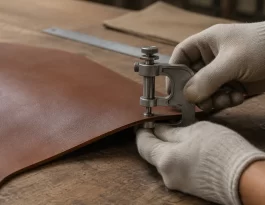
1. Cross-section inspection. Cut a sample edge and examine the cross-section under magnification. Full-grain shows a dense, tight fiber layer at the surface with no visible sanding lines. Top-grain shows a thin, compressed or coated surface layer where the grain was abraded and finished.
2. Water drop test. Place a drop of water on the surface. On full-grain aniline leather, the water is absorbed slowly and darkens the area (it dries back out). On pigmented top-grain, the water beads or sits on the surface without absorption.
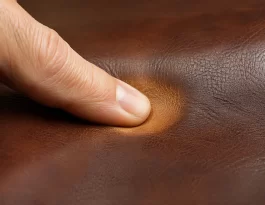
3. Burnish test. Rub the surface firmly with a dry finger or a soft cloth. Full-grain develops a subtle sheen or slight darkening as surface oils warm up. Heavy top-grain finishes show little or no change.
4. Touch and flex. Flex the leather between your fingers. Full-grain has a natural, slightly irregular texture and breathes; heavily finished top-grain feels cooler, smoother, and more uniform.
5. Ask for tannery documentation. Legitimate tanneries issue specification sheets stating the grade, tanning method, and finish type. A supplier who cannot or will not provide grade documentation is a red flag, regardless of how good the sample looks.
6. Confirm the finish type. "Full-grain" that arrives heavily pigmented or embossed is either corrected-grain being mislabeled or a full-grain hide that was finished to hide defects — in either case, the buyer should know exactly what they are paying for. Put the grade and finish in the contract, not just the marketing language.
FAQ
Q: Is full-grain leather always better than top-grain? A: No. Full-grain is higher grade and stronger, but top-grain's stain resistance, consistency, and cost make it the better choice for many everyday bag styles. "Better" depends on the bag's use and price position.
Q: Can top-grain leather develop a patina? A: Generally no. The finish that gives top-grain its consistency also blocks the natural aging process. Some lightly finished top-grain shows slight burnishing over years, but not the rich patina of aniline full-grain.
Q: How much more expensive is full-grain leather? A: At tannery level, roughly 30–60% more per square foot than comparable top-grain, before accounting for the additional cutting yield loss, which pushes the effective material cost gap wider.
Q: Which leather lasts longer in a bag? A: All else being equal, full-grain. Its intact grain layer is the strongest part of the hide. However, a well-constructed top-grain bag with quality stitching and hardware can easily last many years in normal use.
Q: Is top-grain leather "real leather"? A: Yes. Top-grain is genuine animal hide — it is simply sanded and finished. It should not be confused with bonded leather or split leather, which are lower grades with very different performance.
Q: What is the difference between top-grain and genuine leather? A: In tannery terms, "genuine leather" is a loose marketing label, not a grade. It commonly refers to corrected-grain or split leather. Top-grain is specifically the grade just below full-grain, and it outperforms most material sold under the "genuine" label.
Q: For a first bag collection, which grade should a new brand choose? A: For a first line with limited budget and a need for consistent retail product, top-grain is usually the safer choice. Reserve full-grain for a small premium capsule that lets you test the heritage positioning.
Q: Does the factory's stitching quality matter more than the leather grade? A: Yes. Grade sets the ceiling, but construction sets the floor. A full-grain bag with poor stitching fails faster than a top-grain bag built well. Always evaluate the whole manufacturing package, not the material alone.
Choosing for Your Bag Line: A Decision Framework
When our clients ask us to recommend a grade, we walk them through four questions:
1. What is the retail price point you are targeting? Above roughly $250–300, full-grain becomes credible and increasingly expected; below that, top-grain is where the value sits.
2. How will the customer use the bag? Daily commuter and family bags reward top-grain's cleanability. Heritage, travel, and work bags reward full-grain's strength and aging.
3. How large is the production run? Small capsule runs suit full-grain's one-of-one story. Runs above ~500 units demand top-grain's consistency and yield efficiency.
4. What is your brand story? If your narrative is "craft, natural materials, ages beautifully," you need full-grain to be honest. If your narrative is "everyday reliability at a fair price," top-grain delivers it better.
The best manufacturers don't push one grade; they help you match the material to the collection. That matching — grade, style, price, and story — is what separates a bag line that looks like a coherent brand from one that looks like a random assortment of leather goods.
Conclusion
Full-grain and top-grain leather are not enemies, and neither is a compromise. They are two legitimate materials with different strengths, costs, and stories. Full-grain gives you the strongest fiber, the most honest natural surface, and a patina that grows with the customer — at the highest price and with the most demanding production care. Top-grain gives you consistency, stain resistance, and efficient manufacturing — at a cost that lets more customers into your brand.
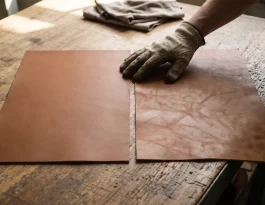
For a bag manufacturer, the professional answer to "which is right for your bag line" is always: it depends on the line. Define the bag, the price, the run size, and the story first; then let the leather follow. If you are planning a new collection and want a grade-by-grade cost comparison for your specific designs, a factory that works with both materials daily is the fastest way to get honest numbers — and to see both leathers side by side on the cutting table before you commit.
Planning a new bag line? Contact our factory team for a full-grain vs top-grain material comparison and cost estimate based on your specific designs — samples of both grades are available on request.