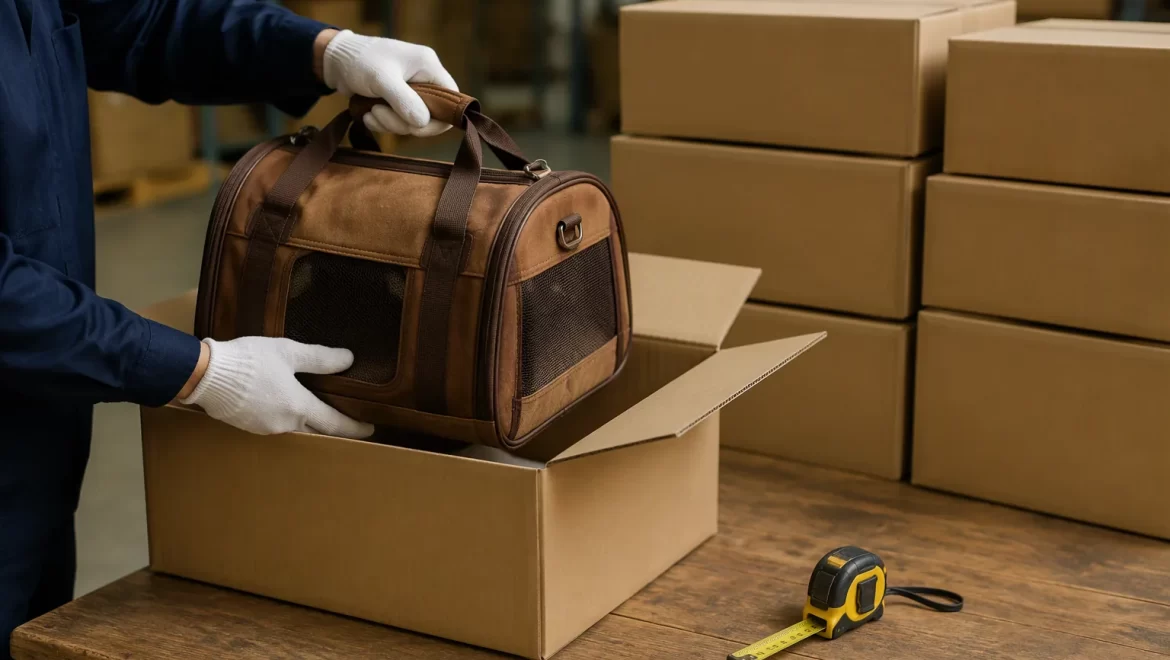
Pre-Shipment Inspection: What Inspectors Check
- What a Pre-Shipment Inspection Is and Is Not
- Timing the Inspection
- Settling Scope and Documents First
- Carton Selection and Sampling of Cartons
- Quantity Verification
- Workmanship and Function Checks
- Packaging and Marking Review
- The Inspection Report
- Reading the Result and Dispositions
- What Pre-Shipment Inspection Cannot Fix
- Preparing the Factory and the File
- Coordinating With Logistics and Loading
- FAQ
A pre-shipment inspection is the last opportunity to look at a finished order before it leaves the factory. It is also the most misunderstood step in the quality chain, because it is often expected to do work that belongs much earlier.
The inspection itself is short: typically one day on site, a defined sample of cartons opened, a list of checks applied, and a report issued. What it verifies is whether the goods as packed match the goods as ordered.
That is a narrow but valuable question. This guide covers what a pre-shipment inspection is and is not, when it should be booked, which documents must be settled beforehand, how cartons are selected and quantity verified, what is checked on the product and its packaging, what a usable report contains, how results are dispositioned, and how the inspection fits with loading and vessel deadlines.
What a Pre-Shipment Inspection Is and Is Not
Setting expectations correctly at the start prevents the most common disappointment, which is treating a finding as a surprise.
The Question It Answers
A pre-shipment inspection answers one question: do the packed goods conform to the specification that was agreed? It compares output against a reference, and it reports the differences.
It is a verification event, not a production control. It observes what has already been made.
What It Cannot Do
It cannot improve the goods. A defect found on the day of inspection is already built into the units that carry it, and the options are rework, sorting, acceptance with a concession or rejection.
It also cannot prove quality across the whole order. Like any sampling exercise, it estimates the condition of the batch from what it sees.
Why It Still Earns Its Place
Despite those limits, the inspection protects the buyer at the point where correcting a problem is still possible before export. Catching a wrong shipping mark or a missing insert on the factory floor is far cheaper than doing it at destination.
It also creates a record. Where the packed goods were inspected and photographed, a later dispute about condition has a baseline.
| Question | Answered by pre-shipment inspection | Answered earlier |
|---|---|---|
| Do packed goods match specification | Yes | No |
| Are shipping marks and labels correct | Yes | No |
| Are quantities and assortments correct | Yes | No |
| Is the line capable of holding tolerance | No | In-line control |
| Are materials as ordered | Partly | Incoming inspection |
| Will the batch defect rate be acceptable | Estimated | In-line control |
Timing the Inspection
Booking the inspection at the right moment is the difference between a useful report and a wasted visit.
After Packing Is Complete
The inspection should take place after the goods are fully packed, marked and ready for loading. Inspecting cartons that are still being packed produces findings that change before the inspector leaves the site.
A practical rule is to require the factory to confirm that the full quantity is packed and available before the inspection date is fixed.
Before Loading
The inspection should be completed before the container is loaded. Once cartons are in a container, access is limited, restacking damages packaging, and a failed inspection becomes far more expensive to act on.
Where the schedule is tight, the inspection and the loading can be on consecutive days, but the sequence matters.
When It Should Not Be Booked
Booking an inspection before the order is complete wastes the visit and may produce a report that misrepresents the batch. Booking it after loading removes most of its value.
The same applies to an inspection booked on the day a public holiday starts, or in the middle of a production peak when no one at the factory is available to open cartons.
| Timing choice | Consequence |
|---|---|
| Before 100% packed | Findings change before the report is written |
| After packing, before loading | Intended window, full access |
| During loading | Access limited, restacking risk |
| After loading | Verification only, correction impractical |
| After vessel cut-off | No time to act on any finding |
Who Books the Inspection
The booking normally sits with the buyer, and the agency is contracted by the buyer rather than by the factory. That separation is what makes the finding credible as an independent record.
Where the factory arranges an inspection and pays for it directly, the report is still useful internally, but it carries less weight in a commercial discussion than one commissioned by the buyer.
Settling Scope and Documents First
The inspection is only as precise as the documents behind it. Ambiguity in the specification becomes argument in the report.
The Documents That Must Exist
Before an inspection can be booked meaningfully, the order should have a purchase order, an agreed specification, a sealed or approved sample, a defect classification list, a packing specification and the final artwork for labels and marks.
Where any of these is missing, the inspector is forced to interpret, and interpretation produces findings that the factory will contest.
Defining the Checks
The booking should specify which checks apply and which do not. A short inspection of a standard order and a full inspection of a new design are different jobs with different durations.
Specifying the checks also fixes the price. Inspections booked as a vague request for a quality check tend to be scoped by the agency rather than by the buyer.
Supplying the Reference Material
The factory should hold physical references on site: the approved sample, the label artwork, the packing instruction and the agreed colour standard. Digital files are useful but not a substitute when a comparison has to be made at a bench.
Where references are held only by the buyer, the inspection should include sending them ahead of the visit.
| Document | Purpose at inspection | If missing |
|---|---|---|
| Purchase order | Quantities and assortments | Counts cannot be verified |
| Specification | Construction and materials | Checks become subjective |
| Sealed sample | Appearance reference | Appearance findings contested |
| Defect list | Classification of findings | Levels assigned by inspector |
| Packing specification | Inner and outer packing | Packing findings debated |
| Label artwork | Label and mark verification | Marks checked for presence only |
| Colour standard | Shade verification | Shade findings inconsistent |
The Cost of a Wasted Visit
An inspection that finds nothing because the order was not ready still costs a day of fees, travel and lost loading time. The saving is entirely in the preparation before the date is fixed.
Confirming packing completion in writing is the single step that prevents most wasted visits, and it takes one message rather than a system.
Carton Selection and Sampling of Cartons
Cartons cannot all be opened, so the inspection relies on selection. How the cartons are chosen determines how representative the findings are.
Selection From the Whole Stack
Selection should be random across the packed quantity, not from a stack placed near the door for the inspector's convenience. Where cartons are pre-selected by the factory, the sample is biased before the inspection begins.
A practical method is to number the cartons in the packing record and select from the full sequence across the pallet positions, including cartons from different pallets and layers.
Top, Middle and Bottom
Within a selected carton, inspection should cover the full assortment rather than only the top layer. In cartons containing multiple units, checks should include units from the top, middle and bottom of the pack.
This is a small detail with real consequences. Packaging damage and compression marks appear at the bottom of a carton, and assortment errors often appear in the middle.
How Many Cartons
The number of cartons opened follows from the order size and the agreed sampling approach. It is normally stated at booking, so both sides know what will happen on the day.
Where an order contains several colours or sizes, cartons should be selected across variants rather than concentrated on the largest variant.
| Aspect of selection | Good practice | Common failure |
|---|---|---|
| Choice of cartons | Random from the full stack | Factory picks the best cartons |
| Coverage | All pallets and layers | Only top layer accessible |
| Within carton | Top, middle and bottom units | Only top unit checked |
| Variant coverage | All colours and sizes | Only the main variant |
| Number opened | Agreed at booking | Decided on site |
Recording the Selection
Which cartons were opened should be written down during the inspection, not reconstructed afterwards from memory. The record is what lets a finding be traced to a pallet or a packing run.
Where the packing list carries carton numbers, the inspector can reference them directly, which is faster than describing positions and more useful when the finding is contested.
Quantity Verification
Quantity errors are the most disruptive findings because they usually cannot be corrected inside the shipping window.
Counting Against the Order
The inspection verifies that the packed quantity matches the order, which means counting cartons and confirming the units per carton against the packing list.
Where a shortage is found, the cause is often an assortment imbalance rather than a simple shortfall: sizes or colours packed in proportions that differ from the order.
Assortment and Mixed Cartons
Mixed cartons require more than a count. The inspector should confirm that each carton contains the intended mix and that the packing list matches what is inside.
Assortment errors are frequently invisible until the goods reach the destination warehouse, where they cause the most disruption to a retail launch.
Over-Shipment
Over-shipment is treated as a finding too. Extra units may indicate an earlier over-production that has now entered the shipment, or a packing error that has displaced other goods.
Where over-shipment is intended, it should be agreed in writing before packing so that the inspection report reflects the agreed quantity.
| Quantity check | Method | Typical finding |
|---|---|---|
| Total cartons | Count against packing list | Missing or extra cartons |
| Units per carton | Recount sample cartons | Wrong pack quantity |
| Assortment | Verify mix in sample cartons | Sizes or colours out of proportion |
| Variant totals | Reconcile against order | One variant short, another over |
| Extra goods | Compare to agreed allowance | Unauthorised over-shipment |
Reconciling the Count
Where the count in a sample carton does not match the packing list, the discrepancy should be projected across the shipment rather than noted as a single error. Packing errors rarely occur once.
The factory can usually explain a mismatch immediately: an extra unit added to reach a round number, or cartons from an earlier run packed into the same lot.
Workmanship and Function Checks
This is the part of the inspection that most buyers picture, and it is where the defect list does most of its work.
Product Checks
Product checks compare the units in the open cartons against the specification and the approved sample: materials, construction, colour, hardware, lining and dimensions.
The inspection weighs defects by the agreed classification, so a batch may pass on minors while failing on a single critical or on an accumulation of majors.
Measurement Verification
Key dimensions are measured against the specification at the measurement points stated in it. Where the specification is silent on measurement points, results are hard to compare with the factory's own.
Measurement is usually applied to a sample rather than every unit, and the report should state how many units were measured and what range was found.
Function Tests
Function tests cover what the product must do: closures closing and releasing, zips running through full travel, straps bearing load and hardware operating without binding.
For carriers, load testing at handle and attachment points matters more than appearance, because a carrier that releases under load has failed regardless of how it looks.
| Check group | What is verified | Basis of judgement |
|---|---|---|
| Materials | Correct leather, lining, interlining | Specification and sample |
| Construction | Stitching, reinforcement, edge treatment | Specification |
| Colour | Shade against the standard | Colour standard |
| Dimensions | Key measurements at stated points | Specification tolerances |
| Hardware | Type, finish, placement | Specification |
| Function | Closures, zips, straps | Defined test |
| Cleanliness | Marks, dust, odour | Agreed standard |
Packaging and Marking Review
Packaging findings are the ones most likely to be dismissed as minor and the ones most likely to cost money at destination.
Inner Packing
Inner packing checks cover the protective materials and the way each unit is presented: protective film, stuffing that holds shape, desiccant where required, and any inserts such as care cards or dust bags.
Missing inserts are a recurring finding. They are invisible in a photograph of the product and disruptive at retail, because the packaging is incomplete when the carton is opened.
Labels and Artwork
Label checks compare the applied label against the approved artwork: wording, language, position and barcode. Where a barcode is applied, a scan check confirms that it reads and resolves to the correct item.
Label position is worth verifying separately. A correctly printed label applied to the wrong position is a visible defect on the retail shelf.
Carton Marking and Shipping Marks
Outer carton checks cover the printed marks, the carton dimensions and the packing method. Shipping marks matter because customs and warehouse operations depend on them.
Cartons should also be checked for condition: compression, water exposure and tape integrity all indicate how the goods have been stored before loading.
| Packing check | Verified against | Consequence if wrong |
|---|---|---|
| Inner protection | Packing specification | Surface damage in transit |
| Dust bag or insert present | Packing specification | Incomplete retail pack |
| Care label wording | Approved artwork | Compliance and information risk |
| Label position | Approved placement drawing | Visible defect at retail |
| Barcode readability | Scan test | Scanning failure at retail |
| Shipping marks | Agreed mark drawing | Customs and handling problems |
| Carton condition | Visual inspection | Damaged goods on arrival |
Judging Appearance Consistently
Appearance findings depend heavily on viewing conditions, so the report should state the lighting used and the distance at which the unit was viewed before it was judged.
Where a brand has a viewing condition in its own standard, passing that standard to the inspector removes a recurring source of dispute about borderline cosmetic faults.
The Inspection Report
A report that records only a verdict cannot be acted on. The useful parts are the detail behind the verdict.
What the Report Should Contain
A usable report states the checks performed, the results per check, the defect counts by level, the units and cartons inspected, and the disposition with its basis.
Photographs should show the findings in context rather than only close-ups, and measurement results should be listed as values rather than as pass or fail statements.
Carton-Level Traceability
The report should identify which cartons were opened, by carton number or mark, so that findings can be traced back to a pallet or a packing run.
This matters when a defect is concentrated in one carton. The pattern often identifies a specific packing station or a specific bundle of material.
What a Weak Report Looks Like
A weak report lists checks as acceptable without values, contains photographs that show a bench rather than a fault, and gives a verdict without stating which category drove it.
Reports of that type are common when the inspection was booked without a defect list, leaving the inspector to decide what counted as acceptable.
| Report element | Strong report | Weak report |
|---|---|---|
| Checks performed | Listed with limits | Summarised as acceptable |
| Defect counts | By level against limits | Single total |
| Measurements | Values recorded | Pass or fail only |
| Photographs | Findings in context | Generic bench shots |
| Carton identification | Carton numbers listed | Not recorded |
| Disposition | Stated with the failing category | Verdict only |
Booking the Re-Inspection
A re-inspection should be booked as soon as the sort is complete rather than when the loading date approaches, because the schedule is the constraint that produces concessions.
Where the factory proposes to correct the fault without a second visit, the buyer should require evidence instead: photographs of the corrected units against the reference, taken by the factory and retained.
Reading the Result and Dispositions
The verdict is a starting point for a decision, not the decision itself. Several dispositions are possible after a failed inspection.
The Common Outcomes
An order can pass, pass with an observation, fail with a requirement to sort and re-inspect, or fail outright. The disposition determines what happens in the following days.
Where a failure is limited to a defined category, a targeted sort is usually cheaper and faster than a full re-inspection.
Re-Inspection Rules
The rules for re-inspection should be agreed in advance: what proportion of the goods must be re-inspected after a sort, whether the same inspector returns, and who bears the cost.
Where the factory corrects the fault and the buyer re-books an inspection, the second visit should focus on the failed category plus a confirmation pass over the rest.
Concessions and Their Cost
Accepting goods with a known defect is a commercial decision, and it should be recorded rather than agreed verbally. A concession note protects both sides and sets the expectation for the margin.
Where a concession is granted repeatedly for the same defect, the cause is upstream, and the next order should carry a changed specification rather than a repeat concession.
| Disposition | Condition | Next step |
|---|---|---|
| Pass | All categories within limits | Proceed to loading |
| Pass with observation | Minor trend noted | Proceed, record for next order |
| Sort and re-inspect | Majors above the limit | Rework, then targeted re-inspection |
| Hold | Critical found | Contain, correct, verify, re-inspect |
| Concession | Buyer accepts known faults | Record in writing before shipment |
| Reject | Faults not commercially usable | Renegotiate, remake, or cancel |
When a Concession Makes Sense
A concession can be the right commercial answer when the fault is cosmetic, the shipment window is fixed and the cost of delay exceeds the cost of the fault. It should be priced rather than accepted.
What makes it work is the record. A written concession with photographs and a date turns a dispute into an agreed position, and it sets the reference for the next inspection.
What Pre-Shipment Inspection Cannot Fix
The most expensive misunderstanding about the inspection is expecting it to rescue an order that was already going wrong.
Findings Arrive After the Fact
By the time the inspection happens, every unit has been made, finished and packed. A finding therefore triggers correction on finished goods only, which is the most expensive form of correction.
Sorting a batch to remove a defective minority, re-packing a shipment with corrected labels, or replacing a hardware batch all cost more than catching the same fault at the operation that produced it.
The Case for Upstream Control
The inspection is most valuable on orders where production has been controlled upstream: checkpoints at irreversible operations, first-article approval and material verification at receipt.
Where those controls exist, the inspection usually confirms a good batch. Where they do not, it audits a gamble, and the outcome depends on hope rather than process.
Using Findings to Change the Next Order
A repeated finding is a signal about the specification or the process rather than about the batch. Where the same label error appears in three consecutive inspections, the artwork file or the packing specification is the place to look.
Feeding findings back into the specification, the defect list and the checkpoint map is what converts a per-order cost into an improvement.
| Finding pattern | Likely cause | Where to act |
|---|---|---|
| Same defect each order | Specification or process gap | Specification and process |
| Concentrated in one carton | A single packing station | Packing station and records |
| One variant affected | A separate material bundle | Material and cutting records |
| Marks or labels wrong | Old artwork in circulation | Artwork control at the factory |
| Quantity short repeatedly | Packing count not verified | Packing verification step |
| Damage at carton bottom | Handling and storage | Warehouse practice |
Findings That Need a Decision
Some findings are not defects at all but gaps in the specification, such as a measurement point that was never defined or a label position that was never drawn. These should be answered in writing after the inspection.
Recording them as open points rather than as failures keeps the report accurate and gives the next order a better specification to work from.
Preparing the Factory and the File
Most slow inspections are slow because the factory was not ready, not because the checks were complicated.
Documents to Have Ready
The factory should have the purchase order, packing list, specification, approved sample and the label and mark artwork available at the inspection table. Retrieving files during the visit is the single largest loss of inspection time.
Where a document must be printed, printing it before the visit is a small task that removes a delay of an hour or more.
Room, Access and Light
Inspection needs a flat surface, access to the packed stack and adequate light. Inspecting cartons on a pallet in a dim corner produces unreliable findings on both appearance and measurement.
Where the goods are already strapped or wrapped for loading, the factory should know that the sample cartons must be accessible on the inspection day.
People Who Must Be Present
Someone with authority to make decisions should be available, because questions about a borderline finding need an answer on the day. Where nobody can decide, the report is issued with an open question and the schedule slips.
A packing supervisor is usually the most useful person to have present, since packing and marking findings are the most common and the quickest to resolve.
| Preparation item | Owner | If not prepared |
|---|---|---|
| Packing list and order | Factory office | Count verification delayed |
| Approved sample on site | Factory or buyer | Appearance findings contested |
| Label and mark artwork | Factory office | Marks checked for presence only |
| Access to packed stack | Warehouse | Sample biased or reduced |
| Inspection area and light | Warehouse | Measurement unreliable |
| Decision maker present | Factory management | Borderline findings unresolved |

Coordinating With Logistics and Loading
The inspection sits inside a loading schedule, and the two need to be sequenced rather than run in parallel.
Loading Supervision
Loading supervision is a separate service from the inspection and answers a different question: whether the goods that leave are the goods that were inspected, and whether they were loaded without damage.
Where an order has been inspected and then loaded, a loading check is a short additional step that closes the gap between the report and the container.
Seal and Record
The container seal number should be recorded and photographed, and the carton count noted against the packing list at the point of loading. That record is what makes a later shortage claim possible to investigate.
Where a manufacturer loads across several days, the record should note which cartons went in on which day rather than reporting a single total.
Schedule and Cut-Off
The inspection date should be set back from the vessel cut-off by enough time to act on a failure. An inspection that finishes on the cut-off date leaves no room for a sort, and in practice converts a failure into a concession.
A practical allowance is one or two working days between the inspection and the cut-off, depending on the size of the order and how quickly the factory can respond.
| Logistics step | Purpose | Record produced |
|---|---|---|
| Inspection before loading | Verify packed goods | Inspection report |
| Loading supervision | Verify what was loaded | Loading report with photos |
| Seal record | Proof of container integrity | Seal number and photograph |
| Carton count at loading | Reconcile against packing list | Count sheet |
| Scheduling back from cut-off | Allow time to react | Revised loading plan |
Following Up After Loading
Once the container has left, the inspection report and the loading record should be filed together with the seal number and the carton count, because that combination is what supports a claim later.
Where the same finding appears in two consecutive orders, it should be raised with the factory as a specification issue rather than as a batch issue, and the correction written into the next order.
FAQ
When should a pre-shipment inspection be booked?
A: After the full quantity is packed and before the container is loaded. Booking it earlier produces findings that change, and booking it later leaves no time to act.
Does a passing inspection guarantee the whole order?
A: No. It is a sampling exercise, so it estimates the condition of the batch from the cartons opened. A pass means the batch is likely to be at or better than the agreed limits.
How many cartons are opened?
A: The number follows from the order size and the agreed sampling approach, and it should be stated at booking so both sides know what to expect.
Should the factory choose which cartons to open?
A: No. Selection should be random across the packed stack, including different pallets and layers, because cartons picked by the factory bias the sample.
What is checked inside a carton?
A: Units from the top, middle and bottom of the pack, because compression marks appear at the bottom and assortment errors commonly appear in the middle.
Is quantity verified as well as quality?
A: Yes. Carton counts, units per carton, assortments and variant totals are all checked, and over-shipment is treated as a finding as well as shortage.
Are dimensions measured during the inspection?
A: Key dimensions are measured at the points stated in the specification, on a sample of units, with the results recorded as values rather than as pass or fail.
What function tests apply to bag orders?
A: Closure operation, zip travel, strap attachment under load and hardware movement. For carriers, load testing at handle and attachment points is the most important of these.
How are packaging faults classified?
A: By consequence at destination. A missing dust bag or insert is usually major commercially, while a scuff on a carton that leaves the product untouched is minor.
What does a shipping mark check cover?
A: The printed marks against the agreed mark drawing, the carton dimensions and the packing method, because customs and warehouse operations depend on the marks.
What should an inspection report contain?
A: The checks performed, results per check, defect counts by level against limits, the units and cartons inspected, measurement values, photographs in context and the disposition with its basis.
Why does carton traceability matter?
A: Identifying the cartons opened lets a pattern be traced back to a pallet, a packing station or a material bundle, which is where the correction has to happen.
What happens after a failed inspection?
A: Dispositions are pass, pass with observation, sort and re-inspect, hold, concession or reject. The disposition decides what happens in the following days.
How much must be re-inspected after a sort?
A: This should be agreed in advance: what proportion is re-inspected, whether the same inspector returns, and who bears the cost of the second visit.
Can a pre-shipment inspection improve the goods?
A: No. By the time it happens everything is made and packed, so findings trigger correction on finished goods, which is the most expensive form of correction.
How does the inspection fit with loading?
A: The inspection verifies the packed goods and the loading record verifies what left the factory, including the seal number and carton count. Both should be completed before the vessel cut-off.
Ready to make the final inspection count? Book it after packing and before loading, settle the specification and defect list before the date is fixed, select cartons across the whole stack rather than the ones offered, verify quantity and markings as carefully as product quality, and treat every finding as an instruction for the next order rather than a verdict on the last one.