Defect Classification: Major, Minor and Critical
- Why Classification Comes Before Counting
- The Three Levels Defined
- Critical Defects
- Major Defects
- Minor Defects
- Worked Examples by Area
- Ruling on Borderline Cases
- The Additivity Rule
- Writing the Classification List
- Photograph Standards for the List
- How Classification Drives the Decision
- Disputes, Reclassification and List Maintenance
- FAQ
Every inspection produces a count, and a count on its own decides nothing. Ten defects in a sample may be a pass or a failure depending entirely on what those defects are.
Classification is what converts a count into a decision. It defines which faults make a product unsafe, which make it unsellable, and which merely reduce its polish. Without agreed definitions, the same batch can be passed by a factory and failed by a buyer using identical numbers.
For bag manufacturers working with overseas brands, classification is also a language. It translates a brand's standards into instructions a line supervisor can apply at the bench, on a Tuesday, without a phone call.
This guide covers the three levels and what distinguishes them, worked examples across stitching, hardware and materials, how to rule on borderline cases, the additivity rule that turns cosmetic faults into a quality problem, how to write and photograph a classification list, and how that list drives accept or reject decisions.
Why Classification Comes Before Counting
A defect count is only meaningful when both sides count the same things in the same way. Classification is what makes that possible.
Counts Without Categories
Where a report simply states that twenty units had defects, the number cannot be acted on. It does not say whether a process is producing unusable goods or cosmetic marks that most customers will never notice.
Categories make the number useful. Twenty units with a loose thread is a different commercial situation from twenty units with a closure that releases under load, even though the count is identical.
Why the Same Batch Can Pass and Fail
Two parties can inspect the same batch and reach different verdicts without either being dishonest. The difference lies in how they classified a defect that sits near a boundary.
A scratch on a hidden inner panel and the same scratch on a front panel may be judged differently by a brand and a factory. Where the list does not say which is which, both parties are applying their own experience.
The Commercial Function
Classification also carries commercial weight. Critical and major defects are usually grounds for rejection; minor defects are typically tolerated within a limit. The list therefore determines who bears the cost of a fault.
That is why classification should be agreed in writing before production. A list agreed afterwards is a negotiation, not a standard.
| Question | Answered by classification | Left open without it |
|---|---|---|
| Is this fault acceptable | Yes, by level | Depends who is asked |
| Does it block shipment | Yes, critical and major typically do | Ambiguous |
| Who pays for the fix | Follows from the level | Contested |
| Can the count be compared across orders | Yes | No, categories differ |
| What does the line check for | Yes, specific faults | General instruction only |
The Three Levels Defined
Three levels are used almost universally, and the distinction between them rests on consequence rather than on appearance.
Critical
A critical defect creates a risk of injury, makes the product unusable for its purpose, or breaches a legal requirement. Critical defects are normally set at zero acceptance.
The category is deliberately narrow. Where too many faults are called critical, the list loses credibility and gets applied unevenly.
Major
A major defect affects function or makes the product clearly unacceptable to the intended customer. It would normally cause a return, a complaint or a markdown if the customer received it.
Major defects are tolerated within a tight limit rather than at zero, because a small number of faults in a large batch is a reality of manufacturing that a zero limit cannot manage.
Minor
A minor defect is a deviation from specification that does not affect function and would not normally prompt a return. Slight variation in a hidden area, a marginal stitch irregularity out of the main sight line, or a small mark in a concealed position.
Minor defects take a looser limit, which is what allows production to continue at a realistic defect rate.
| Level | Test applied | Typical limit | Commercial effect |
|---|---|---|---|
| Critical | Injury risk, unusable, or illegal | Zero acceptance | Rejection, sometimes recall |
| Major | Function affected or clearly unsellable | Tight limit | Rework, sorting, credit |
| Minor | Cosmetic, no functional effect | Looser limit | Tolerated within limit |
Where the List Sits in the Order
The classification list belongs in the purchase order as an annex, referenced by version. Where it is circulated separately, the order and the list drift apart within a season.
Referencing it in the order also settles which version applies to which shipment, which matters as soon as a second order runs under a revised list.
Critical Defects
Critical is the category that most often gets stretched, and stretching it is the fastest way to make an inspection system unworkable.
The Three Tests
A defect is critical when it satisfies at least one of three tests: it can cause injury to a person or an animal, it makes the product fail at its basic purpose, or it places the product outside a legal or regulatory requirement.
The tests are applied to the fault as it would occur in use, not as it appears on a bench. A rough metal edge is minor in appearance and critical in the hand.
Typical Critical Defects in Bags
For carriers and pet travel bags, the recurring critical faults are closure failures under load, attachment points that release, sharp burrs and exposed wire ends, and detaching small components within reach of an animal.
Material contamination also belongs here when it involves anything that could harm the animal or the user: loose staples, broken needles, glass fragments or chemical residues.
Why the Category Must Stay Small
If every fault that a customer might dislike were called critical, the zero-acceptance rule would fail on the first batch, and the buyer would be forced to waive it. Once waived, the rule stops protecting anyone.
Keeping critical narrow is what gives it force. When a critical defect is found, it should stop the batch, and that only works if the category means what it says.
| Critical defect type | Test that applies | Detection method |
|---|---|---|
| Closure releases under load | Unusable for purpose | Load test on sample units |
| Strap attachment separates | Injury risk when carried | Pull test to defined force |
| Sharp burr on hardware | Injury risk | Visual and touch check |
| Exposed wire or frame end | Injury risk | Visual and touch check |
| Detachable small part | Injury risk if swallowed | Pull test, component review |
| Broken needle or staple in material | Injury risk | Metal detection, visual |
| Prohibited substance present | Legal requirement | Material declaration, testing |
Testing Rather Than Looking
Several critical faults cannot be found by looking at a bag on a bench. A closure that releases under load looks normal until it is loaded, and an attachment point looks sound until it is pulled.
Where a fault is defined by behaviour, the list should state the test and the force rather than describing an appearance. A defined test is repeatable; a described appearance is not.
Major Defects
Major is the working category. Most real disputes live here, and most of the judgement a buyer has to exercise sits between major and minor.
The Functional Test
A defect is major when it impairs function or would clearly prevent the product from being sold at its intended price. The test is applied from the customer's position, not the factory's.
A zip that jams in the middle of its travel, a stress-point seam that is under-stitched, a magnetic closure that needs two attempts: each affects how the product works, and the customer will notice quickly.
The Appearance Test
Major also covers appearance faults that are obvious in normal use. A panel with a visible colour difference from the rest of the bag, a misaligned flap, or a hardware finish that does not match the specification on a prominent part.
The distinction from minor is visibility in use. A fault on a front panel seen from a metre away is major; the same fault in a concealed area is not.
Common Major Defects
Recurring majors in bag production include skipped stitches in a load-bearing seam, hardware attached in the wrong position, missing reinforcement, wrong lining or thread colour against specification, and closures that do not latch reliably.
These are the faults that produce returns and chargebacks, which is why they carry tight limits rather than zero. Setting them at zero would reject batches that are commercially usable.
| Major defect | Test applied | Effect if shipped |
|---|---|---|
| Skipped stitches in load seam | Functional | Seam may open in use |
| Zip jams or skips teeth | Functional | Product fails in normal use |
| Closure unreliable | Functional | Repeated handling complaints |
| Hardware positioned wrong | Functional and appearance | Strap geometry altered |
| Wrong lining or thread colour | Appearance against spec | Visible deviation from sample |
| Missing reinforcement | Functional | Structure sags |
| Visible shade difference on front | Appearance | Customer notices immediately |
Minor Defects
Minor is not the same as unimportant. It is the category that determines whether a commercially acceptable batch is held up over details.
The Definition in Practice
A minor defect is a deviation that does not affect function and would not normally cause a complaint or a return. Inner-surface marks, slight stitch irregularity away from sight lines, marginal colour variation within the agreed tolerance.
The test is what a reasonable customer would do on receiving the product: keep it, or raise a complaint. If the answer is keep it, the fault is minor.
Where Minor Becomes Major
Minor faults become a quality problem through accumulation. A single small mark is minor; eight small marks across the front panel of the same bag is a different product in the customer's hands.
This is why minor limits are applied both per unit and across the batch. A loose limit on minors combined with no per-unit rule allows a batch to pass while shipping units no one would accept.
Setting the Minor Limit
Minor limits are usually the loosest of the three categories, and they should be set with the channel in mind. A product sold at a premium through a specialist retailer tolerates fewer minors than a utility item sold at volume.
Where a brand is unsure, a useful discipline is to take a finished sample, add the faults under discussion, and ask whether it could still be sold at full price.
| Situation | Reasonably minor | Becomes major |
|---|---|---|
| Surface mark | Hidden area, small | Front panel, obvious in use |
| Stitch irregularity | Outside main sight line | Along a prominent visible seam |
| Colour variation | Within agreed tolerance | Noticeable against adjacent panels |
| Lining fit | Slight looseness, hidden | Rippling visible at the opening |
| Hardware finish | Faint mark on a hidden face | Mark on a prominent surface |
| Smell | Faint, dissipates | Noticeable on opening the bag |
Worked Examples by Area
The most useful classification lists are built from examples rather than from definitions, because examples settle arguments that definitions leave open.
Stitching and Assembly
Stitch faults are classified by where they sit and what they carry. A broken stitch in a handle attachment is critical or major depending on the load it bears; the same fault on a decorative line is minor.
Where a seam carries the weight of the bag or an animal, any interruption in the stitch should be treated as functional rather than cosmetic.
Hardware and Closures
Hardware faults are classified by function first and appearance second. A closure that fails a load test is critical or major regardless of how it looks, while a plating mark on a concealed surface is minor.
Finish consistency across a set of hardware on one bag is treated separately. A mismatched finish on prominent parts is major even though each part is individually acceptable.
Leather, Materials and Packing
Material faults are classified by visibility and by effect on durability. A light scar on a concealed panel is minor; a scar that will split under load is major or critical depending on the failure mode.
Packing faults are usually classified by consequence at destination: missing inserts or wrong carton markings may be major commercially even though the product itself is perfect.
| Area | Fault | Level | Reasoning |
|---|---|---|---|
| Stitching | Broken stitch in handle attachment | Critical | Load path failure |
| Stitching | Skipped stitches in a top seam | Major | Visible and weakens seam |
| Stitching | Uneven stitch length on a side seam | Minor | Cosmetic, no functional effect |
| Hardware | Closure releases under load | Critical | Unusable for purpose |
| Hardware | Plating worn through at a contact point | Major | Will worsen and be noticed |
| Hardware | Faint mark on a hidden face | Minor | Not visible in use |
| Leather | Scar that will split under load | Major to critical | Depends on failure risk |
| Leather | Light scar on concealed panel | Minor | Hidden and stable |
| Packing | Missing protective insert | Major commercially | Damage risk in transit |
| Packing | Slight scuff on a carton | Minor | Product unaffected |
Documenting the Decision to Pass
Where a batch passes with faults present, the report should record what was accepted and why. A pass with no reasoning is indistinguishable from a pass with no findings.
That record is what protects the decision later. If the same fault becomes a complaint in the market, the basis of the original judgement is available rather than reconstructed.
Ruling on Borderline Cases
The value of a classification list is tested by the cases it does not obviously cover. Written rules for those cases are what stop each one becoming a negotiation.
Four Ruling Questions
Borderline calls become consistent when the same questions are asked in the same order. Is the fault visible in normal use? Does it affect how the product works? Can it be repaired without trace? Would the customer raise it?
The order matters. Function is asked before appearance, because a functional fault is major even when it is invisible, and a cosmetic fault is minor even when it is large but concealed.
Visibility in Use
Visibility should be judged in the conditions of use, not under inspection lighting. A mark that shows under a bright bench lamp and disappears in daylight is a different fault from one visible in ordinary light.
A useful practice is to view the unit at arm's length in ordinary light before classifying. Inspectors who work only under high illumination tend to over-classify cosmetic faults.
Repair Feasibility
Some faults can be corrected without trace: a loose thread trimmed, a light mark cleaned, a hardware part replaced. Others cannot, because correction leaves evidence such as stitch holes or a changed surface.
Where correction is clean and cheap, a fault that would otherwise be major may be treated as a rework item rather than a rejection. Where correction would leave a trace, the fault stands at its original level.
| Ruling question | If yes | If no |
|---|---|---|
| Visible in normal use | Consider major or higher | Consider minor |
| Affects function or safety | Critical or major | Continue to appearance |
| Repairable without trace | Route to rework | Treat at original level |
| Would prompt a complaint | Major or higher | Minor |
The Additivity Rule
Counting defects is not the same as counting defective units, and mixing the two produces both false passes and false rejections.
Per-Unit and Per-Batch Limits
Defect limits are usually applied in two ways at once: a number of defects per unit, and a number of defects across the sample. Both are needed, because a batch average can hide a badly defective unit.
A sample of fifty bags with eight minors spread across eight units is a different shipment from a sample of fifty bags with eight minors on one bag, even though the total is identical.
When Minors Accumulate
Where several minor faults appear on the same unit, the unit should be judged as a whole. Six small marks across a front panel produce an impression that no single mark would create.
A common rule is to treat a unit with more than a stated number of minors as a major defect. The threshold is a commercial decision and should be written into the list.
Counting Rules to Agree in Advance
The list should state whether a fault found on both sides of a bag is counted once or twice, whether repeated instances of the same fault on one unit are aggregated, and how a fault that spans two categories is recorded.
Where these rules are missing, two inspectors will count the same shipment differently, and the report's numbers become incomparable across orders.
| Counting question | Common rule | Effect on the verdict |
|---|---|---|
| One fault on both faces | Counted once | Avoids double penalising |
| Repeated minor in one area | Aggregated as one instance | Prevents inflating counts |
| Many minors on one unit | Treated as a major | Protects the customer |
| Fault spanning two areas | Recorded under the more serious | Prevents downgrading |
| Same fault, different panels | Counted per panel | Reflects total impression |

Writing the Classification List
A classification list is a working document. If it is written to be comprehensive rather than usable, it will be ignored on the line.
Structure and Numbering
Each entry should have a stable code, a short name, the level, the measurement or observation that defines it and a photograph or drawing. Codes make the list usable in reports and in conversation.
Numbering should be stable across revisions. Where a code changes meaning, historical records become misleading, so new faults get new codes rather than replacing old ones.
Language for the Factory
Definitions should be written to be applied by a supervisor without interpretation. Phrases such as poor workmanship belong in neither the list nor the order, because they cannot be checked.
Where a fault depends on a measurement, the list should give the threshold and the method. Where it depends on appearance, it should give a photograph taken under stated conditions.
Revision Control
The list should carry a version and a date, and it should state which version governs which order. New faults discovered during production are added by revision rather than by side agreement.
Where a change is made, both parties should acknowledge it in writing. A revision that exists only in one party's file will reappear as a dispute on the next order.
| Element | Purpose | Failure if omitted |
|---|---|---|
| Stable code | Reporting and comparison | Records cannot be trended |
| Short name | Use on the line | Long descriptions get paraphrased |
| Level | Decision rule | Level becomes opinion |
| Threshold or measure | Repeatable judgement | Each inspector sets their own |
| Photograph reference | Visual standard | Appearance disputes |
| Version and date | Which standard applies | Arguments about which list is valid |
Photograph Standards for the List
Photographs do more work than any written definition, and they only work when they are taken consistently.
What a Usable Reference Shows
A reference photograph should show the fault, its location on the product and something that establishes scale. A close crop of a mark without context tells the inspector very little about severity.
Images should be taken at an angle that matches how the customer will see the product, in ordinary light, rather than under inspection lighting that exaggerates contrast.
Showing the Boundary
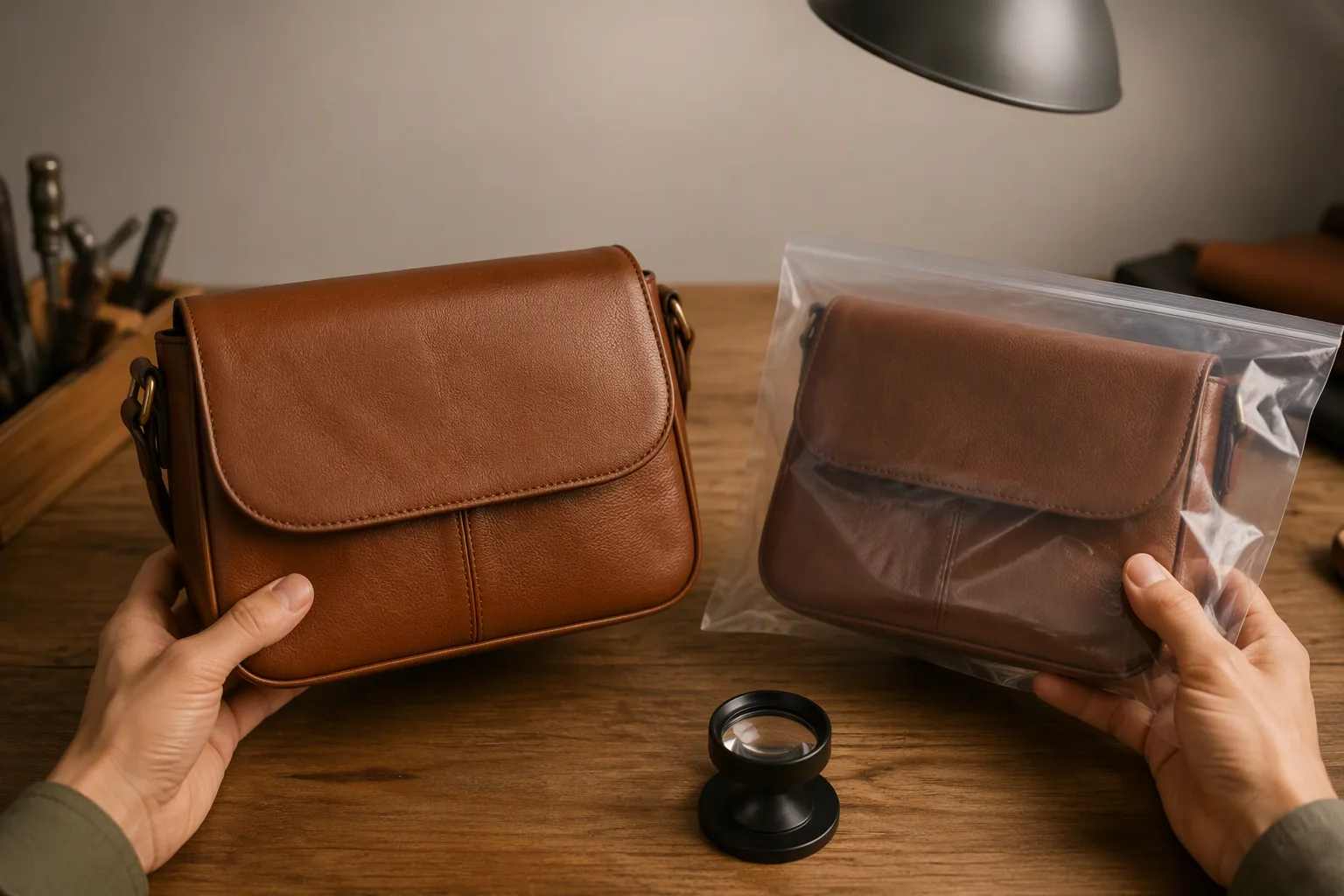
The most useful pictures show the boundary between acceptable and not, rather than the extreme cases. Two photographs side by side, accept and reject, remove most ambiguity.
Where a fault is continuous in severity, three references are usually enough: clearly acceptable, borderline, and clearly not acceptable. The borderline example carries the most weight in practice.
| Photograph requirement | Reason | Common failure |
|---|---|---|
| Fault with surrounding product | Establishes location | Extreme close-up with no context |
| Ordinary lighting | Matches customer view | Inspection lamp exaggerates |
| Scale reference in frame | Prevents size disputes | No sense of size |
| Accept and reject pair | Defines the boundary | Only extreme examples shown |
| Consistent angle per fault type | Comparability over time | Mixed angles across revisions |

How Classification Drives the Decision
Once faults are classified, the decision rule becomes arithmetic. The categories determine which limits apply, and the limits determine the verdict.
Limits by Category
Each category carries its own limit, and the limits are set separately because the consequences differ. Critical is normally set at zero, majors at a tight limit, and minors at a looser one.
Setting a single limit for everything is the most common specification error. It either fails batches for cosmetic reasons or tolerates functional faults that should never have been shipped.
The Verdict When Categories Differ
Where a sample passes on minors and fails on majors, the batch fails. Categories are not averaged, and a large number of acceptable minor faults does not offset a single category failure.
The rule is worth stating explicitly in the order, because averaged verdicts are a recurring source of disagreement in practice.
Recording the Basis
The report should show the count per category against the applicable limit, not just the final verdict. A verdict without its basis cannot be reviewed, appealed or compared with the next shipment.
Where a batch fails, the report should identify which category failed and by how much. That single line tells the factory where to concentrate its correction effort.
| Outcome | Condition | Action |
|---|---|---|
| Pass | All categories within limits | Proceed to shipment |
| Pass with findings | Minor count below limit | Proceed, note trends |
| Fail on majors | Major count at or above the limit | Rework or sort, then re-inspect |
| Fail on critical | Any critical found | Contain, correct, verify before shipment |
| Fail on unit rule | One unit with excessive minors | Sort, then re-inspect |
Storing and Sharing References
Photographs and the list itself should be stored where both parties can reach the same version: the buyer, the factory and the third-party inspector. A reference held by one party only is not a shared standard.
Where a supplier runs several brands, its own defect library often improves faster than any single brand's list. Asking for it is a cheap way to add examples.
Disputes, Reclassification and List Maintenance
Disagreement about the level of a fault is normal in the early orders. What matters is that the disagreement has a route and a resolution.
The Appeal Route
An appeal should be possible within a stated period, with the disputed units held rather than shipped. Once goods have moved, the evidence needed to settle a classification question is usually gone.
The appeal should be recorded with photographs and the reasoning applied. Even where the level is not changed, the record prevents the same dispute from repeating.
Who Rules Finally
The list should name who has the final say on classification, and on what evidence. Where neither party can rule, the dispute is usually settled by a third-party inspector applying the written list.
Deciding this in advance is what keeps the question technical rather than commercial. Where the ruling is left to the party with the greater commercial leverage, the list stops being a standard.
Keeping the List Current
Real orders produce faults the list did not anticipate. Those examples should feed back into the next revision rather than being settled informally each time.
A list that is reviewed after every order becomes progressively easier to apply. A list that is written once and never revised gradually diverges from how decisions are actually being made.
| Maintenance activity | Frequency | Owner |
|---|---|---|
| Add new faults found in production | After each order | Quality lead, with supplier |
| Update photographs at the boundary | Per revision | Quality lead |
| Review limits against defect data | Per season | Buyer and supplier |
| Confirm the governing version | Every order | Buyer |
| Retire codes no longer relevant | Annually | Quality lead |
FAQ
What is a critical defect in bag production?
A: One that can cause injury, makes the product unusable for its purpose, or breaches a legal requirement. Critical defects are normally set at zero acceptance.
What makes a defect major?
A: It affects function or makes the product clearly unacceptable to the intended customer, such as a zip that jams or a visible shade difference on a front panel.
What is a minor defect?
A: A deviation that does not affect function and would not normally prompt a return, such as a small mark in a concealed area or slight stitch irregularity away from sight lines.
Why not call every fault critical?
A: Because a zero limit cannot survive a real batch. Once waived, the category stops protecting anyone, so it has to stay narrow to keep its force.
How do I decide a borderline case?
A: Ask four questions in order: is it visible in normal use, does it affect function, can it be repaired without trace, and would the customer raise it.
Should appearance be judged under inspection lighting?
A: No. Judge it in ordinary light at arm's length, because inspection lighting exaggerates contrast and leads to over-classifying cosmetic faults.
What is the additivity rule?
A: Several minor faults on one unit are judged together rather than individually. A common rule treats a unit with more than a stated number of minors as a major defect.
Are defects counted per unit or per batch?
A: Both. Batch limits control the shipment and per-unit limits prevent a badly defective unit passing inside an acceptable average.
How should a fault on both faces of a bag be counted?
A: Usually once, to avoid double penalising the same fault. Whatever rule is used should be written into the list so inspectors apply it consistently.
What should a classification list contain?
A: A stable code, a short name, the level, the threshold or observation that defines it, a photograph, and the version and date that governs the order.
Why do codes need to be stable?
A: So that records can be trended across orders. If a code changes meaning, historical data becomes misleading and comparisons are lost.
What makes a usable reference photograph?
A: The fault shown with surrounding product for location, ordinary lighting, a scale reference, and a paired accept and reject example that defines the boundary.
How do categories affect the final verdict?
A: Each category has its own limit and they are not averaged. A batch that passes on minors but fails on majors fails overall.
What should an inspection report show?
A: The count per category against the applicable limit, not only the verdict, so the decision can be reviewed, appealed and compared with later shipments.
What happens when the parties disagree on a level?
A: There should be a stated appeal route, with the disputed units held, and a named party or third-party inspector who rules on the evidence.
How often should the list be revised?
A: After each order for new faults, per season for limits against defect data, and annually to retire codes that no longer apply.
Ready to settle quality arguments before they start? Define the three levels by consequence, build the list from worked examples rather than descriptions, rule on borderline cases with the same four questions every time, apply limits per unit as well as per batch, and support every entry with a photograph that shows the boundary rather than the extreme.